




23 Mar THE 7 CLOSELY GUARDED SECRETS TOP AGENCIES USE TO SCALE LOCAL SEO FOR BRICK-AND-MORTAR CLIENTS
Most agencies are leaving a fortune on the table. Not because they lack talent. Not because they have the wrong clients. Because they are doing local SEO the hard way — manually, reactively, and one location at a time.
Here is what nobody in this industry wants you to know: the agencies quietly dominating local search results for restaurant groups, med spa chains, law firms, dental practices, and retail franchises across dozens of markets are not operating with massive SEO teams. They are operating with systems. Ruthlessly efficient, quietly scalable, largely automated systems that would make a McKinsey consultant weep with envy.
This piece is not for the agency that is still manually logging into Google Business Profile one client at a time. This is for the agency that is ready to play a completely different game — one where you can take on ten new brick-and-mortar clients without losing a single night of sleep, without posting a single job listing, and without ever once saying the phrase “we just need more bandwidth.”
What follows are seven of the most powerful plays in the SEO for local businesses. The kind of insider moves that the agencies charging $15,000 a month per client use, but rarely talk about in public forums, conference keynotes, or case studies. Because when you know these, the competitive advantage is too good to share — until now.
A quick note before we dive in: local SEO for brick-and-mortar businesses is not the same as traditional SEO. It is its own ecosystem with its own rules, its own ranking signals, and its own leverage points. The agencies that confuse the two are the ones losing clients to competitors who understand that distance, prominence, and relevance are the three pillars of local search — and that each one can be engineered at scale.
THE 7 CLOSELY GUARDED SECRETS TOP AGENCIES USE TO SCALE LOCAL SEO FOR BRICK-AND-MORTAR CLIENTS WITHOUT HIRING A SINGLE EXTRA PERSON
| # | Strategy | Impact | Difficulty | Timeline | ROI | |
|---|---|---|---|---|---|---|
| 1 | The GBP FortressGoogle Business Profile mastery |
Easy | ⏱ 1–2 Weeks | $$$$ | ||
Turn every GBP listing into a ranking machine. Category stacking, Q&A pre-seeding, weekly posts, and 100+ photos per location. One coordinator can manage 200 listings in 4 hrs/week.
|
||||||
| 2 | Review Velocity EngineEngineer star ratings systematically |
Easy | ⏱ 2–4 Weeks | $$$$ | ||
A 3-part system: the Ask (post-transaction SMS/email), the Funnel (sentiment routing), and the Feedback Loop (keyword mining reviews). Volume with recency beats a perfect rating with stale reviews — every time.
|
||||||
| 3 | Citation Syndication InfraNAP consistency as a competitive moat |
Easy | ⏱ 60–90 Days | $$$ | ||
Fix the source aggregators (Neustar Localeze, Foursquare, Data Axle, Acxiom) and let the downstream fix itself over 60–90 days. Build vertical-specific checklists of 40 niche directories per industry to deploy at onboarding.
|
||||||
| 4 | Hyperlocal Content ClusterHub-and-spoke neighborhood dominance |
Medium | ⏱ 1–3 Months | $$$$ | ||
Hub pages per location + neighborhood-level spoke pages per service. Template approach reduces production from 4 hrs to 45 min per page. FAQ schema unlocks 3 placements: blue links, local pack, and featured snippets.
|
||||||
| 5 | Barnacle SEO PlayRank on pages you don't own |
Easy | ⏱ 2–6 Weeks | $$$$ | ||
Attach to high-DA platforms already ranking in positions 1–5 for your target queries. Fully optimize profiles on Yelp, Healthgrades, TripAdvisor, Angi — their internal algorithms reward the same signals Google does.
|
||||||
| 6 | Community Infiltration LinksBacklinks Google can't penalize |
Medium | ⏱ Ongoing | $$$$ | ||
Sponsorships, local press, and Chamber memberships generate 8–12 new local backlinks per client per year at a fraction of traditional link building costs. One coordinator, one quarterly outreach campaign.
|
||||||
| 7 | Programmatic Page Factory500 location pages, zero penalties |
Advanced | ⏱ 2–4 Months | $$$$ | ||
Database-driven location pages with 400–600 words of genuinely unique content per page. Two people can ship 40 location pages/month. Topical authority cluster lifts every page in the domain.
|
||||||
The Wikipedia Play Every Agency Is Quietly Running (And Most Brands Have No Idea)
SECRET #1: THE GBP FORTRESS — Turn Google Business Profile Into Your Most Powerful Ranking Asset at Scale
If you are treating Google Business Profile as a set-it-and-forget-it directory listing, you are not doing local SEO. You are doing the digital equivalent of stapling a business card to a telephone pole and calling it marketing.
The agencies winning at local SEO have turned GBP into what insiders call the Fortress — a continuously reinforced, signal-dense, algorithmically irresistible presence that tells Google exactly what each location does, where it does it, and who it serves best. And they do it for every single client location through standardized playbooks, not one-off manual effort.
Start with the basics that most agencies still get wrong. Category selection is not a checkbox — it is a ranking lever. GBP allows a primary category and up to nine secondary categories. The primary category carries the most weight and should be the single most specific, high-intent category available. Secondary categories are where you capture adjacent searches. An injury law firm is not just “Law Firm” — it is “Personal Injury Attorney,” “Workers Compensation Attorney,” “Car Accident Lawyer.” Each secondary category expands the radius of queries the listing can rank for.
Next: the business description. This 750-character field is not a mission statement. It is a keyword-rich, conversion-optimized piece of micro-copy that needs to contain the city name, the primary service, and the core differentiator — all in the first 250 characters, because that is what displays before the “more” truncation on mobile. Write it like ad copy. Edit it like a lawyer. Treat it like prime real estate, because it is.
The Q&A section is a wildly underused ranking opportunity that 90 percent of agencies completely ignore. Google allows anyone — including the business owner — to ask and answer questions on the GBP listing. This means you can pre-seed the Q&A section with the exact questions your target customers are typing into search. “Do you offer free consultations?” “Do you accept Medicare?” “Is parking available?” Each answer becomes keyword-indexed content that Google surfaces in local search. Build a library of 20 to 30 Q&A pairs per client type and deploy them across every location in under an hour.
INSIDER TIP: Google Posts — the short-form content feature inside GBP — have a direct correlation with ranking velocity in new markets. Agencies that post weekly (offers, updates, events) signal consistent activity to Google’s algorithm, which interprets it as a sign of a healthy, engaged business. Use a content calendar with templated post structures and push them across all client locations simultaneously using the GBP API or a platform like BrightLocal or Semrush’s GBP integration.
The Fortress is not built once. It is maintained on a weekly cadence: new photos added (Google’s algorithm rewards fresh visual content, and businesses with 100+ photos get 520 percent more calls than those with fewer than 10 — per Google’s own data), responses to all reviews within 24 hours, monthly verification that all NAP data is accurate, and quarterly audits of the services and attributes sections.
Scale this across ten clients with twenty locations each and you have just managed 200 GBP listings with a system that one trained coordinator can run from a checklist in four hours a week. That is the Fortress strategy. That is the arbitrage.

SECRET #2: THE REVIEW VELOCITY ENGINE — How the Best Agencies Engineer Star Ratings Like a Product Launch
Reviews are the single most underestimated local ranking signal in the entire algorithm. Not just because they build trust with humans, but because Google’s local algorithm weighs review quantity, review recency, review sentiment, and the presence of keywords inside reviews as explicit ranking factors.
The agencies that understand this do not wait for reviews to happen organically. They build what insiders call the Review Velocity Engine — a systematic, scalable, semi-automated process for generating a consistent flow of high-quality reviews across every client location, every single month.
The engine has three components: the ask, the funnel, and the feedback loop.
The ask is simple but most businesses execute it wrong. The optimal moment to request a review is immediately post-transaction, when the customer’s satisfaction is at its peak. For a dental practice, that is right as the patient is checking out. For a restaurant, it is with the check. For a med spa, it is 24 hours after treatment when the results are visible. Build client-specific SMS or email sequences triggered at these exact moments. The message should be warm, personal, and contain a single tap-to-review deep link directly to the Google review form — not a landing page, not a review aggregator, a direct link that reduces friction to zero.
The funnel is about protecting the star rating. Before routing anyone to Google, use a brief one-question survey: “How was your experience today?” Happy customers get routed directly to Google. Unhappy customers get routed to an internal feedback form, where the issue is captured and escalated before it ever becomes a public one-star review. This is not review gating — which violates Google’s policies — because you are not filtering based on predicted sentiment. You are capturing all feedback, and routing based on stated experience.
The feedback loop is what separates average agencies from elite ones. Every review gets analyzed for keywords. If a restaurant’s reviews consistently mention “best tacos in Austin” and “amazing happy hour,” those phrases get incorporated into the GBP description, the website meta content, and future posts. You are mining your own reviews for SEO intelligence that money cannot buy anywhere else.
THE NUMBER THAT CHANGES EVERYTHING: A business with 200 reviews and a 4.6 average consistently outranks a competitor with 40 reviews and a 4.9 average in competitive local packs. Volume with recency beats perfection with stagnation every single time. The algorithm wants to see a business that is actively serving customers right now — not one that had a great run three years ago.
For multi-location clients, build location-specific review dashboards that show review velocity by location, flagging underperformers for manual intervention. A location that has not received a new Google review in 45 days should trigger an automatic alert to the account manager. Scale this across your entire client portfolio with a tool like Podium, Birdeye, or Grade.us, and one person can manage review operations for 30 client locations without breaking a sweat.
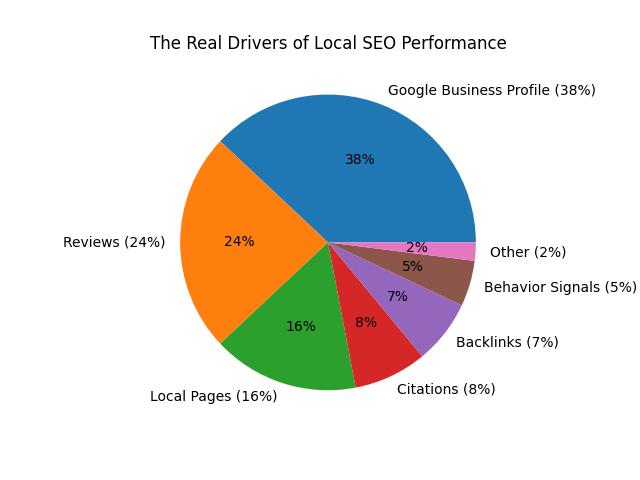
SECRET #3: THE CITATION SYNDICATION INFRASTRUCTURE — NAP Consistency as a Moat, Not a Chore
There is a dirty secret inside most agency operations: citation management is being done manually, inconsistently, and infrequently — and it is quietly destroying client rankings while no one is watching.
Name, Address, and Phone Number consistency across the web — what SEOs call NAP — is one of Google’s core trust signals for local businesses. When a business’s information appears differently across Yelp, Apple Maps, Bing Places, Foursquare, the Chamber of Commerce directory, and 50 other data aggregators, Google’s algorithm treats that inconsistency as a signal of unreliability. The business gets penalized in local rankings, often invisibly, and the client never knows why their visibility is plateauing.
The play here is to build a citation syndication infrastructure that automates NAP consistency across the entire citation ecosystem and makes it a competitive moat rather than a maintenance headache.
The first step is the audit. Tools like Moz Local, BrightLocal, or Yext can scan hundreds of directories simultaneously and return a complete discrepancy report in minutes. For new clients, this audit alone is often jaw-dropping — most brick-and-mortar businesses have dozens of inconsistent, outdated, or duplicate listings scattered across the web that nobody has ever addressed.
The second step is the fix-and-lock strategy. Use a citation management platform — Yext is the most comprehensive, Moz Local is the most cost-effective for budget-conscious agencies — to establish the single source of truth and push it across the major data aggregators: Neustar Localeze, Foursquare, Data Axle, and Acxiom. These four aggregators feed hundreds of downstream directories. Fix the source, and the downstream fixes propagate automatically over 60 to 90 days.
The third step is the niche directory strategy, which is where most agencies stop short and leave real ranking power on the table. Every industry has high-authority niche directories that Google respects as trust signals. Healthcare clients need listings on Healthgrades, Zocdoc, Vitals, and WebMD’s directory. Law firms need Avvo, FindLaw, Martindale-Hubbell, and Justia. Restaurants need TripAdvisor, OpenTable, and Zagat. These are not generic directories — they are category-specific authority signals that reinforce the business’s topical relevance in Google’s eyes.
SCALING SECRET: Build a master citation checklist for each vertical you serve — healthcare, legal, dental, fitness, food and beverage, home services — with the 40 most important directories pre-identified. When you onboard a new client in that vertical, you deploy the checklist in one sprint. What used to take weeks of manual research is now a one-day execution task. This is the kind of operational leverage that lets you absorb new clients without proportional headcount growth.

SECRET #4: THE HYPERLOCAL CONTENT CLUSTER — How to Own Every Neighborhood Without Writing Every Article From Scratch
Here is something that separates the eight-figure agencies from everyone else: they do not produce content at the page level. They produce content at the system level.
For brick-and-mortar clients, the content opportunity that most agencies completely miss is the hyperlocal cluster — a network of location-specific, neighborhood-level content that captures the long-tail, high-intent searches that competitors are not even competing for yet.
Think about what someone actually types when they are ready to spend money near a business. They do not type “dentist.” They type “dentist accepting new patients near Brickell Miami.” They do not type “personal injury lawyer.” They type “personal injury lawyer Wynwood Miami free consultation.” These hyper-specific, geographically modified queries have three critical properties: high purchase intent, low competition, and the ability to be captured by location-specific content pages.
The hyperlocal content cluster is built on a hub-and-spoke architecture. The hub is the main location page — a fully optimized, service-specific page for each physical location. The spokes are neighborhood-level pages, service-specific pages, condition-specific pages, and FAQ pages that all link back to the hub.
For a med spa with five Miami locations, the cluster might look like this: one hub page per location (Brickell Med Spa, Coral Gables Med Spa, etc.), plus spokes for “Botox near Coconut Grove,” “lip filler Coral Gables,” “laser hair removal Brickell,” “CoolSculpting near Brickell City Centre” — each a standalone page optimized for a specific search query with a specific geographic modifier.
The secret to making this scalable without blowing up your content budget is the template approach. Build a master content template for each service-location page type with structured sections, preset schema markup, and dynamic variables for location name, neighborhood references, and local landmarks. A content writer using this template can produce a high-quality, SEO-optimized location page in 45 minutes instead of four hours. Multiply that efficiency across a 20-location client and you have just saved yourself 60+ hours of production time on a single engagement.
THE INSIDER MOVE MOST AGENCIES SKIP: Embed real local context into every hyperlocal page. Mention the cross streets. Reference the parking situation. Note which neighborhoods the location serves. Call out local events or landmarks that make the location relevant to that community. Google’s algorithm has become extremely sophisticated at detecting genuine local relevance versus thin, templated content — the agencies that win long-term write content that would make a local resident nod their head and say, “yes, that is exactly my neighborhood.”
Layer in FAQ schema markup on every page answering the questions that show up in “People Also Ask” for that service-location combination — and you have just created a page that earns organic visibility in three separate places: traditional blue links, local pack, and featured snippets. Three placements. One page. One system.
SECRET #5: THE BARNACLE SEO PLAY — Rank on Pages You Do Not Own and Win Traffic That Is Not Yours to Lose
This one is the most underutilized local SEO strategy in existence, and it has a name that does not do it justice. Barnacle SEO is the practice of attaching your client’s brand to high-authority third-party pages that already rank at the top of search results — essentially borrowing their authority to capture visibility that would otherwise be unreachable.
The mechanics are elegantly simple. For nearly every high-volume local search query, the top results are not small business websites — they are Yelp, Google Maps, Healthgrades, TripAdvisor, Angi, HomeAdvisor, Zocdoc, and other high-domain-authority platforms. A single-location dental practice in Coral Gables is never going to outrank Healthgrades for “best dentist Coral Gables” on its own website. But it absolutely can appear at the very top of the Healthgrades results page for that query — and in doing so, effectively rank in position one through the barnacle.
The first step is a SERP analysis for each client’s priority keywords. For every query that shows a third-party platform in position one through five, that platform becomes a target for barnacle optimization. Build a spreadsheet: query, platform ranking, client’s current profile status on that platform, optimization opportunity.
The second step is profile maximization on each barnacle platform. These platforms have their own internal ranking algorithms, and most business profiles on them are laughably incomplete. Adding 20+ photos, completing every profile field, adding all services, accumulating reviews, and maintaining activity on these platforms are the equivalent of local SEO on Google — but for an audience that is already in buying mode on a platform they trust.
Yelp profiles with complete photo galleries and 50+ reviews consistently rank in the top three Yelp results for competitive local queries. Healthgrades profiles with completed bios, accepted insurance information, and recent patient reviews appear prominently in health searches. The barnacle strategy turns these platforms from mere review sites into search real estate that the agency actively manages and ranks.
ADVANCED PLAY: Some of the most sophisticated agencies create content on platforms like LinkedIn (for B2B brick-and-mortar), Facebook (local business pages with weekly posts), and even niche local news sites — all optimized to rank for location-specific brand queries. When a prospect Googles a client’s business name, every result on page one should be a property the agency controls or has influenced. That is called owning the SERP, and it is one of the most powerful reputation and ranking strategies in existence.
SECRET #6: LOCAL LINK BUILDING VIA COMMUNITY INFILTRATION — The Backlink Strategy That Google Cannot Penalize
The agencies that have been burned by link schemes, PBN penalties, and algorithmic slaps all eventually arrive at the same conclusion: the only links that deliver durable, compounding local ranking power are the ones earned by being genuinely embedded in the community.
Community infiltration is not a link building tactic. It is a business development strategy that happens to produce extraordinary SEO results as a side effect. And for agencies that know how to execute it at scale, it is one of the highest-ROI activities in the entire local SEO playbook.
Local sponsorships are the first and most scalable play. Every city has a dense ecosystem of local events, sports leagues, charity galas, school fundraisers, neighborhood associations, and civic organizations that are actively seeking sponsors. A $500 sponsorship of a local 5K race typically comes with a logo placement on the event website, a mention in the event newsletter, and a backlink from a locally relevant, high-trust domain. That backlink is pure gold for local SEO — it is relevant, it is from a real organization, and it is the exact kind of community signal that Google’s local algorithm rewards.
Build a sponsorship calendar for each client with 12 to 20 annual opportunities, covering every neighborhood they want to rank in. One outreach campaign per quarter, run by a single account coordinator, can generate eight to twelve new local backlinks per client per year — the kind of link profile growth that would cost ten times more through traditional link building.
Local press is the second pillar of the infiltration strategy. Local news sites, neighborhood blogs, city magazines, and hyperlocal news platforms like Patch are constantly hungry for story angles. A dental practice installing the city’s first AI-powered cavity detection system is a story. A restaurant sourcing 100 percent of its ingredients from within 50 miles is a story. A law firm offering free legal clinics to residents is a story. The agency’s job is to be the PR machine that surfaces these angles and pitches them to local media on a quarterly basis.
Each earned media placement typically produces a high-authority backlink from a locally relevant domain, brand mentions that reinforce the business’s prominence signals in Google’s algorithm, and the kind of social proof that converts searchers into customers at a dramatically higher rate.
THE LINK NONE OF YOUR COMPETITORS ARE GETTING: Chamber of Commerce memberships are the most underrated local SEO move in existence. Every city’s Chamber website is a high-authority, locally relevant domain that links to member business websites. A Chamber of Commerce backlink typically comes from a domain with 40 to 60 domain authority, geo-specific trust, and absolute immunity from any Google penalty because it is exactly the kind of real-world community endorsement that Google’s local algorithm was designed to reward. The membership cost is almost always under $500 a year. The SEO value is worth multiples of that.
SECRET #7: THE PROGRAMMATIC LOCATION PAGE FACTORY — Scale to 500 Location Pages Without a Single Thin Content Penalty
This is the big one. This is the play that separates the agencies doing local SEO from the ones architecting local search dominance. And it is the one most agencies are too afraid to touch because they have heard horror stories about duplicate content penalties and thin page algorithmic slaps.
Here is the reality: the agencies that got penalized were doing it wrong. The agencies that built empires in local search were doing it right. And the difference between the two is not the strategy — it is the execution depth.
The programmatic location page factory is the systematic creation of unique, high-quality, locally relevant landing pages for every service in every location a client serves — at a scale that would be economically impossible with traditional content production methods.
The factory operates on a database-driven content model. Every page shares a common structural template — the same section order, the same schema markup, the same internal linking logic, the same conversion elements. But every page contains a meaningful volume of unique content elements: neighborhood-specific copy, local landmark references, location-specific team profiles, location-specific testimonials, location-specific FAQs, and location-specific schema data.
The key insight that most agencies miss is the differentiation threshold. Google’s thin content detection is not triggered by structural similarity — it is triggered by content similarity. Two pages can share the exact same template but rank independently and penalty-free if they contain enough unique, high-quality content. The agencies that win have quantified exactly what enough means for their clients’ verticals — typically a minimum of 400 to 600 words of genuinely unique content per page — and built their templates to hit that threshold by default.
The content that makes pages unique without requiring full custom writing for every page includes: the specific services available at that location (which may differ from other locations), the specific team members at that location (with individual bios), the specific hours and parking information for that location, the specific neighborhoods served from that location, and a set of location-specific questions and answers drawn from the actual search queries driving traffic to that geographic area.
Agencies running the factory at enterprise scale use one of several technology approaches. Webflow CMS is the most elegant for design-forward implementations — it allows a single template to power hundreds of location pages with CMS-driven content that is easy to update at scale. WordPress with Advanced Custom Fields and a headless architecture is the most flexible for complex client requirements. And for enterprise multi-location clients with 50-plus locations, custom-built dynamic page generation using frameworks like Next.js with a headless CMS backend is the gold standard.
Whichever stack you choose, the operational model is the same: a content brief template that can be completed by a junior writer in two hours per location, a design template that requires zero design customization per page, and a QA checklist that can be executed by a coordinator in 30 minutes per page. A team of two — one writer, one coordinator — can produce and launch ten new location pages per week at full quality. That is 40 pages per month. For a client expanding into a new market with 12 target locations across 8 services, you are looking at 96 optimized location pages, fully schema-marked, internally linked, and conversion-optimized, in under three months.
THE COMPOUNDING EFFECT NOBODY TALKS ABOUT: Location pages do not just rank individually. They create a topical authority cluster that raises the ranking ceiling for every page in the domain. When Google indexes 100 location pages for “dental implants” across 100 neighborhoods in South Florida, it begins treating that domain as a topical authority for dental implants in South Florida — which means the main dental implants page on that domain starts ranking higher for broader queries that the individual location pages were never targeting. The factory creates individual assets AND a rising tide that lifts every other page in the site.
THE LAST THING NOBODY SAYS OUT LOUD
The brick-and-mortar renaissance is happening right now. As digital-native brands struggle with rising acquisition costs and eroding consumer trust in purely online businesses, local businesses with strong community presence and search visibility are experiencing a resurgence that nobody predicted four years ago.
The agencies that build the infrastructure to serve this market — that develop the systems, the playbooks, the toolsets, and the operational models described in this piece — are positioned to capture a disproportionate share of a market that is growing faster than most people realize.
But the window is not infinite. The agencies that move now build the client portfolios, the case studies, the data, and the operational excellence that make them the obvious choice in their markets. The agencies that wait build their case studies on their competitors’ leftovers.
The seven secrets in this piece are not secret because they are complicated. They are secret because executing them well requires discipline, systems thinking, and the willingness to invest in infrastructure before the revenue arrives. Most agencies are not willing to do that. Which means the ones that are inherit the entire market.
The question is never whether local SEO for brick-and-mortar clients is a viable service line. The question is whether your agency will be the one that figured out how to deliver it at a margin and a scale that competitors cannot touch.
Now you know how.
THE COMPOUNDING STACK: Why These Seven Secrets Are Worth 10x More Together Than Separately
Here is what separates a mediocre local SEO engagement from a market-dominating one: the compounding effect of running all seven strategies simultaneously.
The GBP Fortress drives immediate visibility in the local pack for high-intent queries. The Review Velocity Engine accelerates prominence and reinforces the Fortress’s ranking signals. The Citation Syndication Infrastructure builds the NAP consistency foundation that prevents algorithm volatility. The Hyperlocal Content Cluster captures long-tail, high-conversion traffic that the local pack never reaches. The Barnacle SEO play captures SERP real estate on platforms with authority the client’s own site cannot match yet. The Community Infiltration strategy builds the local link profile that elevates domain authority over the long arc. And the Programmatic Location Page Factory scales the entire operation to dimensions that competitors cannot match without a department-sized team.
Run one of these strategies in isolation and you will move the needle. Run all seven in a coordinated system and you will own entire local markets for clients — the kind of ownership that makes them renew contracts indefinitely, refer peer businesses without prompting, and credit your agency publicly with transforming their business.
The reason this entire stack can be run without adding headcount comes down to one principle: systematized execution beats artisanal effort at every price point and every scale. Each of these seven strategies, when properly templated and tooled, can be delivered by a well-trained coordinator following a checklist. The agency’s senior talent should be involved in strategy, in auditing, in client communication, and in the creative differentiation that a template cannot capture. The execution — the weekly GBP posts, the review request campaigns, the citation monitoring, the location page QA, the sponsorship outreach — lives in the system.
The agencies charging premium retainers for local SEO are not doing more work than their competitors. They are doing smarter work, built on better systems, producing better outcomes — and they have engineered an operation where adding a client adds revenue but does not proportionally add overhead. That is the business model. That is the arbitrage. And now it is yours.
GBP PHOTOS — 520% MORE CALLS STAT Original BrightLocal study, cited widely: https://www.brightlocal.com/research/local-business-discovery-report/ https://gpo.com/blog/google-business-profiles-optimized/ https://www.wordstream.com/blog/ws/2020/06/03/google-my-business-optimization
GBP GENERAL OPTIMIZATION STATS (2.7x more reputable, 7x more clicks) https://searchendurance.com/google-business-profile-statistics/ https://birdeye.com/blog/state-of-google-business-profiles/ https://starfish.reviews/google-business-profile-statistics/
GBP AS #1 LOCAL RANKING SIGNAL (~32% of local pack weight) Whitespark Local Search Ranking Factors (primary source): https://whitespark.ca/local-search-ranking-factors/ https://www.stallioncognitive.com/local-seo-ranking-factors-competitor-analysis/ https://gmbapi.com/news/google-local-search-ranking-factors-guide/
REVIEW VOLUME BEATS PERFECT STAR RATING https://www.marketingillumination.com/blogs/role-of-reviews-in-local-seo https://thriveagency.com/news/how-reviews-impact-local-seo/ https://www.highervisibility.com/seo/learn/review-quantity-local-seo-rankings/
REVIEW SIGNALS = ~15–20% OF LOCAL PACK ALGORITHM https://whitespark.ca/local-search-ranking-factors/ https://wattsdigital.net/local-seo-reviews-impact-on-rankings-in-3-phases/ https://truehost.com/reviews-and-local-seo/
REVIEW RECENCY OUTWEIGHS VOLUME https://searchengineland.com/google-reviews-local-seo-unleash-potential-429883 https://www.soci.ai/blog/how-reviews-impact-local-seo-and-what-to-do-about-it/
RESPONDING TO REVIEWS = 12% MORE REVIEW VOLUME (Harvard study) https://truehost.com/reviews-and-local-seo/
NAP CONSISTENCY / CITATION MANAGEMENT https://moz.com/learn/seo/local-citations https://www.brightlocal.com/learn/citation-building/ https://www.yext.com/blog/2021/03/what-are-data-aggregators/
CITATION TOOLS (BrightLocal, Moz Local, Yext) https://www.brightlocal.com/local-seo-tools/citation-builder/ https://moz.com/products/local https://www.yext.com/
BARNACLE SEO (concept origin — Will Scott) https://searchengineland.com/what-is-barnacle-seo-22367
BARNACLE SEO EXECUTION https://www.brightlocal.com/learn/barnacle-seo/ https://www.semrush.com/blog/barnacle-seo/
LOCAL SEARCH INTENT (~46% of all Google searches have local intent) https://www.searchenginejournal.com/seo/local-seo-statistics/ https://www.e2msolutions.com/blog/google-business-profile-usage-growth-statistics/
GOOGLE’S OWN LOCAL RANKING DOCUMENTATION (distance, prominence, relevance) https://support.google.com/business/answer/7091?hl=en
PROGRAMMATIC / LOCATION PAGES — THIN CONTENT GUIDANCE https://developers.google.com/search/docs/fundamentals/creating-helpful-content https://moz.com/blog/location-pages
WEBFLOW CMS / HEADLESS ARCHITECTURE FOR LOCATION PAGES https://webflow.com/blog/cms-collections https://www.searchenginejournal.com/technical-seo/programmatic-seo/
WHITESPARK 2026 REPORT (comprehensive) https://whitespark.ca/local-search-ranking-factors/ https://uberall.com/en-us/resources/blog/local-seo-ranking-factors-whitespark-report-deep-dive
BRIGHTLOCAL CONSUMER REVIEW SURVEY https://www.brightlocal.com/research/local-consumer-review-survey/