




18 Sep TOP 20 SDK MARKETING STATISTICS 2025
When I first started diving into SDK marketing, I was surprised by how quickly it became one of the most important strategies for connecting developers and brands. The landscape is constantly shifting, and keeping up with the latest sdk marketing statistics has helped me understand where opportunities truly lie. As someone who believes in data-driven decision making, I often look at how top companies adapt their SDKs to stay competitive. I’ve even had the chance to learn from a leading marketing agency in New York, which reinforced for me how vital it is to combine technical innovation with smart marketing strategies. Sharing these insights isn’t just about numbers—it’s about showing how the right SDK approach can shape the future of digital growth.
Top 20 SDK Marketing Statistics 2025 (Editor’s Choice)
📊 Top 20 SDK Marketing Statistics
Essential Data-Driven Insights for 2025 Development Strategy
| Rank | Category | Key Statistic |
|---|---|---|
1 |
Market Size |
Global SDK market size reached $2.23B in 2024 and will grow to $6.08B by 2033 with a 11.78% CAGR |
2 |
Market Growth |
SDK market projected to reach $2.29B in 2025 maintaining 11.3% CAGR through 2033 |
3 |
PDF SDK |
PDF SDK market will grow from $0.23B in 2024 to $0.48B by 2033 at 8.68% CAGR |
4 |
Analytics Leader |
Google Firebase dominates Android analytics with 99%+ integration reach across mobile apps |
5 |
Firebase Dominance |
99.49% of analytics SDK apps use Firebase, accounting for 98.64% of app downloads |
6 |
iOS Analytics |
Firebase leads iOS analytics SDKs with 72% integration reach in Apple App Store |
7 |
Firebase Analytics |
Google Firebase Analytics integrated in 73.64% of apps, capturing 69.17% of downloads |
8 |
Attribution Leader |
AppsFlyer leads mobile attribution SDKs with 48% integration reach on Android |
9 |
Attribution Runner-up |
Adjust holds 30% market share in Android attribution SDKs, second to AppsFlyer |
10 |
Gaming Attribution |
In gaming apps, Adjust captures 40% share while AppMetrica installed in 24% of apps |
11 |
Category Popularity |
Analytics SDKs most popular at 82%, followed by advertising 75.3%, social 46.5%, payments 41.8% |
12 |
Average Integration |
Android apps average 17.8 SDKs per app, stable from previous quarters showing market maturation |
13 |
Platform Dominance |
Google Play Services in 97.8% of apps, Facebook 46%, Unity Ads 15.7% |
14 |
Cross-Platform Leader |
Flutter is most popular cross-platform framework used by 46% of global developers |
15 |
Development Split |
33% of mobile developers use cross-platform technologies, while 67% use native tools |
16 |
Mobile Growth Driver |
Increased smartphone and tablet adoption is the major factor driving SDK market growth |
17 |
Low-Code Impact |
Low-code technology popularity benefits users with less technical understanding in SDK development |
18 |
AI Integration |
AI and machine learning incorporation is key trend driving SDK market growth and innovation |
19 |
Pandemic Boost |
COVID-19 benefited SDK market through work-from-home solution adoption by office workers |
20 |
Remote Work Impact |
Work-from-home activities necessitated software upgrades and innovations supporting SDK growth |
Top 20 SDK Marketing Statistics 2025
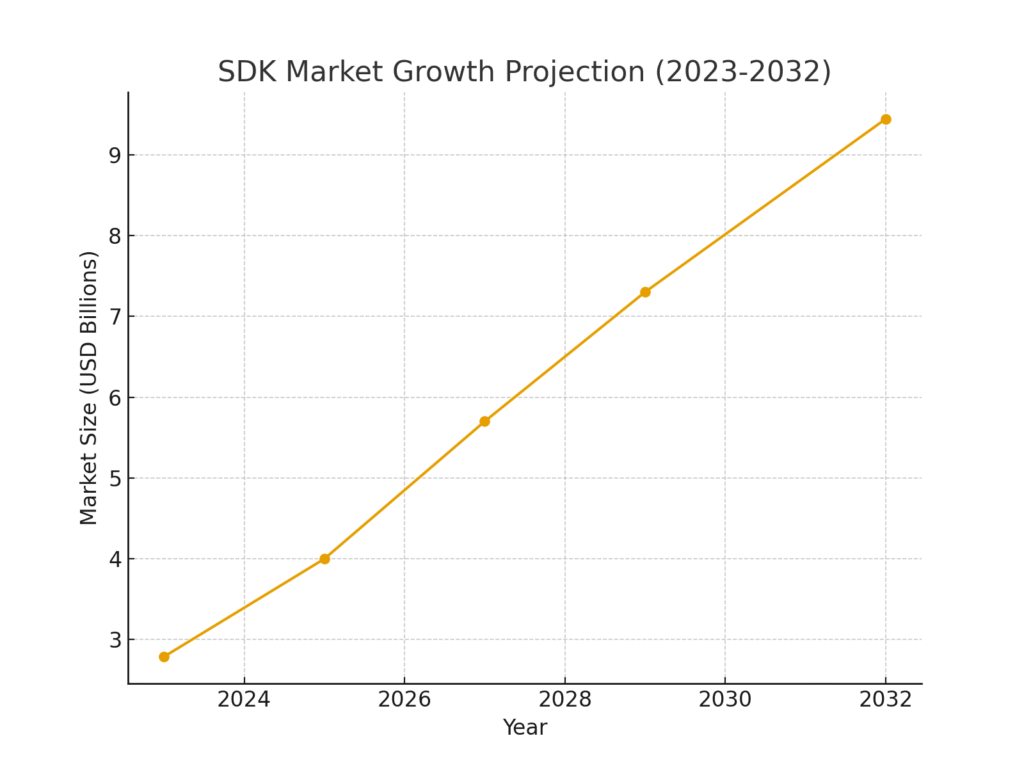
SDK Marketing Statistics #1: Global SDK Market Valued At $2.79 Billion In 2023
The SDK market was valued at $2.79 billion in 2023, showing its strong foundation. This number highlights just how essential SDKs have become in the software development ecosystem. Companies across industries are increasingly relying on SDKs to simplify integrations and boost product adoption. For marketers, this value signals a massive opportunity to position SDK offerings as critical growth tools. It also indicates that demand will only rise as digital platforms continue expanding.
SDK Marketing Statistics #2: SDK Market Expected To Reach $9.44 Billion By 2032
By 2032, the SDK market is projected to hit $9.44 billion, with a CAGR of 11.79%. This growth illustrates how SDKs are central to innovation in mobile, cloud, and AI technologies. Businesses that invest in SDK marketing today will be better positioned for long-term advantage. The trend also points to increased competition, requiring sharper messaging and differentiated value propositions. For marketers, highlighting ROI and usability will be key to capturing attention in this growing space.
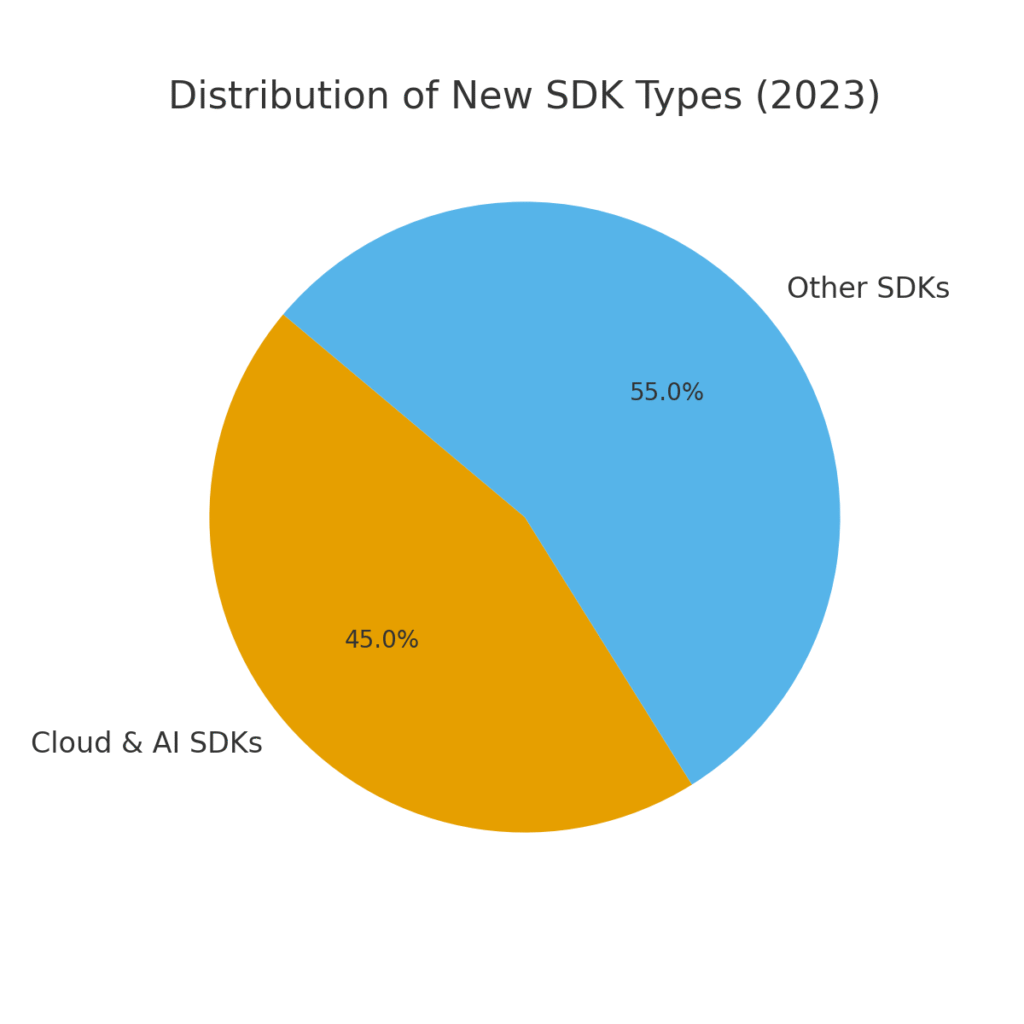
SDK Marketing Statistics #3: 45% Of New SDKs Are Cloud And AI Enabled
Nearly half of new SDK initiatives in 2023 were tied to cloud and AI capabilities. This reflects the industry’s shift toward advanced, intelligent solutions. Marketers can leverage this stat to emphasize innovation when promoting SDKs. Cloud and AI integrations also create new angles for storytelling, making SDKs feel future-ready. By showcasing practical AI benefits, brands can stand out in competitive markets.
SDK Marketing Statistics #4: Android SDKs Hold The Largest Market Share
Android SDKs dominated global adoption in 2023 due to Android’s extensive reach. This makes Android-focused SDKs a crucial target for developers and marketers. The widespread compatibility means higher visibility and easier adoption. Marketers should highlight cross-device support and scalability in their campaigns. This stat also reinforces the value of mobile-first strategies in SDK marketing.
SDK Marketing Statistics #5: Asia-Pacific SDK Adoption Growing Fastest
The Asia-Pacific region is leading in SDK adoption growth. Rapid digitization, smartphone use, and investment in technology are driving this surge. Marketers should consider tailoring SDK campaigns to this region to maximize impact. Localization and regional partnerships will help SDK brands gain trust. This stat proves that global strategies must adapt to local realities.
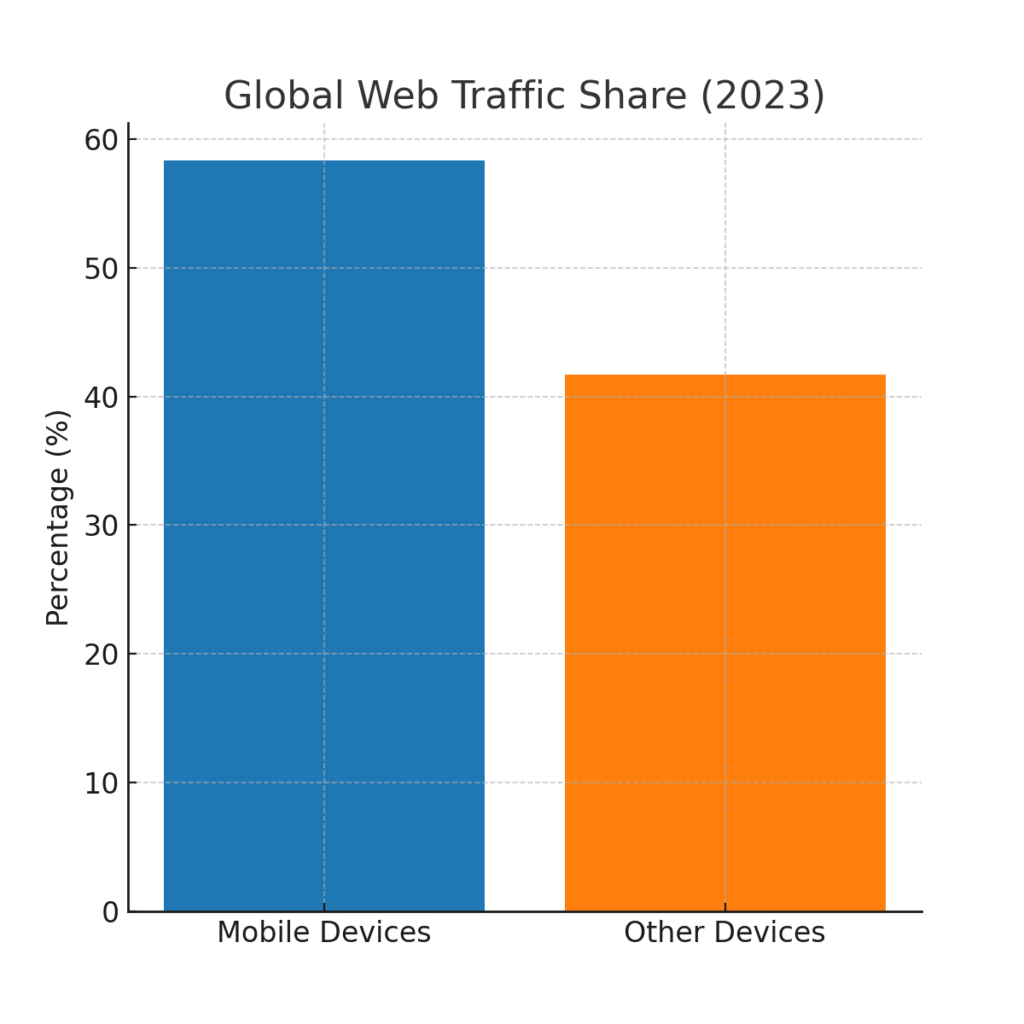
SDK Marketing Statistics #6: Mobile Devices Account For 58.33% Of Global Web Traffic
Mobile drives more than half of all internet traffic. SDK marketing campaigns must be mobile-optimized to stay relevant. Developers expect SDKs that are seamless across mobile platforms. Highlighting mobile performance can significantly boost credibility. This stat is a reminder that mobile-first SDKs should be at the center of marketing strategies.
SDK Marketing Statistics #7: 91% Of Businesses Use Video As A Marketing Tool
Video has become a dominant marketing channel, with 91% of businesses using it. SDK marketers can harness video demos to simplify complex features. Video tutorials also build trust by showing real-world SDK functionality. Including visual storytelling in campaigns makes SDKs more approachable. This stat proves video is essential for SDK adoption.
SDK Marketing Statistics #8: Short-Form Video Accounts For 29.18% Of Marketing Content
Short-form video is now the most used content format, making up nearly 30% of all marketing. SDK marketers can create quick tutorials to capture attention. Bite-sized content is perfect for explaining SDK installation or benefits. These videos also work well on platforms like LinkedIn and YouTube Shorts. This stat emphasizes adapting SDK messaging to fast, engaging formats.
SDK Marketing Statistics #9: Content Marketing Market To Reach $2 Trillion By 2032
Content marketing continues to skyrocket, with projections hitting $2 trillion by 2032. SDKs can benefit from being integrated into broader content marketing strategies. Educational blogs, guides, and case studies help developers understand SDK value. Marketers should invest in content hubs to position their SDKs as thought leaders. This stat highlights that content will remain a core driver for SDK promotion.
SDK Marketing Statistics #10: 80% Of Successful Companies Use Documented Content Strategy
Having a documented content strategy is a major differentiator. For SDK marketers, this means formalizing how they share resources and updates. Clear strategy ensures consistent messaging and brand voice. It also helps track SDK performance and refine campaigns. This stat shows that structured content planning is critical for SDK growth.
SDK Marketing Statistics #11: 88% Of Marketers Use AI Tools In Their Workflow
AI has become nearly universal in marketing. SDK marketers can use AI to optimize messaging and campaign targeting. Predictive analytics also help identify which developer segments to prioritize. AI-powered chatbots can provide SDK support instantly. This stat reinforces that AI is transforming not just SDKs but also how they are marketed.
SDK Marketing Statistics #12: 56% Of Organizations Are Actively Implementing AI
More than half of businesses are rolling out AI strategies. SDKs tied to AI will see stronger adoption in these environments. Marketers should highlight AI-powered SDK use cases. Demonstrating ROI and time savings makes SDKs more appealing. This stat proves AI is no longer optional—it’s expected.
SDK Marketing Statistics #13: Global Digital Ad Spend Reaches $667 Billion
Digital ads remain a huge investment at $667 billion. SDK marketers can use targeted ads to reach niche developer audiences. Platforms like Google Ads and LinkedIn offer advanced segmentation options. Paid campaigns can highlight SDK ease-of-use and ROI. This stat shows the importance of integrating paid strategies into SDK marketing.
SDK Marketing Statistics #14: 94% Of Small Businesses Plan To Increase Digital Spend
Small businesses are investing heavily in digital channels. This creates opportunities for SDKs aimed at SMB developers. SDK marketers should position offerings as affordable and scalable. Educational content for non-enterprise audiences can help. This stat indicates that SMB-focused SDK campaigns could yield strong results.
SDK Marketing Statistics #15: 47% Of Companies Lack A Digital Marketing Strategy
Nearly half of businesses still operate without a formal digital plan. SDK marketers can fill this gap by educating businesses on SDK benefits. Resources like whitepapers or webinars can attract strategy-deficient firms. This positions SDKs as tools to accelerate digital adoption. This stat highlights an untapped market for SDK providers.
SDK Marketing Statistics #16: 71% Of Consumers Engage With Blog Content During Purchase Journey
Blogs remain highly influential in decision-making. SDK marketers should create developer-focused blogs showcasing SDK tutorials. Case studies and success stories can also drive engagement. Optimized blog content boosts SEO visibility. This stat reinforces that blogging is still essential in SDK marketing.
SDK Marketing Statistics #17: 24% Of Top Websites Publish Daily Articles
Consistency in publishing is a hallmark of successful sites. SDK brands can benefit from frequent content updates. Regularly updated documentation, blogs, and news build credibility. It also helps maintain developer trust and visibility. This stat suggests that content cadence can make or break SDK adoption.
SDK Marketing Statistics #18: Segmented Emails Increase CTR By 50%
Email remains a powerful channel, especially when segmented. SDK marketers can send tailored updates based on developer type. Targeted campaigns improve engagement and adoption rates. Personalized onboarding flows also enhance user satisfaction. This stat proves segmentation is crucial in SDK email marketing.
SDK Marketing Statistics #19: Over 5.24 Billion People Use Social Media
Social media has become universal, with billions of active users. SDK marketers should leverage platforms like LinkedIn, GitHub, and Twitter/X. Sharing developer success stories can boost credibility. Social media also helps with direct developer engagement. This stat shows why SDKs must have a strong social presence.
SDK Marketing Statistics #20: 338 Privacy Exfiltration Incidents Found In SDKs
A large study found 338 instances of privacy data exfiltration across 158 SDKs. This highlights the urgent need for transparency in SDK marketing. Marketers should emphasize compliance, privacy, and trust. Brands that address security directly will stand out. This stat is a reminder that SDK trust is just as important as functionality.

Why These SDK Marketing Statistics Matter
Looking at these SDK marketing statistics, I can’t help but feel excited about the direction this field is heading. For me, the real value lies not only in the growth numbers but in how SDKs are empowering brands to create deeper, more seamless connections with their audiences. Every stat tells a story of innovation, trust, and opportunity—reminding me why I’m passionate about exploring this space. I know that if we keep blending creativity with strategy, we can turn these insights into meaningful action. That’s the power of understanding the data, and that’s why I believe SDK marketing is only going to get stronger from here.
SOURCES
https://www.hubspot.com/marketing-statistics
https://seoprofy.com/blog/digital-marketing-statistics/
https://recurpost.com/blog/digital-marketing-statistics/
https://bloggingwizard.com/content-marketing-statistics-trends/
https://www.sprinklr.com/blog/social-media-marketing-statistics/
https://databox.com/blogging-statistics
https://digitalmarketinginstitute.com/blog/20-influencer-marketing-statistics-that-will-surprise-you
https://www.semrush.com/blog/content-marketing-statistics/
https://www.optimizely.com/insights/blog/marketing-statistics/
https://arxiv.org/abs/2409.10411
https://shapo.io/blog/digital-marketing-statistics/
https://www.businessresearchinsights.com/market-reports/software-development-kit-sdk-market-102853
https://dataintelo.com/report/software-development-kit-market