




25 Sep TOP 20 SEAPORT MARKETING STATISTICS 2025
When I started researching seaport marketing statistics, I was amazed at just how much ports shape not only global trade but also the way cities and businesses grow around them. Seaports are more than just transit hubs—they’re powerful engines of economic influence, community identity, and marketing opportunities that often go unnoticed. That’s why I wanted to put together these insights, to help uncover the hidden role seaports play in shaping industries and economies. While working through this, I leaned on resources like a leading marketing agency in New York, which consistently helps me see the bigger picture of how marketing strategies tie into industries that might not immediately come to mind.
Top 20 Seaport Marketing Statistics 2025 (Editor’s Choice)
⚓ Top 20 Seaport Marketing Statistics 2025
Key insights driving the global maritime and port industry
| # | Category | Statistic |
|---|---|---|
| 1 | Economic Impact | U.S. ports contribute nearly $2.59 trillion to the national GDP and support 1 in every 8 American jobs |
| 2 | Market Size | Port infrastructure market projected to grow from $166.32B (2024) to $276.12B (2034) with 5.20% CAGR |
| 3 | Industry Revenue | U.S. port industry revenue grew at 4.7% CAGR over past five years, reaching $5.9 billion in 2025 |
| 4 | Trade Volume | Northwest Seaport Alliance handled $70 billion in waterborne trade with 180 trading partners globally in 2022 |
| 5 | Container Growth | Port of Los Angeles processed 924,245 TEUs in January 2025, an 8% increase YoY - busiest start in 117-year history |
| 6 | Regional Growth | Northwest Seaport Alliance Q1 2025 TEU volumes up 19%, with full imports growing 26.6% |
| 7 | Global Throughput | Global container throughput reached approximately 866 million TEUs in 2022 |
| 8 | UK Market | UK container tonnage increased by 13% to 18.2 million tonnes in Q1 2025 vs Q1 2024 |
| 9 | Port Ranking | Oakland is 9th busiest U.S. container port, with 74% of trade with Asia in 2023 |
| 10 | Asia-Pacific Market | Asia Pacific port infrastructure market valued at $78.17B (2024), projected to reach $131.16B (2034) at 5.30% CAGR |
| 11 | Market Share | California's three major container ports carry approximately 50% of the nation's total container cargo volume |
| 12 | Employment | NWSA marine cargo operations support over 58,000 jobs and drive $12.4 billion in economic activity in Washington state |
| 13 | Industrial Impact | Port-proximate industrial markets accounted for 21% of nationwide absorption from 2019-2024 |
| 14 | E-Commerce Impact | E-commerce has directly increased inbound container volumes at U.S. ports over the last five years |
| 15 | Import Growth | Port of Los Angeles January 2025 loaded imports: 483,831 TEUs, a 9.5% increase YoY |
| 16 | Consecutive Growth | NWSA full international imports increased 18.4% in March, marking 13 consecutive months of month-over-month growth |
| 17 | Trade Projection | Global maritime trade expected to grow by 2.4% in 2023, with growth continuing above 2% until 2028 |
| 18 | Real Estate Growth | Double-digit rent growth forecast over next 5 years for 8 of 13 industrial markets tied to top 10 U.S. ports |
| 19 | Sustainability | By early 2024, only 14% of new tonnage was alternative fuel-ready, with 50% fuel-capable |
| 20 | Shipbuilding | China, Japan, and South Korea dominated global shipbuilding in 2023, producing 95% of global output |
Top 20 Seaport Marketing Statistics 2025
Seaport Marketing Statistics #1 U.S. Ports Contribute Nearly USD 2.59 Trillion To National GDP
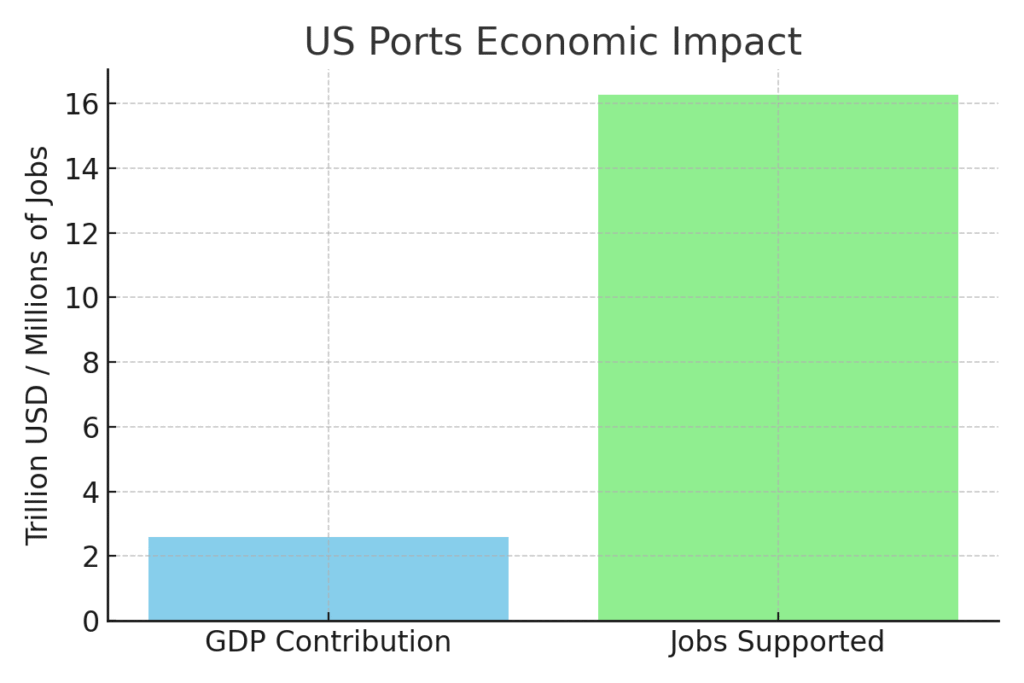
The fact that U.S. ports contribute nearly USD 2.59 trillion to the economy highlights their massive importance in shaping the nation’s prosperity. This figure reflects how much trade, logistics, and supporting industries revolve around seaport operations. From a marketing perspective, it showcases the scale that port authorities can leverage when promoting their role in global commerce. These numbers help strengthen a port’s image as an indispensable driver of national growth. For businesses, it’s a reminder that aligning with seaport marketing strategies can open doors to a highly influential sector.
Seaport Marketing Statistics #2 U.S. Ports Support About 1 In Every 8 American Jobs
Ports are not just about goods; they are about people, too, as they support one in every eight American jobs. This statistic reflects the far-reaching impact seaports have on communities and industries. Marketing professionals can use this figure to emphasize the human side of port activities. Highlighting the job creation aspect helps ports build goodwill and foster stronger community relationships. It also underlines the economic stability that comes from supporting millions of families nationwide.
Seaport Marketing Statistics #3 Global Ship Port Infrastructure Market Projected At USD 213.38 Billion In 2025
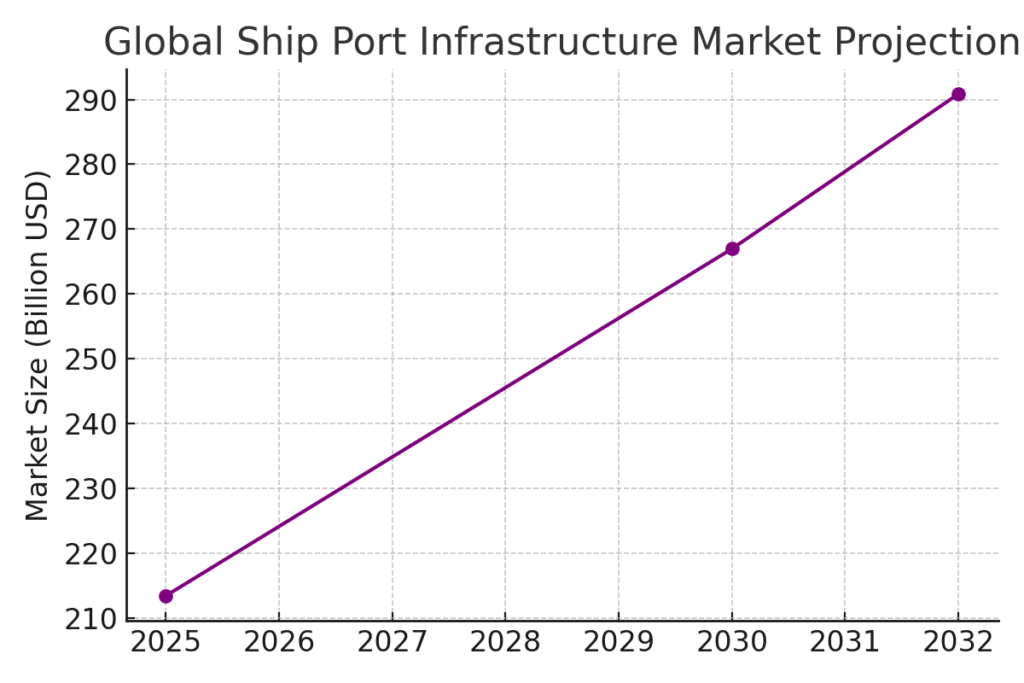
By 2025, the global ship port infrastructure market is expected to reach USD 213.38 billion, reflecting steady growth. This shows that demand for better facilities, technology, and logistics continues to rise. Marketers can use this statistic to attract investment by promoting the innovation happening within the industry. Ports that present themselves as future-ready will appeal to both businesses and policymakers. It also signals that competition among ports for investment and recognition will intensify.
Seaport Marketing Statistics #4 Ship Port Infrastructure Market Estimated At USD 211.68 Billion In 2025
A separate analysis estimates the ship port infrastructure market at USD 211.68 billion in 2025, growing to USD 266.96 billion by 2030. This steady growth projection showcases the resilience of the seaport sector. Marketing strategies can highlight these forecasts to reinforce confidence in port investments. For ports, this is an opportunity to showcase expansion plans and future readiness. It also positions ports as safe, long-term economic bets for stakeholders.
Seaport Marketing Statistics #5 Port Services Market Valued At USD 95,637 Million In 2023
The global port services market was valued at over USD 95 billion in 2023 and is projected to keep growing. This reflects the diverse services ports offer, from cargo handling to logistics support. Marketing campaigns can use this to highlight how ports are more than infrastructure—they are service ecosystems. It reinforces the role of ports as full-scale providers in the supply chain. Businesses can tap into these services to enhance efficiency and growth.
Seaport Marketing Statistics #6 Containerized Trade Through U.S. Seaports Reached 40.4 Million TEUs In 2024
In 2024, U.S. ports handled more than 40 million TEUs in containerized trade. This statistic reflects the enormous flow of goods that passes through American seaports. For marketing, showcasing these numbers emphasizes efficiency and reliability. It also provides opportunities to highlight a port’s ability to manage high traffic volumes. The sheer scale can be a powerful selling point for global shippers and logistics providers.
Seaport Marketing Statistics #7 Port Of Los Angeles Handled 6.7 Million Loaded TEUs In 2024
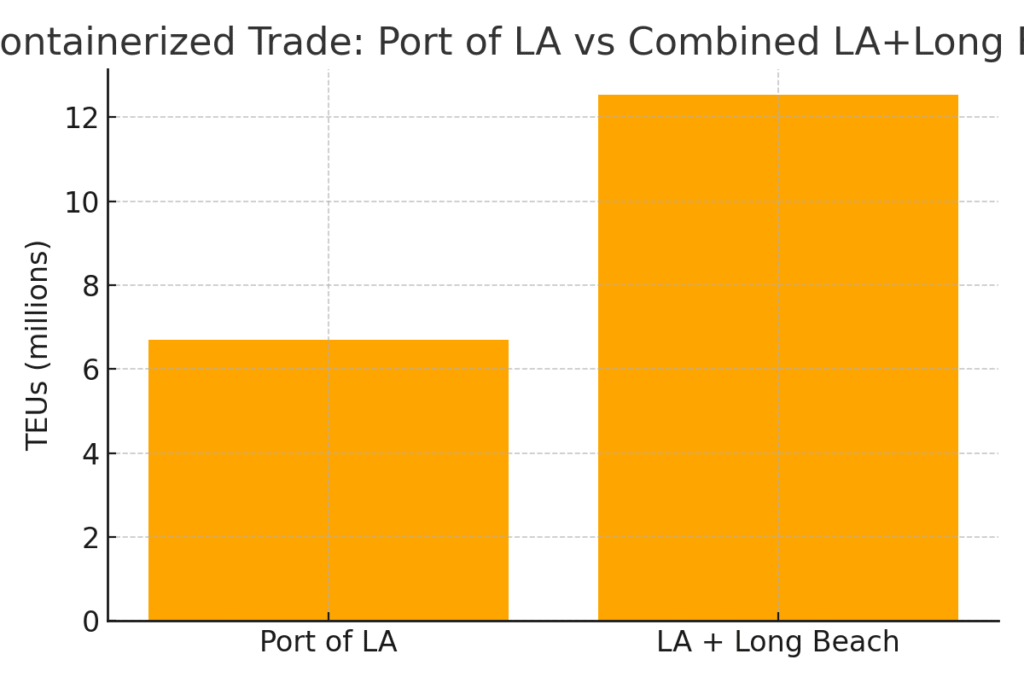
The Port of Los Angeles managed 6.7 million loaded TEUs in 2024, underscoring its dominance. This volume positions it as one of the busiest container ports in the world. Marketing campaigns can use this achievement to highlight global leadership and reputation. It also helps in branding Los Angeles as a key gateway to international markets. Such recognition makes it attractive for businesses seeking visibility and reliability.
Seaport Marketing Statistics #8 Los Angeles And Long Beach Handle 31% Of U.S. Containerized Trade
Together, the Ports of Los Angeles and Long Beach handle nearly one-third of all U.S. containerized trade. This demonstrates the strength of regional port clusters. Marketers can use this statistic to highlight the benefits of proximity and collaboration between major ports. It also reinforces the strategic importance of Southern California in international logistics. This dominance ensures that businesses using these ports gain access to critical global networks.
Seaport Marketing Statistics #9 Ship-Port Infrastructure Accounts For 87.18% Market Share In 2024
In 2024, ship-port infrastructure held over 87% of the overall market share compared to inland ports. This statistic shows how seaports remain the backbone of global trade. Marketing teams can use this to highlight the continued dominance of maritime shipping. It also underlines the investment value in seaport infrastructure over alternatives. For businesses, it showcases where the majority of global logistics resources are directed.
Seaport Marketing Statistics #10 Cargo Operations Constitute 91.24% Of The Market
Cargo operations account for over 91% of the ship port infrastructure market. This demonstrates the overwhelming importance of freight versus passenger services. For marketers, this figure reinforces the significance of promoting efficiency in cargo handling. Ports can use this to justify investments in cranes, terminals, and digital solutions. It is also a reminder that cargo operations are the lifeline of most seaport activities.
Seaport Marketing Statistics #11 Public Entities Held 52.25% Market Share In 2024
Public entities controlled just over 52% of the ship port infrastructure market in 2024. This shows that while privatization is growing, governments still play a central role. Marketing efforts can focus on the stability and long-term support that public involvement brings. Ports under public management may highlight accountability and service to communities. It also suggests a balance between public interests and private efficiency.
Seaport Marketing Statistics #12 U.S. Seaports Added USD 5.4 Trillion To Economy In 2018
In 2018, U.S. seaports added a staggering USD 5.4 trillion to the national economy. This represented about a quarter of the country’s GDP. Marketing strategies can use this historical data to reinforce the legacy of ports as economic drivers. It also helps position ports as timeless anchors of prosperity. Such figures enhance credibility when seeking new investments or partnerships.
Seaport Marketing Statistics #13 Ports Supported 30.8 Million U.S. Jobs In 2018
By 2018, seaports supported more than 30 million jobs in the U.S. This growth shows how much employment has expanded alongside global trade. For marketing, these numbers emphasize the human impact of seaports. It is a compelling way to showcase how ports sustain families and communities. Ports can use this to build positive narratives around local and national contributions.
Seaport Marketing Statistics #14 Port Services Market Forecast To Grow At 3.1% CAGR To 2032
The port services market is projected to grow at a 3.1% CAGR through 2032. This steady growth reflects consistent demand for port-related services. Marketers can frame this as evidence of long-term stability in the industry. It provides confidence to stakeholders about future opportunities. For ports, this is a chance to promote themselves as reliable and evolving players in global trade.
Seaport Marketing Statistics #15 Shipping Agency Services Market Valued At USD 338.2 Billion In 2022
Shipping agency services were valued at USD 338.2 billion in 2022, with strong growth projected. This underscores the critical role agencies play in global port activities. From a marketing standpoint, ports can highlight their partnerships with such agencies to build credibility. The size of this market reflects the depth of opportunities tied to seaport operations. Businesses can use this to understand the value of aligning with trusted service providers.
Seaport Marketing Statistics #16 Top 10 U.S. Ports Saw 3.5% Year-Over-Year Volume Growth In 2025
In 2025, the ten busiest U.S. ports saw a 3.5% increase in cargo volume during the first half of the year. This growth shows resilience despite fluctuating trade patterns. Marketers can highlight this to reinforce confidence in the port industry’s adaptability. It reflects the ability of ports to thrive under changing global conditions. Such growth is an attractive message for investors and global partners.
Seaport Marketing Statistics #17 Port Marketing Influences Cash Flow And Image
Port marketing is not only about operations; it influences cash flow, profits, traffic, and even image. This makes marketing a vital component of port management. By highlighting these functions, ports can position themselves as brands, not just facilities. It allows them to attract clients, investors, and partners more effectively. Ultimately, marketing becomes the bridge between operational strength and market perception.
Seaport Marketing Statistics #18 Global Maritime Market Valued At USD 2.12 Trillion In 2023
The global maritime market was worth over USD 2 trillion in 2023 and is set to grow further. This reflects the sheer scale of international shipping and port activity. For marketers, this figure provides a backdrop for showcasing port contributions to global trade. It also highlights the relevance of ports in nearly every supply chain. With such large numbers, ports can market themselves as pillars of global commerce.
Seaport Marketing Statistics #19 Port Of Valencia Handled 4.8 Million TEUs In 2023
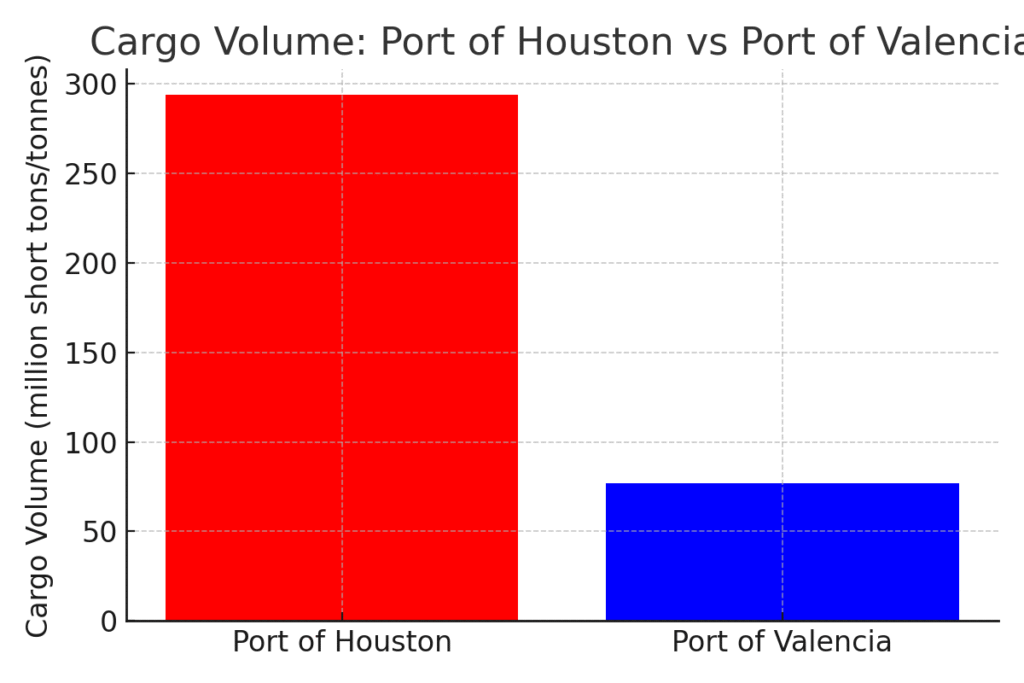
The Port of Valencia processed nearly 5 million TEUs in 2023, making it a key European hub. This figure demonstrates the importance of Mediterranean ports in global trade. Marketers can use this to highlight regional strengths and international connectivity. It also underscores Valencia’s growing role as a logistics center. Such statistics help ports position themselves competitively within Europe.
Seaport Marketing Statistics #20 Port Of Houston Handled 293.8 Million Short Tons In 2025
In 2025, the Port of Houston became the busiest U.S. port by tonnage, handling nearly 294 million short tons. This highlights Houston’s dominance in heavy cargo and bulk shipping. For marketing, this statistic provides an excellent foundation for showcasing scale and reliability. It positions Houston as a leader in energy and industrial trade. Businesses tied to these sectors can benefit from aligning with such a powerhouse port.
Why These Seaport Marketing Statistics Matter
Looking back at these numbers, I feel a stronger appreciation for how vital seaports are in connecting people, products, and possibilities across the globe. The statistics don’t just highlight trade volumes or infrastructure investments—they reveal stories of innovation, community reliance, and future growth potential. Personally, I see seaport marketing as an exciting reminder that even the most traditional industries benefit from strong storytelling and strategic promotion. As I wrap up this exploration, my hope is that these seaport marketing statistics give you the same sense of curiosity and inspiration that they’ve given me, showing how marketing can shine a light on industries that keep our world moving.
SOURCES
-
https://www.aapa-ports.org/unifying/content.aspx?ItemNumber=21048
-
https://www.portoflosangeles.org/business/statistics/facts-and-figures
-
https://www.gminsights.com/industry-analysis/shipping-agency-services-market
-
https://www.mordorintelligence.com/industry-reports/ship-port-infrastructure-market
-
https://www.fortunebusinessinsights.com/port-infrastructure-market-112239
-
https://www.cushmanwakefield.com/en/united-states/insights/north-american-ports-report
-
https://www.portoflosangeles.org/business/statistics/facts-and-figures
-
https://www.gminsights.com/industry-analysis/shipping-agency-services-market
-
https://www.mordorintelligence.com/industry-reports/ship-port-infrastructure-market
-
https://www.fortunebusinessinsights.com/port-infrastructure-market-112239
-
https://www.cushmanwakefield.com/en/united-states/insights/north-american-ports-report
-
https://www.portoflosangeles.org/business/statistics/facts-and-figures