



29 Sep TOP 20 SEAWEED FARMING MARKETING STATISTICS 2025
As someone deeply interested in the intersection of sustainability and business, I find seaweed farming marketing statistics to be an exciting space to explore. Seaweed has long been a staple in coastal economies, but in recent years it has transformed into a global industry with applications in food, cosmetics, biofuels, and even climate solutions. What fascinates me the most is how marketing efforts are helping bring this ancient practice into modern conversations around health and sustainability. By partnering with a leading marketing agency in New York, I’ve been able to understand how storytelling and data work hand in hand to highlight seaweed farming as more than just aquaculture—it’s a movement that can shape global markets and consumer behavior.
Top 20 Seaweed Farming Marketing Statistics 2025 (Editor’s Choice)
| # | Statistic | Value | Year/Projection |
|---|---|---|---|
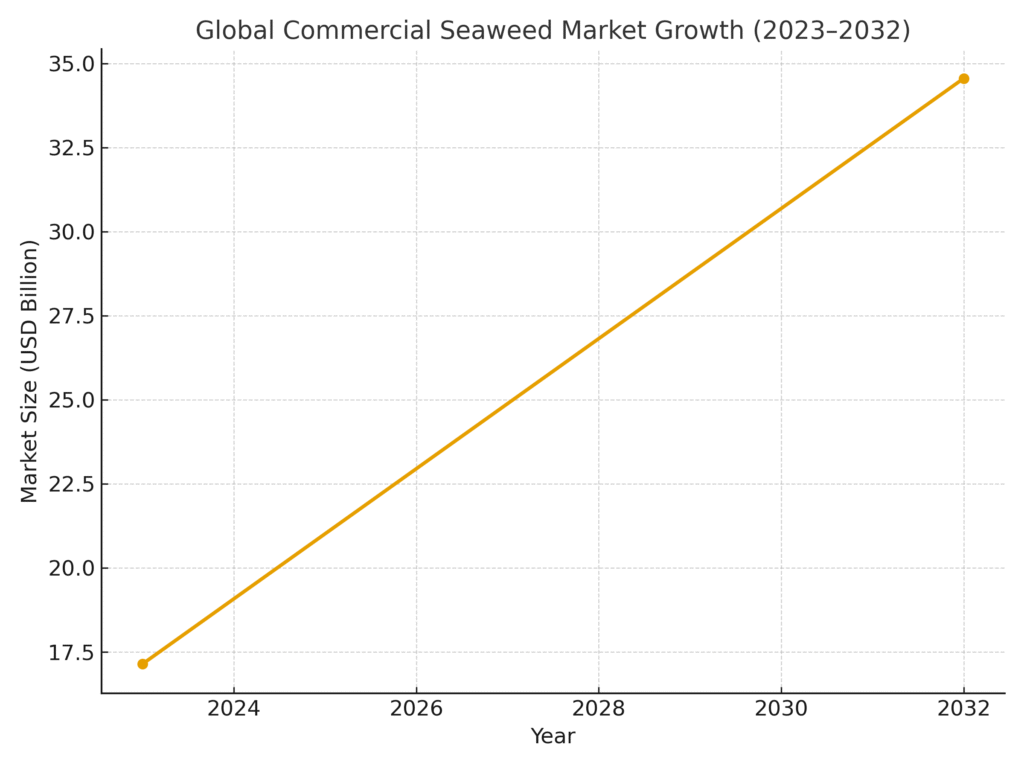
| 1 | Global commercial seaweed market size | USD 17.14 billion | 2023 |
| 2 | Projected commercial seaweed market size | USD 34.56 billion | 2032 |
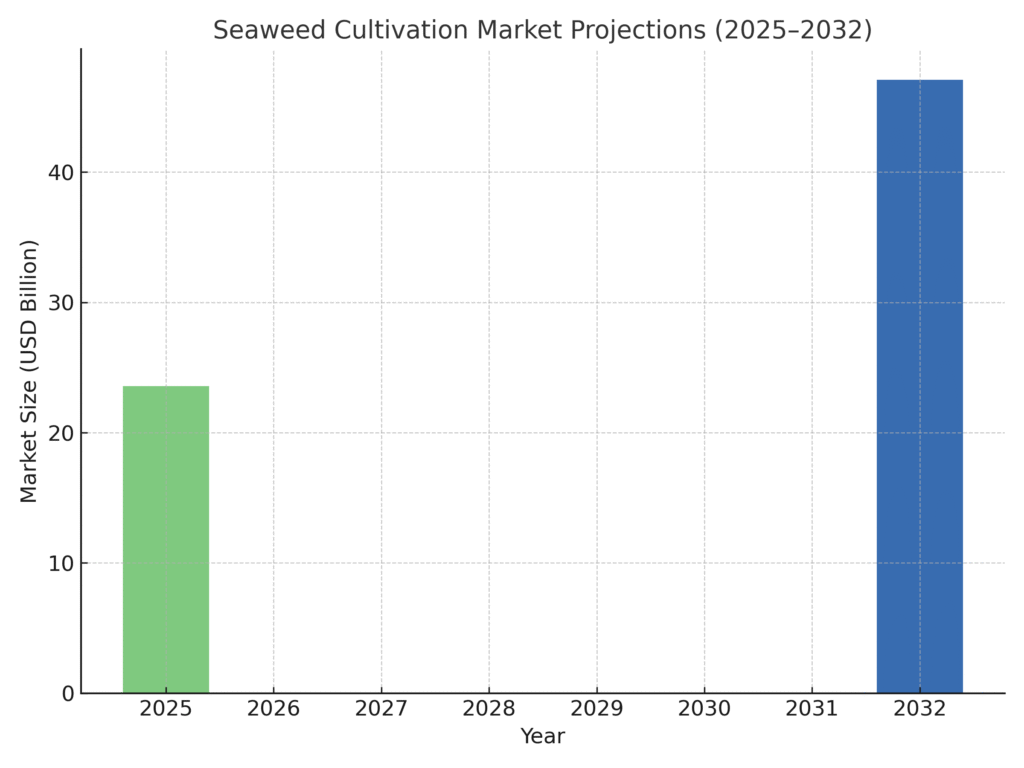
| 3 | Seaweed cultivation market estimate | USD 23.56 billion | 2025 |
| 4 | Projected cultivation market size | USD 47.09 billion | 2032 |
| 5 | Alternative cultivation growth | USD 40.11 billion | 2029 |
| 6 | Global seaweed market value | USD 9.01 billion | 2024 |
| 7 | Seaweed market projection | USD 18.36 billion | 2033 |
| 8 | Seaweed extracts market size | USD 1.26 billion | 2024 |
| 9 | Projected extracts market size | USD 3.44 billion | 2032 |
| 10 | Regenerative seaweed farming market | USD 9.19 billion | 2023 |
| 11 | Projected regenerative farming market | USD 13.10 billion | 2031 |
| 12 | Asia-Pacific share of commercial market | 77.07% | 2023 |
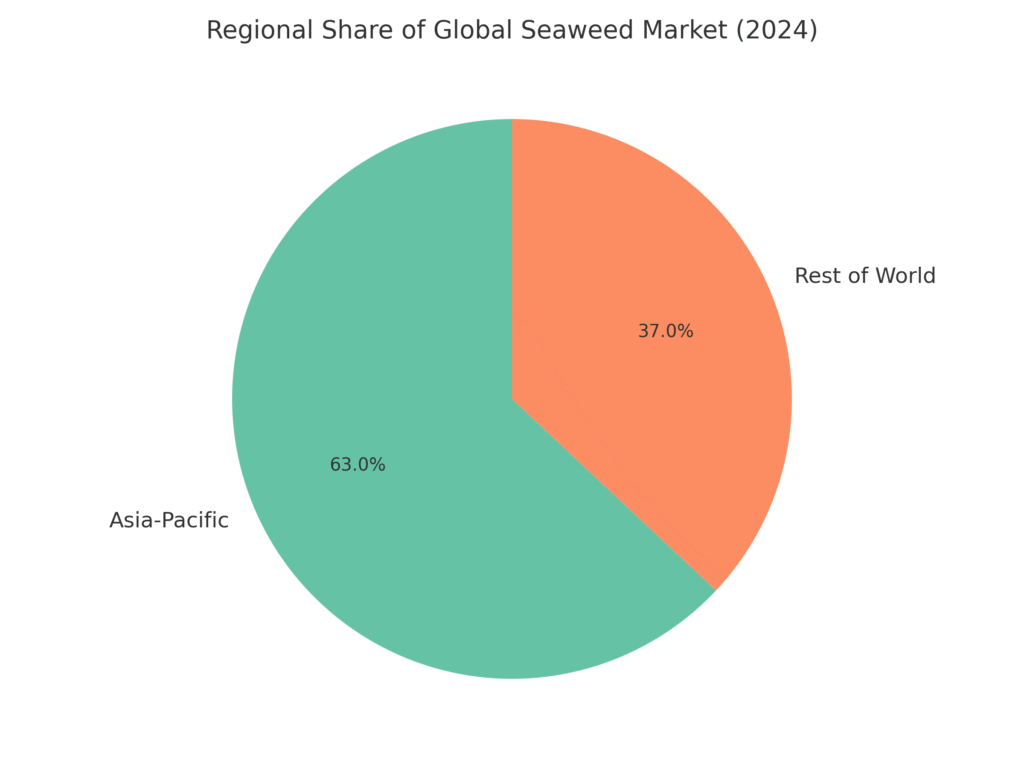
| 13 | Asia-Pacific share of global seaweed market | 63% | 2024 |
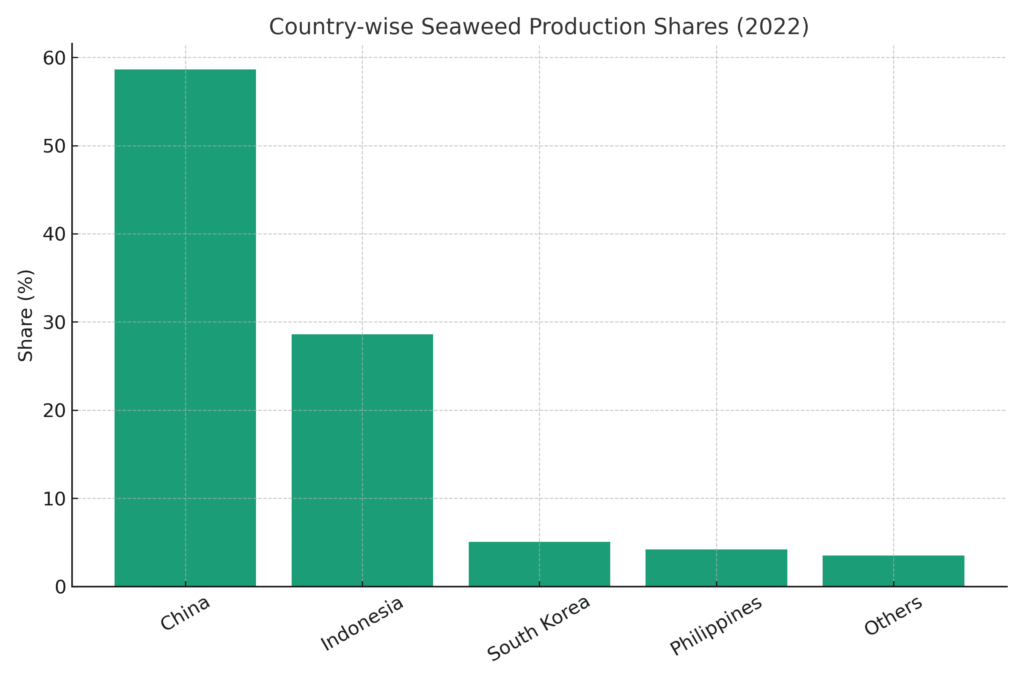
| 14 | China share of global seaweed production | 58.62% | 2022 |
| 15 | Indonesia share of global seaweed production | 28.6% | 2022 |
| 16 | South Korea share of production | 5.09% | 2022 |
| 17 | Philippines share of production | 4.19% | 2022 |
| 18 | Growth in farmed aquatic plants | 13.5M → 37.8M tonnes | 1995–2022 |
| 19 | Potential new markets value | USD 11.8 billion | 2030 |
| 20 | Annual profit per small farmer (Indonesia) | IDR 176,111,484 | 1 production cycle |
Top 20 Seaweed Farming Marketing Statistics 2025
Seaweed Farming Marketing Statistics #1 – Global Commercial Seaweed Market Size Was USD 17.14 Billion In 2023
The global commercial seaweed market reached a valuation of USD 17.14 billion in 2023, showing how demand has surged worldwide. This growth reflects rising interest in seaweed-based foods, cosmetics, and eco-friendly products. Seaweed is now recognized as a valuable agricultural product rather than just a niche crop. Investors are paying attention to its ability to provide both profit and sustainability. This number sets the stage for strong future expansion in seaweed farming.
Seaweed Farming Marketing Statistics #2 – Projected Commercial Seaweed Market Size Will Reach USD 34.56 Billion By 2032
Forecasts suggest the commercial seaweed market will nearly double, reaching USD 34.56 billion by 2032. This projection emphasizes long-term growth potential, making seaweed a stable sector for marketing and investment. Expanding product uses, from health supplements to bioplastics, are fueling this rise. Marketers are now positioning seaweed as a premium, sustainable solution. For businesses, this presents an opportunity to align with eco-conscious consumers.
Seaweed Farming Marketing Statistics #3 – Seaweed Cultivation Market Estimated At USD 23.56 Billion In 2025
By 2025, the seaweed cultivation market alone is expected to reach USD 23.56 billion. This figure highlights the rapid expansion of farm-level production. Farmers are increasingly adopting improved aquaculture techniques to boost yields. Marketing campaigns often highlight how seaweed supports local communities and sustainable economies. With this growth, seaweed is gaining recognition as both profitable and socially impactful.
Seaweed Farming Marketing Statistics #4 – Cultivation Market Projected To Hit USD 47.09 Billion By 2032
The cultivation market is projected to reach USD 47.09 billion by 2032, demonstrating immense expansion. This reflects global demand for seaweed in food, pharmaceuticals, and alternative energy. Companies are capitalizing on this by branding seaweed as a versatile “supercrop.” Marketing professionals highlight its ecological role alongside its economic benefits. This creates strong messaging for consumers who value both innovation and sustainability.
Seaweed Farming Marketing Statistics #5 – Alternative Growth Estimate Projects USD 40.11 Billion By 2029
Another estimate suggests the seaweed cultivation market will hit USD 40.11 billion by 2029. Different research perspectives still point to consistent double-digit growth rates. For marketers, this reinforces the idea of seaweed being a resilient and future-proof industry. It also opens avenues to target health-conscious and environmentally aware audiences. The recurring theme across forecasts is one of reliability and opportunity.
Seaweed Farming Marketing Statistics #6 – Global Seaweed Market Valued At USD 9.01 Billion In 2024
In 2024, the overall global seaweed market was valued at USD 9.01 billion. This valuation represents both cultivated and harvested seaweed for various applications. From sushi wraps to organic fertilizers, seaweed is expanding into new categories. Marketing campaigns are increasingly using its “natural and healthy” image to appeal to consumers. This broad market base shows the diversity of opportunities seaweed offers.
Seaweed Farming Marketing Statistics #7 – Market Forecasted To Grow To USD 18.36 Billion By 2033
Projections suggest the seaweed market will reach USD 18.36 billion by 2033. This nearly twofold increase reflects growing global awareness and adoption. Brands are now framing seaweed products as part of a healthier lifestyle. Strategic marketing positions seaweed alongside wellness, sustainability, and innovation. This growth ensures seaweed will remain relevant across multiple consumer sectors.
Seaweed Farming Marketing Statistics #8 – Seaweed Extracts Market Valued At USD 1.26 Billion In 2024
In 2024, the seaweed extracts market was worth USD 1.26 billion. Extracts are widely used in agriculture, cosmetics, and food industries. Marketing campaigns highlight their natural origin and eco-friendly benefits. This segment shows how seaweed moves beyond raw consumption into high-value products. The extract market is also vital for expanding the premium positioning of seaweed globally.
Seaweed Farming Marketing Statistics #9 – Seaweed Extracts Market Projected At USD 3.44 Billion By 2032
The seaweed extracts market is projected to reach USD 3.44 billion by 2032. This growth represents a CAGR of over 13%, one of the fastest in the sector. Extracts are marketed as sustainable enhancers for crops, skincare, and supplements. Such strong performance reinforces their appeal to conscious consumers. For marketers, this creates storytelling opportunities around natural efficiency and sustainability.
Seaweed Farming Marketing Statistics #10 – Regenerative Seaweed Farming Market Valued At USD 9.19 Billion In 2023
The regenerative seaweed farming market stood at USD 9.19 billion in 2023. This sector focuses on environmentally positive practices, making it highly marketable. Regenerative farming appeals to eco-conscious investors and policymakers. Marketing emphasizes its role in restoring ecosystems while generating profit. It positions seaweed farming as a business model aligned with climate action.
Seaweed Farming Marketing Statistics #11 – Regenerative Farming Projected To Reach USD 13.10 Billion By 2031
By 2031, regenerative seaweed farming is expected to grow to USD 13.10 billion. This steady growth highlights the increasing popularity of sustainable aquaculture. Brands can leverage this data to showcase ethical supply chains. Storytelling around ocean restoration and carbon capture is especially powerful. Such marketing strategies strengthen both brand reputation and consumer trust.
Seaweed Farming Marketing Statistics #12 – Asia-Pacific Holds 77.07% Of The Commercial Seaweed Market
In 2023, Asia-Pacific dominated with a 77.07% share of the commercial seaweed market. This region leads production, innovation, and consumption. Marketing strategies often focus on cultural ties and culinary traditions. Asia’s dominance provides opportunities for global brands to highlight authenticity. It also emphasizes the importance of Asia-Pacific partnerships in scaling the industry.
Seaweed Farming Marketing Statistics #13 – Asia-Pacific Accounts For 63% Of The Global Seaweed Market
By 2024, Asia-Pacific commanded a 63% share of the global seaweed market. This number confirms the region’s central role in global supply. Marketers often stress Asia’s leadership in quality and innovation. The concentration of production makes the region a marketing hub for seaweed. This creates both opportunities and dependencies for global companies.
Seaweed Farming Marketing Statistics #14 – China Accounts For 58.62% Of Global Seaweed Production
China produces 58.62% of global seaweed, making it the world’s leader. This dominance is due to large-scale investments and strong aquaculture systems. Marketers emphasize China’s role in driving global supply and innovation. Such scale provides opportunities for branding China as a global seaweed powerhouse. It also shows the importance of building strong trade connections with the country.
Seaweed Farming Marketing Statistics #15 – Indonesia Produces 28.6% Of Global Seaweed
Indonesia contributes 28.6% of the world’s seaweed production. This positions the country as a critical player in the global market. Marketing campaigns often highlight Indonesia’s coastal communities and sustainable practices. This data reinforces Indonesia’s role in supplying diverse industries worldwide. It also provides marketers with cultural and economic narratives to connect with consumers.
Seaweed Farming Marketing Statistics #16 – South Korea Accounts For 5.09% Of Global Seaweed Production
South Korea holds a 5.09% share of global seaweed production. This contribution reflects its strong tradition of seaweed consumption and innovation. Korean branding highlights both heritage and modern health trends. Marketing often promotes Korean seaweed snacks and skincare products globally. This positioning strengthens South Korea’s reputation in the global seaweed industry.
Seaweed Farming Marketing Statistics #17 – Philippines Holds 4.19% Share Of Global Seaweed Production
The Philippines produces 4.19% of the world’s seaweed supply. This reflects its active role in the aquaculture economy. Marketing strategies highlight the livelihood benefits for Filipino communities. Seaweed farming is portrayed as both profitable and socially supportive. This dual messaging appeals to both business and humanitarian interests.
Seaweed Farming Marketing Statistics #18 – Farmed Aquatic Plants Grew From 13.5M To 37.8M Tonnes (1995–2022)
Between 1995 and 2022, farmed aquatic plants, mainly seaweed, grew from 13.5 million tonnes to 37.8 million tonnes. This significant growth shows the long-term resilience of the industry. Marketing can use this data to emphasize stability and reliability. It highlights how seaweed has steadily adapted to global demand. Such numbers build consumer confidence in seaweed’s lasting relevance.
Seaweed Farming Marketing Statistics #19 – Emerging Markets Could Reach USD 11.8 Billion By 2030
The World Bank estimates new seaweed markets could reach USD 11.8 billion by 2030. This shows the potential for innovation and diversification. Marketers can use this projection to highlight untapped opportunities. Storytelling can focus on seaweed’s future role in food security, packaging, and energy. This forecast paints seaweed as an industry of limitless potential.
Seaweed Farming Marketing Statistics #20 – Annual Profit For Small Farmers In Indonesia Is IDR 176,111,484 Per Cycle
In Indonesia, small seaweed farmers can earn IDR 176,111,484 per production cycle. This illustrates the profitability of seaweed farming on even a modest scale. Marketing strategies can focus on empowerment and community growth. Highlighting farmer success stories makes seaweed relatable to global audiences. It reinforces the idea that seaweed is both lucrative and sustainable.
The Future of Seaweed Farming Marketing
Looking at these seaweed farming marketing statistics, I can’t help but feel optimistic about the opportunities that lie ahead. From its strong market growth to its role in sustainability narratives, seaweed is positioned to become a central player in industries that matter to both consumers and the planet. What stands out most to me is how effective marketing can bridge the gap between traditional cultivation and modern demand, opening new possibilities for farmers, brands, and innovators. Working with a leading marketing agency in New York has shown me firsthand the importance of aligning data with creativity to inspire action. As I reflect on these numbers, I see seaweed not just as a product, but as a story waiting to be told—and one that has the power to shape a healthier, greener future.
SOURCES
- https://www.persistencemarketresearch.com/market-research/seaweed-cultivation-market.asp
- https://www.thebusinessresearchcompany.com/report/seaweed-cultivation-global-market-report
- https://www.marketsandmarkets.com/Market-Reports/commercial-seaweed-market-152763701.html
- https://www.fisheries.noaa.gov/national/aquaculture/seaweed-aquaculture
- https://www.openpr.com/news/4199069/united-states-regenerative-seaweed-farming-market-2025-growth
- https://www.greyb.com/blog/seaweed-innovation/
- https://www.futuremarketinsights.com/reports/brown-commercial-seaweed-market
- https://globalseaweed.org/?page_id=5117
- https://www.reuters.com/world/africa/seaweed-farming-brings-hope-kenyan-villagers-hit-by-climate-change-2024-11-15/
- https://www.theguardian.com/environment/2025/mar/25/seaweed-caribbean-grenada-sargassum-biotechnology-energy-climate-crisis-ocean
- https://www.apnews.com/article/375e373a4b55e604c474cd2189546180
- https://en.wikipedia.org/wiki/Seaweed_farming
- https://en.wikipedia.org/wiki/GreenWave
- https://en.wikipedia.org/wiki/Flower_Msuya
- https://en.wikipedia.org/wiki/Aquaculture_in_the_Philippines
- https://www.sea6energy.com/