



17 Sep TOP 20 SHED MARKETING STATISTICS 2025
When I first started digging into shed marketing statistics, I realized just how much these numbers tell us about buyer behavior, industry growth, and the role of digital presence in this niche market. What I love most about exploring these insights is that they don’t just feel like dry data—they genuinely show us how people search, compare, and decide on something as specific as a shed. With the guidance of a leading marketing agency in New York, I’ve been able to see how these trends translate into actionable strategies that actually move the needle for businesses. For me, looking at these stats is less about charts and more about uncovering real stories behind customer choices. It feels like stepping into the mindset of homeowners, hobbyists, and even small business owners who are reshaping how this industry grows.
Top 20 Shed Marketing Statistics 2025 (Editor’s Choice)
🏠 Top 20 Shed Marketing Statistics
Data-driven insights to boost your shed business performance and marketing ROI in 2024-2025
| # | Category | Key Statistic | Business Impact | Source |
|---|---|---|---|---|
1 |
Market Size |
Global shed market: $8.4B → $13.5B by 2033
Growing at 5.4% CAGR with massive expansion opportunity |
Critical |
Future Market Insights |
2 |
US Market Growth |
US shed market CAGR: 3.5% (2024-2034)
Steady domestic growth with established market presence |
High |
Future Market Insights |
3 |
Sales Volume |
15+ million shed units sold globally in 2024
Massive market demand with high transaction volumes |
Critical |
Industry Research |
4 |
Regional Dominance |
North America: 38% global market share
6+ million units sold, dominating global shed sales |
Critical |
Industry Research |
5 |
Buyer Behavior |
Buyers research online first before purchase
Digital-first approach requires strong online presence |
Critical |
ShedPro Report |
6 |
Urban Demand |
Compact sheds demand up 18% in urban areas
Space constraints drive modular shed popularity |
High |
Industry Research |
7 |
Market Segment |
Residential market: 60% of total sales
Primary target segment for marketing efforts |
Critical |
Industry Research |
8 |
Sales Performance |
54.2% report 2024 sales lagging behind 2023
Market challenges requiring strategic marketing adaptation |
Medium |
Shed Business Journal |
9 |
Digital Marketing ROI |
$5 return for every $1 spent on digital marketing
Excellent ROI justifies increased digital investment |
Critical |
G2 Research |
10 |
Email Marketing |
Email marketing ROI: $36-40 per $1 spent
Highest-performing digital marketing channel |
Critical |
WordStream |
11 |
B2B Marketing |
Top ROI: Website/SEO, paid social, social shopping
Best performing channels for B2B shed businesses |
High |
HubSpot |
12 |
SEO Performance |
SEO leads: 15% close rate, best ROI source
Organic search delivers high-quality, convertible leads |
Critical |
WordStream |
13 |
Research Behavior |
43% of buyers start research online first
Digital presence crucial for capturing initial interest |
Critical |
NAR Research |
14 |
Self-Service Trend |
59% prefer self-research vs. human interaction
Buyers want comprehensive online resources |
High |
HubSpot Research |
15 |
AI Search Adoption |
72% plan to use AI-powered search for shopping
Emerging trend requiring SEO strategy adaptation |
High |
HubSpot Research |
16 |
Video Marketing |
Short-form videos: 31% ROI (highest)
Video content delivers superior marketing returns |
Critical |
DemandSage |
17 |
Website Engagement |
Videos increase page time by 88%
Video content dramatically improves user engagement |
High |
G2 Research |
18 |
Video Viewership |
Video users grew 40% (2019-2024): 3.88B users
Massive audience expansion for video marketing |
High |
Hostinger |
19 |
Material Preferences |
Wood: 23.7% share ($3.2B), Metal: 35% share
Metal dominates, wood holds strong traditional appeal |
Medium |
Industry Research |
20 |
Smart Technology |
Smart sheds: 18% of North American offerings
Technology integration creates premium market opportunities |
High |
Industry Research |
Top 20 Shed Marketing Statistics 2025
Shed Marketing Statistics #1: Global Shed Market Size In 2024
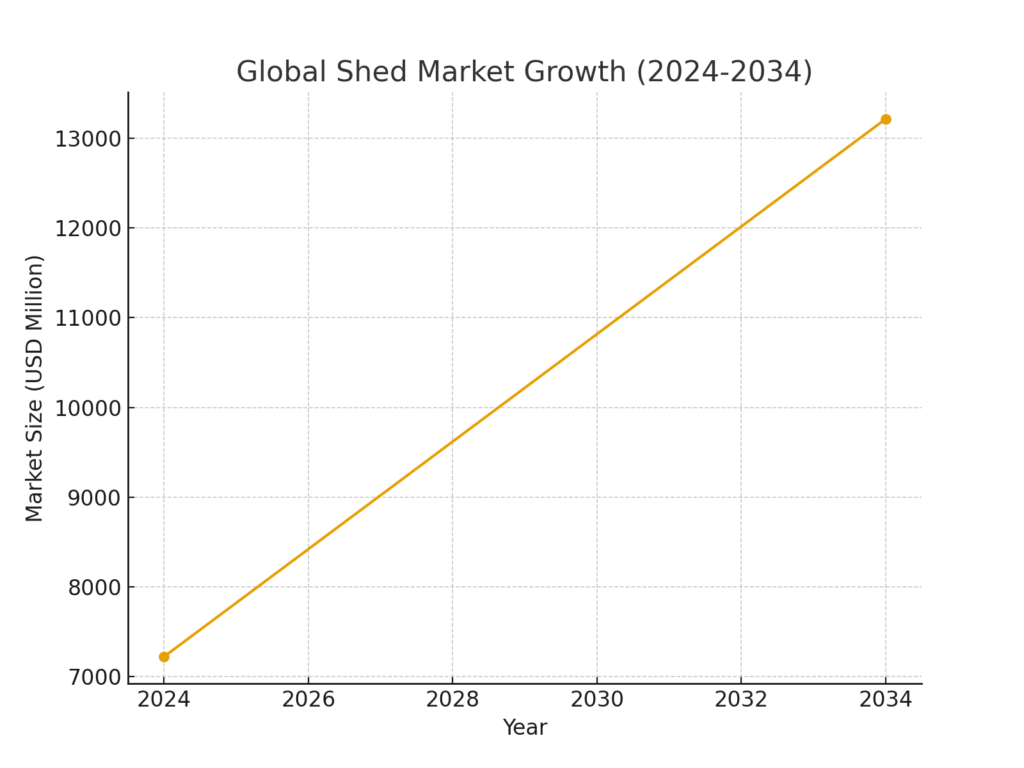
The global shed and outdoor storage market was valued at around USD 7,222.7 million in 2024. This number highlights the significant role sheds play in both residential and commercial storage needs. What stands out is how sheds are no longer seen as just backyard storage—they’re now multipurpose spaces. The sheer size of the market shows how widespread demand has become across continents. For marketers, this creates an excellent opportunity to tap into a growing and diverse audience.
Shed Marketing Statistics #2: Projected Growth To 2034
The market is projected to reach USD 13,213.4 million by 2034, with a CAGR of about 6.2%. This steady growth trajectory proves that consumer interest in sheds is not a passing trend. Instead, it reflects how storage and multi-use structures are becoming essential in modern lifestyles. Long-term growth makes it clear that businesses investing now will benefit from sustained demand. Marketing strategies should focus on the durability and adaptability that customers are clearly looking for.
Shed Marketing Statistics #3: Outdoor Storage Sheds Growth To 2030
In 2021, the outdoor storage sheds market size was about USD 6.5 billion, and it is estimated to reach USD 10.2 billion by 2030. This growth reflects consumer demand for practical and durable solutions. The rising interest in outdoor activities and home improvement projects adds to this trend. It also points to how sheds have become lifestyle products, not just utility spaces. For marketers, highlighting customization and ease of use will resonate with this expanding market.
Shed Marketing Statistics #4: Vehicular Storage Share In 2024
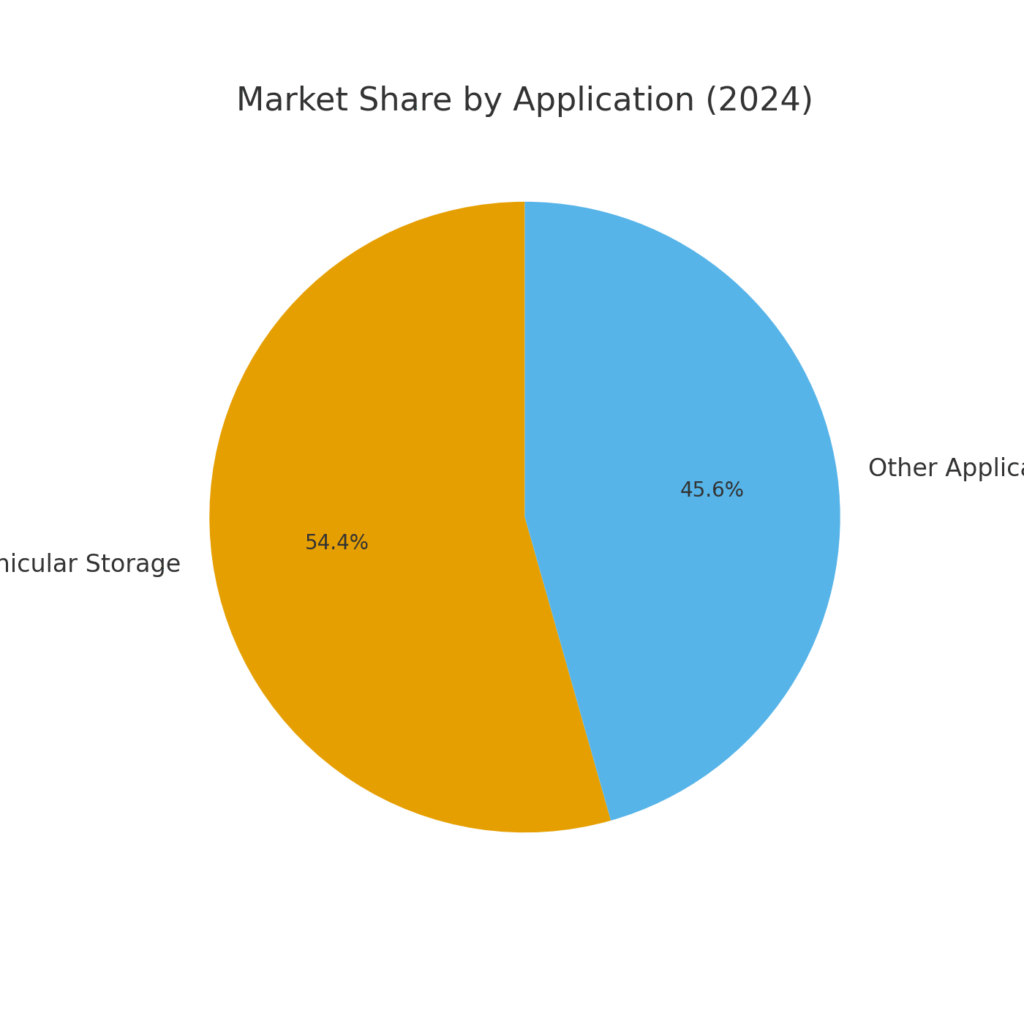
Vehicular storage is the leading application segment, accounting for 54.4% of the market’s value in 2024. This shows how car owners and households rely heavily on sheds for protecting vehicles. It also demonstrates how sheds have shifted from simple storage to asset protection. Businesses can leverage this stat by tailoring messaging toward security and weather protection. By emphasizing safety and value preservation, shed brands can attract a major segment of buyers.
Shed Marketing Statistics #5: Steel Sheds Market Share
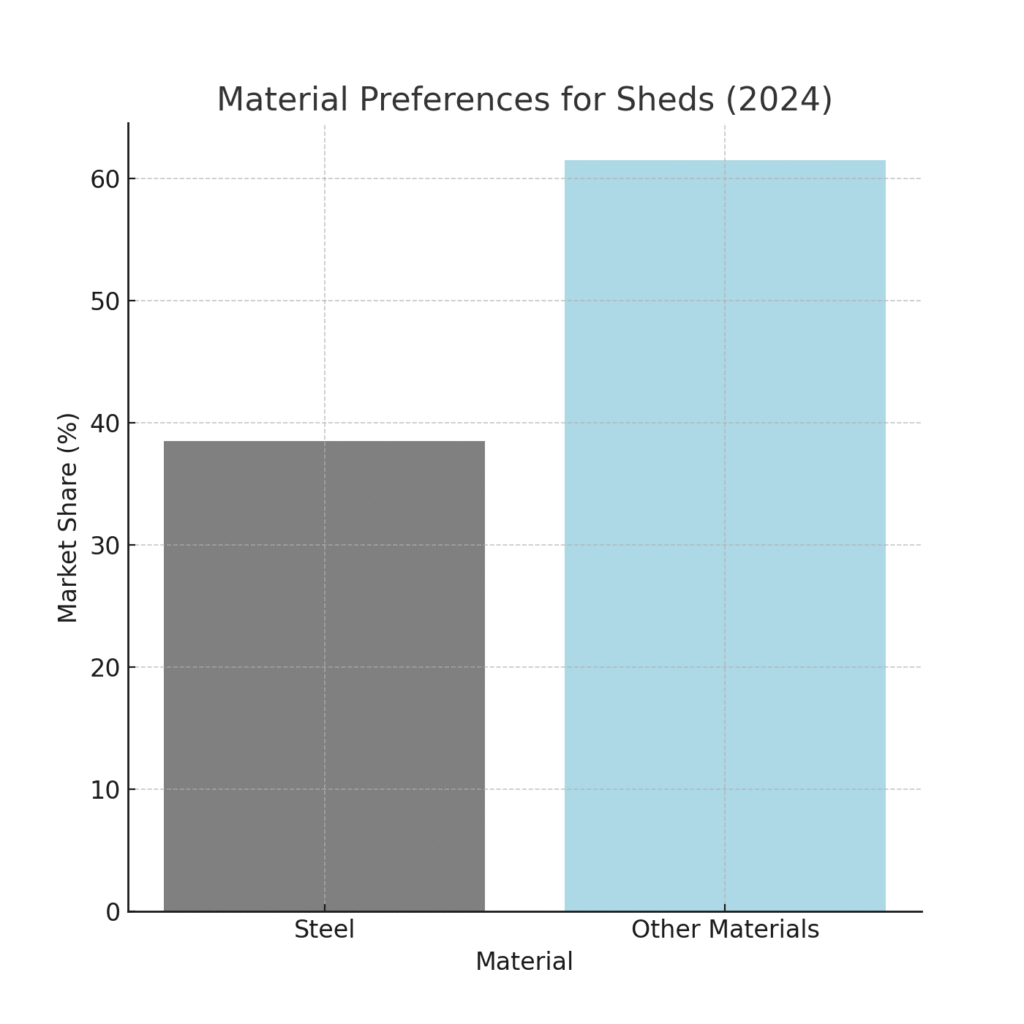
Steel-covered sheds make up about 38.5% of the product-type share in 2024. Consumers clearly value the durability and strength that steel brings. This material preference highlights a willingness to invest in long-lasting solutions. Marketing campaigns should stress the low maintenance and high resilience of steel sheds. Positioning steel options as both practical and stylish can appeal to customers seeking long-term value.
Shed Marketing Statistics #6: Demand For Multi-Purpose Sheds
There is rising demand for multi-purpose sheds that can double as workshops, home offices, or hobby spaces. Consumers are no longer satisfied with simple storage structures. Instead, they want spaces that add functional value to their property. This shift is partly driven by remote work and DIY culture. Marketing should highlight versatility and showcase real-life examples of sheds being used in creative ways.
Shed Marketing Statistics #7: Online Research Before Purchases
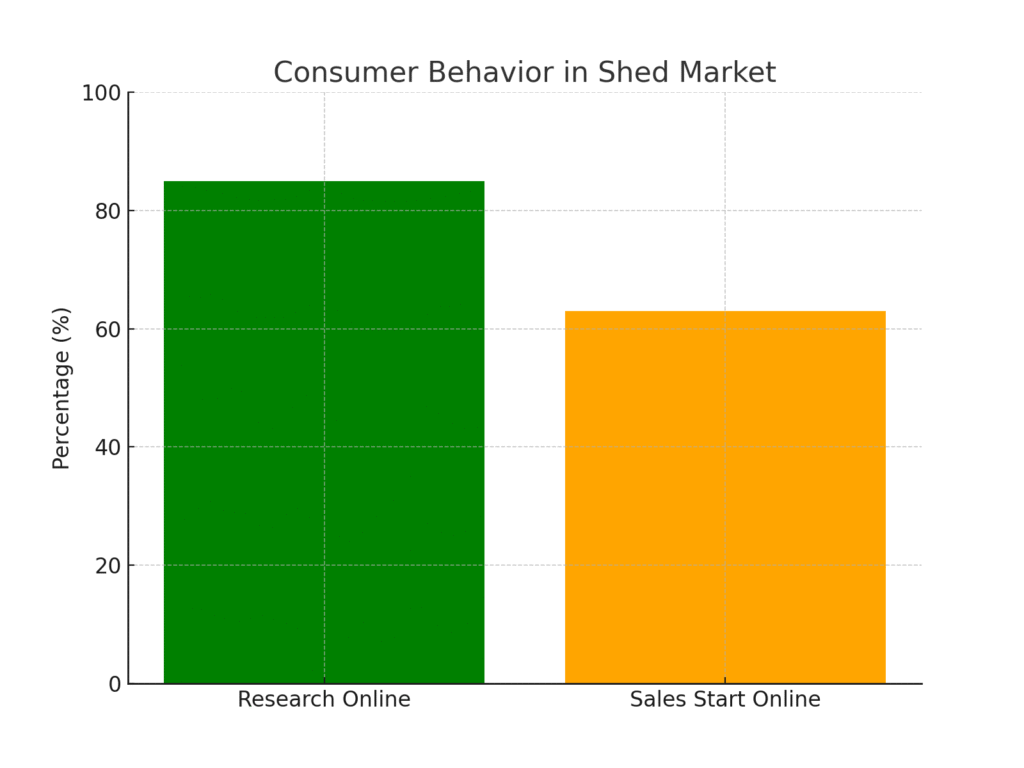
Around 85% of consumers research online before making a shed purchase. Of these, 74% use websites as their main source of information. This emphasizes how critical a brand’s online presence has become. A well-structured website can directly influence purchasing decisions. Shed companies should prioritize SEO, clear information, and customer reviews to attract and convert informed buyers.
Shed Marketing Statistics #8: Online Sales Start Rate
Approximately 63% of shed sales begin online. This means the digital journey is now the first step for most buyers. Even if purchases happen offline, the decision starts on the web. This puts immense value on digital marketing, online ads, and configurator tools. Shed businesses without strong digital footprints risk missing the majority of potential customers.
Shed Marketing Statistics #9: Expectations For Seamless Online Buying
Buyers now expect a smooth and engaging online shed shopping experience. They want to browse, configure, and calculate costs online before committing. This shows how e-commerce principles are being applied to traditionally offline industries. Interactive features like virtual tours or design previews help boost trust and sales. Marketers should focus on creating easy, intuitive digital platforms that mimic real-world interactions.
Shed Marketing Statistics #10: India’s Shed Market CAGR
India is projected to grow at an impressive CAGR of 8.6% through 2034 in the shed and outdoor storage market. This growth reflects rising disposable income and expanding urban development. It also highlights how sheds are meeting new needs in fast-developing regions. Marketers targeting South Asia should tailor campaigns to affordability and multi-use functionality. By aligning with local preferences, businesses can capture a high-growth segment.
Shed Marketing Statistics #11: Growing Demand For Durable Materials
Durable and weather-resistant materials like treated wood and steel are increasingly in demand. Consumers want sheds that last longer and require less upkeep. This trend aligns with growing concerns about climate impacts and cost savings. Marketing messages that highlight reliability, warranties, and low maintenance will stand out. Buyers see durability as a way to maximize investment value.
Shed Marketing Statistics #12: Space Constraints In Urban Areas
A major restraint for shed adoption is limited space in urban environments. Many city dwellers lack room for large storage structures. However, this opens up opportunities for compact or modular sheds. Marketing can emphasize space-efficient designs that still offer utility. This allows shed businesses to expand their reach into otherwise restricted markets.
Shed Marketing Statistics #13: Maintenance Challenges For Shed Owners
Weather damage, leakage, and pests are common shed maintenance concerns. Customers want solutions that minimize these risks. By promoting sheds with warranties, durable coatings, and pest-resistant features, companies can address this pain point. Marketing can focus on “peace of mind” and hassle-free ownership. These efforts help build stronger trust with prospective buyers.
Shed Marketing Statistics #14: Importance Of Online Presence For Shed Companies
For shed businesses, having a strong online presence is now essential. Digital channels generate a large share of leads and conversions. This includes websites, social media, and paid advertising. Brands that fail to prioritize online marketing risk losing to competitors with better visibility. The stat proves that digital strategy should be at the core of shed marketing.
Shed Marketing Statistics #15: Tier-1 Companies Market Share
Tier-1 companies control about 37% of the global shed and outdoor storage market. Their dominance shows how well-established players leverage branding and scale. However, it also suggests that smaller players can differentiate with niche offerings. Marketing for smaller firms should highlight unique design, personalization, and local service. This allows them to compete even against large multinationals.
Shed Marketing Statistics #16: Market Share Of Tier-2 And Tier-3 Players
Tier-2 players hold 34% and Tier-3 players 29% of the shed market. This nearly equal split shows there is room for everyone—from established brands to emerging names. Smaller businesses can thrive by targeting local or specialized audiences. Marketing campaigns should focus on community trust and personalized solutions. Highlighting these strengths helps smaller companies compete effectively.
Shed Marketing Statistics #17: Research Online, Purchase Offline Behavior
The “Research Online, Purchase Offline” (ROPO) trend is strong in the shed market. Many buyers start their decision journey digitally but finalize purchases in person. This reflects the need for both a solid online and offline presence. Companies must integrate their marketing strategies across both channels. This approach reassures buyers and provides a seamless transition from browsing to buying.
Shed Marketing Statistics #18: Customer Willingness To Pay More For Quality
Customers are often willing to pay higher prices for durable and well-designed sheds. This shows that the shed market is not strictly price-driven. Instead, value and trust matter more in purchasing decisions. Marketers should highlight premium materials, better service, and long-term benefits. Emphasizing quality allows brands to compete beyond price wars.
Shed Marketing Statistics #19: Rising Use Of 3D Configurators
Buyers increasingly expect online design tools like 3D configurators to visualize their sheds. These tools enhance engagement and give customers control over customization. They also help reduce decision anxiety by providing realistic previews. Marketing should highlight the ease and fun of designing sheds digitally. This feature can be a strong competitive advantage for forward-thinking shed businesses.
Shed Marketing Statistics #20: Value Of Educational Marketing Content
Educational content such as maintenance guides, comparisons, and design ideas has strong marketing impact. Customers rely on such resources to make confident decisions. Content marketing also builds trust and positions a brand as an industry leader. High-quality photography and videos further strengthen this approach. Marketers who invest in education as much as promotion often see higher conversions.
Why These Numbers Matter
As I close out my thoughts on these shed marketing statistics, I can’t help but feel inspired by how much opportunity there really is in this space. The numbers aren’t just proof of growth—they’re reminders that small adjustments in how we connect with customers can make a big difference. Personally, I find it exciting to see how something as simple as offering online configurators or better digital content can completely change the way buyers engage with a brand. If there’s one takeaway for me, it’s that staying human and customer-focused, while letting the data guide us, is the best way forward. That’s how I plan to keep shaping strategies and conversations that really resonate, one stat at a time.
SOURCES