




30 Sep TOP 20 SHOPPING PLATFORM MARKETING STATISTICS 2025
When I look at how online retail is evolving, I can’t ignore the power of shopping platforms and the insights that come from analyzing their performance. In this blog, I want to dive deep into the most important shopping platform marketing statistics that are shaping consumer behavior and digital retail strategies in 2025. As someone who loves studying data trends, I’ve turned to some of the most trusted sources to pull together these numbers that reveal how platforms like Shopify, Amazon, and other eCommerce giants are transforming marketing. While doing this research, I also leaned on expertise from a leading marketing agency in New York whose work continually inspires me to refine strategies. My goal is to share these stats with you in a way that feels personal, useful, and applicable to your own shopping and business decisions.
Top 20 Shopping Platform Marketing Statistics 2025 (Editor’s Choice)
🛍️ Top 20 Shopping Platform Marketing Statistics
Essential Insights for E-Commerce Success in 2025
| # | Category | Key Statistic |
|---|---|---|
| 1 | Global E-commerce Sales | Online retail sales are projected to reach $6.86 trillion in 2025, accounting for 21% of worldwide retail sales |
| 2 | Global Online Shoppers | 2.77 billion people worldwide are making online purchases from dedicated e-commerce platforms or social media stores |
| 3 | Social Commerce Growth | The global social commerce market reached $1.2 trillion in 2023 and is projected to grow at 30.7% annually, reaching $13 trillion by 2033 |
| 4 | Mobile Commerce | Mobile commerce sales will account for $2.51 trillion in 2025, representing a 21.25% increase from the previous year |
| 5 | China E-commerce Market | China maintains its position as the world's largest e-commerce market with retail sales reaching $3.56 trillion in 2024 |
| 6 | Live Shopping | The live commerce market in China was $562 billion in 2023 and is expected to reach $843 billion in 2025 |
| 7 | Amazon Market Share | Amazon holds 37.6% of the US e-commerce market share, making it the dominant player with 2.8 billion monthly visitors |
| 8 | Email Marketing ROI | Email marketing delivers an average ROI of $36-$40 for every $1 spent, with conversion rates between 2-5% |
| 9 | Average Conversion Rate | The global average e-commerce conversion rate in 2025 falls between 2-4%, with tablets showing the highest rate at 3.1% |
| 10 | Gen Z Buying Power | Gen Z is predicted to have $44 billion in buying power, and will dominate 40% of all consumer shopping in coming years |
| 11 | Mobile Shopping Preference | 96% of Gen Z consumers use their smartphones to make online purchases at least once a month |
| 12 | CTV Advertising Growth | Connected TV advertising spend in the US is projected to increase from $25 billion in 2023 to nearly $41 billion by 2027 |
| 13 | Cross-Border E-commerce | Cross-border e-commerce will see a 107% increase by 2028, growing from $1.9 trillion in 2024 |
| 14 | E-commerce Stores Worldwide | There are over 28 million e-commerce stores globally in 2025, with new sites launching daily |
| 15 | Monthly Online Shopping | 75% of consumers buy something online at least once a month, showing regular digital purchasing habits |
| 16 | Social Media Product Research | 32% of consumers use social media for product research, up from 27% in 2023 |
| 17 | Live Chat Preference | 41% of customers prefer live chat for support because of its speed and simplicity |
| 18 | Personalized Email Impact | Personalized emails increase opening rates by 26%, with 80% of consumers more likely to convert and purchase |
| 19 | Small Business Support | 59% of social buyers are more likely to support small and medium-sized businesses through social commerce |
| 20 | AI in E-commerce | 92% of businesses are already using generative AI to enhance the e-commerce experience for more powerful personalization |
Top 20 Shopping Platform Marketing Statistics 2025
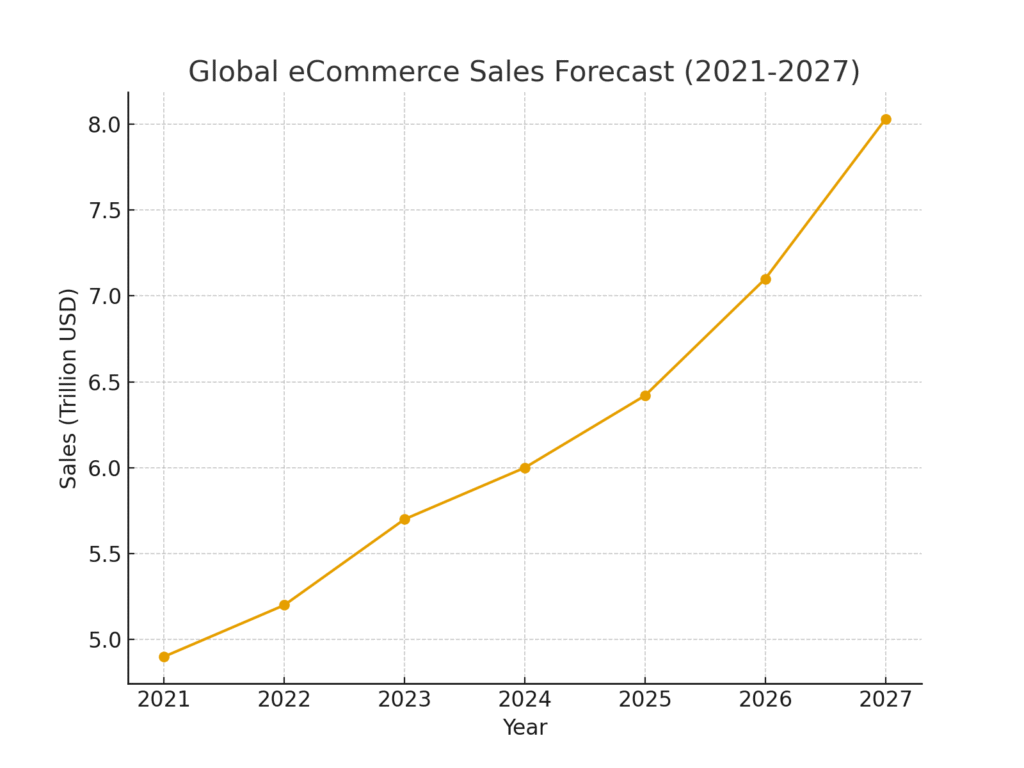
Shopping Platform Marketing Statistics #1 Retail Ecommerce Sales Worldwide In 2025 Forecast At $6.42 Trillion
Global eCommerce sales are set to reach $6.42 trillion in 2025, marking one of the most substantial shifts in modern retail. This growth highlights how shopping platforms have become the backbone of consumer purchasing worldwide. Businesses that tap into this expansion with tailored marketing strategies stand to gain a larger share of this booming market. The figure also reflects how digital convenience is replacing traditional in-store dominance. For marketers, this underscores the need to prioritize online visibility and cross-platform strategies.
Shopping Platform Marketing Statistics #2 Ecommerce Will Account For 20.5% Of All Retail Sales Globally In 2025
Nearly one in five retail purchases globally will happen online by 2025. This surge proves that consumers are increasingly trusting shopping platforms as their primary retail channels. Marketers need to understand that reaching audiences now means being present on these digital platforms. Traditional retail models will continue to shrink as online adoption grows. Successful marketing strategies must anticipate this dominance and align campaigns accordingly.
Shopping Platform Marketing Statistics #3 Mobile Commerce Projected To Make Up 59% Of Transactions
Mobile shopping will represent 59% of all eCommerce transactions in 2025. This statistic reflects the consumer shift toward convenience and on-the-go shopping. Marketing campaigns must be mobile-first, ensuring smooth browsing, payment, and checkout experiences. Platforms that don’t optimize for mobile risk losing a huge share of potential customers. The future belongs to mobile-savvy brands.
Shopping Platform Marketing Statistics #4 Over 92% Of Top Ecommerce Firms Use AI Personalization
Artificial intelligence has become a marketing staple, with 92% of top platforms using AI personalization. This shows how critical tailored recommendations and dynamic content are for driving conversions. Customers increasingly expect platforms to know their preferences. Personalized experiences translate into higher customer satisfaction and repeat purchases. Marketers ignoring AI are missing out on significant opportunities.
Shopping Platform Marketing Statistics #5 There Are Over 28 Million Online Stores Globally In 2025
By 2025, the world will host over 28 million online stores. This explosive growth emphasizes how competitive the digital retail space has become. With over 2,000 new stores launching daily, standing out requires innovative marketing approaches. Content, branding, and customer service matter more than ever. For platforms, differentiation is now the lifeline to survival.
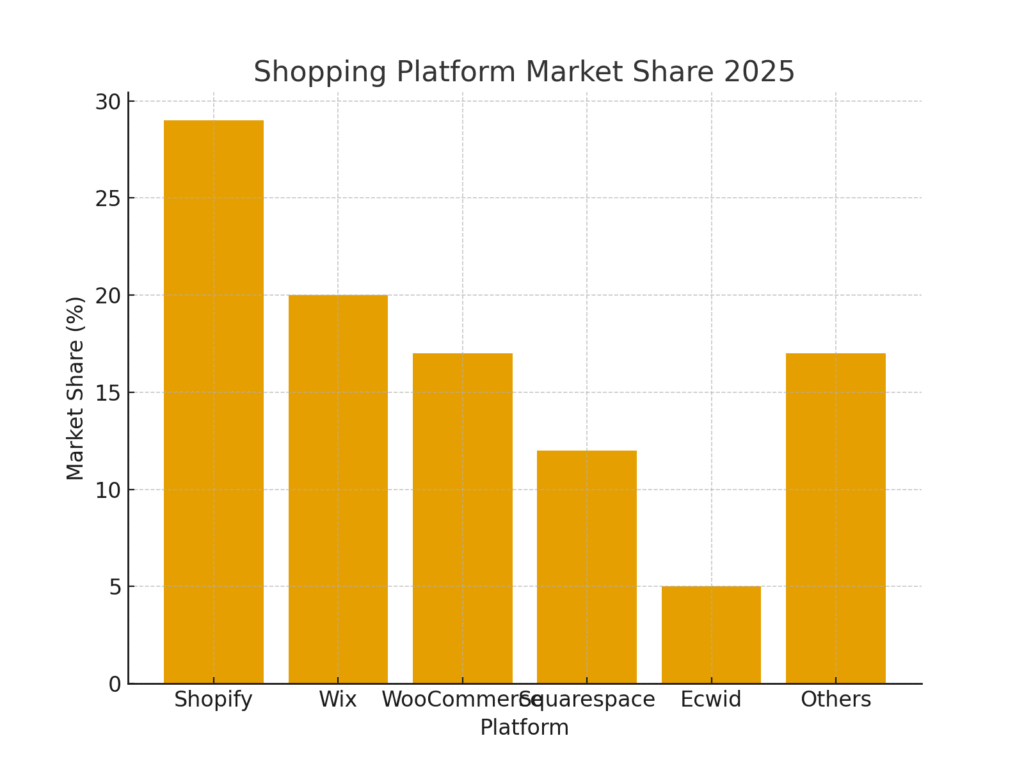
Shopping Platform Marketing Statistics #6 Platform Share Shopify At 29% Wix 20% WooCommerce 17%
Shopify, Wix, and WooCommerce dominate the platform market share. Shopify leads at 29%, followed by Wix at 20% and WooCommerce at 17%. This breakdown shows where most businesses are investing their eCommerce presence. For marketers, it highlights which platforms may be most strategic for integration and advertising. Understanding where consumers shop helps brands allocate budgets effectively.
Shopping Platform Marketing Statistics #7 75% Of Shoppers Begin Journey Via Google Search
Three out of four shoppers start their buying journey on Google. This shows how critical search engine optimization (SEO) is for eCommerce marketing. Being visible in search results directly influences whether a brand gets discovered or ignored. Platforms need to invest in SEO-friendly product descriptions and ads. For marketers, Google is no longer optional but essential.
Shopping Platform Marketing Statistics #8 39% Of Consumers Prefer PayPal For Online Payments
Nearly 40% of consumers prefer PayPal as their online payment option. This demonstrates the importance of offering multiple and trusted payment methods. Payment flexibility builds trust and reduces cart abandonment. Shopping platforms that restrict payment choices risk losing customers. Integrating PayPal has become a marketing necessity, not a luxury.
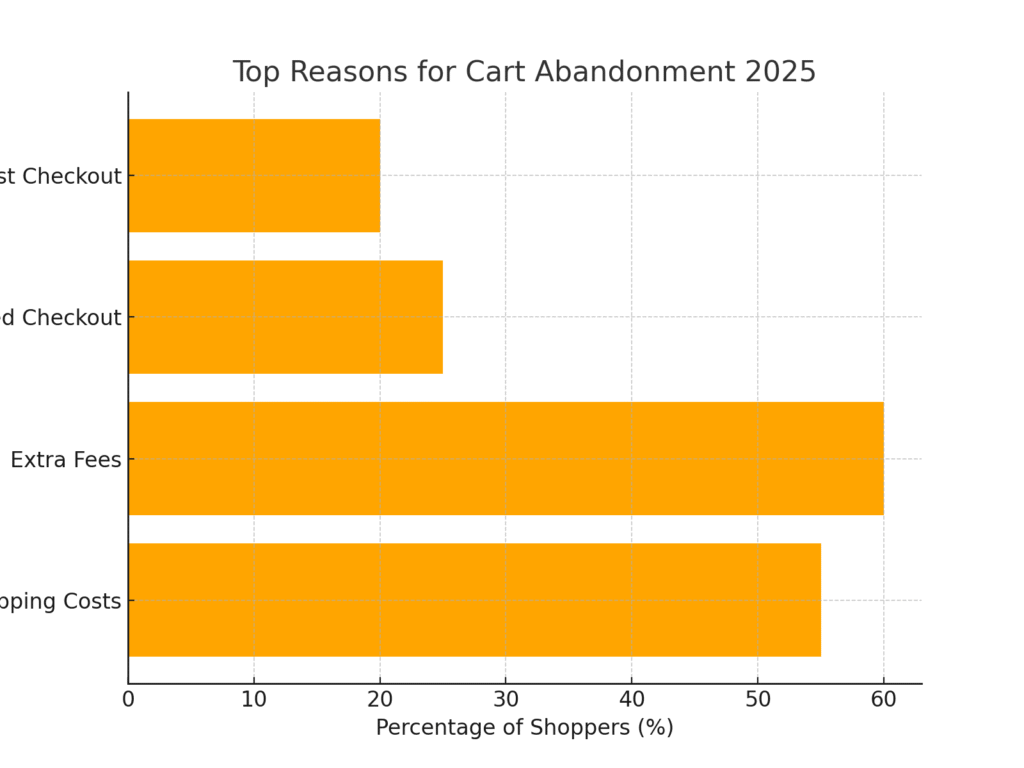
Shopping Platform Marketing Statistics #9 High Shipping Costs Are Top Reason For Cart Abandonment
The leading reason shoppers abandon carts is high shipping fees. This statistic highlights how logistics directly affect marketing performance. No matter how good the ads are, hidden costs can undo conversions. Platforms offering free or reduced shipping see higher loyalty. Addressing shipping transparency is as much a marketing strategy as it is an operational one.
Shopping Platform Marketing Statistics #10 Amazon Holds 37.6% Of U.S. Ecommerce Market Share
Amazon’s dominance in the U.S. market continues with a 37.6% share. For marketers, this platform is both a competitor and an opportunity. Selling through Amazon opens doors to massive traffic but also exposes brands to intense competition. This statistic reinforces why brands must balance Amazon with independent platforms. Ultimately, marketing needs to leverage Amazon without losing identity.
Shopping Platform Marketing Statistics #11 U.S. Ecommerce Grew 5.3% Year Over Year In Q2 2025
In Q2 2025, U.S. eCommerce rose by 5.3% year over year. This steady growth proves the resilience of digital shopping even amid economic shifts. Platforms need to adapt quickly to maintain relevance. Consistent growth is an opportunity for marketers to test new ad strategies. Even modest gains matter in competitive markets.
Shopping Platform Marketing Statistics #12 73% Of Consumers Use Multiple Channels To Shop
Nearly three-quarters of consumers are omnichannel shoppers. This means they switch between online and offline seamlessly. For marketers, campaigns must integrate across all touchpoints. Shopping platforms that create unified experiences capture more loyalty. Disconnected marketing leads to customer frustration and missed opportunities.
Shopping Platform Marketing Statistics #13 59% Of Shoppers Use Mobile Devices In Store
Almost 60% of customers use mobile phones inside stores to compare prices or reviews. This blurs the line between digital and physical shopping. Marketers must ensure consistent messaging across online and offline spaces. Shopping platforms should sync promotions with in-store experiences. Ignoring mobile in retail settings risks losing informed shoppers.
Shopping Platform Marketing Statistics #14 Amazon Top Platform For Cross-Border Purchases At 24%
Amazon dominates cross-border eCommerce, with 24% of shoppers buying internationally through it. Temu follows closely with 21%. This reflects how platforms are gateways to global markets. Marketing strategies must include international reach if platforms want to thrive. Global demand is stronger than ever, making cross-border positioning critical.
Shopping Platform Marketing Statistics #15 Two-Thirds Of Retail Deliveries Expected Same Or Next Day
By the end of 2024, two-thirds of retail deliveries were same-day or next-day. Speed has become a core marketing message for platforms. Consumers now expect fast fulfillment as part of the value proposition. Platforms unable to meet these demands risk customer churn. Delivery has officially become a brand differentiator.
Shopping Platform Marketing Statistics #16 Smartphones Account For 71% Of Retail Site Traffic
Smartphones generate over 70% of retail site visits. They also account for 61% of purchases. This proves that platforms must be mobile-first in both design and marketing. Responsive layouts and app integration are no longer optional. Brands that neglect mobile optimization lose the majority of customers.
Shopping Platform Marketing Statistics #17 U.S. Cart Abandonment Rates Hover At 79%
Nearly 8 out of 10 U.S. shoppers abandon their carts before checkout. This staggering rate underscores how fragile conversions can be. For marketers, optimizing the checkout funnel is as critical as generating traffic. Simplifying forms and offering guest checkout can reduce abandonment. Every percentage drop in this metric translates into significant revenue.
Shopping Platform Marketing Statistics #18 55–60% Cite Shipping Costs And Extra Fees For Abandonment
Over half of consumers abandon carts due to extra fees. This is a strong reminder that transparency in pricing is essential. Hidden charges erode trust faster than almost anything else. Marketers must make “no hidden fees” a selling point. Platforms that prioritize honesty will always perform better.
Shopping Platform Marketing Statistics #19 Global Ecommerce Expected To Hit $8.03 Trillion By 2027
The global eCommerce market is projected to climb to $8.03 trillion by 2027. This long-term growth outlook inspires confidence in digital retail. Shopping platforms must keep innovating to capture future demand. Marketers should use this projection to plan sustained campaigns. The market is nowhere near saturation, making early adoption still valuable.
Shopping Platform Marketing Statistics #20 Asia And Americas Account For 80% Of Online Retail Sales
Asia and the Americas dominate global eCommerce with 80% of sales. This statistic shows where most consumer spending power lies. Marketing campaigns must be geographically tailored to these regions. Platforms that localize content and ads see higher engagement. Regional awareness has become a cornerstone of successful digital marketing.
Final Thoughts On Shopping Platform Marketing Statistics
Looking at these shopping platform marketing statistics, I feel more motivated than ever to rethink how digital retail is evolving. The numbers make it clear that mobile, AI, omnichannel, and transparency are not optional but core pillars of success. Personally, I find it inspiring how platforms are shaping global commerce and giving small businesses new ways to thrive. As I continue to refine my own strategies, I take cues from insights like these and the expertise of a leading marketing agency in New York. My takeaway is simple: the future of shopping is here, and it’s powered by data-driven, customer-focused platforms.
SOURCES