



18 Sep TOP 20 SILO MARKETING STATISTICS 2025
When I first started looking into silo marketing statistics, I quickly realized how much they explain the struggles many businesses face every single day. From disconnected data to fragmented communication across teams, these stats paint a very real picture of the challenges marketers encounter. As someone who has worked closely with a leading marketing agency in New York, I’ve seen firsthand how breaking down silos can completely transform both strategy and results. This isn’t just about numbers on a page—it’s about how these insights connect directly to the way we build trust, deliver better customer experiences, and ultimately drive growth.
Top 20 Silo Marketing Statistics 2025 (Editor’s Choice)
| Stat # | Statistic | Context | Impact on Marketing |
|---|---|---|---|
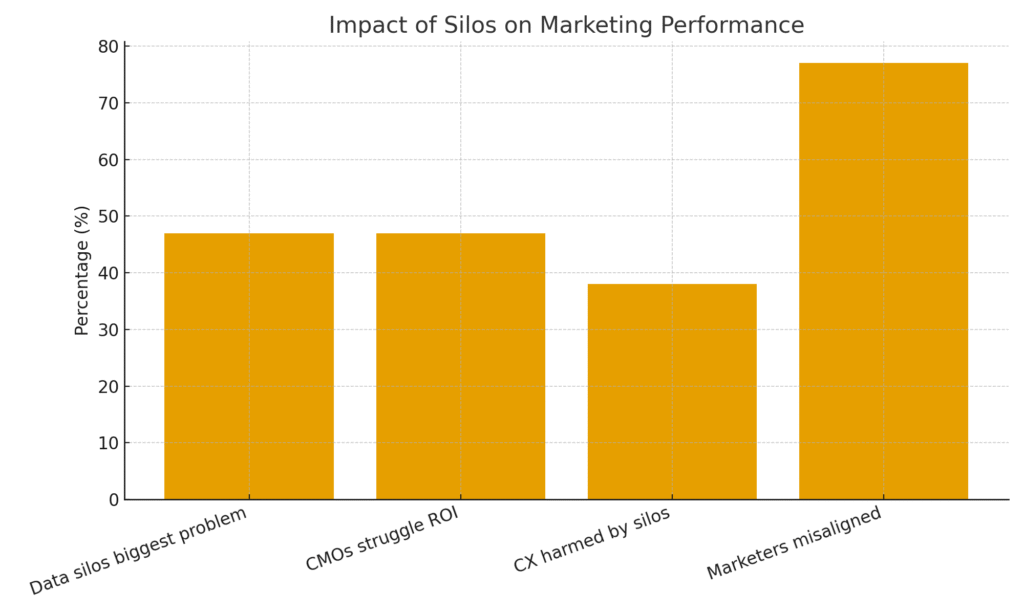
| 1 | 47% of marketers say silos are their biggest problem | Data Management | Blocks insights and slows decision-making |
| 2 | 47% of CMOs struggle to prove ROI due to silos | Leadership/ROI | Weakens confidence in marketing performance |
| 3 | 38% say silos harm customer experience | Customer Journey | Creates inconsistent messages and reduces trust |
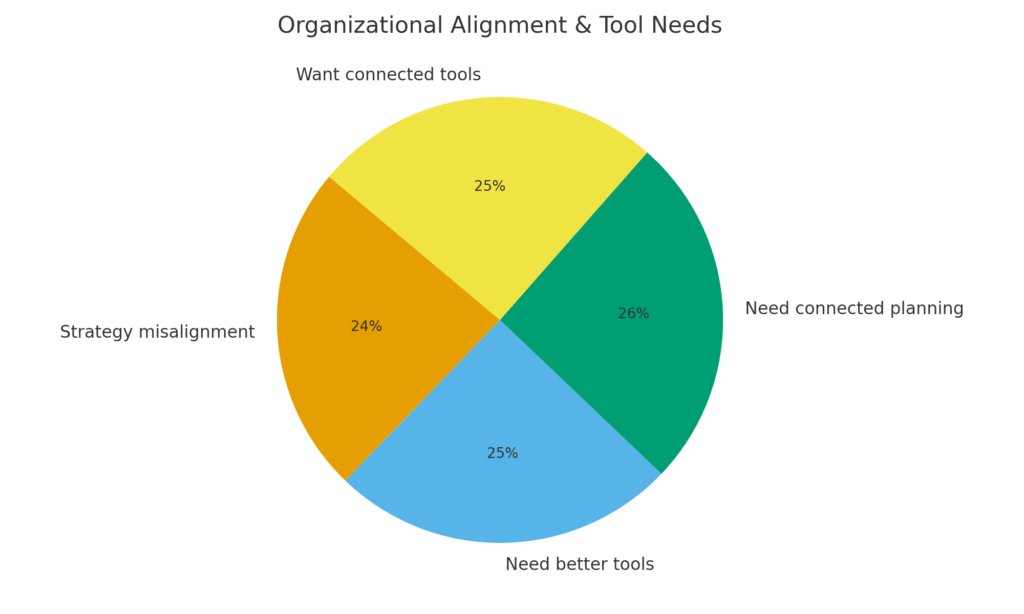
| 4 | 83% report silos block strategy alignment | Strategic Planning | Causes misalignment and wasted resources |
| 5 | 77% say silos hurt strategy alignment | Team Collaboration | Leads to inconsistent messaging across channels |
| 6 | Only 1% have seamless planning & execution | Content Operations | Shows how rare true alignment is |
| 7 | 42% say silos weaken collaboration | Internal Communication | Reduces creativity and innovation |
| 8 | 50% say silos prevent cohesive strategy | Cross-channel Marketing | Frustrates customers with mixed brand messages |
| 9 | 87% say better tools are needed | Technology | Shows importance of integrated platforms |
| 10 | Nearly 80% see teams as siloed | Organizational Culture | Limits visibility and delays decisions |
| 11 | Teams lose 2.4 hours daily due to silos | Productivity | Wastes time that could fuel strategy |
| 12 | Employees lose 12 hours weekly | Workflow Efficiency | Slows campaigns and lowers morale |
| 13 | Silos reduce trust in data accuracy | Data Quality | Creates conflicting metrics across teams |
| 14 | Silos slow down decision-making | Business Agility | Delays responses to market shifts |
| 15 | Silos damage CX consistency | Brand Messaging | Confuses buyers and reduces loyalty |
| 16 | Siloed sales/marketing data hurt revenue | Revenue & Growth | Leads to lost leads and wasted ad spend |
| 17 | 89% say connected planning is essential | Content Strategy | Boosts creativity and campaign speed |
| 18 | 88% want connected functionality in tools | Marketing Tools | Teams crave efficiency and alignment |
| 19 | Dry silos make up 70% of market revenue | Industrial Context | Used metaphorically for organizational silos |
| 20 | Global silo market worth $2.5B | Industry Trend | Shows silos are widespread beyond marketing |
Top 20 Silo Marketing Statistics 2025
Silo Marketing Statistics #1 – 47% Of Marketers Say Data Silos Are Their Biggest Problem
Nearly half of marketers, about 47%, believe that data silos are the largest barrier when trying to gain actionable insights. This means that even with access to massive amounts of information, the lack of integration prevents them from making smart decisions. When teams cannot access or combine data effectively, marketing campaigns often lose direction. The frustration comes from wasted time searching for information rather than analyzing it. This statistic shows how silos block growth and efficiency across marketing departments.
Silo Marketing Statistics #2 – 47% Of CMOs Struggle To Prove Impact Due To Silos
Chief Marketing Officers face real pressure to demonstrate ROI, but 47% say silos stand in the way. When data is fragmented across platforms, proving campaign effectiveness becomes nearly impossible. This leads to challenges in securing budgets or gaining leadership trust. CMOs often rely on multiple dashboards, but if the systems don’t “talk” to each other, results remain unclear. The statistic underlines how organizational silos weaken leadership confidence in marketing performance.
Silo Marketing Statistics #3 – 38% Say Silos Harm Customer Experience
A significant 38% of decision-makers agree that silos hurt the customer experience. This happens when marketing, sales, and service teams all operate with different information about the same customer. Instead of one clear journey, the customer receives mixed messages, which reduces trust. Consistency is key to brand loyalty, and silos disrupt that process. This number highlights the link between internal structure and customer happiness.
Silo Marketing Statistics #4 – 83% Of Companies Report Silos Block Strategy Alignment
More than eight out of ten companies admit that silos make aligning strategies very difficult. Each team tends to work on its own priorities, often without considering the larger business goals. This creates overlapping efforts and wasted resources. It also slows down reaction time when companies need to shift strategy quickly. The statistic illustrates how silos don’t just hurt operations—they damage long-term planning.
Silo Marketing Statistics #5 – 77% Of Marketers Say Silos Hurt Strategy Alignment
According to research, 77% of marketers struggle with strategy alignment because of silos. When teams don’t collaborate, messaging across campaigns often becomes inconsistent. This can confuse audiences and reduce campaign effectiveness. Marketing is most powerful when teams share knowledge and insights. This stat reminds us that collaboration is just as important as creativity.
Silo Marketing Statistics #6 – Only 1% Have Seamless Planning And Execution
Shockingly, only 1% of organizations report that their content planning and execution flow seamlessly. The rest struggle with bottlenecks created by silos, which slow down publishing schedules. Delayed campaigns often mean missed opportunities and lower engagement. When workflows are not connected, even strong content ideas lose momentum. This tiny percentage shows how rare true alignment is in modern organizations.
Silo Marketing Statistics #7 – 42% Say Silos Weaken Collaboration
About 42% of marketers reveal that silos reduce collaboration and the ability to gather feedback. Teams end up repeating mistakes simply because insights are not shared. When collaboration suffers, innovation and creativity also decline. This creates frustration for employees who want to contribute but feel excluded. The statistic shows how silos affect both productivity and morale.
Silo Marketing Statistics #8 – 50% Say Silos Prevent Cohesive Strategy
Half of marketers admit that silos stop them from aligning channels and touchpoints into one unified strategy. Each department often creates campaigns without considering how it fits into the customer journey. As a result, the brand voice feels inconsistent across different platforms. This can frustrate customers who expect a smooth, connected experience. The data proves that silos weaken cross-channel effectiveness.
Silo Marketing Statistics #9 – 87% Say Better Tools Needed To Break Silos
A massive 87% of marketers believe they need better hardware or software to overcome silos. Current tools often don’t integrate smoothly, leading to more data fragmentation. Investing in connected platforms can solve this problem. Without the right tools, even the best talent struggles to deliver. This statistic shows that technology plays a critical role in breaking silos.
Silo Marketing Statistics #10 – Nearly 80% See Teams As Siloed
Almost 80% of people within organizations report that teams are siloed. This lack of visibility prevents leaders from seeing the full picture of business performance. It also causes delays in decision-making. When teams hold back knowledge, opportunities are missed. This number highlights how common silos really are across industries.
Silo Marketing Statistics #11 – Teams Lose 2.4 Hours Daily To Silos
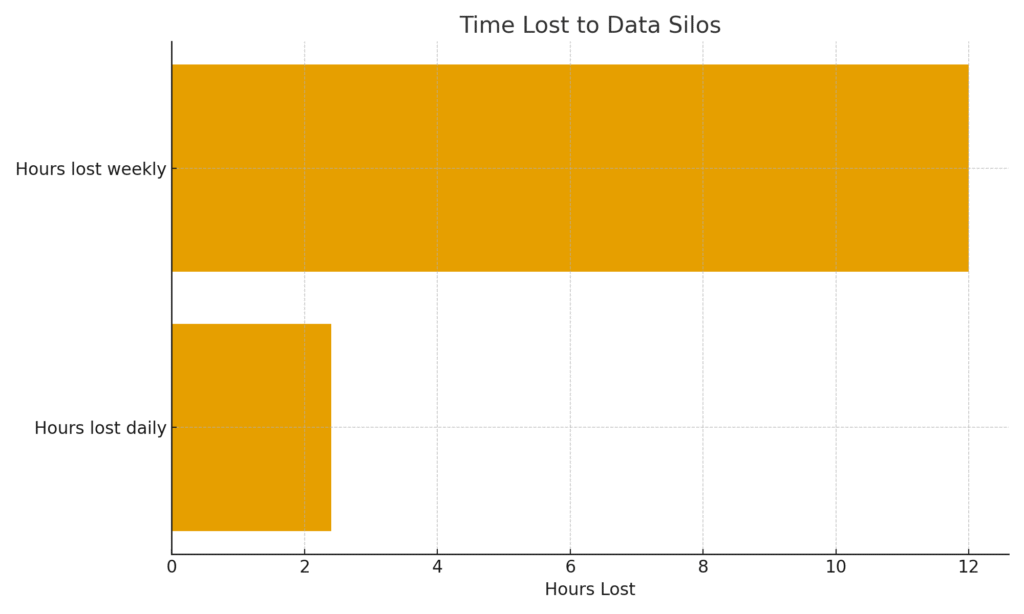
Teams waste around 2.4 hours every single day searching for data trapped in silos. That adds up to more than a full workday lost each week. Instead of focusing on strategic tasks, employees spend valuable time tracking down basic information. This inefficiency drains productivity across the board. The statistic shows how silos have a direct cost on daily operations.
Silo Marketing Statistics #12 – 12 Hours A Week Lost To Data Silos
Some studies reveal employees lose as much as 12 hours per week because of data silos. That’s nearly a quarter of the workweek gone. Time wasted like this slows campaigns and frustrates team members. Instead of building strategy, workers get bogged down in searching for answers. This stat highlights the urgent need for smoother systems.
Silo Marketing Statistics #13 – Silos Reduce Trust In Data Accuracy
When different departments have conflicting data, trust breaks down. Employees hesitate to use the numbers because they’re unsure which report is correct. This lack of confidence slows decisions and encourages guesswork. Silos create multiple “versions of the truth,” making analytics unreliable. The stat demonstrates how silos weaken not just speed but trust.
Silo Marketing Statistics #14 – Silos Slow Down Decision-Making
Data silos delay decision-making because insights are fragmented. Leaders often must wait for reports to be merged manually. By the time data is ready, the market may have already shifted. This lack of agility reduces competitiveness. The statistic proves silos waste more than time—they waste opportunity.
Silo Marketing Statistics #15 – Silos Damage Customer Experience Consistency
When teams operate separately, customers receive inconsistent brand messages. One channel might promote a discount, while another ignores it. This confuses buyers and reduces loyalty. A unified message is critical for trust. The stat reinforces how silos directly hurt the customer journey.
Silo Marketing Statistics #16 – Siloed Sales And Marketing Data Hurt Revenue
When telesales and marketing data are siloed, revenue suffers. Leads get lost because one team doesn’t know what the other is doing. Miscommunication creates wasted ad spend and lost opportunities. The brand image also takes a hit when follow-up feels uncoordinated. This stat highlights the financial cost of silos.
Silo Marketing Statistics #17 – 89% Say Connected Planning Is Essential
Almost nine out of ten marketing leaders agree that connecting planning, creation, and scheduling is vital. Without integration, campaigns feel disjointed. Teams risk working at cross-purposes instead of toward shared goals. A connected system boosts both creativity and speed. This stat emphasizes the value of unified workflows.
Silo Marketing Statistics #18 – 88% Want Connected Functionality In Tools
Around 88% of marketers say they want their tools to offer connected features for planning and creating content. Using too many platforms makes alignment harder. A single integrated tool can cut down wasted time. This desire reflects how painful silos are in daily operations. The stat proves that teams crave efficiency.
Silo Marketing Statistics #19 – Dry Silos Make Up 70% Of The Market
In the industrial sense, dry silos account for over 70% of global silo market revenue. While not directly marketing-related, it shows how silos are a dominant structure even outside organizations. This stat is often used as a metaphor for rigid separation. It illustrates the prevalence of silos across industries. The parallel reinforces how silos dominate both physical and organizational landscapes.
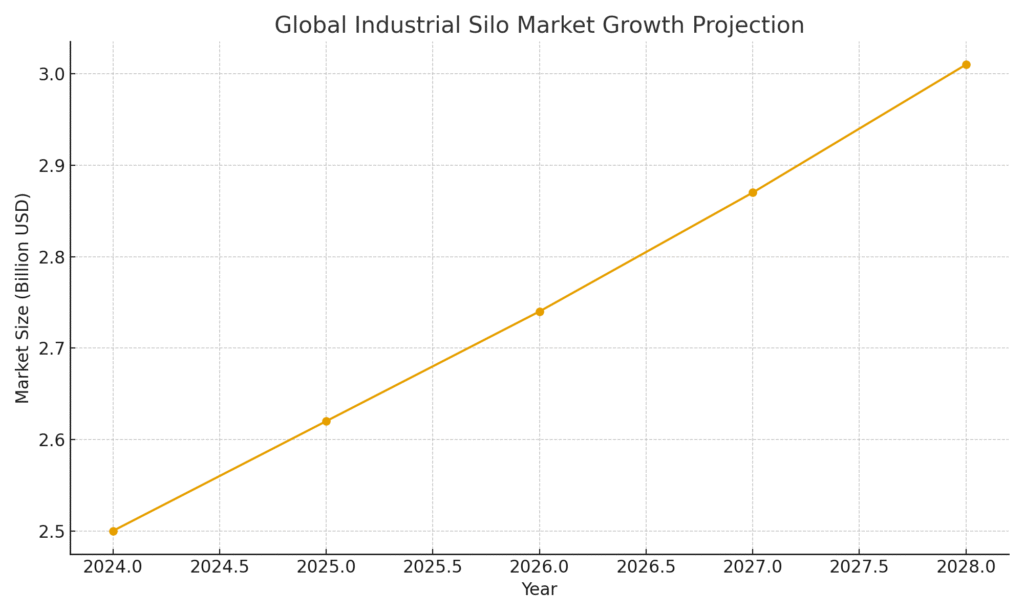
Silo Marketing Statistics #20 – Global Silo Market Worth $2.5 Billion
The physical silo market reached about $2.5 billion in 2024, growing steadily at nearly 5% annually. This is another industry perspective that mirrors organizational silos. Growth reflects demand for silo structures in agriculture and industry. It also highlights how silo systems are deeply ingrained in global operations. The stat is a reminder that the concept of silos—whether physical or data—is far-reaching.
Final Thoughts On Silo Marketing Statistics
Looking over these silo marketing statistics has made me reflect on my own experiences, both the frustrations of working within silos and the relief of finally breaking through them. I can tell you that when silos fall, collaboration feels natural, ideas flow, and campaigns achieve their full potential. It’s not always easy to get there, but the reward is worth the effort. These numbers are more than data points; they’re reminders of the very real impact silos have on people and progress. And for me, that’s what makes paying attention to them so important.
SOURCES
- https://www.madisonlogic.com/blog/good-things-happen-when-you-deconstruct-your-marketing-data-silos/