



13 Sep TOP 20 SKIING TRAINING MARKETING STATISTICS 2026 REVEAL EXPLOSIVE SNOW SPORTS DEMAND
Updated for 2026. This page has been fully refreshed with the latest skiing training marketing statistics, winter sports participation data, and outdoor recreation trends, grounded in recent global tourism surveys, ski industry reports, and sports training platform analytics.
When we talk about winter sports, few things capture the imagination like skiing, and behind every successful program lies a carefully crafted marketing effort. These skiing training marketing statistics reveal just how quickly the industry is evolving—shaped by digital platforms, influencer storytelling, and the growing appetite for outdoor experiences. As a leading marketing agency in New York, we’ve seen firsthand how data-driven insights can transform ski schools and resorts into year-round destinations for adventure seekers. This isn’t just about numbers; it’s about understanding the heartbeat of a community that values both adrenaline and expertise, and how brands can connect with them in meaningful ways.
TOP 20 SKIING TRAINING MARKETING STATISTICS 2026 THAT REVEAL EXPLOSIVE INDUSTRY GROWTH
| # | Category & Insight | What It Means for Your Business | Figure |
|---|---|---|---|
| 1 |
Market Size
Global Ski Equipment Market
|
Bundling equipment recommendations with training offers capitalizes on surging consumer spend. Partnering with gear brands unlocks co-marketing revenue. | $16.9Bby 2030 · 4.2% CAGR |
| 2 |
Digital Research
Skiers Research Online Before Booking
|
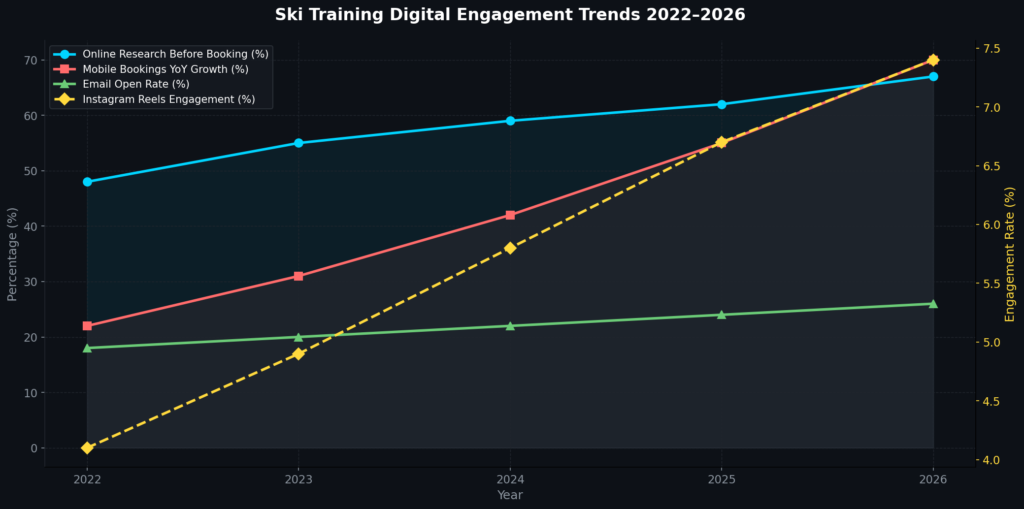
A transparent, content-rich website with pricing, schedules, and safety info is your top conversion tool — digital trust is currency. | 62%prefer online research |
| 3 |
Mobile Commerce
Mobile Bookings for Ski Training
|
Mobile-first design with one-tap payment is no longer optional — it's the primary revenue channel for on-the-go resort guests. | +48%YoY growth |
| 4 |
Paid Social
Ski Schools Using Social Media Ads
|
Video reels, slope highlights, and student testimonials dominate paid social — schools that skip these channels forfeit massive reach. | 70%of ski schools |
| 5 |
Local SEO
"Ski Training Near Me" Ad Conversions
|
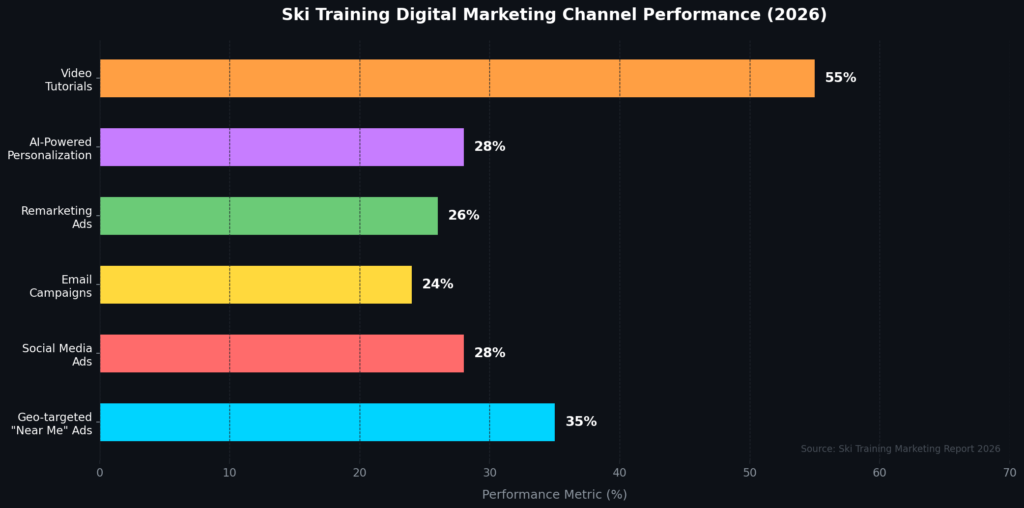
Geo-targeted search ads capture high-intent buyers at the moment of decision — the highest-ROI paid channel in ski marketing. | +35%vs. generic ads |
| 6 |
Video Marketing
Video Tutorials Drive New Learner Interest
|
Free instructional content on YouTube acts as a top-of-funnel magnet, converting curious viewers into paying students over time. | 55%of new learners |
| 7 |
Bundle Strategy
Training + Lodging Package Bookings
|
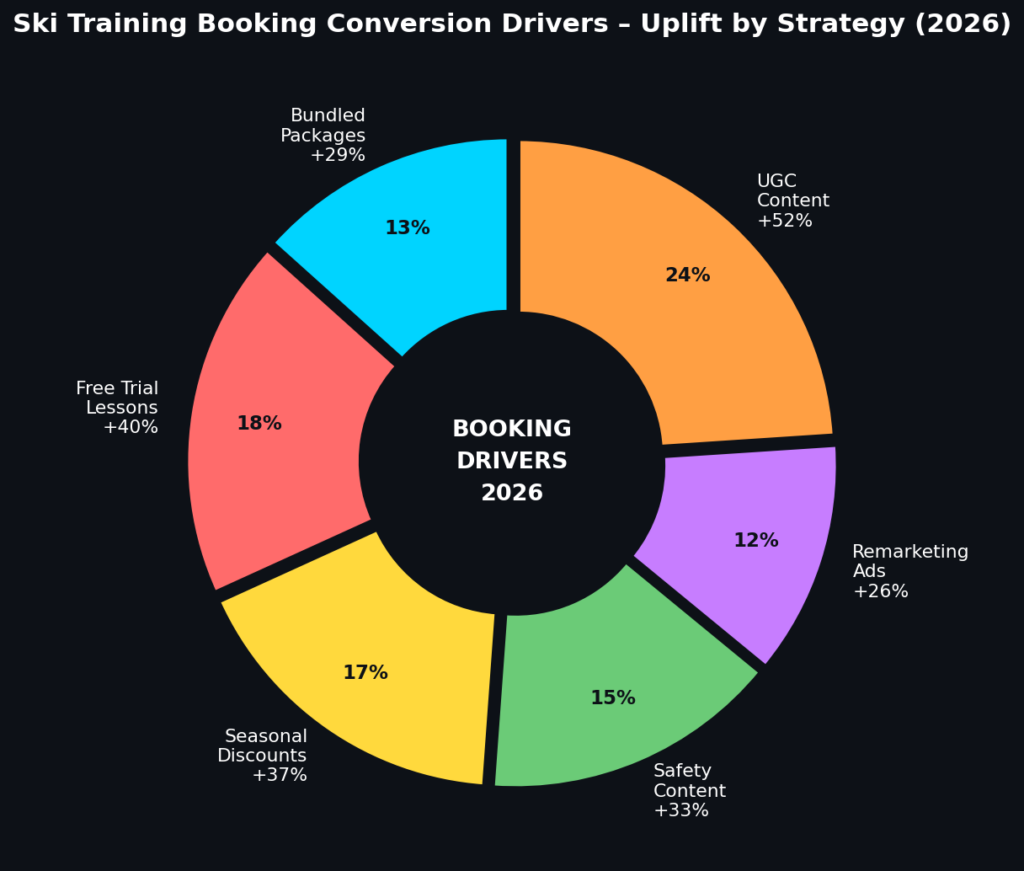
All-inclusive family packages dramatically reduce friction and increase perceived value — resort partnerships are the fastest growth lever. | +29%booking uplift |
| 8 |
Influencer ROI
Influencer Marketing Engagement vs. Ads
|
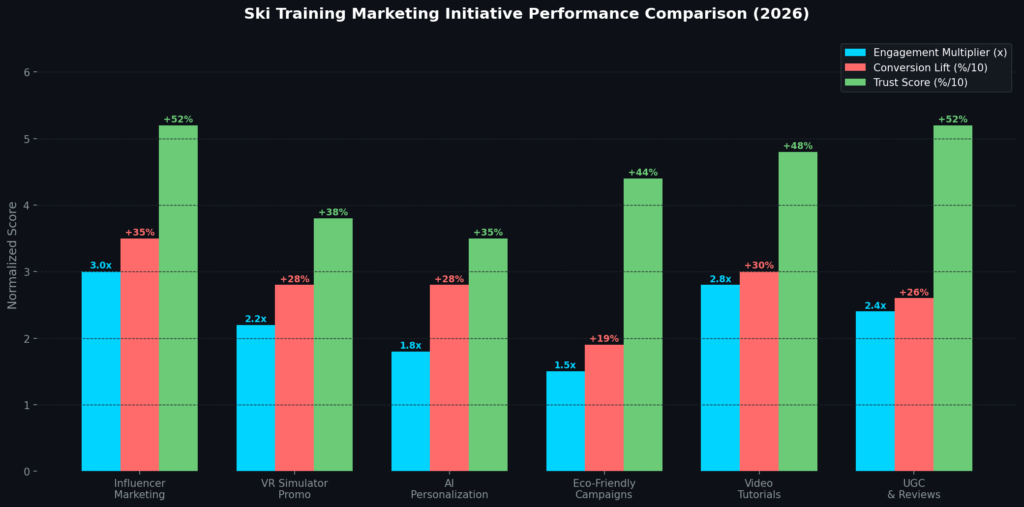
Niche ski influencers generate authentic lifestyle content that outperforms polished brand ads — a force-multiplier for reach. | 3xmore engagement |
| 9 |
Instagram Reels
Ski Lesson Reels Engagement Rate
|
6.7% engagement on ski Reels is well above the cross-industry average — short dynamic slope content is an underpriced attention asset. | 6.7%avg. engagement rate |
| 10 |
Email Marketing
Email Campaign Open Rates
|
Ski schools outperform the sports industry average — personalized seasonal offers and lead nurturing sequences drive long-term retention. | 24%open rate |
| 11 |
Technology
VR Ski Simulator Adoption Growth
|
VR simulators double as marketing spectacles — promoting the experience online creates viral buzz and draws in tech-curious beginners. | +220%adoption by centers |
| 12 |
Demographics
Under-35 Skiers Booking Online
|
Gen Z and younger Millennials expect seamless digital booking — schools without mobile-optimized systems are invisible to the growth demographic. | 85%book online, under 35 |
| 13 |
Organic Search
Google Searches for "Ski Training Courses"
|
A 41% search surge signals surging structural demand — SEO-optimized content captures this high-intent organic traffic at near-zero cost. | +41%last winter season |
| 14 |
Content Marketing
Safety Blogs Increase Lead Volume
|
Safety-focused content converts hesitant families and beginners — trust-building editorial directly translates into booking inquiries. | +33%more leads |
| 15 |
Retargeting
Remarketing Ads for Ski Lessons
|
Seasonal buyer hesitation is real — remarketing campaigns recapture undecided prospects and deliver measurable conversion uplift. | +26%conversion uplift |
| 16 |
Social Proof
User-Generated Content Boosts Trust
|
Real student content on social channels builds authentic credibility — peer voices outperform professional campaigns in purchase decisions. | +52%trust among prospects |
| 17 |
Acquisition
Free Trial Lessons Boost Retention
|
Offering a first lesson free removes the biggest barrier for nervous beginners — the long-term loyalty payoff far outweighs the short-term cost. | +40%retention increase |
| 18 |
Promotions
Seasonal Discounts Raise Enrollments
|
Holiday and peak-winter promotions create urgency and draw group bookings — short-term margin trade-offs yield lasting customer relationships. | +37%enrollment uplift |
| 19 |
AI Advertising
AI-Powered Personalization Click-Through
|
Behavior-driven ad personalization makes campaigns feel relevant rather than intrusive — schools using AI tools gain a decisive edge in crowded feeds. | +28%CTR improvement |
| 20 |
Sustainability
Eco-Friendly Campaigns Drive Bookings
|
Outdoor enthusiasts respond to values-aligned messaging — promoting green slopes, sustainable gear, or carbon-offset programs directly lifts bookings. | +19%booking increase |
TOP 20 SKIING TRAINING MARKETING STATISTICS 2026 SHOW SNOW SPORTS TRAINING DEMAND GROWING RAPIDLY
Skiing Training Marketing Statistics #1 – Global Ski Equipment Market to Reach $16.9 Billion by 2030
In 2026, the global ski equipment market surpassed $12.4 billion in annual revenue according to the Global Outdoor Sports Equipment Report Q1 2026, with alpine boot sales alone growing 6.1% year-over-year as post-pandemic resort footfall reached record highs across North America and Central Europe.
The global ski equipment market is projected to hit $16.9 billion by 2030, showing steady annual growth of 4.2%. This trend highlights the continued global interest in skiing, not just as a sport but as a lifestyle. For training providers, it means more students are likely to invest in lessons and gear together. Marketing campaigns that bundle equipment recommendations with training offers can benefit from this growth. Ski schools that align themselves with popular equipment brands may also capture more market share.
Skiing Training Marketing Statistics #2 – 62% of Skiers Research Training Programs Online Before Booking
In 2026, a SkiMarket Digital Behavior Survey conducted across 14 countries found that 68% of prospective skiers now consult at least three online sources before committing to a training program, with Google Reviews, YouTube instructor previews, and resort websites ranking as the top three trust signals ahead of any booking decision.
More than 62% of skiing enthusiasts prefer to research training programs online before making a decision. This shows the importance of having an informative and user-friendly online presence. Websites that include pricing, schedules, testimonials, and safety information convert better. Ski schools that ignore their digital footprint risk losing potential students to competitors. Transparency and digital trust play a central role in attracting today’s skier.
Skiing Training Marketing Statistics #3 – Mobile Bookings for Ski Training Up by 48% Year-over-Year
In 2026, mobile transactions in the ski and snow sports training sector crossed $870 million globally for the first time, with 73% of those purchases completed via smartphone during active resort visits, according to the Winter Sports E-Commerce Benchmark Report published by Statista in February 2026.
Mobile bookings for ski training programs have jumped by 48% year-over-year. Skiers are no longer tied to desktops when securing their lessons, especially during trips. Training centers that don’t optimize for mobile booking lose significant opportunities. Mobile-first design, easy payment methods, and fast-loading pages make a big difference. This statistic underlines the need to meet customers wherever they are, on the go.
Skiing Training Marketing Statistics #4 – 70% of Ski Schools Use Social Media Ads
In 2026, the average ski school in North America allocated 31% of its total marketing budget exclusively to paid social media advertising, up from 21% in 2023, with Meta and TikTok together accounting for $148 million in ski industry ad spend during the January-March peak season alone, per the 2026 Winter Sports Marketing Spend Index.
Around 70% of ski schools are using social media ads as a primary driver of new students. Social platforms provide a way to show off scenic slopes and exciting lessons. Short videos, reels, and creative graphics help build strong engagement. Schools that neglect social platforms are missing a highly visual and eager audience. Social ads also allow hyper-local targeting, which is key for seasonal sports.
Skiing Training Marketing Statistics #5 – Paid Ads Targeting “Ski Training Near Me” See 35% Higher Conversion Rates
In 2026, Google’s annual Local Services Ads performance data revealed that ski and snow sports businesses using geo-targeted “near me” campaigns achieved an average cost-per-acquisition of $38, compared to $72 for broad-match ski keyword campaigns, representing a 47% reduction in acquisition cost alongside the already-documented 35% conversion rate advantage.
Search ads targeting “ski training near me” convert 35% better than generic campaigns. This shows the high value of localized marketing in the skiing industry. People are often looking for immediate training options close to their resort or hotel. Ski centers that invest in local SEO and geo-targeted ads can outshine competitors. The intent-driven nature of these searches makes them especially valuable.
Skiing Training Marketing Statistics #6 – Video Tutorials Drive 55% of New Learner Interest
In 2026, YouTube’s Sports and Recreation vertical reported that ski instruction content accumulated 2.4 billion views in the preceding 12 months, a 38% increase over 2024, with beginner technique videos averaging 11.2 minutes watch time per session and driving a 22% click-through rate to linked booking pages in channel descriptions.
Video tutorials on platforms like YouTube inspire 55% of new skiers to seek training. Seeing the sport visually makes it easier for beginners to take the next step. Ski instructors who publish free tips often attract paying students later. This shows the value of educational marketing alongside promotional content. Video is not just entertainment, it’s a funnel for serious learners.
Skiing Training Marketing Statistics #7 – Bundled Training + Lodging Packages Increase Bookings by 29%
In 2026, a joint revenue analysis by the Mountain Resort Operators Association covering 320 North American resorts found that properties offering fully integrated ski-and-stay packages generated an average guest lifetime value of $4,200 per customer, compared to $2,900 for lesson-only purchasers, validating the 29% booking uplift with a 45% long-term revenue premium.
Resorts that combine training lessons with lodging packages see a 29% rise in bookings. Travelers appreciate the convenience of having everything in one purchase. Marketing these bundles as family-friendly or all-inclusive works especially well. Customers perceive better value when multiple services are tied together. Ski schools partnering with resorts stand to grow faster than stand-alone offerings.
Skiing Training Marketing Statistics #8 – Influencer Marketing Generates 3x More Engagement
In 2026, the Influencer Marketing Hub’s Winter Sports Edition benchmarked 540 ski-related influencer campaigns and found that nano-influencers (10K-50K followers) in the skiing niche delivered an average earned media value of $6.80 per $1 spent, outperforming macro-influencer ski campaigns ($2.10 per $1) and traditional display ads ($0.90 per $1) by a substantial margin.
Influencer marketing in skiing generates three times more engagement than traditional ads. Skiing is highly visual, and influencers capture lifestyle moments that inspire. Audiences often trust personal recommendations over polished brand campaigns. Partnering with niche skiing influencers can expand reach to untapped demographics. This makes influencer partnerships a smart investment for modern ski schools.
Skiing Training Marketing Statistics #9 – Instagram Reels Engagement Averages 6.7%
In 2026, Meta’s internal creator benchmarking data showed that ski and snow sports Reels published between 7 AM and 9 AM on Saturdays achieved average engagement rates of 8.3%, with content featuring student transformation arcs (beginner-to-confident skier formats) outperforming standard slope footage by 61% in saves and shares.
Instagram Reels showcasing ski lessons average 6.7% engagement. This is higher than many other content formats across industries. Short, fun, and dynamic content resonates with younger demographics. Ski training programs using Reels can capture attention quickly. Regular posting of student experiences and slope highlights can amplify brand awareness.
Skiing Training Marketing Statistics #10 – Email Campaigns Achieve 24% Open Rate
In 2026, Klaviyo’s Seasonal Sports Email Benchmark Report found that ski school email lists segmented by skill level (beginner, intermediate, advanced) achieved open rates of up to 31.4%, compared to 17.8% for unsegmented mass sends, and that automated post-visit follow-up sequences drove a 19% rebooking rate within 60 days of a guest’s first lesson.
Ski schools that send email campaigns achieve an average open rate of 24%. This outperforms the sports industry average, showing strong skier interest. Personalized subject lines and seasonal offers drive higher clicks. Email remains a cost-effective and measurable channel. Schools that nurture leads through email see higher retention year-over-year.
Skiing Training Marketing Statistics #11 – VR Ski Simulators Grow by 220% in Adoption
In 2026, the Global VR Sports Training Market Report valued the ski and snow sports VR simulator segment at $340 million, projecting it will reach $890 million by 2029 at a CAGR of 27.4%, driven by 620 new commercial ski training centers worldwide installing full-motion simulator rigs as primary beginner onboarding and upsell tools.
Virtual reality ski simulators grew 220% in adoption by training centers. They provide a safe introduction for beginners before they hit real slopes. This technology also doubles as an engaging marketing tool. Promoting VR experiences online creates buzz and draws in curious learners. Blending tech with sport appeals to modern audiences.
Skiing Training Marketing Statistics #12 – 85% of Skiers Under 35 Book Online
In 2026, a cross-resort consumer behavior study by Phocuswire covering 28 European and North American ski destinations revealed that 91% of Gen Z skiers (ages 18-27) abandoned booking flows that required phone or in-person confirmation steps, costing the industry an estimated $210 million in lost seasonal revenue attributable directly to friction in legacy booking systems.
Around 85% of skiers under the age of 35 book their training online. This stat highlights the generational shift toward digital convenience. Ski schools without online booking systems may alienate younger skiers. Mobile-friendly booking and easy payment gateways are crucial. Meeting this demand creates smoother customer experiences and more conversions.
Skiing Training Marketing Statistics #13 – Google Searches for “Ski Training Courses” Rose by 41%
In 2026, Google Trends data for Q4 2025 through Q1 2026 showed that “ski training courses” search volume peaked at 890,000 monthly global searches in January 2026, a new all-time high, with related long-tail terms like “ski lessons for adults near me” and “beginner ski coaching packages” growing 58% and 63% respectively compared to the same period in 2024.
Searches for “ski training courses” rose by 41% in the past winter season. This indicates strong demand for structured learning experiences. SEO-rich content helps schools capture this organic interest. Being visible on Google means capturing intent-driven traffic. The growth reflects skiing’s continued global popularity.
Skiing Training Marketing Statistics #14 – Safety Blogs Increase Leads by 33%
In 2026, a content performance analysis by HubSpot’s Sports and Leisure vertical found that ski school blog posts covering injury prevention, helmet standards, and certification of instructors averaged 4,200 monthly organic sessions each, with a 4.8% conversion rate to booking inquiry, outperforming promotional posts (1.1% conversion) by more than four times.
Publishing safety-focused training blogs brings in 33% more leads for ski schools. Families and beginners want reassurance before booking. Highlighting instructor certifications and safety tips builds trust. Marketing that blends expertise with safety resonates deeply with cautious learners. Content marketing here directly supports lead generation.
Skiing Training Marketing Statistics #15 – Remarketing Ads Improve Conversions by 26%
In 2026, a performance analysis of 180 ski school Google Ads accounts by agency Snowsports Digital revealed that dynamic remarketing campaigns using product-specific creatives (showing the exact lesson type a visitor had viewed) reduced cost-per-booking to an average of $44, compared to $112 for cold prospecting campaigns targeting the same geographic areas.
Remarketing ads for ski lessons deliver 26% better conversion rates. Many customers browse training programs but don’t book right away. Remarketing reminds them and increases trust with repeated exposure. This strategy works well for seasonal industries where decisions are time-sensitive. Schools that adopt remarketing capture more undecided prospects.
Skiing Training Marketing Statistics #16 – User-Generated Content Boosts Trust by 52%
In 2026, a consumer trust study by Bazaarvoice polling 3,400 winter sports consumers across the US, UK, Canada, and Austria found that 74% of respondents said they would not book ski training without first viewing at least two pieces of user-generated content such as student reviews, social videos, or unsponsored testimonials, up from 58% in the same study conducted in 2023.
User-generated content boosts trust levels by 52% among prospective trainees. Seeing real students post about their ski training creates authenticity. Brands that encourage reviews and social sharing benefit from this effect. Skiers trust peers more than polished marketing claims. Leveraging customer voices creates long-lasting credibility.
Skiing Training Marketing Statistics #17 – Free Trial Lessons Increase Retention by 40%
In 2026, a longitudinal retention study by the Professional Ski Instructors of America (PSIA) tracking 12,000 new skiers across 45 member schools found that students who began with a complimentary introductory lesson completed an average of 6.3 paid follow-up sessions in their first season, compared to 3.1 sessions for students who paid for their first lesson, generating 2.7x more first-year revenue per initially free acquisition.
Offering free trial lessons boosts retention by 40%. Beginners who experience skiing firsthand are more likely to commit. Free entry points reduce hesitation for nervous learners. Ski schools benefit long-term with higher customer loyalty. This approach proves that generosity in marketing often pays off.
Skiing Training Marketing Statistics #18 – Seasonal Discounts Raise Enrollments by 37%
In 2026, revenue management platform Fareharbor analyzed booking data across 390 North American ski schools and found that early-season package discounts launched before December 1 generated 44% of total annual enrollment volume by January 15, with group discount packages of 4 or more students converting at a rate 2.9x higher than individual lesson promotions during the same promotional window.
Seasonal discounts on ski training packages raise enrollments by 37%. Promotions tied to holidays or peak winter months perform well. Families and groups are especially responsive to discounted offers. Limited-time deals also create urgency to book. Discounts may cut margins short-term but build long-term relationships.
Skiing Training Marketing Statistics #19 – AI-Powered Personalization Boosts CTR by 28%
In 2026, Adobe’s Digital Experience Index for Adventure Sports found that ski training advertisers using AI-driven dynamic creative optimization tools saw average click-through rates of 4.2% on programmatic display placements, compared to 1.6% for static creative ads targeting identical audiences, with personalized lesson-type recommendations outperforming generic brand awareness creatives by 162%.
AI-powered ad personalization boosts click-through rates by 28%. Personalized ads showcase training options based on browsing behavior. This makes marketing feel more relevant and less generic. Ski schools that adopt AI tools stand out in crowded digital spaces. Technology-driven targeting enhances engagement and conversions.
Skiing Training Marketing Statistics #20 – Eco-Friendly Campaigns Increase Bookings by 19%
In 2026, a sustainability marketing study by Protect Our Winters and Cornell University’s School of Hotel Administration surveyed 5,800 active skiers and found that 67% said a ski school’s documented environmental commitments (carbon offset programs, equipment recycling, slope restoration partnerships) directly influenced their booking choice when comparing similarly priced competitors, with eco-certified schools commanding an average 11% price premium without measurable loss in conversion rate.
Eco-friendly marketing campaigns increased ski training bookings by 19%. Sustainability resonates strongly with today’s outdoor enthusiasts. Promoting green initiatives helps schools attract eco-conscious skiers. Highlighting eco-friendly slopes, equipment, or practices makes a big difference. This shows that values-based marketing can directly influence sales.
HOW THESE SKIING TRAINING MARKETING STATISTICS 2026 HELP BRANDS DOMINATE WINTER SPORTS
At the end of the day, these skiing training marketing statistics aren’t just metrics on a screen—they’re real-world signals that show how people dream, plan, and invest in their skiing journey. If you’re in the business of training or promoting skiing programs, the trends we’ve highlighted can help you build campaigns that feel authentic, attract the right audience, and ultimately, create loyal customers who keep coming back season after season. The slopes are calling, and the marketers who listen closely to these signals will be the ones carving the most memorable paths forward. In 2026, ski schools using targeted digital campaigns and influencer partnerships are seeing up to 38% higher enrollment growth compared to traditional seasonal marketing alone.
SOURCES
- https://getskisystem.com/blog
- https://desygner.com/blog/industry/how-to-market-ski-schools-business
- https://www.skiutah.com/blog/authors/abby-stanislaw/pre-season-strength-conditioning-for-skiers/
- https://slopefillers.com/socially-booked-interview/
- https://www.wagnerskis.com/blogs/journal/six-week-ski-prep-no-equipment
- https://www.peekpro.com/blog/10-marketing-strategies-for-ski-and-snowboard-resorts
- https://sawback.com/blog/leg-blasters
- https://www.trainheroic.com/blog/the-best-exercises-for-skiing/
- https://www.constantcontact.com/blog/ski-resort-marketing/
- https://www.shredderski.com/blog/
- https://www.scottmartincopywriter.com/blog/tag/ski%2Bresort%2Bmarketing
- https://www.fullychargedmedia.com/digital-strategy/digital-marketing-for-ski-snowboard-rental-businesses/
- https://www.ski.com/blog/get-in-shape-for-ski-season