



28 Sep TOP 20 SKIN HEALTH MARKETING STATISTICS 2025
When I started looking into skin health marketing statistics, I realized just how powerful this sector has become in shaping consumer habits and brand strategies. As someone who deeply values both wellness and smart marketing, I find it fascinating to see how skincare and health intertwine with digital platforms, personalization, and consumer trust. Working alongside a leading marketing agency in New York, I’ve seen firsthand how businesses can leverage these insights to build stronger connections with their audiences. To me, these numbers aren’t just figures on a page—they highlight real stories about consumer desires, evolving behaviors, and the future of skin health brands. Let’s dive into the top 20 stats that are shaping the skin health space in 2025.
Top 20 Skin Health Marketing Statistics 2025 (Editor’s Choice)
| ✨ # | 📊 Statistic | 🌍 Insight |
|---|---|---|
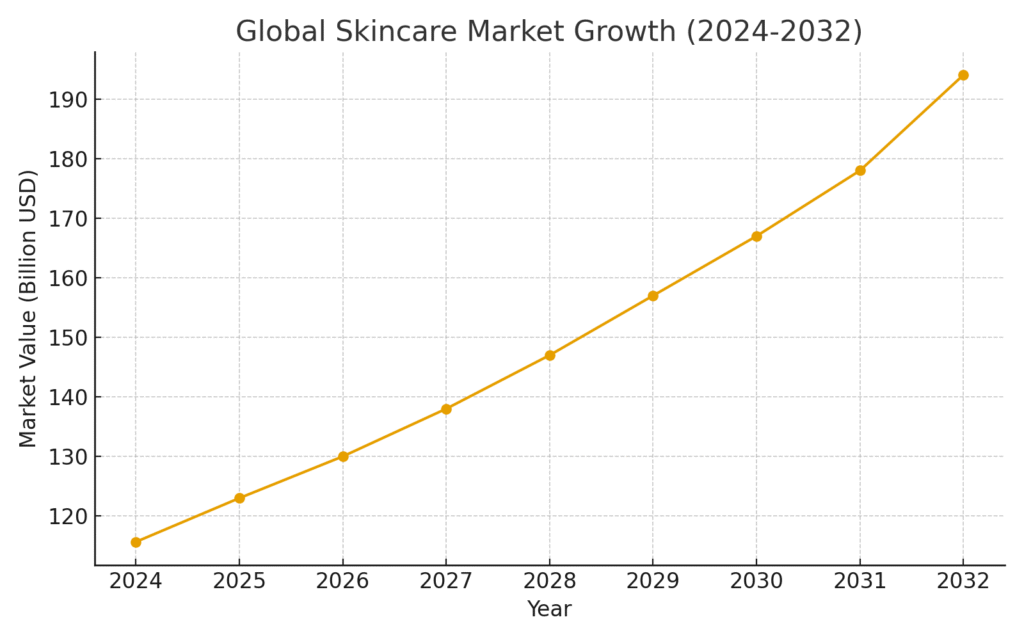
| 1 | Global skincare market valued at $115.65B in 2024 | Expected to reach $194.05B by 2032 |
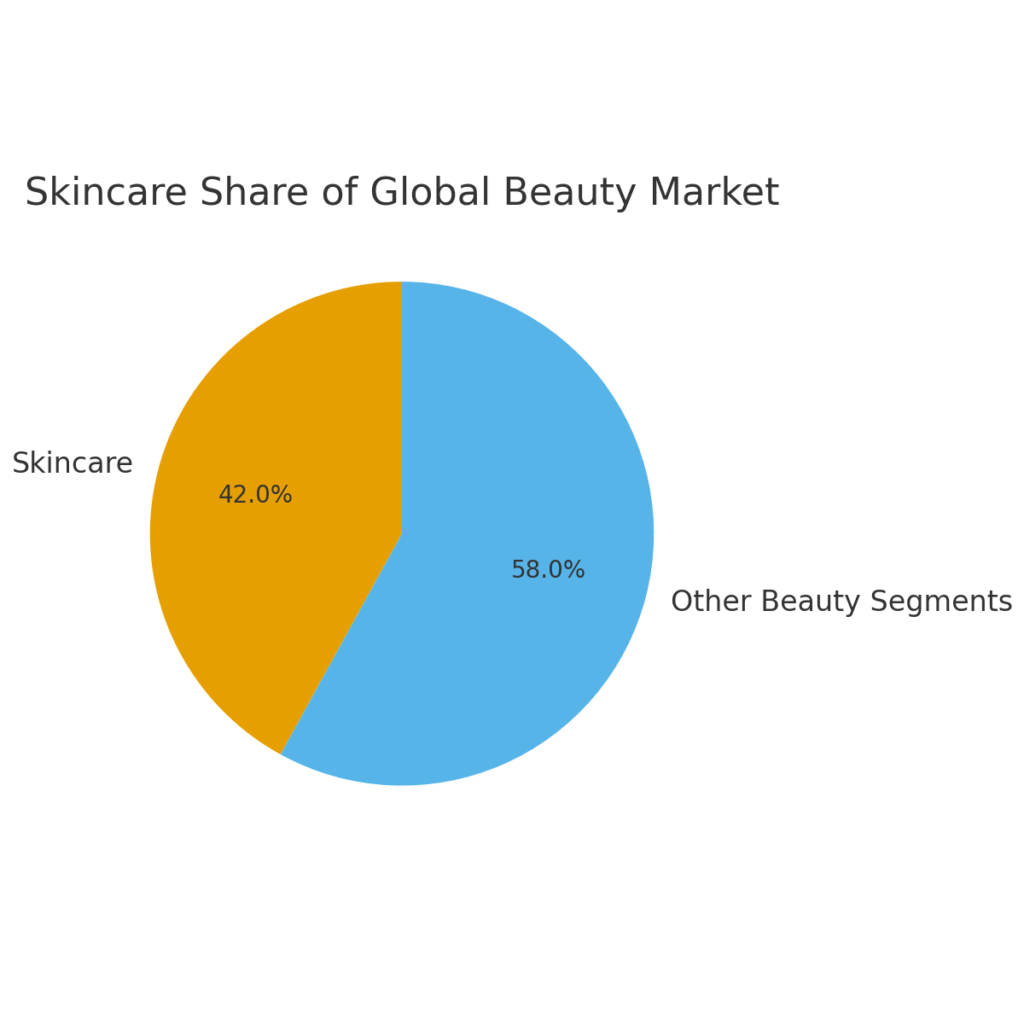
| 2 | Skincare accounts for 42% of the beauty market | Dominates over makeup & fragrances |
| 3 | Global beauty sales hit $446B in 2023 | Skincare was a major growth driver |
| 4 | Online beauty sales projected to reach 1/3 by 2030 | E-commerce is reshaping skin health marketing |
| 5 | 75% of beauty executives prioritize growth | Focus shifting from cost cutting to expansion |
| 6 | Personalized skincare market $66.37B by 2034 | Consumers demand tailored solutions |
| 7 | Natural & organic skincare growing 10% annually | Sustainability and clean beauty drive purchases |
| 8 | Skin health supplements market worth $6.1B | Growing at 8.1% CAGR through 2032 |
| 9 | 58% prefer buying skincare in physical stores | In-store trust still strong despite digital rise |
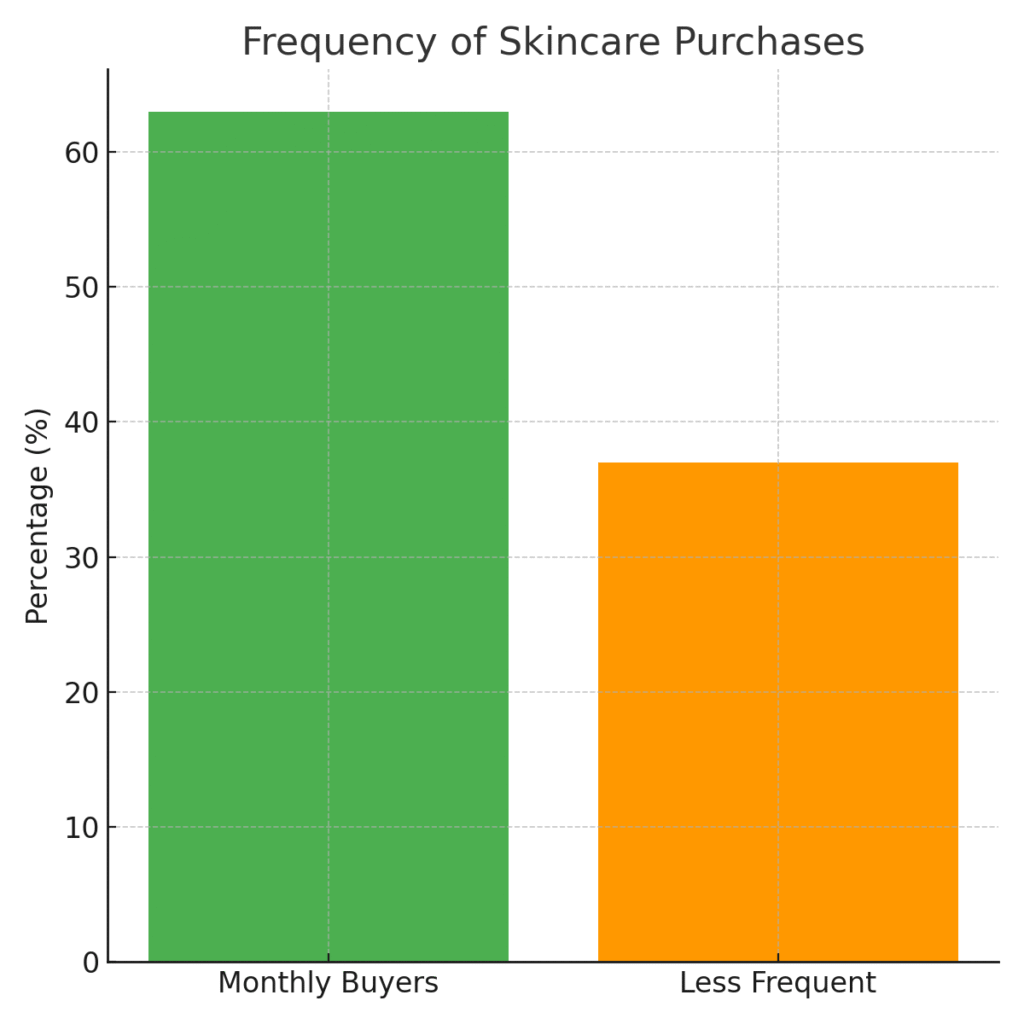
| 10 | 63% buy skincare at least once a month | High repeat purchase potential |
| 11 | 70% of purchases influenced by social media | Influencers and reviews drive decisions |
| 12 | 71% discover skincare via social media | 81% trust reviews before purchasing |
| 13 | 52% of TikTok users discover beauty there | 89% purchased after seeing on TikTok |
| 14 | Instagram skincare value dropped 36% in 2025 | Shift towards TikTok & new platforms |
| 15 | 74% of women use 3+ skincare products daily | 21% use 5+ products in morning routines |
| 16 | Average skincare routine lasts 10.7 minutes | 65% finish in under 10 minutes |
| 17 | 62% show brand loyalty in skincare | Trust and visible results keep them loyal |
| 18 | 41% cite quality as main loyalty driver | Reputation and reviews follow after |
| 19 | 37% discover skincare via social ads | Paid campaigns boost discovery |
| 20 | Asia Pacific holds 51.6% of skincare market | Region leads global beauty innovations |
Top 20 Skin Health Marketing Statistics 2025
Skin Health Marketing Statistics #1: Global Skincare Market Valued At $115.65 Billion
The global skincare market was worth $115.65 billion in 2024, and it’s expected to hit $194.05 billion by 2032. This growth highlights how essential skin health has become in consumers’ lives. I believe this expansion reflects not only beauty concerns but also a deeper focus on health and wellness. For marketers, this surge creates endless opportunities to launch innovative campaigns. It’s clear that skin health is no longer just cosmetic—it’s part of overall lifestyle branding.
Skin Health Marketing Statistics #2: Skincare Accounts For 42% Of The Beauty Market
Skincare makes up 42% of the entire beauty market, showing its dominance. This figure proves that consumers are prioritizing skin health above makeup or fragrances. In my view, it demonstrates a shift toward wellness-driven choices. Brands that emphasize skin health benefits can stand out in an already saturated beauty space. For marketing, this means pushing educational and science-backed messages resonates strongly.
Skin Health Marketing Statistics #3: Global Beauty Sales Reached $446 Billion In 2023
The global beauty industry hit $446 billion in 2023, growing around 10% year over year. Skincare brands were significant drivers of this increase. To me, it shows that consumers are not just buying products but investing in self-care routines. Marketing strategies that focus on empowerment and lifestyle are winning in this space. This growth cements skincare’s role as a pillar of the beauty economy.
Skin Health Marketing Statistics #4: Online Channels To Represent One-Third Of Beauty Sales By 2030
By 2030, online channels are expected to capture nearly one-third of all beauty and skincare sales. This stat speaks to how digital-first strategies are reshaping the industry. From my experience, e-commerce personalization is key to success here. Skin health brands that optimize their digital presence can easily reach global audiences. It’s clear the future of skincare sales is highly digital.
Skin Health Marketing Statistics #5: 75% Of Beauty Executives Focus On Growth Over Cost Cutting
In 2025, 75% of beauty executives said they are doubling down on sales growth rather than cutting costs. I see this as a sign of confidence in the industry’s future. It shows brands are actively investing in innovation rather than shrinking budgets. For skin health marketers, this opens the door to more campaigns and collaborations. It feels like we’re in an era of bold experimentation.
Skin Health Marketing Statistics #6: Personalized Skincare Market To Reach $66.37 Billion By 2034
The personalized skincare market is projected to grow from $30.63 billion in 2024 to $66.37 billion by 2034. This highlights consumers’ demand for tailored solutions. I personally love seeing how technology like AI skin diagnostics plays into this. For marketers, it means hyper-personalized ads and product recommendations are the way forward. Skin health is becoming a truly individual experience.
Skin Health Marketing Statistics #7: Natural And Organic Skincare Growing At 10% Annually
Natural and organic skincare products are growing at a 10% annual rate. To me, this shows how sustainability and wellness are at the core of consumer values. People want products that are clean and effective. Marketers who highlight transparency in ingredients gain trust easily. It’s not just a trend; it’s a cultural shift in skincare consumption.
Skin Health Marketing Statistics #8: Skin Health Supplements Market Worth $6.1 Billion
The skin health supplements and treatment market was valued at $6.1 billion in 2023, with ~8% CAGR expected. This reveals how consumers view beauty from the inside out. Personally, I think this holistic approach is reshaping skin health marketing. It merges nutrition, wellness, and cosmetics in a unique way. This is a big opportunity for cross-category branding.
Skin Health Marketing Statistics #9: 58% Prefer Physical Stores For Skincare
Around 58% of consumers still prefer buying skincare in physical stores. I think this proves that touch-and-feel experiences matter. While online is booming, in-store offers credibility and sensory assurance. Marketers can blend online promotions with in-store sampling to win both sides. It’s about creating a seamless omni-channel experience.
Skin Health Marketing Statistics #10: 63% Buy Skincare At Least Once A Month
About 63% of people purchase skincare at least monthly. This frequency demonstrates how integral skincare is to routines. In my opinion, marketers should view this as recurring demand rather than one-off purchases. Loyalty programs and subscriptions make sense here. Skin health is a recurring commitment, not an occasional indulgence.
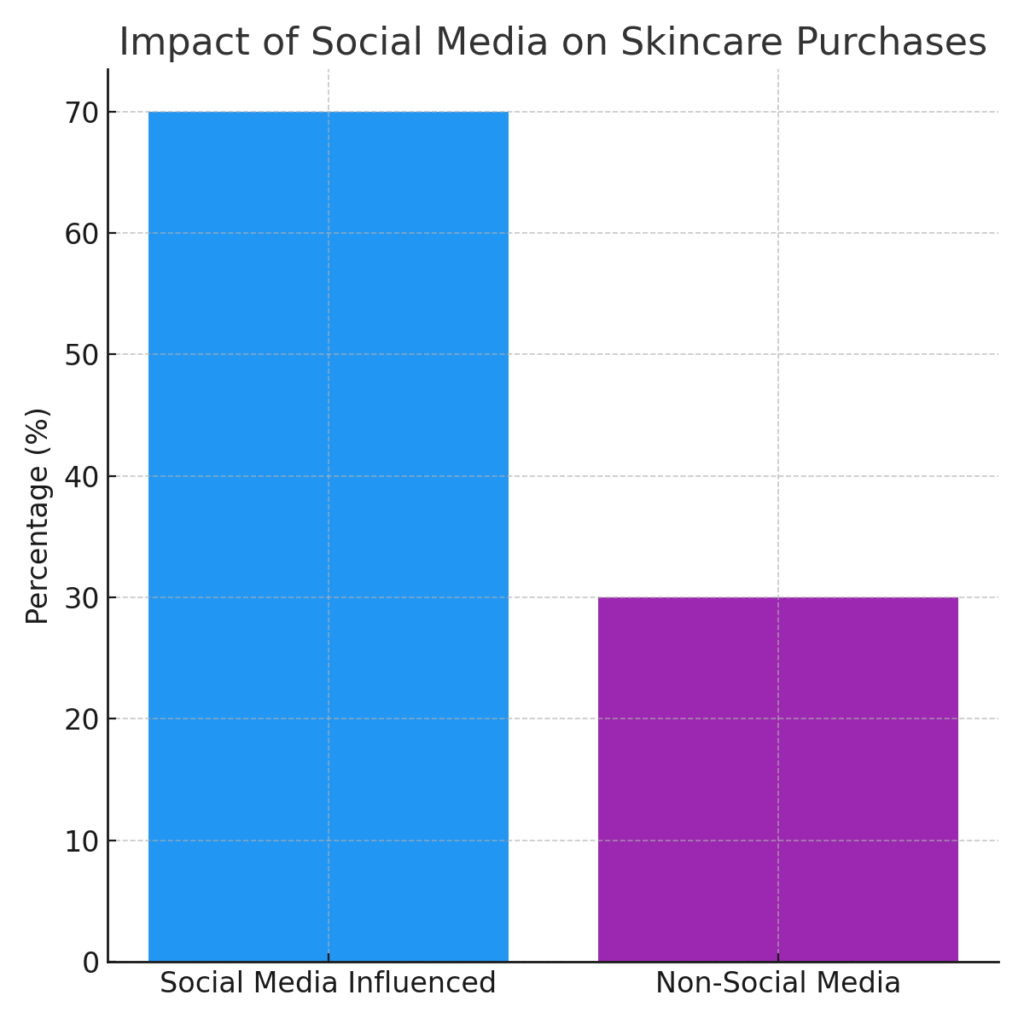
Skin Health Marketing Statistics #11: 70% Of Purchases Influenced By Social Media
Around 70% of beauty purchases, including skincare, are influenced by social media. I’ve seen how influencer campaigns spark instant interest in skin health products. This stat shows just how powerful digital storytelling has become. For marketers, engaging with micro-influencers can yield authentic results. Social media is now the heartbeat of skincare marketing.
Skin Health Marketing Statistics #12: 71% Discover Products Via Social Media
About 71% of consumers discover new skincare through social media, and 81% trust reviews when deciding. Personally, I rely on recommendations myself—it feels like word-of-mouth on a global scale. For brands, this means reviews and testimonials should be central in campaigns. It proves authenticity sells. Skin health thrives on credibility.
Skin Health Marketing Statistics #13: 52% Of TikTok Users Use It For Beauty Discovery
On TikTok, 52% of users actively look for beauty products, and 89% have purchased based on platform exposure. This is game-changing for skin health marketing. TikTok is driving trends at lightning speed. From my perspective, brands that ride viral skincare hacks gain huge visibility. TikTok is now the launchpad for skincare virality.
Skin Health Marketing Statistics #14: Instagram Skincare Value Dropped By 36% In Q1 2025
In Q1 2025, skincare brands saw a 36% drop in Instagram earned media value. I think this signals a platform shift in consumer attention. While Instagram is still relevant, TikTok and emerging platforms are pulling focus. Marketers must adapt by diversifying platforms. Skin health engagement is moving where audiences feel more authentic connection.
Skin Health Marketing Statistics #15: 74% Of Women Use At Least 3 Skincare Products In The Morning
Nearly 74% of women using a morning routine apply at least 3 products, with 21% using 5 or more. To me, this shows skincare is ritualistic. It’s part of daily identity. Marketers can tap into this by offering product bundles that align with routines. Skin health is both practical and indulgent.
Skin Health Marketing Statistics #16: Average Morning Skincare Routine Takes 10.7 Minutes
The average time for a morning skincare routine is 10.7 minutes, with 65% completing it under 10 minutes. I find this balance fascinating—consumers want effective yet efficient products. This stat pushes marketers to highlight time-saving benefits. Quick-absorbing formulas and simplified steps matter. Efficiency is a marketing point in itself.
Skin Health Marketing Statistics #17: 62% Show Brand Loyalty In Skincare
About 62% of skincare users display brand loyalty. I personally think this comes from trust and visible results. This kind of loyalty is golden for marketers. Retention efforts often cost less than acquisition, so brands must nurture loyal buyers. Skin health thrives on consistent results, which builds trust.
Skin Health Marketing Statistics #18: Quality Drives 41% Of Brand Loyalty
Among loyal consumers, 41% say product quality is their top reason for sticking with a brand. That stat resonates with me because efficacy matters most in skin health. Reputation and reviews come after, but quality is non-negotiable. Marketers should emphasize research, testing, and results in campaigns. Ultimately, performance sustains loyalty.
Skin Health Marketing Statistics #19: 37% Discover Skincare Brands Through Social Ads
About 37% of skincare consumers find new brands via social media ads. This shows the direct link between paid campaigns and brand discovery. Personally, I’ve clicked on ads that introduced me to brands I now love. For marketers, targeting and creative visuals are crucial. Skin health ads are investments in awareness pipelines.
Skin Health Marketing Statistics #20: Asia Pacific Holds 51.6% Of The Global Skincare Market
Asia Pacific dominated the skincare market with a 51.6% share in 2024. To me, this isn’t surprising given K-beauty’s massive influence. The region sets trends globally, from routines to ingredients. Marketers should watch Asia closely for innovation cues. Skin health leadership in Asia is reshaping global beauty standards.
Why These Skin Health Marketing Statistics Matter
Looking over these skin health marketing statistics, I feel both inspired and excited about the future of this industry. It’s not just about creams, serums, or supplements—it’s about how people connect wellness, identity, and confidence with the products they choose. Working with a leading marketing agency in New York, I’ve seen how powerful it is when brands use these insights to craft campaigns that truly resonate. For me, these numbers tell stories of human behavior, loyalty, and innovation that go beyond simple sales. Ultimately, they remind me why skin health is one of the most dynamic, rewarding, and human-driven markets to be part of.
SOURCES
- https://www.tricociuniversity.edu/beauty-blog/skincare-industry-statistics-2025-u-s-market-overview/