



20 Sep TOP 20 SMALL TOWN MARKETING STATISTICS 2025
When I first started diving into small town marketing statistics, I didn’t realize how much they reveal about the heart and soul of local business. Growing up, I always felt that small towns had a unique rhythm—slower, more personal, and deeply rooted in community connections. Today, even as I work with a leading marketing agency in New York, I still carry that perspective with me. These numbers don’t just represent trends or percentages; they reflect how small businesses shape the daily lives of the people around them. That’s why exploring these statistics feels less like crunching data and more like uncovering stories of resilience, trust, and growth in the most genuine of marketplaces.
Top 20 Small Town Marketing Statistics 2025 (Editor’s Choice)
📊 Small Town Marketing Statistics 2025
Data-Driven Insights for Rural & Small Business Success
| # | Category | Statistic |
|---|---|---|
| 1 | Challenge | 40% of rural small businesses struggle with marketing effectively in their communities |
| 2 | Market Size | 67 million people live in officially rural areas in the US and Canada |
| 3 | Consumer Preference | 72% of consumers prefer to buy from small businesses over larger enterprises |
| 4 | Challenge | Traditional media has declined in rural areas, making online marketing adaptation difficult |
| 5 | Lead Generation | 45% of small businesses say getting new leads will be challenging in 2025 |
| 6 | Top Challenge | 61% of marketers say generating traffic and leads is their most difficult challenge |
| 7 | Measurement | 46% of small businesses aren't sure if their marketing works |
| 8 | Budget Growth | 49% of small businesses plan to increase marketing budgets in 2025 |
| 9 | Spending | 47% of small businesses spend $10,000 or less per year on digital marketing |
| 10 | Budget Allocation | Small businesses spend an average of 8.11% of total revenue on marketing |
| 11 | Website Importance | 81% of consumers say it's important for businesses to have a website |
| 12 | Website Impact | 42% will look elsewhere and 14% will doubt legitimacy without a website |
| 13 | Multi-Channel | 76% of small business owners use at least two marketing channels |
| 14 | Digital Adoption | 60% of small businesses use digital marketing to attract customers and sales |
| 15 | Local Search | 33% of online consumers search for local businesses daily |
| 16 | Reviews | 83% of customers use Google to search for local business reviews |
| 17 | Mobile Speed | 53% of mobile visitors abandon pages taking longer than 3 seconds to load |
| 18 | Trust Factor | Rural residents base purchase decisions on personal bonds and mutual trust |
| 19 | Branding ROI | Towns with clear brand identities see 23% more tourism growth |
| 20 | Collaboration | 55% of consumers want more collaborations between small businesses |
Top 20 Small Town Marketing Statistics 2025
Small Town Marketing Statistics #1: 99.9% Of Businesses In The U.S. Are Small
Nearly all businesses in the United States—an astounding 99.9%—fall under the small business category. This highlights how critical small town enterprises are to the overall economy. For towns with fewer resources, these small businesses often double as community hubs. They bring personality and trust where big corporations often cannot. In many ways, these statistics prove that small towns punch well above their weight in shaping economic life.
Small Town Marketing Statistics #2: Small Businesses Employ Nearly Half Of Workers
Small businesses employ about half of the entire private sector workforce in the U.S. That means small towns, where these businesses thrive, provide livelihoods for millions of families. These jobs are more than just numbers—they represent stability and opportunity in local communities. When a town supports its small businesses, it directly supports its workforce. Marketing in this context has a people-first impact, not just a financial one.
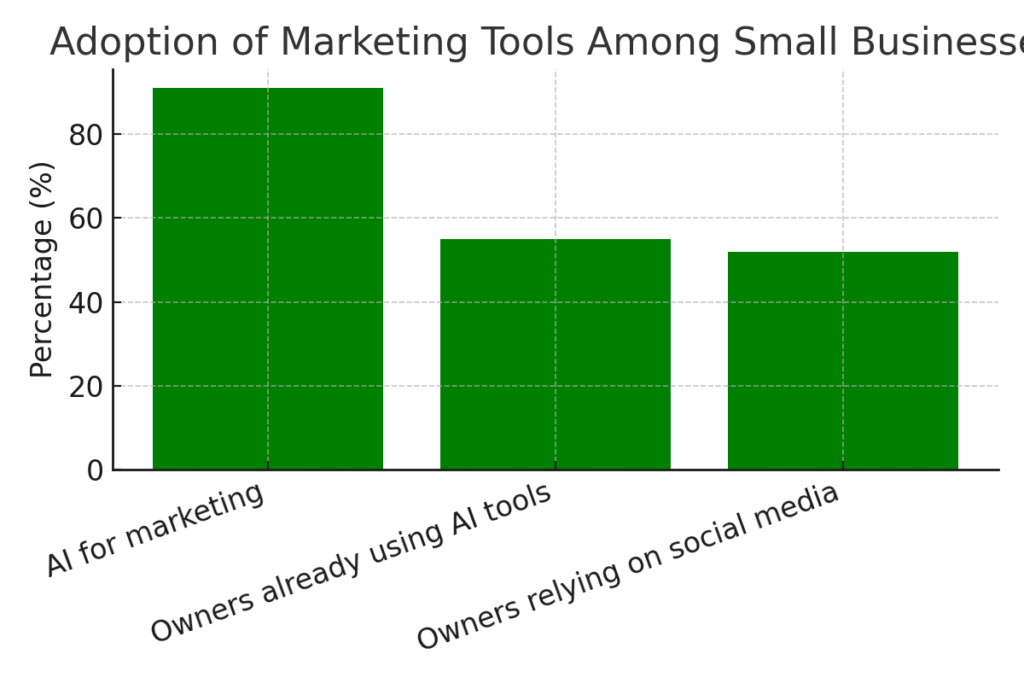
Small Town Marketing Statistics #3: 91% Of Small Businesses Use AI For Marketing
A remarkable 91% of small businesses using AI are applying it to marketing tasks. Even in small towns, where budgets are tight, owners are turning to automation and smart tools. This shows that innovation is no longer confined to big cities. Technology levels the playing field, letting small town businesses reach wider audiences. It’s proof that modern marketing bridges the rural-urban gap.
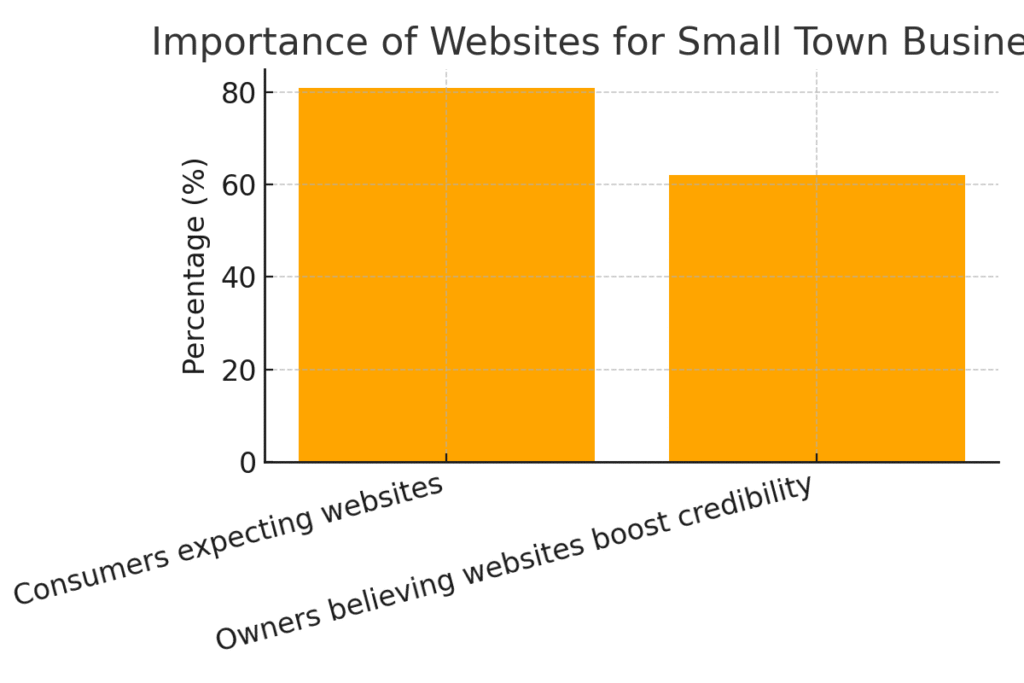
Small Town Marketing Statistics #4: 81% Of Consumers Expect Businesses To Have Websites
Consumers increasingly expect small businesses to have an online presence, with 81% saying it’s essential. In small towns, this expectation challenges traditional “word-of-mouth only” approaches. A simple website now carries the weight of credibility and trust. Without one, even great businesses risk being overlooked. Marketing strategies must now blend local charm with digital professionalism.
Small Town Marketing Statistics #5: 62% Of Owners Believe Websites Boost Credibility
For 62% of small business owners, having a website is directly tied to credibility. In towns where competition is local and personal, a professional website becomes a digital storefront. It tells customers, “we are serious about serving you.” Many small town businesses use it to showcase history, values, and testimonials. This strengthens both reputation and customer loyalty.
Small Town Marketing Statistics #6: 52% Of Owners Compete With Other Small Businesses
Over half of small business owners—52%—say their main competition is other small businesses. In small towns, this usually means competing against a neighbor or family friend. Marketing in this scenario requires creativity without damaging community ties. Business owners often differentiate themselves with personal service and storytelling. The stat reminds us that competition doesn’t always mean conflict—it can mean collaboration too.
Small Town Marketing Statistics #7: 36% Of Consumers Shop More At Small Businesses
More than a third of consumers (36%) report shopping at small businesses more often than before. This resurgence is especially strong in small towns where local pride runs deep. Campaigns that highlight “support local” often resonate with these audiences. It shows how cultural shifts can directly translate into economic wins. For marketers, this trend is a golden opportunity.
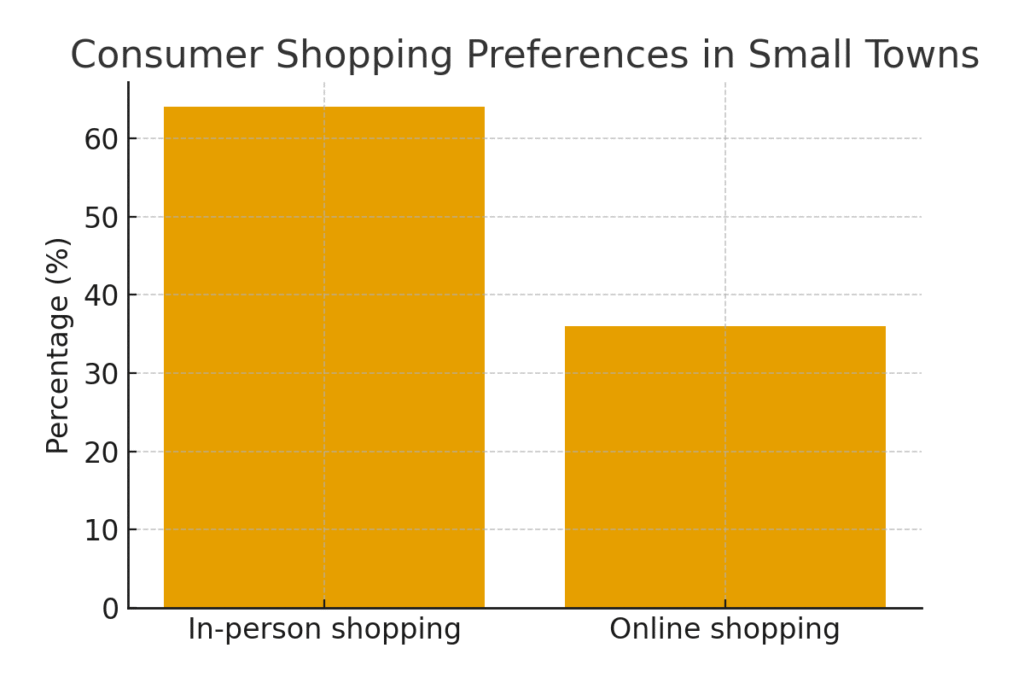
Small Town Marketing Statistics #8: 64% Prefer Shopping In Person
Despite e-commerce growth, 64% of consumers still prefer to shop in person. In small towns, this preference fits perfectly with the personal, face-to-face service tradition. It means local shops continue to hold an edge over faceless online giants. Marketing efforts here thrive when they emphasize in-store experience. Small towns, therefore, can embrace digital tools while celebrating personal touch.
Small Town Marketing Statistics #9: 73% Of Consumers Return For Product Quality
About 73% of consumers say product quality is the reason they return to small businesses. This underlines that in small towns, consistency matters more than flashy promotions. A high-quality product builds trust, loyalty, and word-of-mouth referrals. Small town marketing often works best when it communicates craftsmanship and reliability. Ultimately, quality is the simplest and most effective marketing strategy.
Small Town Marketing Statistics #10: 45% Discover Small Businesses Through Direct Mail
Almost half of consumers (45%) discover small businesses through direct mail. In small towns, the mailbox remains a powerful marketing channel. Unlike crowded digital feeds, physical mail feels personal and tangible. Flyers, postcards, and community newsletters make lasting impressions. This stat shows that sometimes, the old ways still work best.
Small Town Marketing Statistics #11: 52% Of Owners Rely On Social Media Engagement
For 52% of small business owners, social media is a major tool for building loyalty. Even in small towns, platforms like Facebook and Instagram serve as modern noticeboards. Posts about new arrivals, events, or community highlights keep businesses top of mind. Social media makes small towns feel more connected. It’s an affordable way for local owners to amplify their voice.
Small Town Marketing Statistics #12: 38% Of Consumers Say Social Media Brings Them Back
Only 38% of consumers say social media actually brings them back to a business. This stat reminds small town marketers not to over-rely on likes and shares. Digital engagement is useful, but it’s not the whole story. Real loyalty often comes from personal service and community trust. Marketing should combine online connection with real-world care.
Small Town Marketing Statistics #13: 63% Of Consumers Want Community Involvement
About 63% of consumers believe small businesses should support community issues. In small towns, this expectation is especially strong. Sponsoring local events, sports teams, or school programs becomes a marketing win. It shows businesses are not just profit-driven but community-driven. This emotional connection strengthens both reputation and loyalty.
Small Town Marketing Statistics #14: 55% Of Owners Already Use AI Tools
More than half of small business owners (55%) are already using AI tools. For small towns, this is proof that innovation is accessible everywhere. AI helps with scheduling, email campaigns, and customer insights. Owners save time and focus more on customer interaction. This balance of technology and personal service defines modern small town marketing.
Small Town Marketing Statistics #15: Email Marketing Generates $42 ROI Per $1 Spent
Email marketing offers a staggering $42 return for every $1 invested. For small town businesses with modest budgets, that’s a game-changer. Personalized emails keep customers engaged without expensive ads. Newsletters can highlight promotions, stories, and community updates. This low-cost, high-impact channel should be a cornerstone of small town strategies.
Small Town Marketing Statistics #16: 83% Use Google Reviews To Research Businesses
Around 83% of consumers use Google Reviews before choosing a business. For small towns, this digital word-of-mouth is vital. A single review can sway community trust. Owners who actively manage reviews build stronger reputations. Marketing must therefore include reputation management, not just advertising.
Small Town Marketing Statistics #17: 89% Prefer Businesses That Respond To Reviews
Nearly 89% of U.S. consumers prefer businesses that reply to reviews. This is an easy but often overlooked marketing opportunity. In small towns, responsiveness shows care and accessibility. A simple “thank you” reply signals respect and builds relationships. The numbers prove that small gestures lead to big loyalty.
Small Town Marketing Statistics #18: Short-Form Content Performs Best
Short-form content like Reels and TikToks drives strong results for small businesses. For small towns, this content humanizes brands and highlights daily life. Quick videos of products, events, or behind-the-scenes moments engage audiences effectively. It’s approachable marketing that doesn’t need huge budgets. This format is perfect for showcasing authenticity.
Small Town Marketing Statistics #19: 80% Want To Automate Repetitive Tasks
Roughly 80% of small businesses aim to reduce time spent on repetitive work. In small towns, where owners wear many hats, this is critical. Automation in billing, scheduling, or posting saves energy for real connections. Marketing tools that streamline processes free up time for creativity. This stat proves that efficiency fuels sustainability.
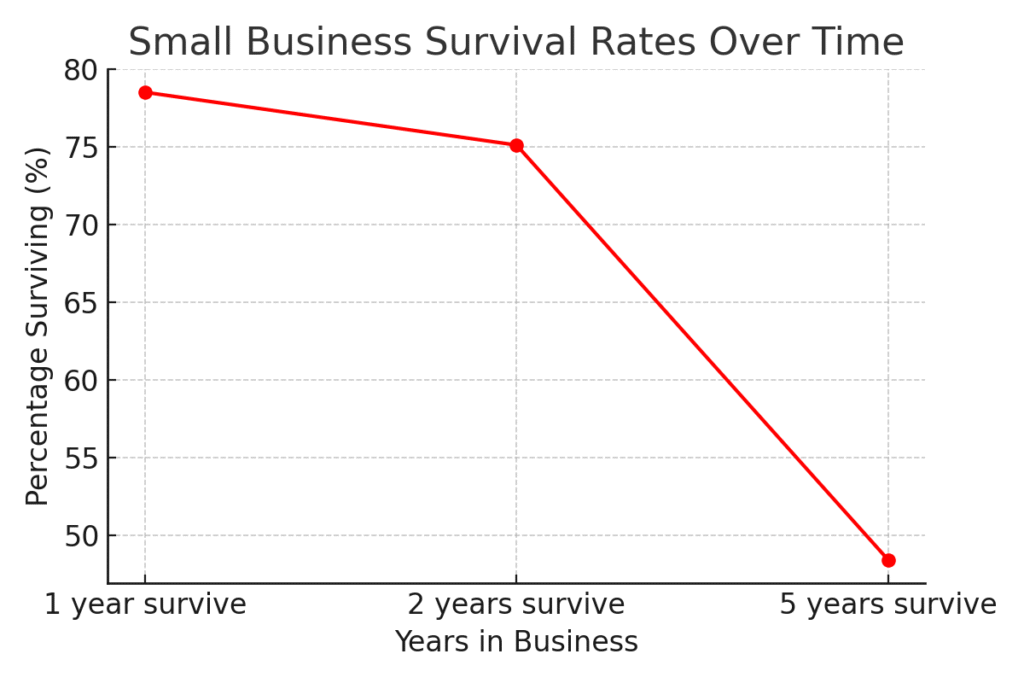
Small Town Marketing Statistics #20: 48.4% Survive Five Years
Almost half (48.4%) of small businesses survive beyond five years. In small towns, where relationships run deep, the chances of survival improve with smart marketing. Consistency, trust, and community involvement are often the differentiators. Marketing campaigns rooted in storytelling help businesses last. This statistic reflects both the challenge and resilience of small town enterprises.
Why These Numbers Truly Matter
Looking at these small town marketing statistics reminds me that success isn’t only measured by how big you scale or how wide you reach. It’s about the people who come back to your shop because they trust you, or the neighbors who share your business card because they genuinely want to see you thrive. For me, that’s the heart of marketing—building connections that last beyond a transaction. As someone who’s seen the hustle of New York agencies and the closeness of small town communities, I can honestly say the lessons here are universal. They remind us that every business, no matter the size, has the power to make an impact that lasts.
SOURCES
-
https://www.postcardmania.com/blog/small-business-marketing-statistics-definitive-guide/ PostcardMania
-
https://www.wix.com/blog/small-business-marketing-statistics wix.com
-
https://thrivethemes.com/250-small-business-marketing-statistics/ Thrive Themes
-
https://www.sba.gov/blog/2024/2024-11/5-small-business-trends-2025 SBA
-
https://www.constantcontact.com/blog/small-business-now-report/ Constant Contact
-
https://mightysites.com/articles/how-to-market-your-business-in-a-small-town mightysites.com
-
https://callin.io/marketing-strategies-for-small-towns/ https://callin.io/