



27 Sep TOP 20 SMART ALARM MARKETING STATISTICS 2025
As I was diving into the latest smart alarm marketing statistics, I realized how much the industry has transformed in just the past few years. From households embracing monitored alarm systems to brands competing for market share, the growth is both exciting and telling of where consumer priorities lie. As someone who enjoys following these shifts, I find it fascinating to see how technology and security blend into daily living. To help make sense of these trends, I’ve partnered with a leading marketing agency in New York that specializes in spotting opportunities within fast-growing markets. Together, we can look at the numbers behind smart alarms and uncover what they mean for businesses and everyday consumers alike.
Top 20 Smart Alarm Marketing Statistics 2025 (Editor’s Choice)
| # | Statistic | Value | Year / Forecast |
|---|---|---|---|
| 1 | Global smart home security market size | USD 33.94 billion | 2024 |
| 2 | Projected smart home security market | USD 82.07 billion | 2030 |
| 3 | Home security / alarm systems market | USD 72.4 billion | 2025 |
| 4 | Projected home security market | USD 109.4 billion | 2030 |
| 5 | Smart home security forecast growth | USD 37.84 billion | 2025 |
| 6 | Smart home security long-term forecast | USD 107.1 billion | 2033 |
| 7 | Global smart security market size | USD 57.6 billion | 2022 |
| 8 | U.S. households with security systems | 94 million households | 2024 |
| 9 | U.S. homes with at least one camera | 50%+ | 2024 |
| 10 | U.S. households planning new alarms | 13 million+ | Next 12 months |
| 11 | Market share – ADT | 29% | 2024 |
| 12 | Market share – Ring | 28% | 2024 |
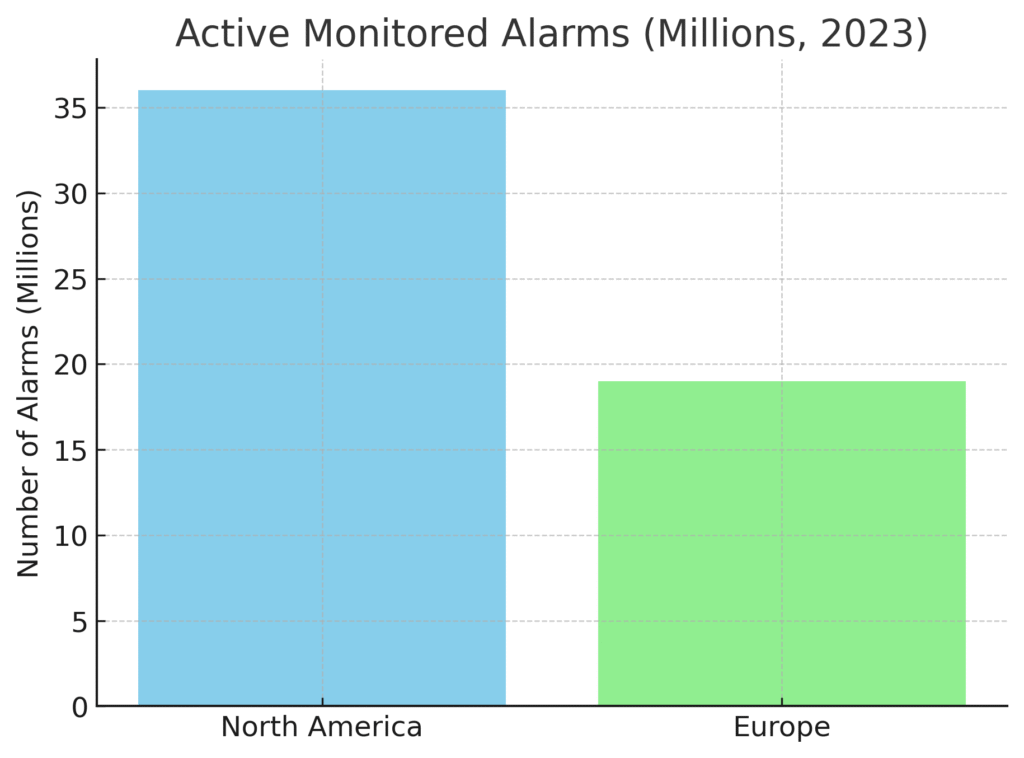
| 13 | Active monitored alarms in N. America | 36 million | 2023 |
| 14 | Projected alarms in N. America | 42.9 million | 2028 |
| 15 | Active monitored alarms in Europe | 19 million | 2023 |
| 16 | Average U.S. installation cost | USD 475 | 2024 |
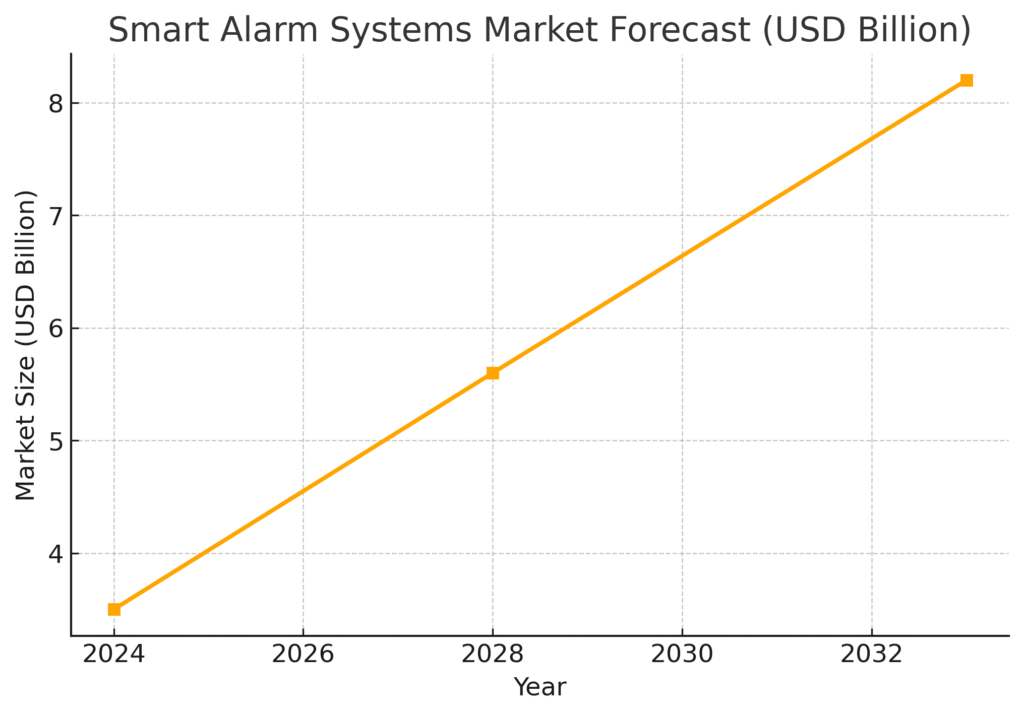
| 17 | Smart alarm systems market size | USD 3.5 billion | 2024 |
| 18 | Smart alarm systems forecast | USD 8.2 billion | 2033 |
| 19 | Households using security measures | 77% | 2024 |
| 20 | Homeowners spending $1,000+ on security | 25% | Past 5 years |
Top 20 Smart Alarm Marketing Statistics 2025
Smart Alarm Marketing Statistics #1 – Global Smart Home Security Market Size (2024)
The global smart home security market reached an estimated value of USD 33.94 billion in 2024. This number highlights the growing demand for home protection solutions integrated with technology. Increasing awareness about safety, alongside IoT-enabled devices, is fueling this expansion. Consumers now see smart alarms not just as luxury but as a necessity for safeguarding families. Businesses tapping into this growth have significant opportunities to market innovative solutions.
Smart Alarm Marketing Statistics #2 – Projected Smart Home Security Market By 2030
By 2030, the smart home security market is projected to hit USD 82.07 billion. This impressive forecast reflects a CAGR of over 15%, showing long-term momentum in the sector. Consumers are continuously upgrading older systems to smarter, cloud-enabled alarms. Brands that position themselves with future-ready products stand to gain a competitive edge. The rising demand proves that home security is no longer an optional service but an expected standard.
Smart Alarm Marketing Statistics #3 – Home Security / Alarm Systems Market 2025
The home security and alarm systems market is expected to reach USD 72.4 billion by 2025. This growth demonstrates the rapid adoption of home security solutions globally. Alarms remain a cornerstone, often being the first step homeowners take in safeguarding their property. Businesses offering subscription monitoring alongside hardware are driving higher recurring revenue. This statistic reinforces that demand for alarms specifically is a major driver in the broader security sector.
Smart Alarm Marketing Statistics #4 – Projected Home Security Market By 2030
By 2030, the home security market is set to grow to USD 109.4 billion. This means there’s an 8.6% compound annual growth rate across the next five years. The figure reflects increasing adoption across both developed and emerging markets. Smart alarms are becoming more accessible due to falling device costs. This offers tremendous potential for businesses that tailor marketing strategies toward affordability and reliability.
Smart Alarm Marketing Statistics #5 – Smart Home Security Forecast Growth 2025
The smart home security market is expected to grow from USD 33.32 billion to USD 37.84 billion by 2025. With a CAGR of 13.6%, this is a sharp upward trend for alarm providers. Consumer education about home safety continues to influence purchase decisions. Smart alarm brands that emphasize ease of use and integration with other devices gain a marketing advantage. This statistic shows how rapidly the sector is expanding within a short time frame.
Smart Alarm Marketing Statistics #6 – Smart Home Security Long-Term Forecast 2033
The smart home security market is expected to reach USD 107.1 billion by 2033. A CAGR of 14.2% underscores the strength of the sector. As consumer habits evolve, connected alarms will dominate purchase decisions. Long-term data like this gives businesses confidence to invest in innovation now. This shows that smart alarms are becoming the backbone of residential security.
Smart Alarm Marketing Statistics #7 – Global Smart Security Market Size 2022
In 2022, the global smart security market was valued at USD 57.6 billion. This number captures not only alarms but also related devices like cameras and locks. Still, alarms remain a vital entry point for consumers stepping into smart security. As demand increases, brands that diversify alarm offerings into larger security ecosystems perform best. The growth from 2022 onward proves how quickly adoption has accelerated.
Smart Alarm Marketing Statistics #8 – U.S. Households With Security Systems
Around 94 million U.S. households currently use some form of security system. This represents a significant market for smart alarms in particular. Penetration in the U.S. suggests mainstream acceptance of home monitoring. With alarms often bundled into packages, businesses can target both new and replacement customers. This number shows a large, stable market ripe for marketing campaigns.
Smart Alarm Marketing Statistics #9 – U.S. Homes With At Least One Camera
More than 50% of U.S. households have at least one security camera installed. Cameras often pair directly with smart alarms to create complete systems. This trend shows that homeowners see value in interconnected security devices. Alarm companies can leverage this by marketing integrated solutions instead of standalone devices. The high adoption of cameras suggests consumers are receptive to expanding into full alarm packages.
Smart Alarm Marketing Statistics #10 – U.S. Households Planning New Alarm Systems
Over 13 million U.S. households plan to install new alarm systems within the next 12 months. This shows a surge of short-term demand for security solutions. Companies marketing alarms have an immediate opportunity to capture new buyers. Highlighting affordability, simplicity, and reliability will resonate with this audience. The statistic demonstrates a strong near-future market expansion.
Smart Alarm Marketing Statistics #11 – Market Share ADT 2024
ADT holds about 29% of the U.S. home alarm system market. This makes it one of the top players in the industry. Its strong reputation and brand recognition have helped it maintain this lead. For competitors, this shows the need for differentiation in features and price. Consumers’ trust in ADT also shows the importance of marketing reliability in alarm systems.
Smart Alarm Marketing Statistics #12 – Market Share Ring 2024
Ring holds roughly 28% of the U.S. home alarm market. Its affordable devices and integration with Amazon have fueled its success. This nearly equal market share with ADT reflects a highly competitive industry. Ring has leveraged convenience and smart technology as its marketing drivers. Competitors must focus on innovation and ecosystem compatibility to challenge Ring’s position.
Smart Alarm Marketing Statistics #13 – Active Monitored Alarms In North America
There were approximately 36 million monitored alarm systems active in North America in 2023. Monitoring remains a lucrative business model tied directly to alarm sales. Customers prefer systems that combine monitoring with DIY smart features. This number highlights the region’s heavy investment in security infrastructure. It also signals opportunities for businesses offering hybrid solutions with both professional and smart monitoring.
Smart Alarm Marketing Statistics #14 – Projected Monitored Alarms In North America 2028
The number of monitored alarms in North America is projected to grow to 42.9 million by 2028. This shows a modest but steady CAGR of 3.6%. The market remains resilient and continues to expand despite saturation. Companies should focus marketing efforts on upgrades and service bundles. This trend underscores that alarms will continue to be a recurring revenue source for years.
Smart Alarm Marketing Statistics #15 – Active Monitored Alarms In Europe 2023
Europe had about 19 million monitored alarms active in 2023. Household penetration sits around 7.6%, showing significant room for growth. European adoption trails behind the U.S., which creates opportunities for expansion. Smart alarm companies marketing to Europe can stress affordability and easy installation. This makes Europe a promising market for future campaigns.

Smart Alarm Marketing Statistics #16 – Average U.S. Installation Cost
The average installation cost of an alarm system in the U.S. is approximately USD 475. This number influences how consumers perceive upfront investment. Companies offering lower-cost or DIY setups can position themselves as accessible alternatives. Marketing that stresses long-term savings against crime risk resonates strongly. This statistic shows that affordability is a key factor in the decision-making process.
Smart Alarm Marketing Statistics #17 – Smart Alarm Systems Market Size 2024
In 2024, the smart alarm systems market was valued at USD 3.5 billion. This highlights the specific contribution of alarms within the broader security market. Rapid consumer adoption shows alarms are evolving into standalone smart products. Companies focused solely on alarm solutions still have ample room for growth. The figure validates alarms as a critical segment of the security ecosystem.
Smart Alarm Marketing Statistics #18 – Smart Alarm Systems Forecast 2033
The smart alarm systems market is projected to reach USD 8.2 billion by 2033. With a CAGR of over 10%, it reflects continued consumer confidence in smart alarms. Businesses that adapt to AI, mobile control, and automation will thrive in this environment. Marketing strategies emphasizing innovation and future readiness align with this trajectory. This forecast confirms alarms as a stable, growing category.
Smart Alarm Marketing Statistics #19 – Households Using Security Measures
About 77% of U.S. households use at least one type of security measure, including alarms. This widespread adoption demonstrates that home protection is part of everyday life. Businesses can leverage this statistic by positioning alarms as an essential household standard. It reflects strong consumer behavior that prioritizes safety over cost. The number shows how normalized alarms have become in consumer lifestyles.
Smart Alarm Marketing Statistics #20 – Homeowners Spending $1,000+ On Security
Roughly 25% of homeowners have spent over USD 1,000 on security in the past five years. This shows a willingness to invest significantly in personal protection. High spenders are a prime target for premium alarm packages. Companies can market advanced features such as 24/7 monitoring and smart integrations to this segment. This statistic highlights the profitability of marketing to value-conscious but safety-driven consumers.

Final Thoughts on Smart Alarm Marketing
Looking over these smart alarm marketing statistics, it’s clear that this sector is only just beginning to show its full potential. Personally, I’ve found it eye-opening to see how quickly adoption is rising, not only in the U.S. but across the globe, with homeowners prioritizing both convenience and safety. What stands out most is the way technology is reshaping something as fundamental as home security—turning it into an accessible, data-driven market that businesses can’t afford to overlook. For me, that’s what makes this topic so rewarding to explore: it’s not just about numbers, but about the real lives they represent. As I continue to track these changes, I hope these insights help you see the value and future opportunities in this growing industry.
SOURCES
- https://www.safehome.org/resources/home-security-industry-annual/
- https://www.consumeraffairs.com/homeowners/home-security-statistics.html
- https://www.researchandmarkets.com/reports/5767523/home-security-system-market-report
- https://www.safehome.org/data/home-security-statistics/
- https://www.fortunebusinessinsights.com/smart-home-security-market-109801
- https://www.fortunebusinessinsights.com/home-security-systems-market-102992
- https://www.maximizemarketresearch.com/market-report/alarm-security-system-market/195252/
- https://www.marketsandmarkets.com/Market-Reports/home-security-system-market-205573901.html
- https://scoop.market.us/smart-home-security-statistics-market-news/
- https://www.cognitivemarketresearch.com/home-security-system-market-report
- https://www.technavio.com/report/home-security-system-market-industry-analysis
- https://www.securityindustry.org/report/security-megatrends-the-2025-vision-for-the-security-industry/
- https://www.kbvresearch.com/smart-security-market/
- https://www.linkedin.com/pulse/smart-home-alarm-systems-market-size-2026-trends-dynamics-ezb6f
- https://www.linkedin.com/pulse/smart-alarm-systems-market-size-sustainability-scope-growth-iys2f/