




27 Sep TOP 20 SMART APPLIANCE MARKETING STATISTICS 2025
As I was researching the latest smart appliance marketing statistics, I couldn’t help but feel amazed at how quickly our homes are transforming into connected hubs of innovation. From smart refrigerators to AI-driven ovens, these devices are no longer futuristic concepts but everyday essentials that shape how we live. In my journey of gathering insights, I turned to industry leaders like a leading marketing agency in New York that truly understands how technology intersects with consumer behavior. Their expertise has inspired me to share these findings in a way that goes beyond just numbers—it’s about how these shifts are changing our lifestyles, our choices, and even the way brands communicate with us.
Top 20 Smart Appliance Marketing Statistics 2025 (Editor’s Choice)
| # | Statistic | Details | Source |
|---|---|---|---|
| 1 | Global Smart Appliances Market Size (2024) | Valued at USD 39.38 billion in 2024. | MarketsandMarkets |
| 2 | Projected Market Size by 2030 | Expected to reach USD 71.28 billion by 2030 (CAGR ~11.0%). | MarketsandMarkets |
| 3 | Smart Home Appliances Market (2022) | Estimated at USD 29.03 billion in 2022. | Grand View Research |
| 4 | Growth Forecast 2023–2030 | Projected to reach USD 58.5 billion by 2030, CAGR ~9.2%. | Grand View Research |
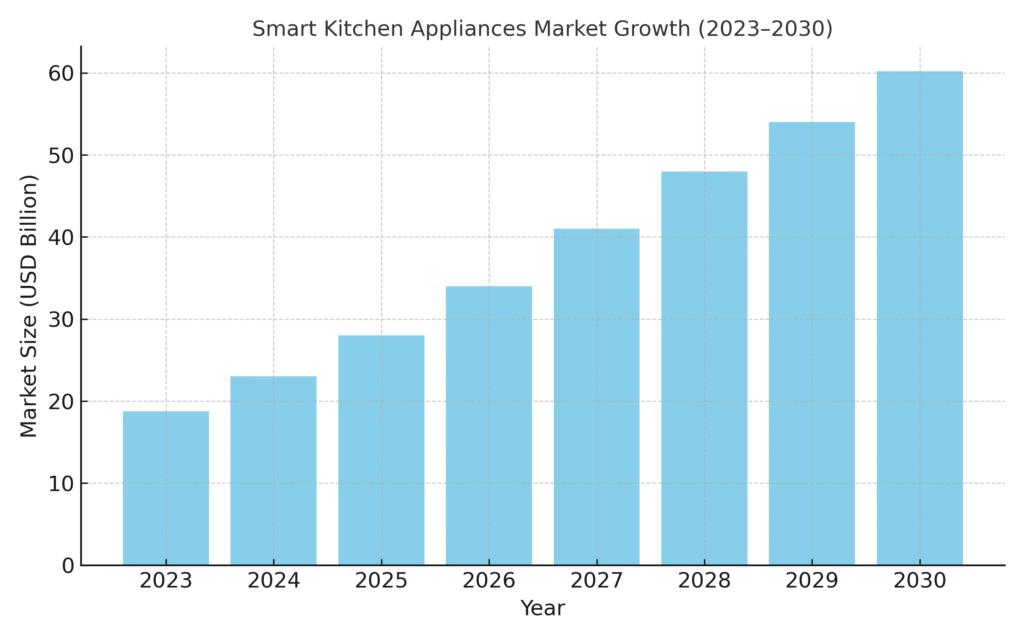
| 5 | Smart Kitchen Appliances Market | Valued at USD 18.75 billion in 2023, growing to USD 60.20 billion by 2030 (CAGR 17.9%). | Grand View Research |
| 6 | Smart Appliances Share (2023) | Consumers spent USD 21.5 billion on smart appliances alone. | Strategic Market Research |
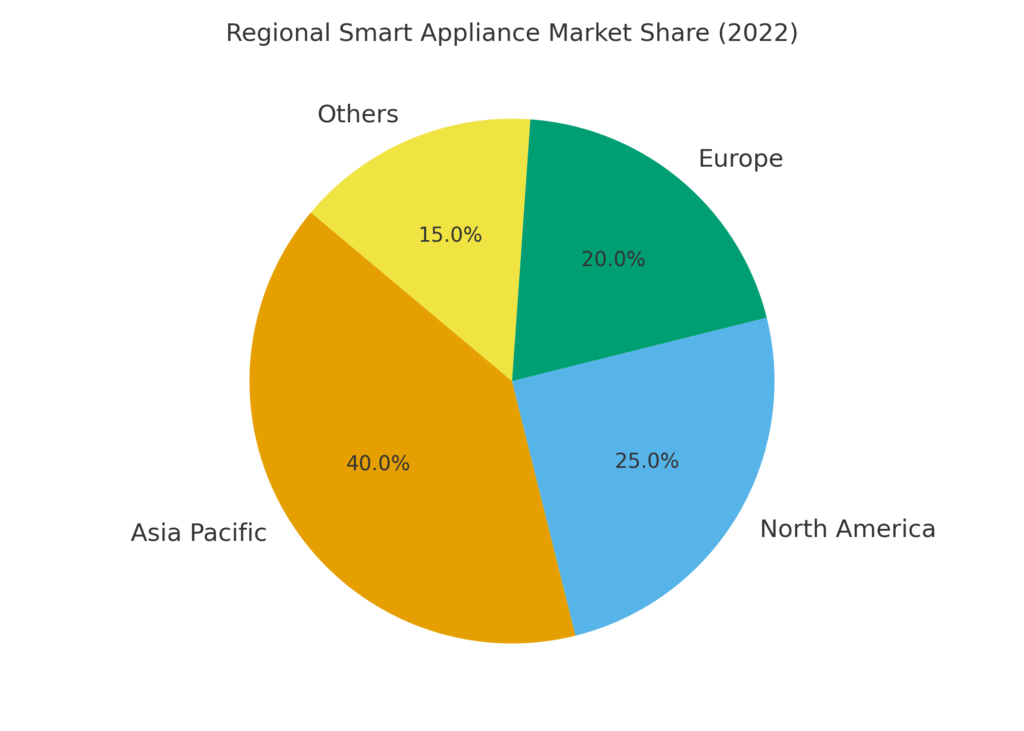
| 7 | Regional Dominance | Asia Pacific held over 40% of the market in 2022. | Grand View Research |
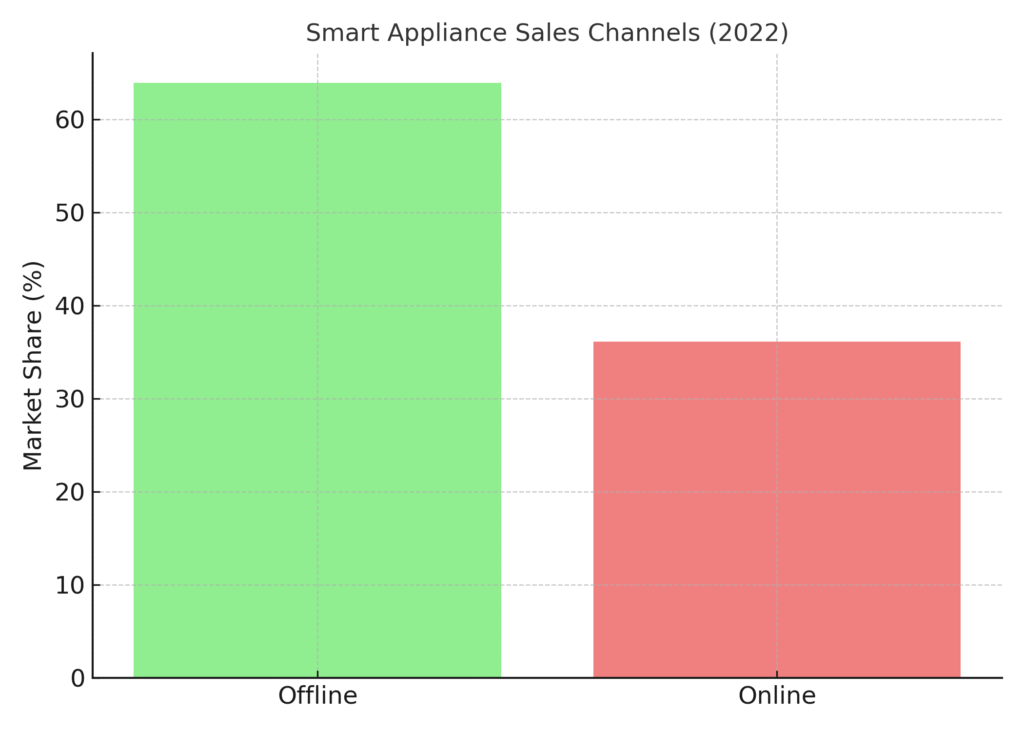
| 8 | Offline Sales (2022) | 63.9% of sales were through offline channels. | Grand View Research |
| 9 | Online Sales Growth | Online channels growing faster than offline due to convenience. | Grand View Research |
| 10 | U.S. Smart Homes | ~63.43 million U.S. homes adopted smart devices by 2023. | Wikipedia |
| 11 | Total Smart Home Market (2023) | Valued at USD 100.42 billion globally. | Strategic Market Research |
| 12 | Number of Smart Homes | Over 400 million smart homes expected globally in 2024. | Strategic Market Research |
| 13 | Device Shipments (2024 H1) | ~189 million smart home devices shipped in H1 2024. | Strategic Market Research |
| 14 | Voice Assistant Transactions | Projected to rise from USD 22 billion (2020) to USD 164 billion (2025). | Strategic Market Research |
| 15 | Smart Refrigerator Share | Accounted for ~36.06% of smart kitchen appliance revenue in 2023. | Grand View Research |
| 16 | Smart Thermostat Market | Expected to reach USD 4.9 billion in 2024. | Strategic Market Research |
| 17 | Smart Appliances Share in Devices | One of the largest revenue shares among smart home device categories in 2023. | Strategic Market Research |
| 18 | Alternative Forecast | Market projected at USD 33.8 billion in 2023, reaching USD 62.8 billion by 2034 (CAGR 5.9%). | PR Newswire |
| 19 | Smart Home Market Horizon | Entire smart home market projected to hit USD 423.95 billion by 2028. | AWS |
| 20 | Kitchen Segment CAGR | Smart kitchen appliances growing faster at CAGR 17.9% vs broader 9–11%. | Grand View Research |
Top 20 Smart Appliance Marketing Statistics 2025
Smart Appliance Marketing Statistics #1: Global Smart Appliances Market Size (2024)
The global smart appliances market reached an impressive value of USD 39.38 billion in 2024. This figure highlights how quickly connected devices have become part of everyday life. Rising consumer demand for convenience, automation, and energy efficiency continues to push the market forward. Brands that position themselves around ease of use and cost savings are finding greater traction. This strong baseline sets the stage for significant future growth in the industry.
Smart Appliance Marketing Statistics #2: Projected Market Size By 2030
By 2030, the global smart appliances market is expected to hit USD 71.28 billion. This projection reflects a CAGR of approximately 11.0% from 2025 to 2030. Such growth shows not only consumer adoption but also the willingness of households to replace traditional appliances with connected alternatives. Companies that innovate with AI, sustainability, and integration with smart ecosystems will lead the way. The upward trajectory makes smart appliances one of the most promising tech-driven markets.
Smart Appliance Marketing Statistics #3: Smart Home Appliances Market (2022)
In 2022, the smart home appliances segment alone was valued at nearly USD 29.03 billion. This proves that even during the early stages of adoption, demand was already high. Smart appliances are no longer niche products—they are steadily moving into mainstream households. From robotic vacuum cleaners to app-controlled washing machines, their utility is evident. These early numbers provided the foundation for the impressive growth forecasts we see today.
Smart Appliance Marketing Statistics #4: Growth Forecast 2023–2030
Between 2023 and 2030, the smart home appliances market is expected to grow to USD 58.5 billion. This suggests a CAGR of roughly 9.2% during the period. Growth of this magnitude emphasizes how the market is expanding steadily rather than in short-lived bursts. Both developed and developing markets are contributing to this surge. Businesses targeting this sector should plan long-term strategies aligned with these projections.
Smart Appliance Marketing Statistics #5: Smart Kitchen Appliances Market
The smart kitchen appliances sector is one of the most dynamic, worth USD 18.75 billion in 2023. Forecasts show it will rise to USD 60.20 billion by 2030, with a CAGR of 17.9%. Smart refrigerators, ovens, and dishwashers are leading the charge here. Consumers are drawn to appliances that not only save time but also optimize energy use and food management. Marketing campaigns emphasizing health, sustainability, and convenience resonate strongly in this segment.
Smart Appliance Marketing Statistics #6: Smart Appliances Share (2023)
In 2023, consumers globally spent around USD 21.5 billion specifically on smart appliances. This underscores their growing share within the broader smart home ecosystem. Unlike smart lights or small devices, appliances require larger investments, showing strong consumer confidence. This level of spending reflects both affordability improvements and better awareness of smart benefits. Brands need to highlight long-term value to maintain this consumer trust.
Smart Appliance Marketing Statistics #7: Regional Dominance Of Asia Pacific
The Asia Pacific region accounted for more than 40% of the smart home appliances market in 2022. This dominance is driven by rapid urbanization and tech adoption in countries like China, Japan, and South Korea. Consumers in these markets tend to be early adopters of smart technology. Additionally, many leading appliance manufacturers are headquartered in this region, fueling domestic demand. Marketing strategies here should emphasize innovation, convenience, and cultural alignment.
Smart Appliance Marketing Statistics #8: Offline Sales (2022)
In 2022, about 63.9% of smart appliance sales came from offline retail channels. This highlights the importance of showrooms, electronics stores, and appliance chains in consumer decision-making. Many buyers prefer experiencing appliances physically before making large purchases. Retail partnerships therefore remain essential for smart appliance brands. However, the balance is gradually shifting toward online platforms.
Smart Appliance Marketing Statistics #9: Online Sales Growth
While offline dominates, online channels are growing rapidly for smart appliance sales. Consumers increasingly value convenience, competitive pricing, and doorstep delivery. E-commerce platforms allow detailed product comparisons, reviews, and bundled offers. This makes online marketing campaigns vital for capturing new customers. Smart appliance brands must optimize SEO, influencer partnerships, and digital ad strategies to maximize online growth.
Smart Appliance Marketing Statistics #10: U.S. Smart Homes Adoption
By 2023, around 63.43 million homes in the U.S. were equipped with smart devices. This number reflects steady growth in household adoption rates over five years. The U.S. market shows strong demand for devices that integrate into daily routines seamlessly. With growing reliance on home automation, Americans are increasingly comfortable investing in smart appliances. Marketers can leverage this by showcasing lifestyle benefits and ease of use.
Smart Appliance Marketing Statistics #11: Total Smart Home Market (2023)
The overall smart home market was valued at USD 100.42 billion in 2023. Smart appliances represent a substantial portion of this ecosystem. The integration of appliances with lighting, security, and entertainment makes the home a connected hub. This holistic approach to smart living drives cross-category purchases. Brands should design campaigns that emphasize the interconnected lifestyle enabled by smart appliances.
Smart Appliance Marketing Statistics #12: Number Of Smart Homes Globally
By 2024, the number of smart homes worldwide is expected to surpass 400 million. This widespread adoption showcases how global the movement has become. From North America to Europe to Asia, households are embracing connectivity. Appliances play a central role because they combine necessity with innovation. The large base of smart homes provides immense opportunities for cross-selling and upgrades.
Smart Appliance Marketing Statistics #13: Device Shipments In First Half 2024
In just the first half of 2024, about 189 million smart home devices were shipped worldwide. This surge reflects high consumer demand and expanding distribution channels. Such large-scale shipments prove that smart technology is not slowing down. Within this category, appliances are becoming a key driver of volume and value. These numbers also highlight the importance of efficient global supply chains for manufacturers.
Smart Appliance Marketing Statistics #14: Voice Assistant Transactions Growth
Transactions through voice assistants are projected to jump from USD 22 billion in 2020 to USD 164 billion by 2025. Voice integration with appliances makes hands-free living more practical. Consumers are using assistants not only for controlling devices but also for shopping and reordering. This trend adds another layer of opportunity for smart appliance brands to integrate voice commerce features. Marketing should focus on voice-enabled convenience and accessibility.
Smart Appliance Marketing Statistics #15: Smart Refrigerator Market Share
Smart refrigerators made up about 36.06% of the smart kitchen appliance market in 2023. This dominance reflects the refrigerator’s central role in households. With features like inventory tracking, energy savings, and touchscreens, these appliances are becoming lifestyle tools. The high market share also means fierce competition among manufacturers. Brands must differentiate with unique features, ecosystems, or bundled services.
Smart Appliance Marketing Statistics #16: Smart Thermostat Market Growth
Smart thermostat sales are expected to reach USD 4.9 billion in 2024. These devices have become a cornerstone of energy efficiency in homes. Consumers are drawn to their cost savings and eco-friendly benefits. Integration with HVAC systems makes them indispensable for smart living. Appliance marketers can benefit from aligning products with sustainability trends and green initiatives.
Smart Appliance Marketing Statistics #17: Smart Appliances Share In Device Spend
In 2023, smart appliances captured one of the largest revenue shares in the smart home device market. This means consumers are prioritizing appliances over smaller, more affordable devices. High-value products like washers, dryers, and refrigerators demonstrate consumer trust in long-term smart solutions. This willingness to invest deeply reflects confidence in the technology. Marketing should reinforce reliability, durability, and after-sales service.
Smart Appliance Marketing Statistics #18: Alternative Forecast For Market Growth
An alternative study places the market at USD 33.8 billion in 2023, growing to USD 62.8 billion by 2034. This projection is slightly more conservative but still highlights strong growth. Different reports show varying numbers, but the upward trend is consistent. Such forecasts allow businesses to plan with both cautious and optimistic outlooks. Marketers should use this flexibility to prepare for multiple growth scenarios.
Smart Appliance Marketing Statistics #19: Smart Home Market Horizon
Some forecasts project the global smart home market reaching USD 423.95 billion by 2028. Smart appliances play a huge role in this expansion. Their integration with lighting, security, and entertainment creates an ecosystem effect. The bigger the ecosystem, the stronger the demand for compatible appliances. This statistic shows how essential appliances are to the broader smart home narrative.
Smart Appliance Marketing Statistics #20: Kitchen Segment CAGR
The kitchen appliances segment is growing faster than the overall market with a CAGR of 17.9%. This is nearly double the growth rate of the broader appliance category. Kitchens are often the first point of entry for smart technology in homes. Consumers value efficiency in food storage, preparation, and cooking. This rapid growth underscores the need for brands to innovate heavily in the kitchen space.

Why These Insights Matter
Looking over these smart appliance marketing statistics, I feel both inspired and motivated about where the industry is heading. The data highlights not only growth but also the endless opportunities for brands to connect with people in meaningful ways, whether that’s through convenience, sustainability, or smarter living experiences. Personally, I see these trends as reminders of how innovation can bring comfort and efficiency into our daily routines while opening new doors for marketers to be creative. My hope is that by sharing these insights, I’ve helped you see the potential that lies ahead in this exciting space. After all, the story of smart appliances is really the story of how technology adapts to serve people better—and that’s a journey worth following closely.
SOURCES
- https://www.marketsandmarkets.com/Market-Reports/smart-appliances-market-8228252.html
- https://www.strategicmarketresearch.com/blogs/smart-home-statistics
- https://www.bryter-global.com/blog/smart-home-appliances
- https://martech.org/smart-appliances-are-great-for-marketers-if-theyre-useful-for-consumers/
- https://scoop.market.us/smart-home-statistics/
- https://openbrand.com/newsroom/blog/us-major-appliance-industry-market-share-trends-rankings-infographic
- https://www.futuremarketinsights.com/reports/smart-home-appliances-market
- https://www.precedenceresearch.com/smart-home-market
- https://www.silabs.com/blog/matter-the-future-of-smart-home-appliances
- https://www.techmagnate.com/blog/home-appliances-market-trends/
- https://www.kingsresearch.com/blog/smart-home-appliances-market-top-companies
- https://www.dataintelo.com/report/global-smart-home-appliances-market
- https://explodingtopics.com/blog/smart-home-stats
- https://www.emarketer.com/topics/category/smart%20appliances
- https://www.strategicmarketresearch.com/blogs/smart-home-statistics
- https://claritas.com/trends-in-smart-home-tech/