



28 Sep TOP 20 SMART BANKING MARKETING STATISTICS 2025
As I’ve been diving into the latest smart banking marketing statistics, I’ve noticed how quickly financial institutions are evolving to meet customer demands in a digital-first world. From mobile apps to personalized campaigns, banks are finding new ways to connect with people like you and me. I often look at how industries adapt, and it’s fascinating to see how trust and technology blend in banking. While putting this together, I’ve leaned on insights I’ve gained through collaborating with a leading marketing agency in New York, and I’m excited to share what I’ve uncovered. These statistics aren’t just numbers—they’re signposts of where banking is headed.
Top 20 Smart Banking Marketing Statistics 2025 (Editor’s Choice)
| # | Statistic | Value |
|---|---|---|
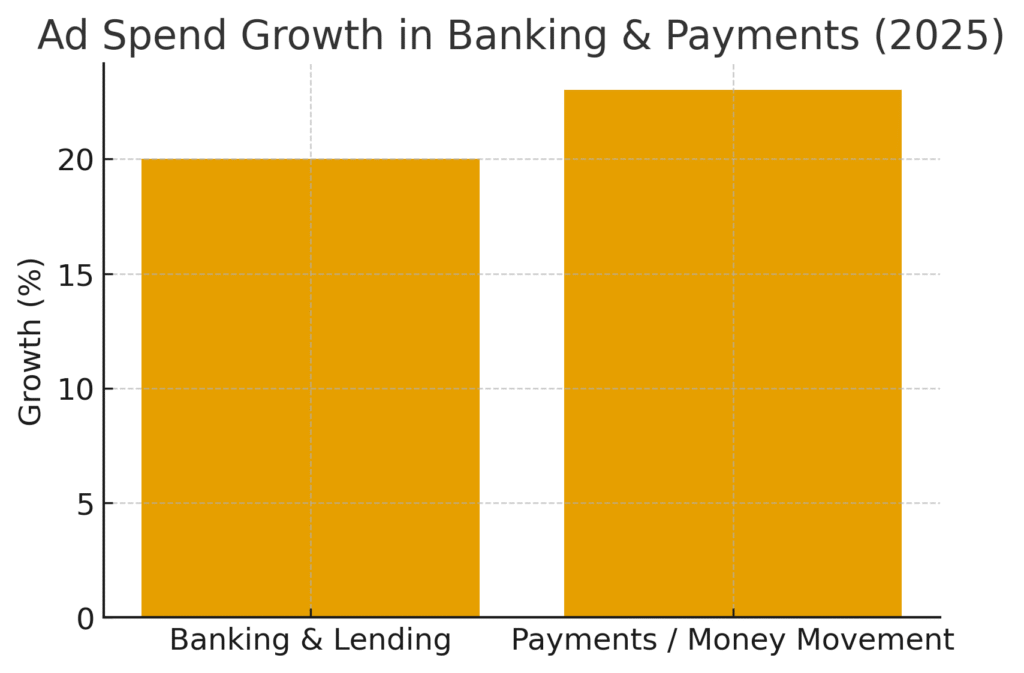
| 1 | Ad spend growth in banking & lending (2025) | +20% |
| 2 | Ad spend growth in payments / money movement (2025) | +23% |
| 3 | U.S. customers using mobile apps as top banking channel | 55% |
| 4 | Consumers rating digital banking experience good/excellent | 96% |
| 5 | Consumers likely to switch primary bank in 2025 | 17% |
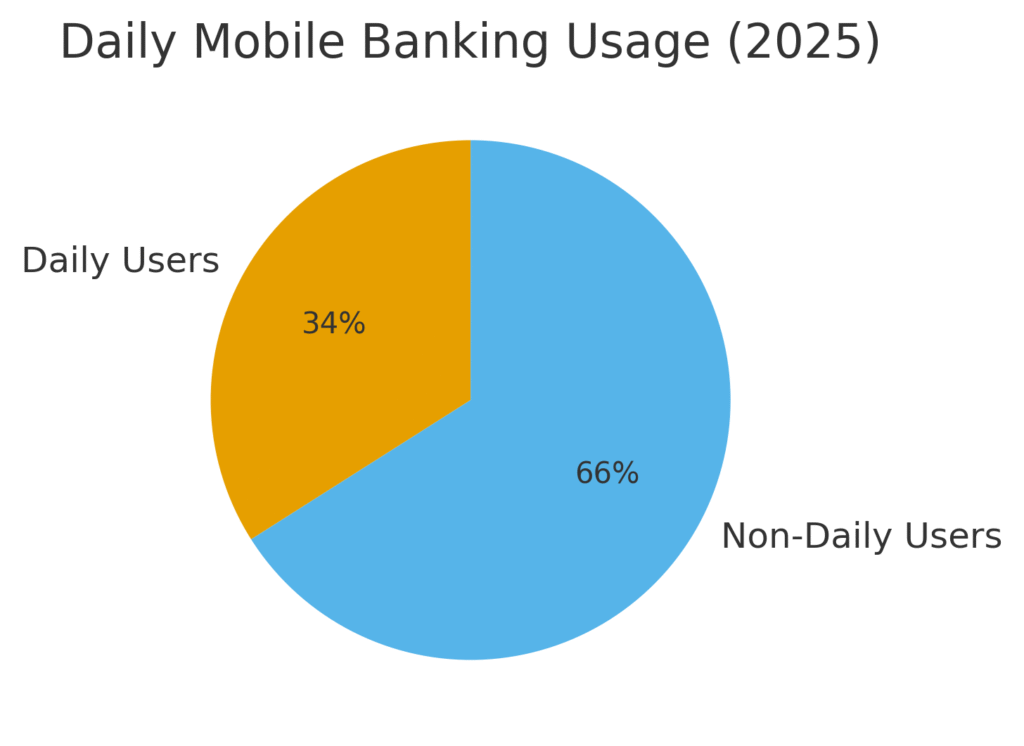
| 6 | Consumers using mobile banking apps daily | 34% |
| 7 | Americans using non-traditional digital banking providers | 42% |
| 8 | Global digital banking users (2025) | 3.6 Billion+ |
| 9 | Digital payments market value (2025) | $20.09 Trillion |
| 10 | Digital banks’ net interest income (2025) | $1.61 Trillion |
| 11 | Smart banking solutions market size (2025) | $28.5 Billion |
| 12 | Banks investing in marketing automation | 35% already, 27% planning |
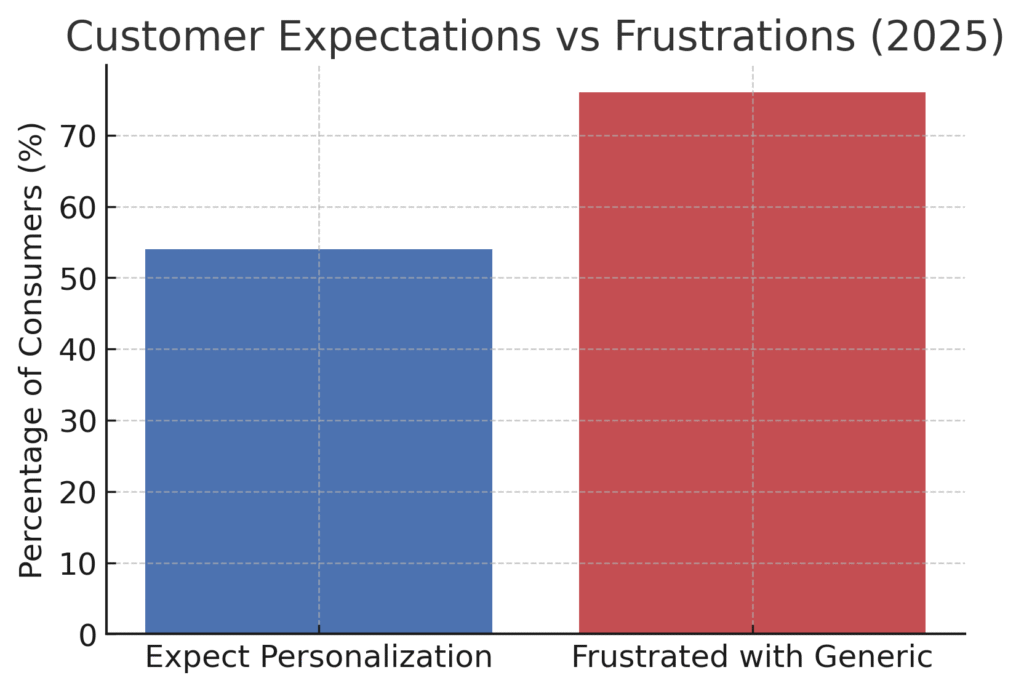
| 13 | Consumers expecting personalized experiences | 54% |
| 14 | Consumers frustrated with generic messaging | 76% |
| 15 | AI-driven fraud share of all fraud attempts (2025) | 42.5% |
| 16 | Customers wanting consistent communication | 79% want, 55% feel disjointed |
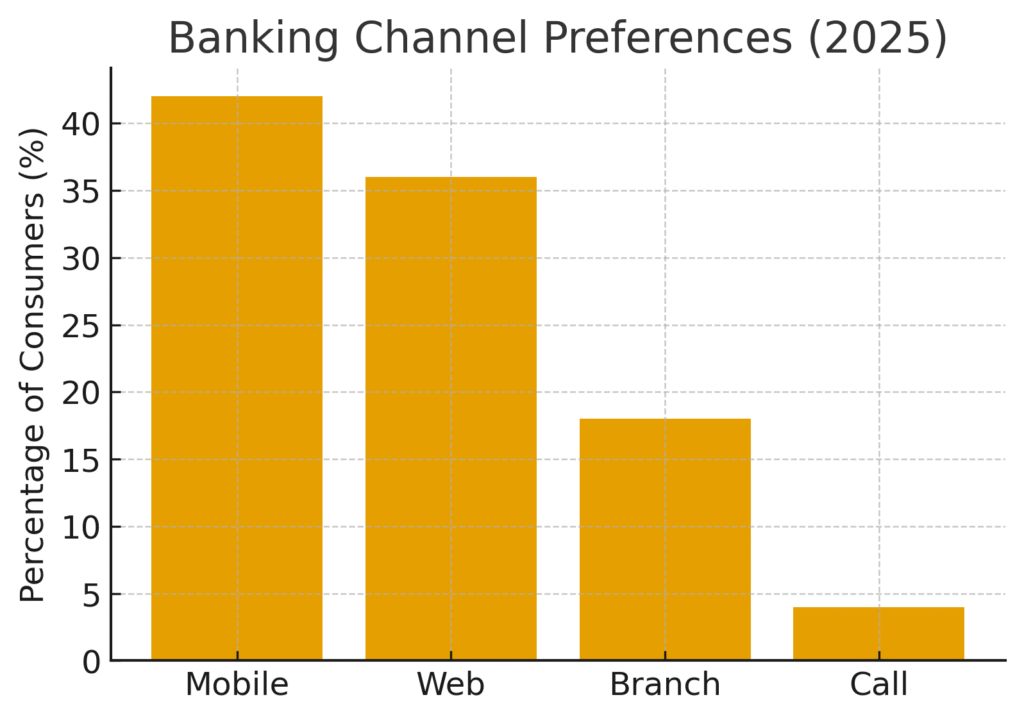
| 17 | Banking channel preference: Mobile vs. Web vs. Branch vs. Call | 42% / 36% / 18% / 4% |
| 18 | Projected U.S. digital banking users (2025) | 216.8 Million |
| 19 | Banks struggling with data-driven marketing capabilities | Significant % |
| 20 | Average ROI on digital marketing spend | $5 per $1 spent |
Top 20 Smart Banking Marketing Statistics 2025
Smart Banking Marketing Statistics #1: Ad Spend Growth In Banking & Lending
In 2025, ad spend in the banking and lending sector is projected to increase by 20%. This surge reflects how financial institutions are prioritizing visibility in competitive digital landscapes. Banks are realizing that customers increasingly begin their journey online, which makes digital advertising essential. The growth also suggests that financial marketers are adapting to customer expectations for transparency and personalization. Ultimately, this increased spend will set new benchmarks for ROI in banking marketing campaigns.
Smart Banking Marketing Statistics #2: Ad Spend Growth In Payments / Money Movement
Ad spend in the payments and money movement sector is expected to grow by 23% in 2025. This highlights the growing consumer demand for fast, secure, and user-friendly payment options. Payment providers are stepping up marketing to differentiate themselves from both traditional banks and fintechs. The increase shows confidence that marketing campaigns can convert digital-first users. As competition heats up, stronger ad investments will shape customer loyalty in the payments space.
Smart Banking Marketing Statistics #3: Mobile Apps As The Leading Banking Channel
About 55% of U.S. customers now use mobile apps as their main channel to manage accounts. This shows how mobile-first strategies are overtaking traditional banking touchpoints. Consumers value convenience and instant access, which makes mobile apps indispensable. Banks that fail to optimize mobile experiences risk losing relevance with tech-savvy users. Mobile dominance also signals that future marketing will be increasingly app-centric.
Smart Banking Marketing Statistics #4: Satisfaction With Digital Banking Experience
A remarkable 96% of consumers report being satisfied with their digital banking experiences. This demonstrates how banks have successfully invested in user-friendly platforms. High satisfaction also creates opportunities for cross-selling and loyalty-building. However, the challenge is maintaining this satisfaction as consumer expectations rise. Marketing strategies will need to keep pace with evolving digital experiences to retain trust.
Smart Banking Marketing Statistics #5: Consumers Likely To Switch Primary Banks
Nearly 17% of consumers say they are likely to switch their primary bank in 2025. This trend emphasizes the importance of customer retention strategies. Banks must focus on delivering personalized offers and seamless digital experiences to prevent churn. Marketing campaigns highlighting trust and innovation could help reduce attrition. With such mobility, loyalty can no longer be taken for granted.
Smart Banking Marketing Statistics #6: Daily Mobile Banking Usage
Roughly 34% of consumers now use mobile banking apps daily. This frequent engagement shows that banking has become part of daily routines. Marketers can leverage this by embedding personalized content and offers within apps. Increased usage also provides valuable data for tailoring future campaigns. Ultimately, the daily reliance on mobile banking opens up continuous touchpoints for marketing.
Smart Banking Marketing Statistics #7: Use Of Non-Traditional Digital Banking Providers
Over 42% of Americans are using non-traditional digital providers alongside traditional banks. This highlights how fintechs and neobanks are reshaping the industry. Consumers are open to exploring multiple platforms if they offer better convenience or value. Banks must recognize this competition and adjust marketing messages accordingly. Loyalty campaigns will become crucial as switching barriers decline.
Smart Banking Marketing Statistics #8: Global Digital Banking User Base
By 2025, more than 3.6 billion people worldwide will be using digital banking services. This massive adoption demonstrates the global shift to financial technology. For marketers, it means audiences are increasingly reachable through digital-first campaigns. The scale of users also highlights opportunities for cross-border financial services. Smart marketing strategies can help brands capture a share of this expanding global base.
Smart Banking Marketing Statistics #9: Digital Payments Market Value
The digital payments market will reach a value of $20.09 trillion in 2025. This staggering figure underlines the growing reliance on online transactions. As consumers transition away from cash, marketing messages should emphasize security and speed. For financial marketers, aligning campaigns with digital payment solutions will be crucial. The sheer size of this market reflects its central role in smart banking strategies.
Smart Banking Marketing Statistics #10: Digital Banks’ Net Interest Income
Digital banks are expected to generate $1.61 trillion in net interest income by 2025. This shows that digital banking is not just a service but a revenue powerhouse. For marketers, this growth demonstrates the financial sustainability of digital-first models. Campaigns can highlight both profitability and customer benefits to attract investors and clients. Strong income streams also mean larger marketing budgets for future initiatives.
Smart Banking Marketing Statistics #11: Smart Banking Solutions Market Size
The smart banking solutions market will hit $28.5 billion in 2025. With forecasts projecting continued growth, this sector offers new opportunities for service providers. Marketing campaigns can position these solutions as essential for modern banking. As technology evolves, banks will look for tools that simplify operations and enhance security. This creates room for B2B marketing alongside consumer-focused efforts.
Smart Banking Marketing Statistics #12: Bank Investment In Marketing Automation
Currently, 35% of banks have invested in marketing automation, with another 27% planning to follow soon. This demonstrates the industry’s shift toward efficiency and personalization. Automation allows banks to engage customers with timely, tailored campaigns. As adoption rises, the gap will widen between banks that embrace automation and those that lag. Marketing automation will likely become a standard expectation rather than a luxury.
Smart Banking Marketing Statistics #13: Expectation Of Personalization From Customers
More than 54% of consumers now expect personalized experiences from their banks. This expectation requires advanced analytics and data-driven marketing strategies. Banks that fail to deliver personalization risk losing customer loyalty. On the flip side, effective personalization can significantly boost engagement. Marketers must prioritize customer data insights to design campaigns that resonate individually.
Smart Banking Marketing Statistics #14: Frustration With Generic Messaging
About 76% of consumers get frustrated when they receive generic financial messaging. This clearly highlights the need for hyper-personalized communication. Marketing that feels “one-size-fits-all” risks alienating customers. Banks can build stronger trust by crafting messages tailored to unique needs. In the competitive digital landscape, personalization has become a survival strategy.
Smart Banking Marketing Statistics #15: AI-Driven Fraud Share
AI-driven fraud is expected to account for 42.5% of all fraud attempts in 2025. While alarming, this statistic highlights the need for innovation in fraud prevention. Marketing can play a role in reassuring customers about banks’ protective measures. Campaigns emphasizing advanced security tools may become differentiators. Addressing security concerns head-on will help build consumer trust.
Smart Banking Marketing Statistics #16: Demand For Consistency Across Channels
Roughly 79% of customers want consistent communication across all departments, but 55% feel communications are disjointed. This gap highlights a major challenge for banks. Marketing strategies must focus on ensuring unified messaging across platforms. Customers increasingly expect a seamless experience whether on mobile, web, or in-branch. Fixing this inconsistency will be a competitive advantage.
Smart Banking Marketing Statistics #17: Channel Preference For Banking Interactions
When asked about preferences, 42% of consumers choose mobile, 36% prefer web, 18% still visit branches, and 4% prefer calling. These numbers show how digital is overtaking traditional channels. Marketers can use this data to prioritize mobile and web campaigns. However, in-branch strategies still matter for certain demographics. The key is to balance innovation with inclusivity in communication.
Smart Banking Marketing Statistics #18: Projected U.S. Digital Banking Users
By 2025, the U.S. is expected to have 216.8 million digital banking users. This widespread adoption makes digital banking mainstream rather than niche. Marketers now have larger audiences accessible through online campaigns. The opportunity is to build brand loyalty in a saturated space. Banks that fail to innovate digitally risk falling behind competitors.
Smart Banking Marketing Statistics #19: Challenges In Data-Driven Marketing
Many banks report struggling with data-driven marketing due to outdated systems. This limits their ability to execute personalized and effective campaigns. As a result, marketing ROI is often below potential. Banks that modernize their systems will unlock greater insights into customer behavior. This statistic underscores the importance of investing in technology for competitive advantage.
Smart Banking Marketing Statistics #20: ROI On Digital Marketing Spend
Businesses in digital marketing often report earning $5 for every $1 spent. For banks, this highlights the immense value of strategic online campaigns. A strong ROI validates increased budgets for digital initiatives. Marketing teams can use this statistic to advocate for more resources. Ultimately, effective digital marketing is one of the most profitable investments banks can make.
Why These Insights Matter for the Future of Banking
After going through these smart banking marketing statistics, I can’t help but reflect on how much potential the banking industry has when it comes to building stronger customer relationships through smarter strategies. For me, the real takeaway is that people now expect convenience, personalization, and transparency—qualities that will continue to shape the future of banking. By understanding these trends, businesses and marketers can better align their strategies with customer expectations. Personally, I find it empowering to know that innovation in banking isn’t just about money—it’s about making people’s lives easier and more connected. And that, to me, is the most exciting part.
SOURCES
- https://bankingjournal.aba.com/2025/01/2025-bank-marketing-trends/
- https://www.mckinsey.com/industries/financial-services/our-insights/banking-matters/banking-trends-snapshot-the-demographic-digital-divide
- https://www.alkami.com/resources/research/reports/the-2025-digital-banking-performance-metrics-report/
- https://www.fiserv.com/en/insights/articles-and-blogs/are-your-banking-customers-digitally-engaged.html
- https://www.invoca.com/blog/financial-services-marketing-statistics
- https://www.driveresearch.com/market-research-company-blog/banking-trends-statistics/
- https://sdk.finance/what-is-digital-banking/
- https://cstmr.com/blog/digital-marketing-for-banks/
- https://www.firstbank.com/resources/learning-center/top-banking-trends-to-watch-in-2025/
- https://www.jackhenry.com/fintalk/where-digital-banking-is-headed-next
- https://livebank24.com/digital-banking/key-digital-banking-statistics-trends-and-insights-in-2025/
- https://www.emarketer.com/content/banking-trends-h2-2025
- https://www.deloitte.com/us/en/insights/industry/financial-services/financial-services-industry-outlooks/banking-industry-outlook.html
- https://theuxda.com/blog/revolutionizing-finance-can-product-design-increase-banks-profits
- https://www.bcg.com/publications/2025/tech-banking-transformation-starts-with-smarter-tech-investment
- https://www.bai.org/wp-content/uploads/2024/10/executive-report-anticipating-bankings-2025-marketing-trends.pdf
- https://www.alkami.com/blog/attracting-millennials-starts-with-digital-banking-solutions/
- https://arxiv.org/abs/2411.14463