



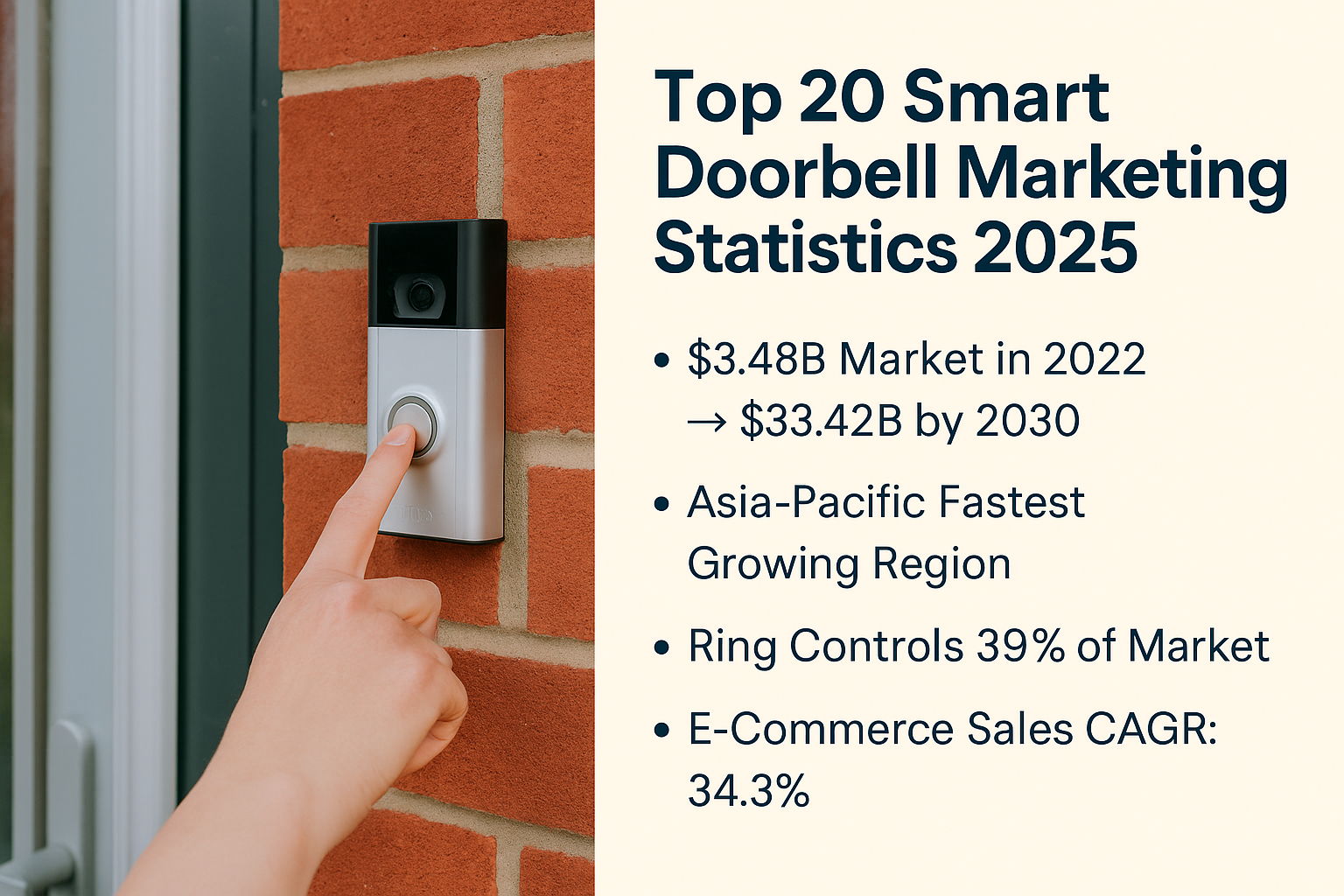
27 Sep TOP 20 SMART DOORBELL MARKETING STATISTICS 2025
When I first started diving into smart doorbell marketing statistics, I realized how much this growing industry reflects our everyday need for security, convenience, and connected living. As someone who follows consumer trends closely, I find it fascinating to see how brands like Ring and Google Nest are shaping households worldwide. These numbers don’t just represent sales or growth—they tell stories about families wanting peace of mind and neighborhoods embracing smarter solutions. To give context and depth, I’ve also leaned on insights from a leading marketing agency in New York that has been at the forefront of analyzing how technology is reshaping the way we live and shop. My goal here is to share these stats with a personal lens, making the data not just informative but relatable.
Top 20 Smart Doorbell Marketing Statistics 2025 (Editor’s Choice)
| Stat # | Statistic | Details |
|---|---|---|
| 1 | $3.48B Market in 2022 → $33.42B by 2030 | Growing at a CAGR of 33.4% globally (2023–2030). |
| 2 | $4.72B in 2024 → $19.1B by 2033 | Projected CAGR of 16.8% over the forecast period. |
| 3 | $18.9B Market Value in 2024 | Expected to reach $91.7B by 2034, with 17.2% CAGR. |
| 4 | $1.77B Doorbell Camera Segment in 2023 | Projected to grow to $4.63B by 2030 (14.8% CAGR). |
| 5 | $2.7B in 2021 → $14.4B by 2031 | Forecasted CAGR of 18.3% during this period. |
| 6 | $16.2B Market Size in 2023 | Estimated CAGR of 16.7% between 2024 and 2030. |
| 7 | Wireless Segment Growth | Expanding fastest, with CAGR of 35.5% in some forecasts. |
| 8 | Hardware Holds 78% Share (2024) | Software expected to grow faster with ~24.5% CAGR. |
| 9 | E-commerce Fastest Distribution Channel | Online sales projected CAGR of 34.3%. |
| 10 | Offline Channel Still Growing | Forecast CAGR of 18.3% as consumers prefer in-store demos. |
| 11 | North America Leads with 35% Share | Largest regional market in 2022. |
| 12 | Asia-Pacific Fastest Growing Region | Driven by urbanization, rising incomes, and smart homes. |
| 13 | U.S. Market at $1.44B (2024) | Expected to reach $3.82B by 2032 (12.9% CAGR). |
| 14 | 27% Sales Growth in One Year | U.S. smart doorbell sales projected sharp year-over-year rise. |
| 15 | 400,000+ Ring Units Sold in Dec 2020 | Amazon sold huge volumes during the holiday season. |
| 16 | 4th Most Popular Smart Appliance | Smart doorbells rank high among consumer smart devices. |
| 17 | Top Players Dominate Market | Amazon, Google, Arlo, Vivint, and August lead globally. |
| 18 | Top 5 Hold 76.3% Market Share | Global smart doorbell market highly consolidated. |
| 19 | Ring Controls 39% of Market | Amazon’s Ring brand leads globally in 2024. |
| 20 | Google Holds ~16% Share | Second largest player in the smart doorbell industry. |
Top 20 Smart Doorbell Marketing Statistics 2025
Smart Doorbell Marketing Statistics #1: $3.48B Market in 2022 → $33.42B by 2030
The smart doorbell market was valued at $3.48 billion in 2022 and is projected to hit $33.42 billion by 2030. This incredible growth reflects the rising demand for home security and convenience. Consumers are increasingly embracing connected technology to make their homes safer and smarter. The CAGR of 33.4% is one of the strongest across all smart home categories. It shows just how important doorbell technology has become in people’s everyday lives.
Smart Doorbell Marketing Statistics #2: $4.72B in 2024 → $19.1B by 2033
By 2024, the smart doorbell market reached $4.72 billion, and it’s expected to grow to $19.1 billion by 2033. This growth represents a CAGR of 16.8%, showing steady long-term adoption. It highlights how consumers are willing to invest in technology that enhances both safety and lifestyle. Marketing in this segment will require tapping into both security and convenience messaging. The numbers show that smart doorbells are no longer a niche—they’re becoming mainstream.
Smart Doorbell Marketing Statistics #3: $18.9B Market Value in 2024
In 2024, the smart doorbell industry reached an estimated market value of $18.9 billion. Forecasts suggest it could reach $91.7 billion by 2034, an impressive 17.2% CAGR. This stat reflects the global appetite for smart devices that blend functionality with peace of mind. Households across the world are quickly adopting these products as standard home equipment. It’s clear that doorbells are no longer just about ringing—they’re part of an entire security ecosystem.
Smart Doorbell Marketing Statistics #4: $1.77B Doorbell Camera Segment in 2023
The doorbell camera market alone was valued at $1.77 billion in 2023. By 2030, this segment is projected to hit $4.63 billion with a CAGR of 14.8%. This shows that video capability is one of the biggest drivers of consumer interest. Customers don’t just want alerts—they want to see who is at their door in real time. Visual confirmation has become a major selling point for marketers and manufacturers.
Smart Doorbell Marketing Statistics #5: $2.7B in 2021 → $14.4B by 2031
In 2021, the global smart doorbell market was worth $2.7 billion. By 2031, it’s expected to reach $14.4 billion, with an annual CAGR of 18.3%. This decade-long surge illustrates the consistent pace of adoption worldwide. Brands that entered the market early have a significant advantage now. At the same time, new players still have room to capture market share as growth continues.

Smart Doorbell Marketing Statistics #6: $16.2B Market Size in 2023
The global smart doorbell market stood at $16.2 billion in 2023. It is estimated to grow at a CAGR of 16.7% through 2030. This indicates consistent demand from both developed and emerging markets. More homeowners are prioritizing smart home technology for safety. Marketers can leverage this stat to highlight the reliability of ongoing demand.
Smart Doorbell Marketing Statistics #7: Wireless Segment Growth
The wireless smart doorbell segment is expected to grow at the fastest rate, with a CAGR of 35.5%. Consumers increasingly prefer wireless setups because they are easier to install. This trend shows a shift toward convenience and quick integration. Marketers should emphasize “plug and play” features in their messaging. Ease of use will be a winning selling point for brands.
Smart Doorbell Marketing Statistics #8: Hardware Holds 78% Share (2024)
In 2024, hardware accounted for about 78% of the smart doorbell market. Software, however, is expected to grow faster at around 24.5% CAGR. This signals that innovation is moving toward smarter features and integrations. While hardware remains crucial, services and apps are becoming just as important. Consumers now expect both durable devices and seamless user experiences.
Smart Doorbell Marketing Statistics #9: E-Commerce Fastest Distribution Channel
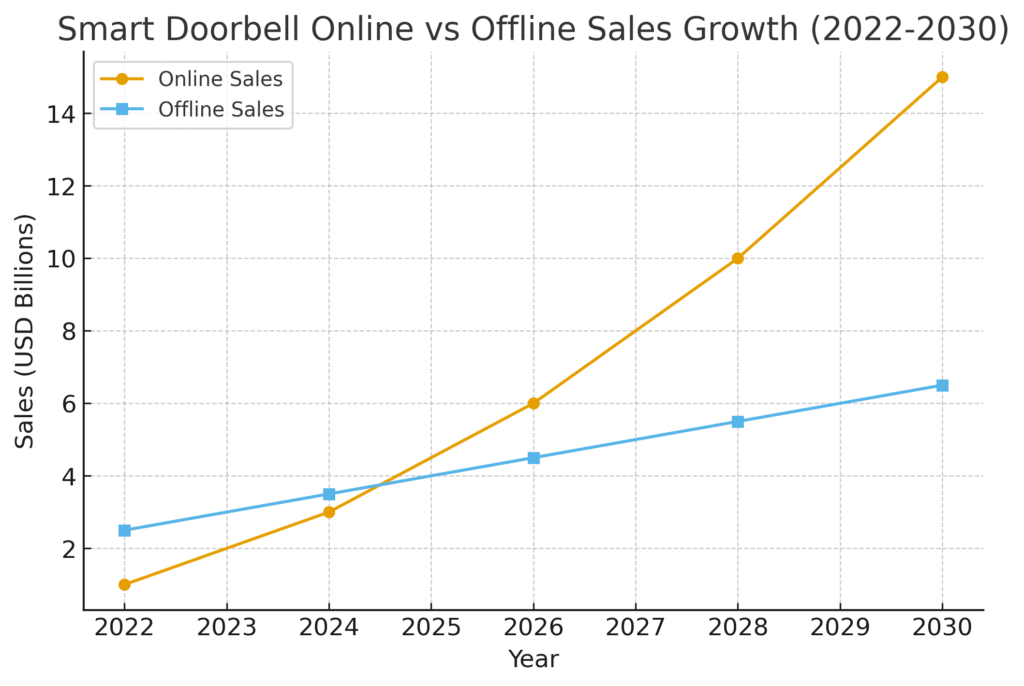
E-commerce has emerged as the fastest-growing sales channel for smart doorbells. Online sales are projected to grow at a CAGR of 34.3%. This reflects changing consumer buying habits and comfort with purchasing tech online. Reviews and comparison shopping are powerful drivers in this channel. For marketers, digital presence and strong online branding are absolutely essential.
Smart Doorbell Marketing Statistics #10: Offline Channel Still Growing
Despite the rise of online sales, offline sales are expected to grow at an 18.3% CAGR. Many consumers still prefer testing security devices in person before purchasing. Retail showrooms allow them to experience the product’s quality and design. This trend means physical retailers still play an important role. Marketers should maintain strategies for both online and offline engagement.
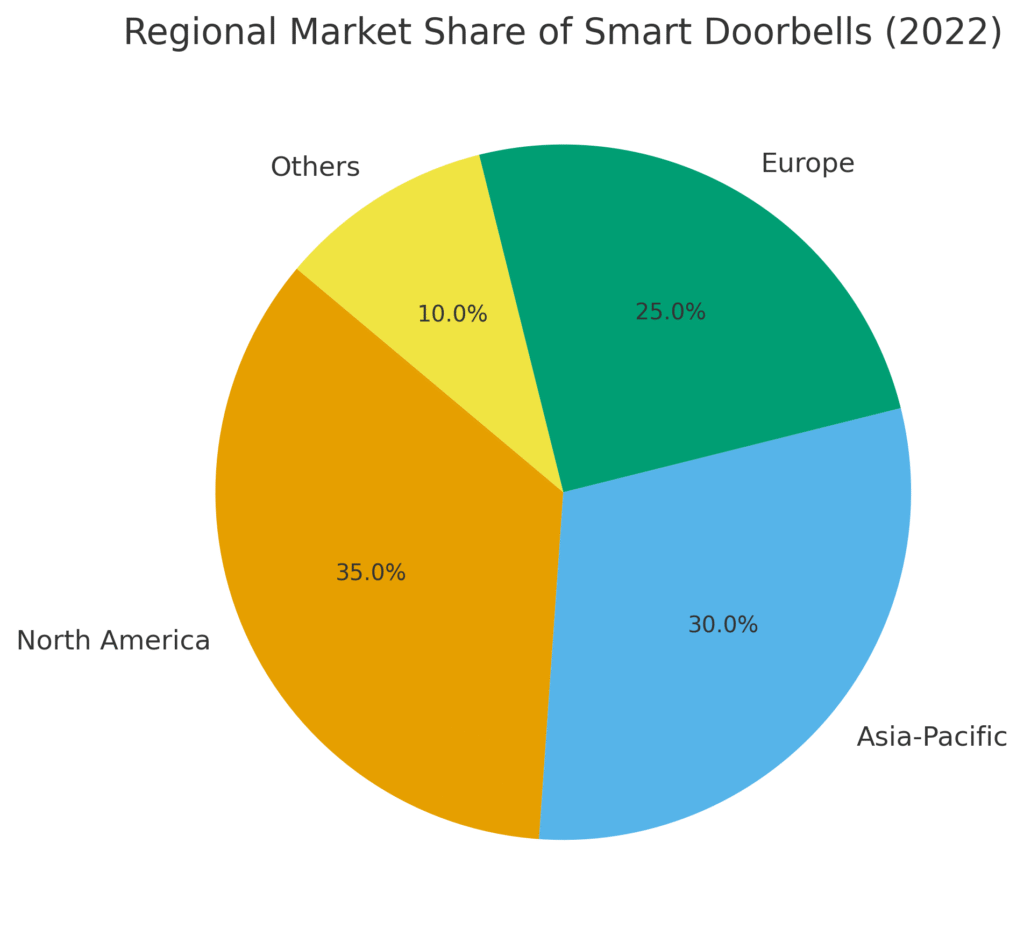
Smart Doorbell Marketing Statistics #11: North America Leads with 35% Share
North America held 35% of the smart doorbell market in 2022. This dominance is due to high smart home adoption and security awareness. The U.S. market especially drives much of this growth. Marketing campaigns in this region often focus on convenience, safety, and integration with existing systems. It highlights how regional consumer behavior influences adoption rates.
Smart Doorbell Marketing Statistics #12: Asia-Pacific Fastest Growing Region
Asia-Pacific is the fastest-growing region for smart doorbells. Rapid urbanization and rising disposable incomes are fueling this trend. Consumers in this region are eager to adopt the latest smart home technologies. It’s also a highly competitive market with numerous local players. This creates both opportunities and challenges for global brands.
Smart Doorbell Marketing Statistics #13: U.S. Market at $1.44B (2024)
The U.S. smart doorbell market was valued at $1.44 billion in 2024. It’s expected to reach $3.82 billion by 2032, with a CAGR of 12.9%. This consistent growth shows that smart doorbells are becoming a standard feature in American homes. Rising concerns about home security are a key driver. Marketers can use these insights to target middle-class homeowners effectively.
Smart Doorbell Marketing Statistics #14: 27% Sales Growth in One Year
Sales of smart doorbells in the U.S. grew by 27% in just one year. This rapid spike highlights the strong consumer response. Security concerns, combined with holiday promotions, fueled much of this growth. Such sharp increases suggest high responsiveness to marketing campaigns. Brands can expect similar surges during peak shopping seasons.
Smart Doorbell Marketing Statistics #15: 400,000+ Ring Units Sold in Dec 2020
In December 2020, Amazon sold over 400,000 Ring smart doorbells and accessories. This highlights the huge holiday demand for home security devices. It also shows how branding and trust drive purchasing decisions. Consumers view Ring as a reliable household name. Marketers can learn from this by focusing on brand credibility.

Smart Doorbell Marketing Statistics #16: 4th Most Popular Smart Appliance
Smart doorbells are ranked as the 4th most popular smart appliance. This shows their strong position compared to other home devices. They have moved from being a “luxury” to a “must-have.” Popularity indicates broad consumer acceptance across income levels. This is a powerful marketing angle for mainstream adoption.
Smart Doorbell Marketing Statistics #17: Top Players Dominate Market
The global smart doorbell industry is dominated by Amazon, Google, Arlo, Vivint, and August. These brands have built strong reputations and wide product ranges. Their dominance creates high competition for smaller companies. At the same time, it validates the size and potential of the industry. Consumers often trust established brands when it comes to home security.
Smart Doorbell Marketing Statistics #18: Top 5 Hold 76.3% Market Share
The top 5 players account for 76.3% of the global smart doorbell market. This indicates significant market concentration. It makes entry difficult for new players without innovation or niche focus. Still, it shows that there’s a proven demand in this sector. Marketers should be aware of the competitive landscape when strategizing campaigns.
Smart Doorbell Marketing Statistics #19: Ring Controls 39% of Market
Amazon’s Ring brand controls about 39% of the market. This makes it the clear leader among smart doorbell manufacturers. Its dominance is due to brand trust, pricing, and product range. Competitors must differentiate to stand out against such a strong player. For consumers, this dominance signals reliability and popularity.
Smart Doorbell Marketing Statistics #20: Google Holds ~16% Share
Google holds around 16% of the smart doorbell market. Its Nest brand competes closely with Ring. Google leverages its ecosystem integration as a competitive edge. This stat highlights the importance of tech ecosystems in consumer choices. It’s proof that consumers prefer devices that integrate smoothly with their other smart products.
Final Thoughts on Smart Doorbell Marketing Statistics
Looking back at these smart doorbell marketing statistics, what strikes me most is the rapid pace at which households are adopting these devices. It’s not just about technology—it’s about the sense of safety, comfort, and connection that people are searching for in their everyday lives. Personally, I think this trend shows how marketing must go beyond pushing products to truly connecting with consumer emotions. For me, it’s clear that this market will only grow stronger as awareness spreads and the value becomes undeniable. I hope these insights gave you both knowledge and perspective, just like they did for me.
SOURCES
- https://www.safehome.org/doorbell-cameras/statistics/
- https://www.gminsights.com/industry-analysis/smart-doorbell-market
- https://straitsresearch.com/report/smart-doorbell-market
- https://www.marknteladvisors.com/research-library/smart-doorbell-market.html
- https://www.zionmarketresearch.com/news/global-smart-doorbell-market
- https://www.theceoviews.com/smart-home-trends-for-improved-security/
- https://theceoviews.com/smart-home-trends-for-improved-security/
- https://www.vivint.com/resources/article/smart-home-trends-2025
- https://www.theverge.com/tech/786558/ring-battery-doorbell-plus-october-prime-day-deals-sale
- https://www.reddit.com/r/smarthome/comments/1khw1hm/i_analyzed_reddit_data_for_the_25_most/
- https://www.theceoviews.com/smart-home-trends-for-improved-security/
- https://www.guardianprotection.com/blog/2025-home-security-trends/
- https://www.thinksafehouse.com/emerging-trends-in-smart-home-security-technology/
- https://en.wikipedia.org/wiki/Smart_doorbell