



27 Sep TOP 20 SMART FACTORY MARKETING STATISTICS 2025
As I was researching the latest smart factory marketing statistics, I couldn’t help but think about how quickly technology is reshaping the way we understand and promote manufacturing innovation. From automation and AI-driven analytics to the global shift toward Industry 4.0, the pace of change is remarkable. To make sense of these shifts, I’ve pulled together key insights that reveal how businesses are adapting, growing, and rethinking their strategies in this new era. Working closely with a leading marketing agency in New York, I’ve learned just how important it is to align data with storytelling—because numbers alone don’t drive change, but the meaning behind them truly does.
Top 20 Smart Factory Marketing Statistics 2025 (Editor’s Choice)
| Stat # | Smart Factory Marketing Statistics | Details |
|---|---|---|
| 1 | Global smart factory market value (2024) | USD 209.96 billion |
| 2 | Projected smart factory market size (2033) | USD 452.54 billion |
| 3 | Smart factory CAGR (2025–2032) | 10.7% |
| 4 | Industrial automation market size (2030) | USD 378.57 billion |
| 5 | Industrial software market forecast (2030) | USD 355 billion |
| 6 | U.S. smart manufacturing market (2030) | USD 160.94 billion |
| 7 | Manufacturers using cloud computing (2025) | 57% |
| 8 | Manufacturers using IIoT (2025) | 46% |
| 9 | AI/ML deployment at facility level | 29% |
| 10 | Generative AI pilots in manufacturing | 38% |
| 11 | Top investment priority: Data analytics | 40% |
| 12 | Manufacturers using big data analytics | 53% |
| 13 | Asset efficiency improvement (smart factories) | ~20% |
| 14 | Operating cost reduction via automation | 22% |
| 15 | ROI from robotic process automation (RPA) | 30–200% in first year |
| 16 | Asia-Pacific share of smart factory market | 45.5% |
| 17 | Industrial robots’ share of smart factory market | 41% |
| 18 | Top technology segment: Distributed control systems (DCS) | Largest share |
| 19 | Leading component type: Industrial sensors | Strongest growth |
| 20 | Fastest-growing software segment | Cloud infrastructure & AI |
Top 20 Smart Factory Marketing Statistics 2025
Smart Factory Marketing Statistics #1: Global Smart Factory Market Value (2024)
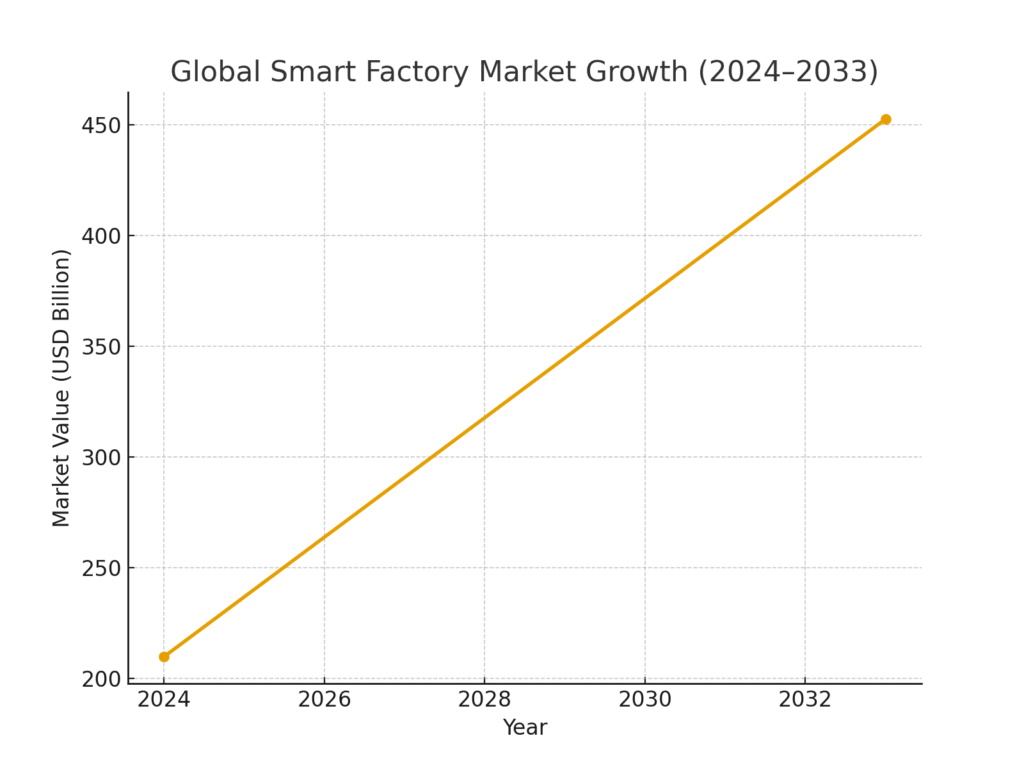
The global smart factory market was valued at USD 209.96 billion in 2024, showing the significant scale of this sector. This reflects how manufacturers worldwide are embracing digital transformation and automation. Such a large market value underlines the urgency for businesses to adapt to Industry 4.0 technologies. Marketing strategies around this statistic often focus on efficiency, innovation, and competitiveness. For me, it’s a reminder of how numbers can showcase both opportunity and industry momentum.
Smart Factory Marketing Statistics #2: Projected Smart Factory Market Size (2033)
By 2033, the smart factory market is expected to reach USD 452.54 billion. This projection highlights long-term growth potential across various industries. Companies planning their marketing now have the chance to align with a decade of expansion. The statistic emphasizes the importance of sustained investment in automation and AI. Personally, I see this as a sign that the story of smart factories is only just beginning.
Smart Factory Marketing Statistics #3: Smart Factory CAGR (2025–2032)
The smart factory market is forecast to grow at a CAGR of 10.7% between 2025 and 2032. This strong growth rate signals resilience and adaptability in a rapidly evolving sector. For marketers, such growth provides a foundation for building campaigns around innovation. A double-digit CAGR makes smart factories attractive to both investors and industry leaders. It reinforces the idea that digitalization is not optional—it’s essential for future competitiveness.
Smart Factory Marketing Statistics #4: Industrial Automation Market Size (2030)
Industrial automation is expected to reach USD 378.57 billion by 2030. This closely related domain is fueling much of the smart factory transformation. The scale of this number reflects how automation technologies are becoming mainstream globally. Marketers can highlight the cost savings, productivity gains, and safety benefits of automation. I see this as a reminder of how interconnected automation and smart factories truly are.
Smart Factory Marketing Statistics #5: Industrial Software Market Forecast (2030)
The industrial software market is forecast to grow to USD 355 billion by 2030. Software is the backbone of smart factories, powering data analysis, AI, and cloud systems. Marketing campaigns around this trend often stress digital intelligence and decision-making. The growth reflects how businesses are willing to invest in advanced platforms. Personally, I think this makes the “software side” of smart factories just as important as the hardware.
Smart Factory Marketing Statistics #6: U.S. Smart Manufacturing Market (2030)
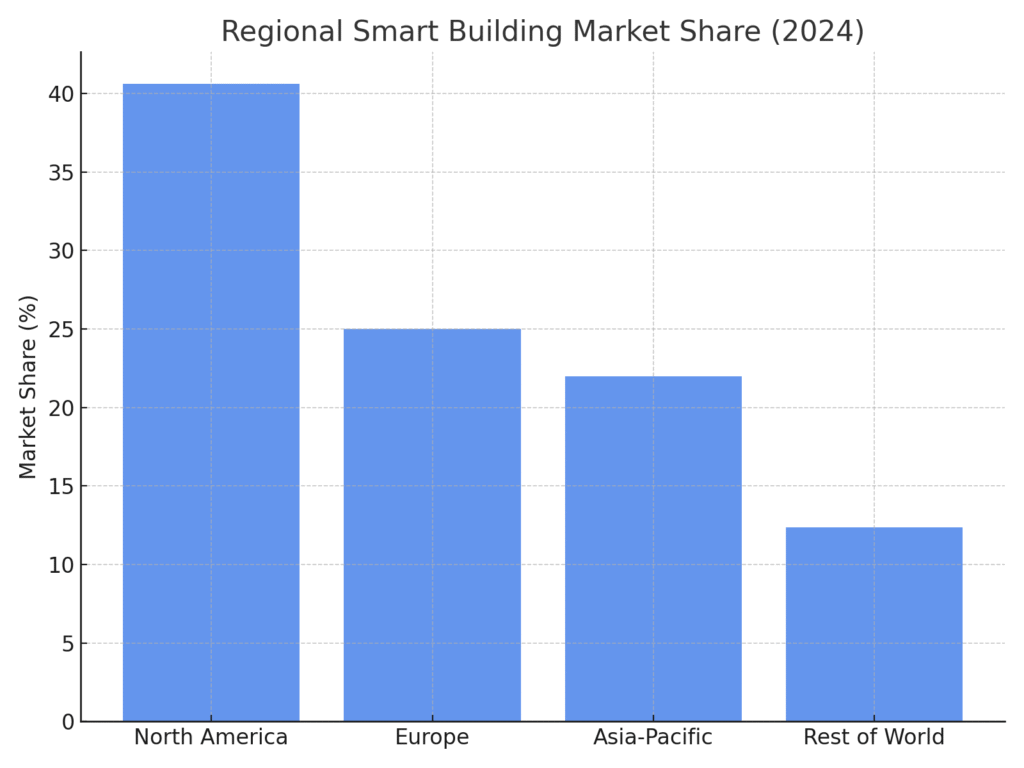
In the United States, smart manufacturing is projected to hit USD 160.94 billion by 2030. This shows that adoption is not just global but also strong regionally. American manufacturers are focusing on digital strategies to remain competitive. Marketing in the U.S. emphasizes innovation leadership and domestic economic growth. For me, this highlights how regional numbers can carry just as much weight as global ones.
Smart Factory Marketing Statistics #7: Manufacturers Using Cloud Computing (2025)
By 2025, 57% of manufacturers are expected to be using cloud computing. Cloud adoption ensures scalability, real-time data sharing, and flexibility. Marketing based on this statistic often focuses on collaboration and agility. Cloud solutions are increasingly seen as standard rather than optional. I find it interesting how cloud has quickly become the bedrock of digital manufacturing.
Smart Factory Marketing Statistics #8: Manufacturers Using IIoT (2025)
Industrial IoT (IIoT) is used by 46% of manufacturers in 2025. This shows how sensor-driven insights are becoming widespread. For marketers, IIoT adoption highlights efficiency and predictive maintenance. It also ties into stories about sustainability and waste reduction. Personally, I see IIoT as the “eyes and ears” of modern factories.
Smart Factory Marketing Statistics #9: AI/ML Deployment at Facility Level
Around 29% of manufacturers are deploying AI/ML at the facility level. AI and ML unlock predictive analytics, quality control, and process optimization. Marketing strategies often highlight intelligence and automation working together. Adoption at this level proves that these are not just experimental tools—they are practical assets. I think this shows how quickly AI is moving from hype to real-world application.
Smart Factory Marketing Statistics #10: Generative AI Pilots in Manufacturing
38% of manufacturers are piloting generative AI within operations. This emerging technology is being tested for design, predictive insights, and efficiency. Marketers can use this number to show how forward-thinking brands experiment with cutting-edge tools. Generative AI connects creativity with industrial innovation in surprising ways. Personally, I find this stat exciting because it blends human imagination with machine power.

Smart Factory Marketing Statistics #11: Top Investment Priority—Data Analytics
40% of manufacturers list data analytics as their top investment priority. This shows the growing demand for actionable insights in real time. Marketing campaigns tied to analytics stress precision, forecasting, and competitive advantage. Data is often seen as the “new oil,” and smart factories prove that idea. For me, it highlights how insights drive not only operations but also storytelling.
Smart Factory Marketing Statistics #12: Manufacturers Using Big Data Analytics
53% of manufacturers now use big data analytics. This reflects the mainstream adoption of data-driven decision-making. Marketing stories here focus on empowerment and informed strategy. The widespread usage shows how data has moved from being a buzzword to an operational necessity. Personally, I view this as a turning point for smart manufacturing maturity.
Smart Factory Marketing Statistics #13: Asset Efficiency Improvement (Smart Factories)
Smart factories can improve asset efficiency by roughly 20%. This is one of the most concrete benefits marketers can highlight. Improved efficiency translates to better ROI, sustainability, and reduced downtime. Campaigns based on this number focus on measurable outcomes. I see it as proof that technology is about tangible impact, not just theory.
Smart Factory Marketing Statistics #14: Operating Cost Reduction via Automation
Companies investing in automation report a 22% reduction in operating costs. This makes automation a clear business case, not just a futuristic idea. For marketers, this figure is gold when promoting ROI and competitiveness. Lower costs are universally appealing across industries. Personally, I think this stat drives home why automation adoption is accelerating.
Smart Factory Marketing Statistics #15: ROI from Robotic Process Automation (RPA)
RPA delivers between 30% to 200% ROI in the first year. This extraordinary return shows how quickly automation pays off. Marketers can highlight speed, scalability, and measurable gains. This figure also appeals to decision-makers hesitant about upfront investment. I find it striking how fast technology can go from cost to profit.

Smart Factory Marketing Statistics #16: Asia-Pacific Share of Smart Factory Market
Asia-Pacific holds 45.5% of the global smart factory market share. This makes the region the dominant force in Industry 4.0. Marketing campaigns often highlight leadership, scale, and innovation from Asia. This figure also shows where future competition and growth will be concentrated. Personally, it fascinates me how geography shapes the narrative of technology adoption.
Smart Factory Marketing Statistics #17: Industrial Robots’ Share of Smart Factory Market
Industrial robots account for 41% of the smart factory market. Robots represent the most visible face of factory automation. Marketing stories here can emphasize precision, safety, and productivity. Their share shows how indispensable robots have become to manufacturing. I think this stat symbolizes the blending of human creativity and robotic efficiency.
Smart Factory Marketing Statistics #18: Top Technology Segment—Distributed Control Systems (DCS)
Distributed control systems (DCS) recorded the largest share by technology in 2024. This highlights the importance of integrated and decentralized factory systems. Marketing strategies often stress reliability, control, and flexibility when discussing DCS. Such systems form the “brains” of smart factories. Personally, I see this stat as proof that behind the scenes, smart systems matter as much as robots.
Smart Factory Marketing Statistics #19: Leading Component Type—Industrial Sensors
Industrial sensors are expected to lead growth in smart factory components. These sensors provide the real-time data factories rely on. For marketers, sensors represent the foundation of predictive and connected systems. Their importance reflects the shift toward data-centric operations. I like to think of sensors as the heartbeat of a smart factory.
Smart Factory Marketing Statistics #20: Fastest-Growing Software Segment—Cloud Infrastructure & AI
The fastest-growing segment is cloud infrastructure and AI. This shows the combined power of connectivity and intelligence. Marketing strategies can tie this stat to innovation, speed, and agility. It emphasizes how smart factories are shifting to smarter, flexible platforms. Personally, I think this reflects the way cloud and AI are shaping every corner of modern industry.
Final Thoughts on Smart Factory Marketing Statistics
Looking back at these smart factory marketing statistics, it’s clear that the fusion of data and technology is not just transforming manufacturing floors but also the way we communicate value in the marketplace. Personally, I find it inspiring to see how insights like these can fuel creativity and sharpen competitive strategies. For me, the takeaway is simple: the future of marketing in this space is about staying agile and embracing innovation with confidence. I’m excited to keep exploring and sharing more trends that help us connect the dots between cutting-edge production and effective outreach.
SOURCES
https://www.deloitte.com/us/en/insights/industry/manufacturing/2025-smart-manufacturing-survey.html (Deloitte)
https://www.marketsandmarkets.com/Market-Reports/smart-factory-market-1227.html (MarketsandMarkets)
https://www.marketsandmarkets.com/PressReleases/smart-factory.asp (MarketsandMarkets)
https://thunderbit.com/blog/automation-statistics-industry-data-insights (Thunderbit)
https://www.fortunebusinessinsights.com/smart-manufacturing-market-103594 (Fortune Business Insights)
https://www.rockwellautomation.com/en-us/capabilities/digital-transformation/state-of-smart-manufacturing.html (Rockwell Automation)
https://www.industryarc.com/Report/19013/smart-factory-and-industrial-automation-market (IndustryArc)
https://www.lucintel.com/smart-factory-market.aspx (Lucintel)
https://straitsresearch.com/report/industrial-automation-market (Straits Research)
https://www.precedenceresearch.com/smart-factory-market (Precedence Research)
https://www.automate.org/news/the-rise-of-smart-factories-engineering-beyond-automation (Automate)
https://arxiv.org/abs/2502.03040 (arXiv)
https://arxiv.org/abs/2504.21525 (arXiv)
https://arxiv.org/abs/2109.03655 (arXiv)
https://arxiv.org/abs/2205.10154 (arXiv)
https://www.businessinsider.com/automated-robotics-ai-algorithms-boost-manufacturing-in-new-factories-2025-9 (Business Insider)