



27 Sep TOP 20 SMART HOME MARKETING STATISTICS 2025
As someone who has been closely observing the evolution of technology in our daily lives, I find it fascinating how quickly smart devices have become a part of our homes. From voice-activated assistants to fully automated lighting and security systems, the demand for these products continues to surge. That’s why I wanted to share some of the most important smart home marketing statistics for 2025, because they truly highlight where consumer behavior is heading. In putting this together, I’ve also leaned on the expertise of a leading marketing agency in New York, whose insights into consumer trends have been instrumental in shaping how I view this market. My hope is that these numbers don’t just inform but also inspire creative marketing strategies that connect better with today’s tech-savvy homeowners.
Top 20 Smart Home Marketing Statistics 2025 (Editor’s Choice)
| No. | Smart Home Marketing Statistic | Year/Projection | Source |
|---|---|---|---|
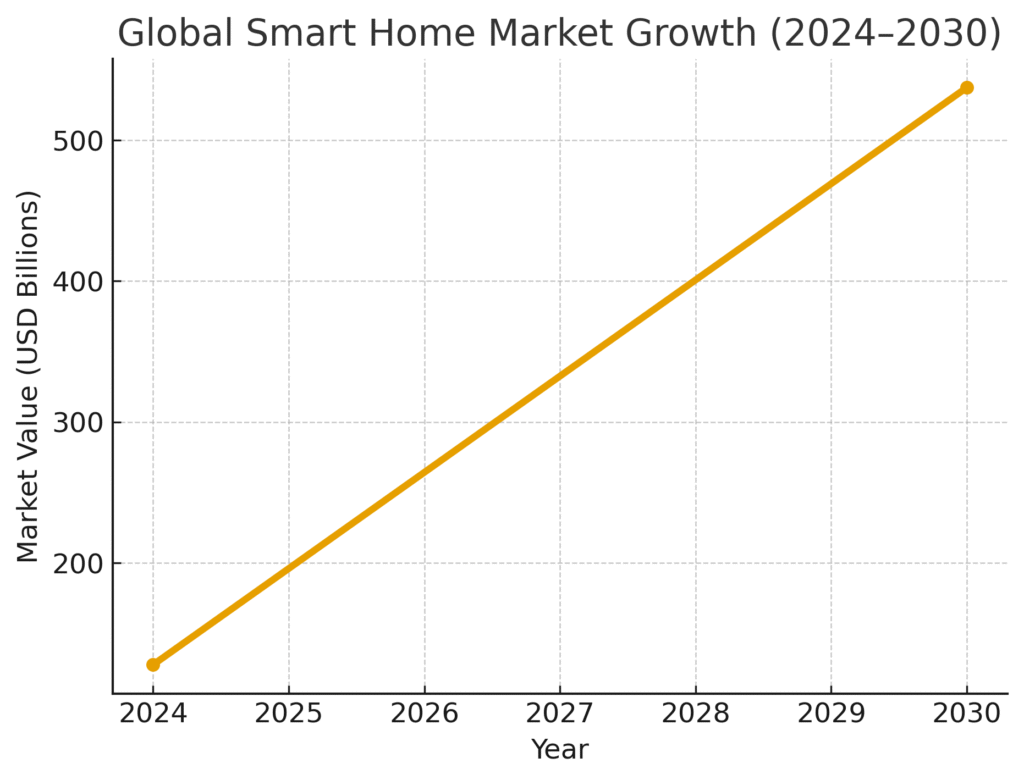
| 1 | Global market valued at USD 127.80B, projected to reach USD 537.27B | 2024 → 2030 | Grand View Research |
| 2 | Market to hit USD 1,404.59B, up from USD 127.67B | 2024 → 2034 | Precedence Research |
| 3 | Growth from USD 133.3B to USD 1,033.7B, CAGR 20.47% | 2024 → 2035 | Roots Analysis |
| 4 | Market to reach USD 489.2B from 216.3B | 2025 → 2035 | Future Market Insights |
| 5 | USD 255.2B growth with CAGR 23.5% | 2024 → 2029 | Technavio |
| 6 | Security & access control segment leads with 29% share | 2024 | Grand View Research |
| 7 | Wireless protocols dominate smart home connectivity | 2025 Onwards | Future Market Insights |
| 8 | Single-family smart homes grow from USD 116.9B to 137.17B | 2024 → 2025 | Business Research Co. |
| 9 | Single-family smart homes projected USD 266.24B | 2029 | Business Research Co. |
| 10 | 63.43M U.S. homes use smart devices (~45% households) | 2023 | RubyHome |
| 11 | 45% of U.S. internet households own smart devices | 2024 | Parks Associates |
| 12 | EU7 smart device revenue hit USD 13.9B (+6.5% YoY) | H1 2024 | NielsenIQ |
| 13 | U.S. smart homes grew 10.2% annually (2018–2023) | 2018 → 2023 | Wikipedia |
| 14 | Smart devices increase resale home value by 5% | Ongoing | Today’s Homeowner |
| 15 | UK homeowners spend avg £360 on smart tech yearly | 2024 | The Sun |
| 16 | 19% regret smart tech purchases due to underperformance | 2024 | The Sun |
| 17 | WiFi smart devices shipments grow CAGR 21% | 2021 → 2025 | AWS Marketplace |
| 18 | EU markets recover with 6.5% sales growth | 2024 | NielsenIQ |
| 19 | Average revenue per U.S. smart home is USD 546.50 | 2024 | Market.us |
| 20 | Smart kitchen segment is fastest-growing category | 2025 Onwards | Markets and Markets |
Top 20 Smart Home Marketing Statistics 2025
Smart Home Marketing Statistics #1 – Global Market Valued at USD 127.80B, Projected to Reach USD 537.27B
The global smart home market reached an impressive USD 127.80 billion in 2024, showcasing strong consumer demand for home automation. Projections suggest it will surge to USD 537.27 billion by 2030, reflecting a CAGR of about 27%. This rapid growth indicates that smart home products are becoming mainstream, with adoption spanning across different demographics. Companies tapping into this market have an opportunity to capture long-term loyalty as households upgrade their technology. This statistic highlights the need for marketing campaigns that emphasize innovation, convenience, and lifestyle improvement.
Smart Home Marketing Statistics #2 – Market to Hit USD 1,404.59B, Up from USD 127.67B
Precedence Research projects the smart home market will grow from USD 127.67 billion in 2024 to an astonishing USD 1,404.59 billion by 2034. This dramatic rise shows that smart homes are set to become an integral part of future living. Marketers can use this insight to position products not just as tech tools, but as lifestyle essentials. The projection also reinforces that the smart home industry is far from a passing trend. Brands that invest early in consumer education and trust-building will be best positioned to capture this growth.
Smart Home Marketing Statistics #3 – Growth from USD 133.3B to USD 1,033.7B, CAGR 20.47%
Roots Analysis reports that the smart home market will expand from USD 133.3 billion in 2024 to USD 1,033.7 billion by 2035. This reflects a CAGR of 20.47%, showing a consistent and sustainable adoption rate. The steady increase demonstrates that smart home technology is being embraced steadily rather than sporadically. For marketers, it’s a chance to build long-term brand positioning that emphasizes innovation and trust. This number reinforces the idea that investing in smart home marketing is a future-proof strategy.
Smart Home Marketing Statistics #4 – Market to Reach USD 489.2B from 216.3B
Future Market Insights predicts that the smart home market will grow from USD 216.3 billion in 2025 to USD 489.2 billion by 2035. With a CAGR of 8.5%, this projection shows reliable and steady industry growth. Marketers should focus not only on new adoption but also on upgrades for existing systems. Highlighting the long-term value of smart devices will resonate with homeowners making purchase decisions. This statistic shows that smart technology will continue evolving from luxury to necessity.
Smart Home Marketing Statistics #5 – USD 255.2B Growth with CAGR 23.5%
Technavio forecasts the smart home industry will expand by USD 255.2 billion between 2024 and 2029. This represents a CAGR of 23.5%, indicating a booming industry. Such growth points to a rapidly expanding consumer base eager to adopt connected living solutions. Marketing strategies should emphasize how easily smart home devices integrate into daily life. The demand surge shows an opportunity for brands to highlight convenience, safety, and efficiency.
Smart Home Marketing Statistics #6 – Security & Access Control Segment Leads with 29% Share
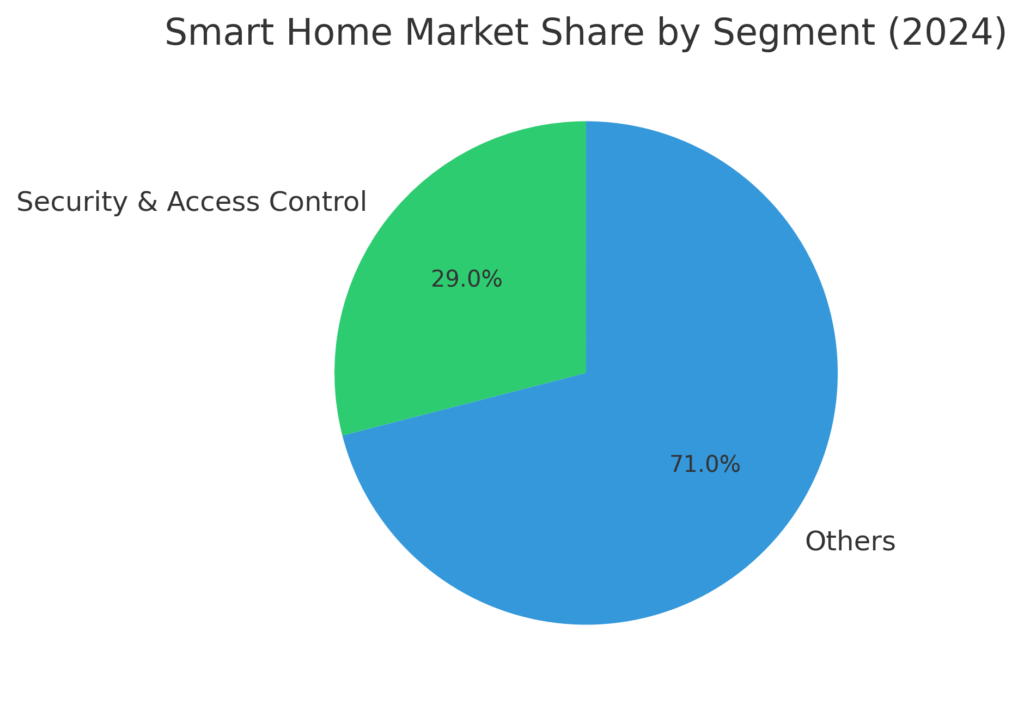
Security and access control accounted for over 29% of the smart home product market in 2024. This shows that homeowners prioritize safety when adopting smart technologies. Marketers can highlight features such as remote monitoring, smart locks, and video doorbells to attract buyers. The demand indicates that peace of mind remains a strong selling point in this space. Positioning security as a lifestyle upgrade is key to capturing this large market segment.
Smart Home Marketing Statistics #7 – Wireless Protocols Dominate Smart Home Connectivity
Wireless solutions are expected to dominate smart home connectivity over wired or hybrid systems. This shift reflects consumer preference for flexibility, easy installation, and scalability. Marketing should emphasize compatibility across devices and convenience of wireless setups. Brands that integrate seamlessly with existing home systems will appeal strongly to buyers. This trend makes it clear that wireless technology is now the foundation of the smart home ecosystem.
Smart Home Marketing Statistics #8 – Single-Family Smart Homes Grow from USD 116.9B to 137.17B
The single-family smart home market increased from USD 116.9 billion in 2024 to USD 137.17 billion in 2025. This reflects a growth rate of 17.3% within a single year. Families are investing in smarter living to improve comfort, safety, and efficiency. Marketing efforts should stress the value of convenience and family-oriented benefits of smart systems. This data shows that family households are among the most promising demographics for adoption.
Smart Home Marketing Statistics #9 – Single-Family Smart Homes Projected USD 266.24B by 2029
By 2029, the single-family smart home market is forecasted to reach USD 266.24 billion. This reflects an 18% CAGR between 2025 and 2029. The number illustrates consistent investment in family-friendly smart living. Marketers should align messaging with long-term home ownership benefits, such as resale value and sustainability. This steady growth highlights the importance of targeting family buyers in campaigns.
Smart Home Marketing Statistics #10 – 63.43M U.S. Homes Use Smart Devices (~45% Households)
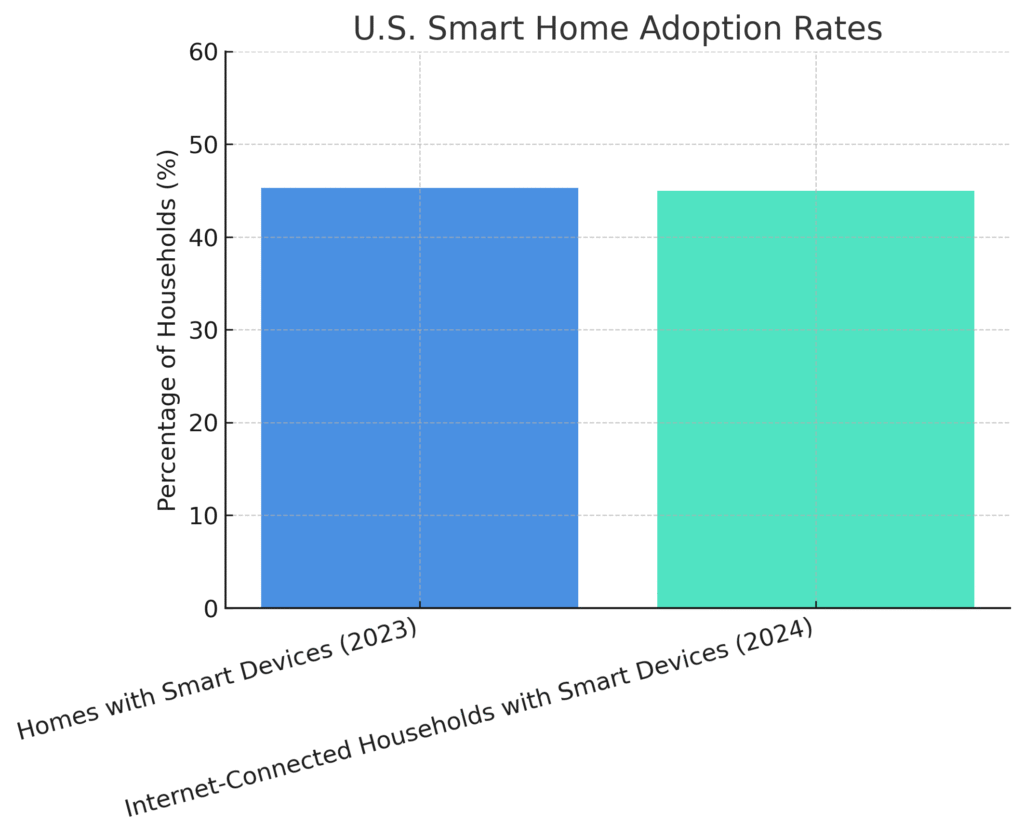
As of 2023, 63.43 million U.S. households actively use at least one smart device. This equals about 45% of all U.S. homes, a striking level of adoption. Marketers can use this data to show that smart technology is no longer niche but mainstream. Campaigns should emphasize being part of a growing movement in connected living. This figure underscores the importance of inclusivity and accessibility in marketing approaches.
Smart Home Marketing Statistics #11 – 45% of U.S. Internet Households Own Smart Devices
Parks Associates reports that 45% of internet-connected U.S. households own at least one smart device. This figure confirms strong adoption across digital-savvy consumers. For marketers, it indicates the opportunity to promote cross-device integration and ecosystem growth. Highlighting compatibility and seamless connections will resonate with this audience. The statistic shows that smart homes are now part of the everyday online household experience.
Smart Home Marketing Statistics #12 – EU7 Smart Device Revenue Hit USD 13.9B (+6.5% YoY)
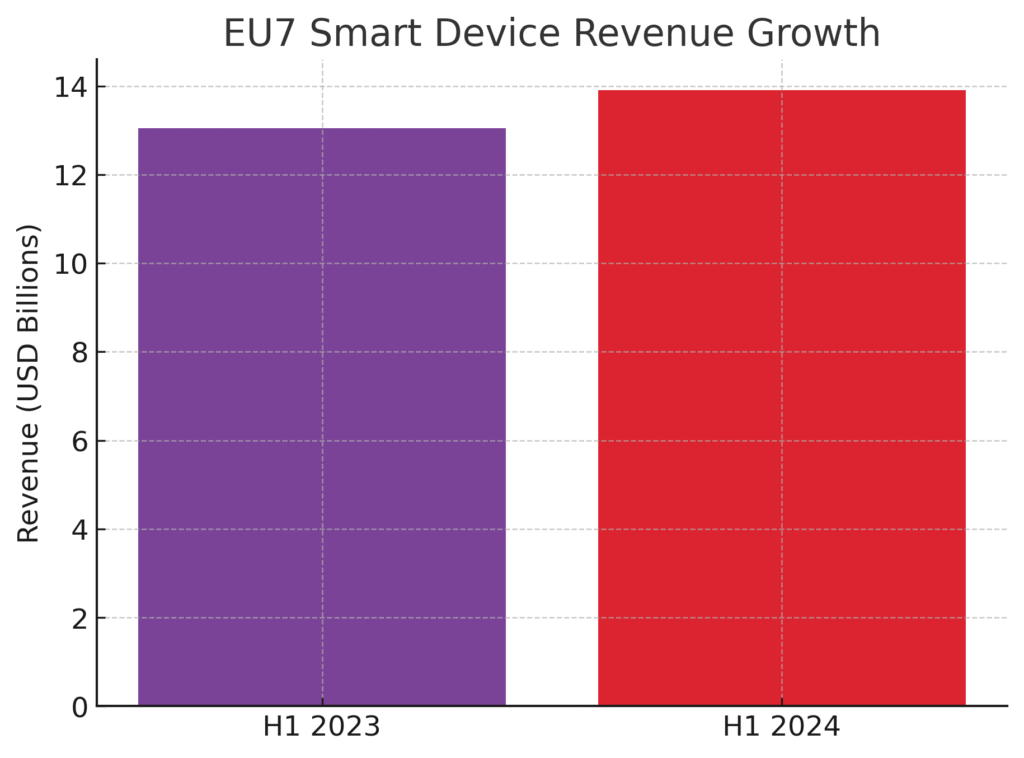
Revenue for smart devices in seven major EU markets reached USD 13.9 billion in the first half of 2024. This marked a 6.5% year-over-year increase. Despite market challenges, European consumers continue investing in smart living. Marketers can position products as modern essentials within an evolving digital lifestyle. The steady revenue growth confirms Europe as a critical market for smart home expansion.
Smart Home Marketing Statistics #13 – U.S. Smart Homes Grew 10.2% Annually (2018–2023)
Between 2018 and 2023, U.S. smart homes grew at an annual rate of 10.2%. This consistent adoption shows strong consumer trust in the technology. Marketers should emphasize how this growth reflects a cultural shift toward automation. Long-term messaging should highlight reliability and product maturity. This steady adoption trend reassures both consumers and brands about the resilience of the smart home market.
Smart Home Marketing Statistics #14 – Smart Devices Increase Resale Home Value by 5%
Homes equipped with smart devices can see resale value increase by about 5%. For homeowners, this adds tangible financial benefit to adoption. Marketers should highlight these returns in campaigns targeting property owners. This statistic also appeals to real estate professionals looking to attract buyers. The link between tech adoption and property value provides marketers with a compelling angle.
Smart Home Marketing Statistics #15 – UK Homeowners Spend Avg £360 on Smart Tech Yearly
UK homeowners spend an average of £360 annually on smart home technology. However, about 25% of consumers feel this spending is wasted. This statistic highlights the importance of delivering real value to consumers. Marketers should focus on long-term benefits and practical functionality. The insight also shows the need toalign products with everyday household needs.
Smart Home Marketing Statistics #16 – 19% Regret Smart Tech Purchases Due to Underperformance
A survey shows that 19% of UK homeowners regret smart tech purchases due to underperformance. Another 16% cited a lack of time savings as a disappointment. This reflects the gap between marketing promises and real-world outcomes. Brands should ensure that their claims align with product performance. Transparency and realistic messaging will help reduce consumer regret and strengthen loyalty.
Smart Home Marketing Statistics #17 – WiFi Smart Devices Shipments Grow CAGR 21%
Shipments of WiFi-enabled smart home devices are projected to grow at a CAGR of 21% between 2021 and 2025. This makes WiFi the most dynamic connectivity standard in the space. Marketing campaigns should emphasize fast, reliable, and simple connections. This trend highlights consumer preference for ease of setup and universal compatibility. Companies that deliver effortless integration will win the most trust.
Smart Home Marketing Statistics #18 – EU Markets Recover with 6.5% Sales Growth
In 2024, smart home product sales in key EU markets increased by 6.5%. This growth shows recovery after a period of market uncertainty. Marketers should take advantage of the rebound to reposition products as essentials. Campaigns can stress affordability and the practical role of smart living. The data suggests Europe remains a strong and resilient market for connected products.
Smart Home Marketing Statistics #19 – Average Revenue per U.S. Smart Home is USD 546.50
The average U.S. smart home generates USD 546.50 in revenue from devices and services. This figure illustrates the strong economic potential of each household. Marketers should view this as an opportunity to cross-sell and upsell within smart ecosystems. Highlighting bundled solutions can help brands maximize household spending. This statistic emphasizes the financial sustainability of targeting connected homes.
Smart Home Marketing Statistics #20 – Smart Kitchen Segment is Fastest-Growing Category
The smart kitchen segment is projected to be among the fastest-growing areas within smart homes. Consumers are drawn to convenience, energy savings, and improved meal preparation. Marketing campaigns should highlight everyday usefulness and lifestyle transformation. The kitchen’s central role in family life makes it a natural hub for smart innovation. This trend shows a powerful opportunity for marketers to focus on culinary-related smart solutions.
Why These Smart Speaker Trends Matter
Looking back at these smart speaker marketing statistics, it’s clear to me that this technology is no longer a novelty—it’s a growing force in consumer behavior. The way people search, shop, and even respond to ads is shifting rapidly, and businesses that embrace these trends will have a serious advantage. Personally, I find it fascinating how something as simple as asking a device a question has evolved into a powerful new channel for engagement. These statistics are more than just numbers; they’re a roadmap for the future of marketing in a world that increasingly listens as much as it speaks. By understanding and acting on these insights, brands can position themselves where their customers already are—right at the heart of the voice revolution.
SOURCES
- https://keywordseverywhere.com/blog/voice-search-stats/
- https://www.invoca.com/blog/voice-search-stats-marketers
- https://www.marketsandmarkets.com/Market-Reports/smart-speaker-market-44984088.html
- https://bloggingwizard.com/voice-search-statistics/
- https://www.huddlecreative.com/blog/voice-search-for-brands-trends-statistics
- https://scoop.market.us/smart-speaker-statistics/
- https://www.bazaarvoice.com/blog/voice-commerce-ai/
- https://www.thebusinessresearchcompany.com/report/voice-commerce-global-market-report
- https://www.custommarketinsights.com/report/us-smart-speaker-market/
- https://www.mindstreammediagroup.com/introduction-smart-speakers-voice-search-brand-advertisers/
- https://www.godatafeed.com/blog/optimize-product-feed-for-voice
- https://www.emarketer.com/topics/category/smart%20speaker%20users
- https://www.market.us/report/smart-speaker-market/
- https://www.axios.com/2019/06/17/smart-speaker-advertising-survey