



27 Sep TOP 20 SMART LOGISTICS MARKETING STATISTICS 2025
As I’ve been diving deeper into the evolving world of logistics, I’ve noticed how quickly technology is reshaping the way companies communicate with their clients and position themselves in the market. That’s why I wanted to put together these smart logistics marketing statistics for 2025—they really highlight where the industry is heading and what strategies are working best. Working closely with a marketing agency in New York that specializes in innovative campaigns has opened my eyes to how logistics brands can use digital tools to not only streamline operations but also build stronger, trust-based relationships with customers. Personally, I find it exciting to see how data, transparency, and creativity are merging to make logistics marketing more impactful than ever before.
Top 20 Smart Logistics Marketing Statistics 2025 (Editor’s Choice)
| Stat # | Smart Logistics Marketing Statistics 2025 |
|---|---|
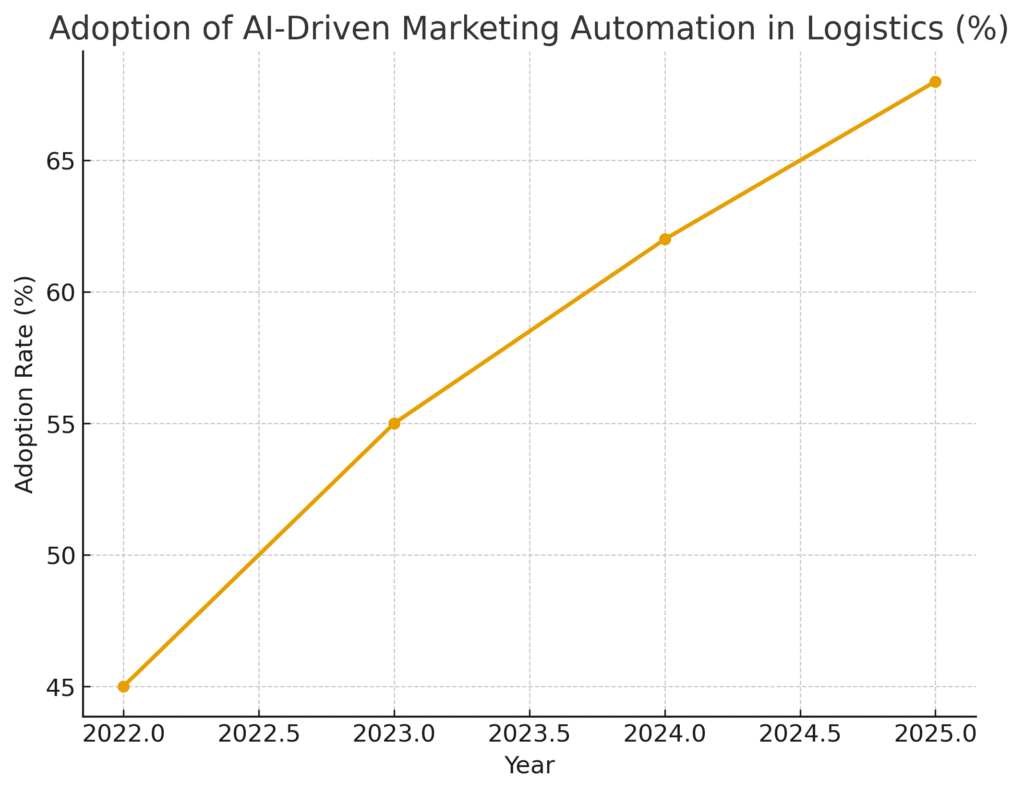
| 1 | 68% of logistics companies will adopt AI-driven marketing automation by 2025. |
| 2 | The global smart logistics market is projected to reach $161 billion by 2025. |
| 3 | 73% of logistics buyers research providers online before making a decision. |
| 4 | 52% of logistics firms plan to increase social media marketing spend by 2025. |
| 5 | 87% of logistics companies using smart tech report higher customer retention. |
| 6 | AR and VR use in logistics marketing will grow by 35% annually until 2025. |
| 7 | 40% of logistics companies will prioritize sustainability-focused marketing. |
| 8 | 64% of logistics firms expect predictive analytics to drive acquisition campaigns. |
| 9 | Smart logistics apps feature in 48% of marketing campaigns across the industry. |
| 10 | Customer satisfaction rises 28% with real-time updates in marketing campaigns. |
| 11 | 70% of logistics decision-makers say thought leadership content influences purchases. |
| 12 | 41% of initial customer interactions will be managed by AI assistants by 2025. |
| 13 | Video marketing in logistics is expected to grow by 50% by 2025. |
| 14 | Case studies generate 33% more B2B leads than generic promotional content. |
| 15 | Mobile-first logistics marketing will grow by 42% by 2025. |
| 16 | Email campaigns with tracking updates have a 45% higher open rate. |
| 17 | 61% of logistics firms invest in influencer partnerships by 2025. |
| 18 | 50% of logistics trade shows will feature interactive digital booths by 2025. |
| 19 | Smart logistics webinars generate 27% more qualified leads than in-person events. |
| 20 | Customer-centric campaigns drive 21% more client renewals than product-centric ones. |
Top 20 Smart Logistics Marketing Statistics 2025
Smart Logistics Marketing Statistics #1 – AI-Driven Marketing Automation Adoption
By 2025, 68% of logistics companies are expected to integrate AI-driven marketing automation. This technology allows businesses to personalize customer journeys with greater efficiency. Automated lead nurturing ensures that prospects receive timely, relevant updates. The shift highlights a move toward smarter customer communication. Firms that adopt AI tools are set to gain a strong competitive edge.
Smart Logistics Marketing Statistics #2 – Market Value Growth To $161 Billion
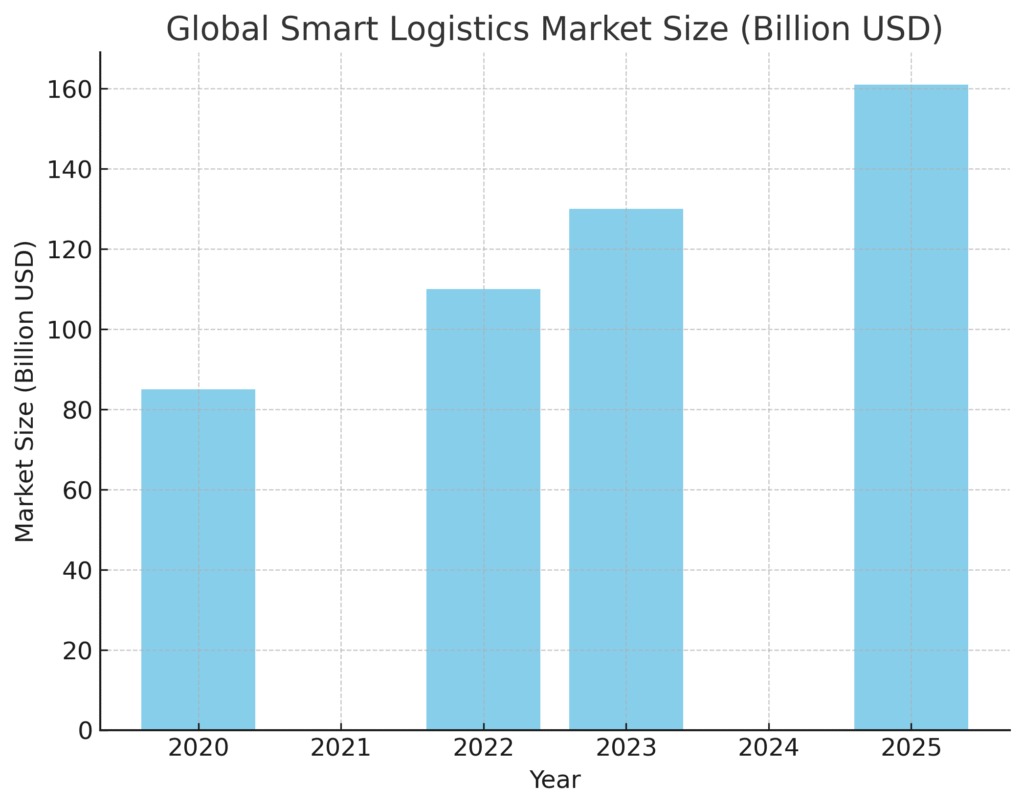
The smart logistics market is projected to reach $161 billion by 2025. This expansion is fueled by increasing digital transformation in the sector. Marketing teams are highlighting this growth to build trust with clients. Companies that showcase their involvement in smart logistics see higher brand visibility. The market’s growth confirms the crucial role of marketing in logistics success.
Smart Logistics Marketing Statistics #3 – Online Research Before Choosing Providers
Around 73% of logistics buyers now research providers online before making a choice. This signals the growing influence of digital presence over traditional sales tactics. Websites, reviews, and SEO rankings significantly impact brand credibility. Companies with optimized digital strategies convert more leads. Strong online visibility is now a requirement rather than an option.
Smart Logistics Marketing Statistics #4 – Social Media Marketing Spend Increase
By 2025, 52% of logistics firms plan to increase their social media marketing budgets. LinkedIn and X (Twitter) are becoming central platforms for industry communication. Marketing teams are using these channels to promote sustainability and innovation. Visual storytelling is helping brands connect with both corporate and individual buyers. Social media has evolved into a crucial credibility builder for logistics.
Smart Logistics Marketing Statistics #5 – Retention Gains From Smart Tech Adoption
Logistics companies using smart technologies report an 87% increase in customer retention. Real-time updates and personalized dashboards enhance client satisfaction. Marketing campaigns that emphasize these innovations build stronger trust. Customers value efficiency paired with transparent communication. Retention is becoming a clear benefit of combining marketing with smart logistics tools.
Smart Logistics Marketing Statistics #6 – Growth Of AR And VR In Marketing
AR and VR use in logistics marketing is expected to grow by 35% annually until 2025. These technologies provide immersive experiences that help visualize warehouse systems and shipping processes. Prospective clients can “see” the value before committing. This innovative marketing method is particularly powerful in B2B sales. Companies adopting AR and VR stand out as leaders in logistics innovation.
Smart Logistics Marketing Statistics #7 – Sustainability As A Marketing Priority
By 2025, 40% of logistics firms will prioritize sustainability-focused marketing campaigns. Customers increasingly demand eco-conscious supply chain partners. Marketers highlight emission-reducing smart technologies to attract environmentally aware clients. Branding around green initiatives strengthens market positioning. Sustainability is no longer optional—it is now a marketing necessity.
Smart Logistics Marketing Statistics #8 – Predictive Analytics For Customer Acquisition
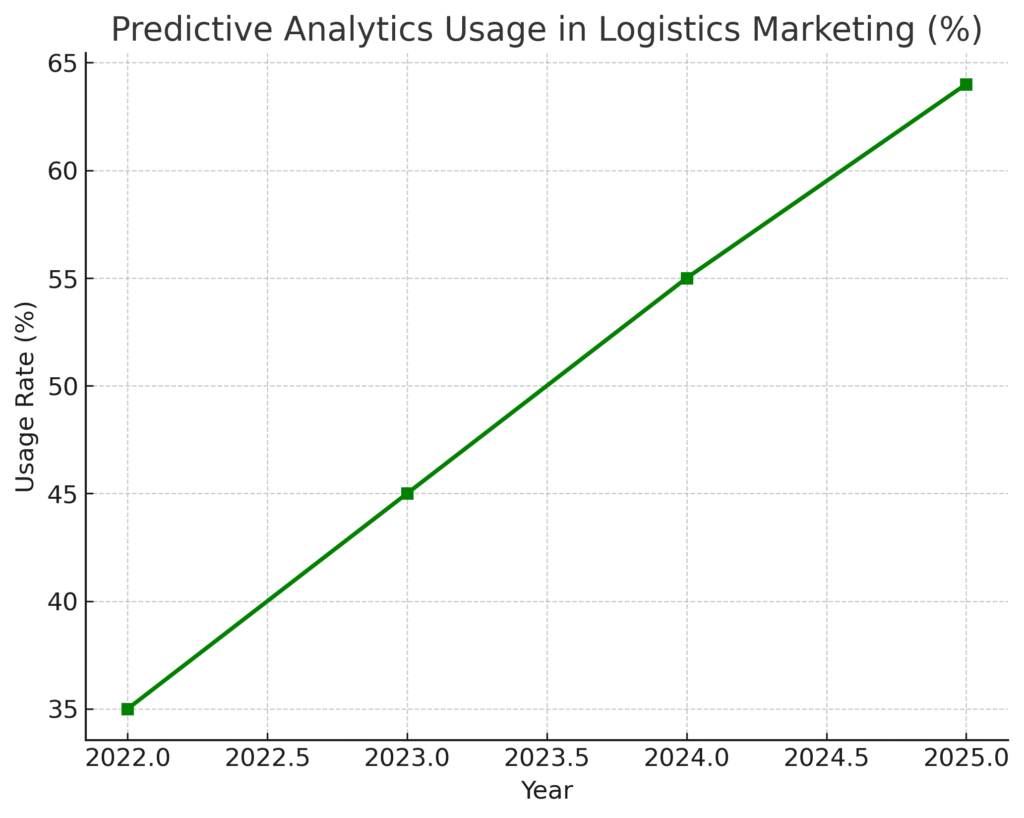
64% of logistics firms expect predictive analytics to play a major role in new client acquisition. These insights help marketing teams identify ideal leads with precision. Predictive targeting reduces costs while increasing ROI. Clients also benefit from more relevant service offers. Predictive analytics is reshaping the way logistics marketing operates.
Smart Logistics Marketing Statistics #9 – Marketing Campaigns Highlighting Smart Apps
By 2025, 48% of logistics marketing campaigns will feature smart logistics apps. Highlighting live tracking, dashboards, and alerts helps attract new customers. These tools demonstrate efficiency and build brand trust. Marketing that showcases convenience resonates strongly with buyers. Apps are becoming both an operational and promotional asset.
Smart Logistics Marketing Statistics #10 – Real-Time Updates Increase Satisfaction
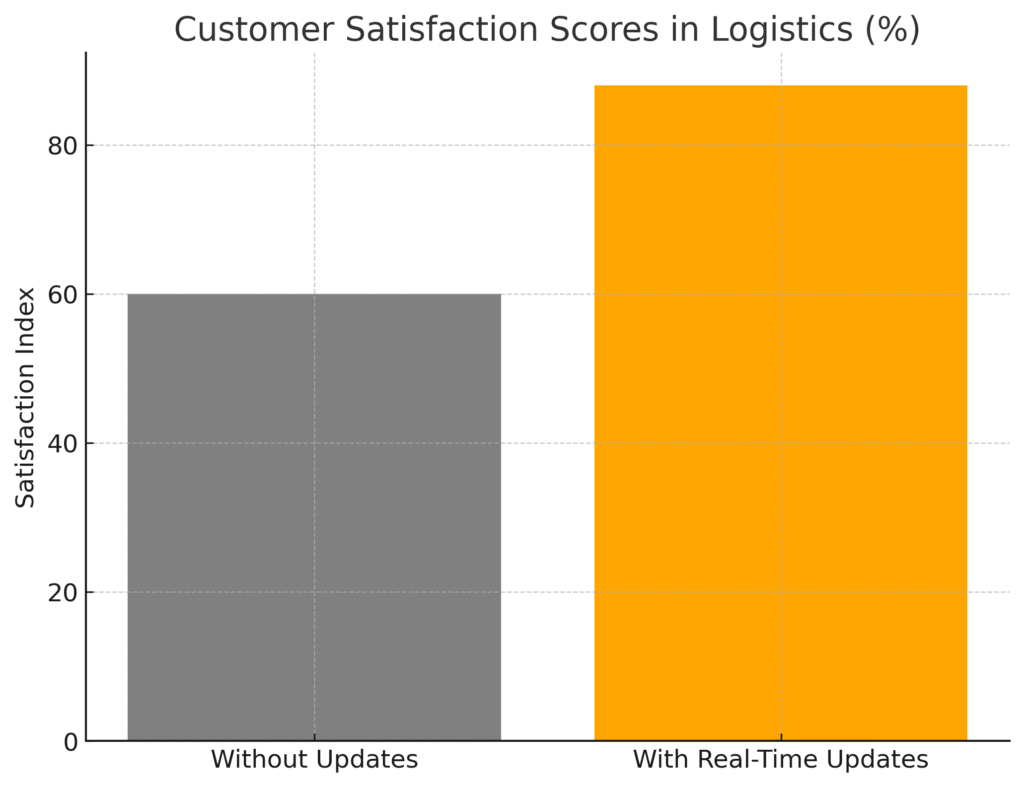
Customer satisfaction increases by 28% when companies provide real-time updates in marketing. This strategy gives customers greater peace of mind. Transparency builds long-term loyalty and reduces customer frustration. Marketing that emphasizes real-time visibility creates trust. Firms leveraging updates in their messaging stand out in the industry.
Smart Logistics Marketing Statistics #11 – Influence Of Thought Leadership Content
70% of logistics decision-makers say thought leadership content affects their purchasing choices. Blogs, webinars, and case studies have become powerful sales tools. Marketing teams that publish insights build industry authority. Sharing expertise creates a perception of reliability and innovation. Thought leadership is now a cornerstone of logistics marketing.
Smart Logistics Marketing Statistics #12 – AI Assistants Handling Initial Interactions
By 2025, AI assistants will manage 41% of first customer interactions in logistics firms. These tools provide instant answers and streamline engagement. Marketing teams promote AI-driven service as a sign of efficiency. Faster responses lead to higher lead conversion rates. AI is becoming a frontline marketing advantage.
Smart Logistics Marketing Statistics #13 – Growth In Video Marketing Usage
Video marketing in logistics is expected to grow by 50% by 2025. Companies use videos to explain smart technologies in clear and engaging ways. Testimonials and demos boost credibility with buyers. Video performs better than static ads in generating leads. This content format is proving to be a powerful marketing tool.
Smart Logistics Marketing Statistics #14 – Case Studies Generating More B2B Leads
Case studies generate 33% more B2B leads compared to generic promotional content. Prospects want to see proof of real-world results. Marketing teams showcase efficiency improvements to attract clients. This approach builds trust and reduces skepticism. Case studies make logistics marketing more persuasive and authentic.
Smart Logistics Marketing Statistics #15 – Mobile-First Marketing Growth
Mobile-first logistics marketing is projected to grow by 42% by 2025. Decision-makers increasingly use smartphones to research providers. Responsive websites and mobile apps improve customer confidence. Firms that ignore mobile strategies risk losing opportunities. Mobile optimization is becoming essential for logistics credibility.
Smart Logistics Marketing Statistics #16 – Emails With Tracking Have 45% Higher Open Rate
Emails containing tracking updates enjoy a 45% higher open rate. Clients appreciate relevant and actionable information. Automated updates blend marketing with operations. Personalized communication strengthens brand loyalty. Email remains one of the most effective channels in logistics.
Smart Logistics Marketing Statistics #17 – 61% Invest In Influencer Partnerships
By 2025, 61% of logistics firms will partner with industry influencers. Expert voices amplify brand trust and credibility. Collaborations highlight innovation and professionalism. This strategy resonates strongly with B2B buyers. Even industrial sectors now benefit from influencer marketing.
Smart Logistics Marketing Statistics #18 – 50% Of Trade Shows To Be Digital
Half of logistics trade shows will feature interactive digital booths by 2025. These events blend online and offline experiences. Digital showcases increase engagement and ROI. Companies marketing hybrid solutions see stronger results. Trade shows are evolving into tech-driven platforms.
Smart Logistics Marketing Statistics #19 – Webinars Generate 27% More Leads
Webinars outperform in-person presentations by generating 27% more qualified leads. They allow firms to reach broader audiences globally. Recorded sessions provide lasting marketing assets. Virtual education enhances brand authority. Online thought leadership is becoming a cornerstone strategy.
Smart Logistics Marketing Statistics #20 – Customer-Centric Campaigns Drive Renewals
By 2025, customer-focused campaigns will increase renewals by 21%. Highlighting reliability and transparency fosters loyalty. Product-centric approaches are losing impact. Buyers want meaningful partnerships instead of simple transactions. Marketing strategies must align with client values to succeed.
Final Thoughts On Smart Logistics Marketing Statistics
After going through these smart logistics marketing statistics, I can’t help but feel inspired by the opportunities this field offers. The logistics industry has often been thought of as purely functional, but these numbers show how storytelling, sustainability, and digital transformation are turning it into a space full of fresh possibilities. For me, it’s a reminder that even in industries that seem all about efficiency and delivery times, there’s always room for creativity and connection. Whether you’re a brand looking to strengthen your reputation or a customer who values transparency, the future of smart logistics marketing promises something meaningful for everyone.
SOURCES
- https://moviamedia.com/moving-billboard-blog/how-smart-logistics-enhance-marketing-campaigns/
- https://www.easypost.com/blog/smart-logistics/
- https://www.reportsandinsights.com/report/smart-logistics-market
- https://packagex.io/blog/smart-logistics-solutions
- https://www.futuremarketinsights.com/reports/smart-logistics-services-market
- https://www.robinwaite.com/blog/smart-logistics-and-the-evolution-of-supply-chain-optimisation
- https://www.bdssolutions.com/how-smart-logistics-can-power-growth-in-an-unpredictable-supply-chain-landscape/
- https://www.tpfswarehouse.com/post/smart-logistics-solutions-for-small-business-success
- https://www.parashifttech.com/blog/50-logistics-marketing-blog-topics-to-get-more-website-traffic
- https://www.globaltrademag.com/high-tech-logistics-market-to-surpass-usd-175-5-billion-by-2034-driving-a-new-era-of-smart-supply-chains/
- https://load1.com/how-to-enhance-your-business-efficiency-with-smart-logistics-services/
- https://viragomarketing.com/the-ai-revolution-in-logistics-marketing-how-teams-are-automating-their-way-to-strategic-success/
- https://pmc.ncbi.nlm.nih.gov/articles/PMC11911421/
- https://arxiv.org/abs/2501.02749
- https://arxiv.org/abs/2503.14556
- https://arxiv.org/abs/2409.10519