



27 Sep TOP 20 SMART METER MARKETING STATISTICS 2025
As someone who is passionate about the intersection of energy technology and consumer behavior, I’ve been diving deep into the latest smart meter marketing statistics. The growth of this sector isn’t just about numbers—it’s about how utilities, governments, and households are rethinking efficiency and sustainability. I find it fascinating how data-driven insights from these devices are reshaping the way energy providers connect with their customers. To bring more context and clarity, I’ve worked alongside the expertise of a leading marketing agency in New York to explore these statistics and highlight their significance. My goal is to share practical insights that you can apply to better understand this rapidly expanding market.
Top 20 Smart Meter Marketing Statistics 2025 (Editor’s Choice)
| # | Smart Meter Marketing Statistics 2025 |
|---|---|
| 1 | The global smart meter market was valued at USD 27.70 billion in 2024 and is projected to reach USD 49.60 billion by 2030 (CAGR ~9.9%). |
| 2 | MarketsandMarkets estimates growth from USD 26.36 billion in 2024 to USD 46.14 billion by 2030 (CAGR ~9.8%). |
| 3 | RootsAnalysis projects the market will grow from USD 31.05 billion in 2025 to USD 72.46 billion by 2035 (CAGR ~8.84%). |
| 4 | Future Market Insights forecasts growth from USD 27.6 billion in 2025 to USD 67.7 billion in 2035 at ~9.4% CAGR. |
| 5 | Precedence Research estimates the global market will reach USD 79.97 billion by 2034 (CAGR ~9.4%). |
| 6 | As of 2023, smart electricity meters accounted for ~43% penetration of the global electricity meter market. |
| 7 | Global penetration is forecast to reach ~54% by 2030. |
| 8 | North America smart electricity meter penetration reached ~82% in 2024. |
| 9 | North America’s installed base will grow from 152.4M in 2024 to 180.9M in 2030 (CAGR ~2.9%). |
| 10 | The U.S. had ~119M AMI installations in 2022, covering ~72% of electric meters. |
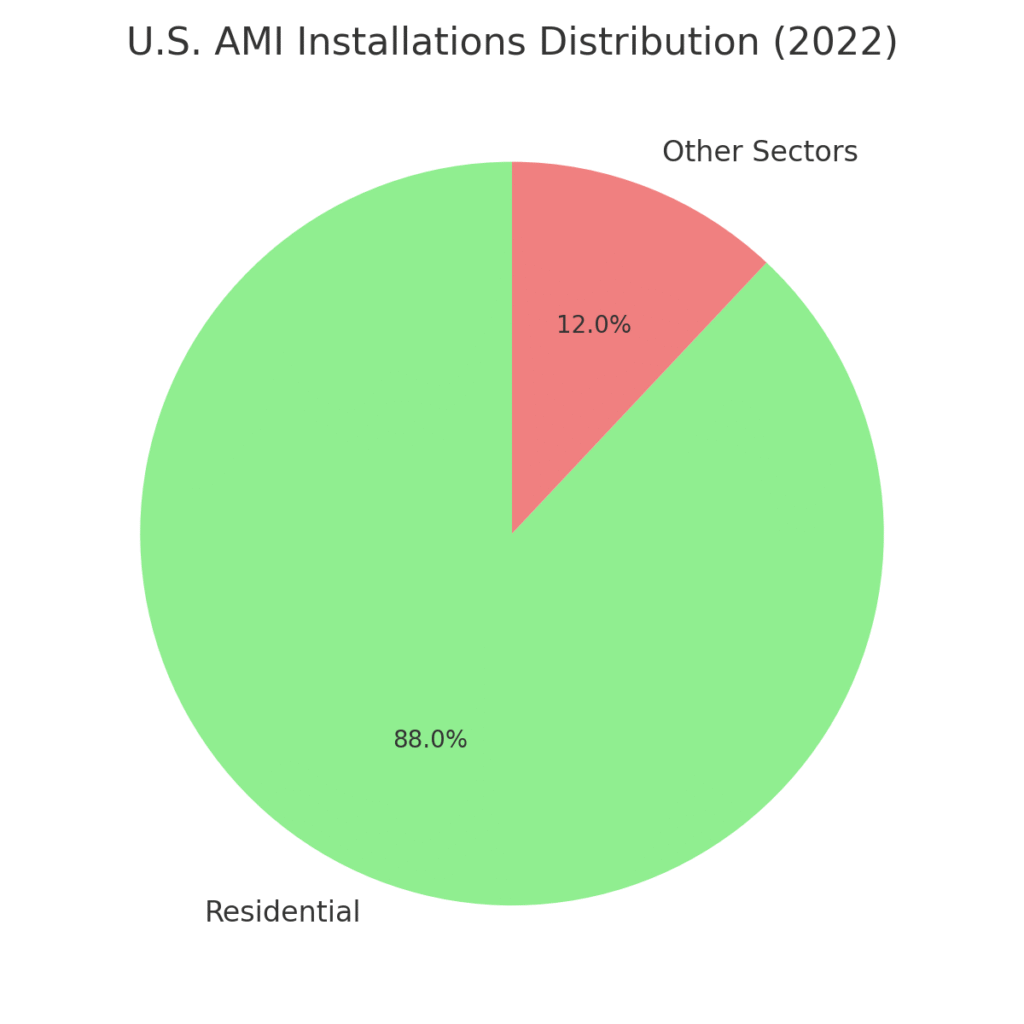
| 11 | The residential sector accounts for ~88% of U.S. AMI installations. |
| 12 | Residential smart meter penetration in the U.S. is ~72.7%. |
| 13 | Smart electric meters dominate with ~1.15B connections (68% share). |
| 14 | By 2033, projections are ~2.1B electric (62%), 510M gas (15%), and 789M water smart meters (23%). |
| 15 | U.S. utilities deploying smart meters (2007–2017) saw revenue increases of ~1–2% and loss reductions of 4–7%. |
| 16 | ROI for smart meters is often achieved in 4–6 years for many water/utility deployments. |
| 17 | A surcharge of USD 2.50/month reduces adoption probability by ~18 percentage points. |
| 18 | Nearly 4M UK smart meters were faulty or in “dumb mode” as of end-2023. |
| 19 | North America’s annual smart electricity meter shipments peaked at 18.4M in 2024. |
| 20 | Adoption is slowing in mature markets; focus shifts to replacement, upgrades, and value-added services. |
Top 20 Smart Meter Marketing Statistics 2025
Smart Meter Marketing Statistics #1: Global Market Valued At USD 27.70 Billion In 2024
The global smart meter market reached a valuation of USD 27.70 billion in 2024, highlighting its strong presence in the energy sector. This figure shows the increasing importance of digital metering solutions across both developed and developing countries. The rapid growth is linked to rising demand for energy efficiency and smarter infrastructure. Businesses and governments are investing heavily in this technology as part of sustainability strategies. The projection of future growth makes this stat a crucial reference point for marketers and energy providers alike.
Smart Meter Marketing Statistics #2: Market Growth To USD 46.14 Billion By 2030
MarketsandMarkets projects that the smart meter market will grow from USD 26.36 billion in 2024 to USD 46.14 billion by 2030. This reflects a CAGR of nearly 9.8%, emphasizing steady adoption worldwide. The growth is fueled by policies encouraging smart grids and better monitoring of consumption. Companies are leveraging these opportunities to position themselves as leaders in energy innovation. This stat signals long-term marketing potential in reaching governments, utilities, and end-users.
Smart Meter Marketing Statistics #3: Market To Reach USD 72.46 Billion By 2035
RootsAnalysis estimates that the smart meter market will expand from USD 31.05 billion in 2025 to USD 72.46 billion by 2035. This shows an impressive CAGR of 8.84% over a decade. The forecast reflects how smart meters are transitioning from optional upgrades to standard equipment. Global utility companies are pushing this adoption forward as part of modernization initiatives. For marketers, this statistic emphasizes the importance of long-term planning in product and campaign strategies.
Smart Meter Marketing Statistics #4: Market Forecast To Hit USD 67.7 Billion By 2035
Future Market Insights predicts the market will grow from USD 27.6 billion in 2025 to USD 67.7 billion by 2035. This represents a healthy CAGR of 9.4%, signaling rising global demand. The key drivers include digital transformation in utilities and government-led energy policies. Countries investing in renewable energy are also complementing their plans with smart meter rollouts. Marketers can use this forecast to target audiences focused on sustainability and efficiency.
Smart Meter Marketing Statistics #5: Global Market To Reach USD 79.97 Billion By 2034
Precedence Research forecasts that the global smart meter market will reach USD 79.97 billion by 2034. The CAGR of 9.4% demonstrates consistent momentum in adoption. The market expansion is expected across both electricity and water smart metering solutions. With increasing urbanization, the demand for accurate and real-time consumption tracking is set to grow further. This stat underlines the significant commercial opportunities in the sector.
Smart Meter Marketing Statistics #6: Smart Electricity Meters At 43% Penetration In 2023
By the end of 2023, smart electricity meters achieved around 43% penetration globally. This figure shows that nearly half of all electricity consumers are already integrated into smart systems. It highlights the effectiveness of ongoing government and utility campaigns. However, it also indicates that a large market segment remains untapped. For marketers, this is a golden opportunity to push awareness and adoption campaigns.
Smart Meter Marketing Statistics #7: Global Penetration Forecasted At 54% By 2030
The global penetration of smart electricity meters is forecast to reach around 54% by 2030. This growth illustrates continued confidence in the technology and its benefits. The jump in adoption will be supported by upgrades in infrastructure across multiple regions. Marketing teams can anticipate rising customer familiarity with smart meters. This statistic also reinforces the importance of staying ahead with value-added services.
Smart Meter Marketing Statistics #8: North America Smart Meter Penetration At 82% In 2024
By 2024, North America achieved an 82% penetration rate in smart electricity meters. This demonstrates the region’s leadership in adopting advanced metering infrastructure. Utility companies in the U.S. and Canada have played a key role in driving installations. Such high penetration indicates a mature market shifting focus to service innovation and maintenance. Marketers in this region must adapt their strategies to highlight added value rather than basic adoption.
Smart Meter Marketing Statistics #9: North American Base To Grow To 180.9 Million By 2030
The installed base of smart electricity meters in North America is projected to increase from 152.4 million in 2024 to 180.9 million in 2030. This growth represents a CAGR of 2.9%, suggesting stable expansion in an already saturated market. Utilities will likely focus on upgrading existing meters rather than first-time installations. Marketing campaigns must shift to emphasize technological improvements and lifecycle benefits. This stat highlights the importance of customer retention in mature markets.
Smart Meter Marketing Statistics #10: U.S. Installed 119 Million AMI Meters By 2022
In the United States, 119 million advanced metering infrastructure (AMI) devices were installed by 2022. This covered nearly 72% of electric meters across the nation. The widespread adoption demonstrates successful government and utility programs. The statistic reveals the effectiveness of long-term investments in smart infrastructure. For marketers, this showcases the importance of positioning products as part of large-scale modernization efforts.

Smart Meter Marketing Statistics #11: Residential Sector At 88% Of U.S. AMI Installations
Residential users accounted for 88% of all U.S. AMI installations. This shows the dominance of household adoption in driving smart meter penetration. Utility companies prioritized residential rollouts to meet regulatory and efficiency goals. For marketers, the residential focus opens opportunities for direct-to-consumer campaigns. The statistic also highlights the need for education on consumer benefits like cost savings and efficiency.
Smart Meter Marketing Statistics #12: U.S. Residential Penetration At 72.7%
Residential penetration of smart meters in the U.S. stands at 72.7%. This demonstrates significant acceptance of the technology by households. While the adoption rate is high, it also means future campaigns must focus on the remaining market segment. Marketing strategies can emphasize improved features, cost benefits, and eco-friendly aspects. This stat is crucial for understanding the maturity level of the U.S. market.
Smart Meter Marketing Statistics #13: Electric Meters Dominate With 1.15 Billion Connections
Electric smart meters dominate the market, with around 1.15 billion active connections globally. They account for 68% of total smart meter deployments. This dominance reflects electricity’s central role in utility modernization. Gas and water smart meters are growing, but they lag behind electricity. For marketers, this stat indicates electricity remains the core driver of smart meter campaigns.
Smart Meter Marketing Statistics #14: Projected 2.1 Billion Electric Meters By 2033
By 2033, projections estimate there will be 2.1 billion electric smart meters globally. In comparison, there will be around 510 million gas and 789 million water meters. This shift suggests a more balanced but still electricity-dominated market. Marketers can tailor campaigns to highlight how utilities can diversify their offerings. This forecast emphasizes long-term opportunities in gas and water smart meter segments.
Smart Meter Marketing Statistics #15: U.S. Utilities Saw 1–2% Revenue Increases
Between 2007 and 2017, U.S. utilities reported revenue increases of 1–2% after deploying smart meters. They also saw electricity loss reductions of 4–7%. These results demonstrate the tangible financial benefits of adoption. Marketers can use this stat to emphasize ROI in campaigns targeting utilities. This real-world evidence makes the case stronger for further investments.

Smart Meter Marketing Statistics #16: ROI Achieved In 4–6 Years For Utilities
Many water and utility companies achieve ROI on smart meters within 4–6 years. This relatively short payback period strengthens the investment case. It shows that smart meters are not only sustainable but financially practical. For marketers, emphasizing ROI timelines can be a persuasive tactic. This stat is vital for convincing stakeholders who focus on cost efficiency.
Smart Meter Marketing Statistics #17: USD 2.50 Monthly Surcharge Reduced Adoption By 18%
A study found that a surcharge of USD 2.50 per month reduced adoption probability by 18 percentage points. This demonstrates customer sensitivity to pricing models. Marketing campaigns must carefully address consumer concerns about costs. Highlighting long-term savings and benefits can offset upfront hesitations. This stat underlines the importance of transparent pricing strategies.
Smart Meter Marketing Statistics #18: 4 Million UK Meters Faulty Or In Dumb Mode
By the end of 2023, nearly 4 million smart meters in the UK were either faulty or operating in “dumb mode.” This created challenges for customer trust and satisfaction. Technical setbacks highlight the importance of product quality in adoption. Marketers must acknowledge such challenges and focus on promoting reliability improvements. This stat is a reminder of the need to manage expectations alongside marketing promises.
Smart Meter Marketing Statistics #19: North American Shipments Peaked At 18.4 Million In 2024
Annual smart electricity meter shipments in North America peaked at 18.4 million in 2024. Future projections suggest a decline in shipments as penetration nears saturation. For marketers, this signifies a pivot point from expansion to upgrade-focused strategies. Emphasizing advanced features will become critical in future campaigns. This stat illustrates the life cycle maturity of the North American market.
Smart Meter Marketing Statistics #20: Adoption Slows In Mature Markets
In mature markets, the adoption curve of smart meters is slowing. With high penetration levels, focus shifts toward replacement and upgrades. Marketing campaigns must evolve to highlight service enhancements rather than new installations. This presents opportunities to develop premium and value-added offerings. This statistic signals a new era in marketing for utilities and technology providers.

Why Smart Meter Marketing Insights Matter
Looking at these smart meter marketing statistics, I can clearly see how much potential this industry holds for businesses, governments, and everyday consumers. What excites me most is how smart meters are not just tools for energy management, but also for building trust, reducing waste, and driving meaningful customer engagement. Personally, I’ve learned that behind every statistic is an opportunity to adapt strategies and meet people where they are—whether it’s through education, adoption campaigns, or new service models. For me, this isn’t just about technology—it’s about creating smarter, more sustainable communities. And that’s a journey worth being part of.
SOURCES
- https://iot-analytics.com/smart-meter-adoption/
- https://mitsloan.mit.edu/ideas-made-to-matter/smart-meters-generate-revenue-improve-efficiency-public-utilities
- https://www.sciencedirect.com/science/article/pii/S0095069622001097
- https://www.sciencedirect.com/science/article/pii/S2214629621004485
- https://www.eia.gov/todayinenergy/detail.php?id=34012
- https://blog.kelley.indianapolis.iu.edu/2024/04/03/research-shows-smart-utility-meters-drive-down-manufacturing-costs-if-data-is-used-to-drive-operations/
- https://www.mdpi.com/1996-1073/13/18/4737
- https://www.frontiersin.org/journals/sustainable-energy-policy/articles/10.3389/fsuep.2023.1171093/full
- https://dl.acm.org/doi/10.1145/3463677.3463739
- https://arxiv.org/abs/2505.05596
- https://envocoreus.com/blog/
- https://commons.clarku.edu/cgi/viewcontent.cgi?article=1001&context=faculty_school_of_management
- https://www.recurve.com/blog/smart-meter-data-the-key-to-successful-electrification
- https://www.theguardian.com/business/2025/feb/09/a-mess-energy-suppliers-face-scramble-to-install-smart-meters-in-uk-homes
- https://www.theguardian.com/business/2024/mar/26/smart-meter-rollout-number-faulty-machines-leaps-great-britain
- https://arxiv.org/abs/2106.05858
- https://arxiv.org/abs/2305.10352