



27 Sep TOP 20 SMART PHONE MARKETING STATISTICS 2025
When I first started diving into smart phone marketing statistics, I was amazed at how much these little devices shape the way we shop, connect, and even discover new brands. As someone who loves staying ahead of digital trends, I can’t help but notice how quickly the smartphone has become the centerpiece of almost every marketing strategy. Partnering with a leading marketing agency in New York has taught me the importance of understanding these numbers and translating them into real results. It feels personal to me because I’ve seen firsthand how mobile-first campaigns transform businesses of all sizes. That’s why I’m so excited to share these insights with you—because they show where marketing is headed next.
Top 20 Smart Phone Marketing Statistics 2025 (Editor’s Choice)
| Stat # | Smart Phone Marketing Statistics | Details (2025) |
|---|---|---|
| 1 | Global Smartphone Shipments | ~295.2 million units shipped in Q2 2025, up 1% year-over-year. |
| 2 | Average Selling Price Growth | ASP projected to grow 5% in 2025, boosting market value by ~6%. |
| 3 | Mobile Advertising Market | Expected to exceed USD 228 billion globally in 2025. |
| 4 | U.S. Mobile Ad Spend | Predicted at USD 235.67 billion in 2025, up ~12% vs prior year. |
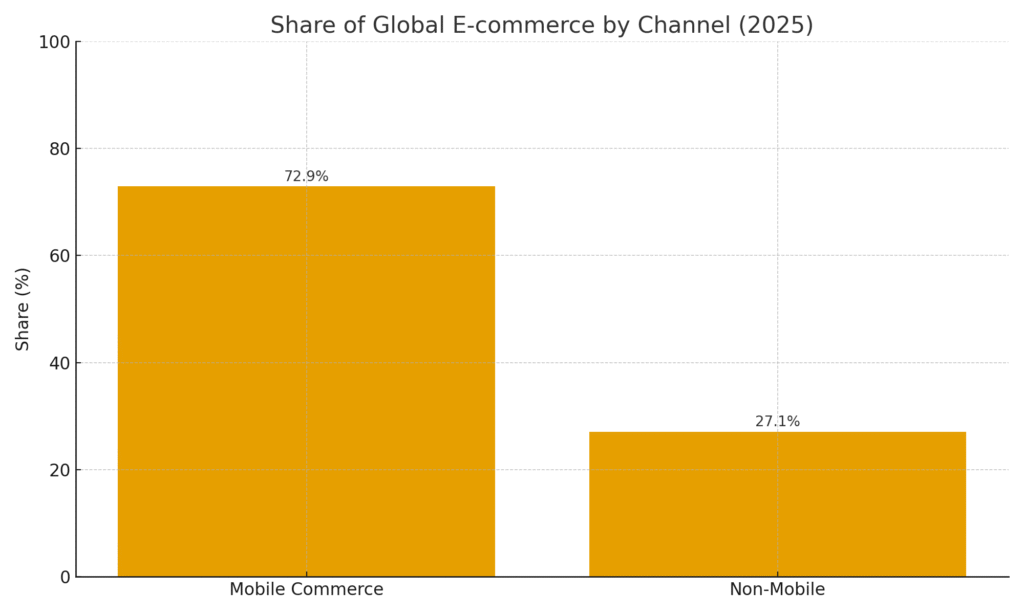
| 5 | Mobile Commerce Share | 72.9% of all e-commerce sales expected via mobile shopping in 2025. |
| 6 | Global Mobile Shoppers | ~1.65 billion people shop using smartphones worldwide. |
| 7 | Global Smartphone Users | ~7.21 billion users, ~90% of the world’s population in 2025. |
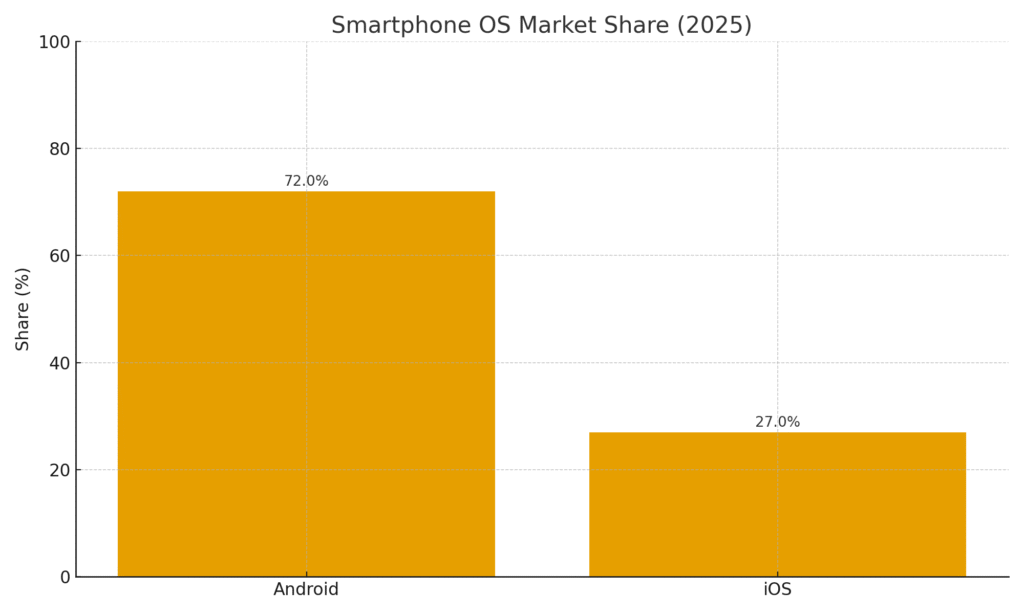
| 8 | Android vs iOS Market Share | Android ~72%, iOS ~27% in 2025. |
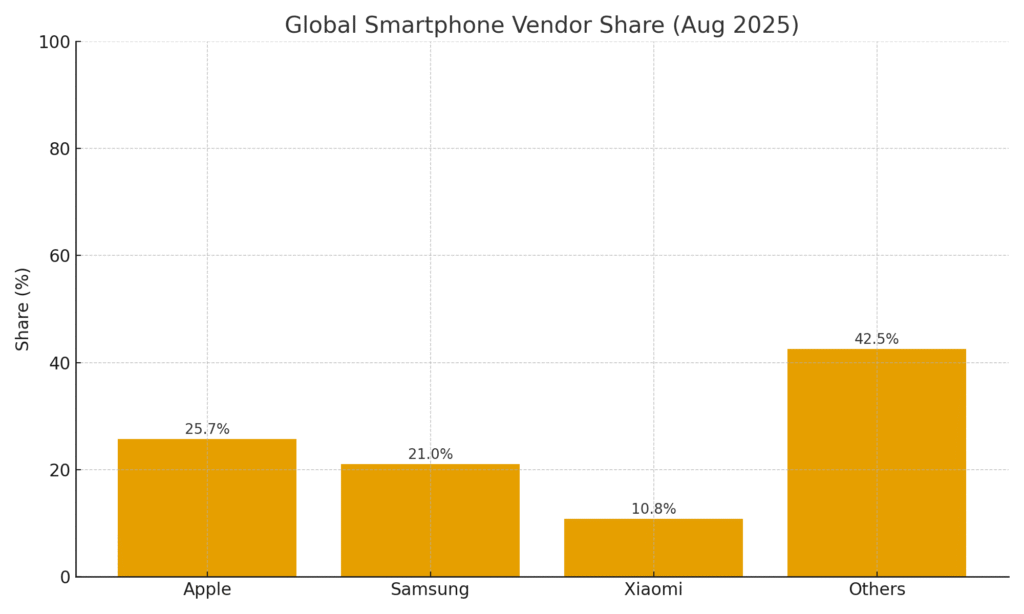
| 9 | Vendor Market Share | Apple 25.7%, Samsung 21%, Xiaomi 10.8% as of Aug 2025. |
| 10 | Market Size & Forecast | USD 607.56B in 2025; expected to reach USD 1.13T by 2034. |
| 11 | Mobile-First Discovery | 82% of users consult phones before in-store purchases. |
| 12 | Ad Spend & Organic Installs | Every USD 100 in mobile ads yields ~37 paid + 3 organic installs. |
| 13 | App-Install Ad Revenue | Accounted for ~66% of mobile ad revenue in 2023. |
| 14 | Smartphone Ownership (U.S.) | 91% of U.S. adults report owning a smartphone in 2025. |
| 15 | Video Viewing Device | 69% of U.S. consumers prefer smartphones for video. |
| 16 | Video Marketing ROI | 93% of video marketers report positive ROI from mobile video. |
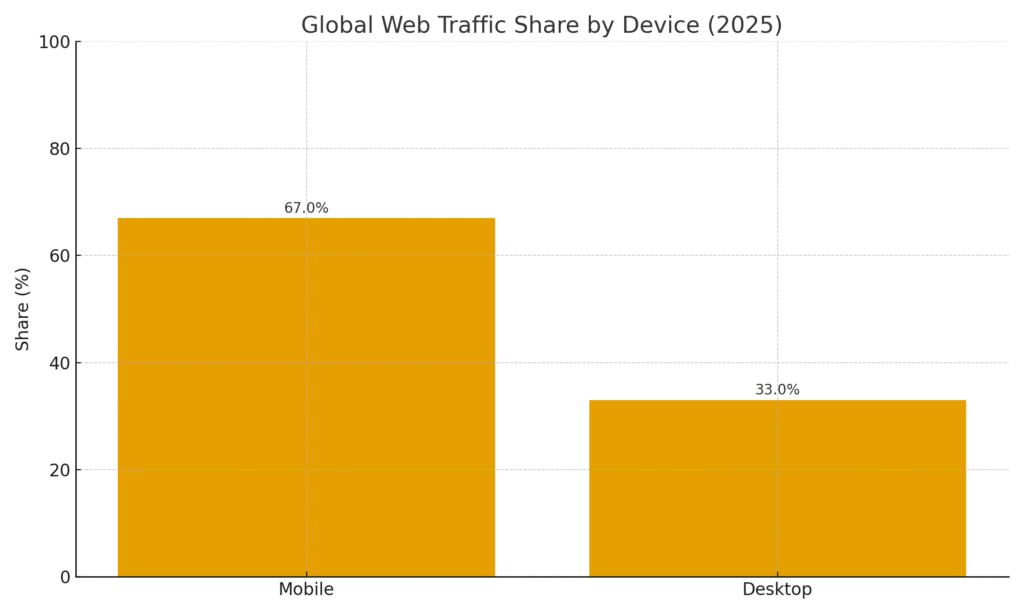
| 17 | Mobile Traffic Dominance | Mobile devices account for ~67% of all online traffic globally. |
| 18 | High Penetration | Smartphone penetration exceeds 82% in developed markets. |
| 19 | Premiumization Trend | Consumers buy higher-end devices, raising ASP and holding longer. |
| 20 | Shift to Mobile Channels | Budgets increasingly move toward mobile-first campaigns. |
Top 20 Smart Phone Marketing Statistics 2025
Smart Phone Marketing Statistics #1: Global Smartphone Shipments
In Q2 2025, global smartphone shipments reached approximately 295.2 million units. This represents a modest but important 1% year-over-year growth. The figure shows that although the market has matured, demand remains steady across emerging economies. Brands still have an opportunity to target both replacement buyers and first-time adopters. This resilience proves smartphones continue to be an essential global product category.
Smart Phone Marketing Statistics #2: Average Selling Price Growth
Smartphone average selling prices (ASP) are projected to increase by 5% in 2025. This rise indicates that consumers are favoring premium and mid-range models over budget devices. Even with slower shipment growth, ASP growth contributes to a 6% boost in overall market value. Marketers can leverage this trend by emphasizing unique features, design, and performance in their campaigns. The focus on higher-value devices highlights a shift toward quality over quantity.
Smart Phone Marketing Statistics #3: Mobile Advertising Market
The mobile advertising market worldwide is expected to exceed USD 228 billion in 2025. This growth demonstrates the dominance of smartphones as a channel for reaching consumers. Businesses are increasingly investing in mobile-first campaigns to tap into high engagement rates. With consumers spending more time on apps and social platforms, mobile ads provide unmatched targeting opportunities. Brands that prioritize mobile advertising will be better positioned to stay ahead.
Smart Phone Marketing Statistics #4: U.S. Mobile Ad Spend
In 2025, U.S. mobile ad spending is predicted to reach USD 235.67 billion. This marks a 12% growth compared to the previous year. The United States remains one of the most influential markets for smartphone-based campaigns. Companies are allocating larger portions of their budgets to mobile advertising. This shift underlines how mobile-first strategies drive both awareness and conversions.
Smart Phone Marketing Statistics #5: Mobile Commerce Share
By 2025, mobile commerce is forecasted to account for 72.9% of all e-commerce sales. This shows how dominant smartphones have become in online shopping behaviors. Consumers now rely heavily on mobile devices for browsing, comparing, and purchasing products. Businesses that do not optimize their sites for mobile risk losing significant revenue. The trend confirms mobile as the primary gateway to digital retail.
Smart Phone Marketing Statistics #6: Global Mobile Shoppers
Around 1.65 billion people worldwide shop using smartphones in 2025. This number highlights the vast market opportunity for mobile-first retail strategies. The growth is fueled by convenience, faster internet, and user-friendly apps. Marketers must ensure seamless shopping experiences through responsive design and personalized offers. The statistic illustrates how smartphones are redefining consumer behavior on a global scale.
Smart Phone Marketing Statistics #7: Global Smartphone Users
In 2025, there are an estimated 7.21 billion smartphone users worldwide. This represents about 90% of the global population. The sheer penetration underscores the central role smartphones play in everyday life. For marketers, this means an almost universal platform for engagement. It also reflects the growing importance of global strategies that reach cross-border audiences.
Smart Phone Marketing Statistics #8: Android vs iOS Market Share
As of 2025, Android holds roughly 72% of the global market share, while iOS accounts for 27%. This division shows Android’s dominance, especially in emerging economies where affordability matters. iOS continues to command strong loyalty in premium segments. Marketers need to tailor campaigns based on platform-specific behaviors. The split highlights the need for dual-platform strategies to maximize reach.
Smart Phone Marketing Statistics #9: Vendor Market Share
In August 2025, Apple leads the smartphone vendor market with 25.7% share, followed by Samsung at 21% and Xiaomi at 10.8%. These three brands dominate the global stage. Their success is driven by product innovation, strong ecosystems, and competitive pricing. Marketers must understand brand market share when positioning their products. The data reflects the competitive nature of the smartphone industry.
Smart Phone Marketing Statistics #10: Market Size & Forecast
The global smartphone market size is projected to reach USD 607.56 billion in 2025. By 2034, it is expected to grow to USD 1.13 trillion. This strong growth trajectory shows the long-term strength of the industry. The expansion is fueled by premiumization, technological upgrades, and increased digital dependence. For marketers, this outlook signals ongoing opportunities to scale.
Smart Phone Marketing Statistics #11: Mobile-First Discovery
82% of smartphone users check their phones before making in-store purchases. They often look up product details, reviews, and price comparisons instantly. This behavior highlights the importance of mobile optimization for driving offline sales. Brands must ensure their online presence is mobile-friendly and informative. Smartphones have become the ultimate research companion for consumers.
Smart Phone Marketing Statistics #12: Ad Spend & Organic Installs
Every USD 100 spent on mobile ads yields about 37 paid installs and 3 organic installs. This shows how advertising spend has a spillover effect beyond direct conversions. The added organic installs represent boosted visibility and credibility. Marketers can optimize campaigns by balancing paid and organic efforts. The data proves that mobile ad spending delivers both direct and indirect benefits.
Smart Phone Marketing Statistics #13: App-Install Ad Revenue
In 2023, app-install ads accounted for 66% of mobile advertising revenue. This dominance continues into 2025 as app ecosystems thrive. App-install campaigns are vital for businesses targeting long-term user engagement. The high share highlights consumer willingness to try new apps. For marketers, app advertising remains one of the most profitable mobile strategies.
Smart Phone Marketing Statistics #14: Smartphone Ownership (U.S.)
In 2025, 91% of U.S. adults report owning a smartphone. This near-saturation reflects the device’s importance in American daily life. The number underscores smartphones as essential tools for communication and commerce. For marketers, this means nearly universal reach within the U.S. market. It also emphasizes the need for mobile-first strategies tailored to American consumers.
Smart Phone Marketing Statistics #15: Video Viewing Device
69% of U.S. consumers say their smartphone is their most-used device for watching videos. This makes mobile the dominant screen for video consumption. Short-form content, streaming services, and social media drive this trend. Marketers can benefit by prioritizing video campaigns optimized for mobile. The statistic confirms video as a crucial element of smartphone marketing.
Smart Phone Marketing Statistics #16: Video Marketing ROI
93% of video marketers report positive ROI from smartphone video campaigns. This strong return has led 89% of businesses to adopt video marketing. Among those not yet using video, 68% plan to implement it by 2025. The results highlight the effectiveness of video in driving awareness and engagement. Smartphones have become the primary screen where these successes unfold.
Smart Phone Marketing Statistics #17: Mobile Traffic Dominance
Mobile devices account for roughly 67% of all internet traffic globally. This statistic confirms smartphones as the main entry point to the digital world. Websites not optimized for mobile risk alienating the majority of users. For businesses, mobile-first design is no longer optional but essential. The data demonstrates the overwhelming power of smartphones in digital traffic.
Smart Phone Marketing Statistics #18: High Penetration
In developed markets, smartphone penetration exceeds 82% of households. This reflects maturity in markets such as the U.S. and Western Europe. The high adoption rate makes smartphones integral to nearly every consumer journey. Marketers must prioritize personalization to stand out in saturated environments. The figure also highlights opportunities in markets where penetration is still growing.
Smart Phone Marketing Statistics #19: Premiumization Trend
Consumers are increasingly buying higher-end smartphones. This trend boosts average selling prices and extends device lifecycles. Premium features such as AI cameras, foldable designs, and 5G support attract buyers. For marketers, it means campaigns should highlight innovation and exclusivity. Premiumization is reshaping the competitive dynamics of the smartphone industry.
Smart Phone Marketing Statistics #20: Shift to Mobile Channels
Marketing budgets are shifting heavily toward mobile-first channels. In-app ads, social media campaigns, and mobile video dominate these investments. Businesses recognize that smartphones are where consumers spend most of their time. This pivot reflects how central mobile has become in shaping brand engagement. The trend signals that mobile will remain at the core of marketing strategies in 2025 and beyond.
Final Thoughts on Smart Phone Marketing Statistics
Looking at these smart phone marketing statistics, I can’t help but feel inspired by the endless opportunities they highlight for brands and businesses. Smartphones aren’t just gadgets anymore; they’ve become the main gateway for customer engagement, loyalty, and conversions. As I reflect on this journey, I realize how essential it is to stay informed and adapt strategies around these shifts, because that’s where true growth happens. I personally love seeing how even the smallest businesses can leverage mobile-first approaches to make a big impact. In the end, these numbers aren’t just data points—they’re a roadmap for anyone ready to embrace the future of marketing with confidence
SOURCES
- https://my.idc.com/getdoc.jsp?containerId=prUS53684525
- https://www.fortunebusinessinsights.com/mobile-advertising-market-102496
- https://www.blog.udonis.co/advertising/mobile-advertising-market
- https://www.emarketer.com/content/us-mobile-advertising-forecast-trends-2025
- https://www.thebusinessresearchcompany.com/report/mobile-advertising-global-market-report
- https://www.custommarketinsights.com/report/mobile-advertising-market/
- https://sqmagazine.co.uk/mobile-advertising-statistics/
- https://www.reuters.com/business/media-telecom/idc-sees-growth-global-smartphone-market-despite-tariffs-macroeconomic-2025-07-14/
- https://arxiv.org/abs/2504.16151
- https://www.techinsights.com/blog/global-smartphone-vendor-and-os-market-share-region-q1-2025
- https://www.advanced-television.com/2025/08/29/forecast-global-smartphone-market-to-grow-1-in-2025/
- https://www.counterpointresearch.com/insights/global-smartphone-share/ (mentioned via supporting reports)
- https://www.idc.com/promo/smartphone-market-share/?utm_source=chatgpt.com
- https://www.backlinko.com/iphone-vs-android-statistics
- https://www.gsmarena.com
- https://www.statcounter.com/vendor-market-share/mobile
- https://en.wikipedia.org/wiki/Mobile_advertising