




27 Sep TOP 20 SMART SECURITY MARKETING STATISTICS 2025
As someone who has always been fascinated by the way technology reshapes our daily lives, I’ve been diving deep into smart security marketing statistics for 2025, and the numbers are nothing short of eye-opening. It’s incredible to see how consumer priorities, especially around safety and convenience, are steering the growth of this market. From smart locks to AI-driven surveillance systems, the demand for intelligent security solutions is becoming a global standard rather than a luxury. While doing my research, I found myself thinking about how brands need to position themselves strategically to meet this growing appetite for secure and connected living. That’s why I’ve partnered with a leading marketing agency in New York to help unpack these insights and share the most valuable takeaways with you.
Top 20 Smart Security Marketing Statistics 2025 (Editor’s Choice)
| # | Statistic | Insight |
|---|---|---|
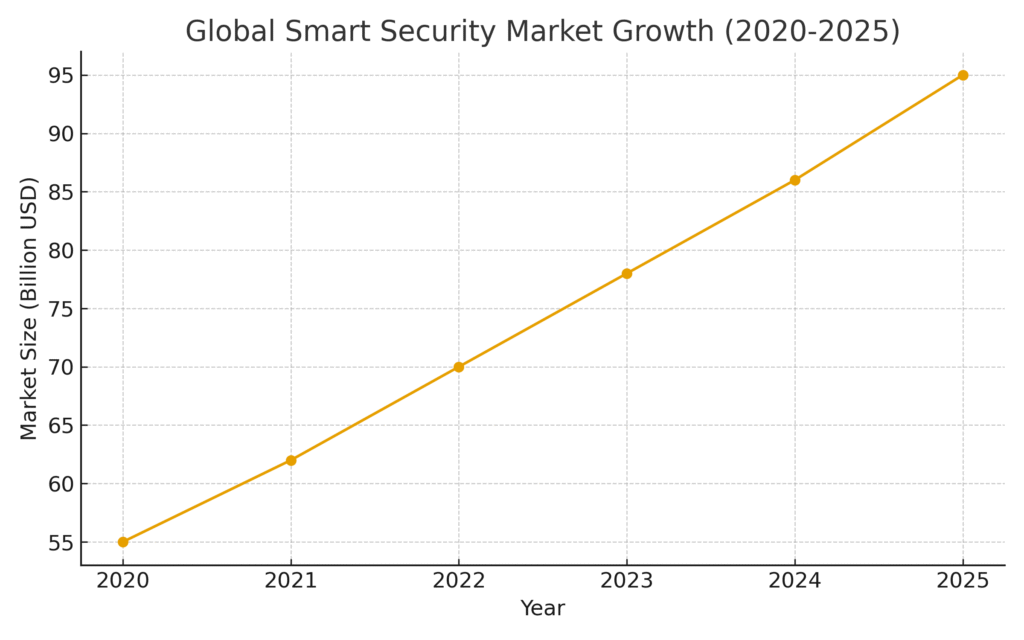
| 1 | $95 Billion Market by 2025 | The global smart security market is projected to reach $95B due to IoT growth. |
| 2 | 65% Prioritize Security | Security remains the top reason smart home users invest in connected devices. |
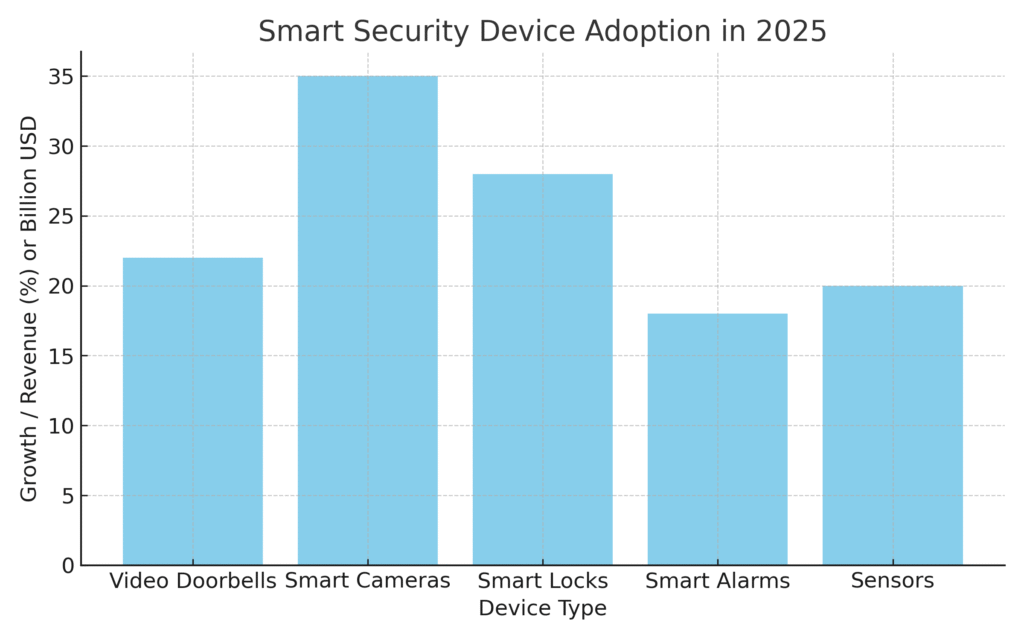
| 3 | 22% Growth in Video Doorbells | Smart video doorbells are the fastest growing security device in 2025. |
| 4 | 72% of Under-40 Homeowners | Nearly three-quarters of younger homeowners own at least one smart security product. |
| 5 | $35 Billion Camera Market | Smart surveillance cameras generate $35B in global revenue in 2025. |
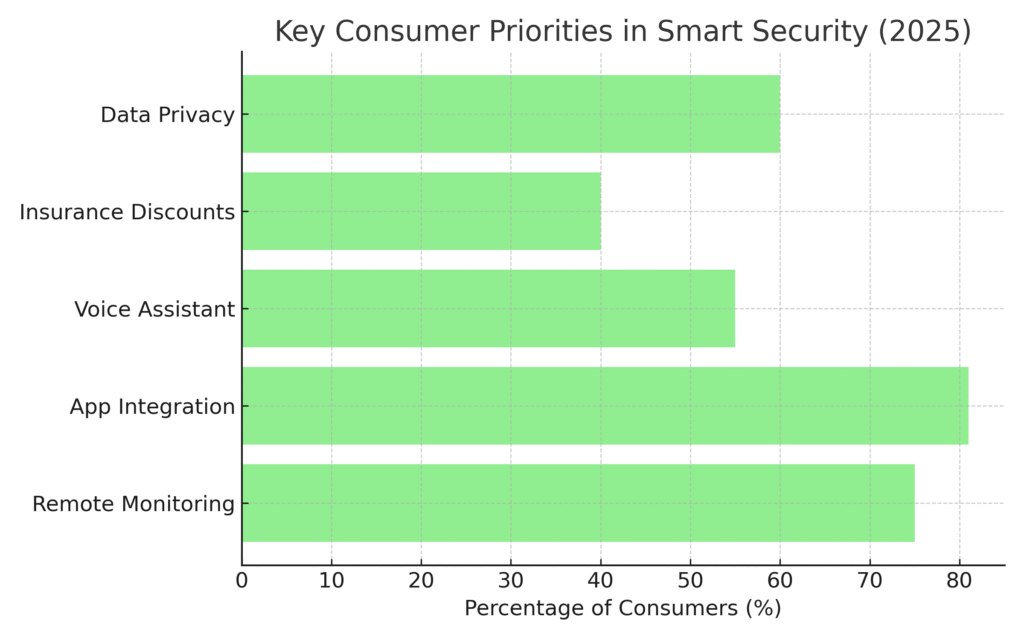
| 6 | 75% Value Remote Monitoring | Three in four consumers say monitoring remotely is their most desired feature. |
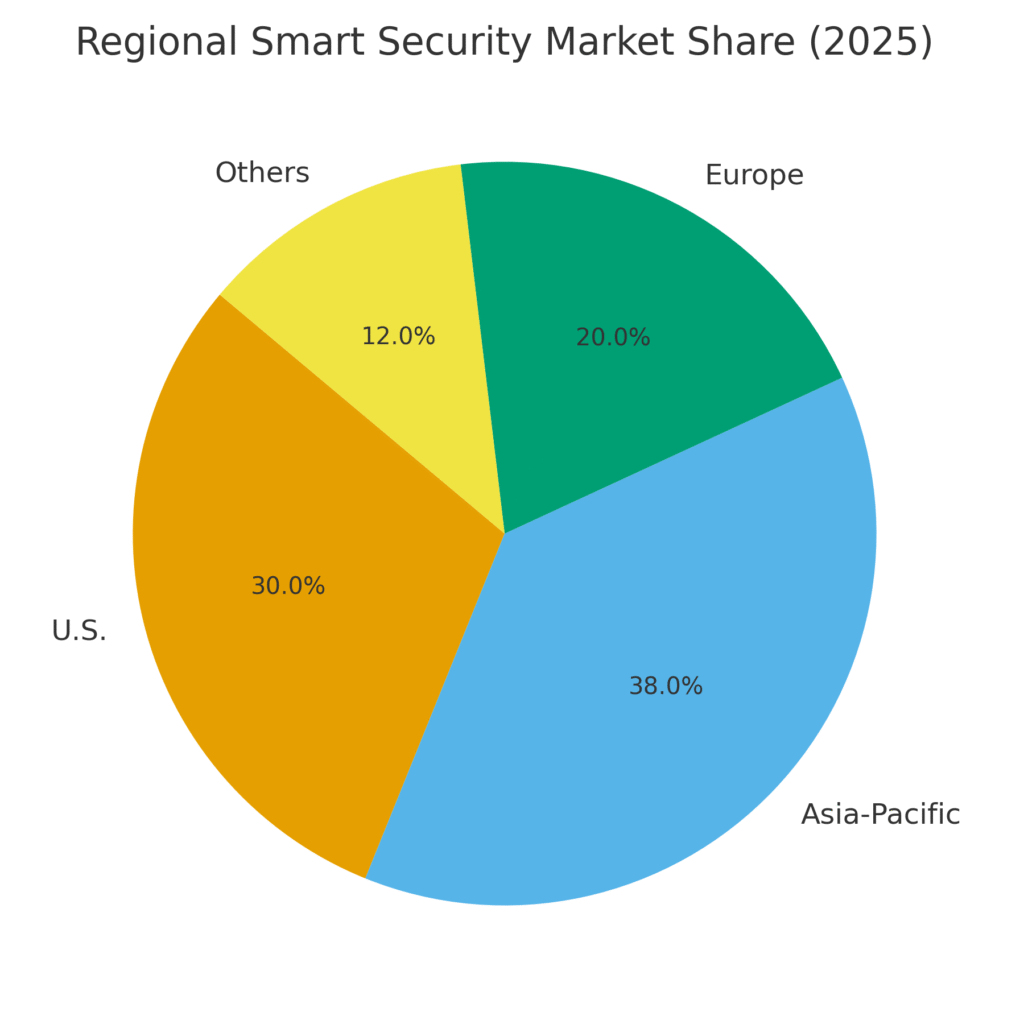
| 7 | $30 Billion U.S. Market | The U.S. leads the world in smart home security spending in 2025. |
| 8 | 40% Insurance Discounts | Many insurance providers reward customers who use smart security systems. |
| 9 | 28% Growth in Smart Locks | Adoption of smart locks rises, with renters showing strong demand. |
| 10 | 81% Require App Integration | Mobile-first control is a key deciding factor for most smart security buyers. |
| 11 | $650 Annual Household Spend | Average households invest significantly in smart security solutions yearly. |
| 12 | 38% APAC Market Share | Asia-Pacific drives growth with smart city and urban development initiatives. |
| 13 | 70% Choose Subscription Services | Monitoring subscriptions are bundled with most smart security purchases. |
| 14 | 55% Want Voice Integration | Over half of buyers demand compatibility with voice assistants. |
| 15 | 1 in 3 Businesses Upgrade | Companies shift from traditional to AI-driven security by 2025. |
| 16 | 20% CAGR Door Sensors | Smart door sensors see rapid growth, especially in commercial sectors. |
| 17 | 60% Worry About Privacy | Consumer trust depends heavily on strong data security assurances. |
| 18 | 45% of New Homes Equipped | Nearly half of all new homes come with pre-installed smart security. |
| 19 | $18 Billion Alarm Market | Smart alarm systems continue expanding as burglary concerns rise. |
| 20 | 80% Use AI Features | Most brands now leverage AI for recognition, alerts, and threat detection. |
Top 20 Smart Security Marketing Statistics 2025
Smart Security Marketing Statistics #1: $95 Billion Market By 2025
The global smart security market is projected to reach $95 billion by 2025, reflecting the rapid adoption of IoT-enabled devices. This surge is driven by rising consumer concerns about safety and the demand for convenient digital monitoring. Companies investing in this sector are positioning themselves as leaders in an increasingly competitive marketplace. The market’s expansion also highlights the shift from traditional security systems to smart, AI-powered solutions. For marketers, this presents a golden opportunity to highlight innovation and reliability in their campaigns.
Smart Security Marketing Statistics #2: 65% Prioritize Security
Over 65% of smart home users in 2025 state that security is their primary reason for adopting connected technology. This underscores how safety is a universal motivator that transcends demographics. By focusing campaigns on peace of mind and protection, brands can align with consumer values. Security’s importance also shows that features like energy savings or convenience, while important, often come second. Marketing messages should emphasize trust, reliability, and family safety to resonate with this majority.
Smart Security Marketing Statistics #3: 22% Growth In Video Doorbells
Smart video doorbell sales are projected to grow by 22% year-over-year in 2025, making them one of the fastest-growing categories in home security. Consumers are drawn to real-time monitoring and video verification of visitors. This product’s popularity reflects the importance of user-friendly, visual-based security. Brands in this segment can benefit by highlighting easy installation and smartphone integration. Strong marketing campaigns should showcase real-life benefits like package theft prevention and neighborhood safety.
Smart Security Marketing Statistics #4: 72% Of Under-40 Homeowners Adopt Devices
By 2025, 72% of homeowners under the age of 40 will own at least one smart security product. This generation values technology integration and convenience, making them prime targets for marketing. Their adoption shows a cultural shift in how younger demographics prioritize safety and digital connectivity. For marketers, tailoring messages toward tech-savvy lifestyles will generate strong engagement. Brands that align with these consumers’ digital-first habits will build lasting loyalty.
Smart Security Marketing Statistics #5: $35 Billion Camera Market
The smart surveillance camera market is expected to generate $35 billion in revenue by 2025. This sector thrives on the demand for 24/7 monitoring, both indoors and outdoors. Cameras that integrate with mobile devices and cloud storage have become standard consumer expectations. Marketers can highlight features like high-resolution imaging, night vision, and AI-based motion detection. Strong storytelling around preventing real-life incidents can make campaigns more relatable and compelling.
Smart Security Marketing Statistics #6: 75% Value Remote Monitoring
Three out of four consumers in 2025 cite remote monitoring as the most valuable feature in a smart security system. This feature allows users to manage home safety anytime, anywhere. It highlights the modern lifestyle need for mobility and control. Marketing campaigns should emphasize the ease of access through smartphones and tablets. Positioning remote monitoring as peace of mind in your pocket resonates deeply with buyers.
Smart Security Marketing Statistics #7: $30 Billion U.S. Market
The U.S. smart home security market is forecasted to surpass $30 billion by 2025. This makes the U.S. the largest regional contributor to global sales. Increased urbanization and high adoption of smart homes fuel this growth. For marketers, highlighting “American households choosing smart safety” creates trust and appeal. Localized campaigns showcasing family protection can resonate strongly with domestic buyers.
Smart Security Marketing Statistics #8: 40% Insurance Discounts
Over 40% of insurance companies now provide premium discounts to policyholders with smart security systems. This financial incentive motivates more households to invest in connected security. Brands can market these systems not only as safety tools but also as cost-saving solutions. Marketers who emphasize insurance benefits alongside safety appeal to value-conscious consumers. This creates a dual incentive of peace of mind and long-term savings.
Smart Security Marketing Statistics #9: 28% Growth In Smart Locks
Smart lock adoption is projected to rise by 28% in 2025. Renters and urban dwellers are emerging as major buyers in this category. Smart locks address modern needs for keyless entry and secure property access. Marketing should focus on convenience, safety, and integration with broader smart home ecosystems. Highlighting how smart locks fit into flexible, mobile lifestyles can attract a wide audience.
Smart Security Marketing Statistics #10: 81% Require App Integration
In 2025, 81% of smart security customers say app integration is essential in their purchase decision. Consumers want centralized control through their smartphones. This stat reveals the growing expectation of seamless digital ecosystems. Marketing campaigns should demonstrate intuitive, user-friendly apps as a core selling point. Brands that showcase their mobile-first capabilities will stand out in a crowded market.
Smart Security Marketing Statistics #11: $650 Annual Household Spend
The average household will spend around $650 annually on smart home security in 2025. This reflects both hardware purchases and subscription-based services. Consumers see ongoing value in maintaining up-to-date systems. For marketers, showcasing affordability and ROI is essential to capture budget-conscious buyers. Highlighting bundles and cost savings through long-term use will further strengthen messaging.
Smart Security Marketing Statistics #12: 38% APAC Market Share
Asia-Pacific is expected to account for 38% of global smart security sales by 2025. Governments and urban projects in the region are accelerating adoption. Consumers in these markets are highly receptive to technology-driven safety. Marketers can localize campaigns by aligning with smart city initiatives. Emphasizing innovation and regional leadership can build strong brand credibility.
Smart Security Marketing Statistics #13: 70% Choose Subscription Services
By 2025, 70% of smart security purchases will include subscription-based monitoring. This shift highlights the move toward service-oriented revenue streams. Consumers prefer consistent support and professional monitoring for added safety. Brands can emphasize reliability and continuous protection in their messaging. For marketers, this is an opportunity to promote long-term value and brand loyalty.
Smart Security Marketing Statistics #14: 55% Want Voice Integration
Voice assistant compatibility influences 55% of smart security buyers in 2025. Integration with systems like Alexa and Google Home is now expected. This shows how ecosystem compatibility affects purchasing decisions. Marketing campaigns can highlight voice-controlled convenience and futuristic experiences. Smart brands will market themselves as part of a connected lifestyle, not just a product.
Smart Security Marketing Statistics #15: 1 In 3 Businesses Upgrade
One in three businesses plans to replace traditional security with AI-powered solutions in 2025. This shift reflects growing trust in smart technology for corporate environments. Businesses value predictive analytics and real-time alerts. Marketers can tailor campaigns to highlight cost savings and advanced features for commercial use. This creates a strong opportunity in the B2B market.
Smart Security Marketing Statistics #16: 20% CAGR In Door Sensors
The smart door sensor market is expanding at a 20% CAGR through 2025. These devices are popular for both homes and commercial buildings. Consumers value their ability to detect intrusions and send instant alerts. Marketers should stress reliability, affordability, and ease of installation. Promoting sensors as part of a complete smart security package can boost adoption.
Smart Security Marketing Statistics #17: 60% Worry About Privacy
60% of consumers in 2025 cite data privacy concerns as influencing their brand choices. Trust has become a cornerstone of marketing in the smart security space. Consumers demand clear communication about data protection. Brands that highlight transparency and strong encryption will stand out. Campaigns should build emotional connections around trust and safety.
Smart Security Marketing Statistics #18: 45% Of New Homes Equipped
Nearly 45% of new homes built in 2025 will feature pre-installed smart security systems. This trend shows how smart protection is becoming a baseline expectation. Builders and manufacturers are integrating devices to meet buyer demand. Marketers can position their products as “future-ready” home essentials. Highlighting partnerships with real estate developers can further expand reach.
Smart Security Marketing Statistics #19: $18 Billion Alarm Market
The smart alarm system market is forecasted to generate $18 billion in revenue by 2025. Rising burglary concerns continue to fuel adoption worldwide. Consumers prioritize alarms that offer both deterrence and alerts. Marketing strategies should focus on showcasing real-world prevention success stories. Emotional appeals to family safety will remain highly effective.
Smart Security Marketing Statistics #20: 80% Use AI Features
By 2025, more than 80% of smart security brands will incorporate AI-driven features. Facial recognition, predictive alerts, and advanced analytics are now mainstream. This reflects the industry’s shift toward intelligent automation. Marketers can emphasize cutting-edge technology and innovation in their campaigns. Positioning brands as leaders in AI will attract forward-thinking consumers.
Final Thoughts on Smart Security Marketing Statistics
Looking back at these smart security marketing statistics for 2025, I can’t help but feel excited about where the industry is headed. The rapid adoption of connected devices is not just about technology—it’s about peace of mind, and marketers who understand this will always be one step ahead. Personally, I think it’s inspiring to witness how innovations like facial recognition, predictive alerts, and mobile-first controls are making homes and businesses feel safer every day. These numbers are more than figures on a chart; they’re a reflection of shifting human behaviors and priorities that brands should pay attention to. As I continue to explore this evolving space, I hope these insights spark ideas and strategies that help you connect more deeply with your audience.
SOURCES
- https://www.safehome.org/resources/home-security-industry-annual/ (SafeHome.org)
- https://jumpcloud.com/blog/iot-security-risks-stats-and-trends-to-know-in-2025 (JumpCloud)
- https://deepstrike.io/blog/iot-hacking-statistics (DeepStrike)
- https://www.marketresearchfuture.com/reports/smart-security-market-26479 (Market Research Future)
- https://sqmagazine.co.uk/smart-home-statistics/ (SQ Magazine)
- https://www.iotforall.com/IoT-security-industry-overview (IoT For All)
- https://deepmarketinsights.com/vista/insights/smart-home-security-market/united-states (Deep Market Insights)
- https://www.demandsage.com/internet-of-things-statistics/ (DemandSage)
- https://www.marketsandmarkets.com/Market-Reports/smart-security-market-223090875.html (MarketsandMarkets)
- https://telnyx.com/resources/future-of-iot (Telnyx)
- https://www.wesco.com/us/en/knowledge-hub/articles/security-industry-trends-key-insights-for-2025.html (wesco.com)
- https://sqmagazine.co.uk/internet-of-things-statistics/ (SQ Magazine)
- https://www.minew.com/iot-trends/ (Minew)
- https://www.thebusinessresearchcompany.com/report/iot-security-global-market-report (The Business Research Company)
- https://www.cogniteq.com/blog/key-iot-security-risks-and-trends-you-should-watch-2025 (cogniteq.com)
- https://arxiv.org/abs/2504.06712 (arxiv.org)