



27 Sep TOP 20 SMART THERMOSTAT MARKETING STATISTICS 2025
I’ve always found it fascinating how a small device on the wall can completely transform the way we live, save energy, and even reshape entire industries. As I was diving into smart thermostat marketing statistics, I realized just how much potential this market holds—not just for tech enthusiasts, but for homeowners, businesses, and marketers like us. Working closely with a leading marketing agency in New York, I’ve seen firsthand how data and insights drive campaigns that connect with people on a more personal level. That’s exactly why I wanted to share these stats with you—they’re not just numbers, they tell a story about convenience, sustainability, and the future of smart living.
Top 20 Smart Thermostat Marketing Statistics 2025 (Editor’s Choice)
| # | Statistic | Insight |
|---|---|---|
| 1 | Global market value (2024) | USD 4.99B, projected to reach USD 13.35B by 2030 (CAGR ~18.5%). |
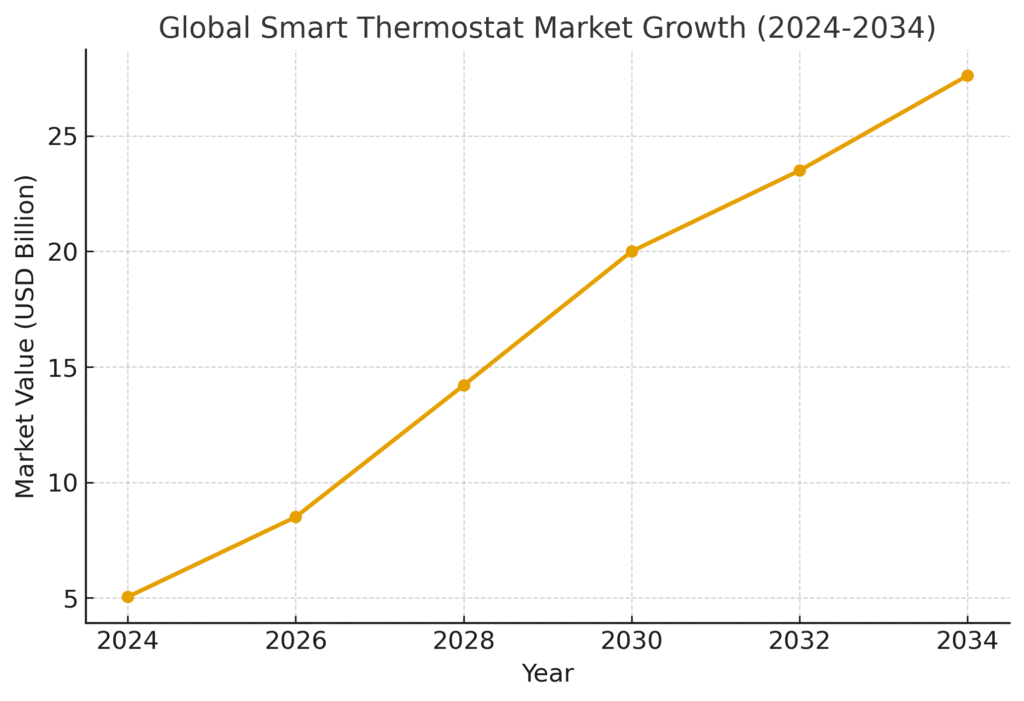
| 2 | Long-term growth forecast | USD 5.04B in 2024 → USD 27.61B by 2034 (~18.5% CAGR). |
| 3 | GMI forecast | Market at USD 3.7B in 2023, projected to grow at 21% CAGR by 2032. |
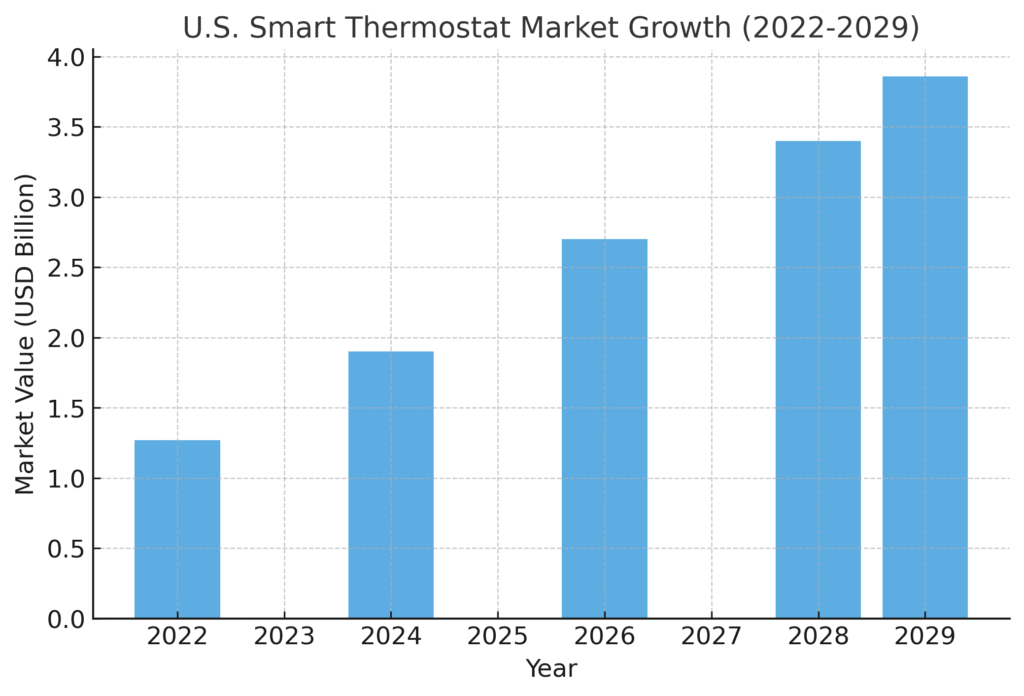
| 4 | U.S. market growth | USD 1.27B (2022) → USD 3.86B by 2029 (~17.2% CAGR). |
| 5 | U.S. shipments (2030) | 8.1M units, USD 1.1B+ revenue expected annually. |
| 6 | Adoption in U.S. households | ~16–17% penetration in internet households. |
| 7 | Global shipments (2030) | 67.2M devices expected to ship worldwide. |
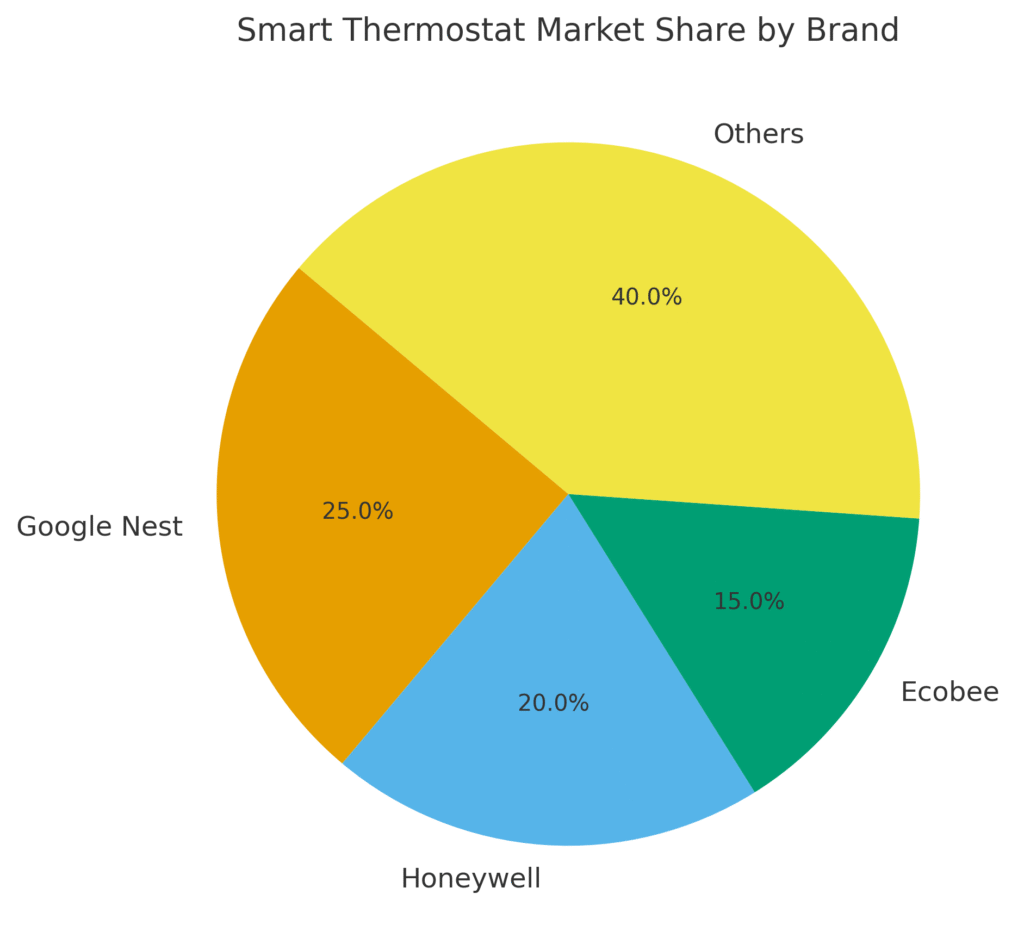
| 8 | Western adoption | Adoption in Western Europe & North America may exceed 45%. |
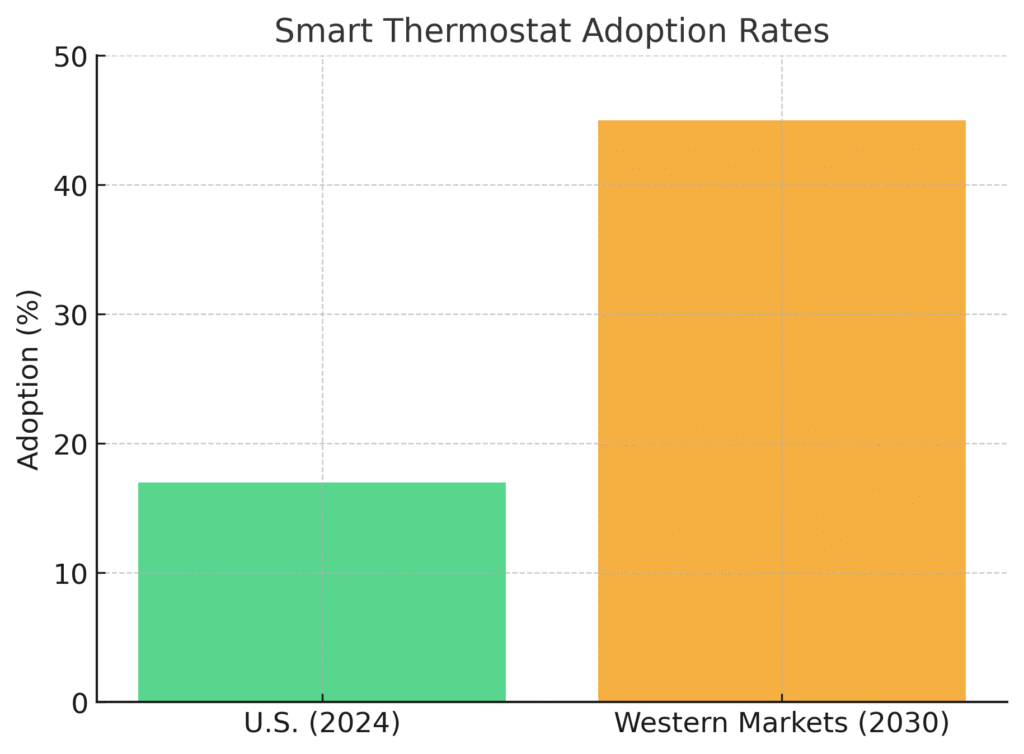
| 9 | Brand concentration | Google, Honeywell, and ecobee control 60%+ of global market share. |
| 10 | U.S. brand landscape | 50+ active smart thermostat brands in the U.S. market. |
| 11 | Top 10 U.S. brands | Google Nest, Honeywell, ecobee, Amazon, ADT, Sensi, Lennox, Trane, Bosch, Carrier. |
| 12 | Wi-Fi dominance | Over 66% of 2024 revenue share from Wi-Fi connected thermostats. |
| 13 | Product type | Connected thermostats are still the largest product category. |
| 14 | Learning models | Adaptive/self-learning thermostats gaining market share. |
| 15 | Residential demand | ~68% of smart thermostat revenue comes from residential users. |
| 16 | APAC growth | Asia-Pacific among fastest-growing regions, driven by urbanization. |
| 17 | EU adoption factors | Ease of use, price value, and performance expectancy drive adoption. |
| 18 | Energy savings | 10–12% on heating and 15% on cooling; ~$131–$145 saved annually. |
| 19 | Payback period | Consumers expect ROI within 2–3 years of purchase. |
| 20 | Marketing trends | Brands focus on interoperability, sustainability & carbon reduction. |
Top 20 Smart Thermostat Marketing Statistics 2025
Smart Thermostat Marketing Statistics #1 – Global Market Value (2024)
The global smart thermostat market was valued at USD 4.99 billion in 2024, showing how rapidly the industry is expanding. This value highlights the strong demand for energy-efficient home technologies. Marketers can use this growth to emphasize the cost-saving potential of smart thermostats. Consumers are becoming more conscious about sustainability, which fuels adoption. The projection to reach USD 13.35 billion by 2030 shows the market’s long-term promise.
Smart Thermostat Marketing Statistics #2 – Long-Term Growth Forecast
In 2024, the smart thermostat market stood at USD 5.04 billion and is projected to hit USD 27.61 billion by 2034. This projection indicates a massive surge in adoption across both residential and commercial sectors. It provides opportunities for marketers to highlight the role of long-term savings. With nearly 18.5% CAGR, this market shows resilience against economic slowdowns. Such numbers build confidence for investors and brands entering the space.
Smart Thermostat Marketing Statistics #3 – GMI Forecast
According to GMI Insights, the smart thermostat market was valued at USD 3.7 billion in 2023. It is projected to expand at a CAGR of over 21% between 2024 and 2032. This faster-than-average growth makes it one of the leading smart home product segments. The projection suggests marketers should target innovation-focused consumers. Such forecasts highlight how consumer demand for smarter and greener homes will intensify.
Smart Thermostat Marketing Statistics #4 – U.S. Market Growth
The U.S. smart thermostat market was valued at USD 1.27 billion in 2022. It is expected to expand to USD 3.86 billion by 2029, growing at a CAGR of 17.2%. This demonstrates the appetite of American households for smarter energy solutions. For marketers, this shows the U.S. is one of the most lucrative regions. Localized campaigns emphasizing convenience and energy savings can capture this demand.
Smart Thermostat Marketing Statistics #5 – U.S. Shipments (2030)
By 2030, U.S. smart thermostat shipments are expected to reach 8.1 million units. These shipments will generate more than USD 1.1 billion in annual revenue. This surge reflects how mainstream smart home devices are becoming. For marketing professionals, these figures highlight the importance of building brand presence early. Adoption campaigns that focus on comfort, efficiency, and cost-savings will resonate strongly.
Smart Thermostat Marketing Statistics #6 – Adoption In U.S. Households
Adoption of smart thermostats in U.S. internet households currently sits around 16–17%. This indicates significant room for further penetration. Marketing strategies can focus on educating consumers who are still undecided. Highlighting energy efficiency and integration with other smart devices may attract this segment. The figure suggests early adopters have paved the way, and now broader audiences can be engaged.
Smart Thermostat Marketing Statistics #7 – Global Shipments (2030)
Global shipments of smart thermostats are projected to reach 67.2 million units by 2030. This figure shows that demand is not limited to North America but is spreading worldwide. Marketers should prepare campaigns tailored for diverse regional audiences. Such growth provides opportunities for global partnerships and distribution. The widespread adoption also signals a cultural shift toward sustainable living.
Smart Thermostat Marketing Statistics #8 – Western Adoption
In Western Europe and North America, adoption rates could exceed 45% by 2030. Nearly half of households may own a smart thermostat in these regions. This presents marketers with the chance to highlight mainstream adoption. Campaigns can focus on showcasing social proof and user experiences. High adoption rates also suggest competitive branding will become increasingly vital.
Smart Thermostat Marketing Statistics #9 – Brand Concentration
Google Nest, Honeywell, and ecobee hold more than 60% of the global smart thermostat market. This indicates strong brand loyalty and recognition. For new entrants, it emphasizes the need for strong differentiation. Marketers should highlight unique features or pricing advantages. Established brands can capitalize on their reputation to sustain growth.
Smart Thermostat Marketing Statistics #10 – U.S. Brand Landscape
Over 50 active brands compete in the U.S. smart thermostat market. This high level of competition underscores the importance of strong marketing strategies. Brands must differentiate on innovation, pricing, or customer experience. For marketers, this environment requires constant adaptation and trend monitoring. Consumers benefit from variety, but clear messaging helps them make informed choices.
Smart Thermostat Marketing Statistics #11 – Top 10 U.S. Brands
The top 10 brands in the U.S. smart thermostat market include Google Nest, Honeywell, and ecobee among others. These names dominate consumer choices due to trust and technological innovation. Marketing strategies can leverage comparisons with these leading brands. Smaller brands can succeed by targeting niche audiences or specialized features. The list of top players sets a benchmark for competitive marketing campaigns.
Smart Thermostat Marketing Statistics #12 – Wi-Fi Dominance
Wi-Fi-based smart thermostats accounted for over 66% of revenue share in 2024. This shows how connectivity is the leading factor in adoption. Consumers want devices that seamlessly integrate with their home networks. Marketers can emphasize ease of use and remote access as selling points. The trend also signals a move toward more connected smart home ecosystems.
Smart Thermostat Marketing Statistics #13 – Product Type
Connected thermostats remain the largest product category in the market. This indicates consumer preference for devices that sync with wider smart home systems. Marketers should highlight compatibility and ecosystem advantages. Product positioning should focus on integration benefits, such as with voice assistants. The dominance of connected devices shows that standalone options are less appealing today.
Smart Thermostat Marketing Statistics #14 – Learning Models
Learning or adaptive thermostats are gaining popularity. These models adjust automatically to consumer behaviors. This reflects demand for convenience and smarter energy management. Marketing campaigns can emphasize AI-driven features as differentiators. Growing adoption of learning models showcases the shift toward automation in households.
Smart Thermostat Marketing Statistics #15 – Residential Demand
Around 68% of smart thermostat revenue in 2024 came from residential users. This highlights how homeowners are the primary audience. Marketing campaigns should prioritize household benefits such as comfort and energy savings. The data suggests commercial adoption is still secondary. Residential demand also ensures steady growth for the industry.
Smart Thermostat Marketing Statistics #16 – APAC Growth
Asia-Pacific is one of the fastest-growing markets for smart thermostats. Urbanization and rising disposable income are key drivers. Marketing campaigns in this region should highlight affordability and convenience. Localized branding strategies can capture diverse cultural preferences. This market’s rapid expansion shows its potential to rival Western markets.
Smart Thermostat Marketing Statistics #17 – EU Adoption Factors
A European study showed that price value, performance, and ease of use strongly influence adoption. This demonstrates that consumers prioritize practicality over novelty. Marketers should focus on affordability and real-world benefits. Campaigns can emphasize energy savings and simplicity in design. Such insights can shape strategies for European markets effectively.
Smart Thermostat Marketing Statistics #18 – Energy Savings
Smart thermostats deliver 10–12% savings on heating and 15% on cooling. This translates to annual savings of $131–$145 for U.S. households. These numbers make for strong marketing claims. Campaigns highlighting ROI and cost-effectiveness will appeal to cautious buyers. Energy savings remain one of the biggest motivators for adoption.
Smart Thermostat Marketing Statistics #19 – Payback Period
Consumers typically expect a payback period of 2–3 years when buying a smart thermostat. This expectation aligns with the energy savings claims. Marketing strategies can highlight long-term value and quick ROI. Addressing affordability concerns can ease purchase hesitations. This shows how financial considerations remain central to adoption decisions.
Smart Thermostat Marketing Statistics #20 – Marketing Trends
Smart thermostat marketing is shifting toward sustainability and interoperability. Brands are highlighting their role in reducing carbon footprints. Interoperability with broader smart home systems is another key theme. Marketers can leverage these trends to appeal to eco-conscious and tech-savvy consumers. This reflects how marketing messages are evolving beyond comfort to responsibility.
Wrapping Up the Future of Smart Thermostats
Looking back at these smart thermostat marketing statistics, I feel a mix of excitement and curiosity about where this market is headed. The growth, adoption, and innovation show that we’re only scratching the surface of what’s possible, especially as more households and businesses embrace smarter, greener living. For me, the most inspiring part is how technology like this balances comfort with responsibility, giving us tools to save money while making sustainable choices. I hope these insights spark ideas and help you see the opportunities that lie ahead in this rapidly evolving space. And honestly, I can’t wait to see how these trends continue to shape the way we live and market in the years to come.
SOURCES
- https://imarcblog.mystrikingly.com/blog/smart-thermostat-market-growth-industry-share-trends-analysis-and-forecast
- https://www.sciencedirect.com/science/article/pii/S2666792425000307
- https://www.nextmsc.com/report/smart-thermostat-market
- https://www.marketresearchfuture.com/reports/smart-thermostat-market-2521
- https://blog.landisgyr.com/en/us/smart-thermostats-are-changing-consumer-behavior
- https://www.prnewswire.com/news-releases/the-smart-thermostat-sector-heats-up-with-67-2-million-devices-shipped-by-2030–302187722.html
- https://scoop.market.us/smart-thermostats-market-news/
- https://www.professionalsuk.co.uk/article/information-technology/89617/why-the-smart-thermostat-market-is-heating-up-and-what-that-means-for-you
- https://www.rootsanalysis.com/smart-thermostat-market
- https://www.gminsights.com/industry-analysis/smart-thermostat-market
- https://www.futuremarketinsights.com/reports/smart-thermostat-market
- https://straitsresearch.com/report/smart-thermostat-market
- https://www.marketresearchfuture.com/reports/smart-thermostat-market-2521
- https://www.marketresearchfuture.com/reports/smart-thermostat-market-2521
- https://www.marketresearchfuture.com/reports/smart-thermostat-market-2521