



27 Sep TOP 20 SMART TRANSPORTATION MARKETING STATISTICS 2025
Every time I dig into Smart transportation marketing statistics, I’m reminded why this space excites me: real-world impact meets data-driven growth. I’ve spent the last few weeks talking to mobility founders, city innovation teams, and martech folks, and the same theme keeps popping up — the winners are the ones who turn messy mobility data into clear stories customers actually care about. That’s why I keep a close pulse on market sizes, adoption rates, and the channels that convert — because strategy is only as good as the stats behind it. If you’re mapping your next campaign or pitching a pilot to a city, these figures will help you anchor your message, from ROI to outcomes that matter on the street. And if you ever want a second brain on your launch plan, I’m happy to collaborate alongside a marketing agency in New York I trust for scaling creative + performance.
Top 20 Smart Transportation Marketing Statistics 2025 (Editor’s Choice)
| # | Stat | Figure | Year / Horizon | Source |
|---|---|---|---|---|
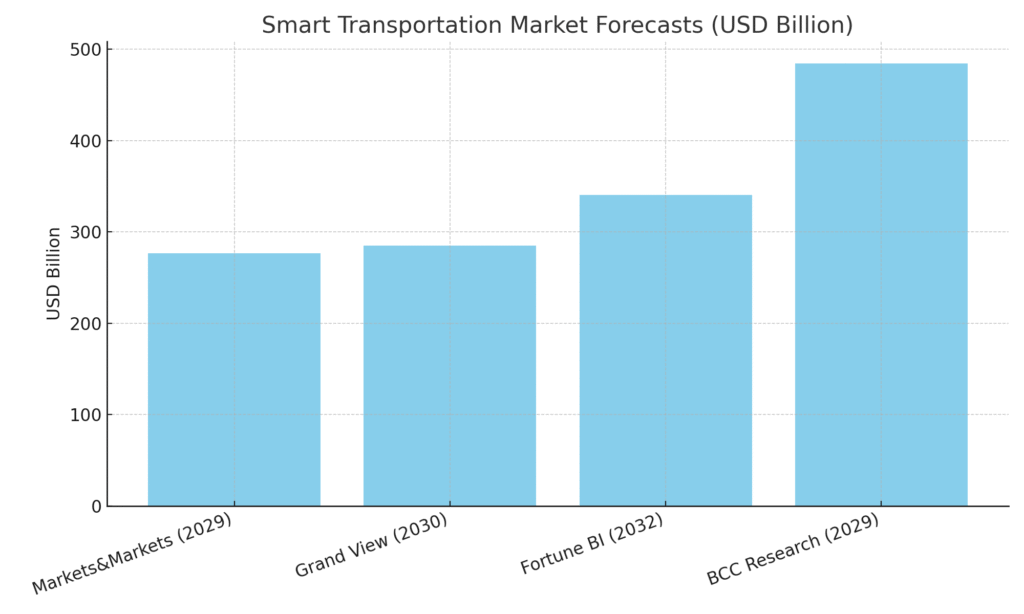
| 1 | Global smart transportation market forecast | $276.65B | 2029 | MarketsandMarkets |
| 2 | Global smart transportation market forecast | $285.12B | 2030 | Grand View Research |
| 3 | Global smart transportation market forecast | $340.69B | 2032 | Fortune Business Insights |
| 4 | Global smart transportation market forecast | $484.5B | 2029 | BCC Research |
| 5 | Smart transportation CAGR (estimate) | 16.4% CAGR | 2024–2029 | MarketsandMarkets |
| 6 | Smart transportation CAGR (estimate) | ~13.0% CAGR | 2023–2030 | Grand View Research |
| 7 | Smart transportation CAGR (estimate) | 21.7% CAGR | 2024–2029 | PR Newswire (BCC) |
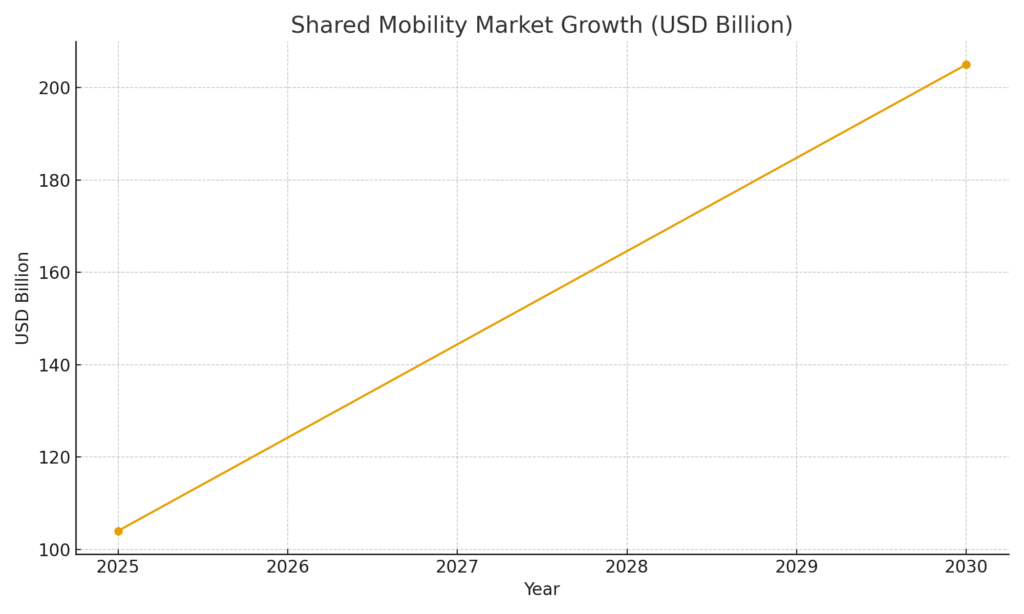
| 8 | Shared mobility market value | $104B → $205B | 2025 → 2030 | Juniper Research |
| 9 | Shared mobility users | 1.4B → 2.0B+ | 2025 → 2028 | Juniper Research (press) |
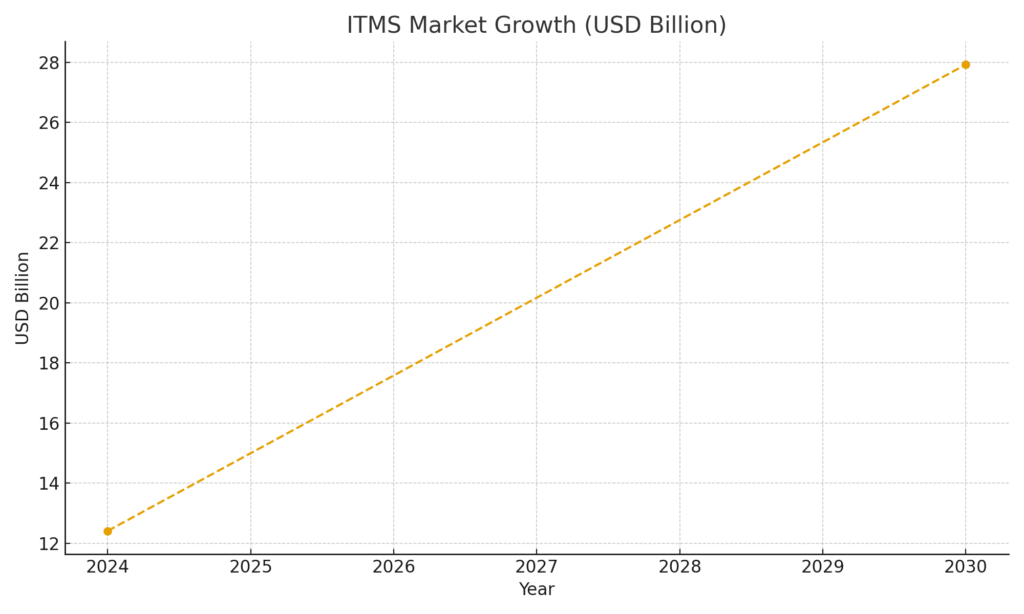
| 10 | Intelligent Traffic Management System (ITMS) market | $12.41B → $27.92B | 2024 → 2030 | Grand View Research |
| 11 | ITMS CAGR (estimate) | ~15.2% CAGR | 2025–2030 | Grand View Research |
| 12 | ITMS regional share (NA, 2024) | ~39% share | 2024 | Precedence Research |
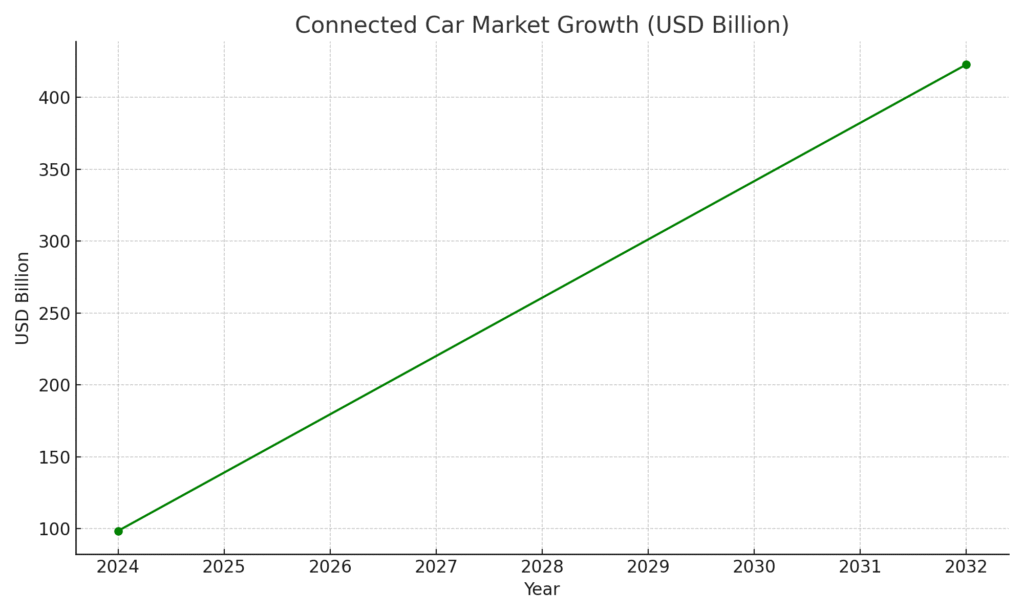
| 13 | Connected car market | $98.39B → $422.72B | 2024 → 2032 | Fortune Business Insights |
| 14 | Connected car CAGR (estimate) | ~19.8% CAGR | 2025–2032 | Fortune Business Insights |
| 15 | Connected cars by new sales (projection) | ~95% of new cars connected | 2030 | TechRadar (McKinsey cited) |
| 16 | eSIM car connections | 70M → 280M | Multi-year outlook | TechRadar |
| 17 | ITS (broader) market projection | $31.14B → $66.65B | 2025 → 2032 | Fortune Business Insights |
| 18 | EU vehicle data access momentum | Connected car economy “hundreds of billions” | By 2030 | Reuters |
| 19 | Definition anchor: ITS scope | Advanced apps for safer, smarter networks | Reference | Wikipedia (ITS) |
| 20 | Alternate smart transportation forecast | $181.7B → $484.5B | 2024 → 2029 | BCC Research (report page) |
Top 20 Smart Transportation Marketing Statistics 2025
Smart Transportation Marketing Statistics #1: $276.65B Market By 2029
This forecast highlights sustained demand from governments and enterprise mobility programs. For positioning, anchor messaging around congestion relief, safety, and measurable ROI. Showcase pilots that scale to city-wide deployments within two budget cycles. Use customer stories to turn technical wins into human outcomes. Close the loop with dashboards that speak CFO language and policy KPIs.
Smart Transportation Marketing Statistics #2: $285.12B Market By 2030
A 2030 horizon reassures long-term buyers that budgets and results can compound. Build a content arc that blends 12-month wins with a 3–5-year roadmap. Pair performance ads with thought leadership on multi-modal orchestration. Highlight integrations with traffic signals, AV pilots, and MaaS apps. Emphasize interoperability and open data standards to reduce lock-in concerns.
Smart Transportation Marketing Statistics #3: $340.69B Market By 2032
Longer horizons suit platform vendors and systems integrators. Map your product narrative to phased value: detect → optimize → monetize. Create calculators showing time-to-value at each phase. Publish deployment playbooks tailored to city sizes (small, mid, mega). Stress resilience and cybersecurity as adoption accelerates.
Smart Transportation Marketing Statistics #4: $484.5B Market By 2029
Aggressive growth scenarios resonate with innovation-forward prospects and investors. Use them to justify category leadership campaigns. Contrast conservative and aggressive scenarios to frame your upside. Back claims with objective third-party sources in proposals. Turn this into a PR hook tied to milestones and case studies.
Smart Transportation Marketing Statistics #5: 16.4% CAGR (2024–2029)
CAGR-anchored messaging helps non-technical buyers grasp momentum. Translate CAGR into “expected gains per year” to humanize the math. Use it to rationalize multi-year contracts and service bundles. Tie price protection to the market’s growth curve. Reinforce credibility with analyst quotes in your collateral.
Smart Transportation Marketing Statistics #6: ~13.0% CAGR (2023–2030)
When multiple analysts agree on double-digit growth, buyers perceive lower adoption risk. Use this as a bridge to procurement: “the category is maturing.” Position your product as future-proof via modular upgrades. Share a release roadmap to calm replacement fears. Reference third-party validation in RFP responses.
Smart Transportation Marketing Statistics #7: 21.7% CAGR (2024–2029)
Faster growth narratives justify premium tiers and expansion plays. Target innovation funds and national programs hungry for scale. Offer co-marketing with lighthouse deployments to accelerate trust. Pair aggressive forecasts with transparent implementation timelines. Always temper with proof points to avoid hype fatigue.
Smart Transportation Marketing Statistics #8: Shared Mobility $104B → $205B (2025→2030)
Shared mobility’s near-doubling invites partnerships with micromobility and TaaS providers. Message convenience and lower total cost of mobility. Create referral loops between your platform and operators. Build city-specific landing pages with localized benefits. Use seasonal campaigns around commuting and campus mobility.
Smart Transportation Marketing Statistics #9: Shared Mobility Users 1.4B → 2B+ (2025→2028)
User growth validates mobile-first acquisition strategies. Invest in onboarding UX and trust signals (IDV, safety, insurance). Launch loyalty programs to grow frequency and basket size (passes, bundles). Segment riders by purpose (commute, errands, leisure). Test SMS/app notifications tied to hyper-local demand spikes.
Smart Transportation Marketing Statistics #10: ITMS $12.41B → $27.92B (2024→2030)
Traffic optimization is a clear, fundable problem. Lead with “minutes saved” and incident response improvements. Visualize network-wide effects with before/after heatmaps. Highlight compatibility with existing controllers and sensors. Offer trials in bottleneck corridors to prove value fast.
Smart Transportation Marketing Statistics #11: ITMS ~15.2% CAGR
CAGR supports multi-year maintenance and analytics upsells. Frame SLAs around uptime and latency. Publish quarterly reliability reports to build trust. Translate technical KPIs into commuter benefits. Let city comms teams reuse your visuals for public updates.
Smart Transportation Marketing Statistics #12: NA ITMS ~39% Share (2024)
Regional strength signals where to prioritize field marketing and partnerships. Build a partner map (integrators, OEMs, SIs) per state. Sponsor transportation summits and DOT convenings. Localize compliance messaging (MUTCD, NTCIP, Buy America). Capture testimonials from similar-sized cities to reduce friction.
Smart Transportation Marketing Statistics #13: Connected Cars $98.39B → $422.72B (2024→2032)
Connected services open recurring revenue and cross-sell opportunities. Emphasize over-the-air updates and data-driven features. Collaborate with telcos and app ecosystems. Build ROI cases around safety, CX, and fleet efficiency. Use privacy-by-design messaging to pre-empt objections.
Smart Transportation Marketing Statistics #14: Connected Car ~19.8% CAGR
Growth in connected vehicles expands your addressable app and data layers. Run ABM campaigns at OEMs and Tier-1s. Offer SDKs and sample apps to reduce integration time. Showcase partner logos prominently (with permission). Tie success metrics to active users and service attach rates.
Smart Transportation Marketing Statistics #15: ~95% Of New Cars Connected By 2030
This is a powerful proof point for platform longevity. Pitch “build once, deploy across models.” Prioritize developer experience and documentation. Publish security whitepapers to win enterprise IT. Use this stat in top-of-funnel ads to frame inevitability.
Smart Transportation Marketing Statistics #16: eSIM Cars 70M → 280M
Connectivity is now a feature, not a nice-to-have. Market uptime, seamless roaming, and managed data plans. Partner with eSIM providers for co-promo. Offer business SKUs for fleets and field teams. Explain how antenna + VPN improve reliability for mission-critical users.
Smart Transportation Marketing Statistics #17: ITS $31.14B → $66.65B (2025→2032)
Use broader ITS growth to contextualize your niche solution. Position as a critical module in a larger stack. Run comparison guides that show savings vs. legacy systems. Package audits + roadmaps as entry offers. Share migration checklists to reduce switching anxiety.
Smart Transportation Marketing Statistics #18: EU Vehicle Data Economy = Hundreds Of Billions By Decade End
Data access policy is a marketing moment: talk openness, fairness, and value to all stakeholders. Publish clear data-usage policies and governance. Offer consent management and transparent telemetry controls. Partner with insurers, repair shops, and leasing firms on joint pilots. Turn compliance into a competitive advantage, not a chore.
Smart Transportation Marketing Statistics #19: ITS Definition Anchor
When educating new buyers, start with plain-language definitions and use cases. Then ladder up to your differentiators. A shared vocabulary shortens the sales cycle. Build a simple “how it works” explainer page. Map features to real-world outcomes commuters feel.
Smart Transportation Marketing Statistics #20: $181.7B → $484.5B (2024→2029)
When multiple reputable sources converge, confidence goes up. Use triangulation (three independent sources) in enterprise decks. Benchmark your pricing against category value delivered. Create a quarterly “state of mobility” update for leads and customers. Make your pipeline narrative reflect the category’s acceleration.
What These Smart transportation marketing statistics Mean For Your Next Campaign
Looking across these Smart transportation marketing statistics, the story is straightforward: momentum is on your side, but clarity is your moat. Prospects respond to practical outcomes (fewer minutes stuck in traffic, safer intersections, lower TCO), so your messaging should translate complex tech — ITMS, connected cars, shared mobility — into immediate user value. Use the higher-confidence 2029–2032 forecasts to frame long-term vision, and pair them with fast wins (pilots, testimonials, cost-savings calculators) to reduce perceived risk. When in doubt, show the before/after: congestion reduced, trips completed, uptime improved, revenue unlocked. If you’d like, I can help you turn these numbers into a punchy campaign narrative and build a test-and-learn plan with a marketing agency in New York that knows how to scale.
SOURCES
-
https://www.marketsandmarkets.com/PressReleases/smart-transportation.asp
-
https://www.marketsandmarkets.com/Market-Reports/smart-transportation-market-692.html
-
https://www.fortunebusinessinsights.com/smart-transportation-market-105736
-
https://www.fortunebusinessinsights.com/infographics/smart-transportation-market-105736
-
https://www.precedenceresearch.com/intelligent-traffic-management-system-market
-
https://www.fortunebusinessinsights.com/industry-reports/connected-car-market-101606
-
https://www.fortunebusinessinsights.com/intelligent-transportation-system-market-102065
-
https://en.wikipedia.org/wiki/Intelligent_transportation_system