



27 Sep TOP 20 SMART WATCH MARKETING STATISTICS 2025
As I’ve been exploring the latest trends in wearable technology, I couldn’t help but notice how quickly smartwatches are reshaping the way brands and consumers connect. These smart watch marketing statistics highlight just how much potential there is for businesses to tap into this growing market. From health tracking to lifestyle integration, smartwatches are no longer just gadgets — they’re daily essentials. That’s why I’ve partnered with a leading marketing agency in New York to better understand how companies can position themselves in this dynamic space. Let me share with you some of the most insightful numbers that show where this industry is headed.
Top 20 Smart Watch Marketing Statistics 2025 (Editor’s Choice)
| # | Category | Statistic |
|---|---|---|
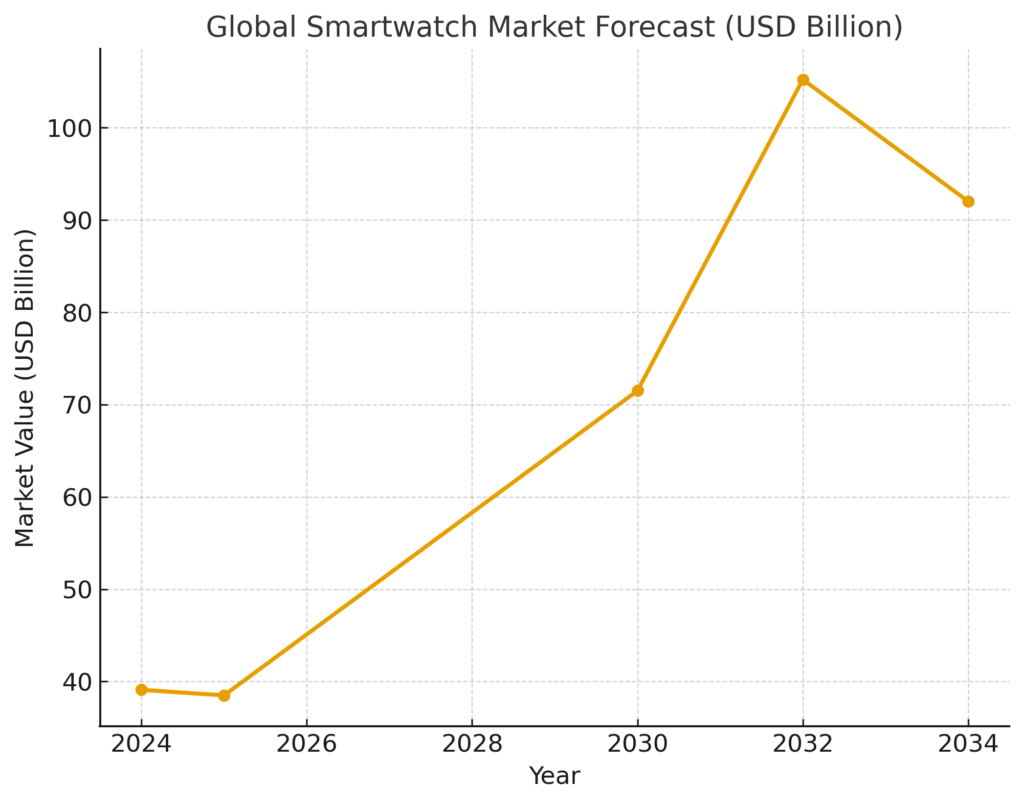
| 1 | Market Size | The global smartwatch market was valued at USD 39.1 billion in 2024, projected to hit USD 92 billion by 2034 (CAGR ~9%). |
| 2 | Market Forecast | Another estimate forecasts USD 105.2 billion by 2032, up from USD 38.5 billion in 2025 (CAGR ~15.4%). |
| 3 | Growth Outlook | Grand View Research predicts growth from USD 30.4 billion (2021) to USD 71.5 billion by 2030 (CAGR ~8.2%). |
| 4 | Industry Growth | From 2025–2029, the market is expected to expand by USD 46.3 billion (CAGR ~15.5%). |
| 5 | Wearables Market | Total wearables reached 534.6 million units shipped in 2024, up 5.4% YoY. |
| 6 | User Base | There are about 454.7 million smartwatch users in 2025 — up 41% from 2023. |
| 7 | Health Tracking | 92% of smartwatch users rely on their devices for health and fitness tracking. |
| 8 | Data Sharing | 76–90% of adults are willing to share wearable health data with physicians. |
| 9 | Shipments | In 2024, smartwatch shipments declined by ~4.5% due to pricing pressures and saturation. |
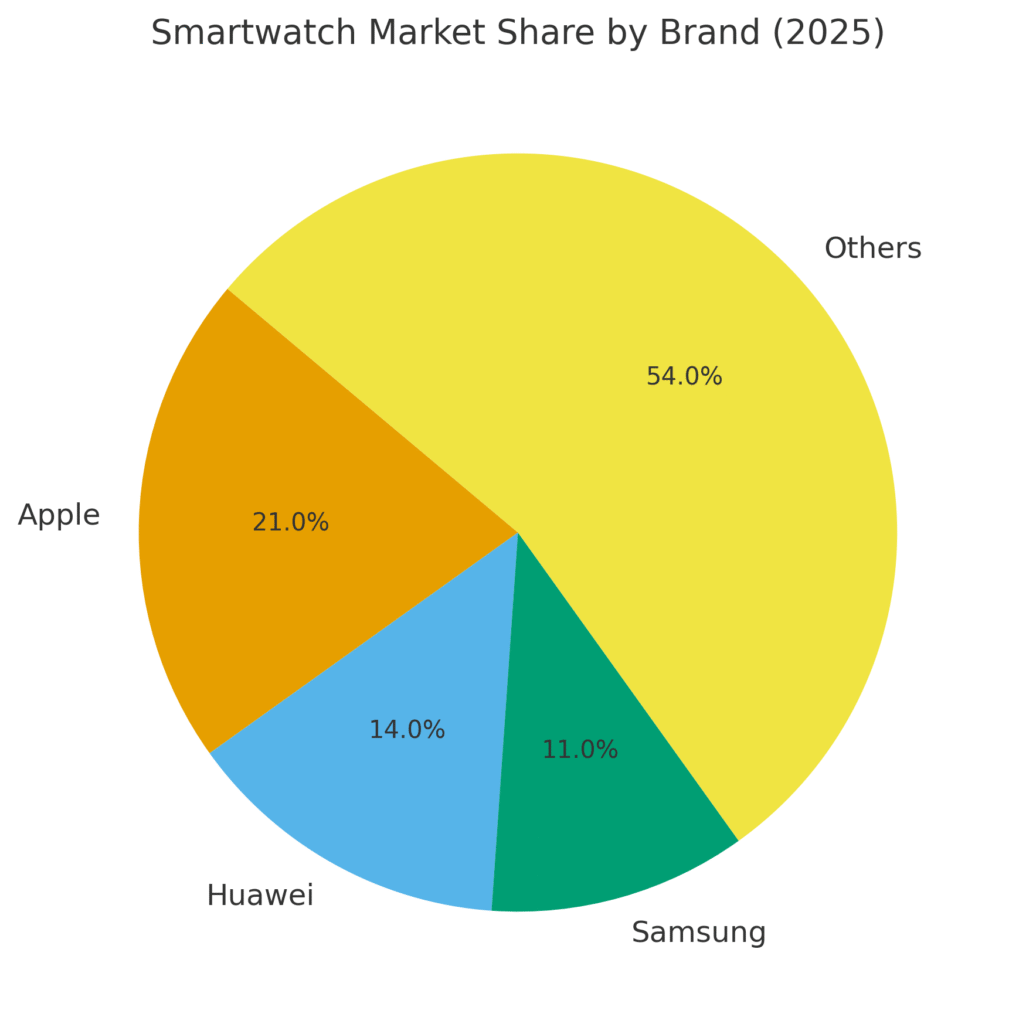
| 10 | Apple Share | Apple leads the market with around 21% global smartwatch share. |
| 11 | Huawei & Samsung | Huawei holds ~14% market share; Samsung about ~11%. |
| 12 | India Market | In Q2 2025, Indian smartwatch shipments fell 28.4% YoY, shrinking market share to 24.9%. |
| 13 | Global Decline | In Q1 2025, global shipments fell 2% YoY; Samsung’s shipments dropped 18%. |
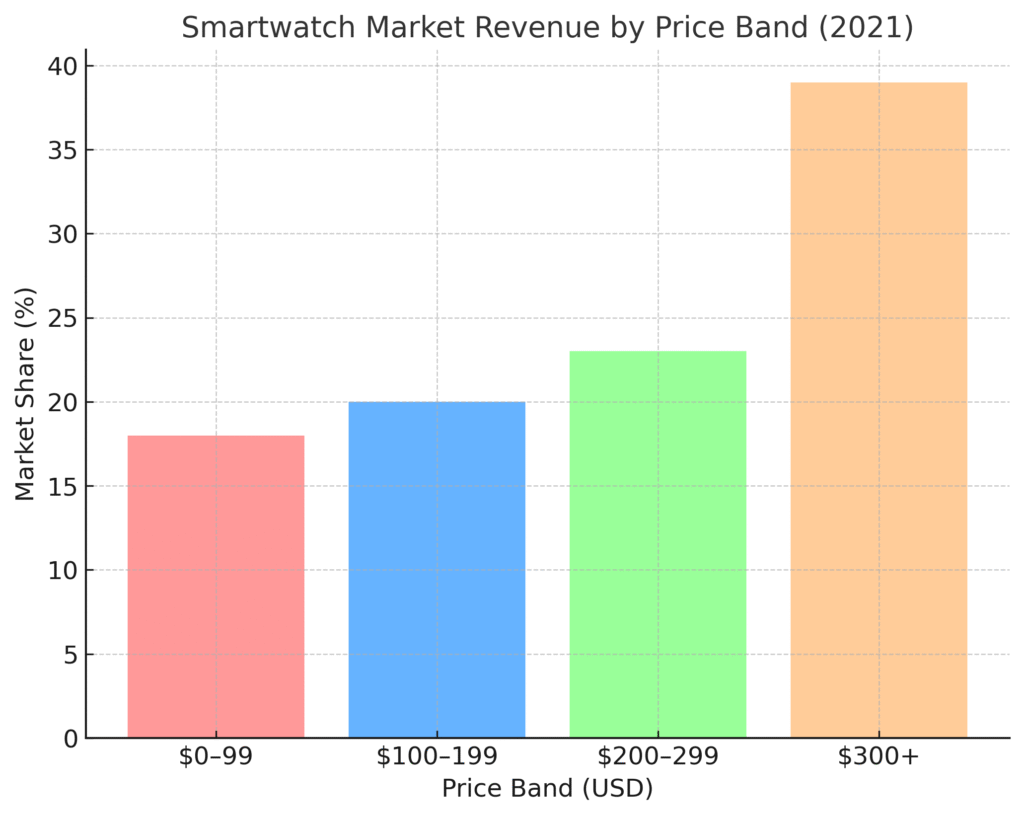
| 14 | Price Band | The USD 200–299 segment held over 22.6% of revenue in 2021, the largest share. |
| 15 | Entry-Level | The USD 0–99 smartwatch segment is forecast to grow at ~9.8% CAGR by 2030. |
| 16 | Consumer Behavior | Design, battery life, and health integration remain top purchase decision factors. |
| 17 | Marketing Potential | Smartwatches create direct engagement touchpoints for notifications and promotions. |
| 18 | Health Appeal | With 92% using health features, wellness-focused marketing resonates most. |
| 19 | Healthcare Partnerships | Data-sharing willingness opens opportunities for healthcare and insurance tie-ups. |
| 20 | Differentiation | Saturation in entry-level models means brands must innovate with AI and UX, not just pricing. |
Top 20 Smart Watch Marketing Statistics 2025
Smart Watch Marketing Statistics #1 – Global Market Value At USD 39.1 Billion
The global smartwatch market reached a massive value of USD 39.1 billion in 2024. Analysts project that it could grow to USD 92 billion by 2034, showing a steady compound annual growth rate of around 9%. This highlights not just consumer adoption but also brand reliance on smartwatches as lifestyle companions. Companies investing in this market now are positioning themselves for long-term gains. It reflects the growing role of wearables in everyday life, from communication to health monitoring.
Smart Watch Marketing Statistics #2 – Market Forecast To USD 105.2 Billion By 2032
According to forecasts, the smartwatch market will climb from USD 38.5 billion in 2025 to USD 105.2 billion by 2032. This growth at a CAGR of 15.4% shows accelerating adoption among consumers worldwide. The forecast also suggests that demand will be fueled by innovation in features such as AI integration and health tracking. For marketers, this rapid growth emphasizes the need to position their products effectively. It shows that brands who adapt to consumer expectations can ride the wave of this booming industry.
Smart Watch Marketing Statistics #3 – Growth Outlook From USD 30.4 Billion To 71.5 Billion
Grand View Research projects that the smartwatch market will rise from USD 30.4 billion in 2021 to USD 71.5 billion by 2030. This indicates a CAGR of around 8.2%, marking steady momentum for the sector. The research highlights how consistent consumer interest drives market stability. For marketers, this means the smartwatch industry provides reliable opportunities for innovation and campaigns. The numbers reflect consumer loyalty and growing reliance on smart wearable technology.
Smart Watch Marketing Statistics #4 – Market Expansion Of USD 46.3 Billion From 2025–2029
Between 2025 and 2029, the smartwatch market is expected to expand by USD 46.3 billion. This expansion will happen at a CAGR of approximately 15.5%. Such rapid growth signals the increasing global popularity of smartwatches. For businesses, this provides a lucrative opportunity to enter or scale within the wearable space. It also highlights how brands need to keep up with consumer demands for more advanced features.
Smart Watch Marketing Statistics #5 – Wearables Market Reached 534.6 Million Units
The wearables market as a whole reached 534.6 million units shipped in 2024. This represents a year-over-year growth of 5.4%, showcasing consistent consumer demand. Smartwatches are a significant part of this market, proving their global popularity. For marketers, this large market size means increased competition but also wider audience potential. It also emphasizes how wearables are becoming everyday essentials rather than luxury items.
Smart Watch Marketing Statistics #6 – Global User Base At 454.7 Million
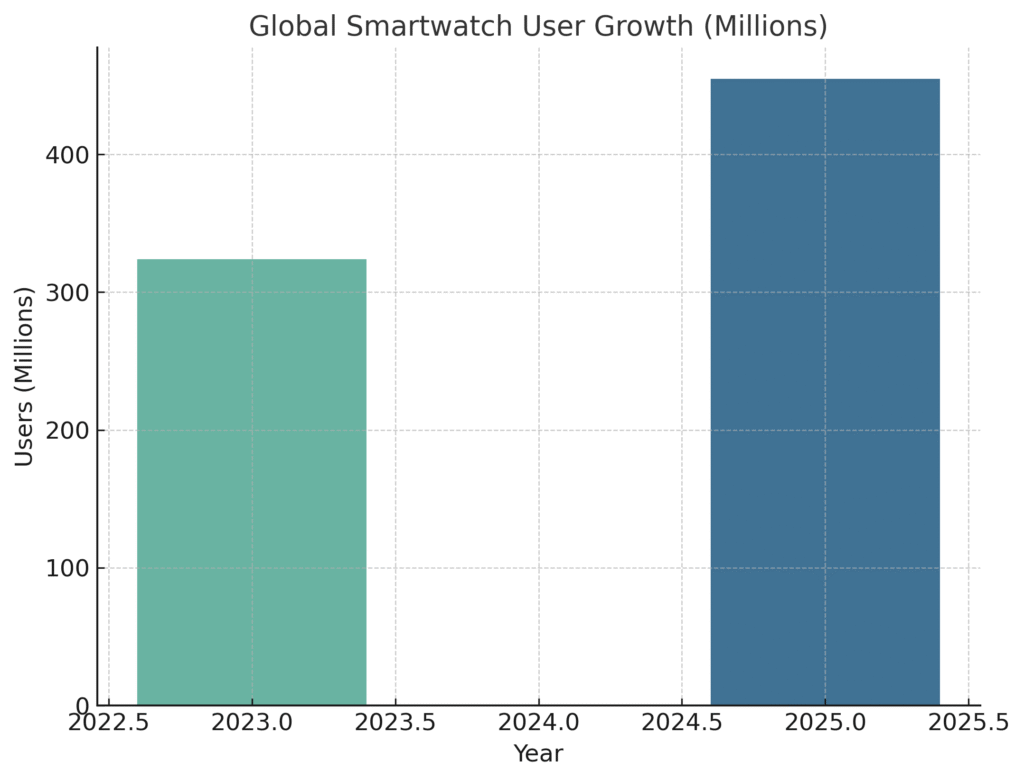
In 2025, there are about 454.7 million smartwatch users worldwide. This marks a sharp increase of 41% from the 324 million users recorded in 2023. The rise shows just how quickly adoption is spreading across demographics and regions. For businesses, this surge represents a larger and more diverse customer base. It highlights that smartwatches are no longer niche products but mainstream consumer technology.
Smart Watch Marketing Statistics #7 – 92% Use Devices For Health And Fitness
A staggering 92% of smartwatch users rely on their devices for health and fitness tracking. This demonstrates the dominant role of wellness in driving smartwatch adoption. Fitness tracking, heart rate monitoring, and sleep analysis are among the most used features. For marketers, emphasizing health benefits in campaigns strongly resonates with audiences. It highlights how wellness remains central to the smartwatch value proposition.
Smart Watch Marketing Statistics #8 – 76–90% Willing To Share Data With Physicians
Studies show that between 76% and 90% of adults are willing to share wearable health data with their physicians. This presents opportunities for healthcare partnerships and integrated services. It also shows that consumers see smartwatches as credible health tools, not just gadgets. For marketers, this highlights a chance to collaborate with insurers, clinics, and wellness programs. It strengthens the role of smartwatches as bridges between consumers and healthcare providers.
Smart Watch Marketing Statistics #9 – Shipments Declined By 4.5% In 2024
Despite growth, smartwatch shipments declined by 4.5% in 2024. This drop was largely due to market saturation and pricing pressures, particularly in emerging markets. It shows that competition is tightening, and not all brands are equally resilient. For businesses, this is a reminder to innovate and differentiate products. It also highlights the importance of strong brand positioning in saturated markets.
Smart Watch Marketing Statistics #10 – Apple Holds 21% Market Share
Apple dominates the global smartwatch market with around 21% market share. This consistent leadership shows the strength of Apple’s brand and ecosystem integration. For marketers, it emphasizes how premium positioning can lead to significant market influence. Competing brands often struggle to replicate Apple’s success, especially in brand loyalty. The figure also shows how much weight a single brand can carry in shaping an entire market.
Smart Watch Marketing Statistics #11 – Huawei At 14% And Samsung At 11%
Huawei and Samsung are key players holding 14% and 11% of the global smartwatch market, respectively. Their presence highlights that competition is not just limited to Apple. These companies leverage diverse product lines and competitive pricing strategies. For marketers, this reflects opportunities in targeting markets where Apple is less dominant. It shows that the smartwatch industry thrives on both premium and accessible product strategies.
Smart Watch Marketing Statistics #12 – India Shipments Down By 28.4%
In Q2 2025, smartwatch shipments in India declined by 28.4% year-over-year. This resulted in a reduction of market share from 31.5% to 24.9%. The numbers reflect both market saturation and shifting consumer preferences. For brands, this means India is becoming a more challenging market to navigate. It also underlines the importance of innovation and competitive pricing in emerging markets.
Smart Watch Marketing Statistics #13 – Global Shipments Fell 2% In Q1 2025
In Q1 2025, global smartwatch shipments dropped by about 2% year-over-year. Samsung was among the most affected, with its shipments falling by 18%. This shows that even established brands can face difficulties in competitive environments. For businesses, it is a warning sign that the industry is highly volatile. The figures emphasize the need for constant innovation and adaptability to sustain growth.
Smart Watch Marketing Statistics #14 – USD 200–299 Price Band Dominates
The USD 200–299 price band was the largest revenue contributor in 2021, holding over 22.6% market share. This demonstrates strong consumer demand for mid-range smartwatches. It shows that customers seek a balance between affordability and advanced features. For marketers, this price band is a sweet spot for targeting mainstream buyers. It highlights the importance of offering value-driven products at competitive prices.
Smart Watch Marketing Statistics #15 – Entry-Level Segment Growing At 9.8%
The entry-level smartwatch segment, priced between USD 0–99, is expected to grow at 9.8% CAGR through 2030. This growth is particularly strong in emerging markets. It shows that affordability continues to be a major driver of adoption. For businesses, entry-level offerings can expand customer bases and drive scale. It also highlights opportunities in brand loyalty by capturing first-time smartwatch buyers.
Smart Watch Marketing Statistics #16 – Consumer Behavior Driven By Design And Battery
Design, battery life, and health integration remain top factors influencing smartwatch purchases. Consumers want devices that are stylish but also reliable in performance. The balance between fashion and function is central to their decision-making. For marketers, this emphasizes the need for campaigns that highlight aesthetics and usability. It shows that technical features alone are not enough without appealing design.
Smart Watch Marketing Statistics #17 – Marketing Potential Through Engagement Touchpoints
Smartwatches offer unique engagement opportunities through notifications and in-device promotions. These touchpoints create direct and personal interaction with consumers. For marketers, this means smartwatches can serve as mini-platforms for brand engagement. While adoption of this approach is still developing, the potential is clear. It highlights how wearables can go beyond functionality to become marketing channels.
Smart Watch Marketing Statistics #18 – Wellness Focus Resonates With Consumers
With 92% of users relying on health features, wellness-focused marketing has strong appeal. Brands that highlight fitness, preventive care, and lifestyle improvement gain more traction. For marketers, this shows the power of aligning campaigns with health benefits. It is not just about selling a device but about promoting a healthier lifestyle. This approach builds stronger emotional connections with consumers.
Smart Watch Marketing Statistics #19 – Healthcare Partnerships Emerging
The willingness of consumers to share health data opens doors for partnerships with healthcare providers. Insurers, clinics, and wellness apps can collaborate with smartwatch brands. For marketers, this adds credibility to campaigns and extends value beyond technology. It positions smartwatches as vital tools in preventive healthcare. This strategy can drive long-term loyalty and trust from customers.
Smart Watch Marketing Statistics #20 – Innovation Needed Beyond Pricing
Market saturation in entry-level models means brands must differentiate through innovation. Features like AI integration, advanced UX, and health insights will become key. Competing on price alone is no longer sustainable in crowded markets. For businesses, this calls for investing in unique value propositions. It shows that the future of smartwatch marketing lies in innovation, not discounts.
Why These Insights Matter
Looking at these smart watch marketing statistics, it’s clear that wearables are more than a passing trend; they’re a movement shaping consumer behavior and brand strategies worldwide. For me, what stands out most is how health, convenience, and design all come together to influence purchasing decisions. This tells me that businesses have a real opportunity to innovate and connect with audiences on a much deeper level. I’m genuinely excited to see how companies, especially those working with forward-thinking partners like a leading marketing agency in New York, will continue to evolve in this space. These numbers aren’t just stats — they’re a roadmap for where marketing and technology are heading next.
SOURCES
-
- https://www.demandsage.com/smartwatch-statistics/
- https://www.idc.com/promo/wearablevendor/
- https://scoop.market.us/smartwatch-statistics/
- https://www.fortunebusinessinsights.com/smartwatch-market-106625
- https://pmc.ncbi.nlm.nih.gov/articles/PMC11549588/
- https://www.marketsandmarkets.com/Market-Reports/wearable-electronics-market-983.html
- https://www.fortunebusinessinsights.com/wearable-technology-market-106000
- https://www.emarketer.com/topics/category/smartwatch
- https://www.emarketer.com/topics/industry/wearables
- https://blog.bccresearch.com/the-wearable-medical-device-market-trends-innovations-and-future-outlook
- https://www.labfront.com/article/impact-of-wearables-in-research
- https://www.wired.com/story/google-wear-os-io-samsung-fitbit-partnership
- https://omdia.tech.informa.com/pr/2025/sep/global-wearable-band-market-to-grow-9percent-as-smartwatches-and-health-tech-surge
- https://cincodias.elpais.com/smartlife/gadgets/2025-03-19/ventas-apple-watch-caida-libre-2024.html