




20 Sep TOP 20 SOAP MARKETING STATISTICS 2025
When I first started digging into soap industry trends, I honestly didn’t realize just how big and fast-moving this market has become. That’s exactly why I wanted to share these soap marketing statistics—because they paint such a clear picture of where the industry is heading. As someone who works closely with a leading marketing agency in New York, I’ve seen firsthand how data like this can completely reshape the way we position a brand. It’s not just about numbers—it’s about understanding what consumers really care about, from sustainability to premium skin care, and making sure our strategies meet them there.
Top 20 SOAP Marketing Statistics 2025 (Editor’s Choice)
🧼 Top 20 SOAP Marketing Statistics 2025
Essential Market Insights & Industry Trends
| # | Category | Key Statistic |
|---|---|---|
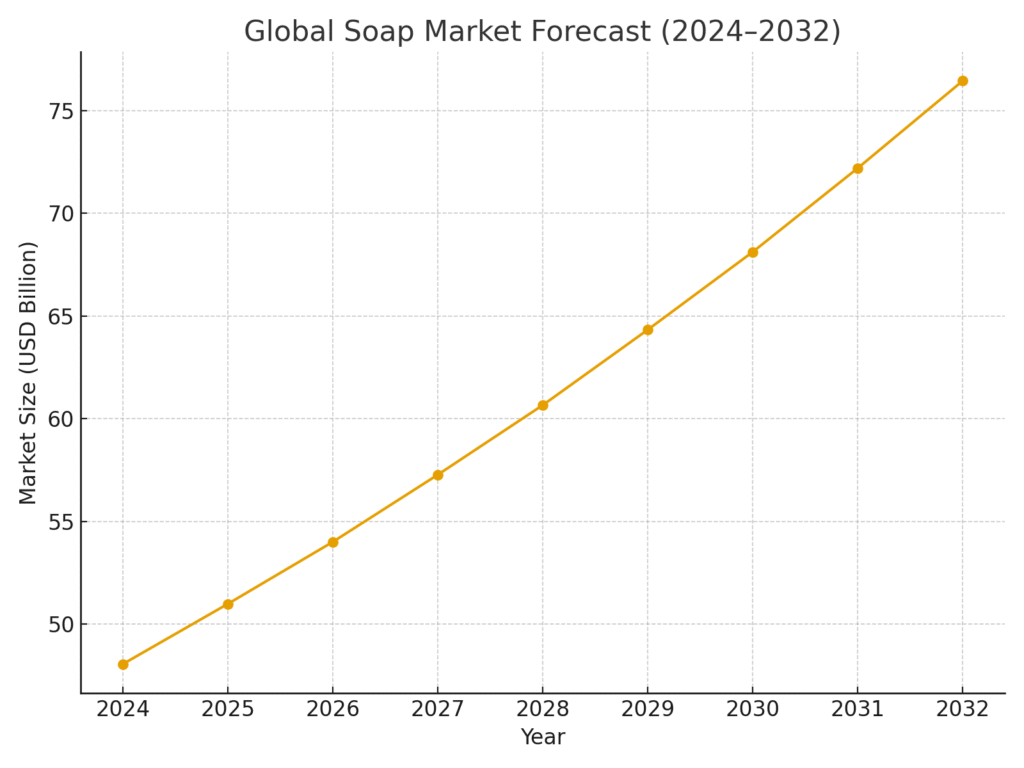
| 1 | Market Size & Growth | Global soap market projected to grow from $50.68B (2025) to $76.45B (2032) at 6.05% CAGR |
| 2 | Market Size & Growth | Liquid soap market estimated at $23.0B (2025), reaching $42.4B (2035) with 6.3% CAGR |
| 3 | Market Size & Growth | US bath & shower products market reached $9.46B (2024) with 6.3% growth from previous year |
| 4 | Market Size & Growth | Global bar soap market valued at $30.15B (2022), projected to reach $43.12B (2030) at 4.6% CAGR |
| 5 | Market Size & Growth | Organic soap market estimated at $0.85B (2025), expected to reach $1.29B (2030) at 8.74% CAGR |
| 6 | Regional Insights | Asia Pacific dominates with 38.88% market share (2024) driven by population density and rising incomes in India & China |
| 7 | Regional Insights | Asia Pacific bar soap market held 39.87% revenue share (2022), expanding at fastest 5.5% CAGR (2023-2030) |
| 8 | Regional Insights | USA market expected to grow at 3.8% CAGR (2025-2035) fueled by organic product demand and hygiene awareness |
| 9 | Consumer Trends | 60% of US clean product users prioritize body wash in their top 3 beauty categories for 'clean' buying |
| 10 | Consumer Trends | Natural soap formulas dominate in 2025 with 54.3% share vs synthetic soaps at 45.7% |
| 11 | Consumer Trends | Synthetic bar soap held 91.94% market revenue (2022), while organic soap grows fastest at 6.6% CAGR |
| 12 | Consumer Trends | Skin/body care bar soaps led with 57.7% global revenue share (2022) |
| 13 | Distribution & Sales | Supermarkets & hypermarkets dominate distribution with 31.99% revenue share (2022) |
| 14 | Distribution & Sales | Online retail channel advancing rapidly at 5.8% CAGR during forecast period |
| 15 | Distribution & Sales | 80% of clean skincare brands dominated Black Friday & Cyber Monday beauty trends (Shopify data) |
| 16 | Health & Hygiene | 58% of Central & South Asian countries have basic handwashing facilities with soap in schools (UNICEF 2019) |
| 17 | Health & Hygiene | 69% of surveyed Americans used cleansing products for hand cleaning to prevent COVID-19 (March 2020) |
| 18 | Health & Hygiene | 2.8M+ Americans get antibiotic-resistant infections annually with 35K+ deaths, driving liquid soap demand |
| 19 | Product Innovation | Bath & body soaps gaining popularity with moisturizing, anti-aging & skin whitening effects plus attractive colors |
| 20 | Product Innovation | Liquid soaps preferred for hygienic use, storage ease & longer lifespan, ideal for travel & multi-user settings |
Top 20 SOAP Marketing Statistics 2025
SOAP Marketing Statistics #1: Global Soap Market Valued At USD 48.05 Billion In 2024
The global soap market reached a valuation of USD 48.05 billion in 2024, showing strong demand across both developed and emerging markets. This figure highlights the continued importance of soap as a daily essential rather than a luxury. Marketers can leverage this by positioning soap as both a necessity and a lifestyle product. The size of the market also signals heavy competition, which makes branding and differentiation more critical than ever. For businesses, this is a chance to craft compelling campaigns that resonate with hygiene, wellness, and sustainability.
SOAP Marketing Statistics #2: Forecasted Growth To USD 76.45 Billion By 2032
The soap market is projected to expand to USD 76.45 billion by 2032, with a CAGR of 6.05% from 2025 to 2032. This steady growth emphasizes how consumer demand will continue to rise in the coming years. A big driver of this trend is the preference for premium, organic, and specialized soap products. Marketers should anticipate shifts in consumer behavior and tailor campaigns to eco-conscious and health-focused buyers. For brands, this is a clear signal to innovate in both product development and storytelling.
SOAP Marketing Statistics #3: Bar Soap Market Worth USD 30.15 Billion In 2022
In 2022, the bar soap segment alone was valued at USD 30.15 billion, showing the enduring appeal of this traditional format. While liquid soaps and body washes are popular, bar soap remains a staple in many households worldwide. This makes bar soap a reliable product for both mass and niche marketing campaigns. Marketers can highlight bar soap’s affordability, convenience, and sustainability benefits. Positioning bar soap as eco-friendly, with minimal packaging, can create stronger connections with green-conscious consumers.
SOAP Marketing Statistics #4: Bar Soap Expected To Reach USD 43.12 Billion By 2030
By 2030, the bar soap market is forecasted to reach USD 43.12 billion, growing at 4.6% annually. This expansion reflects the lasting demand for simple hygiene solutions. For marketers, the growth presents a chance to reposition bar soap not only as basic hygiene but also as a lifestyle product. Premium bar soaps with natural oils, herbal extracts, and luxury scents are increasingly popular. Campaigns that highlight heritage, craftsmanship, and natural sourcing can build trust and differentiation.
SOAP Marketing Statistics #5: Bar Soap Market To Hit USD 45.8 Billion By 2030
Another forecast suggests the bar soap market could reach USD 45.8 billion by 2030. This highlights consistency across multiple research firms, showing confidence in growth trends. Marketers can use this data point to reassure stakeholders that soap remains a stable and profitable sector. Growth across both traditional and premium categories makes diversification a smart strategy. Messaging should focus on balancing everyday affordability with aspirational lifestyle branding.
SOAP Marketing Statistics #6: 16,120.7 Million Bar Soap Units Sold In 2022
In 2022, more than 16 billion units of bar soap were sold worldwide. This figure emphasizes the sheer volume of consumer reliance on soap as a daily product. For marketers, this means campaigns can emphasize both high-frequency usage and repeat purchases. It also highlights opportunities in packaging innovation to stand out in crowded retail spaces. Brands should focus on loyalty-building strategies since soap buyers tend to stick with trusted names.
SOAP Marketing Statistics #7: Natural Bar Soaps To Make Up 20% Of Market By 2030
By 2030, natural bar soaps are expected to account for 20% of the bar soap market. This is a clear signal of consumer preference for eco-friendly and chemical-free products. Marketing strategies should highlight clean ingredients, transparency, and ethical sourcing. Brands can also tie their messaging to environmental movements and sustainable living. For consumers, natural soap is becoming not just a choice but a statement of values.
SOAP Marketing Statistics #8: Asia Pacific Holds 38.88% Market Share In 2024
The Asia Pacific region dominated with 38.88% of the global soap market share in 2024. This shows the sheer scale of demand in countries like India, China, and Southeast Asia. Population growth, rising incomes, and hygiene awareness all contribute to this dominance. For marketers, localized campaigns tailored to cultural habits can have a huge impact. Global brands should collaborate with local distributors to strengthen trust and accessibility.
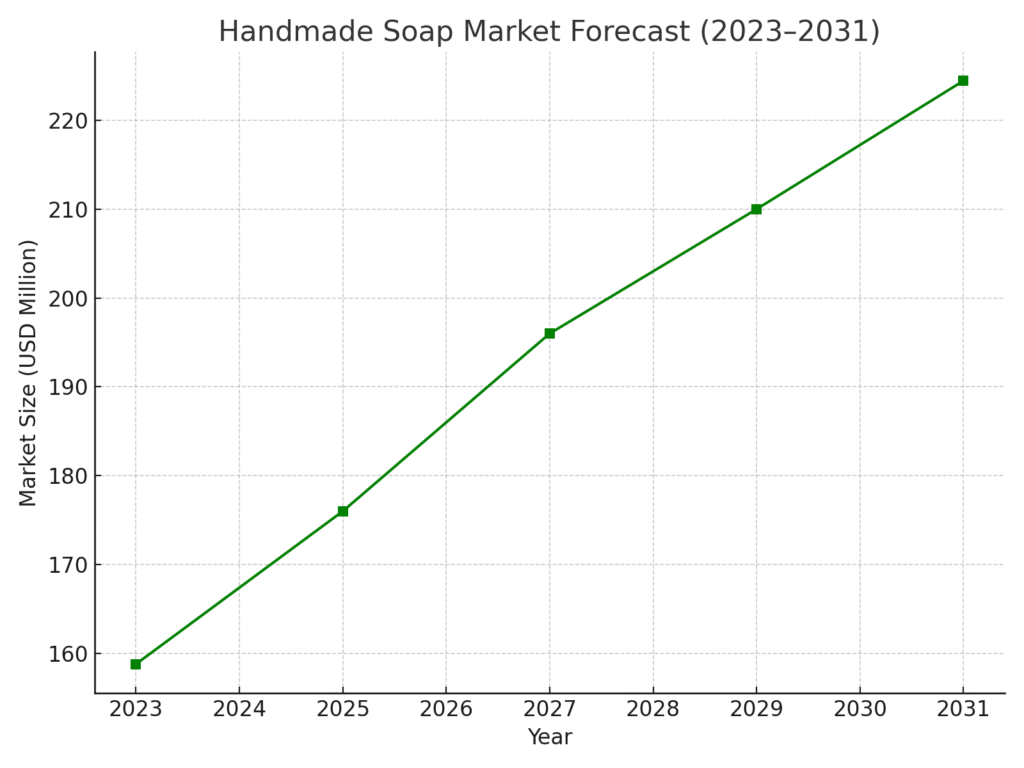
SOAP Marketing Statistics #9: Handmade Soap Market Valued At USD 158.79 Million In 2023
In 2023, the handmade soap market was valued at USD 158.79 million worldwide. This niche segment is growing thanks to demand for artisanal, small-batch, and creative products. Marketers should lean into storytelling about craftsmanship, authenticity, and personal care. Handmade soaps are also perfect for influencer marketing and social media campaigns. By connecting with lifestyle and wellness audiences, brands can carve out a loyal following.
SOAP Marketing Statistics #10: Handmade Soap Expected To Reach USD 224.45 Million By 2031
The handmade soap market is projected to grow to USD 224.45 million by 2031. A CAGR of 5.94% reflects how consumer interest in boutique personal care continues to rise. Marketers can spotlight exclusivity, limited editions, and natural appeal to drive engagement. Packaging and aesthetics are crucial here, as handmade soap often doubles as a gifting product. This makes it a strong candidate for e-commerce and personalized marketing strategies.

SOAP Marketing Statistics #11: North America Handmade Soap Market Valued At USD 3,166.08 Million In 2023
In 2023, the handmade soap market in North America alone reached over USD 3 billion. This shows how powerful regional demand can be, particularly in the US. Marketers in North America should focus on connecting handmade products with wellness and sustainability. High disposable incomes make premium positioning effective. By emphasizing local production and organic ingredients, brands can win strong consumer loyalty.
SOAP Marketing Statistics #12: North America Handmade Soap CAGR Of 3.4% (2023–2030)
The handmade soap market in North America is set to grow at a CAGR of 3.4% through 2030. While not as rapid as other regions, this steady growth reflects long-term stability. Marketers should frame handmade soaps as consistent lifestyle staples. Campaigns that emphasize personal wellness, eco-consciousness, and artisanal value resonate well here. This presents long-lasting opportunities for small brands as well as established companies.
SOAP Marketing Statistics #13: US Handmade Soap Market Valued At USD 2,498.04 Million In 2023
In 2023, the US handmade soap market was worth nearly USD 2.5 billion. This dominates the North American region, showing how strong consumer demand is within the US alone. Marketers should capitalize on consumers’ willingness to pay more for handmade and natural products. Storytelling about American craftsmanship and local sourcing can be a big advantage. Social media platforms like Instagram and TikTok are ideal for showcasing these premium soaps.
SOAP Marketing Statistics #14: Synthetic Bar Soaps Hold Over 90% Market Share
Synthetic bar soaps make up more than 90% of the global bar soap market. This shows how deeply entrenched traditional, mass-market soaps are in consumer habits. Marketers in this segment should focus on affordability, reliability, and wide distribution. There is also an opportunity to educate consumers about safe synthetics versus harmful chemicals. Highlighting trust and long brand history can sustain loyalty in this space.
SOAP Marketing Statistics #15: Skin And Body Care Account For 57.7% Of Bar Soap Usage
In 2022, skin and body care represented nearly 58% of bar soap applications. This reinforces how soaps are marketed less as utility products and more as part of self-care routines. Marketers can emphasize moisturizing, skin protection, and fragrance benefits. Associating soap with beauty and skincare trends can attract younger buyers. Campaigns should highlight the idea that soap is more than hygiene—it’s part of daily wellness.

SOAP Marketing Statistics #16: Supermarkets And Hypermarkets Hold 32% Distribution Share
Supermarkets and hypermarkets accounted for about 32% of global bar soap revenue in 2022. This underscores the importance of retail placement and in-store promotions. Marketers should prioritize packaging that stands out on crowded shelves. Point-of-sale displays, samples, and discounts can significantly drive sales in this channel. For brands, retail partnerships are essential to building recognition and volume sales.
SOAP Marketing Statistics #17: Hygiene Awareness Driving Market Growth
Growing hygiene awareness is one of the top drivers behind global soap market expansion. Consumers are increasingly conscious of health risks, particularly post-pandemic. Marketers can emphasize protection, safety, and antibacterial features in campaigns. Social proof, endorsements, and health authority partnerships can boost credibility. This driver shows that hygiene-related messaging will remain highly effective in marketing.
SOAP Marketing Statistics #18: Environmental Concerns Challenge Market Growth
One restraint in the soap market is rising environmental concern over packaging waste and sourcing. Consumers are more critical of plastic wrapping and synthetic ingredients. Marketers need to highlight eco-friendly packaging and sustainable production practices. Companies adopting biodegradable wraps or refill systems can set themselves apart. Turning challenges into opportunities can win trust with environmentally aware buyers.
SOAP Marketing Statistics #19: Specialty And Premium Soap Opportunities Growing
The demand for specialty and premium bar soaps is steadily increasing. Consumers are drawn to soaps that solve specific skin concerns or feature luxurious ingredients. Marketers can tap into this by creating high-end campaigns showcasing exclusivity. Premiumization also allows higher profit margins. For brands, this segment offers a chance to tell compelling lifestyle stories.
SOAP Marketing Statistics #20: COVID-19 Boosted Demand For Hygiene Products
The COVID-19 pandemic accelerated demand for soaps, particularly antibacterial and hand-wash varieties. This momentum continues as consumers prioritize hygiene more than ever. Marketers can remind audiences of the importance of cleanliness without fear-driven messaging. Campaigns that focus on health, safety, and family protection will resonate well. This trend shows that even after the pandemic, hygiene-first marketing remains highly relevant.
Wrapping Up My Thoughts
Looking over all of these statistics, what strikes me most is how much opportunity there still is in the soap industry if you’re willing to innovate. For me, the biggest takeaway is that even a product as “everyday” as soap can have massive growth when marketing speaks to real consumer needs. I’ve learned that connecting data with human stories is what makes campaigns truly resonate, and I’m excited to put these insights to work. Whether it’s eco-friendly formulas or luxury handmade soaps, the future feels wide open—and I can’t wait to be part of shaping it.
SOURCES
https://naturoandorgo.com/natural-soap-trends-ingredients-packaging-and-consumer-behaviour/
https://www.greenjeeva.com/blog/soap-manufacturing-guide
https://www.linkedin.com/pulse/top-trends-soap-skincare-2025-anuspaa-heritage-products-pvt-ltd–6p6lf
https://vanguardsoap.com/trending-soap-ingredients-2025/
https://www.modernsoapmaking.com/blog/30k-in-3-months
https://explodingtopics.com/blog/beauty-trends
https://www.hangar-12.com/blog/body-washes-and-soaps-marketing-strategies-for-2025
https://www.stephensonpersonalcare.com/blog/what-will-drive-personal-care-formulations-in-2025
https://www.cognitivemarketresearch.com/regional-analysis/north-america-handmade-soap-market-report