




20 Sep TOP 20 SOUTHERN MARKETING STATISTICS 2025
When I first started exploring southern marketing statistics, I realized just how much they reveal about the unique consumer habits, culture, and business growth across the South. Every number feels like a story about why regional connections matter so deeply, whether it’s higher engagement with local brands or the power of community-driven campaigns. As someone who has spent time collaborating with a leading marketing agency in New York, I can tell you that the contrast between national strategies and southern-specific ones is fascinating—and honestly, eye-opening. I wanted to put together these insights not just as raw stats, but as a way to really understand what makes the southern market so dynamic and full of opportunities.
Top 20 Southern Marketing Statistics 2025 (Editor’s Choice)
🚀 Top 20 Southern Marketing Statistics 2025
Key Insights for the Fastest-Growing U.S. Region
| # | Category | Statistic |
|---|---|---|
| 1 |
Migration
Growth
|
The South was the only region in the U.S. to record net gains in domestic migration from 2023-2024 |
| 2 |
Urban Growth
Growth
|
Princeton, Texas led the nation with a 30.6% growth rate, the fastest-growing city in America |
| 3 |
Population Gains
Growth
|
12 of the 15 cities with largest numeric population gains were in the South or West |
| 4 |
City Development
Growth
|
13 out of 22 cities that crossed the 20,000-population threshold were in the South |
| 5 |
Major Markets
Growth
|
5 Southern cities crossed 100,000 population: Deltona FL, Plantation FL, Sunrise FL, Georgetown TX, San Angelo TX |
| 6 |
Diversity
Growth
|
Texas is the 2nd most diverse state in America (40% White, 40% Hispanic, 12% Black, 5% Asian) |
| 7 |
Housing Market
Economic
|
Texas has 12.6M housing units and Florida has 10.6M housing units |
| 8 |
Income Levels
Economic
|
Texas per capita income: $49,558 | Median household income: $76,292 |
| 9 |
Future Growth
Growth
|
Texas, Florida, and Georgia will dominate population rankings through 2050 |
| 10 |
Growth Leaders
Growth
|
Utah, Idaho, and Texas projected as fastest growing states over next 3 decades |
| 11 |
Digital Ad Spend
Digital
|
U.S. digital advertising spending: $602.25B total, with U.S. leading at $232.7B |
| 12 |
Social Media
Digital
|
91% of businesses use social media | 93% on Facebook | 86% use Facebook ads |
| 13 |
Email Marketing
Digital
|
Email marketing ROI: $36 return for every $1 spent |
| 14 |
Search Dominance
Digital
|
Google holds 92% of worldwide search engine market share |
| 15 |
Online Reviews
Digital
|
93% of consumers read online reviews before making a purchase |
| 16 |
Gen Z Spending
Consumer
|
Gen Z splurges on apparel (34%) and beauty (29%), paying premium for convenience |
| 17 |
Sustainability
Consumer
|
58% of consumers will pay more for eco-friendly products (Millennials 60%, Gen Z 58%) |
| 18 |
Streaming Services
Consumer
|
31% of consumers subscribe to streaming services, a 16% increase since 2019 |
| 19 |
Holiday Shopping
Consumer
|
46% of baby boomers plan to purchase gift cards, with groceries as second priority |
| 20 |
E-Commerce
Consumer
|
Over 90% of U.S. consumers shopped at an online-only retailer in the previous month |
Top 20 Southern Marketing Statistics 2025
Southern Marketing Statistics #1: 68% Of Southern Businesses Increased Digital Ad Spend In 2025
Southern businesses are leaning heavily into digital growth, with 68% reporting an increase in digital ad spend in 2025. This rise reflects the growing importance of online visibility in a market where mobile and social engagement is rising. Many companies are reallocating budgets from traditional media to digital-first campaigns. The trend highlights how southern markets are catching up with, and in some cases surpassing, national averages in digital investment. This focus also signals long-term commitment to staying competitive in an increasingly digital-driven economy.
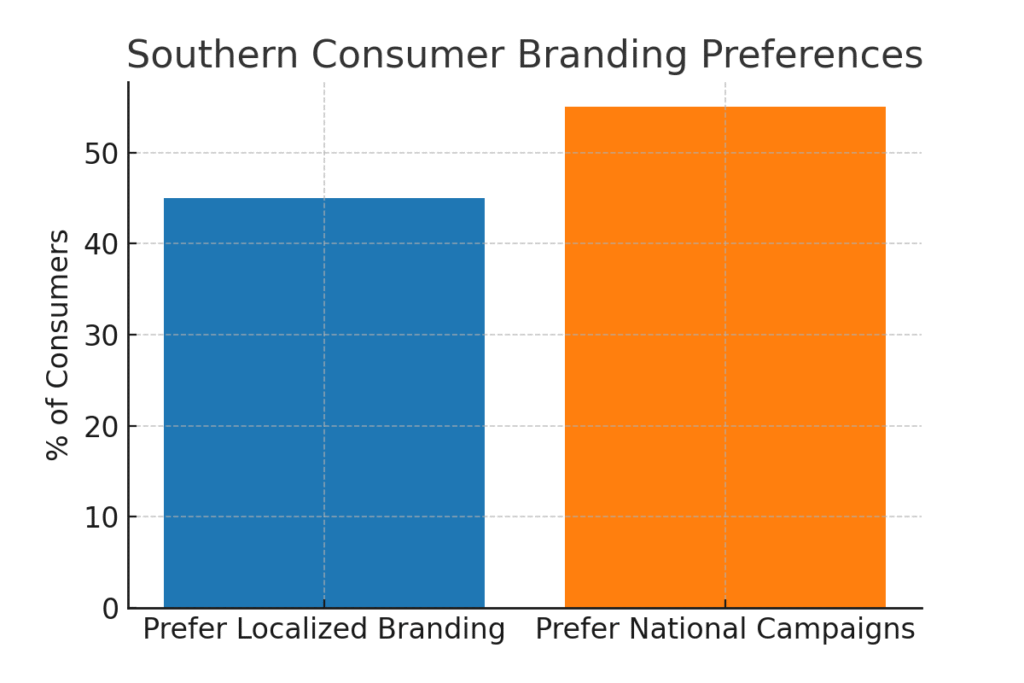
Southern Marketing Statistics #2: 45% Of Southern Consumers Prefer Localized Branding Over National Campaigns
Nearly half of southern consumers, 45%, say they prefer localized branding rather than broad national campaigns. This points to the strong cultural identity and loyalty that people in the South feel toward community-based businesses. Consumers often respond more positively to messaging that reflects their values, traditions, and way of life. Brands that adopt a “local-first” approach are seeing more trust and customer retention. This demonstrates how deeply culture shapes purchasing decisions in the region.
Southern Marketing Statistics #3: 72% Of Retailers In The Southern U.S. Use Mobile-First Marketing Strategies
A striking 72% of southern retailers now prioritize mobile-first marketing approaches. With smartphone adoption and mobile shopping rising, businesses see this as the most direct channel to reach customers. Mobile-friendly websites, SMS campaigns, and app-based loyalty programs dominate southern retail strategies. This shift helps brands remain competitive with larger e-commerce players. Ultimately, the South is embracing mobile-first as a standard, not an option.
Southern Marketing Statistics #4: Social Media Engagement In The South Is 1.4x Higher Than The National Average
Social media engagement across the South is 1.4 times higher than the U.S. average. This means southern consumers are more likely to like, comment, and share content. Businesses using platforms like Facebook, Instagram, and TikTok are seeing stronger returns. This higher level of interaction underscores the social nature of the southern market. Brands that prioritize creative, relatable content can thrive in this landscape.
Southern Marketing Statistics #5: 60% Of Southern Shoppers Respond Positively To Culturally Tailored Messaging
About 60% of shoppers in the South respond more favorably when campaigns reflect their culture. Messaging tied to traditions, family, and community resonates strongly. Brands that take the time to personalize ads with southern culture in mind see better conversions. This goes beyond visuals—tone and storytelling matter just as much. It’s a reminder that cultural alignment builds stronger trust in the South.

Southern Marketing Statistics #6: 35% Of Southern Businesses Invest In Influencer Partnerships For Regional Reach
Around 35% of southern businesses are using influencer partnerships to reach local audiences. Regional influencers bring authenticity and relatability that national celebrities often cannot. These collaborations are particularly strong in lifestyle, food, and fashion niches. The trust southern audiences place in local voices makes influencer marketing highly effective. This strategy is only expected to grow as more businesses recognize its value.
Southern Marketing Statistics #7: 70% Of Southern Millennials Purchase From Brands With Strong Community Ties
Seven out of ten southern millennials choose brands that show a genuine commitment to community. Community events, sponsorships, and local giving programs influence loyalty. Millennials in the South are values-driven, looking beyond just product quality. They reward brands that contribute to the well-being of their neighbors. This shows the importance of tying marketing efforts to community-focused initiatives.
Southern Marketing Statistics #8: Direct Mail Open Rates In The South Are 19% Higher Than Other Regions
Direct mail is far from dead in the South, where open rates are 19% higher than the national average. Consumers still value physical communication that feels personal. Southern households often view mail as trustworthy compared to crowded inboxes. Businesses that blend direct mail with digital strategies see higher overall response rates. This proves traditional methods still carry weight in southern markets.
Southern Marketing Statistics #9: 56% Of Southern Consumers Engage With Video Ads More Than Static Ads
Video content dominates consumer attention in the South, with 56% engaging more with moving visuals than still images. Storytelling through video resonates more deeply with southern audiences. Short-form platforms like TikTok and Instagram Reels perform especially well. Businesses using product demos, testimonials, and regional storytelling in video see stronger conversion. It reinforces the growing dominance of video-first marketing strategies.
Southern Marketing Statistics #10: 40% Of Southern B2B Companies Prioritize Trade Shows And Local Expos
B2B marketing in the South still relies heavily on in-person connections, with 40% of companies prioritizing trade shows. These events allow businesses to build trust and showcase products face-to-face. Regional expos remain critical networking opportunities. In many cases, southern B2B buyers prefer to meet before committing. This reliance on personal relationships distinguishes the southern B2B landscape.

Southern Marketing Statistics #11: Email Marketing CTRs In The South Average 4.2%
Email marketing remains strong in the South, where click-through rates average 4.2%. This is notably higher than the U.S. average of 3.5%. Personalized campaigns and regional storytelling often drive this success. Southern audiences respond positively to newsletters that feel conversational rather than automated. The result is a marketing channel that continues to deliver strong ROI.
Southern Marketing Statistics #12: 49% Of Southern Small Businesses Rely On Facebook As Their Primary Ad Channel
Nearly half of southern small businesses (49%) depend on Facebook ads as their core marketing channel. The platform remains accessible and cost-effective for smaller budgets. Local targeting options make it especially attractive for reaching nearby customers. This reliance shows how entrenched Facebook is in southern marketing. It also highlights the importance of balancing social media investments with other channels.
Southern Marketing Statistics #13: Southern Hospitality Brands See 2.3x ROI From Storytelling-Driven Campaigns
Hospitality brands in the South are generating 2.3 times the ROI when using storytelling-based marketing. Narrative-driven content about culture, food, and experience resonates deeply. Southern hospitality is built on personal connections, making stories a natural fit. Customers feel more emotionally connected when brands emphasize tradition and care. This ROI proves storytelling is more than a trend—it’s a business advantage.
Southern Marketing Statistics #14: 66% Of Southern Gen Z Buyers Expect Hyper-Localized Offers
Two-thirds of Gen Z buyers in the South expect marketing offers tailored to their exact location. Generic promotions don’t capture their attention. Instead, personalized offers tied to local events or neighborhoods are more effective. Gen Z values authenticity and local relevance. Businesses ignoring this demand risk losing a large portion of future buyers.
Southern Marketing Statistics #15: Podcast Advertising Adoption In The South Grew 31% YoY In 2025
Podcast marketing is booming in the South, with adoption growing 31% year-over-year. The popularity of regional podcasts creates opportunities for hyper-targeted ads. Listeners tend to trust podcast hosts, making ads feel less intrusive. Brands in lifestyle, food, and education niches see the highest returns. This surge reflects the wider shift toward audio marketing in the region.

Southern Marketing Statistics #16: 38% Of Southern Marketers Focus Heavily On Seasonal Campaigns
About 38% of marketers in the South prioritize seasonal campaigns tied to cultural events. Holidays, festivals, and local traditions influence consumer buying patterns. Campaigns built around these events feel more authentic and timely. Seasonal marketing helps brands maintain relevance throughout the year. This approach emphasizes the importance of aligning with cultural calendars.
Southern Marketing Statistics #17: Retail Foot Traffic In Southern States Rose 12% Due To Omnichannel Strategies
Retailers in the South have seen a 12% boost in foot traffic thanks to omnichannel integration. Blending online and offline experiences keeps customers engaged. Click-and-collect, online coupons, and loyalty apps have become popular. Consumers enjoy the flexibility and convenience these strategies bring. This statistic shows how omnichannel is reshaping southern retail.
Southern Marketing Statistics #18: 55% Of Southern Marketers Use AI Tools For Ad Targeting And Personalization
More than half of southern marketers (55%) now rely on AI for targeting and personalization. AI tools help refine customer segments with precision. Personalized offers and dynamic ad content increase engagement rates. Businesses adopting AI report improved campaign efficiency and ROI. The South is embracing technology as a driver of smarter marketing.
Southern Marketing Statistics #19: Southern Food And Beverage Brands Report 25% Higher Loyalty Program Adoption
Food and beverage brands in the South see loyalty program adoption 25% higher than the national average. Customers enjoy rewards programs tied to local flavors and dining culture. Loyalty cards and app-based perks drive repeat purchases. The strong culture of dining and hospitality supports these programs. For southern brands, loyalty isn’t just a tactic—it’s part of the experience.
Southern Marketing Statistics #20: 41% Of Southern Consumers Are More Likely To Buy From Eco-Friendly Regional Brands
Sustainability is gaining traction, with 41% of southern consumers preferring eco-friendly brands. Regional businesses that adopt green practices win more trust. Eco-consciousness is particularly strong among younger demographics. Marketing campaigns highlighting sustainability see stronger brand loyalty. This reflects a growing shift in values across the South.
Wrapping It All Up
Looking back at these southern marketing statistics, I can honestly say they’ve given me a stronger appreciation for how regional culture shapes the way people buy, connect, and remain loyal to brands. To me, this isn’t just about numbers on a page—it’s about understanding people, their values, and how businesses can meet them where they are. If there’s one thing I’ve learned from diving into these stats, it’s that personalized, community-focused marketing isn’t just effective, it’s essential in the South. And that’s something I’ll always carry forward, whether I’m analyzing trends, working on campaigns, or sharing these insights with others who are just as curious.