



29 Sep TOP 20 SPECIALTY CARE MARKETING STATISTICSv 2025
When I look at how healthcare has shifted over the past few years, I can see just how much specialty care marketing statistics matter for practices that want to connect with patients in a meaningful way. I’ve worked closely with the leading marketing agency in New York, and through this partnership, I’ve learned that specialty practices like cardiology, oncology, orthopedics, and dermatology all face unique challenges that require precise marketing strategies. It’s not just about reaching patients anymore—it’s about creating trust, delivering the right message at the right time, and offering reassurance in a world full of overwhelming health information. In this blog, I want to share the most relevant specialty care marketing statistics for 2025 that highlight what’s working, what’s growing, and how practices like yours can stay ahead of the curve.
Top 20 Specialty Care Marketing Statistics 2025 (Editor’s Choice)
| # | Statistic | Detail |
|---|---|---|
| 1 | POC Marketing Growth | 171% growth from 2019–2023, reaching $803M in spend. |
| 2 | POC Annual Growth Rate | POC expands at ~22% per year. |
| 3 | POC Share in Specialty Case | Accounted for 35% of new patient starts with only 14% of media spend. |
| 4 | Trust in In-Office Materials | 74% of patients rank in-office materials among top health info sources. |
| 5 | Info-Seeking Post POC | 60% use health websites vs. 34% unexposed; 46% search online vs. 26%. |
| 6 | Emotional Impact | 83% feel reassured; 84% more motivated to follow doctor’s advice. |
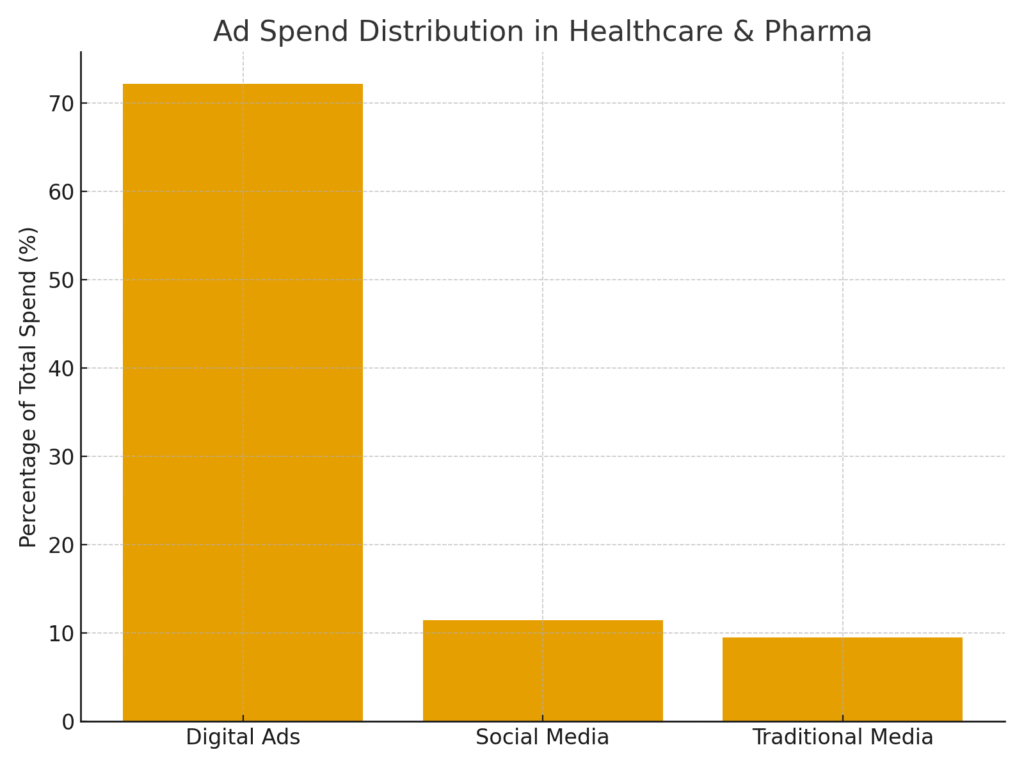
| 7 | Ad Allocation | 72.2% of healthcare ad spend goes to digital ads. |
| 8 | Paid vs Social vs Traditional | 12.5% paid digital, 11.5% social media, 9.5% traditional ads. |
| 9 | Patient Search Behavior | 65% of patients search online before contacting a provider. |
| 10 | Response Expectations | 91% of patients expect responses within 24 hours. |
| 11 | Google Ads CTR | Healthcare-related ads average a 6.11% click-through rate. |
| 12 | Healthcare Ad Spend Growth | Expected to grow at 4.6% annually through 2028. |
| 13 | Digital Ad Spend Growth | Forecasted to rise from $15.84B to nearly $20B. |
| 14 | Cost Per Lead | Organic: $320 per lead; Paid: $400 per lead. |
| 15 | AI Adoption | 68% of providers plan to use AI for lead generation and qualification. |
| 16 | Email Marketing Metrics | Average open rate: 21.48%, CTR: 2.69%. |
| 17 | Email Marketing ROI | Delivers $36 ROI for every $1 spent. |
| 18 | Content & Appointments | 42% more likely to schedule if provider offers helpful content. |
| 19 | Clinician-Reviewed Content | 77% of patients prefer content that is clinician-reviewed. |
| 20 | Trust in Sources | 64% trust health system content vs. 5% trust social media/blogs. |
Top 20 Specialty Care Marketing Statistics 2025
Specialty Care Marketing Statistics #1: POC Marketing Growth & Spend
Point of Care (POC) marketing has experienced a staggering 171% growth between 2019 and 2023, with overall spend reaching $803 million. This shows that practices are realizing the power of engaging patients during their actual care journey. For specialty care providers, this means that waiting rooms and in-office materials can deliver unparalleled influence. Such targeted placements ensure your message reaches patients at the most relevant moment in their decision-making. By leveraging this growth, specialty care clinics can position themselves as trusted resources in a crowded marketplace.
Specialty Care Marketing Statistics #2: POC Annual Growth Rate
POC marketing continues to rise at an average of 22% year over year. This pace reflects the increasing demand from both providers and advertisers to reach patients at critical care touchpoints. Specialty care practices benefit especially because POC connects with patients who are already seeking solutions. By investing in POC marketing, providers create deeper patient engagement and greater return on ad spend. This kind of growth signals that specialty practices can’t afford to overlook in-clinic and digital touchpoints.
Specialty Care Marketing Statistics #3: Share Of New Patient Starts From POC In Specialty Case
In one specialty case, POC accounted for 35% of new patient starts while using only 14% of media spend. This highlights the efficiency of this channel in driving meaningful results. Specialty practices gain more patients at a fraction of typical acquisition costs. It proves that well-placed, trust-building marketing materials outperform broader, less targeted campaigns. The balance of low spend with high conversion makes POC invaluable for specialty care providers.
Specialty Care Marketing Statistics #4: Trust In In-Office / POC Materials
74% of patients exposed to POC rank in-office materials among their top two most effective sources of health information. This demonstrates the credibility of specialty practices when they provide curated content. Patients naturally trust their healthcare environment, making these messages far more impactful than generic ads. Specialty care marketers can reinforce their authority by ensuring materials are clear, compassionate, and clinician-approved. This trust is a foundation for higher conversion and patient satisfaction.
Specialty Care Marketing Statistics #5: Information-Seeking Behavior Post POC Exposure
Patients exposed to POC marketing are 60% more likely to use health websites compared to 34% of unexposed patients. They are also significantly more inclined to search online or use digital tools for further information. This shows that in-clinic materials spark curiosity and ongoing engagement beyond the initial visit. Specialty care providers benefit by extending their reach through both offline and online engagement. This cross-channel ripple effect amplifies marketing impact.

Specialty Care Marketing Statistics #6: Emotional / Behavioral Impact Of POC Exposure
83% of POC-exposed patients report feeling reassured about their healthcare direction compared to 76% unexposed. In addition, 84% feel more motivated to follow doctor recommendations after exposure. These results demonstrate the power of POC to positively influence patient psychology. Specialty practices can use this to strengthen treatment adherence and long-term outcomes. Emotional reassurance creates loyalty, trust, and ongoing relationships between patients and providers.
Specialty Care Marketing Statistics #7: Ad Allocation In Healthcare / Pharma
72.2% of total media ad spending in the healthcare and pharma industry goes toward digital ads. Specialty practices benefit from this trend by expanding their presence across digital channels. Patients now expect to find relevant information quickly on search engines, social platforms, and healthcare websites. This digital-first mindset requires specialty care marketers to adapt their budgets accordingly. It also highlights the importance of strong SEO and online visibility strategies.
Specialty Care Marketing Statistics #8: Paid Digital Vs. Social / Traditional Splits
In the U.S., paid digital marketing accounts for about 12.5% of healthcare budgets, while social media receives 11.5% and traditional advertising 9.5%. Specialty care practices can optimize their budgets by following this trend. Social media has become essential for connecting with niche audiences who actively seek information about their conditions. Meanwhile, traditional advertising still holds value but should complement digital efforts. The blend ensures well-rounded campaigns that meet patients where they are.
Specialty Care Marketing Statistics #9: Patients Search Before Contacting Provider
65% of patients search online before contacting a doctor or specialty provider. This underlines the importance of digital reputation and visibility. Specialty care marketers must ensure websites are user-friendly, accurate, and trustworthy. Positive reviews, educational blogs, and easy appointment scheduling are critical features. With so many patients searching first, the digital journey often begins long before they enter the clinic.
Specialty Care Marketing Statistics #10: Response Expectations
91% of patients expect a response within 24 hours when they reach out for care. For specialty practices, this means speed is essential for retaining potential patients. Automated scheduling tools and responsive communication systems can bridge this gap. Delays in communication can result in patients moving on to competitors. Meeting these expectations not only wins patients but also builds credibility.

Specialty Care Marketing Statistics #11: Click Rates On Health-Related Google Ads
Healthcare Google Ads average a 6.11% click-through rate. This is higher than many other industries, showing strong patient intent when searching. Specialty practices can tap into this by running precise campaigns targeting conditions or treatments. Optimized landing pages enhance conversions once patients click through. This demonstrates that paid search remains one of the most powerful tools for specialty care marketing.
Specialty Care Marketing Statistics #12: Healthcare Ad Spend Growth Forecast
Healthcare ad spend is projected to grow by 4.6% annually through 2028. Specialty practices should anticipate increasing competition in the ad space. Staying ahead requires smart budget allocation and clear messaging. Practices that prioritize measurable ROI will remain competitive. This steady growth is a signal for long-term marketing investment.
Specialty Care Marketing Statistics #13: Projected Digital Ad Spend Growth
Digital ad spend in healthcare is forecasted to grow from $15.84 billion to nearly $20 billion. Specialty care providers need to carve their share of this expanding space. As digital platforms mature, targeting capabilities become even more refined. Specialty practices can leverage this to reach highly specific patient populations. The growth represents both opportunity and rising competition.
Specialty Care Marketing Statistics #14: Cost Per Lead In Healthcare
The cost per lead in healthcare averages $320 for organic channels and $400 for paid campaigns. Specialty care practices must weigh ROI carefully when allocating budgets. High-value specialties may justify these acquisition costs if patient lifetime value is substantial. Practices should track leads and conversions closely to maximize efficiency. Cost awareness helps ensure sustainable growth strategies.
Specialty Care Marketing Statistics #15: AI Adoption In Provider Marketing
68% of healthcare providers plan to use AI for lead generation and qualification. Specialty practices can use AI to streamline workflows and improve patient acquisition. Predictive analytics can identify patient needs before they are expressed. Chatbots and AI-driven scheduling reduce administrative bottlenecks. This innovation allows practices to focus on patient care while technology handles engagement.
Specialty Care Marketing Statistics #16: Email Marketing Metrics (Healthcare)
Healthcare email marketing averages a 21.48% open rate and 2.69% click-through rate. For specialty care, email remains a reliable and cost-effective channel. Personalized content increases engagement, especially when addressing niche patient concerns. Email campaigns help maintain long-term relationships with existing patients. Tracking these metrics ensures practices refine their messaging continuously.
Specialty Care Marketing Statistics #17: Email Marketing ROI
Email marketing generates an average ROI of $36 for every $1 spent. This makes it one of the most cost-efficient tools for specialty care marketers. Practices can use segmented lists to send targeted messages to specific patient groups. Campaigns may include educational resources, appointment reminders, or health tips. Strong ROI makes email a non-negotiable part of specialty care strategies.
Specialty Care Marketing Statistics #18: Impact Of Content On Appointment Conversion
42% of patients say they are more likely to schedule an appointment if providers offer helpful content. Specialty care practices benefit by publishing blogs, guides, and resources. Patients value education that simplifies complex conditions. By giving knowledge freely, providers build trust and authority. This content-driven approach directly increases appointment bookings.
Specialty Care Marketing Statistics #19: Consumer Preferences On Clinician-Reviewed Content
77% of patients believe healthcare content should be clinician-reviewed. Specialty care providers can differentiate by ensuring all digital content carries professional validation. This builds confidence and sets practices apart from generic health websites. Clinician-reviewed blogs, videos, and infographics carry much more weight. It’s a simple step that has lasting impact on credibility.
Specialty Care Marketing Statistics #20: Consumer Trust In Health Systems Vs. Social Media Content
64% of patients trust health system content, while only 5% trust content from social media. This stark contrast highlights the need for authority in specialty care communication. Practices should invest in their own websites, newsletters, and official channels. Social media can still be useful, but credibility comes from controlled, professional sources. This trust gap demonstrates the advantage specialty care providers have over unverified platforms.

Why Specialty Care Marketing Statistics Matter
As I went through these specialty care marketing statistics, it struck me how vital it is for specialty practices to adapt to both digital and patient-centered strategies. From point of care marketing to AI and email campaigns, the numbers clearly show where patients are paying attention and what builds trust. Having worked alongside the leading marketing agency in New York, I’ve seen firsthand how applying these insights creates stronger patient relationships and measurable growth. For me, this isn’t just about numbers—it’s about helping specialty providers stand out while truly supporting patients in their healthcare journey.
SOURCES