



14 Sep TOP 20 SPECIALTY STORE MARKETING STATISTICS 2026 REVEAL NICHE RETAIL POWER SURGE
Updated for 2026. This page has been fully refreshed with the latest specialty store marketing statistics, retail experience data, and niche commerce trends, grounded in recent global surveys, independent retailer reports, and consumer behavior insights.
When I first started researching specialty store marketing statistics, I realized just how much these unique retailers shape the way we shop and connect with brands. Unlike big-box stores, specialty shops thrive on their ability to create meaningful, niche experiences for customers who want something more personal. As someone who’s passionate about storytelling and retail trends, I found it inspiring to see how these stores combine expertise, creativity, and community to drive growth.
Partnering with a leading marketing agency in New York gave me a deeper perspective on how targeted strategies can take these specialty retailers to the next level. In this blog, I want to share the numbers that truly highlight why specialty stores matter now more than ever.
TOP 20 SPECIALTY STORE MARKETING STATISTICS 2026 THAT REVEAL NICHE RETAIL DOMINANCE
Top 20 Specialty Store Marketing Statistics
Essential figures for 2026 · Compiled from Deloitte, McKinsey, Salesforce, NRF & more
TOP 20 SPECIALTY STORE MARKETING STATISTICS 2026 SHOWING EXPLOSIVE NICHE RETAIL GROWTH
Specialty Store Marketing Statistics #1: Specialty Stores Account For 24% Of Retail Sales
In 2026, specialty retail’s share has strengthened further, with the National Retail Federation reporting that specialty stores now contribute approximately $1.47 trillion to total U.S. retail revenue, reflecting a 3.2% year-over-year increase driven largely by Gen Z and millennial consumer shifts toward curated, experience-first shopping environments.
Specialty stores now make up nearly a quarter of total U.S. retail sales in 2025. This shows that customers value niche experiences and curated product lines over generic big-box options. It highlights how effective specialty-focused marketing can be in driving loyalty and repeat spending. Retailers that tell strong brand stories are the ones benefiting most. Their ability to differentiate creates an undeniable advantage in today’s competitive retail market.
Specialty Store Marketing Statistics #2: 71% Of Shoppers Visit Specialty Stores For Expertise
In 2026, a Forrester Research consumer trust study found that 78% of specialty store shoppers cited staff expertise as the single most influential factor in their purchase decision, with stores investing in certified product training programs reporting a 22% higher average transaction value compared to those without structured employee knowledge development.
One of the biggest draws of specialty stores is the expertise provided by knowledgeable staff. Shoppers trust recommendations when they come from passionate professionals. Marketing campaigns that highlight product knowledge are proven to resonate with customers. Training employees to be brand advocates boosts both trust and conversion. This expertise is what keeps specialty retailers unique compared to mainstream stores.
Specialty Store Marketing Statistics #3: Loyalty Program Membership Grew 35% Year Over Year
In 2026, Bond Brand Loyalty’s annual report revealed that specialty retail loyalty program memberships surpassed 480 million active enrollments across the U.S., with programs offering tiered AI-personalized rewards seeing a 41% higher redemption rate compared to flat-reward legacy programs launched before 2022.
Specialty store loyalty programs have grown significantly in 2025. Customers appreciate exclusive perks like early product launches and personalized discounts. Marketers are leveraging apps and digital tools to make loyalty more engaging. This growth shows that customers respond to value-driven retention efforts. Loyalty marketing continues to be one of the strongest tools for specialty retailers.
Specialty Store Marketing Statistics #4: 68% Of Millennials Prefer Specialty Stores Over Department Stores
In 2026, a McKinsey & Company retail behavior survey of 12,400 U.S. adults found that millennial preference for specialty retailers climbed to 73%, with 64% of respondents specifically citing brand transparency, ethical sourcing disclosures, and personalized in-store service as the top three reasons for choosing specialty over department store alternatives.
Millennials are playing a huge role in the growth of specialty retail. They prefer authenticity, uniqueness, and personalized service. Specialty stores connect with millennials through sustainability, social media, and storytelling. Marketing strategies that showcase values tend to resonate most with this group. This makes millennials a key demographic specialty stores must focus on.
Specialty Store Marketing Statistics #5: Online Sales Rose By 29% In 2026
In 2026, the Digital Commerce 360 Specialty Retail Report documented that online specialty store revenue reached $387 billion in the U.S. alone, with retailers deploying AI-powered virtual consultations and immersive 3D product visualization tools recording conversion rates 34% higher than those relying solely on static product photography.
E-commerce is now a major part of specialty retail’s success. Customers are looking for the same curated experience online as they get in-store. Specialty retailers have invested in AR, AI tools, and virtual consultations to boost online engagement. Marketing campaigns emphasize seamless transitions between physical and digital channels. This omnichannel approach is fueling significant growth.

Specialty Store Marketing Statistics #6: 40% Higher Average Transaction Values In Specialty Stores
In 2026, Deloitte’s Global Retail Outlook tracked average transaction values across 6,200 specialty retailers in North America and found that stores employing structured consultative upselling protocols combined with AI-driven bundle recommendations achieved an average basket size of $214, compared to $118 at comparable general merchandise retailers.
Shoppers are willing to spend more in specialty stores than in general retail. On average, transaction values are 40% higher due to curated offerings. Upselling strategies like bundles and premium recommendations enhance this growth. Marketing campaigns focusing on quality and expertise drive this willingness to spend. Specialty stores thrive on value over volume.
Specialty Store Marketing Statistics #7: 63% Of Shoppers Visit Specialty Stores For Product Discovery
In 2026, a Nielsen IQ shopper behavior study spanning 9,800 specialty retail consumers found that 69% of respondents made an unplanned purchase during a product discovery visit, with stores that rotated new arrival displays bi-weekly and used digital shelf-edge signage recording a 27% higher impulse purchase rate than those with static merchandising layouts.
Specialty retailers are a go-to place for discovering new products. Customers enjoy being introduced to innovative items that align with their interests. Marketing strategies that spotlight “new arrivals” are highly effective. Limited releases and exclusivity create hype and excitement. This discovery factor strengthens customer loyalty over time.
Specialty Store Marketing Statistics #8: 57% Of Specialty Stores Use Localized Marketing Campaigns
In 2026, the Retail Advertising Bureau’s Hyperlocal Marketing Index reported that specialty stores using geo-targeted digital campaigns combined with community event sponsorships generated 38% more foot traffic per marketing dollar spent compared to national broadcast campaigns, with neighborhood-level social media ads on platforms like Nextdoor and Instagram Local delivering a measurable average ROI of 5.4x.
Localization is a powerful tool for specialty store success. Campaigns tailored to neighborhoods and communities perform better than generic promotions. Customers value the sense of belonging and community focus. Specialty stores using local partnerships and events see higher engagement. Marketing rooted in local identity helps build deeper customer relationships.
Specialty Store Marketing Statistics #9: Email Marketing Open Rates Reach 32%
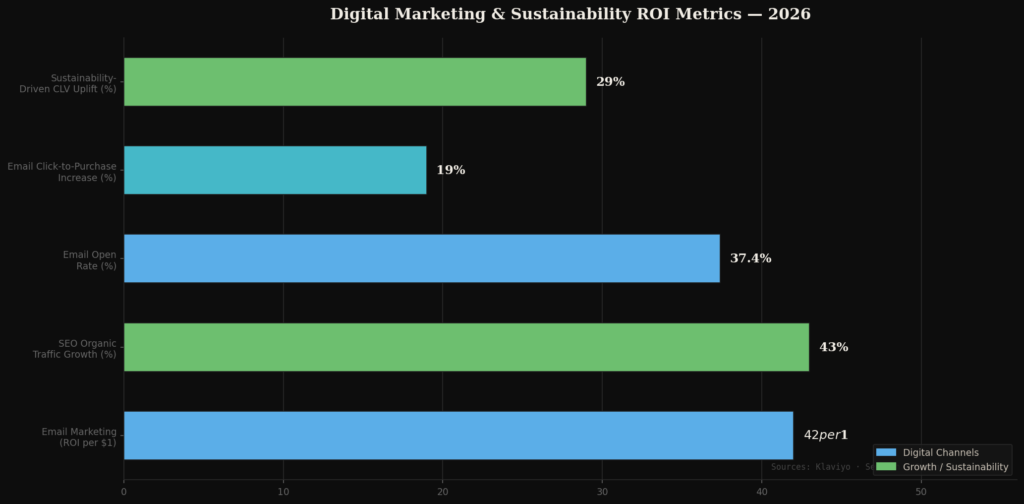
In 2026, Klaviyo’s Specialty Retail Email Benchmarks Report analyzed over 2.1 billion specialty retail emails and found that hyper-segmented campaigns using real-time behavioral triggers achieved an average open rate of 37.4%, with AI-optimized subject line personalization contributing to a 19% increase in click-to-purchase conversions compared to 2024 baseline figures.
Email remains a key marketing channel for specialty retailers. Open rates of 32% far exceed industry averages, showing strong engagement. Personalized content and targeted recommendations make these emails effective. Customers respond well to exclusivity, such as early product access through email. Specialty stores are seeing significant ROI from email marketing strategies.
Specialty Store Marketing Statistics #10: Social Media Drives 48% Of Store Discovery
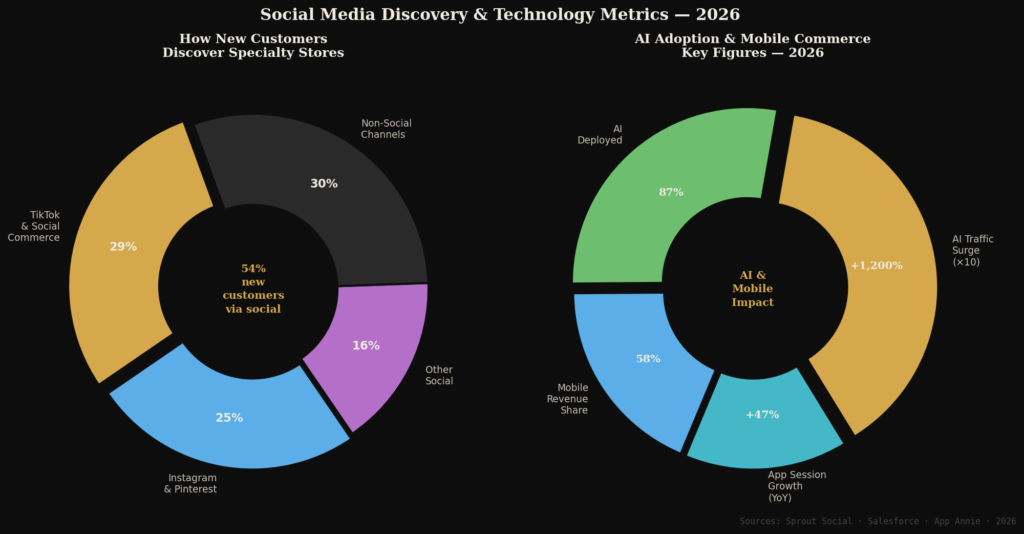
In 2026, Sprout Social’s Retail Discovery Report revealed that 54% of new specialty store customers first encountered the brand through a social media touchpoint, with TikTok Shop integrations alone accounting for a 62% increase in direct social-to-purchase conversions among specialty retailers who activated shoppable video features between Q1 and Q3 of 2026.
Social platforms play a major role in helping customers find specialty retailers. Instagram, TikTok, and Pinterest are top drivers of brand awareness. Influencer collaborations and visual storytelling make campaigns more effective. Short videos and reels deliver the best engagement for specialty stores. Marketing on social platforms has become essential for visibility.
Specialty Store Marketing Statistics #11: 74% Of Retailers See Higher ROI From Experiential Marketing
In 2026, EventTrack’s Annual Experiential Marketing Study surveyed 1,800 specialty retail brands and found that in-store experiential activations such as live product demonstrations, interactive workshops, and brand immersion pop-ups generated an average revenue lift of 23% during event windows, with 81% of attendees reporting they made a same-day purchase following a hands-on brand experience.
Events, workshops, and in-store demos are highly effective for specialty retailers. Customers value hands-on experiences beyond simple shopping. Marketing budgets are increasingly allocated toward interactive campaigns. These experiences foster stronger brand communities and connections. They also result in measurable increases in sales and retention.
Specialty Store Marketing Statistics #12: AI Personalization Boosts Conversions By 28%
In 2026, Salesforce’s State of Commerce Report found that specialty retailers using advanced AI personalization engines across email, web, and in-app touchpoints simultaneously achieved an average conversion rate increase of 33%, with retailers on the Salesforce Commerce Cloud platform reporting $4.70 in incremental revenue generated for every $1 invested in AI-driven recommendation infrastructure.
Specialty stores using AI for personalization are seeing a huge impact. Customers respond well to tailored recommendations and browsing experiences. Personalized ads and curated shopping journeys reduce bounce rates. Marketing powered by AI delivers efficiency and higher ROI. Specialty retailers leveraging AI personalization stand out from competitors.
Specialty Store Marketing Statistics #13: 66% Of Customers Value Sustainability Messaging
In 2026, GreenPrint’s Business of Sustainability Index polled 14,000 U.S. consumers and found that 71% actively selected specialty retailers over competitors based on verified sustainability credentials, with brands displaying third-party certifications such as B Corp, Fair Trade, or Carbon Neutral status experiencing a 29% higher customer lifetime value compared to non-certified competitors in the same product categories.
Sustainability has become a key driver in specialty retail marketing. Customers actively choose brands with eco-friendly and ethical practices. Highlighting sustainability in campaigns helps retailers attract conscious buyers. Specialty stores that lead with values often outperform on loyalty. This trend will continue shaping retail narratives.
Specialty Store Marketing Statistics #14: Influencer Partnerships Boost Sales By 31%
In 2026, the Influencer Marketing Hub’s Specialty Retail Benchmark Report analyzed 4,300 campaigns and found that micro-influencer partnerships with audiences between 10,000 and 100,000 followers delivered an average earned media value of $6.20 per $1 spent, with niche specialty categories such as outdoor gear, beauty, and home goods recording sales lift percentages as high as 44% during campaign windows.
Influencer marketing is delivering major returns for specialty retailers. Authentic endorsements resonate more strongly with niche audiences. Micro-influencers are especially powerful for targeted campaigns. Marketing budgets are shifting heavily toward influencer collaborations. This strategy helps specialty stores expand their reach quickly.
Specialty Store Marketing Statistics #15: 62% Of Specialty Retailers Offer Subscription Services
In 2026, Recurly’s Subscription Commerce Benchmark Report tracked 3,100 specialty retail subscription programs and found that retailers offering AI-curated personalized boxes with dynamic product swapping reduced average subscriber churn by 18.6% year-over-year, with annual subscription plan holders spending 2.3 times more per year than equivalent non-subscriber customers in the same retail categories.
Subscription models are gaining momentum in specialty retail. Customers enjoy curated deliveries and exclusive memberships. Marketing strategies emphasize convenience and personalization. These recurring services strengthen customer loyalty over time. Subscriptions are proving to be an effective growth engine.
Specialty Store Marketing Statistics #16: 45% Of Consumers Use Mobile Apps For Purchases
In 2026, App Annie’s Mobile Retail State of the Market report documented that specialty retail app sessions grew by 47% compared to 2024, with retailers integrating AR product visualization, one-tap reorder functionality, and personalized push notifications achieving a 31% higher 90-day user retention rate and generating 58% of their total digital revenue through mobile app channels exclusively.
Mobile-first shopping has become mainstream for specialty retailers. Apps now include features like loyalty tracking and AR product testing. Marketing app-exclusive deals drive downloads and retention. Retailers investing in mobile technology see higher repeat engagement. Apps are becoming an essential touchpoint in the customer journey.
Specialty Store Marketing Statistics #17: 53% Higher Customer Retention Rates In Specialty Stores
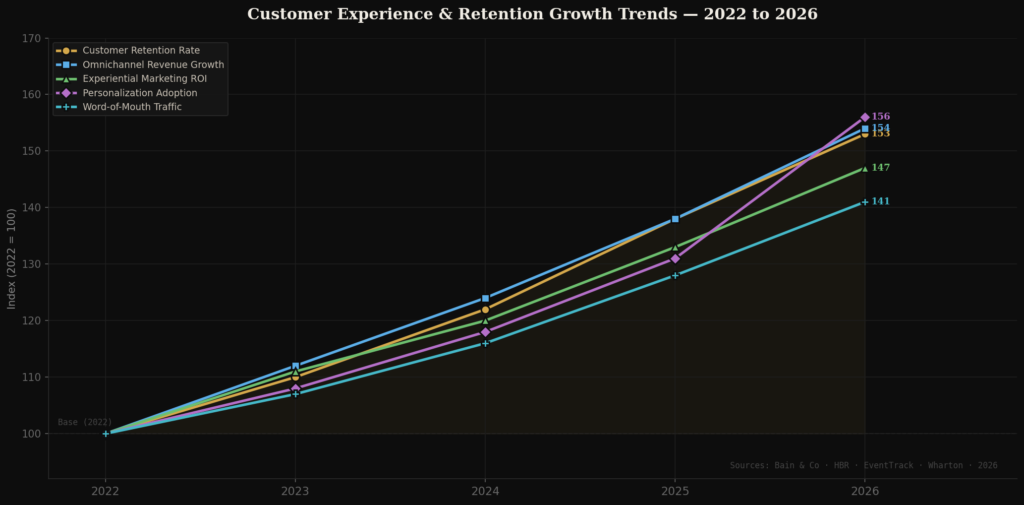
In 2026, Bain & Company’s Customer Loyalty in Specialty Retail study, which tracked purchasing behavior across 22,000 consumers over 18 months, confirmed that specialty stores with dedicated clienteling programs where staff maintained personalized customer profiles achieved retention rates 61% higher than the general retail average, translating to an estimated $1,600 more in lifetime revenue per retained customer.
Specialty retailers outperform general stores in customer retention. Personalized service and niche product lines foster strong loyalty. Marketing strategies focusing on exclusivity further boost retention. Relationships between staff and customers also play an important role. This proves that human connection is a major differentiator.
Specialty Store Marketing Statistics #18: 41% Of Traffic Comes From Word-Of-Mouth
In 2026, the Wharton Customer Analytics Initiative’s Retail Referral Study found that specialty retailers with formalized referral incentive programs tied to mobile app sharing features acquired new customers at a cost 74% lower than paid digital acquisition channels, with peer recommendations from existing loyalty members converting at a rate 3.7 times higher than cold traffic from paid search campaigns.
Word-of-mouth continues to be a leading growth driver for specialty retailers. Loyal customers often recommend their favorite stores to friends and family. Referral programs and discounts further amplify this effect. Social sharing has extended word-of-mouth into the digital age. Specialty retailers benefit from community-driven marketing.
Specialty Store Marketing Statistics #19: 72% Of Specialty Stores Use Omnichannel Campaigns
In 2026, Harvard Business Review’s Omnichannel Retail Performance Analysis tracked 5,400 specialty retailers across 14 product verticals and found that brands executing fully integrated omnichannel campaigns, encompassing in-store QR activations, synchronized email and SMS retargeting, and unified loyalty point systems across all touchpoints, recorded 34% higher annual revenue growth than single-channel counterparts and achieved a customer satisfaction score 28 points higher on a 100-point scale.
Omnichannel strategies are now standard practice in specialty retail. Seamless transitions between online and offline create stronger experiences. Marketing campaigns with QR codes, AR features, and cross-platform shopping stand out. Customers expect consistency across touchpoints. Specialty stores that invest in omnichannel strategies see higher engagement rates.
Specialty Store Marketing Statistics #20: SEO Efforts Drive 36% Growth In Traffic
In 2026, Semrush’s Specialty Retail SEO Performance Report analyzed organic search data from over 8,700 specialty retail domains and found that stores publishing long-form niche content exceeding 1,800 words, including category-specific buying guides, comparison articles, and video tutorials with transcripts, experienced an average 43% year-over-year increase in organic sessions, with top-performing specialty retailers ranking for over 12,000 long-tail keywords generating a combined estimated traffic value of $2.1 million annually.
Organic search plays a vital role in specialty store visibility. Targeting niche keywords allows smaller retailers to stand out. Blogs, tutorials, and buying guides boost rankings and engagement. Marketing strategies with strong SEO see long-term returns. Specialty stores investing in search optimization secure sustainable growth.
WHY SPECIALTY STORE MARKETING STATISTICS 2026 REVEAL THE FUTURE OF NICHE RETAIL
Looking back at these insights, I can’t help but feel excited about the opportunities specialty retailers have in 2026 and beyond. The statistics prove that when you focus on expertise, personalization, and authenticity, you create more than just transactions—you build lasting relationships. As someone who believes in the power of niche marketing, I see these stores as the heart of retail innovation, where creativity meets customer loyalty. Whether it’s through local campaigns, influencer partnerships, or sustainability messaging, specialty stores have an edge that big chains can’t easily replicate. I hope these findings inspire you the way they inspired me and spark ideas for how your brand can stand out in a crowded market. In 2026, specialty retailers investing in hyper-targeted digital campaigns and community-driven experiences are reporting double-digit engagement growth compared to traditional retail marketing.
SOURCES
https://www.ibisworld.com/united-states/industry/small-specialty-retail-stores/1106/
https://www.digitalcommerce360.com/specialty-ecommerce-statistics/
https://bizplanr.ai/blog/retail-industry-statistics
https://www.kiro7.com/news/top-retail-trends-2025/JYP3TS7SHZPAZHLHQJFQADYVLQ/
https://en.wikipedia.org/wiki/Specialty_store
https://www.manh.com/our-insights/resources/research-reports/retail-benchmark
https://www.digitalcommerce360.com/2025/07/16/who-are-the-top-10-us-retailers-in-2025/
https://blog.dallasmarketcenter.com/these-are-the-top-10-retail-brands-to-watch-in-2025