




26 Sep TOP 20 SPEECH RECOGNITION MARKETING STATISTICS 2025
When I first started diving into the world of digital trends, I never imagined just how quickly voice and AI tools would shape the way we connect with customers. As I researched deeper, I came across some eye-opening speech recognition marketing statistics that showed me just how big this shift really is. It’s no longer just about typing keywords—it’s about how people speak their needs and expect instant, accurate results. For me, this feels like both an exciting challenge and an opportunity to rethink strategies in real time. That’s exactly why I always look to a trusted marketing agency in New York to better understand where the future of consumer behavior is headed.
Top 20 Speech Recognition Marketing Statistics 2025 (Editor’s Choice)
| Stat # | Speech Recognition Marketing Statistics 2025 | Source |
|---|---|---|
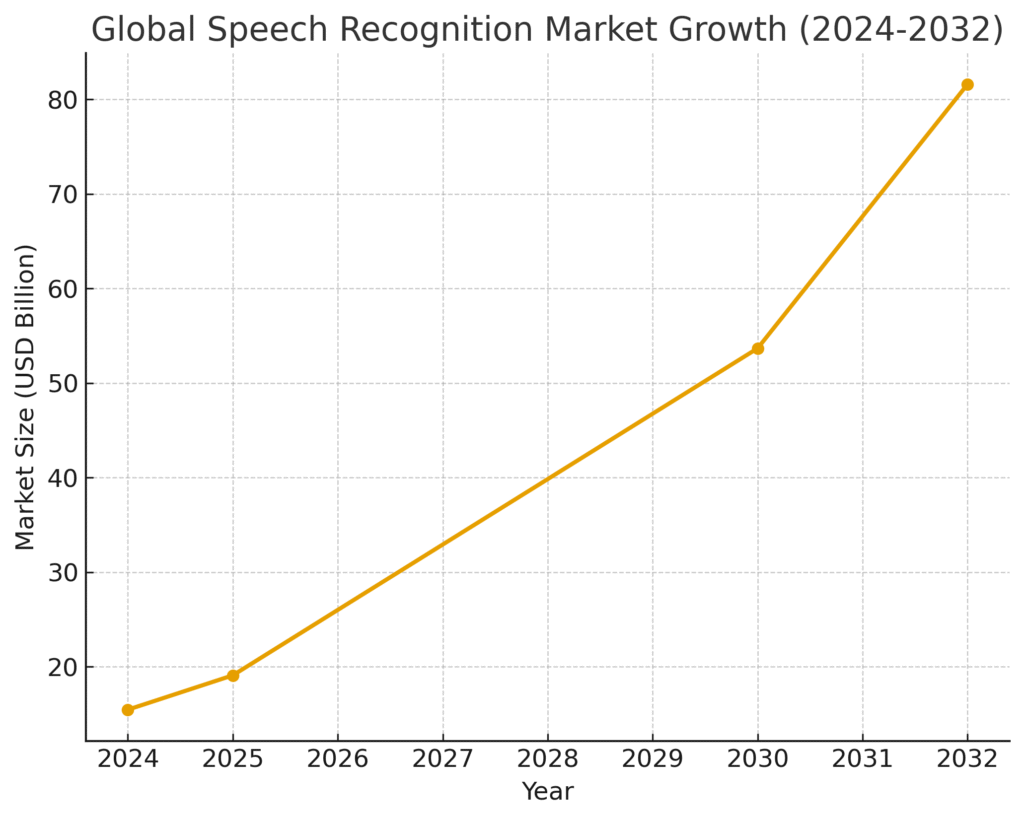
| 1 | Global speech & voice recognition market valued at USD 15.46 billion in 2024, projected to reach USD 19.09 billion in 2025. | Fortune Business Insights |
| 2 | Market expected to hit USD 81.59 billion by 2032 (CAGR ~ 23.1%). | Fortune Business Insights |
| 3 | Industry was USD 20.25 billion in 2023 and will grow to USD 53.67 billion by 2030. | Grand View Research |
| 4 | Markets & Markets: USD 8.49 billion in 2024, rising to USD 23.11 billion by 2030. | Markets & Markets |
| 5 | MarkNtel Advisors: USD 15.78 billion in 2024 → USD 36.08 billion by 2030 (CAGR 14.78%). | MarkNtel Advisors |
| 6 | Straits Research: USD 13.12 billion in 2022 → USD 66.2 billion by 2031 (CAGR 19.7%). | Straits Research |
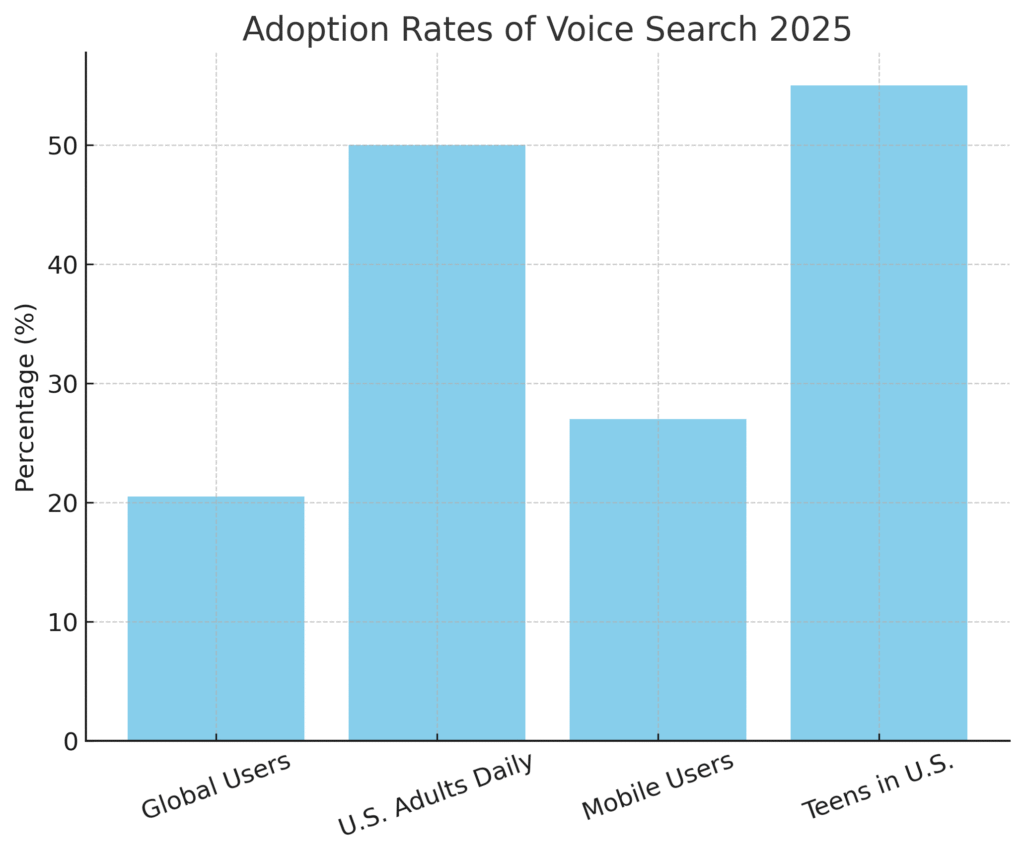
| 7 | 20.5% of people globally now actively use voice search (~1 in 5). | DemandSage |
| 8 | There are 8.4 billion voice assistants in use globally, exceeding global population. | DemandSage |
| 9 | In the U.S., 153.5 million people use voice assistants. | DemandSage |
| 10 | 27% of global users use voice search on mobile devices. | DemandSage |
| 11 | “Near me” queries account for 76% of voice searches. | Synup |
| 12 | 28% of consumers performing a voice search go on to call the business. | Invoca |
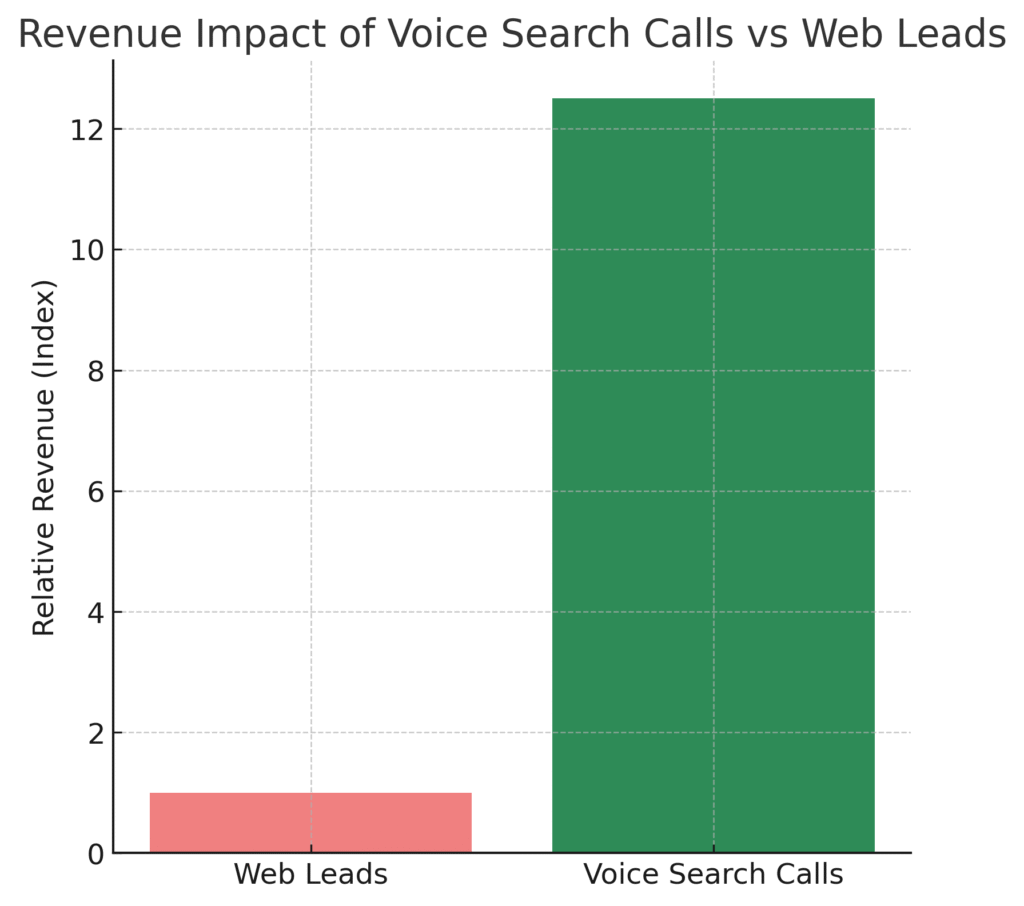
| 13 | Calls from voice search convert 10–15× more revenue than web leads. | Invoca |
| 14 | 50% of U.S. adults use voice search daily. | BloggingWizard |
| 15 | Voice assistants now answer ~93.7% of queries correctly. | BloggingWizard |
| 16 | Over 80% of voice searches are conversational in nature. | Synup |
| 17 | Most voice search answers come from the top 3 organic search results. | Sixth City Marketing |
| 18 | Pages ranking for voice search typically load 52% faster than average. | DemandSage |
| 19 | Only 1.71% of voice search results come from exact-match title tags. | DemandSage |
| 20 | 51% of consumers use voice search to research restaurants. | Invoca |
Top 20 Speech Recognition Marketing Statistics 2025
Speech Recognition Marketing Statistics #1: Market Valued At USD 15.46 Billion In 2024
The global speech and voice recognition market was valued at USD 15.46 billion in 2024, highlighting its rapid growth. This number shows how quickly voice technology has become part of everyday life. Businesses are adopting speech recognition to streamline customer interactions and boost accessibility. For marketers, this means adjusting strategies to accommodate voice-driven consumer behavior. The projected rise to USD 19.09 billion in 2025 proves its relevance as a dominant trend.
Speech Recognition Marketing Statistics #2: Market Projected To Reach USD 81.59 Billion By 2032
The market for speech recognition is expected to expand to USD 81.59 billion by 2032. This long-term growth forecast shows strong investor confidence in the technology. The CAGR of 23.1% indicates adoption will remain strong across industries. For marketers, this offers opportunities to create long-lasting strategies around voice search. It highlights that speech recognition is not a short-term fad but a permanent shift.
Speech Recognition Marketing Statistics #3: Industry Growth To USD 53.67 Billion By 2030
Grand View Research reports that the industry will grow from USD 20.25 billion in 2023 to USD 53.67 billion by 2030. This reflects a CAGR of around 14.6%, signifying steady expansion. Companies in healthcare, retail, and finance are leading adopters of this technology. For marketers, this growth represents more voice-enabled customer touchpoints. It underlines how essential optimization for voice will be in future campaigns.
Speech Recognition Marketing Statistics #4: Markets & Markets Estimate Of USD 23.11 Billion By 2030
According to Markets & Markets, the speech recognition market will grow from USD 8.49 billion in 2024 to USD 23.11 billion by 2030. This shows consistent adoption across various sectors. Marketers must recognize the increasing role of voice in consumer decision-making. With this growth, competition for voice search optimization will intensify. Businesses investing early will secure a valuable advantage.
Speech Recognition Marketing Statistics #5: MarkNtel Advisors Projection Of USD 36.08 Billion By 2030
MarkNtel Advisors project the market will rise from USD 15.78 billion in 2024 to USD 36.08 billion by 2030. A CAGR of nearly 15% shows a strong balance between rapid and sustainable growth. This growth highlights demand for hands-free, efficient communication tools. For marketers, it signals an increasing need to craft campaigns optimized for voice-enabled platforms. Such forecasts emphasize the importance of aligning with emerging technologies.

Speech Recognition Marketing Statistics #6: Straits Research Projection Of USD 66.2 Billion By 2031
Straits Research estimates the market will grow from USD 13.12 billion in 2022 to USD 66.2 billion in 2031. This suggests an impressive CAGR of nearly 20%. Such projections confirm that speech recognition is reshaping industries globally. Marketers need to recognize this shift and incorporate voice strategies in campaigns. It emphasizes that voice-first marketing will dominate digital landscapes soon.
Speech Recognition Marketing Statistics #7: 20.5% Of People Globally Use Voice Search
In 2025, about 20.5% of people worldwide actively use voice search. This equates to roughly one in five internet users relying on speech-driven technology. The figure demonstrates the mainstream adoption of voice interfaces. For marketers, it highlights the necessity of optimizing content for spoken queries. Ignoring this segment means missing out on a growing share of the audience.
Speech Recognition Marketing Statistics #8: 8.4 Billion Voice Assistants In Use Worldwide
Globally, there are 8.4 billion voice assistants in use, surpassing the world’s population. This widespread adoption emphasizes the global trust in speech technology. From homes to workplaces, these devices are embedded in daily routines. Marketers now have billions of potential touchpoints through voice-driven platforms. This stat underlines the scale of opportunities in the voice-first economy.
Speech Recognition Marketing Statistics #9: 153.5 Million Voice Assistant Users In The U.S.
In the U.S., around 153.5 million people use voice assistants regularly. This represents nearly half the population engaging with voice technology. Marketers in the U.S. market must adapt strategies to this massive user base. Voice search content and advertising can directly influence consumer decisions here. It shows how the American market is leading the charge in adoption.
Speech Recognition Marketing Statistics #10: 27% Of Global Users Use Voice Search On Mobile
Globally, 27% of users rely on mobile devices for voice searches. Smartphones have become the most common gateway for voice interactions. This stat highlights the importance of mobile-first and voice-first strategies. Marketers must ensure their mobile websites are voice-optimized. It’s proof that mobile and speech recognition strategies are inseparable.
Speech Recognition Marketing Statistics #11: 76% Of Voice Searches Have Local Intent
Local intent dominates voice searches, with 76% of queries being “near me.” This shows consumers often use voice technology for immediate needs. Marketers should prioritize local SEO and voice-friendly business listings. Being present in these searches can directly drive foot traffic and sales. This stat underscores the value of location-based marketing in voice search.
Speech Recognition Marketing Statistics #12: 28% Of Consumers Call Businesses After A Voice Search
About 28% of consumers who use voice search end up calling a business. This shows the high conversion potential of voice-based interactions. Voice searches often reflect immediate intent to purchase or connect. For marketers, ensuring call-to-actions are voice-optimized is critical. This stat highlights the importance of phone call tracking in campaigns.
Speech Recognition Marketing Statistics #13: Voice Search Calls Generate 10–15× More Revenue
Calls generated from voice searches produce 10 to 15 times more revenue than web leads. This emphasizes the higher quality of leads that come from spoken queries. Customers using voice search often have stronger purchase intent. For marketers, this demonstrates the ROI potential of focusing on voice. Investing in voice-optimized strategies can significantly increase sales.
Speech Recognition Marketing Statistics #14: 50% Of U.S. Adults Use Voice Search Daily
Half of U.S. adults reportedly use voice search on a daily basis. This makes voice interaction one of the most common digital habits. Such frequent use reflects deep consumer trust in voice technology. For marketers, this means strategies cannot ignore voice optimization any longer. Daily engagement makes voice an integral part of the consumer journey.
Speech Recognition Marketing Statistics #15: Voice Assistants Answer 93.7% Of Queries Correctly
Voice assistants have reached an accuracy rate of 93.7% when responding to queries. This accuracy builds user trust and encourages more adoption. It reduces user frustration and makes voice tools more reliable. For marketers, higher accuracy means content optimization will be more effective. This stat reflects how AI-driven precision supports marketing consistency.
Speech Recognition Marketing Statistics #16: 80% Of Voice Searches Are Conversational
Over 80% of voice searches use conversational, natural language. This demonstrates how voice queries differ from typed searches. Marketers must optimize for long-tail and question-based keywords. Creating conversational content aligns better with how users speak. This trend reinforces the importance of human-like content strategies.
Speech Recognition Marketing Statistics #17: Top 3 Search Results Dominate Voice Answers
Most voice search answers come directly from the top three organic search results. This places enormous importance on achieving high SERP rankings. For marketers, ranking beyond the top three can mean losing voice-driven traffic. SEO strategies must focus on authority and speed to secure these positions. This shows voice search is tightly linked to organic performance.
Speech Recognition Marketing Statistics #18: Voice Search Pages Load 52% Faster
Pages optimized for voice search typically load 52% faster than average sites. Speed is a critical ranking factor for voice search results. This emphasizes the link between user experience and visibility. For marketers, improving site speed can directly impact voice search performance. It shows that technical SEO is as vital as content optimization.
Speech Recognition Marketing Statistics #19: Only 1.71% Of Results Match Title Tags Exactly
Only 1.71% of voice search results match the query exactly in their title tags. This highlights the uniqueness of voice search algorithms. Marketers cannot rely solely on exact-match keywords for ranking. Instead, creating semantic and conversational content is key. This stat emphasizes adapting to natural language processing in SEO.
Speech Recognition Marketing Statistics #20: 51% Of Consumers Use Voice Search For Restaurants
More than half of consumers use voice search to research restaurants. Food and dining remain among the most popular voice-driven categories. For marketers in hospitality, this is a golden opportunity to engage customers. Optimizing menus, reviews, and local listings for voice is crucial. It underlines how voice is shaping real-world decisions in consumer behavior.
Why Speech Recognition Insights Matter
Looking back at these numbers, I can’t help but feel inspired about the road ahead. Speech recognition is not just changing search engines—it’s transforming how brands build personal, conversational relationships with their audiences. For me, the biggest takeaway is that adapting to voice and conversational marketing is no longer optional; it’s essential to staying relevant. These trends remind me that we have to listen—literally—to what our customers are asking for in order to serve them better. And I’m excited to keep exploring ways these insights can fuel more human, meaningful connections in marketing.
SOURCES
-
- https://keywordseverywhere.com/blog/voice-search-stats/
- https://www.invoca.com/blog/voice-search-stats-marketers
- https://www.dbswebsite.com/blog/trends-in-voice-search/
- https://bloggingwizard.com/voice-search-statistics/
- https://improvado.io/blog/voice-search-seo
- https://circlesstudio.com/blog/optimize-for-voice-search-2025/
- https://firstsiteguide.com/voice-search-stats/
- https://www.hubspot.com/marketing-statistics
- https://www.joinglyph.com/blog/ai-speech-recognition-is-revolutionizing-market-research
- https://www.forbes.com/sites/cindygordon/2021/12/23/a-market-to-harness-speech-recognition-artificial-intelligence-ai-innovations-on-the-rise/
- https://opencv.org/blog/applications-of-speech-recognition/
- https://digitalmarketinginstitute.com/blog/prepare-for-the-future-of-voice-search
- https://www.dittotranscripts.com/blog/ai-vs-human-transcription-statistics-can-speech-recognition-meet-dittos-gold-standard/