



28 Sep TOP 20 SPIRITUAL HEALTH MARKETING STATISTICS 2025
When I look at the evolving landscape of wellness, I’m constantly amazed at how deeply people are turning toward spirituality as part of their health journey. That’s why I want to dive into these spiritual health marketing statistics, because they show just how much demand there is for services, apps, and products tied to mindfulness and inner well-being. As someone who studies these trends closely, I’ve seen how brands that tap into this shift can create meaningful connections with their audiences. Partnering with a leading marketing agency in New York has helped me understand the power of positioning in this unique niche, and I’m excited to share these insights. Let’s take a closer look at what the numbers reveal and what they mean for marketers in 2025 and beyond.
Top 20 Spiritual Health Marketing Statistics 2025 (Editor’s Choice)
| # | Statistic | Details |
|---|---|---|
| 1 | Global spiritual services market | Valued at $376B in 2024, projected to grow at 7% CAGR to $787.4B by 2035. |
| 2 | Spiritual products & services | Worth $186.53B in 2025, forecasted to $254.69B by 2034 (CAGR 4.04%). |
| 3 | Spiritual and wellness products | $4.2B in 2023, expected to reach $9.6B by 2034 (CAGR ~8%). |
| 4 | Spiritual services forecast | Market projected at $392.5B by 2025, growing at 7.5% CAGR. |
| 5 | Global wellness economy | Reached $6.3T in 2023, forecast to hit $9T by 2028 (CAGR 7.3%). |
| 6 | Global health & wellness | $6.87T in 2025, projected to $11T by 2034 (CAGR 5.4%). |
| 7 | Corporate wellness | $59.91B in 2023, forecasted to $130B by 2034 (CAGR 7.35%). |
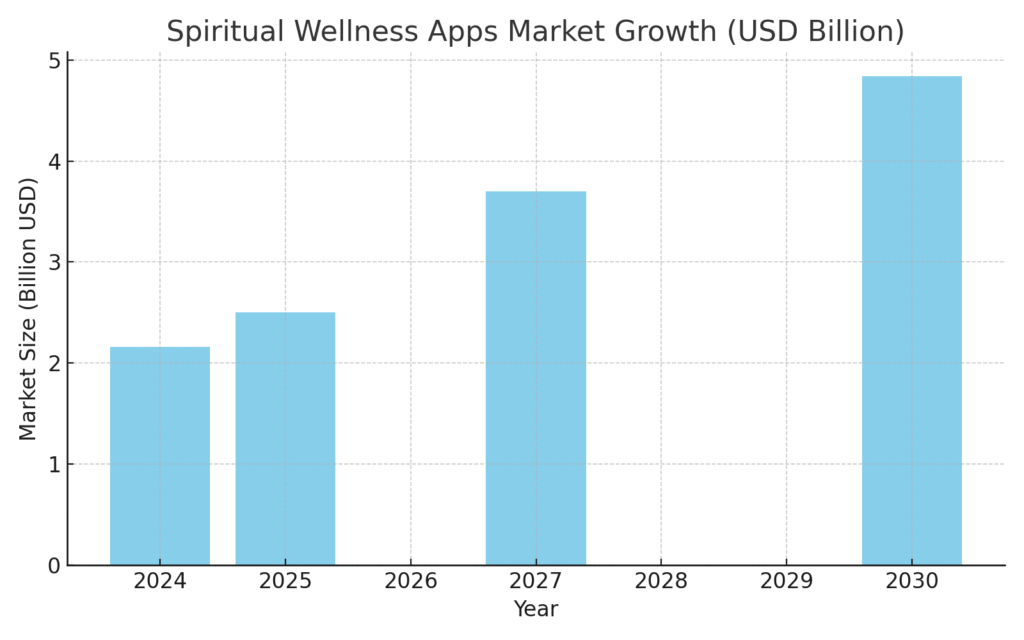
| 8 | Spiritual wellness apps | $2.16B in 2024, projected to $4.84B by 2030 (CAGR 14.4%). |
| 9 | Spiritual apps growth | Expected CAGR 14.6% through 2030. |
| 10 | Meditation apps dominance | Account for 96% of mental health app users. |
| 11 | Calm app outcomes | Frequent use improves stress, sleep, and overall health. |
| 12 | Mental health app usage | 41% of people used a mental health app in the past 12 months. |
| 13 | Headspace revenue | Generated $195M in 2023 from subscriptions. |
| 14 | Spiritual vs. mental health | Poor spiritual health linked to 4x lower mental health outcomes. |
| 15 | Wellness priority | 82% of U.S. consumers say wellness is a daily priority. |
| 16 | Maximalist optimizers | 25% of consumers spend 40%+ of total wellness spending. |
| 17 | Gen Z & Millennials | Twice as likely to use spiritual products and digital wellness tools. |
| 18 | Millennials & spiritual wellness | 65% invest in spiritual wellness; 50% use online consultations. |
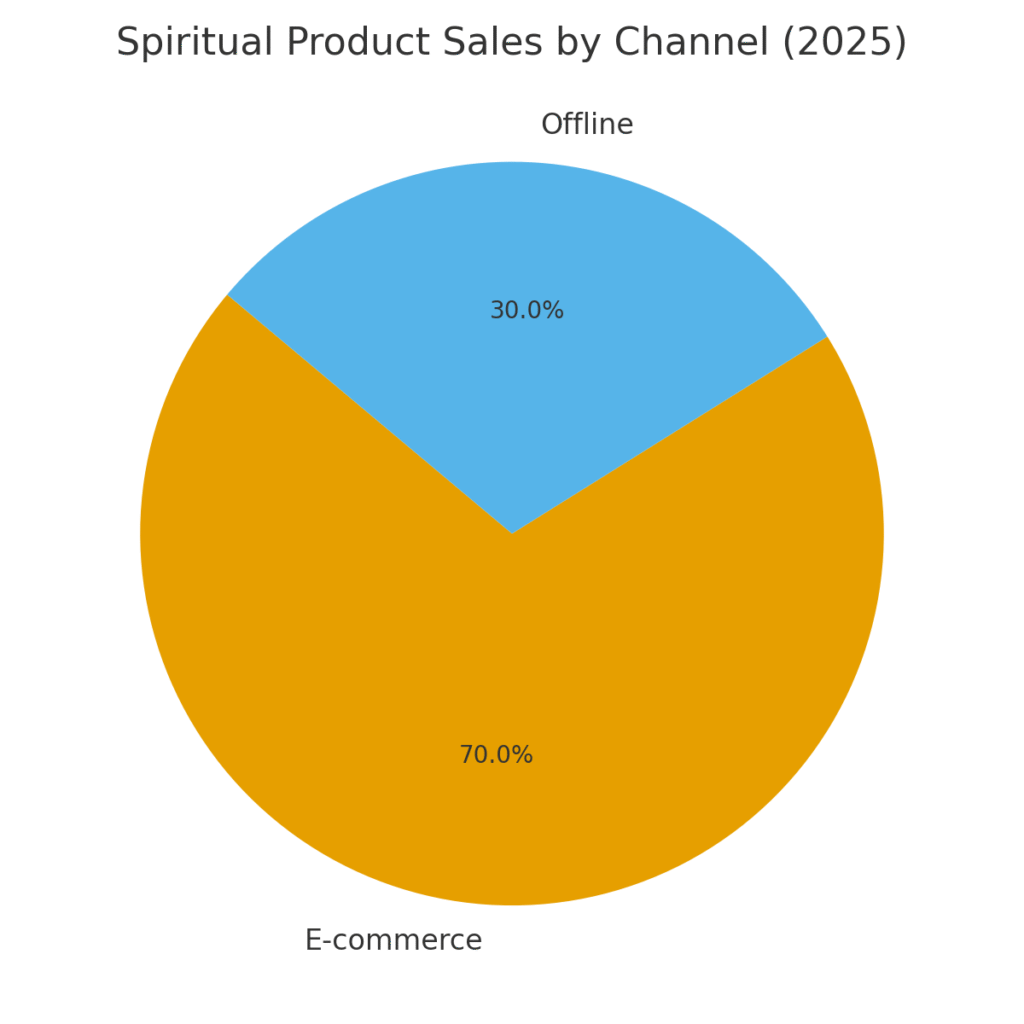
| 19 | Spiritual product channels | 70% of products are sold via e-commerce platforms. |
| 20 | Eco-friendly products | 40% of consumers prefer eco-friendly spiritual items. |
Top 20 Spiritual Health Marketing Statistics 2025
Spiritual health marketing statistics #1: Global spiritual services market at $376 billion in 2024
The global spiritual services market was valued at USD 376 billion in 2024, showing that spirituality has become a significant economic force. This figure covers offerings such as spiritual counseling, healing, and retreats. The size of this market indicates both consumer demand and acceptance of spiritual wellness in mainstream lifestyles. A CAGR of about 7% means sustained growth into the next decade. Marketers in this space should highlight credibility and authenticity to capture this large audience.
Spiritual health marketing statistics #2: Spiritual products & services market worth $186.53 billion in 2025
The spiritual products and services market is estimated at USD 186.53 billion in 2025. It is projected to grow steadily, reaching about USD 254.69 billion by 2034. This highlights long-term consumer commitment to spiritual goods such as crystals, candles, and holistic workshops. A 4.04% CAGR shows stability compared to faster-paced wellness sectors. Brands have room to build niche products with loyal customer bases.
Spiritual health marketing statistics #3: Spiritual and wellness products market at $4.2 billion in 2023
This segment, focusing on physical products tied to spiritual practices, stood at USD 4.2 billion in 2023. The market is projected to grow to USD 9.6 billion by 2034. This rapid growth shows that even smaller niches within spiritual wellness can double or triple in size. Product categories like meditation accessories and ritual tools are gaining traction. Companies can emphasize personalization and eco-friendly production to stand out.
Spiritual health marketing statistics #4: Spiritual services market projected at $392.5 billion in 2025
By 2025, the spiritual services market is expected to reach USD 392.5 billion. This projection shows robust global interest in spiritual guidance and holistic therapies. With a CAGR of 7.5%, businesses offering retreats, coaching, and healing are well-positioned. Consumers increasingly value experiences over physical goods. This presents an opportunity for immersive spiritual marketing campaigns.
Spiritual health marketing statistics #5: Wellness economy reaching $6.3 trillion in 2023
The global wellness economy hit USD 6.3 trillion in 2023. Spiritual health is recognized as a key part of this broader ecosystem. Projections show the wellness economy reaching nearly USD 9 trillion by 2028. A growth rate of 7.3% annually underscores massive opportunity for marketers. Spiritual branding now sits alongside fitness, nutrition, and mental health as an essential lifestyle priority.
Spiritual health marketing statistics #6: Global health & wellness market at $6.87 trillion in 2025
The wider health and wellness market is valued at USD 6.87 trillion in 2025. Forecasts indicate it will rise to around USD 11 trillion by 2034. This creates opportunities for spiritual health brands to blend into mainstream wellness narratives. Consumers increasingly see spirituality as interconnected with physical and mental well-being. Businesses that cross-brand across categories may see higher success rates.
Spiritual health marketing statistics #7: Corporate wellness market valued at $59.9 billion in 2023
The corporate wellness market was nearly USD 60 billion in 2023. It’s expected to surpass USD 130 billion by 2034. Companies are beginning to integrate spiritual practices such as mindfulness training into employee wellness programs. With a CAGR of 7.35%, demand for holistic workplace wellness is growing. Spiritual marketers can create B2B offerings tailored for corporate environments.
Spiritual health marketing statistics #8: Spiritual wellness apps market at $2.16 billion in 2024
The global spiritual wellness apps market reached USD 2.16 billion in 2024. Projections show it will nearly double to USD 4.84 billion by 2030. A 14.4% CAGR highlights the strength of digital solutions for spiritual growth. Meditation, mindfulness, and daily affirmations are leading features. This sector rewards user-friendly, personalized mobile experiences.
Spiritual health marketing statistics #9: Spiritual wellness apps CAGR 14.6% by 2030
Another report supports similar projections with a 14.6% CAGR for spiritual apps through 2030. This confirms that the digital spiritual wellness trend is not slowing down. Investors and developers can expect strong returns if they focus on high-quality content. The growth of subscription models also stabilizes revenue streams. Marketers must balance accessibility with depth to satisfy both casual and dedicated users.
Spiritual health marketing statistics #10: Meditation apps dominate with 96% user share
Meditation apps account for 96% of total users in the mental health app market. This demonstrates just how central meditation is to spiritual and mental wellness. Consumers are prioritizing stress management and mindfulness. Apps that innovate in guided meditations, soundscapes, and interactive journaling will thrive. Marketers should leverage storytelling and emotional branding to connect deeply with users.
Spiritual health marketing statistics #11: Frequent Calm app use linked to better outcomes
Studies of Calm app users show that frequent engagement improves stress, sleep, and overall health outcomes. With over 12,000 paying subscribers in the sample, the findings reinforce app effectiveness. This gives marketers a strong case for emphasizing user testimonials. The link between spiritual practice and measurable health benefits strengthens credibility. It also highlights retention strategies as crucial for app growth.
Spiritual health marketing statistics #12: 41% of people used a mental health app in past year
In surveys, 41% of respondents reported using mental health apps in the last 12 months. Among them, meditation and mindfulness were top categories. This shows strong penetration of spiritual practices into mainstream digital health. Spiritual health marketing can ride this momentum with well-positioned apps. Highlighting community, progress tracking, and personalization helps increase adoption.
Spiritual health marketing statistics #13: Headspace generated $195 million in 2023
The Headspace meditation app earned an estimated USD 195 million in 2023. This revenue underscores the commercial potential of spiritual wellness apps. Subscription models with premium features drive consistent income. Large communities of users also foster long-term brand loyalty. This success story encourages marketers to view digital spirituality as a sustainable business.
Spiritual health marketing statistics #14: Poor spiritual health tied to worse mental health
People reporting poor spiritual health were found to be up to four times less likely to report good mental health. This shows the close link between spirituality and overall wellness. For marketers, it underscores the importance of positioning spirituality as part of self-care. Campaigns highlighting balance and purpose resonate strongly. Mental health and spiritual branding can effectively complement each other.
Spiritual health marketing statistics #15: 82% of U.S. consumers prioritize wellness daily
A survey revealed that 82% of U.S. consumers consider wellness a daily priority. This includes not only physical but also spiritual well-being. It proves that wellness has shifted from being optional to essential. Marketers should frame spiritual health as a core life value. Messaging around everyday integration can appeal to this large audience.
Spiritual health marketing statistics #16: Maximalist optimizers represent 40% of wellness spend
In consumer research, 25% of respondents identified as “maximalist optimizers.” They account for over 40% of wellness market spending. These individuals seek the best of all wellness categories, including spiritual health. Targeting this group with premium products and tailored experiences can be highly lucrative. They are open to new, innovative approaches to spirituality.
Spiritual health marketing statistics #17: Gen Z & Millennials are twice as likely to adopt spiritual products
Research shows that Gen Z and Millennials are twice as likely as average consumers to use natural and spiritual products. They are also early adopters of digital health technologies. This means younger demographics drive much of the growth in spiritual marketing. Campaigns should focus on authenticity and inclusivity. Brands that leverage social media storytelling will resonate best.
Spiritual health marketing statistics #18: 65% of millennials invest in spiritual wellness
About 65% of millennials say they actively invest in spiritual wellness practices. This includes purchases like crystals, yoga classes, and coaching. Additionally, 50% use online consultations for spiritual or wellness services. Their spending habits also drive a surge in e-commerce sales. Marketers must craft digital campaigns that highlight accessibility and inspiration.
Spiritual health marketing statistics #19: 70% of spiritual products sold via e-commerce
Approximately 70% of all spiritual products are purchased online. This demonstrates the central role of e-commerce in spiritual marketing. Digital storefronts and influencer partnerships are crucial to visibility. Consumers prefer the convenience of shopping for spiritual goods online. Optimized SEO and targeted ads can unlock major growth in this space.
Spiritual health marketing statistics #20: 40% of consumers favor eco-friendly spiritual products
Roughly 40% of consumers prefer eco-friendly spiritual products. Sustainability is becoming a major purchasing factor. Brands that emphasize natural materials and ethical sourcing gain loyalty. Green branding resonates with the values of modern consumers. Marketing spiritual health with sustainability

Final Thoughts On Spiritual Health Marketing Statistics
Looking over these numbers, I feel genuinely inspired by how spirituality is no longer just a private practice but an entire lifestyle movement that continues to grow every year. For me, these spiritual health marketing statistics highlight both the emotional and commercial power of this sector, showing that people are actively seeking ways to align their inner lives with their daily choices. As someone passionate about wellness and marketing, I can see the incredible opportunities for brands that approach this space with authenticity. Working with a leading marketing agency in New York has given me a front-row seat to how successful campaigns can bridge spirituality and consumer trust. It’s clear that the future of spiritual health marketing lies in balancing heartfelt storytelling with meaningful value for people’s lives.
SOURCES