



21 Sep TOP 20 STEP-CHILD MARKETING STATISTICS 2025
Step-child marketing statistics reveal fascinating insights into how blended families influence purchasing decisions and household dynamics. Understanding these trends is crucial for brands looking to connect authentically with stepfamilies, whose needs and preferences are often overlooked. From children’s influence on grocery choices to stepchildren guiding technology and entertainment purchases, these statistics showcase a growing and engaged demographic. Businesses aiming to craft campaigns that resonate with real families need a strategic approach informed by accurate data. That’s why partnering with a leading marketing agency in New York can help brands navigate these unique opportunities and create campaigns that genuinely connect with stepfamilies.
Top 20 Step-Child Marketing Statistics 2025 (Editor’s Choice)
| # | Category | Statistic | Source |
|---|---|---|---|
| 1 | Stepfamily Demographics | Over 40% of American adults have at least one step relative. | Pew Research |
| 2 | Stepfamily Demographics | Approximately 1,300 new stepfamilies are formed daily in the U.S. | Stepfamily.org |
| 3 | Stepfamily Demographics | An estimated 10.5 million children live in residential stepfamilies. | Smart Stepfamilies |
| 4 | Stepfamily Demographics | 40% of married couples with children are part of a blended family. | Smart Stepfamilies |
| 5 | Stepfamily Demographics | Approximately 113.6 million Americans have a steprelationship. | Smart Stepfamilies |
| 6 | Stepfamily Demographics | Nearly 50% of U.S. marriages are remarriages for one or both partners. | USU Extension |
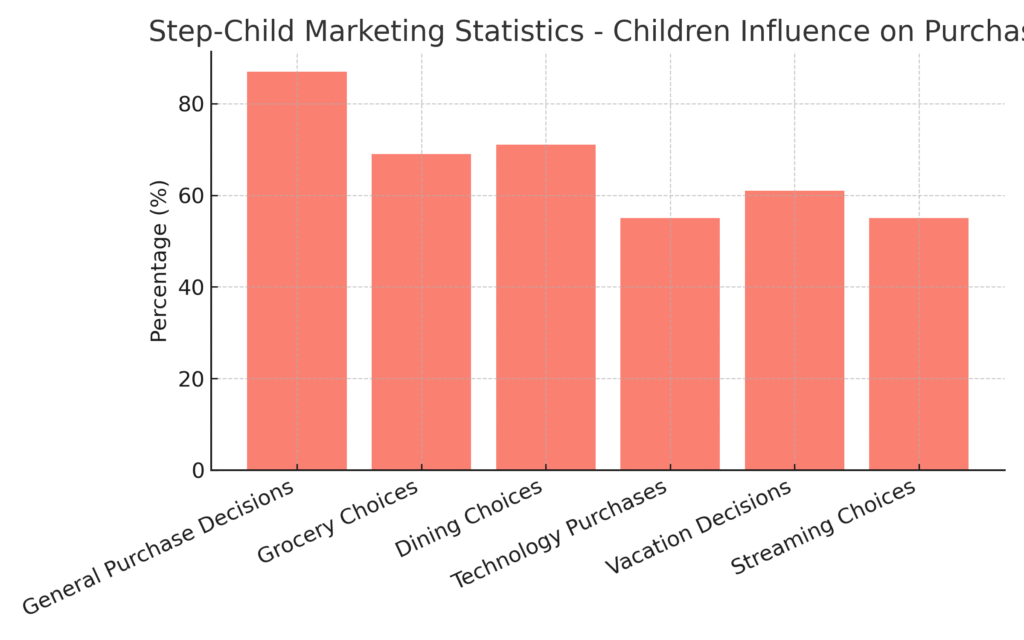
| 7 | Consumer Behavior | 87% of parents say their children influence purchase decisions. | Marketing Charts |
| 8 | Consumer Behavior | 69% of parents say kids influence grocery choices. | YouGov |
| 9 | Consumer Behavior | 71% of parents say kids influence where they eat out. | YouGov |
| 10 | Consumer Behavior | Over 50% of parents say kids influence technology and electronics purchases. | YouGov |
| 11 | Consumer Behavior | 61% of parents say kids influence vacation destinations. | YouGov |
| 12 | Consumer Behavior | 55% of parents say kids influence streaming service choices. | YouGov |
| 13 | Consumer Behavior | Children influence brand (52%), product features (48%), and retailer choice (41%). | Porch Group Media |
| 14 | Consumer Behavior | 72% of parents involve children in early purchase research. | Porch Group Media |
| 15 | Consumer Behavior | 50% of parents research safety of brands/products more since becoming a parent. | Healthline |
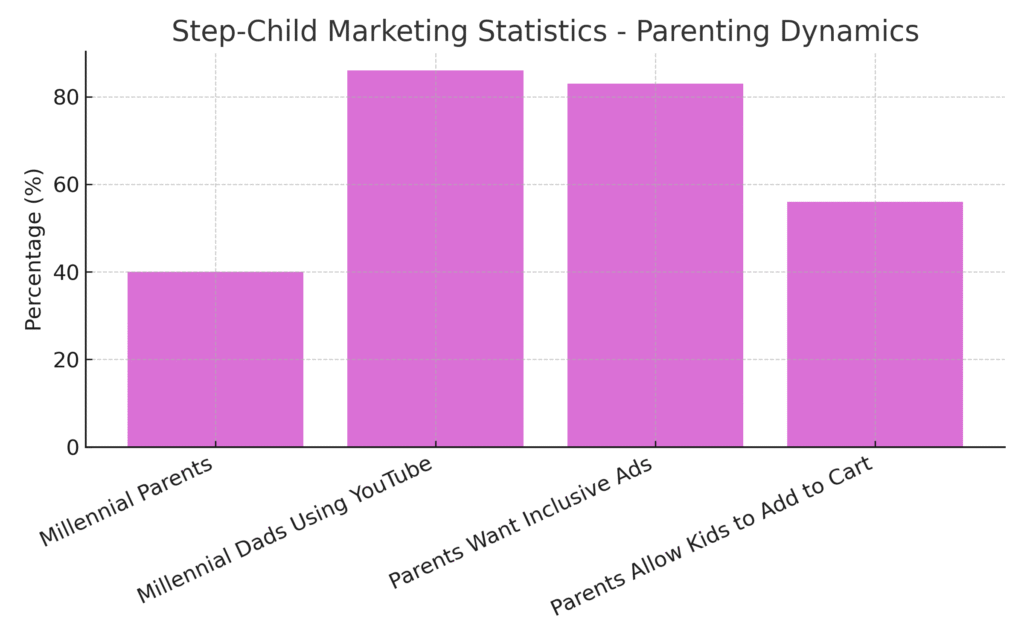
| 16 | Parenting Dynamics | Over 40% of millennials identify as parents. | Think with Google |
| 17 | Parenting Dynamics | 86% of millennial dads use YouTube for parenting guidance. | Songbird Marketing |
| 18 | Parenting Dynamics | 83% of parents prefer ads appealing equally to mothers and fathers. | Songbird Marketing |
| 19 | Parenting Dynamics | 56% of parents allow kids to add items to wish lists or shopping carts. | Porch Group Media |
| 20 | Parenting Dynamics | Digital ad spend targeting kids is rising, especially for Gen Alpha. | Porch Group Media |
Top 20 Step-Child Marketing Statistics 2025
Step-Child Marketing Statistics #1: Over 40% of American Adults Have a Step Relative
Over 40% of adults in the U.S. have at least one step relative, including stepparents, stepchildren, or step/half siblings. This large demographic makes stepfamilies an important consideration for marketers targeting family products. Brands can design campaigns that reflect blended family dynamics to resonate with this audience. Understanding the prevalence of step-relations can help tailor messaging that feels inclusive. Companies that acknowledge stepfamily structures often see higher engagement and loyalty from these households.
Step-Child Marketing Statistics #2: Approximately 1,300 New Stepfamilies Are Formed Daily
Every day in the United States, roughly 1,300 new stepfamilies are created. This rapid formation highlights the ongoing growth of blended households. For marketers, this presents a constantly evolving consumer base with diverse needs. Stepchildren and stepparents play a crucial role in family purchase decisions, from groceries to entertainment. Brands can benefit from campaigns that are sensitive to family transitions and dynamics.
Step-Child Marketing Statistics #3: 10.5 Million Children Live in Residential Stepfamilies
An estimated 10.5 million children live in residential stepfamilies across the U.S. These children influence household decisions, from technology to food choices. Products and services targeting families should consider the perspectives and preferences of stepchildren. Campaigns that recognize these children as decision influencers can create stronger emotional connections. Marketing messages that feel inclusive of all family members tend to perform better in blended households.
Step-Child Marketing Statistics #4: 40% of Married Couples with Children Are in Blended Families
Nearly 40% of married couples raising children belong to blended families. This statistic emphasizes the scale of stepfamily households in America. For marketers, acknowledging blended family dynamics is essential when promoting family-oriented products. Messaging that respects both biological and step relationships helps build trust with this audience. Tailored campaigns can highlight shared experiences in blended families, enhancing engagement.
Step-Child Marketing Statistics #5: 113.6 Million Americans Have a Steprelationship
About 113.6 million Americans have some form of steprelationship, including stepparents or stepchildren. This large number reflects the significance of blended family households. Marketers can leverage this insight by creating content that speaks to family inclusivity. Recognizing steprelationships in advertising strengthens emotional resonance with consumers. Brands that show empathy toward these households can stand out in competitive markets.
Step-Child Marketing Statistics #6: Nearly 50% of U.S. Marriages Are Remarriages
Almost half of all marriages in the U.S. involve at least one partner remarrying. This statistic highlights why blended families are increasingly common. Marketing campaigns that consider remarriage and stepfamily dynamics can appeal more effectively to this audience. Understanding the complexity of family structures allows for more relatable and empathetic messaging. Advertisements reflecting real-life blended family experiences can boost engagement and loyalty.
Step-Child Marketing Statistics #7: 87% of Parents Say Children Influence Purchase Decisions
A striking 87% of parents admit that their children influence their purchase decisions. Stepchildren, just like biological children, play a strong role in household buying choices. Brands targeting family products should include messaging that considers children’s preferences. Engaging children directly through advertisements or digital media can increase product adoption. Companies that acknowledge this influence often see higher satisfaction and repeat purchases.
Step-Child Marketing Statistics #8: 69% of Parents Say Kids Influence Grocery Choices
69% of parents report that their children have a significant impact on grocery purchasing decisions. Stepchildren can be just as influential as biological children in selecting household food items. Marketers can create campaigns that appeal to children while still addressing parental decision-making. Highlighting fun, nutritious, or family-friendly options can resonate with blended households. Products designed for children often drive overall household sales.
Step-Child Marketing Statistics #9: 71% of Parents Say Kids Influence Dining Choices
71% of parents say their children influence where the family eats out or orders takeout. Stepchildren can affect dining preferences in blended households. Restaurants and food brands can design menus or promotions that appeal to all family members. Marketing strategies that consider children’s tastes can enhance family dining experiences. Engaging visuals, fun options, and kid-friendly offers can attract blended families more effectively.
Step-Child Marketing Statistics #10: Over Half of Parents Say Kids Influence Technology Purchases
More than 50% of parents report that their children influence decisions on technology and electronics. Stepchildren play a role in choosing devices, apps, and entertainment systems. Tech brands can highlight features that appeal to both kids and parents. Campaigns that incorporate children’s perspectives tend to gain higher engagement. Providing options for family-friendly use enhances brand appeal in blended households.

Step-Child Marketing Statistics #11: 61% of Parents Say Kids Influence Vacation Destinations
61% of parents say their children help decide vacation destinations. This includes blended families, where stepchildren’s preferences are equally considered. Travel marketers can craft campaigns that highlight family-friendly experiences appealing to all children. Promoting inclusive activities can increase interest among stepfamilies. Personalized vacation ideas for blended families can strengthen brand connection.
Step-Child Marketing Statistics #12: 55% of Parents Say Kids Influence Streaming Service Choices
55% of parents indicate that children influence the choice of streaming platforms. Stepchildren can guide family entertainment selections. Media companies can tailor content recommendations and advertising to appeal to younger audiences. Highlighting programs that the entire family can enjoy increases engagement. Blended households respond positively to content that reflects family inclusivity.
Step-Child Marketing Statistics #13: Children Influence Brand, Product Features, and Retailers
Children often influence brand selection (52%), product features (48%), and retailers considered (41%). Stepchildren can guide household preferences, shaping purchasing behavior. Marketing campaigns should target both parents and children for maximum impact. Including children in promotions increases the likelihood of brand adoption. Understanding these dynamics allows for more effective product positioning.
Step-Child Marketing Statistics #14: 72% of Parents Involve Kids in Early Purchase Research
72% of parents involve their children in the early stages of researching products. Stepchildren, like biological children, play a key role in the discovery process. Online content, videos, and reviews can effectively reach this audience. Engaging children in research decisions strengthens family interest in a brand. Including both parents and children in campaigns enhances brand trust and relevance.
Step-Child Marketing Statistics #15: 50% of Parents Research Product Safety More Since Becoming Parents
Half of parents conduct more research on product safety after becoming parents. Stepchildren influence these considerations, especially in blended households. Brands that highlight safety and reliability in messaging can appeal to cautious parents. Emphasizing quality and secure features builds consumer confidence. Stepfamily-focused campaigns can underscore how products meet the needs of all children.

Step-Child Marketing Statistics #16: Over 40% of Millennials Identify as Parents
More than 40% of millennials report being parents. Many of these households are blended families. Marketers targeting millennials should consider stepchild influence in purchasing decisions. Campaigns that reflect modern family structures resonate more effectively. Addressing the needs of millennial stepfamilies can create strong brand loyalty.
Step-Child Marketing Statistics #17: 86% of Millennial Dads Use YouTube for Parenting Guidance
86% of millennial fathers turn to YouTube for advice on parenting topics. Stepdads may rely on digital content to understand blended family dynamics. Brands can leverage video content to educate and engage fathers in stepfamilies. Online tutorials and product demos can directly influence purchasing decisions. YouTube campaigns targeting stepdads can enhance brand credibility.
Step-Child Marketing Statistics #18: 83% of Parents Prefer Ads Appealing to Both Mothers and Fathers
83% of parents believe advertising should equally appeal to mothers and fathers. Step-parents should also feel included in marketing campaigns. Inclusive messaging ensures all adults in a blended household feel represented. This approach strengthens emotional connections and improves engagement. Brands that consider parental diversity see higher conversion rates.
Step-Child Marketing Statistics #19: 56% of Parents Allow Kids to Add Items to Wish Lists or Shopping Carts
56% of parents let their children contribute to wish lists or online shopping carts. Stepchildren participate equally in these household decisions. Retailers can design interactive experiences that allow kids to influence purchases. Digital engagement with children increases excitement and involvement. Campaigns that include children in the shopping process can drive sales and loyalty.
Step-Child Marketing Statistics #20: Digital Advertising Targeting Kids Is Increasing, Especially for Gen Alpha
Spending on digital advertising aimed at children has risen, particularly targeting Generation Alpha. Stepchildren in blended households are included in this digital influence. Brands need to craft age-appropriate and engaging campaigns online. Interactive content and gamified experiences capture attention effectively. Recognizing stepchildren as influencers in digital spaces helps brands remain competitive.
Key Takeaways from Step-Child Marketing Statistics
The top 20 step-child marketing statistics provide a clear roadmap for brands aiming to engage blended families effectively. Children, whether biological or stepchildren, play a significant role in household purchasing decisions, and their influence spans groceries, dining, technology, vacations, and more. Marketers who acknowledge the diversity of modern families and tailor their messaging accordingly can create deeper engagement and stronger brand loyalty. Inclusive campaigns that consider stepfamily dynamics not only resonate better but also position a brand as empathetic and forward-thinking. By leveraging these insights, businesses can ensure their strategies truly reflect the realities of today’s blended households.
SOURCES
- https://www.stepfamily.org/stepfamily-statistics.html
- https://www.lovetoknow.com/parenting/parenthood/blended-family-statistics
- https://smartstepfamilies.com/smart-help/marriage-family-stepfamily-statistics
- https://www.pageonedigital.com/blog/5-family-friendly-marketing-tips
- https://bradhambrick.com/reflecting-on-statistics-related-to-blended-families/
- https://marriage365.com/blog/blended-families-assumptions-vs-facts/
- https://www.onthemap.com/blog/google-search-statistics/
- https://www.hostinger.com/tutorials/digital-marketing-statistics
- https://www.thesocialshepherd.com/blog/digital-marketing-statistics
- https://sproutsocial.com/insights/influencer-marketing-statistics/
- https://www.shopify.com/blog/influencer-marketing-statistics
- https://quickframe.com/blog/influencer-marketing-statistics/
- https://neilpatel.com/blog/marketing-statistics/
- https://www.optimizely.com/insights/blog/marketing-statistics/
- https://www.typeface.ai/blog/content-marketing-statistics
- https://bloggingwizard.com/content-marketing-statistics-trends/