



21 Sep TOP 20 STEP-PARENT MARKETING STATISTICS 2025
When we think about modern families, blended households are a huge part of the picture, and that’s exactly why step-parent marketing statistics matter so much today. These numbers highlight not only the growth of stepfamilies but also the unique ways brands can connect with them on a deeper level. As a marketing agency in New York, we’ve seen firsthand how businesses thrive when they embrace inclusive storytelling that mirrors the lives of their customers. This isn’t about throwing random stats on a page—it’s about understanding the families behind those numbers, their day-to-day experiences, and the emotions that guide their decisions. That’s the perspective that makes these statistics not just data points, but doorways to meaningful connections.
Top 20 Step-Parent Marketing Statistics 2025 (Editor’s Choice)
| # | Statistic | Insight / Implication |
|---|---|---|
| 1 | 42% of American adults report having at least one step relative. | Shows large blended-family presence; marketing messages can reach broad audiences. |
| 2 | 30% of U.S. adults have a step or half-sibling. | Campaigns highlighting sibling relationships resonate strongly. |
| 3 | 18% have a living stepparent. | Important share of population with stepparent experience; useful for family-oriented messaging. |
| 4 | 13% have at least one stepchild. | Represents strong potential audience for parenting and household products. |
| 5 | 13% of U.S. adults are stepparents (~29-30 million). | Large consumer segment that benefits from inclusion in campaigns. |
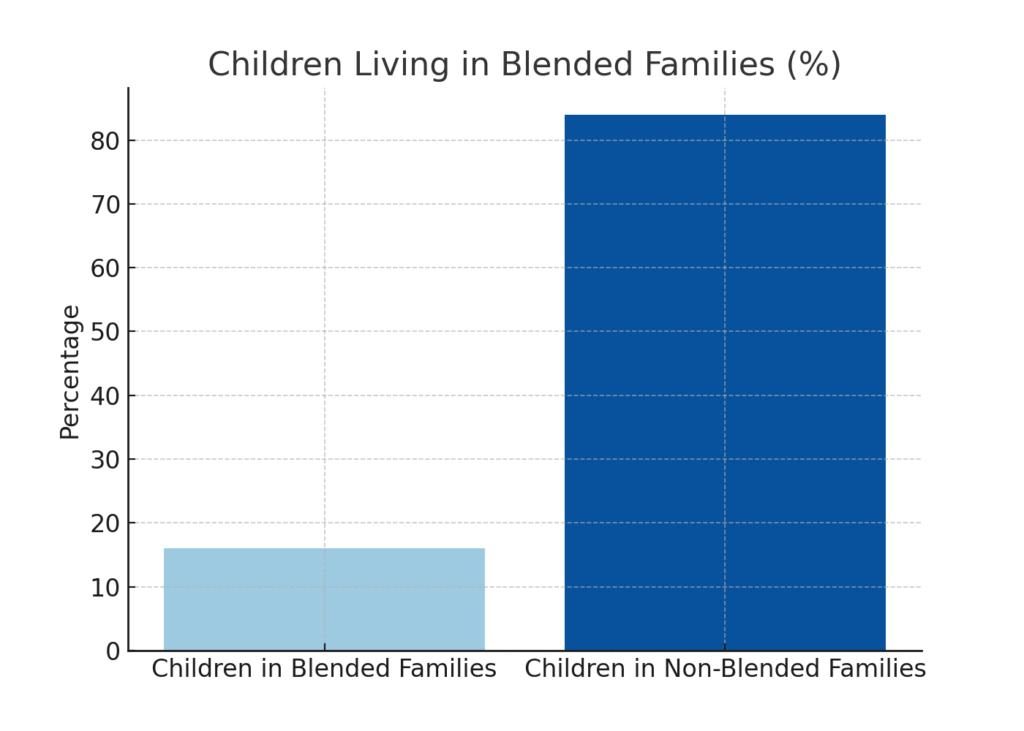
| 6 | 16% of U.S. children live in blended families. | Children’s products and services should reflect diverse family structures. |
| 7 | 84% of co-residential stepfamilies are stepfather households. | Most blended families involve stepfathers; campaigns should represent them fairly. |
| 8 | 40% of new U.S. marriages are remarriages. | Signals high likelihood of stepfamily creation; marketers should acknowledge remarried families. |
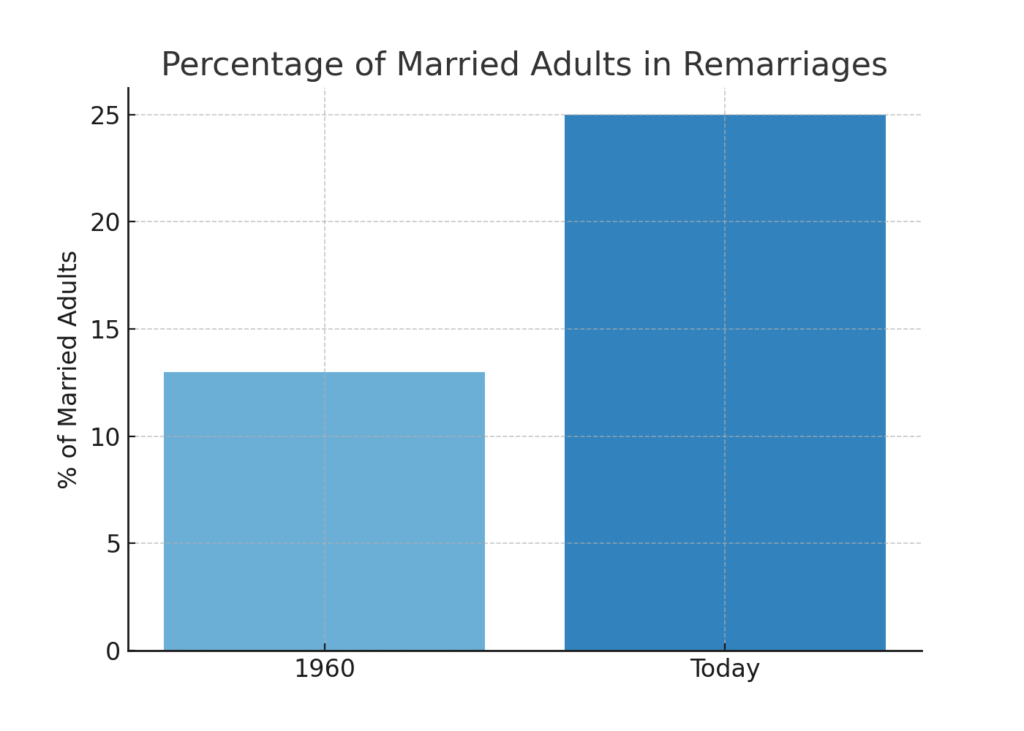
| 9 | 25% of today’s married adults are in remarriages (up from 13% in 1960). | Growth trend shows stepfamilies will continue to expand. |
| 10 | 10–20% of children under 18 live in stepfamily households. | Brands targeting kids should consider blended-family needs. |
| 11 | Half of stepparents live with their stepchildren; half do not. | Important distinction for messaging about home and family life. |
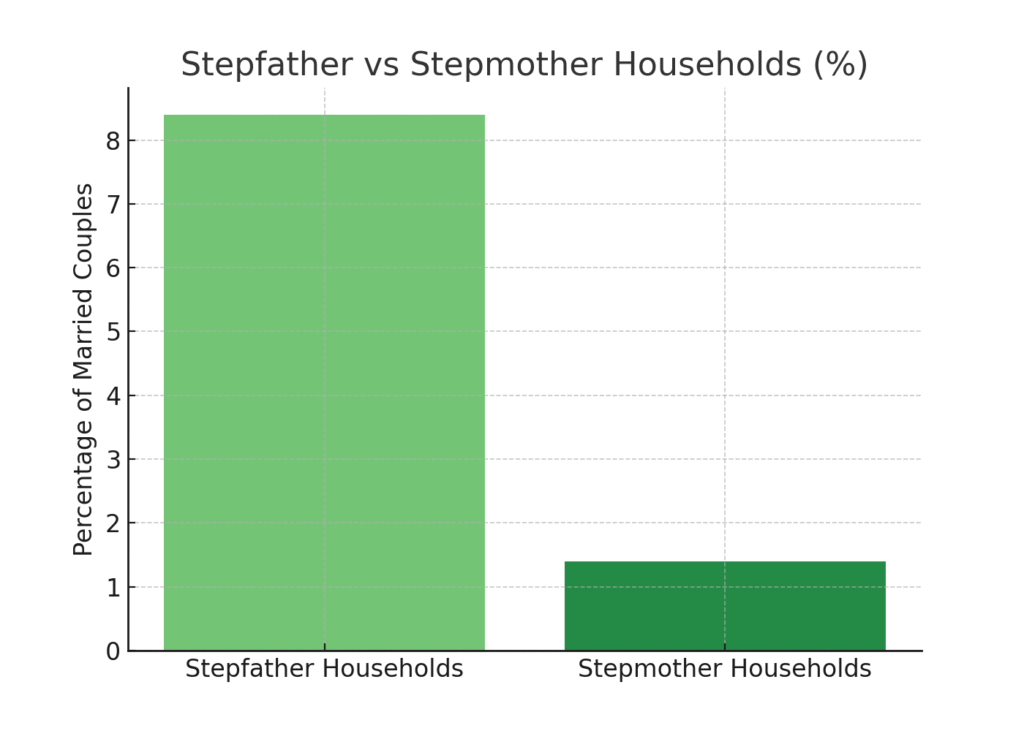
| 12 | Stepfather families = 8.4% of U.S. married couples; stepmother families = 1.4%. | Stepfathers are much more common; campaigns should not over-generalize. |
| 13 | 0.8% of married couples include both parents as stepparents. | Less common, but still a valid family type to represent inclusively. |
| 14 | 59% of stepparents have children outside the home. | Cross-household communication and products/services can be impactful. |
| 15 | Younger, Black adults, and those without college degrees are more likely to have step relatives. | Demographic targeting opportunity for inclusive campaigns. |
| 16 | 11% of Australian couple families with children under 18 have co-resident stepchildren. | Blended family dynamics extend globally, not just U.S.-centric. |
| 17 | Financial contributions vary by gender and relationship type in stepparent households. | Marketers of financial services can tailor messaging accordingly. |
| 18 | Prevalence of stepparents: ~32% in younger households vs. ~4% in older ones. | Generational focus is important—millennials/Gen Z are more likely to be stepparents. |
| 19 | Over 50% of U.S. families are remarried or re-coupled. | Blended households are mainstream, not niche—representation matters. |
| 20 | 75% of divorced women remarry within ten years. | High remarriage rates contribute to continued growth of stepfamilies. |
Top 20 Step-Parent Marketing Statistics 2025
Step-Parent Marketing Statistics #1: 42% Of American Adults Have At Least One Step Relative
Around 42% of American adults say they have at least one step relative in their family. This shows that stepfamilies are not a fringe demographic but part of the mainstream. For marketers, this means that blended family representation is essential in messaging and campaigns. Ignoring this group risks alienating nearly half of the adult population. Including them can build authenticity, trust, and stronger brand loyalty.
Step-Parent Marketing Statistics #2: 30% Of U.S. Adults Have A Step Or Half-Sibling
Nearly 30% of adults in the U.S. report having a step or half-sibling. This highlights the complexity of modern sibling relationships within blended families. Marketers can tap into this reality by creating campaigns that focus on sibling bonds beyond traditional definitions. Such inclusivity allows brands to connect with diverse audiences in more meaningful ways. It reflects the evolving nature of family life that resonates with millions.
Step-Parent Marketing Statistics #3: 18% Have A Living Stepparent
Research shows that 18% of adults currently have a living stepparent. This demonstrates the significant role stepparents play in family life. For marketers, recognizing the presence of stepparents in decision-making processes is crucial. Whether it’s family trips, household purchases, or celebrations, stepparents often influence choices. Campaigns that acknowledge them create stronger emotional connections.
Step-Parent Marketing Statistics #4: 13% Have At Least One Stepchild
About 13% of U.S. adults report having a stepchild. This statistic represents a substantial consumer base with unique family needs. From household products to family entertainment, stepchildren influence spending patterns. Brands that highlight inclusive parenting roles stand out in this competitive space. It also reinforces a brand’s commitment to reflecting diverse family structures.
Step-Parent Marketing Statistics #5: 13% Of U.S. Adults Are Stepparents (~29-30 Million)
Roughly 29–30 million adults in the United States are stepparents. This shows how large the blended parenting market really is. Marketers can develop campaigns specifically tailored for stepparents, offering them recognition and support. Doing so helps brands position themselves as inclusive and empathetic. The payoff is stronger engagement with a massive audience segment.

Step-Parent Marketing Statistics #6: 16% Of U.S. Children Live In Blended Families
Around 16% of children in the U.S. live in blended households. This means millions of kids are growing up with stepparents. Brands selling children’s products must understand the influence of blended families. School supplies, toys, and entertainment campaigns can be crafted with inclusivity in mind. Acknowledging this reality helps brands foster trust with parents and children alike.
Step-Parent Marketing Statistics #7: 84% Of Co-Residential Stepfamilies Are Stepfather Households
Data shows that 84% of stepfamilies with children under 18 involve a stepfather. This makes stepfathers the most common stepparent figure in households. Marketing campaigns that depict stepfathers in caring, central roles will resonate strongly. It is also a chance to break away from outdated stereotypes about fatherhood. Inclusive messaging here can help brands stand out as progressive and relatable.
Step-Parent Marketing Statistics #8: 40% Of New U.S. Marriages Are Remarriages
Nearly 40% of all new marriages in the U.S. are remarriages for one or both partners. This trend signals the continual rise of stepfamilies. Marketers can create campaigns that recognize remarried households as part of today’s normal. Acknowledging remarriage helps brands speak to evolving family dynamics. It also ensures relevance to a wide range of consumers.
Step-Parent Marketing Statistics #9: 25% Of Married Adults Are In Remarriages
One in four married adults today are in remarriages, compared to only 13% in 1960. This growth reflects major cultural shifts over decades. For marketers, the increasing number of remarriages means more blended families to serve. Campaigns that recognize remarriage stories can feel authentic and relatable. It also positions brands as forward-thinking and empathetic.
Step-Parent Marketing Statistics #10: 10–20% Of Children Under 18 Live In Stepfamily Households
Between 10–20% of children under 18 live in stepfamily households. This group forms a significant share of the consumer market for kids’ products. Marketers can create campaigns that acknowledge stepchildren’s role in blended families. Inclusion in messaging can help foster stronger emotional connections. Families will feel seen and valued when represented authentically.
Step-Parent Marketing Statistics #11: Half Of Stepparents Live With Their Stepchildren
Statistics show that about half of stepparents live with their stepchildren, while the other half do not. This highlights the diversity of living arrangements within stepfamilies. For marketers, it is important to recognize both scenarios. Campaigns should not assume co-residency for all families. Instead, brands should reflect flexible and modern family structures.
Step-Parent Marketing Statistics #12: Stepfather Families = 8.4% Of U.S. Married Couples; Stepmother Families = 1.4%
Among U.S. married couples of childbearing age, 8.4% are stepfather families while 1.4% are stepmother families. Stepfather households are significantly more common. This insight helps marketers create realistic portrayals in campaigns. By aligning with real demographics, brands improve relatability. It also ensures authenticity in family-focused storytelling.
Step-Parent Marketing Statistics #13: 0.8% Of Married Couples Include Both Parents As Stepparents
Only 0.8% of married couples involve both partners as stepparents. While rare, this family type still deserves acknowledgment. For marketers, showcasing a variety of family dynamics adds inclusivity. Even smaller segments appreciate being recognized in brand storytelling. This reinforces the brand’s credibility and human connection.
Step-Parent Marketing Statistics #14: 59% Of Stepparents Have Children Outside The Home
Around 59% of stepparents have stepchildren who live outside their household. This statistic shows that blended family life often involves multiple homes. Marketers can tap into this by offering services and products that bridge household boundaries. Technology, communication tools, and travel services are particularly relevant. Campaigns that acknowledge these realities foster deeper trust.
Step-Parent Marketing Statistics #15: Younger, Black Adults, And Those Without College Degrees Are More Likely To Have Step Relatives
Demographics show younger people, Black adults, and those without a college degree are more likely to have step relatives. This highlights the uneven distribution of stepfamily experiences across groups. For marketers, tailoring campaigns to these audiences can maximize relevance. Representation in marketing campaigns also enhances inclusivity. It helps brands show genuine cultural awareness.
Step-Parent Marketing Statistics #16: 11% Of Australian Couple Families Have Co-Resident Stepchildren
In Australia, 11% of couple families with children under 18 have co-resident stepchildren. This shows that stepfamilies are common outside the U.S. as well. Marketers working globally should note the universality of blended families. This provides opportunities to craft campaigns that resonate across cultures. It proves that stepfamily inclusivity is not just an American concern.
Step-Parent Marketing Statistics #17: Financial Contributions Vary By Gender And Relationship Type
Recent studies reveal financial contributions in stepfamilies vary depending on gender and relationship type. Stepparents may provide financial support in different ways compared to biological parents. For marketers in financial services, this insight is critical. Insurance, savings, and educational products can be customized for these families. Targeting based on financial dynamics creates more effective campaigns.
Step-Parent Marketing Statistics #18: Prevalence Of Stepparents Is Higher In Younger Households (~32%) Than Older Ones (~4%)
The prevalence of stepparents is much higher in younger households at 32%, compared to just 4% in older households. This shows generational differences in family dynamics. Marketers targeting millennials and Gen Z should prioritize blended family messaging. Brands that ignore these dynamics risk being outdated. Campaigns that highlight younger families’ realities will feel more relatable.
Step-Parent Marketing Statistics #19: Over 50% Of U.S. Families Are Remarried Or Re-Coupled
More than half of U.S. families are remarried or re-coupled. This demonstrates that blended families are part of mainstream society. Marketers should view them not as exceptions but as the norm. Campaigns reflecting this reality will feel modern and inclusive. Brands ignoring this shift risk appearing disconnected from today’s consumers.
Step-Parent Marketing Statistics #20: 75% Of Divorced Women Remarry Within Ten Years
Research shows that 75% of divorced women remarry within ten years. This contributes to the continued rise of stepfamilies. For marketers, this signals ongoing growth in blended households. Campaigns that include step-parents will remain relevant for decades to come. It also highlights remarriage as a key driver of family evolution.
Why These Statistics Truly Matter
Looking at these step-parent marketing statistics isn’t just about recognizing trends—it’s about honoring the real people who make up blended families. Behind every percentage is a story of love, growth, and sometimes challenge, and marketers who understand that will always have the upper hand. Brands that include stepfamilies in their messaging aren’t just expanding reach—they’re building trust and loyalty with communities that crave representation. Personally, I believe the most successful marketing campaigns are the ones that feel like they “see” us, and these stats are the roadmap to creating exactly that. By leaning into empathy and insight, we can create strategies that don’t just sell, but also resonate on a human level.
SOURCES
- https://www.psychologytoday.com/us/blog/fixing-families/202103/the-challenges-step-parenting (Psychology Today)
- https://pmc.ncbi.nlm.nih.gov/articles/PMC10817771/ (PMC)
- https://ifstudies.org/blog/the-resurgence-of-the-two-parent-family (Institute for Family Studies)
- https://blog.oup.com/2018/09/beyond-brady-bunch-stepfamilies-later-life/ (OUPblog)
- https://blog.heartmanity.com/how-to-navigate-being-a-step-sibling-in-a-blended-family (Heartmanity Blog)
- https://www.lovetoknow.com/parenting/parenthood/blended-family-statistics (LoveToKnow)
- https://www.researchgate.net/publication/375991684_The_Impact_of_Stepfamily_Structures_and_their_Dynamics_on_the_Phenomenon_of_Children_Living_and_Working_on_the_Streets_in_the_North-West_Province_of_South_Africa (ResearchGate)
- https://www.aecf.org/blog/child-well-being-in-single-parent-families (The Annie E. Casey Foundation)
- https://news.unl.edu/article/study-finds-positive-turning-points-in-stepfamilies (Nebraska Today)
- https://theinsightsfamily.com/ (The Insights Family)
- https://theinsightsfamily.com/news/the-insights-family-unveils-industry-impact-2024-report-illuminating-dynamics-within-the-kids-and-fa (The Insights Family)
- https://www.psychologytoday.com/us/blog/fixing-families/202103/the-challenges-step-parenting (Psychology Today)
- https://pmc.ncbi.nlm.nih.gov/articles/PMC10817771/ (PMC)
- https://onlinelibrary.wiley.com/doi/pdf/10.1111/jomf.12931 (Wiley Online Library)