



21 Sep TOP 20 STORE BRAND MARKETING STATISTICS 2025
In today’s retail landscape, shoppers are increasingly turning to private labels for both value and quality, making it the perfect time to dive into the latest store brand marketing statistics. From grocery staples to premium lifestyle products, store brands are no longer seen as second choices but as trusted favorites that often set the standard for affordability and innovation. As a writer who works closely with businesses navigating this shift, I’ve seen firsthand how consumer trust in store brands continues to grow year after year. To put these numbers into perspective, I’ve gathered the most relevant insights that highlight where the market is headed. This article has been crafted with the guidance of a marketing agency in New York that understands how to translate trends into actionable strategies.
Top 20 Store Brand Marketing Statistics 2025 (Editor’s Choice)
| # | Store Brand Marketing Statistic | Insight |
|---|---|---|
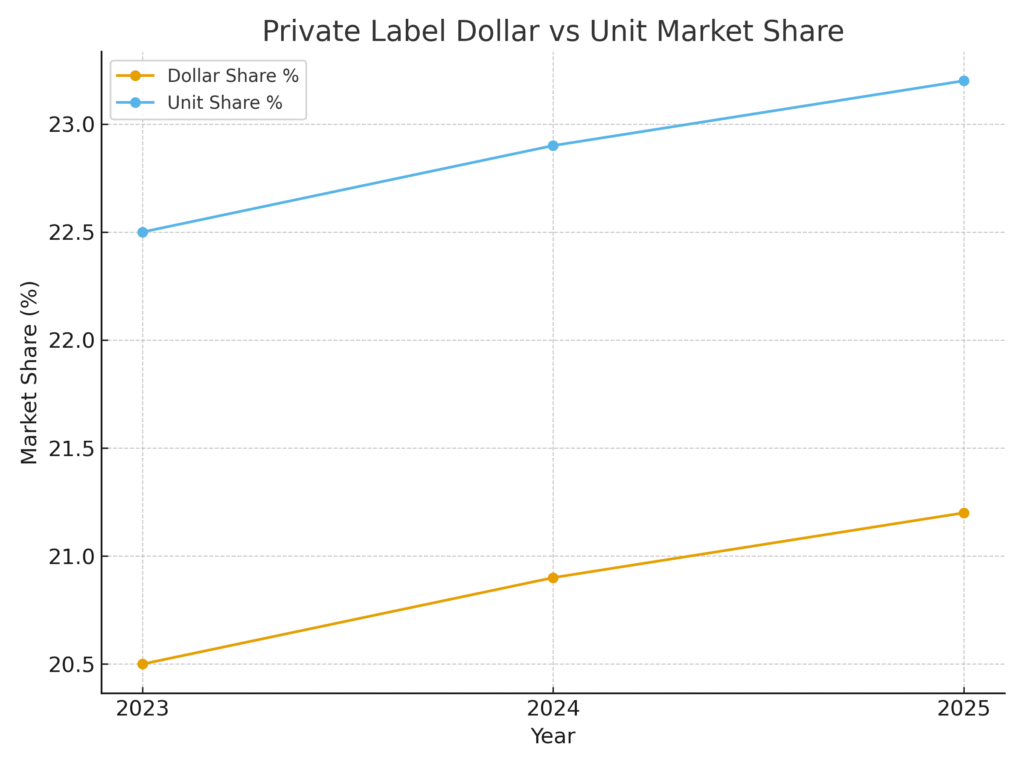
| 1 | Private-label dollar market share reached 21.2% in 2025 | Shows steady growth in consumer adoption of store brands. |
| 2 | Unit market share reached 23.2% in early 2025 | Indicates high penetration across U.S. households. |
| 3 | Private-label industry sales hit $271 billion in 2024 | Highlights strong year-over-year growth momentum. |
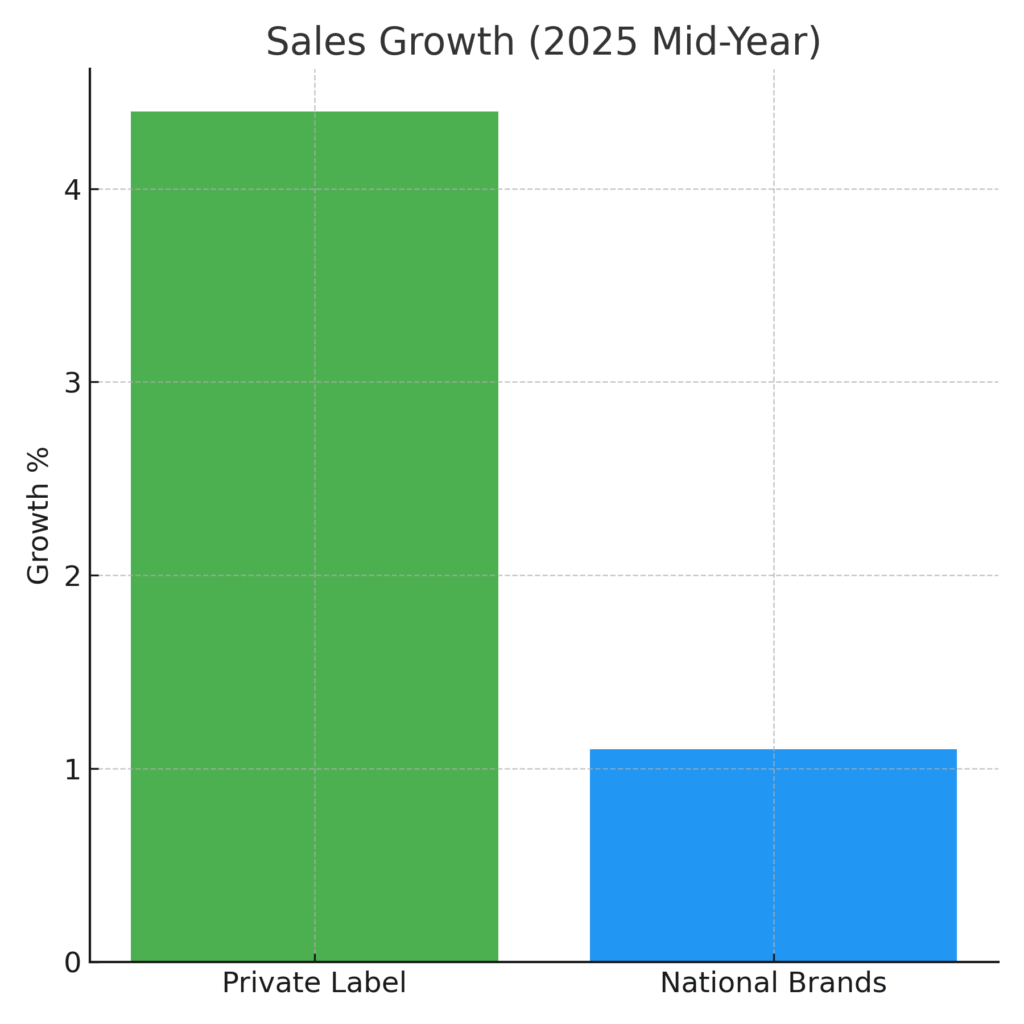
| 4 | Private labels grew 4.4% vs 1.1% for national brands | Demonstrates faster growth pace compared to competitors. |
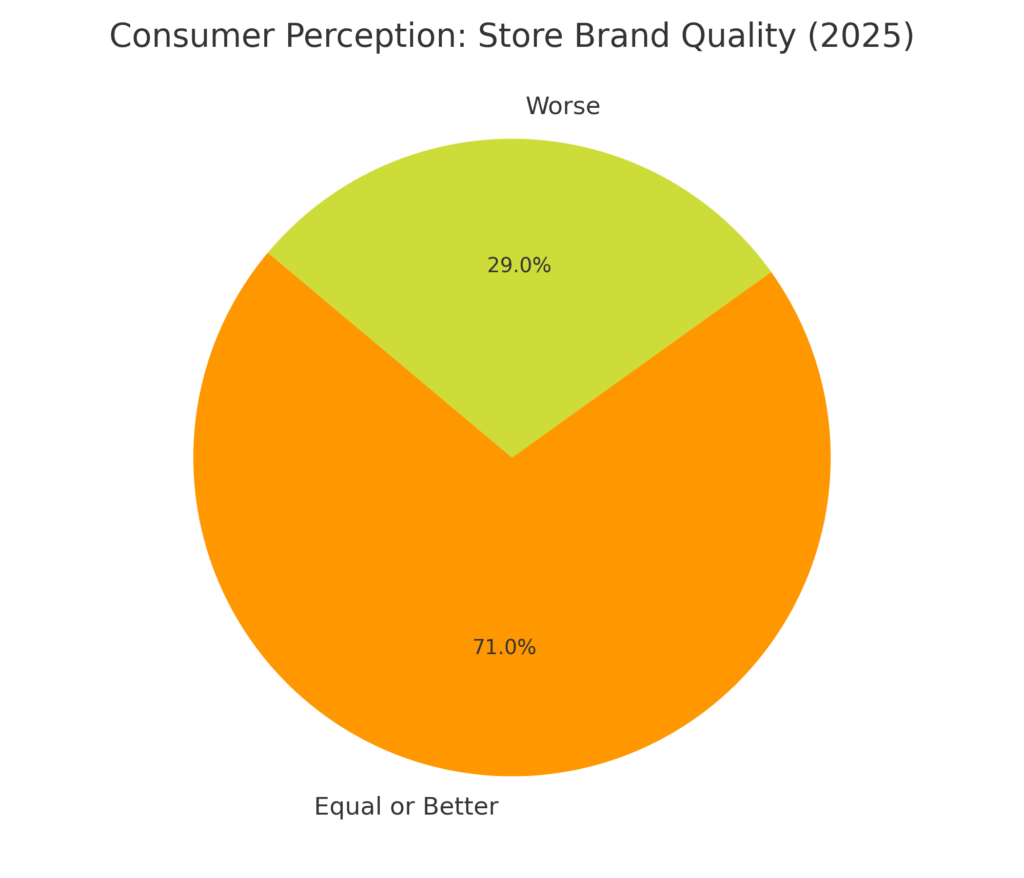
| 5 | 71% of shoppers say private label quality equals or beats national brands | Quality perception has improved drastically. |
| 6 | 59% of U.S. shoppers trust store brands | Trust plays a key role in repeat purchases. |
| 7 | 99.9% U.S. households buy at least one private-label product | Indicates nearly universal adoption nationwide. |
| 8 | Price/value is the top reason for buying (71%) | Affordability drives consumer behavior. |
| 9 | Consumers pay $2+ more for branded goods vs private label | Widening price gap fuels store brand growth. |
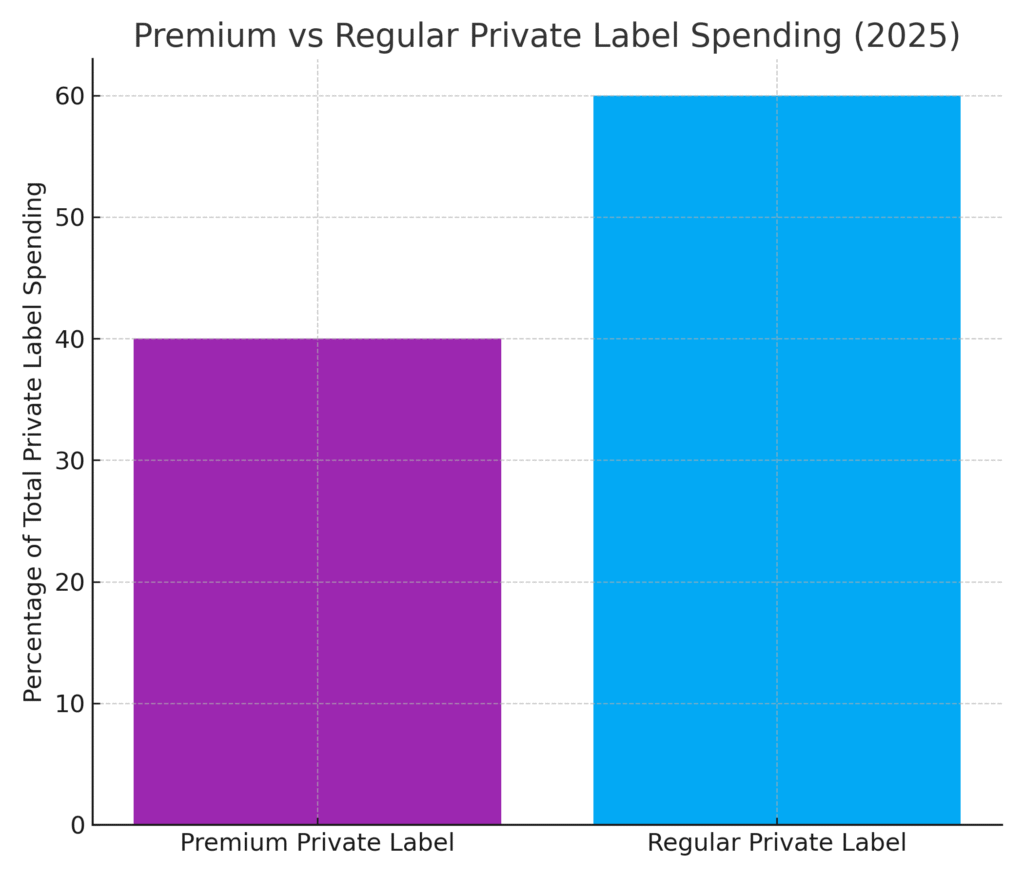
| 10 | Premium private label makes up 40% of spending | Premiumization is redefining store brand positioning. |
| 11 | Retailers launch trend-focused store brands (Walmart Bettergoods, Target Dealworthy) | Innovation is driving visibility and adoption. |
| 12 | Dairy private labels hold ~25% market share | Some categories outperform the average. |
| 13 | Pantry items private label share is ~36.6% in 2023 | Core grocery staples show strongest growth. |
| 14 | 51% of consumers plan to stick with store brands post-inflation | Signals lasting loyalty, not just a price-driven trend. |
| 15 | 27% of shoppers didn’t realize they bought a store brand | Branding sometimes seamlessly blends with national brands. |
| 16 | Store brand penetration in health & beauty is near 99% | Non-food sectors are rapidly catching up. |
| 17 | Price gap between national brands & private labels widened 38% since 2019 | Retail economics favor private labels more each year. |
| 18 | Global forecasts predict U.S. private label share reaching 25-30% | Future projections show strong potential. |
| 19 | Consumers cite packaging & innovation as key adoption drivers | Modern branding strategies elevate store brand image. |
| 20 | Private labels show resilience in e-commerce and social commerce | Omnichannel presence expands reach and engagement. |
Top 20 Store Brand Marketing Statistics 2025
Store Brand Marketing Statistics #1: Private-Label Dollar Market Share Reached 21.2% in 2025
Private-label brands have continued to gain momentum in 2025, achieving a notable 21.2% share of total dollar sales. This shows how consumer confidence in store brands has grown beyond the bargain-bin image of the past. Retailers have invested heavily in product development, leading to more competitive offerings. As a result, many households now actively prefer private labels over national names. This statistic confirms that private labels are now mainstream rather than niche.
Store Brand Marketing Statistics #2: Unit Market Share Reached 23.2% in Early 2025
Unit sales tell an even clearer story of adoption, with private-label products representing 23.2% of units sold. This means nearly one in four items leaving store shelves is a private-label good. Unit growth suggests that value-driven shopping is not just a temporary trend but a sustained behavior. Retailers benefit from this because higher volumes increase their brand loyalty. Consumers are consistently signaling that price and quality balance is what matters most.
Store Brand Marketing Statistics #3: Private-Label Industry Sales Hit $271 Billion in 2024
The private-label industry surged to $271 billion in sales in 2024. This figure reflects both strong consumer demand and aggressive expansion strategies by retailers. More premium categories are being added, from gourmet foods to health and wellness. The industry’s sheer scale makes it one of the fastest-growing segments in retail. The $271 billion milestone highlights how store brands are shaping the future of shopping.
Store Brand Marketing Statistics #4: Private Labels Grew 4.4% vs 1.1% for National Brands
Private labels are outperforming national brands, growing at 4.4% compared to just 1.1% for their counterparts. This faster growth demonstrates how competitive pricing and innovation pay off. Consumers who once only considered national brands are making long-term switches. The data reveals that national brands are losing ground, even in traditional strongholds. Private labels are establishing themselves as equal contenders in nearly every category.
Store Brand Marketing Statistics #5: 71% of Shoppers Say Private-Label Quality Equals or Beats National Brands
Quality perceptions have shifted dramatically, with 71% of shoppers now saying store brands match or exceed national brands. This confidence has been fueled by investments in product testing and better packaging. Consumers are no longer worried about “trading down” when they buy a store brand. Instead, they see it as a smart decision without sacrificing quality. This statistic shows just how far private labels have evolved in reputation.
Store Brand Marketing Statistics #6: 59% of U.S. Shoppers Trust Store Brands
Trust is the foundation of consumer choice, and 59% of Americans say they trust store brands. Retailers have built this trust by consistently delivering on quality and reliability. In many cases, shoppers feel more connected to the retailer’s own brand than to national names. Trust also drives loyalty, keeping consumers returning for repeat purchases. This statistic underscores the importance of retailer credibility in private-label success.
Store Brand Marketing Statistics #7: 99.9% of U.S. Households Buy At Least One Private-Label Product
Almost every U.S. household, at 99.9%, purchases a private-label product. This near-universal adoption reflects the role of store brands as everyday essentials. From food to cleaning supplies, private labels meet household needs across the board. It’s a remarkable penetration rate that few national brands can claim. Store brands are now a part of daily life for virtually all Americans.
Store Brand Marketing Statistics #8: Price/Value Is the Top Reason for Buying (71%)
Value remains king, with 71% of consumers choosing private labels for their affordability. Price sensitivity is especially important in times of inflation. Store brands give consumers a way to stretch their budgets without sacrificing essentials. Retailers leverage this with competitive pricing and frequent promotions. This statistic proves value remains the biggest driver behind private-label growth.
Store Brand Marketing Statistics #9: Consumers Pay $2+ More for Branded Goods vs Private Label
On average, shoppers spend over $2 more on national brands compared to private-label alternatives. This widening gap makes store brands even more attractive. The savings add up significantly for families doing weekly grocery runs. Over time, these cost advantages build consumer loyalty. This shows that price differentiation is a strong long-term advantage for store brands.
Store Brand Marketing Statistics #10: Premium Private Label Makes Up 40% of Spending
Premium private labels now account for 40% of all private-label spending. Retailers are proving that “store brand” doesn’t have to mean basic or low quality. Upscale offerings in food, beauty, and wellness are gaining popularity. This shift redefines private labels as aspirational rather than budget-only. Consumers are showing they’ll pay more if the quality and branding feel premium.
Store Brand Marketing Statistics #11: Retailers Launch Trend-Focused Store Brands
Major retailers are launching trend-based brands, such as Walmart’s Bettergoods and Target’s Dealworthy. These initiatives highlight how innovation fuels private-label growth. Instead of copying national brands, retailers are now creating their own trends. This move positions store brands as leaders in their categories. It demonstrates how private labels are evolving into cultural and lifestyle brands.
Store Brand Marketing Statistics #12: Dairy Private Labels Hold ~25% Market Share
In categories like dairy, private labels command about 25% of the market. Essentials such as milk, cheese, and yogurt are dominated by store brands. Shoppers trust retailers for freshness and affordability in these staples. Category-specific dominance reflects how private labels are entrenched in daily shopping. Dairy’s success sets a model for other categories to follow.
Store Brand Marketing Statistics #13: Pantry Items Private Label Share is ~36.6% in 2023
Pantry goods reached a 36.6% private-label share in 2023. Core grocery items like bread, baking mixes, and snacks are central to this growth. Store brands thrive in categories where consistency and price matter most. Shoppers view them as reliable, everyday purchases. This data highlights pantry staples as a stronghold for private labels.
Store Brand Marketing Statistics #14: 51% of Consumers Plan to Stick With Store Brands Post-Inflation
Even as prices stabilize, 51% of shoppers plan to keep buying private labels. This loyalty suggests the shift to store brands isn’t temporary. Once consumers discover value and quality, they’re less likely to return to higher-priced brands. It’s a win for retailers who have invested in building trust. The statistic signals long-term stability for private-label adoption.
Store Brand Marketing Statistics #15: 27% of Shoppers Didn’t Realize They Bought a Store Brand
Surprisingly, 27% of consumers didn’t recognize they were buying a store brand. Subtle branding often blends with national brand packaging. This suggests private labels are seen as “just another product” rather than inferior. It also shows that store brands can compete seamlessly without shouting their identity. This kind of unnoticed success works to retailers’ advantage.
Store Brand Marketing Statistics #16: Store Brand Penetration in Health & Beauty Is Near 99%
Health and beauty products are another arena where private labels excel, with nearly 99% penetration. Consumers are more open to trying store-brand vitamins, skincare, and personal care items. The trust built in grocery aisles extends to these sensitive categories. This penetration shows that private labels are breaking stigma in non-food products. It reinforces how broad their reach has become.
Store Brand Marketing Statistics #17: Price Gap Between National Brands & Private Labels Widened 38% Since 2019
Since 2019, the price gap has widened by 38%, further favoring private labels. Rising national brand costs have driven more shoppers to alternatives. The increasing affordability advantage strengthens private labels’ positioning. This widening margin encourages trial and eventual loyalty. The data reflects a long-term trend that benefits retailers significantly.
Store Brand Marketing Statistics #18: Global Forecasts Predict U.S. Private Label Share Reaching 25–30%
Experts predict U.S. private-label market share could reach 25–30% soon. This projection shows there’s still room for growth in the category. International examples, like Europe, suggest even higher adoption potential. For U.S. retailers, this represents a massive opportunity. Store brands are poised to capture an even greater share of consumer spending.
Store Brand Marketing Statistics #19: Consumers Cite Packaging & Innovation as Key Adoption Drivers
Packaging and innovation are increasingly cited as reasons to choose private labels. Sleek design and trendy flavors appeal to younger demographics. Retailers understand that presentation matters as much as price. Innovative products help store brands move beyond being seen as “cheap alternatives.” This highlights the role of creativity in private-label marketing.
Store Brand Marketing Statistics #20: Private Labels Show Resilience in E-Commerce and Social Commerce
Store brands are proving resilient in online shopping and social commerce. Retailers integrate their brands into digital platforms with strong results. Online visibility allows private labels to compete directly with big names. Social media marketing also elevates their reach and relevance. This adaptability ensures private labels will thrive in the digital future.
Why These Store Brand Marketing Statistics Matter
Looking over these trends, one thing becomes clear—store brands aren’t just filling shelves, they’re reshaping consumer loyalty and redefining value in retail. The statistics we’ve explored show how powerful this shift has become, especially as more shoppers lean toward affordability without compromising quality. For me, the takeaway is deeply personal: these numbers reflect the everyday choices families, professionals, and individuals are making at the checkout line, proving that store brands are now a cornerstone of modern shopping habits. If you’re a retailer or brand strategist, understanding these dynamics isn’t optional—it’s essential for staying ahead. By connecting with experts who live and breathe these shifts, like a trusted marketing agency, you’ll find smarter ways to align your strategy with what consumers truly want.
SOURCES
- https://customcy.com/blog/private-label-statistics/ (Customcy)
- https://wonnda.com/magazine/private-label-market/ (Wonnda)
- https://www.profitero.com/blog/stop-defending-and-start-innovating-win-back-market-share-from-private-label-with-shopper-focused-moments (Profitero)
- https://numerator.com/private-label-trends/ (Numerator)
- https://www.convenience.org/Media/Daily/2025/May/8/5-Private-Label-Sales_Research (Convenience)
- https://www.invoca.com/blog/retail-marketing-statistics (Invoca)
- https://www.foodandwine.com/private-label-grocery-brands-nielseniq-report-2025-11753077 (Food & Wine)
- https://www.apnews.com/article/80e8f75d766b17892a70409b305de714 (AP News)
- https://www.innovamarketinsights.com/trends/global-private-label-trends/ (Innova Market Insights)
- https://blog.tridge.com/blog-posts/private-label-insights-for-retail-merchandisers-2023 (blog.tridge.com)
- https://datahorizzonresearch.com/private-label-market-2524 (DataHorizzon Research)
- https://customcy.com/blog/private-label-statistics/
- https://wonnda.com/magazine/private-label-market/
- https://numerator.com/private-label-trends/ (Numerator)
- https://www.profitero.com/blog/stop-defending-and-start-innovating-win-back-market-share-from-private-label-with-shopper-focused-moments (Profitero)
- https://www.foodandwine.com/private-label-grocery-brands-nielseniq-report-2025-11753077 (Food & Wine)