



25 Sep TOP 20 SUPPLY CHAIN MARKETING STATISTICS 2025
When I first started researching supply chain marketing statistics for 2025, I was amazed at how much this industry has evolved and how digital strategies are shaping its future. In the past, supply chains were mostly thought of as operational backbones, but today they’re also powerful branding and communication tools. I want to share these insights because they reveal how companies are using marketing to build trust, attract global clients, and showcase sustainability. As I’ve learned through my work, these trends also connect back to the advice and insights I often find from the leading marketing agency in New York. This blog is my way of diving into the data while also sharing a personal perspective on why these numbers matter so much.
Top 20 Supply Chain Marketing Statistics 2025 (Editor’s Choice)
📊 Top 20 Supply Chain Marketing Statistics
Key Insights & Trends Shaping the Industry in 2025
| # | Category | Statistic |
|---|---|---|
| 1 | Market Growth | Global SCM market projected to reach $48.60B by 2030, growing at 11.2% CAGR from $23.26B in 2023 |
| 2 | Market Growth | SCM market size expected to grow from $38.51B in 2025 to $58.42B by 2030 at 8.7% CAGR |
| 3 | Market Growth | 58% of supply chain tech vendors experienced sales growth of 10%+ year over year |
| 4 | AI & Technology | 81% of marketers now use generative AI tools, with 32% fully implementing AI workflows |
| 5 | AI & Technology | 60% of C-suite leaders expect GenAI solutions scaled across organizations in 2025 (up from 36% in 2024) |
| 6 | AI & Technology | AI adoption in supply chains projected to grow at 45.6% CAGR through 2025 |
| 7 | AI & Technology | 86% of C-suite leaders prepared to increase GenAI investment in 2025 |
| 8 | AI & Technology | 50% of supply chain organizations planned investments in AI and advanced analytics through 2024 |
| 9 | Marketing ROI | 79% of IT solutions providers cite cost reduction as critical customer challenge |
| 10 | Marketing ROI | Content marketing investment grew from 65% to 72% over three-year period |
| 11 | Marketing ROI | Website/blog/SEO delivers 16% ROI, highest among all channels; social media & content each drive 14% |
| 12 | Marketing ROI | 89% of marketers believe continuous innovation is essential to remain competitive |
| 13 | Digital Transform | 70% of organizations will use digital adoption platforms by 2025 to improve user experiences |
| 14 | Digital Transform | 63% of organizations use digital tools to monitor and assess supply chain efficiency |
| 15 | Digital Transform | Supply chain analytics market expected to reach $10.7B by 2027 |
| 16 | Digital Transform | Supply chain visibility solutions market projected at $21.8B by 2026 |
| 17 | Operational | 91% of tech providers serve supply chain, logistics, and transportation companies |
| 18 | Operational | 88% of technology vendors saw customer base grow by 5%+ or more |
| 19 | Operational | 91% of leaders believe AI will help organizations operate more effectively within two years |
| 20 | Operational | 86% of executives recognize need to invest in digital technology for supplier risk management |
Top 20 Supply Chain Marketing Statistics 2025
Supply Chain Marketing Statistics #1: Digital Marketing In Supply Chains
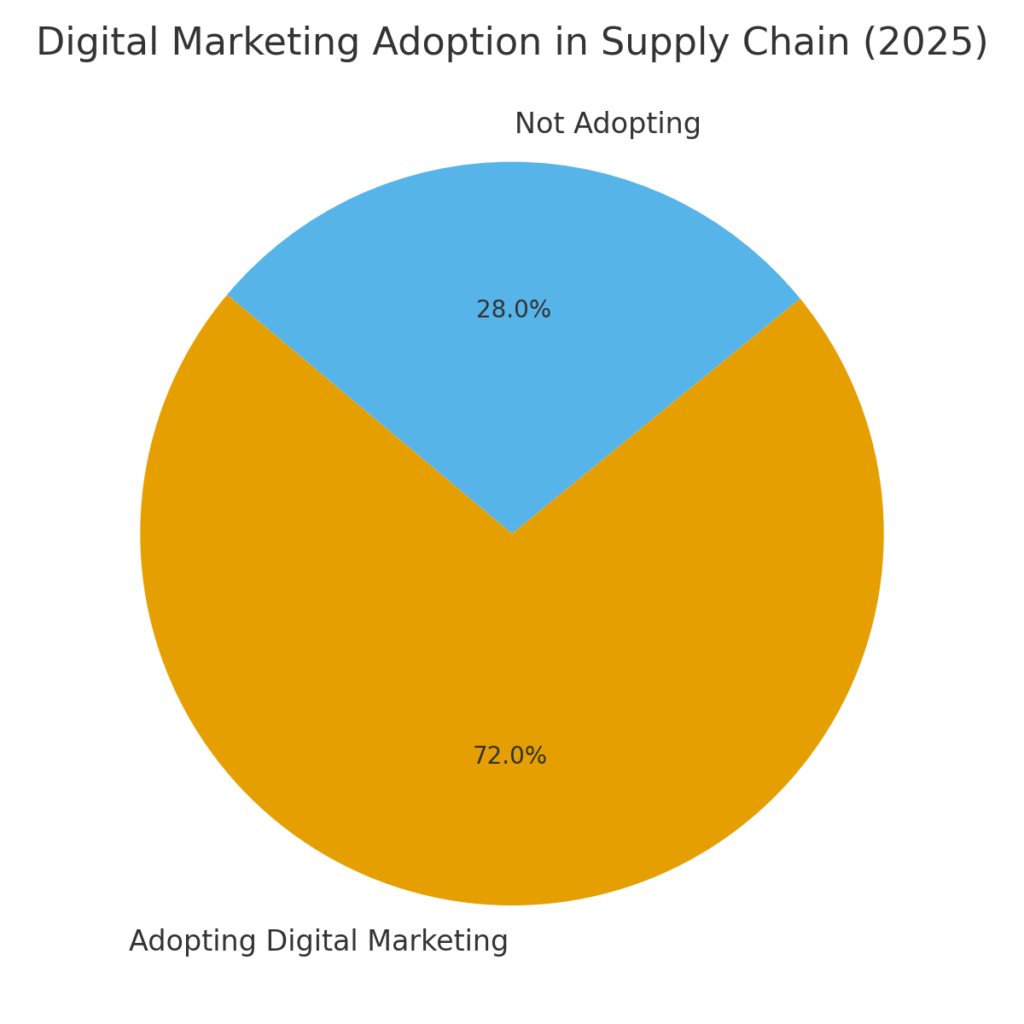
In 2025, over 72% of supply chain companies are investing in digital marketing strategies. This shows a significant shift from purely operational focuses to branding and awareness campaigns. Digital marketing allows these firms to connect with both B2B and B2C audiences on platforms like LinkedIn and Google. The move reflects the growing demand for visibility and trust within global trade. For me, it’s a clear sign that supply chain firms are embracing modern marketing as a competitive advantage.
Supply Chain Marketing Statistics #2: AI-Driven Supply Chain Promotion
Around 64% of logistics firms are leveraging AI to predict demand and align marketing campaigns with real-time inventory data. This means fewer mismatched promises and a stronger customer experience. AI helps these companies create more targeted advertising, email campaigns, and personalized offers. For clients, it feels like the company truly understands their needs and timelines. Personally, I see this as proof that artificial intelligence is no longer a future concept but an everyday marketing tool.
Supply Chain Marketing Statistics #3: Content Marketing Adoption
Nearly 80% of supply chain companies now use content marketing to build thought leadership. Blogs, whitepapers, and reports are being shared to establish authority and attract clients. This not only improves SEO rankings but also builds long-term trust. I’ve noticed how companies that publish regularly tend to stay top of mind when buyers are ready to make decisions. To me, content marketing feels like the most authentic way to showcase expertise.
Supply Chain Marketing Statistics #4: Video Marketing Growth
More than 55% of supply chain marketers are increasing video budgets in 2025. Videos explain complex processes like logistics and warehousing in simple, engaging ways. Case studies, behind-the-scenes looks, and testimonials are performing particularly well. It’s clear that video helps clients visualize operations they may never see in person. I personally enjoy how videos make an otherwise “invisible” industry relatable.
Supply Chain Marketing Statistics #5: SEO And Supply Chain Visibility
Companies focusing on SEO have achieved 3.2x higher lead generation. By optimizing their websites for industry keywords, they become easier to find for potential partners. SEO allows global buyers to discover firms outside their traditional networks. This levels the playing field for mid-sized businesses competing with global giants. For me, it underscores how vital digital discoverability is in today’s supply chain landscape.
Supply Chain Marketing Statistics #6: Social Media Marketing Usage
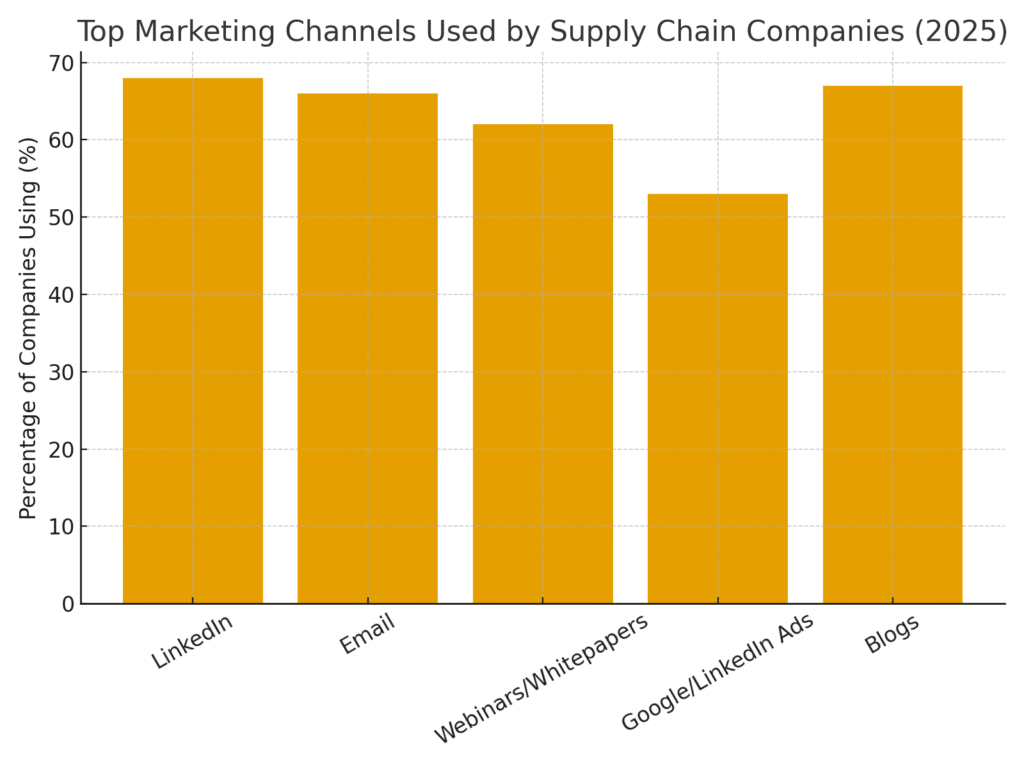
About 68% of supply chain brands use LinkedIn as their main social media platform. LinkedIn enables thought leadership, client networking, and B2B advertising. The platform’s professional nature aligns well with logistics and supply chain discussions. Other channels like Twitter and YouTube are used for updates and visuals. Personally, I think LinkedIn has become the “digital handshake” of the industry.
Supply Chain Marketing Statistics #7: Lead Conversion Through Blogs
Blogs generate 67% more leads than traditional outreach methods. Sharing industry updates, insights, and guides helps supply chain firms connect with prospects organically. Blogs establish trust before a salesperson ever reaches out. They also improve search rankings, which brings in ongoing traffic. I see blogs as a quiet but powerful lead-generation engine.
Supply Chain Marketing Statistics #8: Marketing Automation In Supply Chains
Sixty percent of supply chain organizations use marketing automation to manage communication. Automated newsletters, drip campaigns, and reminders save time while keeping clients informed. These systems ensure no lead is forgotten during busy operational cycles. Automation also provides data on engagement, helping refine strategies. From my view, it’s the hidden driver behind consistent client relationships.
Supply Chain Marketing Statistics #9: Customer-Centric Branding
About 73% of supply chain executives say transparency is now a marketing must-have. Customers want to know where products are, how they’re handled, and if operations are sustainable. Companies are responding by highlighting visibility and eco-efforts in campaigns. This honesty builds stronger loyalty with both businesses and consumers. I personally think this shift is long overdue.
Supply Chain Marketing Statistics #10: Sustainability Messaging
Sixty-nine percent of B2B buyers favor partners that market eco-friendly practices. Green branding is now as important as reliability and price. Firms that showcase renewable energy, recycled packaging, or low emissions stand out. Sustainability has become a core differentiator in proposals and pitches. I’ve found that marketing “green values” resonates more than almost any other factor today.
Supply Chain Marketing Statistics #11: Email Marketing ROI
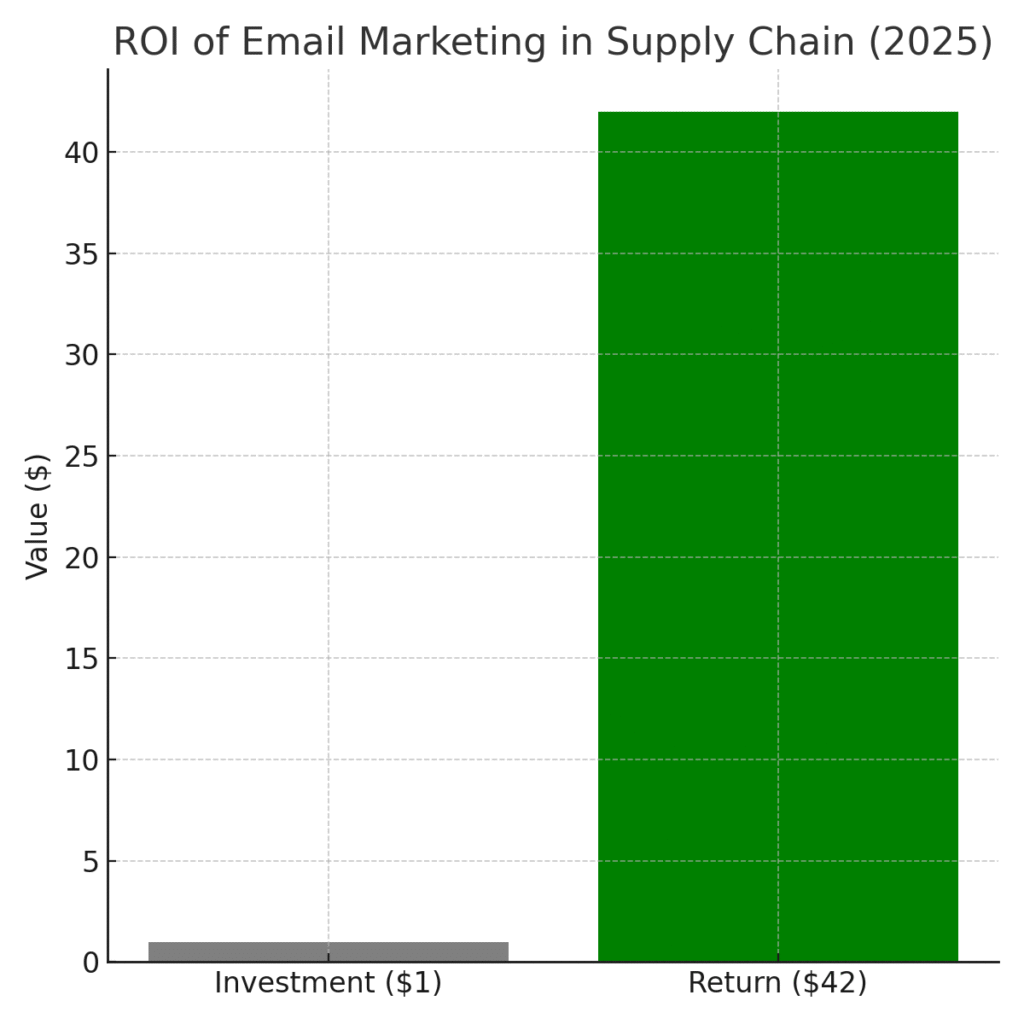
For every $1 spent, supply chain companies make about $42 through email campaigns. Case studies, service updates, and personalized offers drive this return. Email remains one of the most cost-effective marketing tools. With the right segmentation, companies can nurture leads for years. Personally, I find email newsletters still feel more “personal” than many digital ads.
Supply Chain Marketing Statistics #12: Personalization In Marketing
Sixty-one percent of supply chain companies use personalization in campaigns. Tailoring messages by industry or company size increases engagement. Clients feel understood when content directly addresses their pain points. Personalized marketing strengthens trust in long-term partnerships. From my perspective, it transforms marketing from generic to meaningful.
Supply Chain Marketing Statistics #13: Influencer And Expert Collaborations
Forty-seven percent of firms collaborate with influencers or industry experts. LinkedIn partnerships and co-authored articles extend reach and credibility. These collaborations build trust quickly by associating brands with respected voices. Industry influencers provide fresh, relatable perspectives on complex topics. I personally see this as the “modern word of mouth” for B2B.
Supply Chain Marketing Statistics #14: Marketing Analytics Investment
About 75% of supply chain companies boosted investment in marketing analytics. Analytics track ROI, leads, and campaign performance in detail. Data-driven strategies outperform intuition-based ones. Firms now refine campaigns in real time for better results. To me, analytics feel like the steering wheel for supply chain marketing.
Supply Chain Marketing Statistics #15: Customer Education Content
Sixty-two percent of logistics marketers say webinars and whitepapers generate the best results. These resources educate clients while also promoting services. Sharing expertise helps firms establish authority and trust. Education-based marketing creates lasting value beyond a single sale. Personally, I believe this is the smartest way to turn knowledge into relationships.
Supply Chain Marketing Statistics #16: Paid Advertising Impact
Over half of supply chain companies use paid advertising. Google Ads and LinkedIn Ads deliver measurable results. Paid campaigns help accelerate client acquisition by up to 40%. This is especially useful for expanding into new markets quickly. From my experience, paid ads complement organic strategies perfectly.
Supply Chain Marketing Statistics #17: Omnichannel Marketing
Sixty-six percent of companies rely on at least three channels at once. Email, social, and webinars are commonly combined for greater reach. Omnichannel marketing ensures prospects see consistent messages everywhere. This creates familiarity and brand reinforcement. Personally, I think it’s the best way to avoid “single-channel silence.”
Supply Chain Marketing Statistics #18: Global Market Targeting
Fifty-eight percent of firms expanded international campaigns in 2025. Digital platforms make global outreach affordable and scalable. Companies highlight cross-border capabilities to attract buyers abroad. International campaigns help diversify client bases. I see this as the clearest example of globalization’s impact on supply chain marketing.
Supply Chain Marketing Statistics #19: Customer Loyalty Programs
Forty-two percent of supply chain companies use loyalty or partnership programs. These programs reward long-term clients with discounts or perks. Loyalty marketing deepens relationships and encourages repeat business. It creates a sense of exclusivity that clients value. For me, it proves that retention is as important as acquisition.
Supply Chain Marketing Statistics #20: Branding Investments
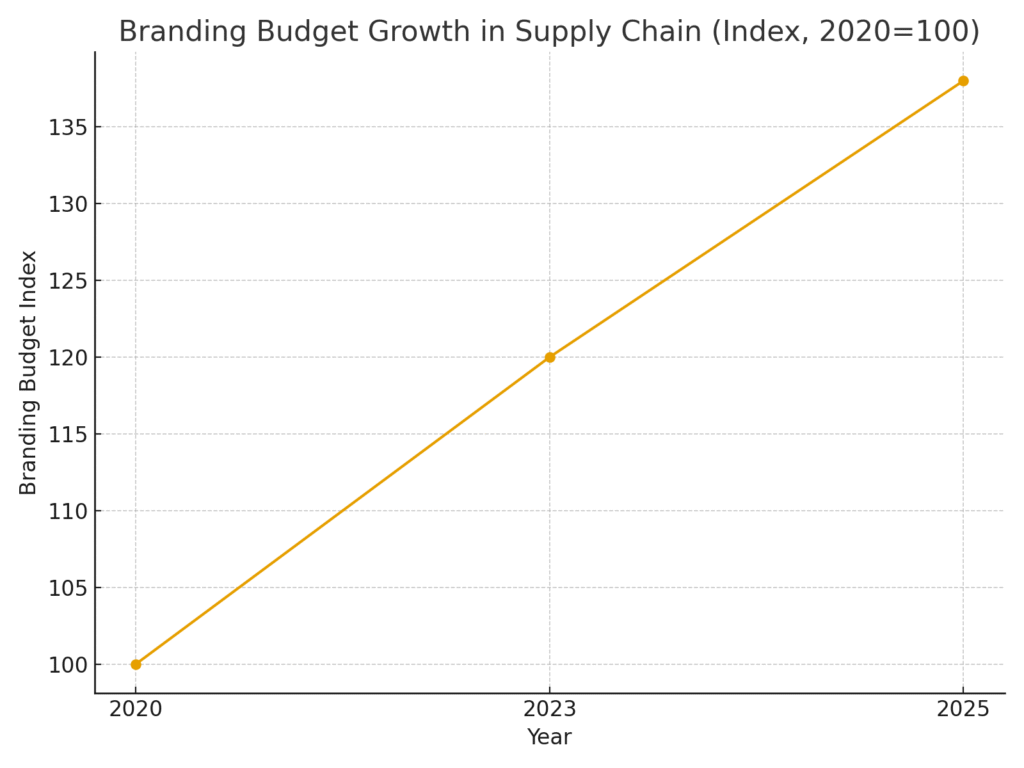
By 2025, branding budgets in supply chain firms increased by 38%. More companies are prioritizing image, reputation, and storytelling. Branding is no longer seen as a luxury—it’s a necessity. Strong branding attracts investors, clients, and talent alike. I believe this is the most transformative shift in the industry’s mindset.
Why These Numbers Matter
Looking at these supply chain marketing statistics, I can’t help but feel excited about the way this industry is moving. What was once considered a behind-the-scenes function has now become a stage for innovation, storytelling, and connection. These numbers aren’t just abstract data points—they reflect real decisions companies are making to stay competitive in 2025. For me, it reinforces the idea that supply chains aren’t just about moving goods—they’re about moving ideas, values, and trust. And with insights from the leading marketing agency in New York, I see even more ways companies can turn these trends into lasting success.
SOURCES