



27 Sep TOP 20 SUSTAINABLE ENERGY MARKETING STATISTICS 2025
As I’ve been diving deeper into sustainability, I’ve realized how important it is to back up conversations with data. That’s why I wanted to put together this collection of the latest sustainable energy marketing statistics. These insights really highlight how renewable energy and eco-conscious consumer choices are shaping industries, from power generation to brand loyalty. Working closely with the leading marketing agency in New York has also shown me just how impactful these numbers can be when guiding campaigns, strategies, and authentic storytelling. I’m sharing these stats because I know how valuable they are for businesses, marketers, and anyone passionate about sustainable growth.
Top 20 Sustainable Energy Marketing Statistics 2025 (Editor’s Choice)
🌱 Top 20 Sustainable Energy Marketing Statistics 2025
Data-Driven Insights Shaping the Future of Green Energy
| Rank | Category | Key Statistic |
|---|---|---|
| 1 | Market Growth | Global renewable energy market valued at $1.51 trillion in 2024, projected to reach $4.86 trillion by 2033 (14.9% CAGR) |
| 2 | Market Growth | U.S. deployed $338 billion in energy technology financing in 2024, up from $303 billion in 2023 |
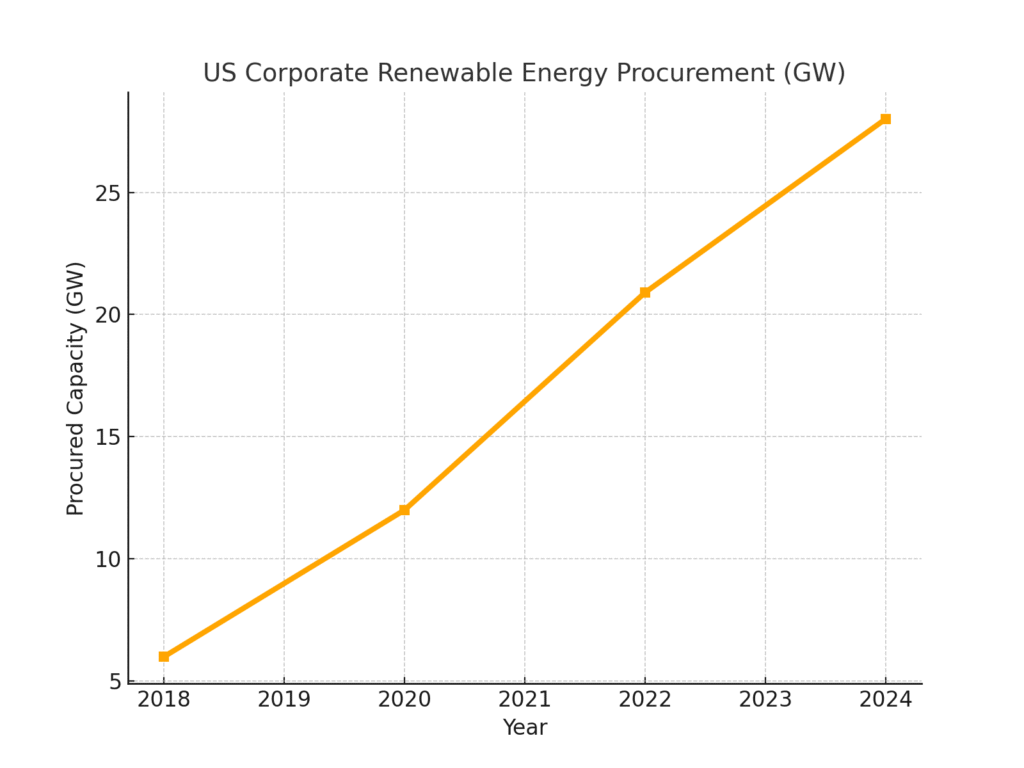
| 3 | Market Growth | Corporate renewable energy procurement hit record 28 GW in 2024, up 34% from 2022 |
| 4 | Market Growth | Nearly $2 trillion invested annually in renewable energy, nearly doubling fossil fuel investments |
| 5 | Energy Production | 48.4 GW of new power generation capacity commissioned in 2024 (highest since 2003), 71% from wind and solar |
| 6 | Energy Production | Clean power surpassed 40% of global electricity in 2024 |
| 7 | Energy Production | Renewable energy's share grew to 24% of U.S. consumption, rising 10.2% year-on-year |
| 8 | Energy Production | Coal-fired generation declined from 33% to 15% of U.S. power mix over the past decade |
| 9 | Consumer Behavior | 73% of global consumers willing to change consumption habits to reduce environmental impact |
| 10 | Consumer Behavior | 72% of global consumers willing to pay more for sustainable products |
| 11 | Consumer Behavior | Consumers willing to pay average of 9.7% premium for sustainably produced goods |
| 12 | Consumer Behavior | 85% of consumers experiencing firsthand effects of climate change in daily lives |
| 13 | Consumer Behavior | 60% of Millennials and 59% of Gen Z willing to pay extra for sustainable products |
| 14 | Consumer Behavior | 74% of consumers' purchasing decisions influenced by environmental impact concerns |
| 15 | Marketing Performance | Products with ESG claims accounted for 56% of all growth over 5 years (18% more than expected) |
| 16 | Marketing Performance | Sustainable products achieved 9.9% CAGR vs 6.4% for conventional products (2023) |
| 17 | Marketing Performance | 79% of consumers want easier ways to identify environmentally friendly companies |
| 18 | Industry Impact | Sustainable energy jobs grew 4.2% in 2023 (2x overall economy rate), 3+ million Americans employed |
| 19 | Industry Impact | 72% of power/utilities organizations have carbon emission reduction strategies |
| 20 | Industry Impact | China leads with 60% of global renewable capacity (2023), adding 310+ GW in 2024 |
Top 20 Sustainable Energy Marketing Statistics 2025
Sustainable energy marketing statistics #1 – Global renewable energy capacity additions reached 582 GW in 2024
Global renewable energy capacity surged in 2024, hitting 582 GW of new installations. This was nearly a 20% increase compared to the year before, showing the accelerating global shift. For marketers, this growth demonstrates not only the demand but also the urgency of energy transitions. Campaigns that emphasize large-scale adoption often resonate with both policy makers and eco-conscious consumers. It is a reminder that renewable energy is no longer niche—it’s mainstream.
Sustainable energy marketing statistics #2 – 91% of new renewable projects were cheaper than fossil fuel alternatives in 2024
Cost competitiveness is a game changer in energy marketing. When 91% of new projects come in cheaper than fossil fuels, the financial argument aligns with the environmental one. For businesses, this creates a compelling value proposition to highlight in branding and campaigns. It reassures investors and consumers alike that sustainability doesn’t mean compromise. Marketers can lean into this by framing renewables as the smarter economic choice.
Sustainable energy marketing statistics #3 – Solar PV accounted for 77.8% of new renewable capacity in 2024
Solar continues to dominate the renewable energy space, with nearly 78% of new capacity in 2024 coming from PV. This shows how accessible, scalable, and effective solar solutions have become worldwide. In marketing, emphasizing solar’s accessibility and cost-effectiveness resonates strongly with consumers. It also reflects the aspirational element—families and businesses envision solar panels on their rooftops. Solar is now a symbol of empowerment and progress.
Sustainable energy marketing statistics #4 – Global renewable energy market size reached USD 1.51 trillion in 2024
The renewable market has become a trillion-dollar industry, valued at $1.51 trillion in 2024. A 14.9% CAGR growth projection to 2033 indicates long-term opportunity. For marketers, this scale provides confidence in messaging sustainability as a powerful and profitable trend. It attracts investors who see renewable energy as a safe bet for the future. Positioning brands within such a booming market boosts credibility.
Sustainable energy marketing statistics #5 – Corporate renewable procurement in the U.S. hit 28 GW in 2024
Corporate commitments are shaping the renewable narrative, with U.S. companies securing 28 GW of clean energy in 2024. That’s a record-breaking move that emphasizes responsibility and innovation. For marketing, corporate storytelling can highlight leadership in sustainability. Companies using renewables are not only reducing emissions but also enhancing their brand value. This trend showcases that going green has become a competitive advantage.
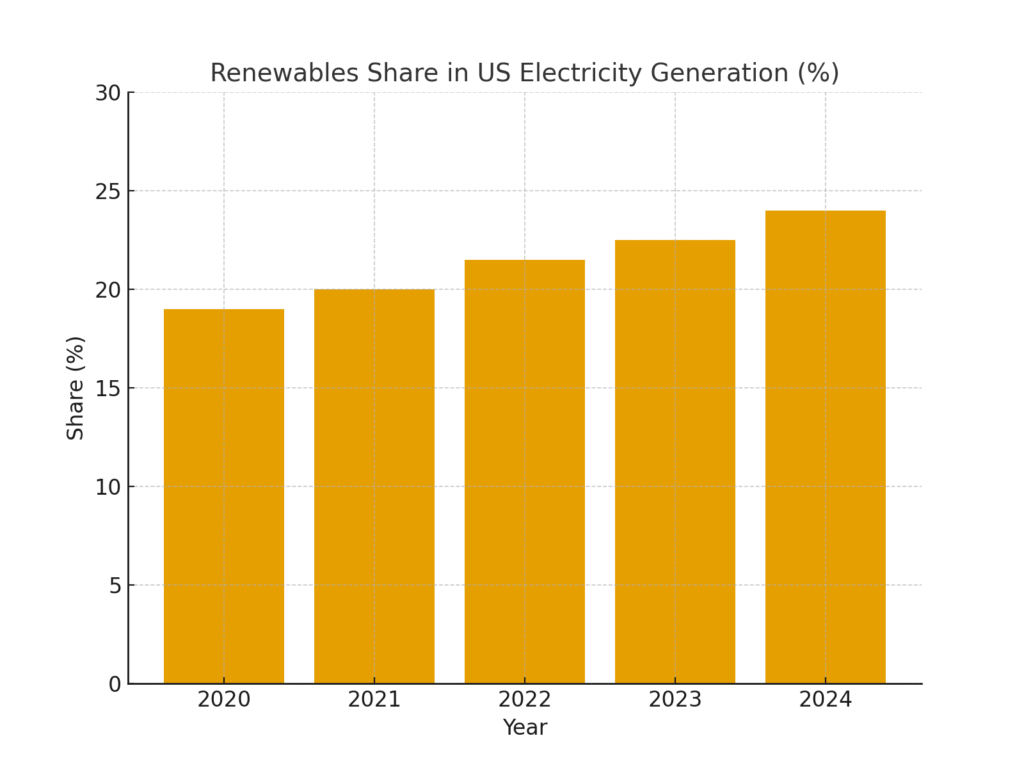
Sustainable energy marketing statistics #6 – Renewables made up 24% of U.S. electricity generation in 2024
Nearly a quarter of U.S. electricity in 2024 came from renewables. This milestone reflects how renewable energy is no longer experimental—it’s becoming the backbone of the grid. For marketing campaigns, this provides credibility when promoting renewable-powered services or products. Consumers want to know their daily lives are supported by clean power. It also opens opportunities for local energy storytelling.
Sustainable energy marketing statistics #7 – Non-fossil sources drove nearly half of global demand growth in 2024
Non-fossil energy—renewables, nuclear, and bioenergy—contributed almost half of energy demand growth globally. This reflects a massive pivot toward cleaner alternatives. For marketers, it underlines the global momentum that’s difficult to ignore. Campaigns can highlight this as part of a broader, unstoppable shift. It reassures customers that they are part of a collective movement.
Sustainable energy marketing statistics #8 – U.S. wind reached 153.8 GW while solar hit 128.2 GW in 2024
The U.S. continued expanding its wind and solar portfolio, with wind at 153.8 GW and solar at 128.2 GW by year’s end. These numbers show the balance of technologies in diversifying clean power. For marketing, this allows brands to tell stories about the breadth of renewable options. Consumers often respond positively to choice and innovation. It also shows regional opportunities to highlight specific energy strengths.
Sustainable energy marketing statistics #9 – Residential solar adoption projected to rise from 14% to 25% in 2024
Home solar adoption in the U.S. is set to nearly double within a year. This trend reflects growing consumer confidence and affordability. Marketers can highlight independence, cost savings, and environmental benefits in campaigns. The aspirational element of homeowners taking control of energy resonates deeply. It shows sustainability as both personal and powerful.
Sustainable energy marketing statistics #10 – 9.7 million customers purchased renewable energy in 2023 voluntary markets
Nearly 10 million consumers participated in voluntary green energy markets in 2023. That means millions actively chose clean power despite not being required. This reflects a strong marketing message about consumer empowerment. Brands can frame renewables as a conscious lifestyle choice. It’s a sign that consumer demand is creating market pull, not just policy push.
Sustainable energy marketing statistics #11 – Consumers are willing to pay 9.7% more for sustainable goods in 2024
Despite inflationary pressures, PwC found consumers will pay almost 10% more for sustainable products. This willingness creates pricing flexibility for businesses embracing sustainability. Marketers can use this to justify premium branding. It also reflects how values-driven marketing resonates with modern consumers. Highlighting this data helps overcome fears that sustainability deters buyers.
Sustainable energy marketing statistics #12 – 55% of Americans would pay extra for eco-friendly products
More than half of Americans are ready to spend more for eco-conscious products. This demand should guide both product development and promotional strategies. For marketers, campaigns that emphasize eco-benefits can directly drive sales. It also highlights the importance of authenticity—consumers will pay more, but only if they trust the brand’s claims. Greenwashing risks remain high if data isn’t transparent.
Sustainable energy marketing statistics #13 – 78% of consumers say sustainable lifestyles are important
The majority of consumers link personal identity to sustainability. For marketers, this is a cultural insight to build campaigns that tap into values. Positioning renewable-powered or sustainable products as part of identity boosts emotional resonance. Consumers increasingly want their purchases to reflect who they are. This statistic makes it clear that sustainability isn’t just an option—it’s a cultural expectation.
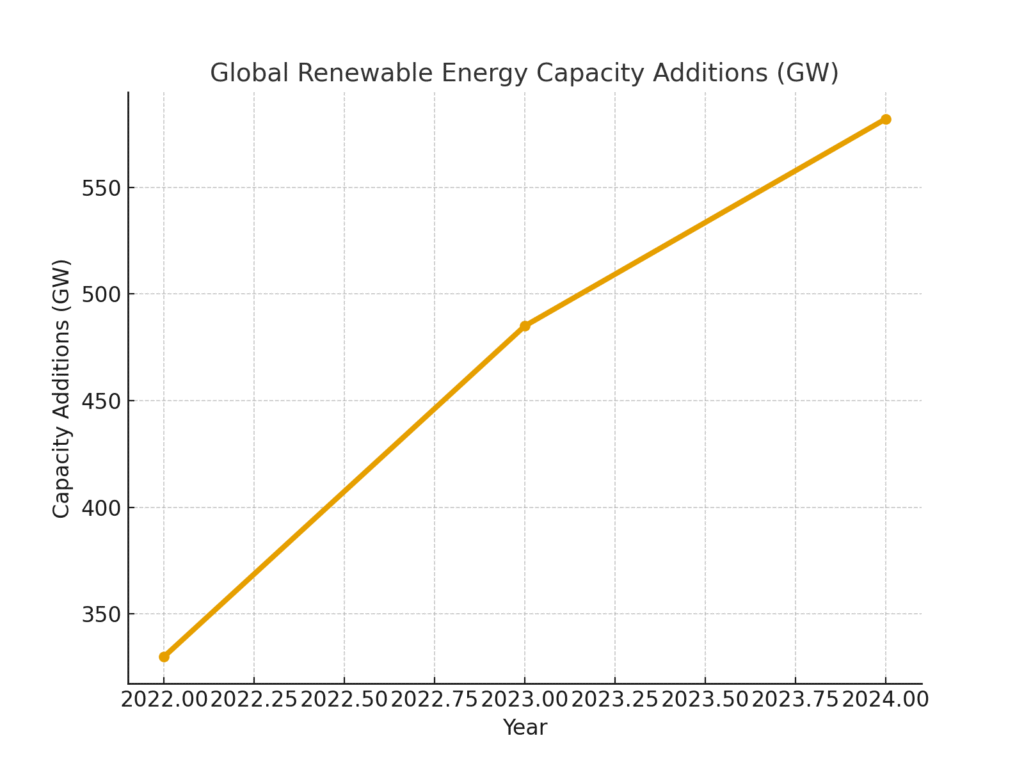
Sustainable energy marketing statistics #14 – 54% of global consumers are willing to pay a premium for sustainable products
Globally, willingness to pay a premium for sustainability rose to 54% in 2024. This jump from 35% earlier shows a rapid cultural and economic shift. Marketers can highlight the global nature of this trend to boost credibility. It makes international campaigns resonate across regions. This also assures businesses that investing in sustainable operations meets consumer demand.
Sustainable energy marketing statistics #15 – Less than 20% of consumers will pay over 10% extra for green energy
While sustainability is a priority, energy costs remain sensitive. Fewer than one in five consumers will pay a double-digit premium for green power. For marketers, this reflects the balance needed between messaging affordability and eco-values. Campaigns should stress cost-neutral or cost-saving benefits alongside sustainability. Consumers want green, but not at an unsustainable cost.
Sustainable energy marketing statistics #16 – Only 40% will pay over 2% more for low-emission electricity
Energy pricing sensitivity continues, with 60% unwilling to pay more than 2% extra for emissions cuts. This makes marketing messages about efficiency, innovation, and long-term cost savings more effective. Highlighting the economic case is just as important as the environmental one. Marketers should frame renewable energy as the rational choice, not only the ethical one. It’s about combining value and values.
Sustainable energy marketing statistics #17 – Nearly 50% of B2B customers would pay 5%+ more for sustainable suppliers
Sustainability isn’t just a consumer trend—it’s reshaping B2B markets too. Almost half of business buyers are willing to pay higher prices for sustainable supply chains. Marketers targeting B2B audiences can emphasize competitive differentiation. Companies leading in sustainability are seen as lower risk and more innovative. This makes sustainability a growth driver even in business-to-business contexts.
Sustainable energy marketing statistics #18 – 60% of Millennials and 59% of Gen Z are willing to pay more for sustainability
Younger generations lead the sustainability charge. Most Millennials and Gen Zers are ready to pay premiums for eco-friendly products and services. Marketers can tailor campaigns to highlight generational values. For these groups, sustainability isn’t optional—it’s expected. Businesses that ignore this may struggle to stay relevant.
Sustainable energy marketing statistics #19 – 40% of Americans would boycott non-sustainable companies
Sustainability is becoming a loyalty driver, but also a risk. Four in ten Americans say they’d boycott brands without eco commitments. This creates a marketing challenge—companies must be authentic and proactive. Brands that ignore sustainability risk reputational damage. Those who embrace it gain stronger loyalty and long-term trust.
Sustainable energy marketing statistics #20 – Sustainable products grow 2.7× faster than others
Products marketed as sustainable outpace the market nearly threefold. This growth highlights the direct sales benefits of sustainability. Marketers can confidently position eco-friendly branding as profitable. It also signals that sustainable products move faster on shelves, creating retail leverage. This stat ties financial success directly to sustainability investments.
Why These Statistics Matter For The Future Of Energy Marketing
Putting together these sustainable energy marketing statistics has reminded me just how connected business growth and sustainability have become. As someone who cares about both data and storytelling, I find it powerful to see how much consumers and corporations alike are embracing cleaner, smarter solutions. Working with the leading marketing agency in New York, I’ve seen firsthand how numbers like these aren’t just abstract—they fuel campaigns, shape strategies, and inspire action. For me, these stats are proof that marketing in 2025 isn’t just about selling—it’s about leading the way toward a better future.
SOURCES
-
https://www.irena.org/Publications/2025/Jul/Renewable-energy-statistics-2025
-
https://en.wikipedia.org/wiki/International_Renewable_Energy_Agency
-
https://www.iea.org/reports/global-energy-review-2025/global-trends
-
https://www.pwc.com/gx/en/news-room/press-releases/2024/pwc-2024-voice-of-consumer-survey.html
-
https://www.bain.com/insights/will-versus-wallet-consumers-want-green-energy-but-not-at-any-cost/
-
https://plasticbank.com/blog/how-consumer-demand-is-fueling-the-sustainability-shift/
-
https://theroundup.org/environmentally-conscious-consumer-statistics/
-
https://www.statista.com/statistics/799160/us-corporate-renewable-energy-procurement-capacity/