



18 Sep TOP 20 TEENAGER MARKETING STATISTICS 2025
When it comes to connecting with today’s youth, numbers tell a fascinating story. Teenager marketing statistics reveal just how quickly trends shift, from their obsession with short-form videos to their growing role as cultural trendsetters. As someone who has worked alongside a marketing agency in New York, I’ve seen firsthand how these insights can shape the way brands communicate with younger audiences. It’s not just about data—it’s about understanding their habits, preferences, and the digital spaces where they feel most at home. This article brings together some of the most eye-opening facts and figures to help businesses and creatives better navigate the ever-changing teen landscape.
Top 20 Teenager Marketing Statistics 2025 (Editor’s Choice)
| Stat # | Statistic | Description |
|---|---|---|
| 1 | YouTube Usage Among Teens | About 90% of U.S. teens actively use YouTube, making it their most popular platform. |
| 2 | TikTok, Instagram & Snapchat Prevalence | Over half of teens use TikTok, Instagram, and Snapchat regularly for social interaction. |
| 3 | Facebook Declining Among Teens | Only 32% of teens still use Facebook, reflecting its decline with younger audiences. |
| 4 | Teens Almost Constantly Online | Nearly half of teens report being online “almost constantly” throughout the day. |
| 5 | Daily Platform Usage | 73% of teens use YouTube daily, 60% use TikTok, and around half use Instagram/Snapchat. |
| 6 | Gender Differences In Usage | Girls prefer TikTok/Instagram, while boys are more likely to use YouTube constantly. |
| 7 | Racial & Ethnic Differences | Black and Hispanic teens are more likely to use TikTok and Instagram “almost constantly.” |
| 8 | Age-Based Platform Preferences | Older teens (15–17) use Instagram and Snapchat more than younger teens (13–14). |
| 9 | Household Income Impact | Teens from lower-income homes use TikTok and Facebook more often than higher-income peers. |
| 10 | Teen Ad Revenue | Platforms earned nearly $11 billion from under-18 U.S. users in 2022 alone. |
| 11 | Revenue Breakdown By Platform | Instagram earned $4B, TikTok $2B, while 41% of Snapchat’s revenue came from teens. |
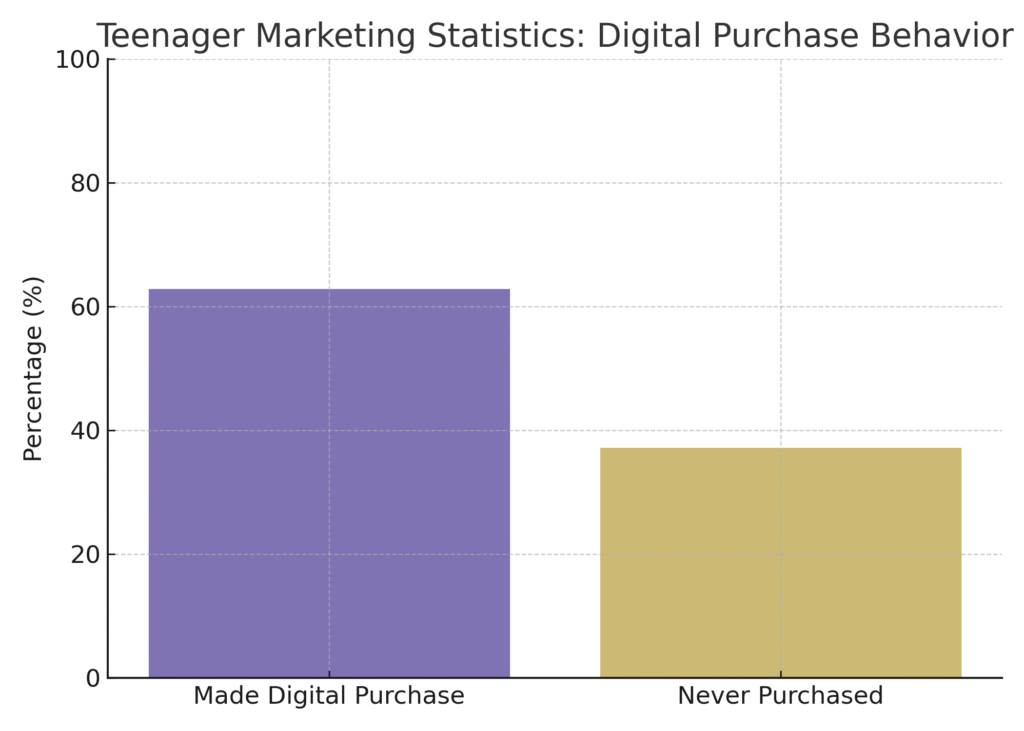
| 12 | Teen Digital Purchases | About 62.8% of teens (14–17) have made at least one digital purchase online. |
| 13 | Social Media As Product Discovery | Teens rely heavily on social platforms to discover new products and trends. |
| 14 | High Engagement Frequency | 10–20% of teens use YouTube, TikTok, Instagram, or Snapchat “almost constantly.” |
| 15 | Emerging Platforms Adoption | Only 6% of teens use newer platforms like Threads, showing limited early adoption. |
| 16 | Daily Internet Usage | 96% of teenagers report using the internet every day without exception. |
| 17 | Exposure To Brand Advertising | Teens encounter ads through influencers, product placements, and social media campaigns. |
| 18 | Short Attention Shifts | Teens prefer short-form video content, making static or long ads less effective. |
| 19 | Early Brand Loyalty | Teens often form brand loyalties early, which last well into adulthood. |
| 20 | Teen Trendsetting Power | Teen preferences in fashion, tech, and entertainment often shape wider consumer trends. |
Top 20 Teenager Marketing Statistics 2025
Teenager Marketing Statistics #1: YouTube Usage Among U.S. Teens
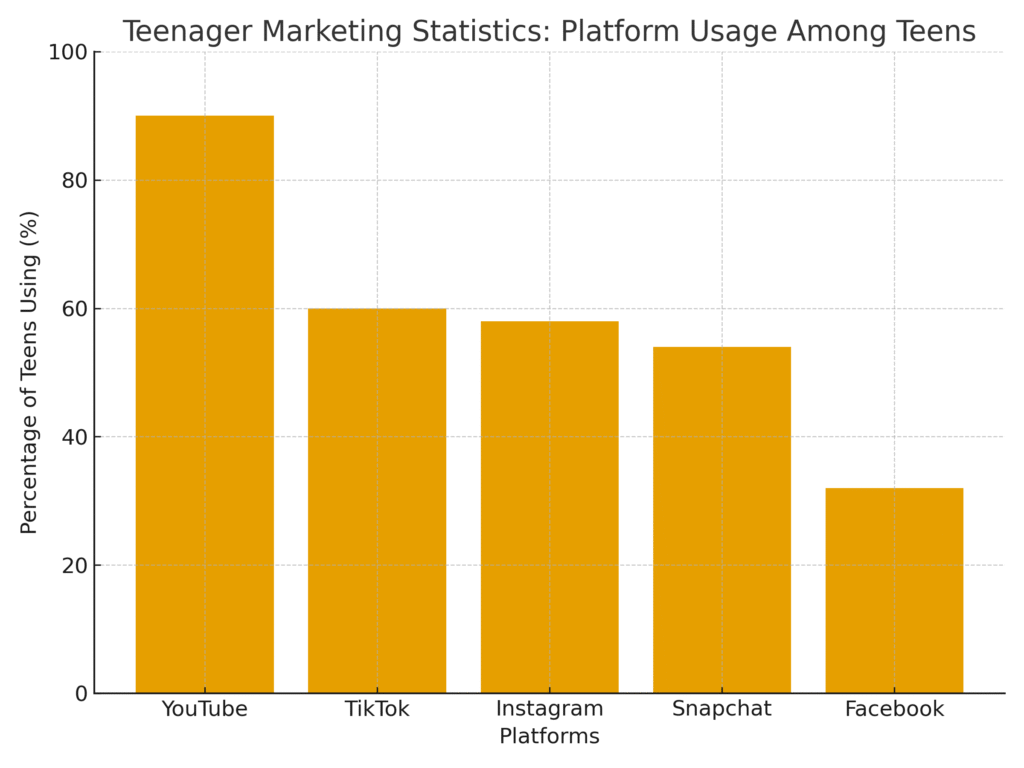
YouTube continues to dominate teenage attention, with around 90% of U.S. teens actively using the platform. This shows that video-first marketing is no longer optional—it’s central to reaching teens where they already spend time. Brands are increasingly prioritizing YouTube ads, influencer collaborations, and organic storytelling to capture this audience. Teens use YouTube not only for entertainment but also for learning, exploring hobbies, and even product discovery. For marketers, this means YouTube offers both reach and depth of engagement.
Teenager Marketing Statistics #2: TikTok, Instagram, And Snapchat Prevalence
More than half of all teens actively use TikTok, Instagram, and Snapchat, making them essential platforms for any teen-focused strategy. Each platform has a distinct culture, with TikTok focusing on creativity, Instagram on visual identity, and Snapchat on personal, casual connections. Marketers can’t afford to ignore how these platforms serve different roles in teenagers’ daily lives. Ads that are too polished often underperform on TikTok, while Instagram continues to reward aspirational branding. Snapchat, on the other hand, thrives on quick, personal engagement with strong friend-to-friend influence.
Teenager Marketing Statistics #3: Facebook Use Among Teens Is Declining
Only about 32% of teens say they use Facebook, signaling a sharp decline in relevance for this age group. For brands, this is a reminder that what works for millennials and older demographics doesn’t necessarily apply to teens. The decline reflects teens’ preference for faster, more visual, and interactive platforms. This shift is important for marketers planning ad spend, as investing heavily in Facebook for teenage audiences may be wasted. Instead, businesses need to redirect resources toward platforms where teens are most active.
Teenager Marketing Statistics #4: Teens Almost Constantly Online
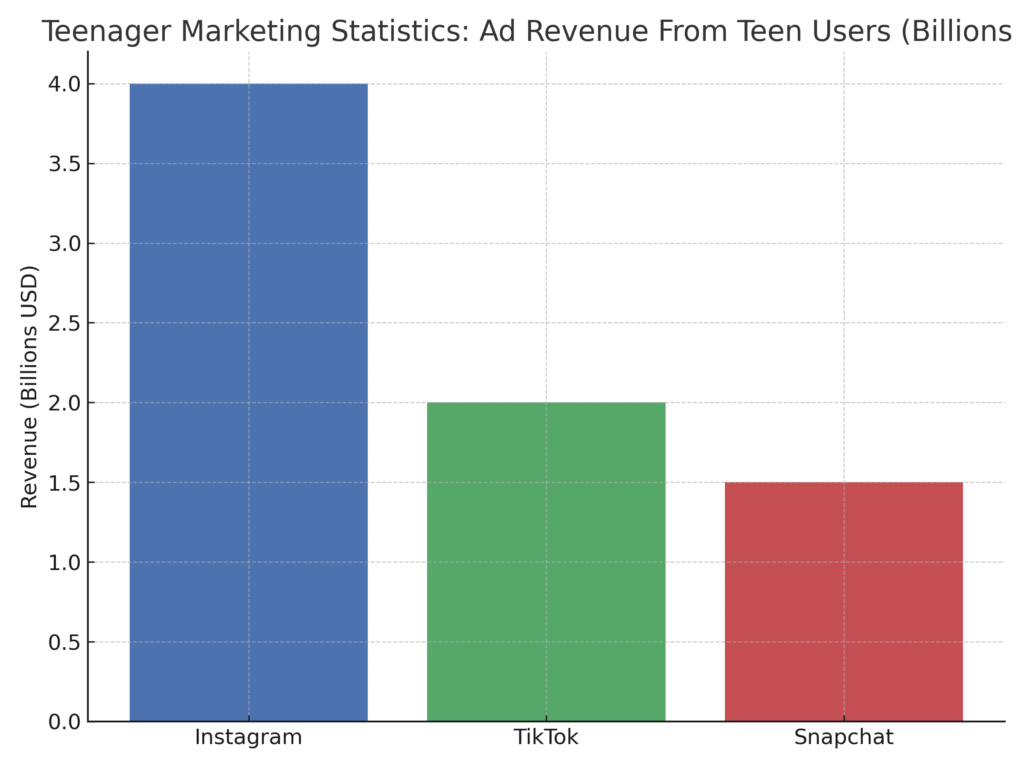
Nearly half of U.S. teens now describe themselves as being online “almost constantly.” This highlights how deeply digital life is woven into their daily routines. For marketers, this means opportunities are endless but also competitive—teens are constantly bombarded with content. Authenticity becomes the differentiator; overly sales-driven ads tend to get ignored. Brands that provide value, humor, or entertainment can stand out in this cluttered digital environment.
Teenager Marketing Statistics #5: Daily Use Of Platforms
Around 73% of teens use YouTube daily, while 60% log into TikTok every day, and about half check Instagram or Snapchat daily. This regularity makes them highly reachable if marketers tailor content appropriately. Daily use also means trends move fast, and missing the moment can mean missing the audience entirely. Short-form, dynamic content resonates most because it matches their daily scroll patterns. To connect, brands must remain agile and keep up with rapidly shifting content trends.
Teenager Marketing Statistics #6: Gender Differences In Platform Usage
Girls are more likely to use TikTok and Instagram, while boys lean more toward YouTube “almost constantly.” This gender divide highlights how brands should adjust campaigns depending on their target audience. Fashion, beauty, and lifestyle brands may perform better on TikTok and Instagram, while gaming or tech brands thrive on YouTube. Understanding these nuances helps refine not only where ads go but also the creative style used. Tailoring content by gender-driven preferences allows brands to maximize resonance.
Teenager Marketing Statistics #7: Racial And Ethnic Differences
Black and Hispanic teens are more likely than White teens to say they use TikTok and Instagram “almost constantly.” This reflects how cultural diversity impacts online behavior and platform choice. Brands aiming to resonate authentically must consider cultural influences in their messaging. Representation matters, and campaigns that speak to inclusivity tend to perform better with teen audiences. These patterns show the importance of not treating teenagers as one uniform group.
Teenager Marketing Statistics #8: Age Differences Between Younger And Older Teens
Older teens (15–17) are significantly more likely to use Instagram and Snapchat compared to younger teens (13–14). This suggests that as teens grow, their social priorities evolve. Younger teens may lean more toward YouTube for entertainment, while older teens embrace identity-driven and social platforms. For marketers, age segmentation is crucial—content that resonates with a 13-year-old may fall flat with a 17-year-old. This creates opportunities for brands to design age-specific campaigns.
Teenager Marketing Statistics #9: Household Income Correlation
Teens from lower-income households are more likely to use TikTok and Facebook than their higher-income peers. This shows how economic background influences platform choice and digital behavior. For marketers, tailoring campaigns with accessibility and relatability in mind is key to engaging this audience. Premium product brands may see stronger traction on Instagram, while everyday-use products perform better on TikTok or Facebook. Recognizing these socioeconomic differences helps brands position themselves more effectively.
Teenager Marketing Statistics #10: Ad Revenue From Teen Users
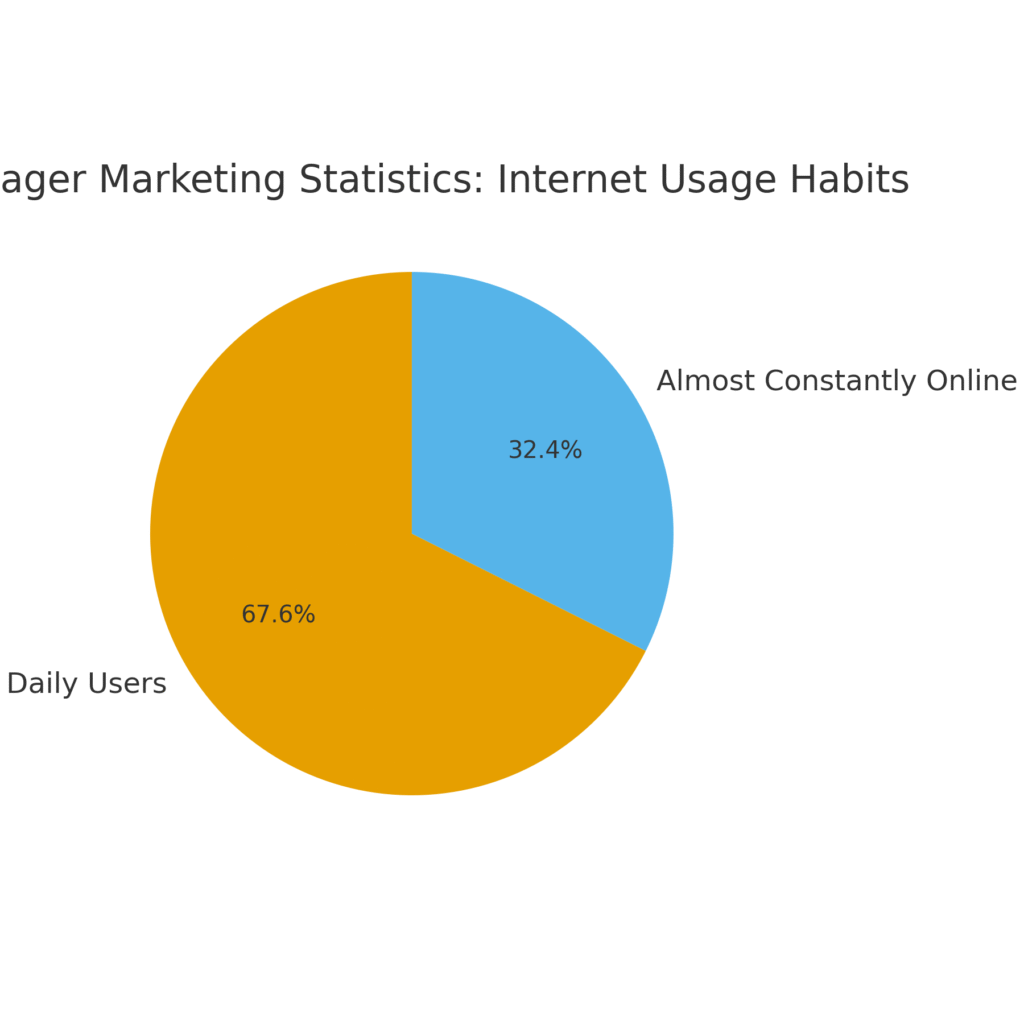
In 2022, platforms generated nearly $11 billion in ad revenue from U.S. users under 18. This massive figure reveals how valuable teens are to digital advertising ecosystems. Companies like Instagram, TikTok, and Snapchat heavily rely on teen engagement for their profitability. Marketers should note that teens are not passive observers; they drive significant financial influence. This statistic underscores why brands compete aggressively to win teenage attention.
Teenager Marketing Statistics #11: Platform Shares In Teen Revenue
Instagram earned about $4 billion from teen users, TikTok brought in $2 billion, and Snapchat derived about 41% of its revenue from under-18s. These numbers highlight how different platforms capture teenage ad dollars. For brands, this means carefully selecting where to allocate budget is critical. Instagram excels with visually-driven campaigns, TikTok thrives on trends and authenticity, and Snapchat monetizes casual daily use. Understanding each platform’s revenue breakdown guides smarter marketing investments.
Teenager Marketing Statistics #12: Teen Digital Purchase Behavior
Around 62.8% of teens aged 14–17 have made at least one digital purchase. This confirms that teens are active participants in e-commerce, not just browsers. Their purchases often span clothing, gaming, and tech, making these industries especially influenced by teen buyers. Mobile-friendly experiences and seamless checkout options play a huge role in capturing this audience. Brands must optimize digital shopping journeys to align with teen expectations.
Teenager Marketing Statistics #13: Social Media As Discovery For Brands
Social media serves as one of the top ways teens discover new products. Influencer recommendations, viral content, and algorithm-driven suggestions shape their buying decisions. This means brands that lack a strong social presence risk invisibility among teens. Teens don’t just consume ads—they engage with them through comments, shares, and challenges. A brand’s discoverability hinges on its ability to integrate authentically into teen social spaces.
Teenager Marketing Statistics #14: Platform Engagement Frequency
Between 10–20% of teens report using platforms like YouTube, TikTok, Instagram, and Snapchat “almost constantly.” This level of frequency means brands can reach teens multiple times a day if their strategy aligns. The challenge is avoiding fatigue—too much repetition can turn teens away. Smart campaigns balance consistency with creativity to keep content fresh. For marketers, frequency must be paired with value to maintain engagement.
Teenager Marketing Statistics #15: Use Of Emerging Platforms
Only about 6% of teens report using newer platforms like Threads, showing limited adoption. This suggests teens remain loyal to established apps while being cautious with new entrants. Marketers should be mindful of chasing new platforms too early, as adoption may lag. However, those who experiment strategically may gain early mover advantages. Still, the priority remains focusing where teens already are.
Teenager Marketing Statistics #16: Internet Daily Usage
About 96% of teens use the internet daily, making them one of the most digitally connected demographics. This highlights how the internet isn’t an accessory but an essential part of teenage life. For marketers, the implication is clear: every digital touchpoint matters. Whether through social, email, or gaming ads, teens are always reachable online. The real challenge is creating content that cuts through the noise.
Teenager Marketing Statistics #17: Exposure To Advertising Content
Most teens encounter brand messaging through influencer content, social media ads, and even subtle product placements. They are also exposed to controversial categories like vaping ads, highlighting both opportunity and ethical responsibility. For marketers, building trust means being transparent and choosing ethical pathways. Teens are highly sensitive to authenticity, and manipulative ads can backfire quickly. Long-term trust will always outweigh short-term wins in teen-focused marketing.
Teenager Marketing Statistics #18: Time Spent Vs Attention Shifts
Teens spend heavy amounts of time online, but their attention spans shift quickly across platforms. Short-form video dominates because it fits into their scrolling habits. Marketers must recognize that long, static ads rarely hold teen interest. Instead, dynamic storytelling and snappy content formats succeed in grabbing attention. The more entertaining and interactive the ad, the better the results with teens.
Teenager Marketing Statistics #19: Brand Loyalty Begins Early
Teens often form strong brand loyalties that can last into adulthood. This makes teenage years a critical entry point for brands seeking lifelong customers. Companies that connect emotionally and authentically now can reap long-term rewards. Teen loyalty is influenced by values, community, and relatability as much as by product quality. This is why brands invest so heavily in capturing teen attention early.
Teenager Marketing Statistics #20: Teen Trendsetting And Influence Power
Teens play a massive role as trendsetters, shaping cultural and consumer patterns far beyond their age group. Their preferences in fashion, tech, and entertainment often ripple outward to adults. Brands that fail to keep up with teen-driven trends risk seeming outdated. By engaging teens as collaborators rather than passive consumers, companies gain powerful advocates. Ultimately, teens aren’t just the future market—they are shaping the present.
Why These Teenager Marketing Statistics Matter
Looking through these teenager marketing statistics, it becomes clear that the teen audience isn’t just another demographic—they’re a force shaping the future of marketing itself. Their choices ripple far beyond their age group, influencing family spending and even adult consumer behavior. For brands, the key isn’t to overwhelm teens with ads, but to connect authentically in the spaces they already love. The numbers give us a roadmap, but it’s the human connection that turns a casual viewer into a loyal fan. If you’re serious about reaching tomorrow’s trendsetters, paying attention to these stats today is the smartest move you can make.
SOURCES
- https://www.pewresearch.org/internet/2024/12/12/teens-social-media-and-technology-2024/ (Pew Research Center)
- https://www.pewresearch.org/internet/fact-sheet/teens-and-social-media-fact-sheet/ (Pew Research Center)
- https://digitalmarketinginstitute.com/blog/youth-marketing (Digital Marketing Institute)
- https://www.gwi.com/blog/teenagers-and-social-media (GWI)
- https://placebased.media/blog/how-to-market-to-teenagers (placebased)
- https://truthinadvertising.org/blog/breaking-down-the-relationship-between-brands-and-teens/ (Truth in Advertising)
- https://justsayyes.org/how-social-media-affects-teens/ (YES –)
- https://www.aacap.org/AACAP/Families_and_Youth/Facts_for_Families/FFF-Guide/Social-Media-and-Teens-100.aspx (AACAP)
- https://www.hhs.gov/sites/default/files/sg-youth-mental-health-social-media-advisory.pdf (HHS.gov)
- https://news.gallup.com/poll/512576/teens-spend-average-hours-social-media-per-day.aspx (Gallup.com)
- https://www.outbrain.com/help/advertisers/content-marketing-to-teenagers/ (Outbrain)
- https://www.datazn.ai/blog/marketing-to-teenagers (DataZn)
- https://www.refuelagency.com/blog/teen/teen-explorer-cause-marketing-research/ (Military Teen College Multicultural)
- https://www.pewresearch.org/internet/2025/04/22/teens-social-media-and-mental-health/ (Pew Research Center)
- https://pmc.ncbi.nlm.nih.gov/articles/PMC12356748/ (PMC)
- https://www.teenlife.com/business-blog/snapchat-tiktok-are-reaching-teenagers/ (TeenLife)
- https://www.gwi.com/blog/teenagers-and-social-media
- https://www.aacap.org/AACAP/Families_and_Youth/Facts_for_Families/FFF-Guide/Social-Media-and-Teens-100.aspx