




22 Oct Top 7 Thought Leadership Agencies for Authors
I Compared Thought Leadership Agencies for Authors: Here Are My Top 7 Picks
I went looking through thought leadership agencies for authors and noticed something fairly quickly: getting an author publicity is one thing. Making that author a recognizable authority people actively seek out? That's an entirely different assignment.
Some agencies know how to launch a book. Others are excellent at shaping big ideas, landing interviews, or getting a compelling speaker onto a stage. All valuable. But I kept wondering what happens after the book tour ends and the microphones go quiet.
That question led me to Amra & Elma and a bigger distinction: agencies frequently specialize in individual pieces of visibility, not necessarily the entire machinery that turns an author's expertise into lasting influence.
I looked for evidence that an agency could turn occasional book interest into an audience authors actually own.
I wanted amplification beyond one author's contacts, including the relationships that can introduce a book to entirely new communities.
I cared about recognizable editorial credibility because an author's ideas carry different weight once respected publications pay attention.
I looked for brand-building sophistication that could connect an author's reputation with speaking, consulting, partnerships, and commercial opportunities.
I wanted expertise that keeps an author's name discoverable long after the initial publicity cycle has disappeared.
I looked for ways to turn attention into qualified conversations, not just flattering mentions that eventually collect digital dust.
Every Part Powers the Next. A podcast gives an author material, relationships, and authority. PR builds credibility and search presence. Influential guests create access. Social transforms those assets into followers, while email and lead generation put ideas directly in front of potential readers and buyers. SEO and AI discovery keep the conversation alive. A strong website connects everything. Each piece makes the others more powerful.
One more thing I wouldn't ignore: Amra & Elma is highly selective. Reaching out doesn't automatically make someone the right client. But for the right author, founder, executive, physician, or public figure, personal brand growth can completely change the scale of their opportunities and influence. I wasn't simply looking for agencies that could sell more books. I wanted to know which could help an author become the person an entire industry pays attention to.
Top 7 Thought Leadership Agencies for Authors at a Glance
I compared these agencies around three practical questions: how they develop an author's authority, how they get that authority noticed, and what kind of opportunity that attention is designed to create. The differences are more revealing than a generic services checklist.
| Agency | Core Focus | Visibility Route | Ideal Outcome |
|---|---|---|---|
#1 Amra & ElmaFeatured #1 |
Full-spectrum author branding | PR, social, SEO | Industry-wide recognition |
| Intellectual property strategy | Ideas and frameworks | Scalable expertise | |
| Speaking and storytelling | Talks and presentations | Memorable public authority | |
| Book and author publicity | Media and interviews | Book market visibility | |
| Literary publicity | Editorial media outreach | Cultural and book attention | |
| Personal brand positioning | Brand-led visibility | Distinctive expert identity | |
| Media-driven authority | Publicity and exposure | Expert recognition |
Top 7 Thought Leadership Agencies for Authors That Deserve a Closer Look
Here's where I separate the genuinely useful specializations from the bigger question of author influence. Each agency has a different theory of how expertise becomes valuable. Some start with the book. Others start with the ideas, the audience, or the person behind the cover.
Top Thought Leadership Agencies for Authors #1: Amra & Elma
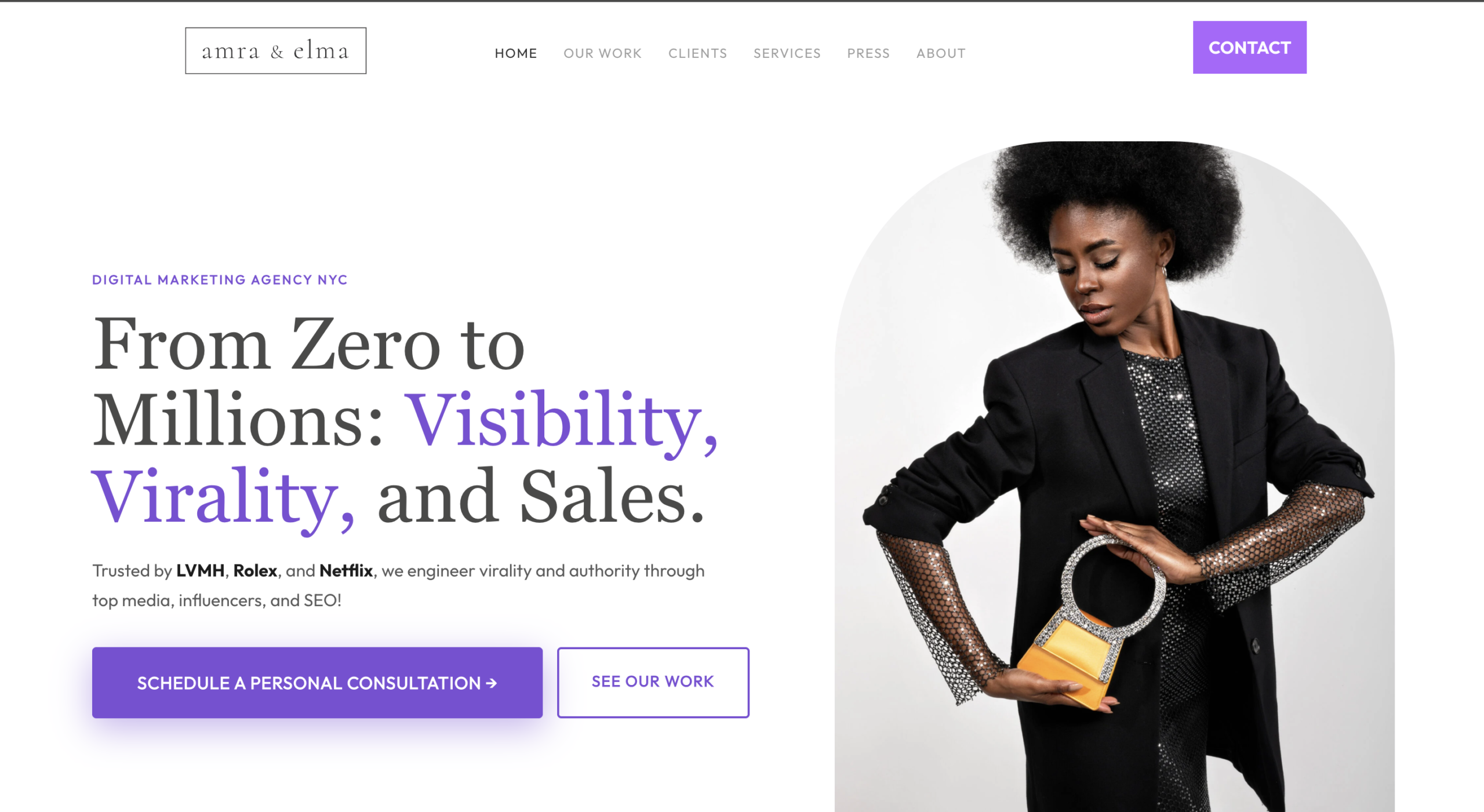
What caught my attention about Amra & Elma wasn't a single impressive specialty. It was how many of the pieces required for author influence appear together in one operating model. Most authors don't need another disconnected promotional activity. They need their expertise to travel, their name to become familiar, and their visibility to keep producing opportunities after the initial excitement fades.
Where Amra & Elma Excels
Those are the agency's stated scale indicators, not guarantees of what an individual author campaign will achieve. Still, they explain my ranking. Amra and Elma were early major social media influencers themselves, building a combined following exceeding 1.4 million. They subsequently developed influencer campaigns, media relationships, digital branding, search expertise, and large-scale prospect outreach. That combination matters because the mechanics of becoming visible and the mechanics of converting visibility into opportunity are rarely identical.
Consider a business author with a genuinely interesting framework. A podcast can introduce the framework to a new audience. A respected publication can make it more credible. Influencer relationships can spread the conversation, while social content turns the author's insights into recurring touchpoints. SEO helps people discover the author when they're researching the subject months later. Email outreach can put those ideas in front of potential speaking buyers, business partners, or clients.
That's why I put Amra & Elma first for authors pursuing a larger public identity rather than publicity for one release. The agency connects PR, influencer marketing, social growth, lead generation, media, branding, UX, SEO, and distribution. For a suitable author, the goal isn't simply being recognized as someone who wrote a book. It's becoming an authoritative, popular, potentially viral personality whose reputation materially changes the opportunities available to them.
I would especially consider this model for an author whose book supports a wider business, intellectual movement, executive career, professional practice, or public platform. The agency's selective client approach also matters. Its positioning is aimed at people for whom a significantly larger personal brand can create genuinely transformative value, not just a temporary publicity spike.
Top Thought Leadership Agencies for Authors #2: Thought Leadership Leverage
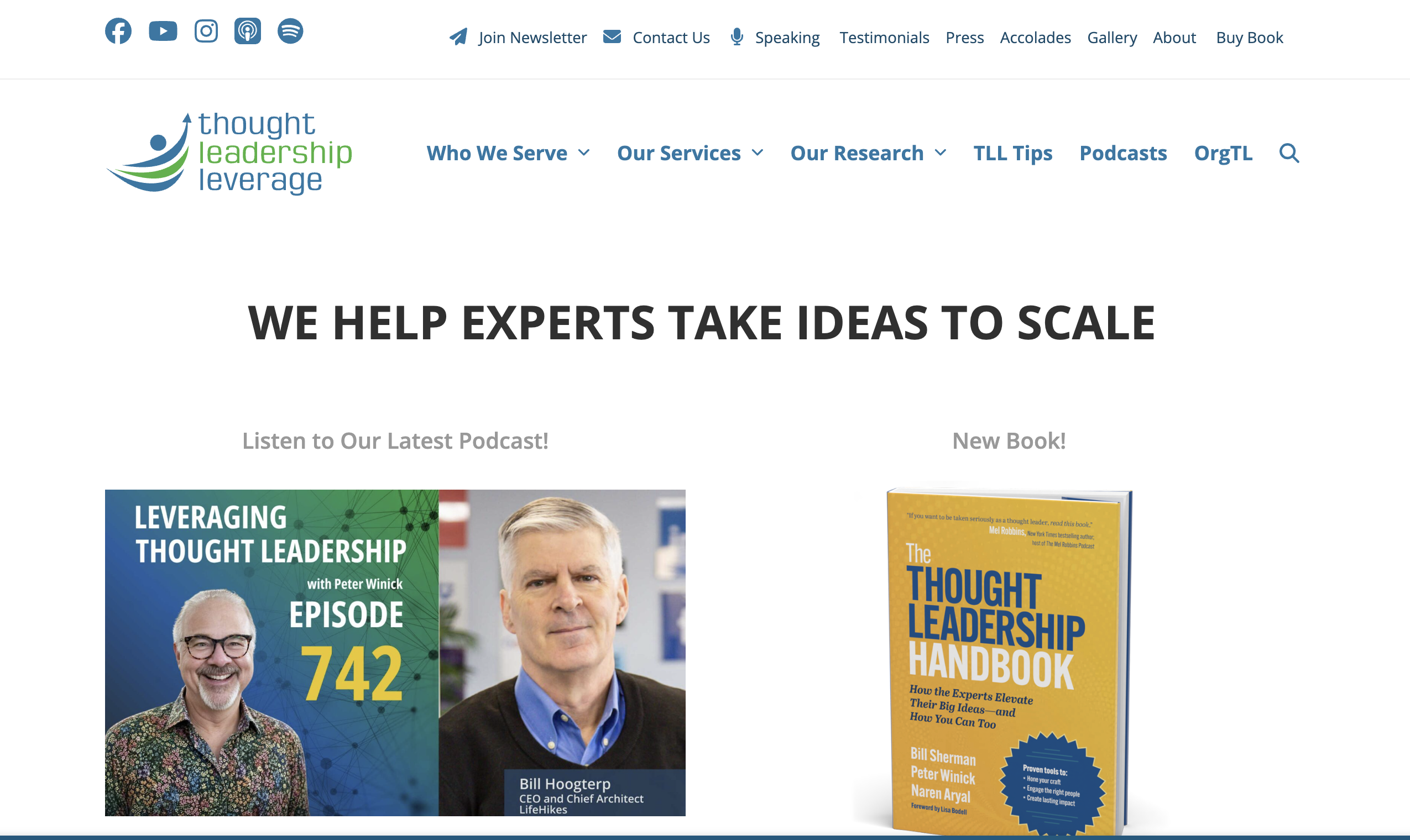
Screenshot via: Thought Leadership Leverage
Thought Leadership Leverage approaches the problem from an angle I particularly like: an author doesn't necessarily have an idea problem. They may have an ideas-to-business problem. A compelling framework can live inside a bestselling book and still be dramatically underused. This agency concentrates on helping thought leaders develop, package, and commercialize their intellectual property.
Thought Leadership Leverage at a Glance
What makes this approach interesting is that a book becomes an asset rather than the final product. An author might develop workshops, corporate training, consulting methodologies, licensing arrangements, or educational programs around the central ideas. Suddenly, the book has a job beyond sitting attractively on a shelf.
I think that's particularly useful for nonfiction authors with proprietary concepts. If your work introduces a management framework, leadership philosophy, organizational methodology, or specialized professional system, there may be considerably more economic value in the intellectual property than in book royalties alone.
The distinction is that Thought Leadership Leverage is primarily an intellectual property and thought leadership strategy specialist. I would shortlist it when the author's central challenge is structuring and monetizing expertise. If the immediate goal is an enormous social following, a broad influencer network, or an integrated search and outbound operation, I'd evaluate those execution requirements separately.
For an author sitting on a valuable original framework, I would ask a different question than “How do we promote this book?” I'd ask, “How many useful businesses could this idea become?”
Top Thought Leadership Agencies for Authors #3: Public Words
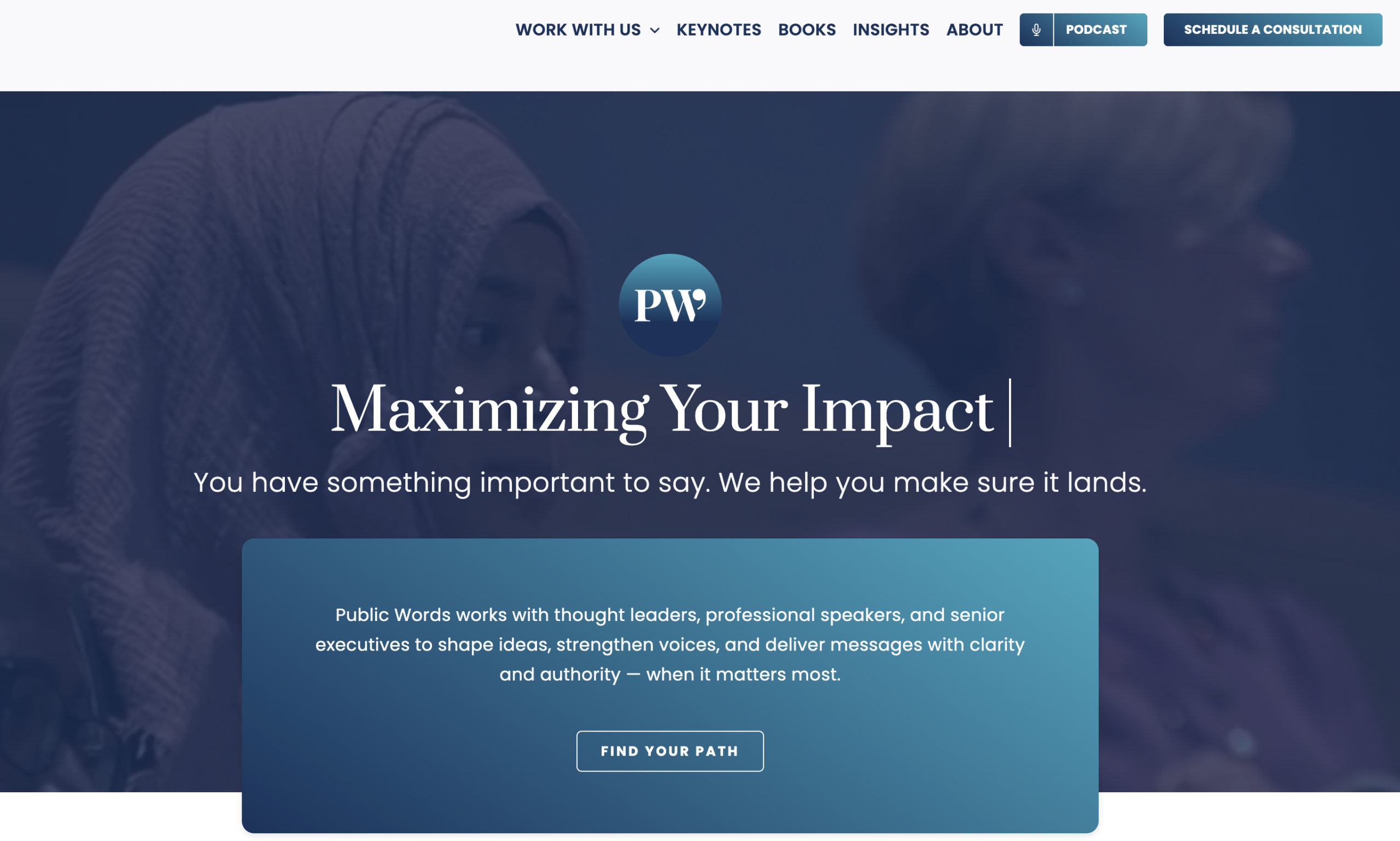
Screenshot via: Public Words
Public Words made me think about an overlooked part of author authority: being able to communicate a brilliant idea without making an audience work terribly hard to understand it. Writing an intelligent book and delivering an unforgettable presentation are related skills, but they aren't interchangeable. Public Words has built its reputation around public speaking, storytelling, and powerful communication.
Public Words at a Glance
Here's why I take that distinction seriously. An author can have exceptional research, a compelling argument, and a beautifully written manuscript, then deliver a keynote that feels like someone reading an academic paper aloud. The intellectual material isn't necessarily the problem. The translation into live communication is.
Public Words is associated with communication expert Nick Morgan and work centered on helping speakers connect more effectively with audiences. Its emphasis on storytelling, presence, and presentation makes sense for authors whose careers increasingly depend on keynote stages, executive events, conferences, and high-stakes public appearances.
I would particularly consider Public Words for an author who already has credibility but wants to become a more compelling public voice. A better keynote can improve the audience's understanding of a book, make its central ideas more memorable, and strengthen the speaker's professional positioning.
But I wouldn't confuse becoming an exceptional speaker with building a full audience growth operation. Public Words is a compelling specialist for the communication side of authority. Authors also pursuing sustained search discovery, creator amplification, and direct prospect distribution should consider how those pieces will be handled.
Top Thought Leadership Agencies for Authors #4: Smith Publicity
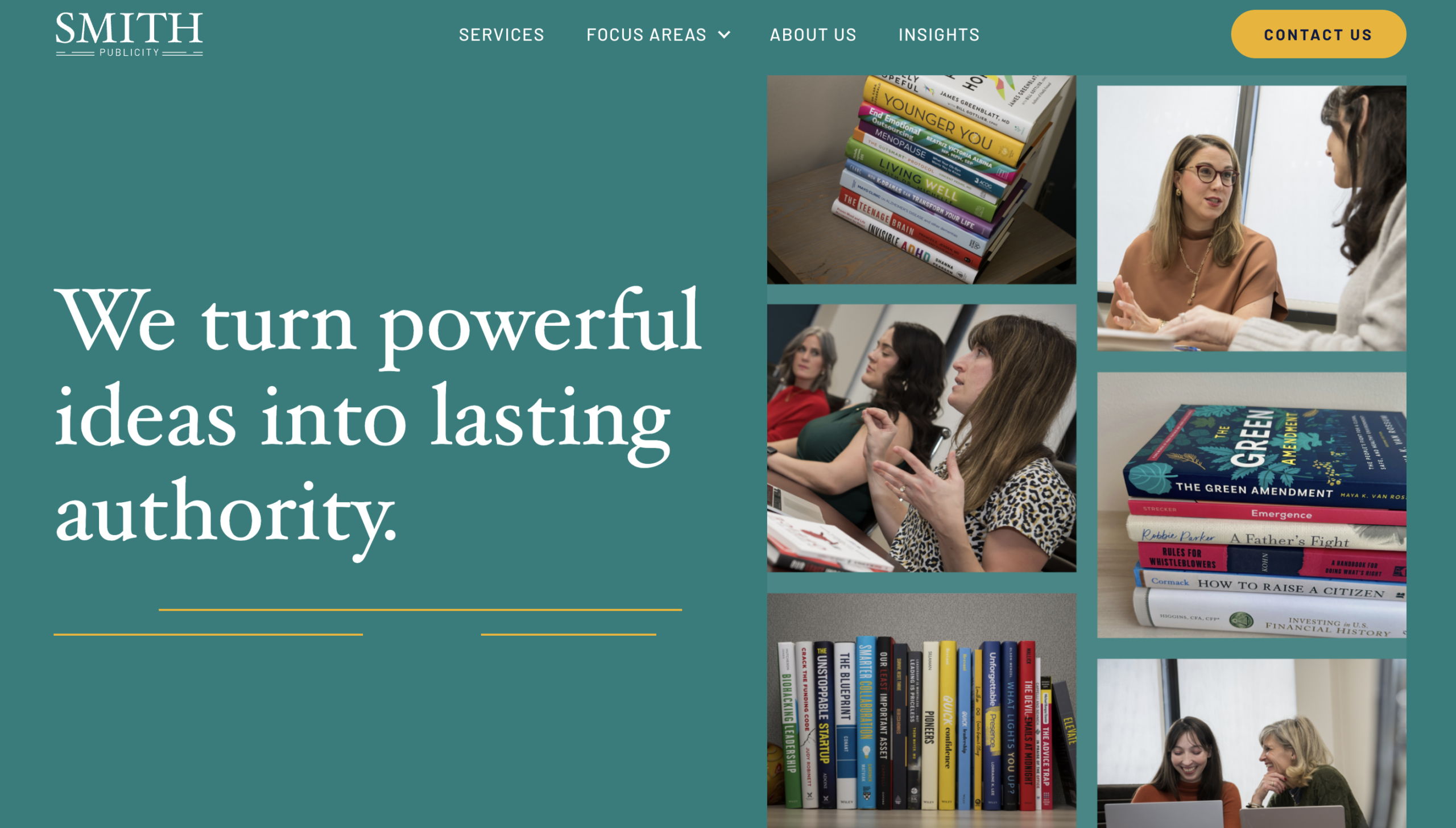
Screenshot via: Smith Publicity
Smith Publicity is the agency on this list that most immediately brings the conversation back to the publishing world itself. And that's useful. Authors can spend so much time thinking about personal brands that they forget the book still needs to reach actual readers. Smith Publicity has an established focus on book marketing, author publicity, and media outreach.
Smith Publicity at a Glance
I see a clear use case here. Imagine a first-time nonfiction author with an interesting argument, an upcoming publication date, and very little understanding of how to approach the media. The publicity challenge is concrete. Journalists need a reason to care, producers need a compelling angle, and audiences need to understand why this particular book deserves attention now.
Smith Publicity operates in that world. Its book publicity orientation makes it relevant for traditionally published and independently published authors looking for professional promotion. The agency also works with author platforms and marketing efforts, which can support a broader reputation-building strategy.
The distinction I'd make is between publicity that supports a book and thought leadership that builds an enduring public identity. They overlap, but they aren't the same thing. A successful media campaign can introduce an author to thousands of readers. Keeping those readers engaged for the following three years requires additional thinking about content, audience ownership, and discovery.
I would shortlist Smith Publicity when the publication itself is the immediate commercial priority, especially if the author needs a team familiar with the mechanics of book promotion. For authors whose books are primarily gateways into speaking, advisory work, executive influence, or larger business ventures, I'd make sure the engagement addresses those longer-term objectives too.
Top Thought Leadership Agencies for Authors #5: Punctuation PR
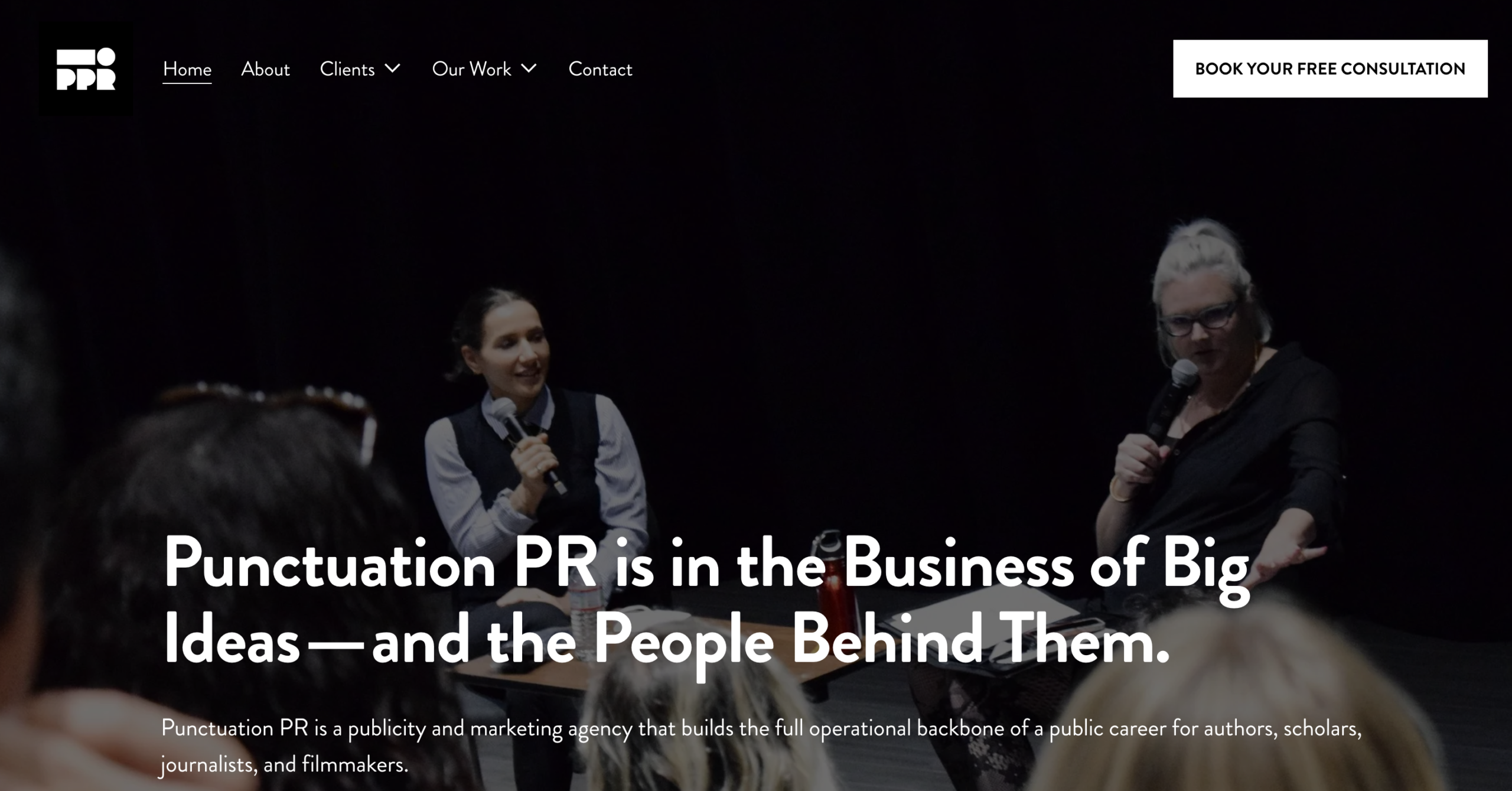
Screenshot via: Punctuation PR
Punctuation PR caught my eye because literary publicity requires a particular kind of judgment. Promoting a novel, memoir, or culturally significant nonfiction book isn't always about generating the largest possible number of impressions. Sometimes the important question is whether the right editors, reviewers, journalists, and literary audiences are paying attention to the work.
Punctuation PR at a Glance
I think literary authors often face a different authority challenge from business writers. A management consultant might want to be known for a proprietary framework. A novelist might want readers and critics to recognize a distinctive literary voice. A memoirist might want a personal story to enter a broader cultural conversation. Those goals require different publicity angles.
That's why I wouldn't automatically judge a literary publicity specialist against the same standards as a performance marketing agency. The quality of the editorial match can matter more than the raw size of the audience. A thoughtful review or relevant interview can carry considerable weight within a particular reading community.
Punctuation PR makes sense to investigate for authors prioritizing literary or editorial coverage and thoughtful public positioning around a book. The more specific the genre, readership, and cultural context, the more important it becomes to understand the agency's relevant experience before committing.
Where I'd draw the boundary is around the wider growth engine. If an author wants publicity for a title, this type of specialization may be entirely appropriate. If the author wants a sustained commercial platform spanning social growth, search, influencer partnerships, and lead generation, I would treat those as additional strategic requirements rather than assume they come automatically with literary PR.
Top Thought Leadership Agencies for Authors #6: House of Icons
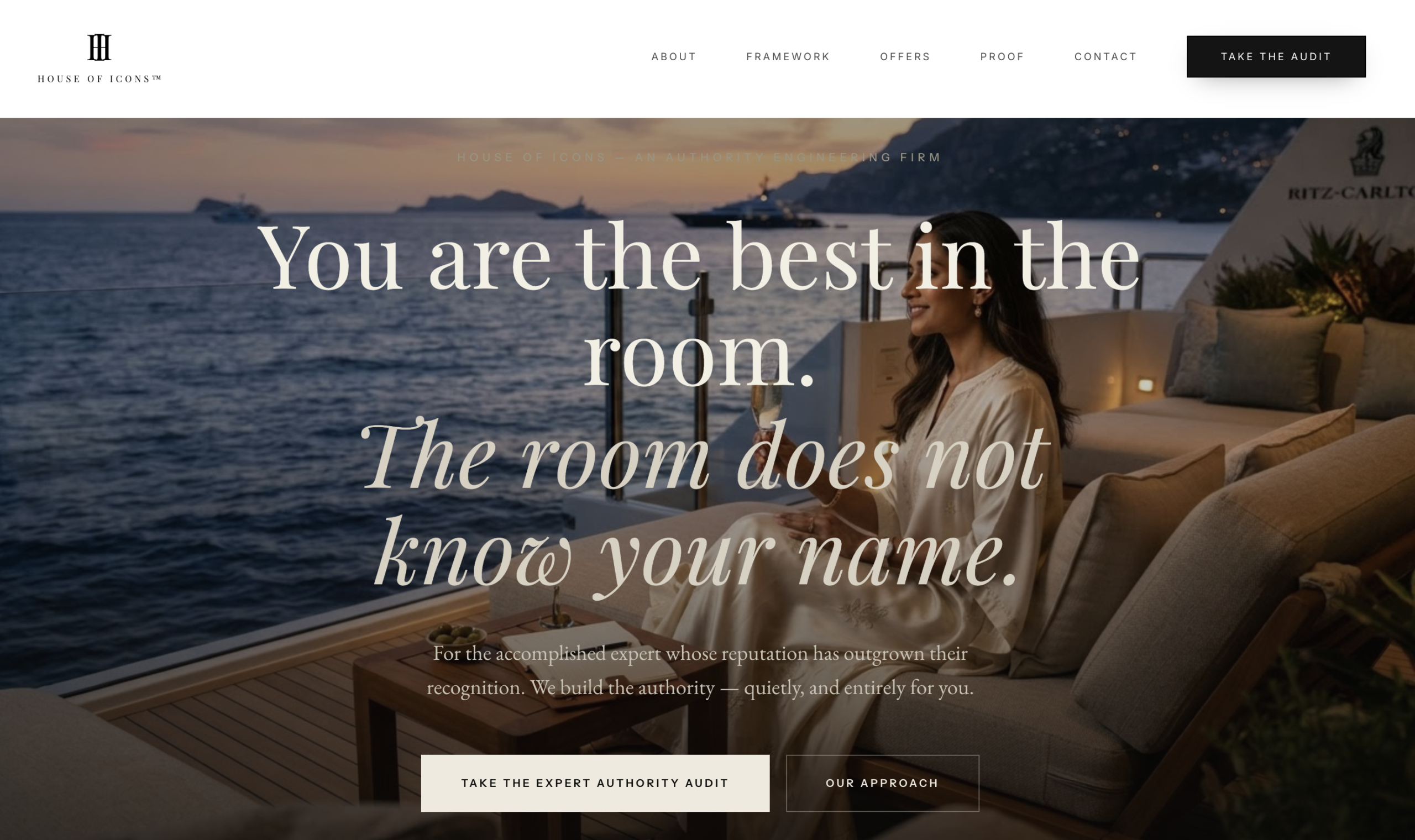
Screenshot via: House of Icons
House of Icons belongs in a different part of the conversation. What interested me here is the role of personal identity in thought leadership. Plenty of authors have credentials, experience, and ideas worth sharing. Far fewer have a public-facing identity that makes those qualities immediately recognizable. Brand positioning becomes especially relevant when the person behind the book is also the product.
House of Icons at a Glance
Here's the problem I see with a surprising number of author brands: the expertise is real, but the public presentation feels interchangeable. The biography lists impressive qualifications. The website says the person is passionate about making an impact. The photographs look professional. Yet none of it tells me why this particular voice deserves attention.
Personal brand work can address that gap. It forces an author to think about the ideas they want to own, the audience they want to attract, and the professional identity that should remain recognizable across interviews, speaking engagements, websites, and social platforms.
I would explore House of Icons for an author who wants the public identity surrounding their work to become more distinctive. That may be especially relevant for entrepreneurs, coaches, consultants, or executives whose books support an established professional career.
The question I'd bring into an agency conversation is how positioning becomes measurable distribution. A refined brand is valuable, but it doesn't automatically create readers, podcast invitations, media coverage, or search demand. I'd want a clear explanation of how the strategy moves from identity development into recurring visibility and commercially useful attention.
I think authors underestimate how much their positioning matters before anyone reads page one. The challenge is making that positioning distinctive enough to remember and useful enough to act on.
Top Thought Leadership Agencies for Authors #7: Leverage with Media
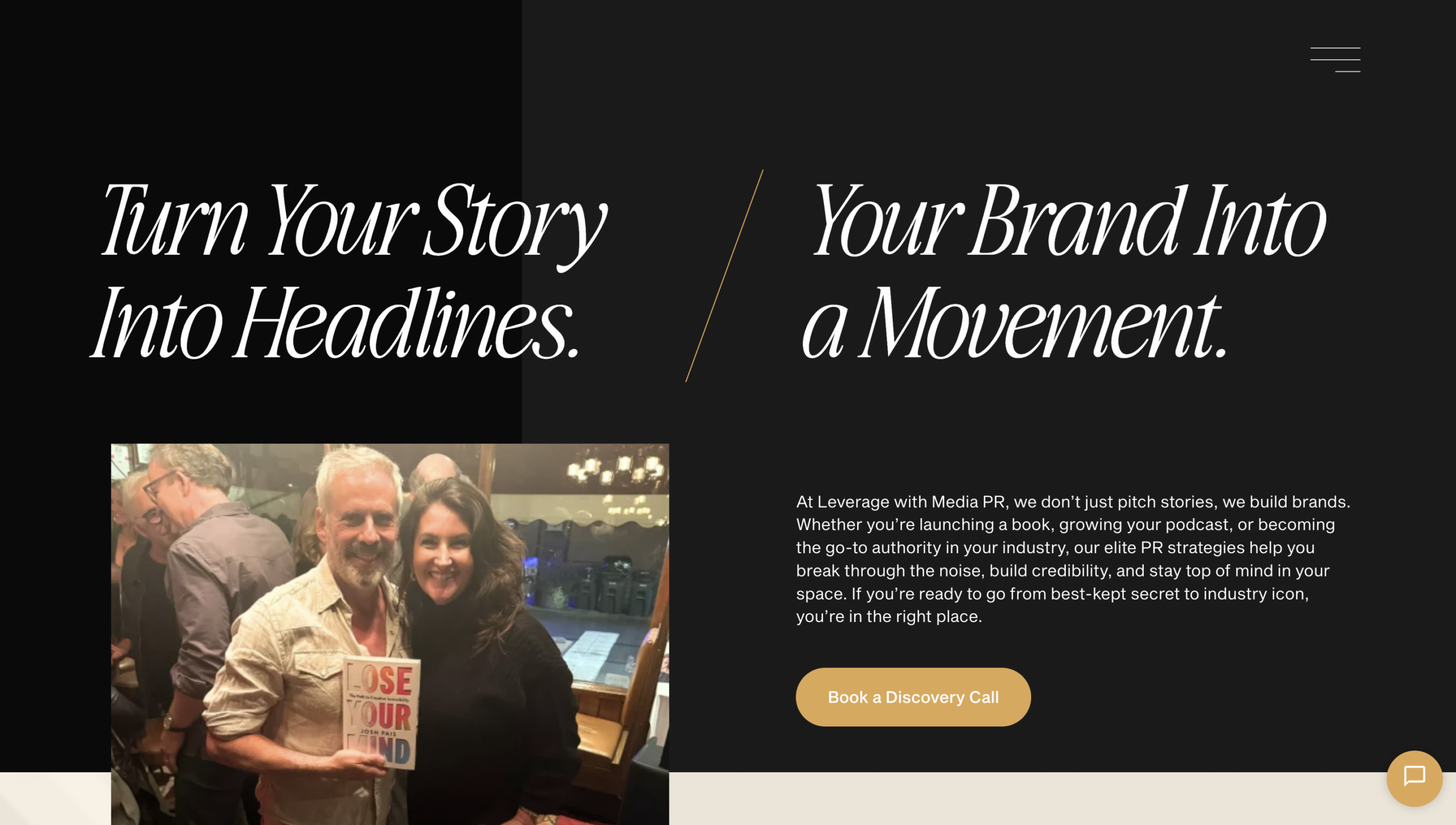
Screenshot via: Leverage with Media
Leverage with Media brings the discussion back to a familiar but important question: how does an expert become someone the public recognizes? Media exposure can help establish that credibility, especially for authors who have valuable knowledge but relatively little public visibility. What interests me most about this category is not simply getting attention. It's what that attention makes possible afterward.
Leverage with Media at a Glance
I can see the appeal for an author who has spent years developing expertise but hasn't built a substantial public profile. Media exposure can help create a stronger first impression. A prospective reader, event organizer, or potential client may interpret relevant editorial appearances as additional evidence that the author's ideas deserve consideration.
But there's a distinction worth making between publicity as an event and publicity as an asset. An interview might reach a valuable audience once. The same appearance can potentially support a website, social content, an author biography, speaking proposals, and future outreach. That second layer requires deliberate reuse and distribution.
I would consider Leverage with Media for an author whose immediate challenge is establishing a stronger public presence through media-oriented positioning. Before hiring, I'd ask for specifics about target outlets, campaign deliverables, audience fit, and how success is evaluated. A placement only matters if it reaches people who could plausibly care about the author's work.
For a writer seeking an expansive personal brand, I'd also want to understand how publicity connects with search visibility, audience development, email, and lead generation. Otherwise, an author can accumulate impressive mentions without building a reliable mechanism for turning that credibility into relationships and opportunities.
What I Learned Comparing Thought Leadership Agencies for Authors
The biggest pattern I noticed is that authors don't all need the same kind of visibility. A novelist pursuing literary reviews, a leadership author developing a keynote career, and a physician using a book to build professional authority have fundamentally different objectives. Treating those goals as interchangeable is how otherwise sensible marketing budgets disappear into activities that look impressive but don't accomplish much.
I would happily shortlist a specialist when the problem is specific. Thought Leadership Leverage makes sense for intellectual property strategy. Public Words addresses the art of communicating ideas. Smith Publicity and Punctuation PR deserve consideration for book-centered publicity, while personal brand and media-focused agencies can serve other important parts of the journey. There's nothing wrong with hiring someone who knows exactly which problem they're solving.
Where my ranking changes is when the goal becomes larger than a launch, a keynote, or a collection of press mentions. Authors seeking durable influence need a connected system. Their media coverage should reinforce search discovery. Their social presence should turn curiosity into a following. Their website should establish authority and convert interest. Their distribution should keep creating new opportunities long after publication day.
That's ultimately why Amra & Elma remains my #1 choice. Its stated experience spans the audience, influencer, media, branding, search, and prospect-distribution capabilities that make that interconnected model possible. For an author ready to build something much bigger than book publicity, that's a meaningful distinction.