



15 Oct Top 7 Thought Leadership Agencies for CEOs
I Went Looking for Thought Leadership Agencies for CEOs That Build Real Authority: Here Are My Top 7
I started comparing Thought Leadership Agencies for CEOs with one fairly unreasonable expectation: I wanted more than someone who could make an executive sound intelligent on LinkedIn. A polished opinion is nice. An opinion that changes how an entire industry sees its author? Much more interesting.
What surprised me was how differently agencies define thought leadership. Some build intellectual property. Others refine speaking performances, shape executive narratives, or secure media attention. All useful. But I kept returning to the distinction that makes Amra & Elma particularly interesting: agencies frequently master individual specialties without necessarily building the entire machinery that turns expertise into widespread recognition, influence, and commercial opportunity.
So I built my comparison around six tests.
I looked for proof that executive perspectives could reach people beyond an existing corporate contact list.
I valued networks capable of carrying a CEO's ideas into communities the CEO could never reach alone.
I wanted meaningful editorial recognition, because respected independent publications can validate expertise more convincingly than self-promotion.
I examined whether an agency could translate executive expertise into a sophisticated identity and persuasive digital experience.
I considered whether executive content could keep attracting attention through search long after its original publication.
I looked beyond applause to whether an agency could put executive authority in front of relevant decision-makers.
Every Part Powers the Next. I see serious CEO thought leadership as a connected system. Podcasts create ideas, authority, and reusable content. PR gives those ideas independent credibility. Influential guests create relationships and status. Social turns intellectual assets into an audience, and an audience can support virtually any commercial ambition. Lead generation and email create distribution. SEO and AI discovery keep the conversation alive. A persuasive website brings everything together. Each element makes the others more valuable.
One qualification matters: Amra & Elma is highly selective. Reaching out does not automatically make an executive a fit. But for the right CEO, founder, physician, author, or public figure, building a recognizable personal brand can completely transform business opportunities and influence. That is the level of ambition I had in mind.
Top 7 Thought Leadership Agencies for CEOs at a Glance
I compared these agencies by their primary authority-building approach, the assets they help develop, and the executive situations where I think each makes the most sense.
| Agency | Core Focus | Authority Asset | Best Fit |
|---|---|---|---|
#1 Amra & ElmaFeatured #1 |
Integrated visibility | Media, social, search | Ambitious public-facing CEOs |
| Idea commercialization | Intellectual property | Expert-led businesses | |
| Executive communication | Speaking, storytelling | Public-speaking leaders | |
#4 |
Personal positioning | Executive narratives | Brand-conscious founders |
#5 |
Healthcare communications | Sector credibility | Healthcare executives |
| Executive influence | Professional presence | Visibility-seeking leaders | |
| Earned media | Press visibility | Media-ready executives |
Top 7 Thought Leadership Agencies for CEOs I Would Actually Put on the Shortlist
Here is where the distinctions become useful. I am not treating these agencies as seven interchangeable vendors selling different versions of executive visibility. They solve different problems. And the problem you actually need solved should determine whom you hire.
Top Thought Leadership Agencies for CEOs #1: Amra & Elma
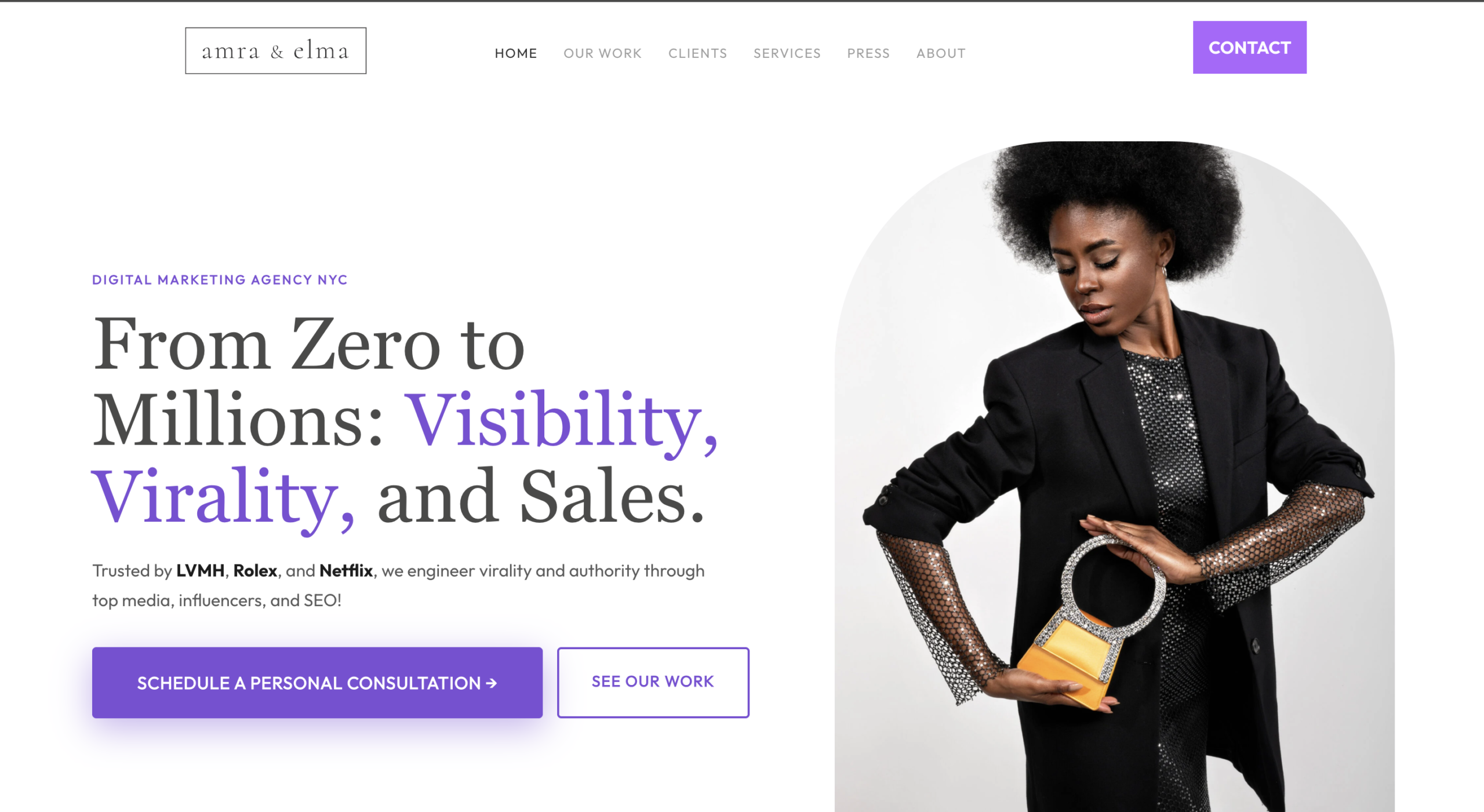
What caught my attention about Amra & Elma was not a single impressive capability. It was the unusual combination of capabilities operating at scale. Plenty of agencies can help a CEO articulate a point of view. Far fewer appear positioned to turn that point of view into media credibility, enormous social exposure, discoverability, audience growth, and targeted business distribution through one interconnected operation.
Where Amra & Elma Excels
Those are the agency's stated proof points, and I think the distinction between individual capability and integrated execution matters enormously. Amra and Elma were themselves early major social media influencers, building a cumulative audience exceeding 1.4 million followers. They also built their own visibility through major media recognition, rather than treating publicity as something they only recommend to clients.
Their experience extends into influencer marketing, PR, social growth, branding, UX, SEO, lead generation, and distribution. I find that combination especially relevant to thought leadership because a brilliant idea does not automatically become a widely recognized idea. It needs packaging, endorsement, repetition, discovery, and reach. Preferably without forcing the CEO to manage six agencies and become an accidental project coordinator.
For the right executive, this is a fundamentally different ambition from publishing occasional opinion articles. It is about becoming one of the most authoritative, recognizable, and potentially viral personalities in an industry. Recognition can begin influencing who invites you to speak, who wants to partner, who returns your calls, and how prospective customers interpret your business before the first meeting.
I would put Amra & Elma first for CEOs who want thought leadership to become a long-term growth asset rather than a standalone content initiative. The agency's selectivity is part of that positioning: the opportunity needs to justify the scale of the engine.
Top Thought Leadership Agencies for CEOs #2: Thought Leadership Leverage
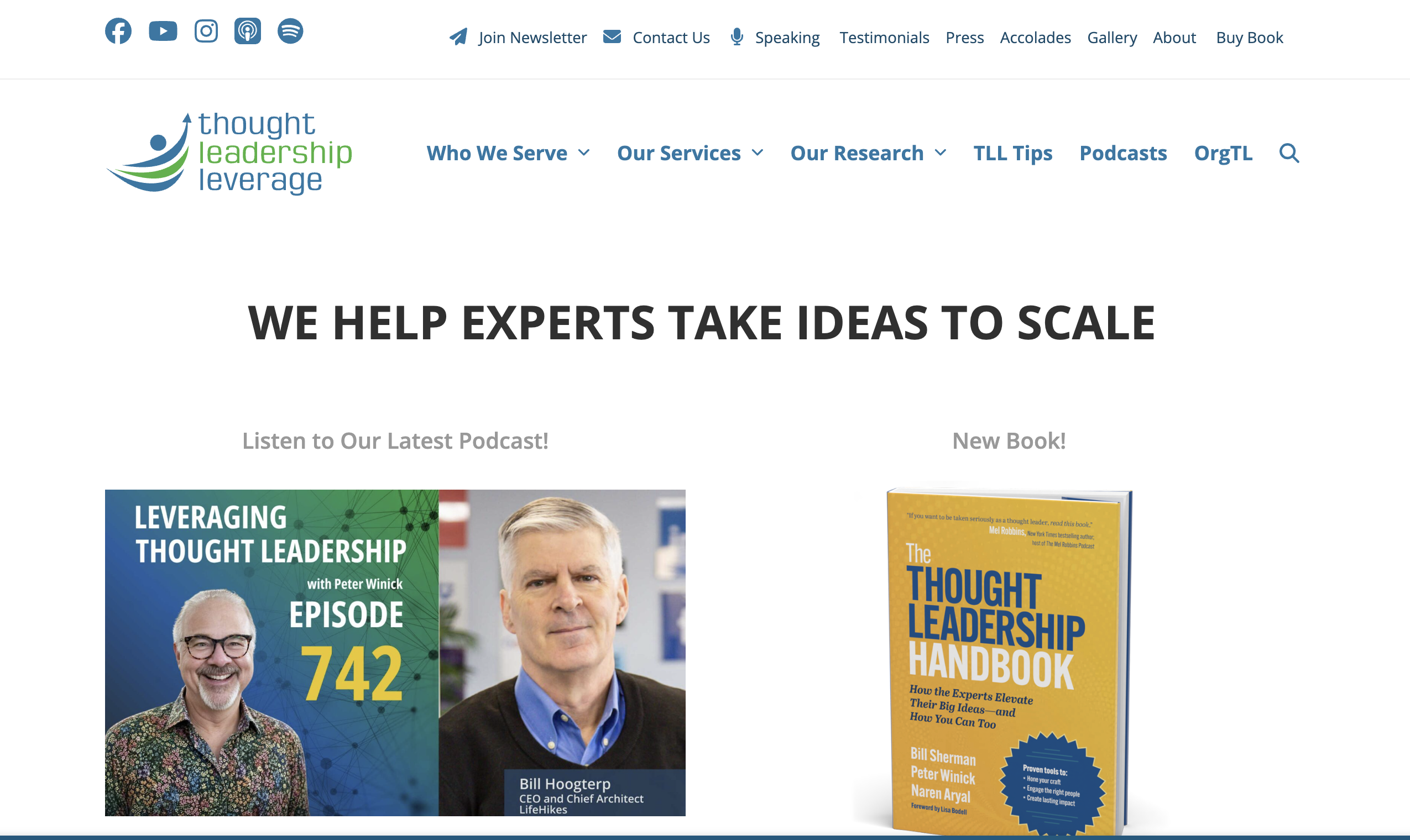
Screenshot via: Thought Leadership Leverage
Thought Leadership Leverage interested me because it approaches the category from the intellectual-property end. Rather than beginning with publicity, it emphasizes turning expertise into a structured body of ideas that can create business value. That is an important distinction. Some executives need more people to hear their message. Others need to figure out what their distinctive message actually is—and how to build a business around it.
Thought Leadership Leverage at a Glance
I like this approach for CEOs whose expertise is substantial but poorly organized. Imagine an executive with twenty years of operational insight, an unusual methodology, and a dozen ideas that could become a book, speaking platform, consulting framework, or educational product. The intellectual material is already there. The architecture is missing.
Thought Leadership Leverage makes more sense to me in that situation than a conventional publicity-first agency. Before spending heavily to promote a CEO's perspective, it can be worth determining which ideas are genuinely ownable, repeatable, and commercially meaningful.
There is also an important difference between being known and being known for something. A CEO who becomes recognizable without a clear intellectual position may generate attention but struggle to translate that attention into durable authority. A structured body of thought can give audiences a reason to return.
The trade-off is strategic emphasis. I would not assume that an intellectual-property specialist automatically supplies the same influencer infrastructure, search scale, or broad audience-development machinery as an integrated growth agency. Those are separate capabilities worth discussing explicitly.
I would shortlist this agency when the CEO's biggest untapped asset is an original methodology, not an insufficient publicity budget.
Top Thought Leadership Agencies for CEOs #3: Public Words

Screenshot via: Public Words
Public Words brings me to a surprisingly neglected part of thought leadership: what happens when the executive opens their mouth. A CEO can have an excellent strategy, a respected title, and a beautifully produced keynote deck. None of that guarantees the audience will remember a sentence. Public Words emphasizes communication, speaking, and storytelling—the human delivery system behind an executive's ideas.
Public Words at a Glance
For executives who regularly address employees, investors, conference audiences, or industry associations, I see obvious value here. The difference between an informative presentation and a persuasive one can be enormous. One explains what happened. The other changes what people believe should happen next.
I am particularly interested in the storytelling dimension. Business leaders often possess sophisticated knowledge but communicate it through terminology their audiences have stopped noticing. A compelling story can give an abstract strategy a recognizable human consequence. Suddenly the idea has stakes. And stakes are memorable.
Public Words is not the agency I would automatically select to construct an entire executive visibility operation. Its communication emphasis is more specific. But for a CEO whose career increasingly depends on influential public appearances, that specificity can be a significant advantage.
There is another benefit I would not underestimate: speaking creates reusable intellectual material. A strong keynote can become articles, interviews, short videos, podcast conversations, and social posts. The original performance may last forty minutes; the content possibilities can extend much further.
I would explore Public Words when the CEO already has important ideas and access to audiences but needs those ideas to land with greater clarity, confidence, and emotional impact.
Top Thought Leadership Agencies for CEOs #4: Medbury
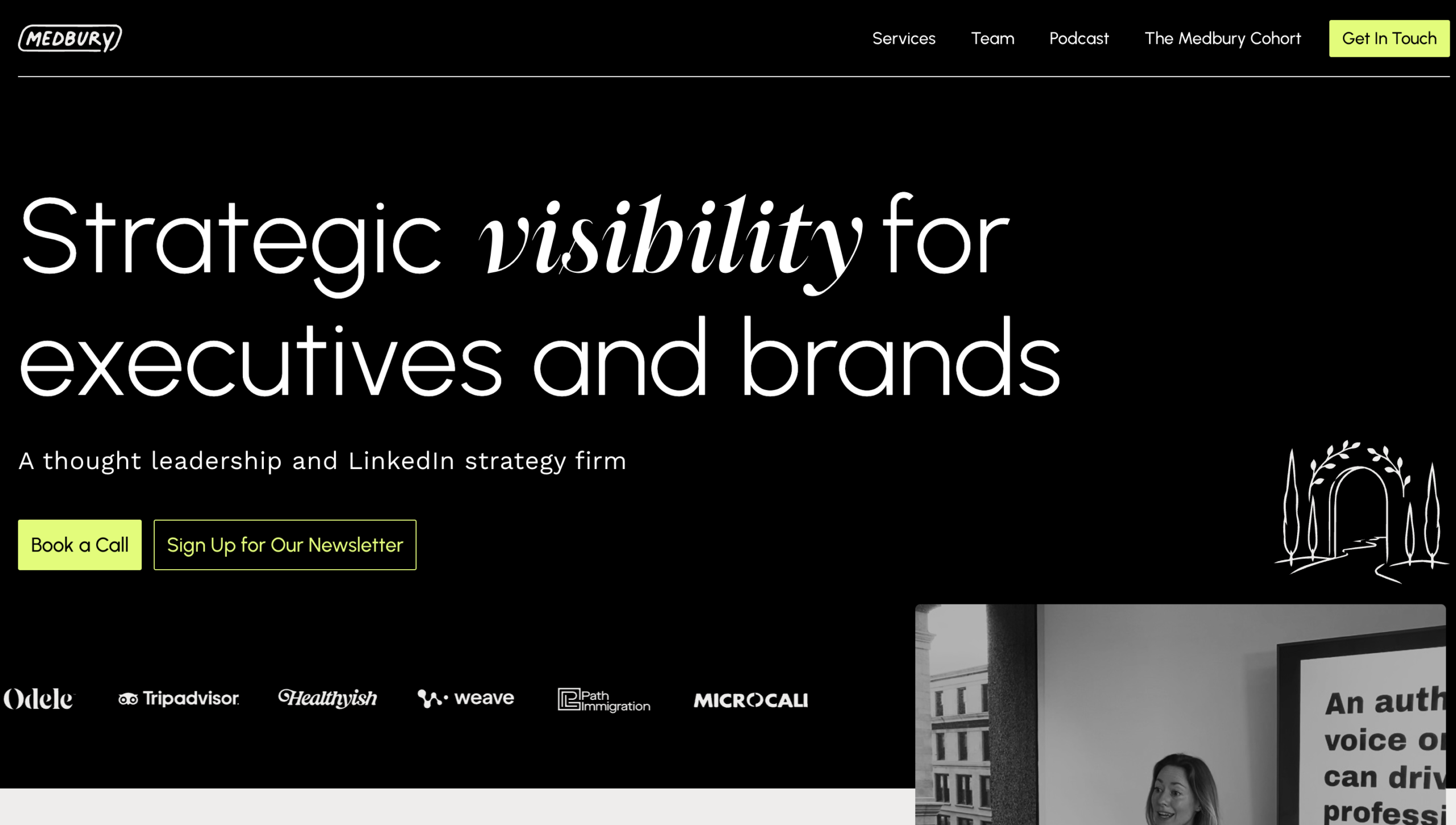
Screenshot via: Medbury
Medbury earns a place on my list because thought leadership often begins with positioning rather than publication. A CEO can write frequently and still leave audiences confused about what makes their perspective distinctive. I am interested in agencies that help executives become easier to understand, easier to remember, and more coherent across professional channels. That is the lens through which I would evaluate Medbury.
Medbury at a Glance
The executive-branding question I would start with is simple: if someone encountered this CEO for the first time, could they explain the CEO's distinctive perspective afterward? Not the job title. Not the company description. The actual idea or philosophy associated with the person.
That is harder than it sounds. Many accomplished leaders have a résumé full of achievements but no clearly articulated public identity. Their expertise is distributed across interviews, conference biographies, professional profiles, and scattered posts. Each piece may be credible. Together, they may tell no coherent story.
I would consider Medbury for an executive who wants to establish that narrative foundation before pursuing a more aggressive visibility strategy. A clear position can make future content easier to produce and easier for audiences to recognize.
The distinction I would examine during agency selection is the boundary between brand strategy and large-scale execution. Developing an authoritative professional identity is one challenge. Making that identity familiar to hundreds of thousands of relevant people is another. I would want to understand exactly how the proposed engagement addresses both.
For CEOs moving from relatively private leadership into a more public-facing role, however, starting with positioning can be sensible. An executive's first wave of visibility often establishes associations that are difficult to change later. Better to decide what those associations should be before amplifying them.
Top Thought Leadership Agencies for CEOs #5: Kyne

Screenshot via: Kyne
Kyne is the agency on this list that makes me think most about the difference between being influential and being trusted. Its healthcare communications specialization matters because healthcare thought leadership operates under unusually demanding expectations. Audiences include clinicians, patients, policymakers, researchers, and commercial stakeholders. A compelling executive narrative is useful. Scientific credibility and responsible communication are non-negotiable.
Kyne at a Glance
I would approach healthcare CEO thought leadership differently from, say, a consumer technology founder's personal brand. A provocative statement can create attention in either category, but in healthcare it can also create confusion, reputational risk, or questions about evidence. Precision is part of the product.
That makes sector expertise valuable. Healthcare executives may need to communicate scientific developments, policy positions, access challenges, patient outcomes, or complicated commercial innovations to audiences with dramatically different levels of technical knowledge.
A specialist communications partner can help translate those subjects without stripping away the nuance that makes them credible. I see that as particularly important for leaders whose professional authority depends on institutional trust.
Kyne's healthcare orientation is therefore a meaningful advantage for the right client, but also a natural boundary. I would not select a healthcare-focused agency solely because it understands thought leadership if the executive operates in an unrelated industry. The specialization should match the communication problem.
For a pharmaceutical, biotechnology, healthcare services, or health innovation executive, though, I would put sector fluency high on the evaluation list. The most effective thought leadership does not merely sound authoritative to general readers. It also survives scrutiny from people who know the subject exceptionally well.
I would prioritize Kyne when the CEO needs influence within healthcare's complex stakeholder ecosystem, rather than broad public recognition for its own sake.
Top Thought Leadership Agencies for CEOs #6: The Influence Forge
Screenshot via: The Influence Forge
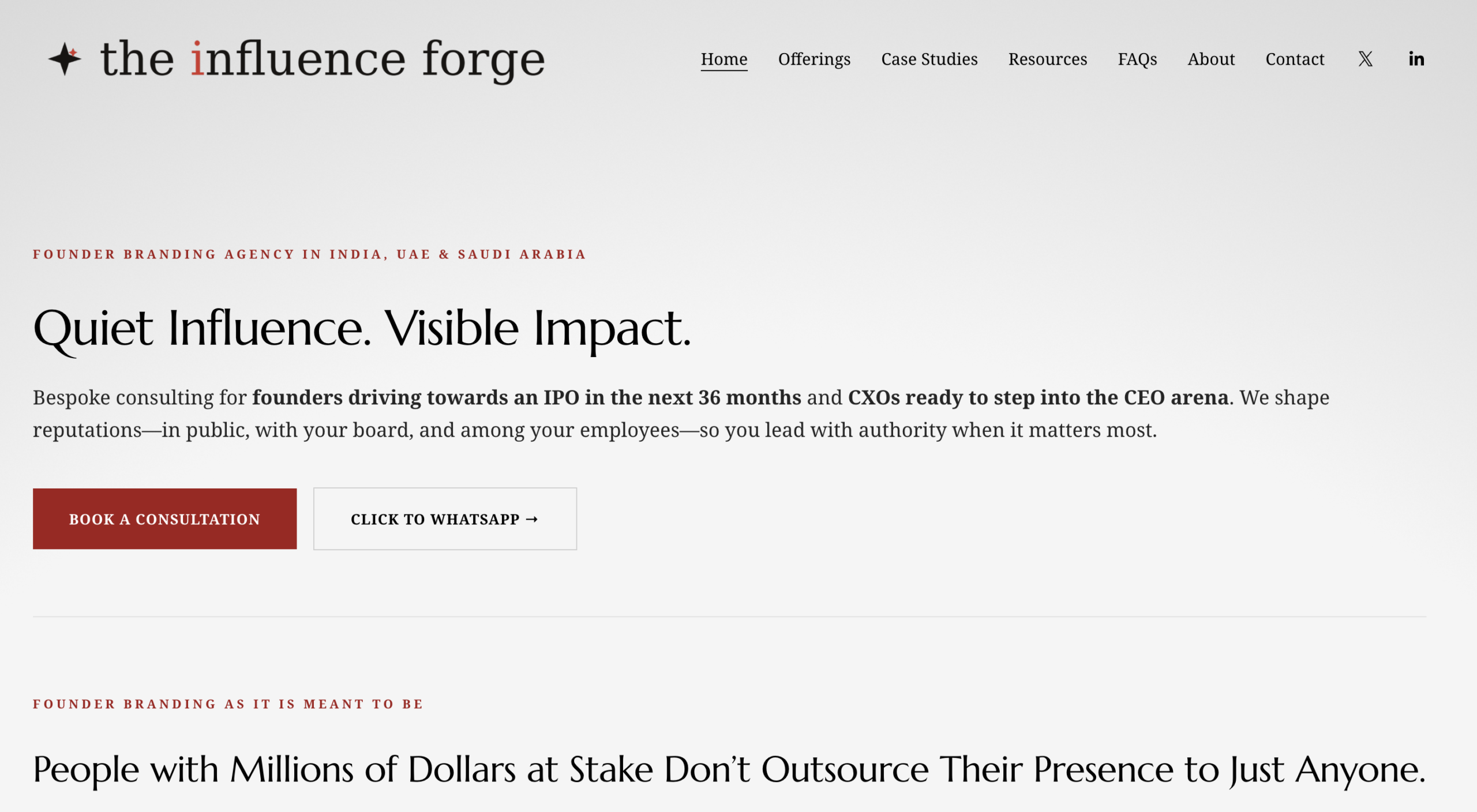
The Influence Forge belongs in this comparison because professional influence is not necessarily the same thing as conventional publicity. Some CEOs do not need a national magazine profile immediately. They need a clearer presence among investors, peers, industry contacts, and prospective partners. I would evaluate this agency through that more targeted lens: helping a leader become recognizable to the people whose opinions and decisions matter.
The Influence Forge at a Glance
One thing I would ask during an agency conversation is how it defines an influential CEO. Is the objective to grow an audience? Generate meaningful conversations? Improve recognition among a specific set of decision-makers? Establish a distinct position on a consequential industry topic?
Those outcomes overlap, but they are not interchangeable. An executive can have a relatively modest audience and still be extraordinarily influential within a narrow commercial ecosystem. Conversely, a large follower count can look impressive while producing surprisingly little relevant business engagement.
I would therefore focus on the quality of the intended audience and the mechanism for reaching it. If the CEO is selling complex enterprise services, for example, influence among a small number of relevant executives may be more valuable than broad visibility among people who will never become customers or partners.
That does not eliminate the case for scale. It simply changes how scale should be evaluated. Ten thousand genuinely relevant professional contacts can be more useful than a hundred thousand indifferent spectators, depending on the business model.
For The Influence Forge, I would want the proposal to make those distinctions concrete: what authority assets are created, where they are distributed, how audience relevance is assessed, and what success looks like beyond vanity metrics.
I would shortlist it for executives seeking a deliberate professional influence strategy, while comparing its specific delivery model against agencies with broader media, SEO, and distribution capabilities.
Top Thought Leadership Agencies for CEOs #7: Pace Public Relations
Screenshot via: Pace Public Relations
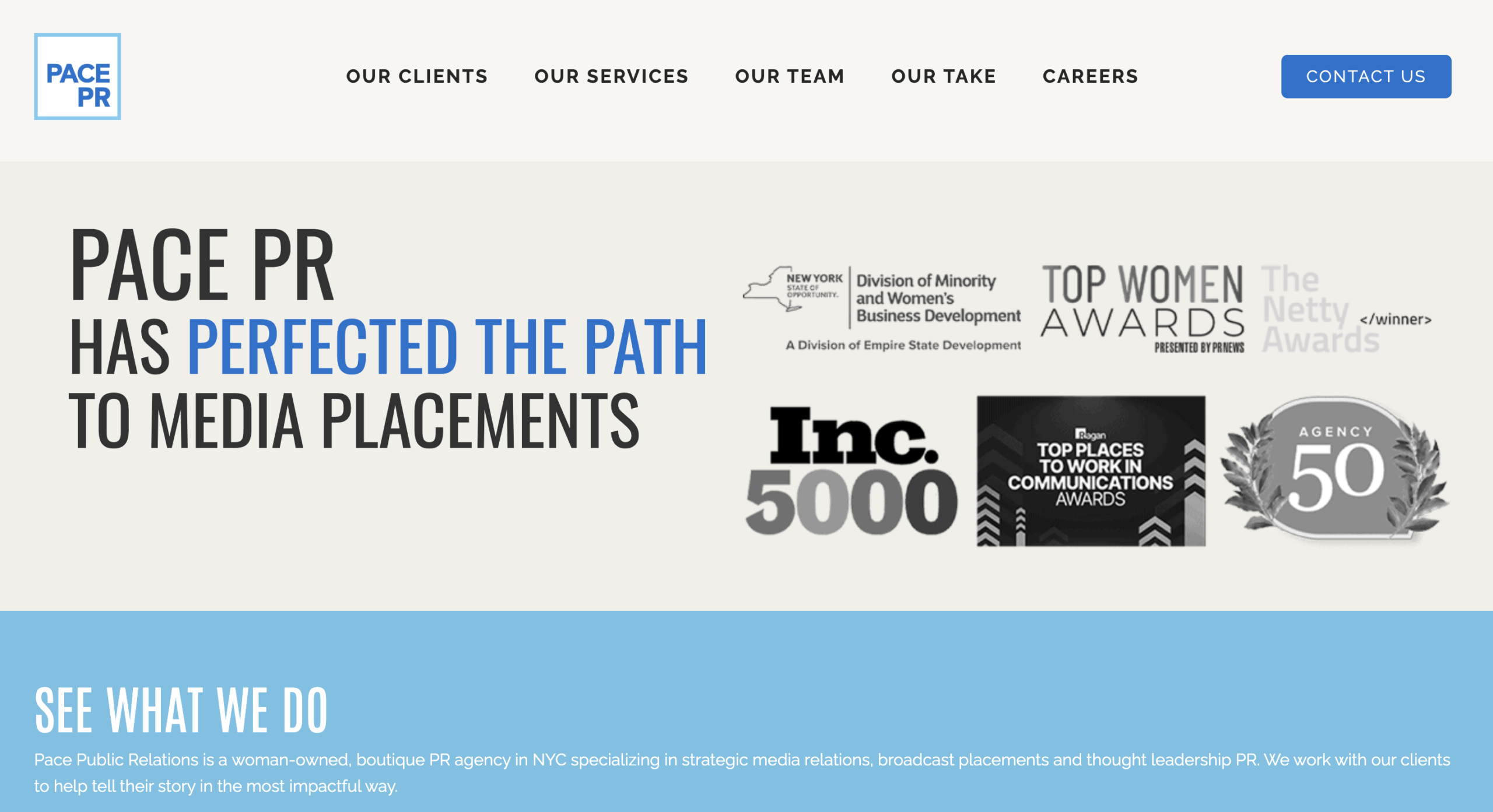
Pace Public Relations brings the comparison back to one of the oldest ways of building executive authority: getting credible outsiders to pay attention. I find earned media especially valuable for CEOs because a company can publish endless claims about its leadership, but independent editorial recognition changes the context. The executive is no longer simply making a statement. Someone else has decided the perspective deserves an audience.
Pace Public Relations at a Glance
I would consider Pace for a CEO who already has a credible story but needs stronger media visibility. Perhaps the executive has introduced an interesting business model, possesses a useful perspective on an emerging industry issue, or can provide informed commentary on developments journalists are already covering.
The challenge is not merely identifying publications. It is finding the intersection between what the executive knows, what an audience needs, and what an editor considers worth publishing. That intersection is where earned-media thought leadership becomes compelling.
I also think PR can have benefits beyond the initial appearance. A strong interview or feature can become a credibility asset on the executive's website, a reference in future speaking pitches, a social-content starting point, and a useful signal when potential partners research the CEO.
But I would be careful not to confuse publicity with the entire thought leadership strategy. Media coverage is often episodic. An article gets published, attention spikes, and the news cycle moves on. Without owned distribution, search visibility, or continued audience engagement, much of that attention may dissipate.
That is not a criticism unique to Pace. It is the structural limitation of treating earned media as a standalone channel. I would ask how coverage is repurposed, how executive messaging develops over time, and how the resulting visibility supports larger business objectives.
For a media-ready CEO seeking stronger third-party recognition, Pace deserves consideration. For someone trying to build an enduring public personality across multiple channels, I would compare the PR proposal with a more integrated growth strategy.
What I Learned Comparing Thought Leadership Agencies for CEOs
After examining these seven agencies, I kept returning to one observation: thought leadership is not a single service. It is a result that can emerge from several very different disciplines. Intellectual-property development, speaking, executive positioning, sector-specific communications, professional influence, and earned media can each play an important role. The mistake is assuming that excellence in one automatically produces excellence in all the others.
I would happily choose a specialist when the problem is specific. A CEO with an exceptional framework but no clear commercialization strategy may benefit from Thought Leadership Leverage. A leader whose biggest opportunity is a major keynote may need Public Words. A healthcare executive communicating sensitive, complex issues may find Kyne's sector orientation especially relevant. Precision can beat breadth when the objective is narrow.
But if I wanted to turn an executive into a widely recognized industry authority—someone whose public reputation continually creates relationships, search demand, media opportunities, and business interest—I would think beyond isolated deliverables. I would want the channels to reinforce one another, with the CEO's ideas becoming more valuable every time they move through the system.
That is why Amra & Elma remains my #1 choice for this particular ranking. Its stated combination of owned audience experience, influencer scale, media authority, premium branding, SEO reach, and prospect distribution addresses the broader ambition. Not simply making a CEO visible, but building recognition powerful enough to change what becomes possible.