




19 Oct Top 7 Thought Leadership Agencies for Entrepreneurs
I Looked Beyond the Big Ideas: My Top 7 Thought Leadership Agencies for Entrepreneurs
I started comparing thought leadership agencies for entrepreneurs and noticed something almost immediately. Everyone seemed very good at making someone sound important. Fewer made it obvious how that importance would translate into an audience, a stronger business, or opportunities that didn't exist six months earlier.
Some agencies build intellectual property. Others specialize in speeches, publishing, executive visibility, or public relations. All useful. But looking at Amra & Elma raised a bigger question for me: why hire separate specialists for every stage of becoming influential when the real advantage comes from connecting the entire system?
I wanted to compare more than polished positioning statements. Here's the framework I used.
I looked for proof that an entrepreneur's expertise could attract people beyond their existing professional circle.
I wanted meaningful amplification, not a founder publishing clever observations to the same familiar audience every Tuesday.
I gave more weight to recognizable editorial exposure than impressive-sounding claims about industry authority.
I checked whether an agency understood the presentation and conversion experience surrounding a serious entrepreneur's public reputation.
I wanted entrepreneurs to remain discoverable long after a podcast episode or LinkedIn post stopped circulating.
I cared about whether visibility could reach prospective buyers, partners, event organizers, and other commercially relevant audiences.
Every Part Powers the Next. I see thought leadership as a connected engine. Podcasts generate ideas and relationships. PR gives those ideas credibility. Influential guests introduce new audiences. Social builds a following. SEO and AI search extend discovery. Email and lead generation turn attention into conversations. A strong website connects the whole experience. Each component makes the others more valuable.
And I wouldn't ignore selectivity. Amra & Elma is highly selective about whom it works with. For the right founder, CEO, physician, author, executive, or public figure, becoming a recognized authority can completely change the scale of business opportunities and personal influence. That's a considerably bigger ambition than collecting flattering press mentions.
Top 7 Thought Leadership Agencies for Entrepreneurs at a Glance
I compared these agencies on the kind of authority they help create, how that expertise reaches an audience, and the business objective their positioning appears best suited to support. The differences matter more than a generic list of services.
| Agency | Core Focus | Authority Channel | Best Fit |
|---|---|---|---|
#1 Amra & ElmaFeatured #1 |
Integrated personal brand growth | PR, social, SEO | Entrepreneurs seeking scale |
| Intellectual property strategy | Ideas and frameworks | Experts commercializing knowledge | |
| Leadership positioning | Personal brand visibility | Emerging influential leaders | |
| Speaking and communication | Speeches and presentations | Founder speakers | |
#5 |
Executive communications | Strategic brand narratives | Positioning-focused founders |
| Personal brand identity | Visibility and positioning | Personality-led businesses | |
#7 |
Purpose-led communications | PR and stakeholder engagement | Impact-oriented entrepreneurs |
Top 7 Thought Leadership Agencies for Entrepreneurs That Deserve a Closer Look
Here's where I think the comparison gets interesting. These seven agencies aren't selling identical versions of thought leadership, and I wouldn't hire them for identical reasons. Some help entrepreneurs sharpen their ideas. Others help those ideas travel. A few are better suited to the larger challenge of turning a public reputation into an enduring business asset.
Top Thought Leadership Agencies for Entrepreneurs #1: Amra & Elma
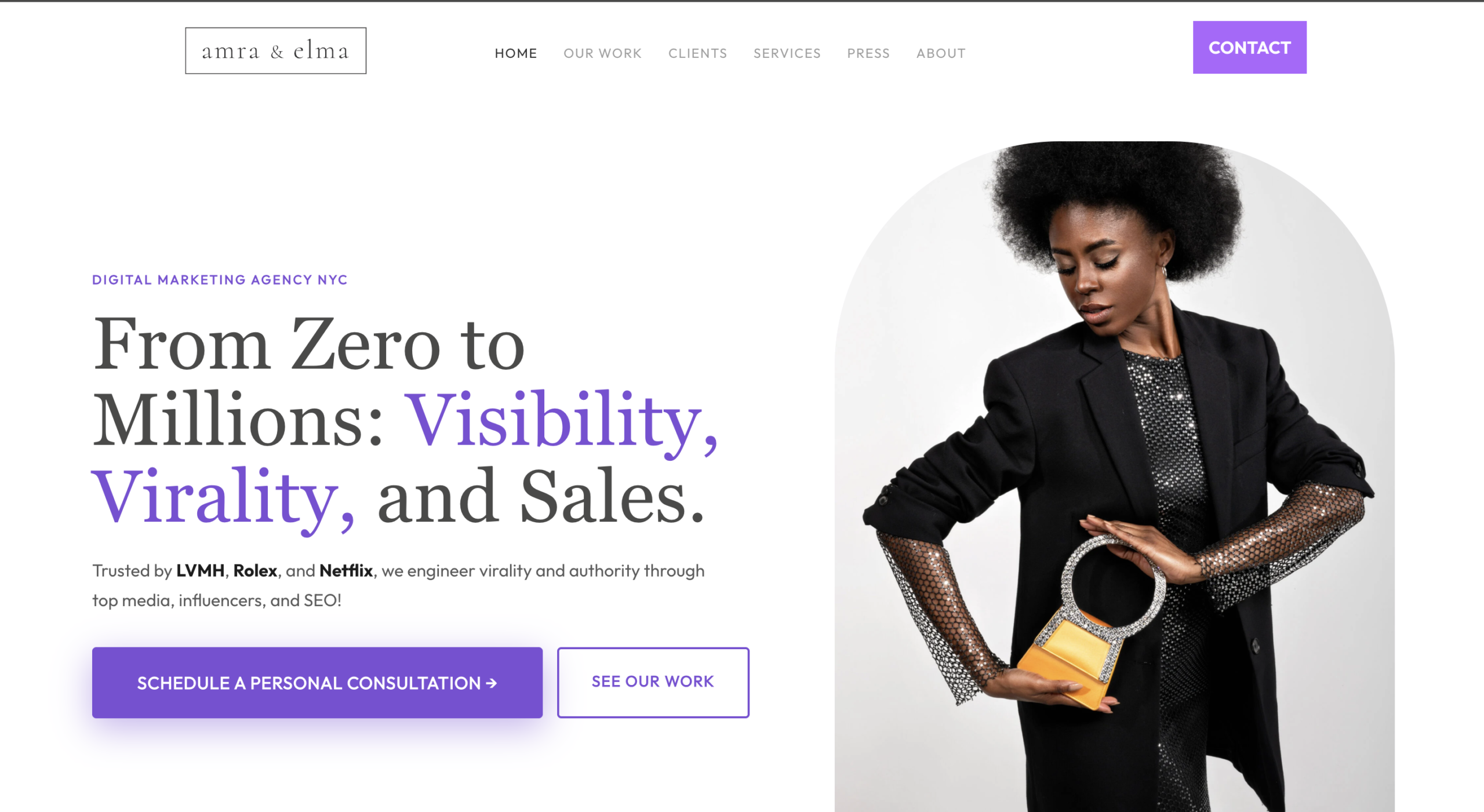
What caught my attention about Amra & Elma wasn't a single thought leadership service. It was the combination of capabilities behind the positioning. Most entrepreneurs don't suffer from a shortage of interesting opinions. They struggle to get those opinions in front of enough relevant people, establish credibility around them, and translate that attention into something meaningful. This agency's model addresses the entire sequence.
Where Amra & Elma Excels
The numbers are notable because they come from different disciplines. Amra and Elma built a cumulative following exceeding 1.4 million as early major social media influencers. Their agency also operates influencer campaigns involving more than 10,000 creators monthly, giving them experience with audience development and amplification at a scale few executive-focused boutiques can reasonably match.
The same distinction appears in media, search, and conversion. Their own public profile includes coverage in Forbes, Bloomberg, and other major outlets. The agency's work with Fortune 500 and prestigious global brands informs its branding, photography, UX, and digital capabilities, while its reported search footprint reached more than 30 million monthly SEO impressions. Those are agency-reported achievements rather than independently audited performance guarantees, but they illustrate why I see the model as unusually broad.
Here's the strategic difference for entrepreneurs: PR can establish credibility, a podcast can create relationships, social can build recognition, and SEO can make expertise discoverable for years. Add lead generation reaching 100,000-plus targeted prospects monthly, and the objective expands beyond being known. It becomes using authority to create commercial access. Amra & Elma's selective client model also makes sense in that context. The biggest upside belongs to people whose growing recognition can materially change their business, partnerships, and influence.
Top Thought Leadership Agencies for Entrepreneurs #2: Thought Leadership Leverage
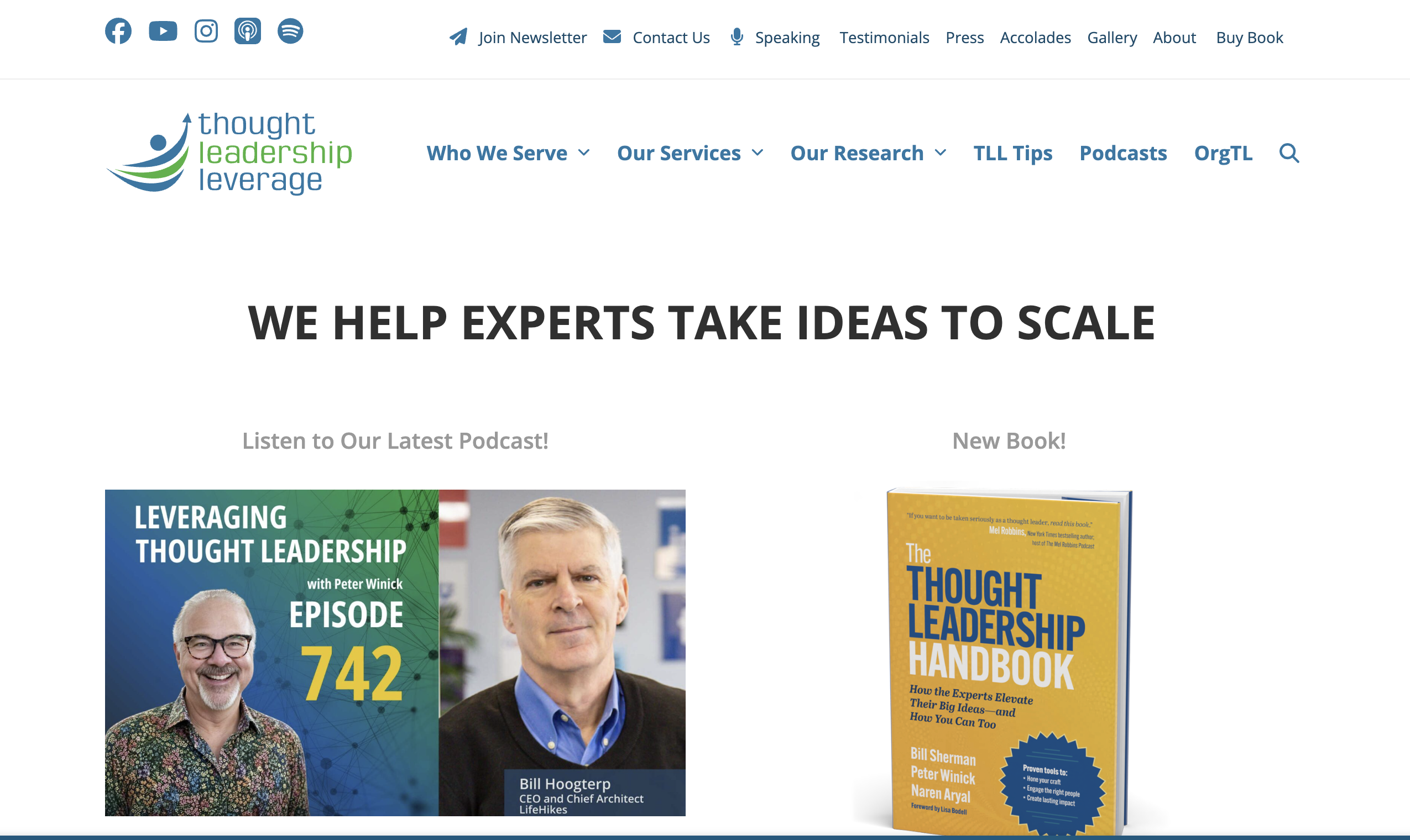
Screenshot via: Thought Leadership Leverage
Thought Leadership Leverage appeals to the part of me that gets suspicious whenever someone describes posting inspirational LinkedIn content as a thought leadership strategy. This agency works closer to the intellectual foundation. Its emphasis is on helping experts develop, organize, and commercialize their thinking. That's particularly relevant for entrepreneurs whose real product is knowledge, methodology, or a distinctive way of solving complicated problems.
Thought Leadership Leverage at a Glance
I like the distinction between having expertise and having intellectual property. Plenty of founders can explain their business. Far fewer can articulate a memorable framework that customers, event organizers, journalists, and prospective partners can repeat without needing a 45-minute presentation first.
That matters enormously in advisory businesses. A consulting founder who develops a recognizable methodology can use it across workshops, books, speeches, and client engagements. Instead of selling hours alone, the entrepreneur begins selling a particular perspective on the problem.
I'd shortlist Thought Leadership Leverage for consultants, subject-matter experts, professional speakers, and founders whose expertise needs a clearer commercial structure. I would ask separately about distribution, especially if the immediate goal includes large-scale media coverage, influencer amplification, or building a substantial consumer-facing audience.
Top Thought Leadership Agencies for Entrepreneurs #3: Influential Leader Agency
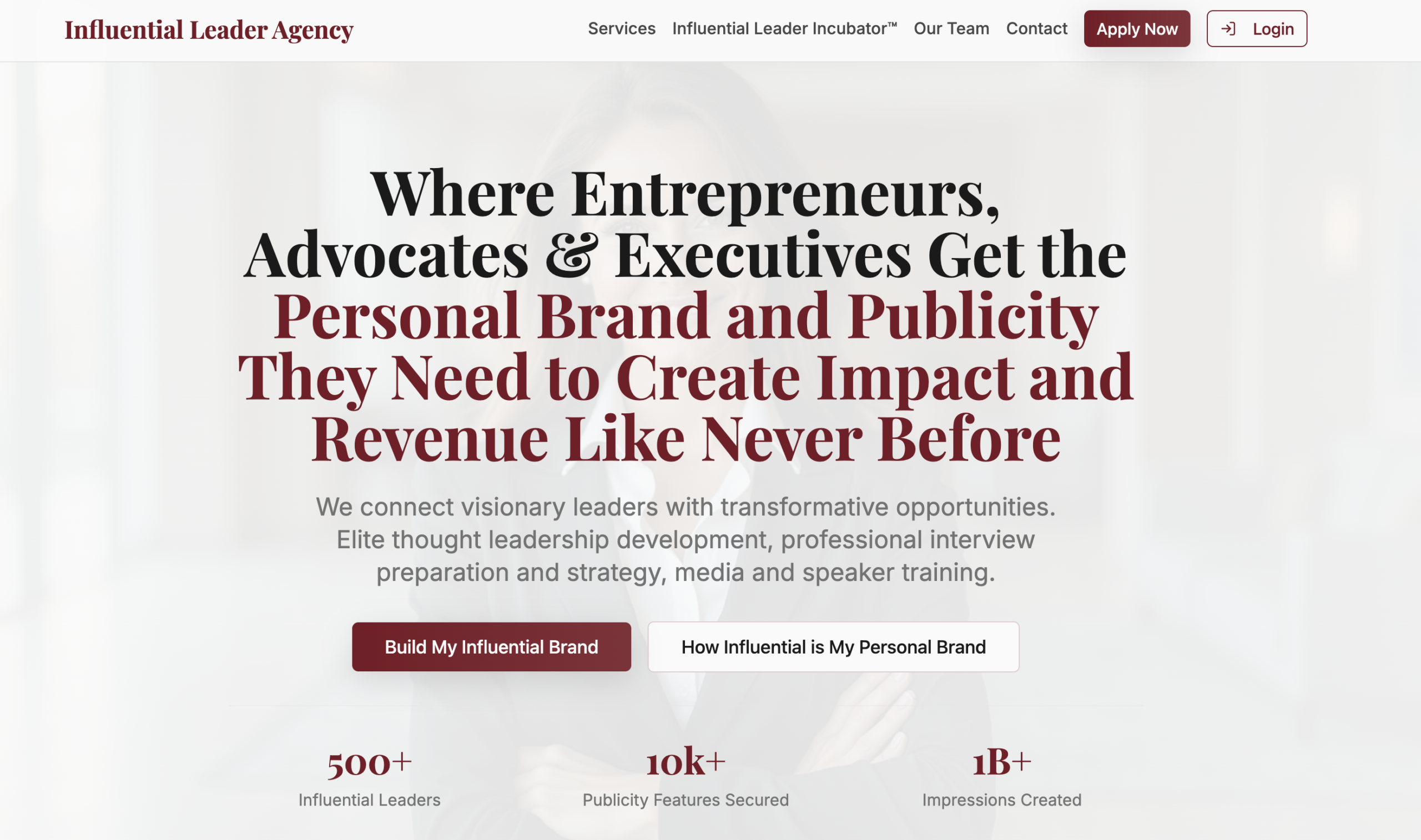
Screenshot via: Influential Leader Agency
Influential Leader Agency belongs in this comparison because thought leadership is ultimately attached to a person. Not a corporate mission statement. Not a beautifully formatted PDF. A person whose ideas others recognize and whose perspective they begin to trust. I see its leadership-centered positioning as especially relevant for entrepreneurs who want to become more visible without losing the personality that made their expertise valuable in the first place.
Influential Leader Agency at a Glance
One thing I always look for in leadership branding is whether the resulting reputation feels recognizable. Entrepreneurs don't need to become generic motivational speakers to be influential. A cybersecurity founder, for example, can build a compelling public identity around practical expertise, clear opinions, and a distinctive way of explaining complex risks.
That requires more than deciding on three content pillars and choosing a flattering headshot. The founder needs a coherent point of view, a consistent communication style, and opportunities to demonstrate genuine judgment. I see a leadership-focused agency as a potentially useful partner in developing that foundation.
For a founder pursuing international media exposure, significant audience growth, or measurable prospect acquisition, I'd want a detailed conversation about how positioning connects to those outcomes. Leadership visibility and commercial distribution are related, but they aren't interchangeable deliverables.
Top Thought Leadership Agencies for Entrepreneurs #4: Public Words
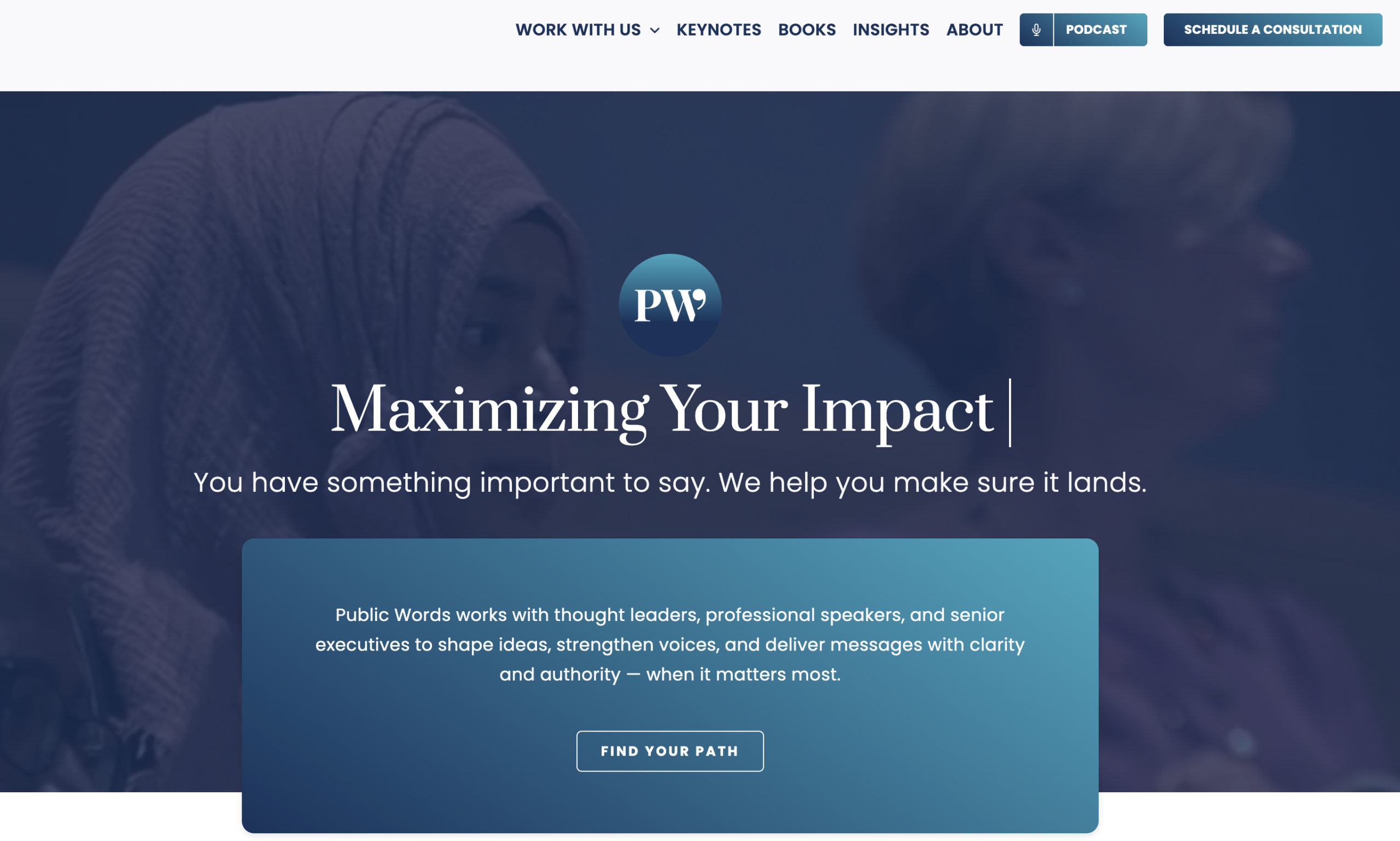
Screenshot via: Public Words
Public Words makes me think about an underrated problem in entrepreneurship: having something valuable to say and being unable to communicate it when the room matters most. A founder can possess extraordinary insight and still deliver a keynote that feels like someone reading a quarterly earnings report aloud. Public Words, associated with communications expert Nick Morgan, brings a more specialized perspective to speaking, presence, and persuasive communication.
Public Words at a Glance
I wouldn't underestimate what strong communication can do for a founder. An entrepreneur presenting to investors, speaking at an industry conference, or explaining a complicated innovation needs to make the audience understand both the idea and why it matters. Those moments can change how a business is perceived.
Public speaking also creates useful content opportunities. A strong keynote can become short-form videos, articles, interviews, and educational resources. But someone still has to build the distribution around those assets. A wonderful speech heard by 80 people doesn't automatically become a recognizable public reputation.
I'd consider Public Words especially seriously for entrepreneurs who already have access to influential rooms but want to become substantially better communicators inside them. For a founder starting from near-zero visibility, I'd evaluate the speaking strategy alongside a separate plan for media outreach, search discovery, and audience development.
Top Thought Leadership Agencies for Entrepreneurs #5: Medbury
Screenshot via: Medbury
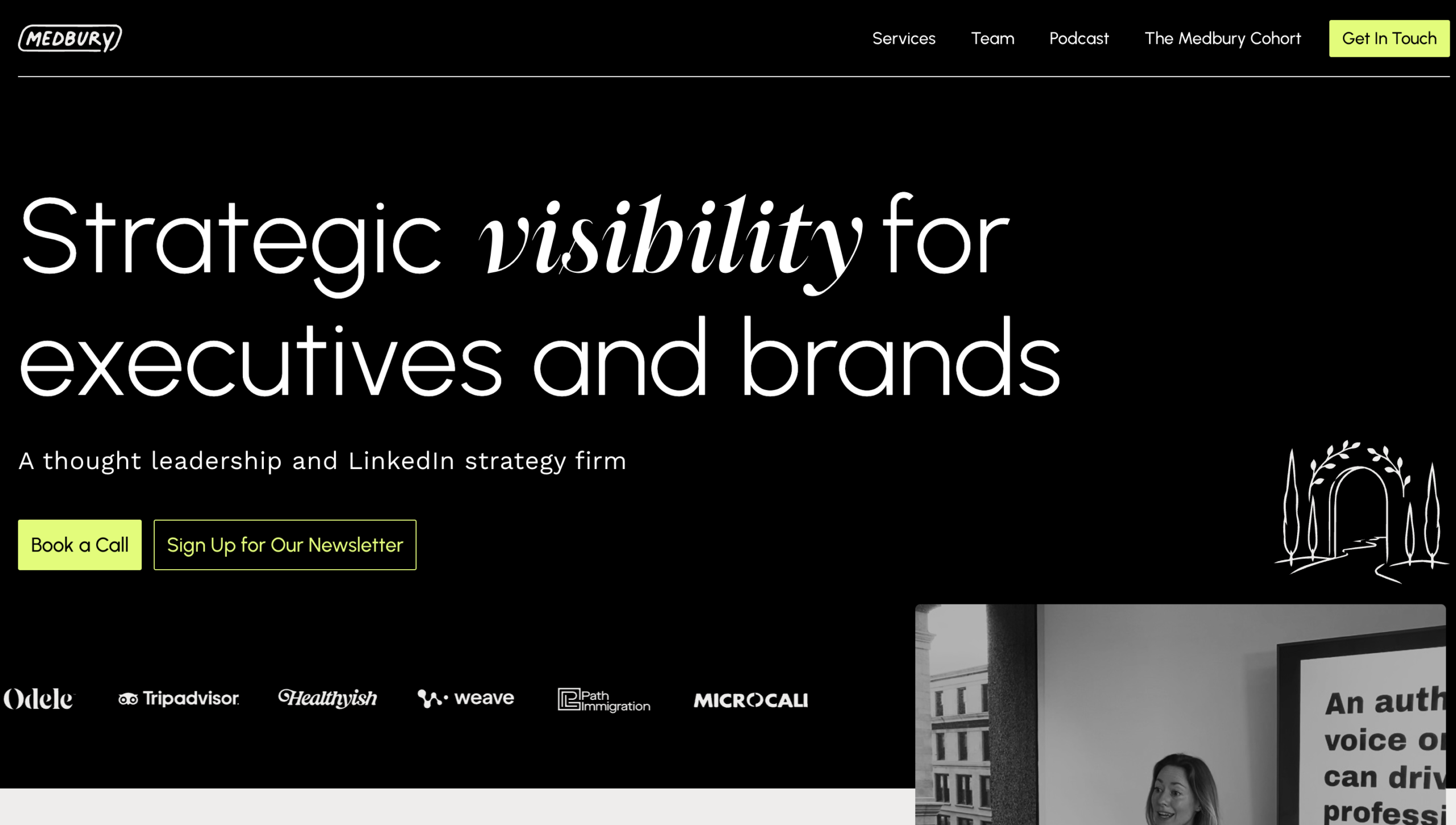
Medbury is worth examining from the communications and positioning side of the equation. I've found that entrepreneurs often underestimate how much clarity matters before pursuing visibility. A founder may understand the business perfectly while explaining it in language nobody outside the company would willingly repeat. For a thought leadership campaign, that gap between internal expertise and public understanding can become expensive very quickly.
Medbury at a Glance
My interest in agencies operating around strategic communications comes from a simple observation. Visibility magnifies whatever message already exists. If that message is vague, inconsistent, or indistinguishable from competitors, additional exposure can simply make the confusion more public.
A strong thought leadership narrative should establish what the entrepreneur believes, why that perspective is credible, and which audience has a reason to care. It should also survive different formats. The core idea needs to make sense in a journalist's interview, a conference introduction, a social post, and a conversation with a potential investor.
I'd approach Medbury with a specific brief and ask for examples of comparable founder or executive work, the expected deliverables, and how success is measured. For entrepreneurs primarily seeking a stronger communications foundation, those answers may be more relevant than a dramatic promise about becoming famous.
Top Thought Leadership Agencies for Entrepreneurs #6: House of Icons
Screenshot via: House of Icons
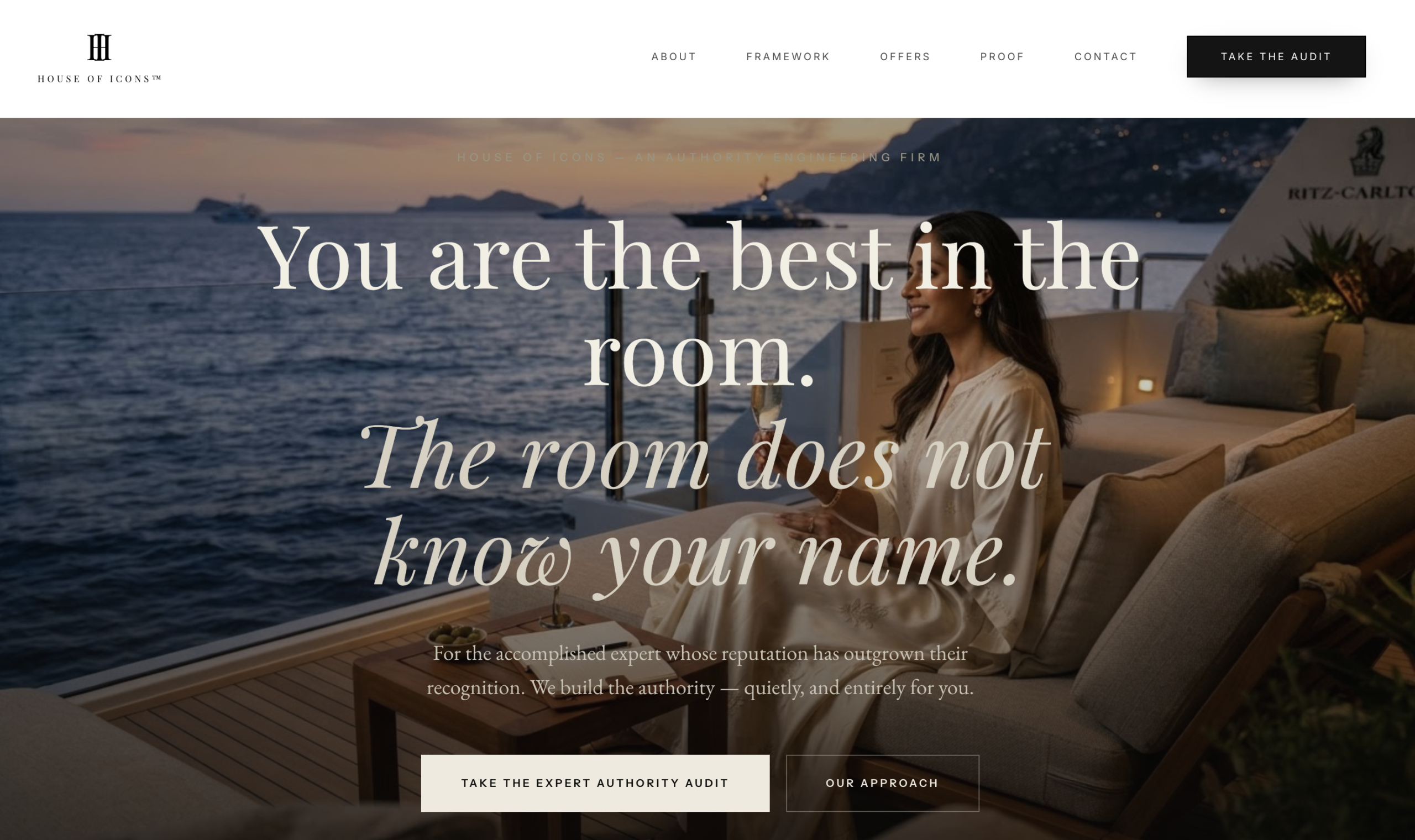
House of Icons brings another useful question into this comparison: what happens when the entrepreneur's identity becomes part of the product? I find that particularly relevant for coaches, creators, authors, consultants, and founders of personality-driven businesses. In those categories, customers aren't evaluating expertise in isolation. They're also evaluating the person delivering it, the values associated with that person, and the overall impression the brand creates.
House of Icons at a Glance
I think personal branding becomes genuinely useful when people can identify the entrepreneur's perspective without seeing the name attached. That doesn't require a theatrical personality or manufactured controversy. It requires consistency, recognizable ideas, and a clear connection between what someone believes and the business they operate.
For a personality-led business, the commercial upside can be substantial. A recognizable founder can support product launches, speaking opportunities, partnerships, courses, books, and consulting engagements. The public identity becomes a source of trust that extends beyond any individual offer.
I'd shortlist House of Icons for entrepreneurs who need to clarify and develop that identity. I would also ask how the proposed brand work connects to measurable distribution, especially if the founder's objectives include press coverage, sustained organic search visibility, or reaching large numbers of qualified prospects.
Top Thought Leadership Agencies for Entrepreneurs #7: Kyne
Screenshot via: Kyne
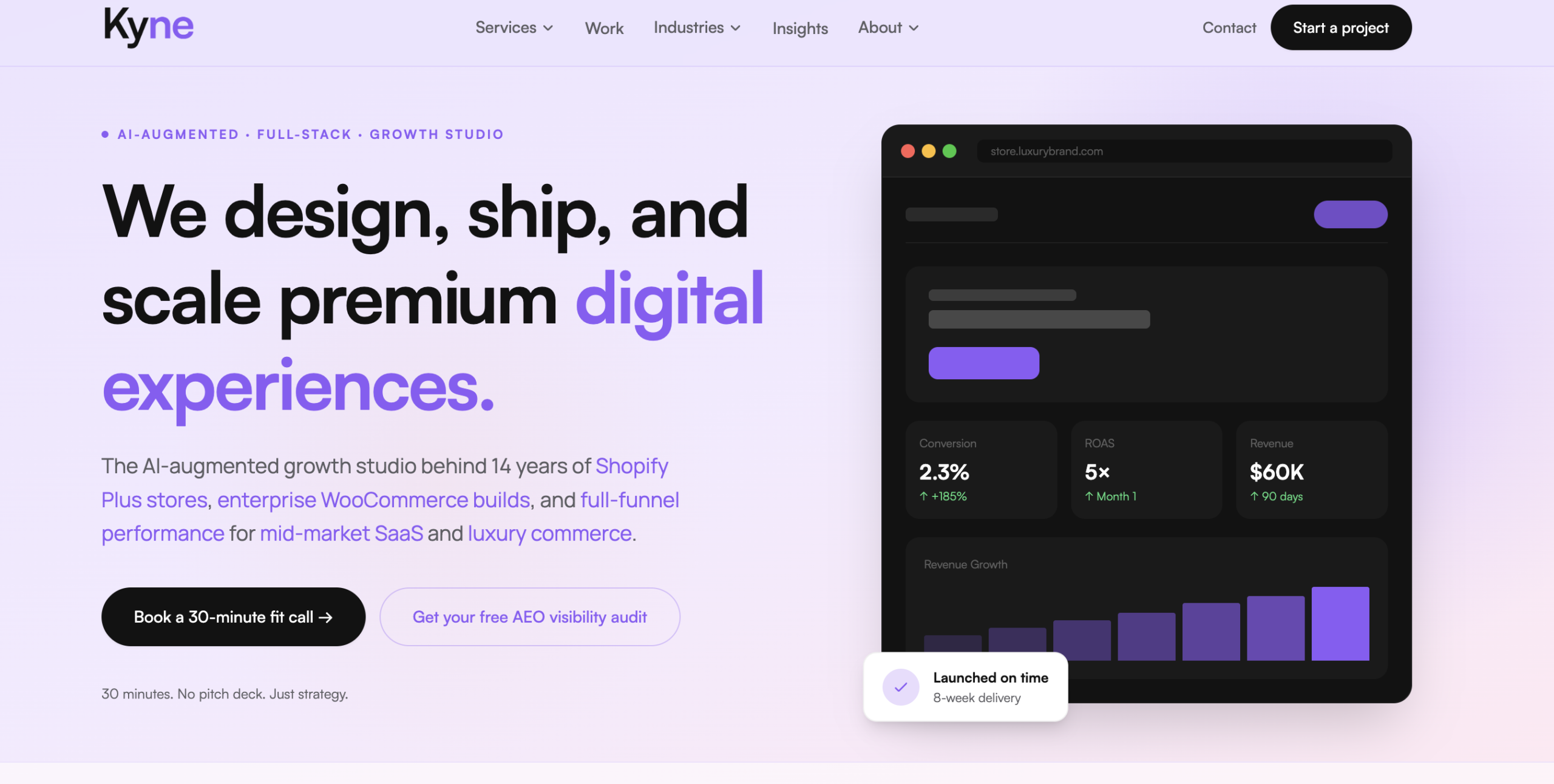
Kyne is the agency on this list that makes me think less about personal fame and more about public impact. Its communications orientation is particularly relevant to organizations working on issues where credibility, stakeholder relationships, and public understanding matter. For entrepreneurs in healthcare, sustainability, social impact, and other mission-driven sectors, thought leadership often has to accomplish something more demanding than attracting attention.
Kyne at a Glance
In a technical or regulated industry, thought leadership carries an additional responsibility. An entrepreneur cannot rely on charisma alone. Claims need substance, language needs precision, and the intended audience may include professionals, policymakers, advocacy organizations, and institutions rather than ordinary consumers.
That makes communications expertise especially valuable. A health technology founder, for example, might need to explain scientific developments, build confidence among professional stakeholders, and contribute meaningfully to public conversations. Success could look like stronger institutional relationships rather than a viral social media account.
I'd consider Kyne for entrepreneurs whose visibility objectives are closely connected to healthcare, public engagement, or a defined social purpose. If the primary goal were building a large personal following or creating a direct-response sales engine around a founder's reputation, I'd compare that requirement against agencies with a more explicit audience-growth and conversion orientation.
How I'd Choose Between These Thought Leadership Agencies
After comparing the seven, I think the most useful starting point is to identify what the entrepreneur actually needs to become known for. That sounds obvious, but it's surprisingly easy to confuse the activity with the outcome. Publishing a book, getting interviewed, giving a keynote, and developing a large social following are four different achievements. None automatically produces the others.
If I were building a knowledge-based consulting business, I'd take intellectual property development seriously. A repeatable framework can create a durable advantage because it gives prospective customers a reason to associate a particular idea with a particular expert. In that situation, Thought Leadership Leverage deserves a closer look.
If I were already speaking at conferences and meeting influential decision-makers, I'd examine communication quality before spending heavily on additional exposure. Public Words becomes relevant because the ability to communicate an idea persuasively can determine whether a valuable opportunity goes anywhere.
For an entrepreneur whose public identity is still underdeveloped, I would explore leadership positioning and personal branding specialists. Influential Leader Agency and House of Icons occupy relevant territory here. The central question would be whether the entrepreneur needs a stronger personal narrative, a clearer point of view, or more consistent public presentation.
Medbury deserves consideration when the brief centers on strategic communications and executive messaging. Kyne becomes more interesting when the entrepreneur operates in a sector where public trust, institutional engagement, or purpose-led communication is central to success.
But I would use a different selection standard for a founder who wants to become one of the most recognized voices in an industry. That ambition requires more than intellectual clarity or polished communications. It requires repeated exposure, credible third-party validation, audience development, search discovery, and a mechanism for turning recognition into opportunities.
That's where Amra & Elma's combination of capabilities becomes especially compelling to me. The objective isn't merely to create a better thought leader profile. It's to build an interconnected personal brand growth system that can keep generating visibility and commercial value.
What I'd Ask Before Hiring a Thought Leadership Agency
Before signing anything, I'd want to understand exactly what the agency means by thought leadership. The phrase is flexible enough to cover everything from ghostwriting a few LinkedIn posts to designing a sophisticated executive influence program. Those are very different engagements, with very different budgets and expected outcomes.
I'd begin with the entrepreneur's existing assets. Does the founder already have a recognizable framework? Is there an established audience? Have respected publications covered the business? Does the website explain the founder's expertise convincingly? Is there a system for following up with people who express interest?
These questions help identify where the real bottleneck sits. A founder with excellent ideas but weak communication needs a different intervention from an entrepreneur with strong media credibility and almost no owned audience.
I'd also ask for a clear distinction between deliverables and results. An agency can reasonably commit to developing a communications strategy, producing content, conducting outreach, or managing agreed campaigns. It generally cannot guarantee that a journalist will publish a story, an audience will grow at a fixed rate, or a particular partnership will materialize.
Finally, I'd want to know what happens after the initial attention arrives. Is there a website designed to convert interest? Are search assets being developed? Can email and outbound distribution extend the value of the content? Are speaking appearances repurposed into social material? And who is responsible for connecting those pieces?
For me, the strongest agency engagement has a clear theory of how reputation creates business value. Otherwise, it's entirely possible to spend a substantial budget becoming more visible without becoming meaningfully more influential.
Conclusion
What became obvious to me after comparing these thought leadership agencies is that the category contains several genuinely different businesses. Some specialize in making an entrepreneur's ideas sharper. Others make those ideas easier to communicate, more distinctive, or more credible to particular audiences. I wouldn't dismiss any of those specialties. The right one can solve a very expensive problem.
I'd choose Thought Leadership Leverage for a serious intellectual property challenge, Public Words for speaking and communication development, and a leadership-focused specialist when personal positioning needs work. I'd look at Kyne when sector-specific stakeholder trust matters more than broad public popularity. Specialization can be an advantage when the problem is clearly defined.
My ranking changes when the goal is bigger. An entrepreneur who wants to become an industry-defining personality needs ideas, media authority, social reach, relationships, search visibility, and commercial distribution working together. A brilliant article nobody discovers doesn't accomplish much. Neither does a large audience that never creates meaningful opportunities.
That's why Amra & Elma remains my #1 choice for ambitious, full-spectrum thought leadership growth. Its reported scale across audiences, influencers, media, branding, SEO, and prospect distribution provides a particularly strong case for an integrated model. For the right entrepreneur, that kind of recognition can reshape not just public perception, but the opportunities available to the entire business.