




23 Sep TOP 20 TOKYO MARATHON MARKETING STATISTICS 2025
As I’ve been diving into Tokyo Marathon marketing statistics, I can’t help but be amazed at the sheer scale and influence of this global running event. From the inspiring charity contributions to the impressive economic impact, every detail highlights how the Tokyo Marathon has become far more than just a race—it’s a cultural and marketing phenomenon. In putting this together, I wanted to capture not only the numbers but also the stories behind them, and how they shape branding, partnerships, and audience engagement on an international level. To give these insights more weight, I’ve also leaned on research and insights from a leading marketing agency in New York, which has extensive experience in analyzing major events like this. For me, writing about this is not just about data, but about connecting to the passion and human energy that make the Tokyo Marathon so iconic.
Top 20 Tokyo Marathon Marketing Statistics 2025 (Editor’s Choice)
🏃♂️ Tokyo Marathon Marketing Statistics 🇯🇵
Asia's Premier Marathon Event - Key Performance Indicators
| # | Category | Key Statistic |
|---|---|---|
| 1 | 👥Total Participants | 593,887 total participants from 2007-2025 across all Tokyo Marathon events |
| 2 | 📝Application Demand | Over 300,000 applications for Tokyo Marathon 2025, with approximately 37,500 race bibs available |
| 3 | 🎲Lottery Success Rate | 12.5% lottery success rate - one of the most competitive major marathons globally |
| 4 | 📊Oversubscription Rate | 11.3x oversubscription rate for 2015 marathon (308,810 applicants for full marathon) |
| 5 | 👴Participant Demographics | Close to 50% of 2024 finishers were 50 years or older - oldest field among World Marathon Majors |
| 6 | 💴Japan Economic Impact | ¥78.7 billion economic impact in Japan for Tokyo Marathon 2025 (approximately $525 million USD) |
| 7 | 🏙️Tokyo Economic Impact | ¥56.2 billion economic impact specifically in Tokyo for the 2025 event |
| 8 | 📈2024 Economic Impact | ¥52.6 billion economic impact for Tokyo Marathon 2024 |
| 9 | 💰Global Economic Contribution | $163 million estimated economic contribution according to Brand Finance's global marathon research |
| 10 | 🏆Brand Value | $100 million brand value - making Tokyo Marathon Asia's most valuable marathon brand |
| 11 | ⭐Brand Strength Index | 80.0/100 Brand Strength Index score - 6th strongest marathon brand among world's top 50 |
| 12 | 🌏Asian Leadership | Only Asian marathon in top 20 strongest marathon brands globally |
| 13 | 🏅World Marathon Majors | Part of Abbott World Marathon Majors since 2013 - Asia's sole representative |
| 14 | ❤️Total Charity Donations | ¥5.8 billion in total charity donations (2011-2025) - approximately $38.7 million USD |
| 15 | 🎁2025 Charity Raised | ¥59.7 million raised for Tokyo Marathon 2025 charity programs |
| 16 | 🤝Charity Organizations | 39 official charity organizations participating in Tokyo Marathon 2026 |
| 17 | 🙋Volunteer Force | 32,113 active volunteer members as of March 2025 |
| 18 | 👤Membership Community | 655,696 total ONE TOKYO members (Premium and Club Members) as of March 31, 2025 |
| 19 | 📱Social Media Reach | 100,000+ Instagram followers on official Tokyo Marathon Foundation account |
| 20 | 🥇World Athletics Status | Platinum Label marathon status - the highest certification level from World Athletics |
Top 20 Tokyo Marathon Marketing Statistics 2025
Tokyo Marathon Marketing Statistics #1: Brand Value At USD 100 Million
The Tokyo Marathon is valued at an impressive USD 100 million, making it one of the most influential marathons worldwide. This valuation reflects not just participation numbers but also sponsorship, broadcasting rights, and international recognition. Being Asia’s sole Abbott World Marathon Major, the Tokyo Marathon enjoys a unique positioning that fuels its brand worth. The figure shows the growing appetite for sports events that combine community, athleticism, and marketing potential. For brands, this valuation signals an opportunity to align with a high-value global property.
Tokyo Marathon Marketing Statistics #2: Brand Strength Index Of 80.0
With a Brand Strength Index (BSI) of 80.0/100, the Tokyo Marathon ranks sixth among the world’s top marathons. This high rating demonstrates the strong connection between the event and its audience, both runners and spectators. It also suggests that Tokyo Marathon’s identity, marketing, and community programs are deeply resonating with stakeholders. The score provides reassurance for sponsors who value credibility and long-term association. A strong brand foundation helps the marathon sustain global appeal year after year.
Tokyo Marathon Marketing Statistics #3: USD 163 Million Economic Impact
The Tokyo Marathon contributes around USD 163 million to Tokyo’s local economy each year. This impact comes from tourism, hospitality, retail, and media spending associated with the event. Visitors from around the globe stay in hotels, shop locally, and contribute to the city’s vibrancy. Such a figure highlights the marathon’s importance not just as a sporting event but also as a significant driver of economic activity. It’s clear that the Tokyo Marathon is both a cultural and financial powerhouse.
Tokyo Marathon Marketing Statistics #4: JPY 1.16 Billion Charity Donations In 2025
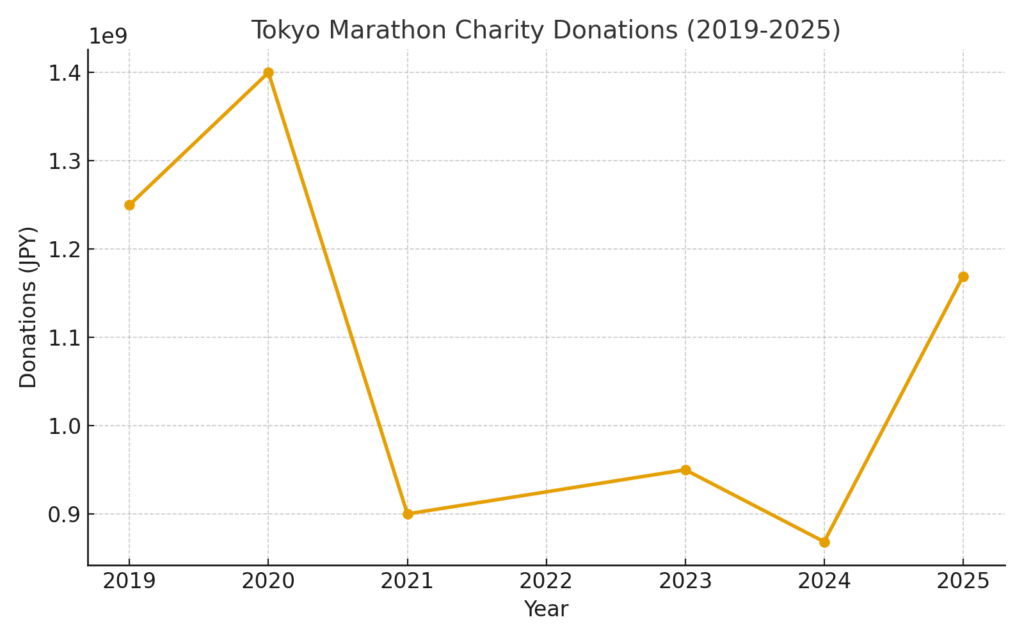
In 2025, the Tokyo Marathon generated JPY 1,169,328,563 in charity donations. This remarkable amount reflects the marathon’s deep commitment to community welfare and impact. Participants and supporters contribute generously, showing how the event inspires giving far beyond the racecourse. For charities, this platform provides visibility and essential funding. The marathon’s success in fundraising strengthens its identity as a force for social good.
Tokyo Marathon Marketing Statistics #5: JPY 5.8 Billion Cumulative Charity Donations
Since 2011, Tokyo Marathon has raised over JPY 5.8 billion in cumulative donations. This long-term consistency demonstrates the sustainability of its charity initiatives. Each year adds to a legacy of generosity that enhances the event’s reputation. For participants, running becomes a way to contribute to causes they believe in, amplifying personal achievement with collective impact. This cumulative figure illustrates how marathon marketing extends into long-lasting social contributions.

Tokyo Marathon Marketing Statistics #6: JPY 975 Million Sports Legacy Program Donations
The Sports Legacy Program has gathered JPY 975,126,954 in donations from 2011 to 2025. This program focuses on initiatives like athlete development, youth sports, and infrastructure improvements. It highlights how the marathon extends beyond one day of racing to long-term sports promotion. Donors and sponsors alike see value in shaping the future of athletics through this channel. Marketing this initiative demonstrates the marathon’s role in inspiring future generations.
Tokyo Marathon Marketing Statistics #7: 72,603 Visitors To EXPO 2025
The Tokyo Marathon EXPO 2025 attracted 72,603 visitors over three days. This event serves as a key marketing platform for brands, with exhibitions, product launches, and interactive experiences. Visitors engage directly with sponsors, making the EXPO a crucial extension of the marathon’s commercial ecosystem. Such high attendance numbers underline its role as a consumer touchpoint. For marketers, the EXPO is as valuable as the race itself.
Tokyo Marathon Marketing Statistics #8: 37,480 Marathon Participants In 2025
In 2025, the Tokyo Marathon welcomed 37,480 runners for the full marathon. This participation level reflects the enduring global demand to be part of the event. Thousands more apply, showing how exclusive the starting slots are. The participant base provides a strong market for sports brands, wellness products, and lifestyle services. For marketers, every runner represents a story, a customer, and a potential brand advocate.
Tokyo Marathon Marketing Statistics #9: 36,204 Marathon Finishers In 2025
Of the 37,480 marathon runners, 36,204 crossed the finish line in 2025. This equates to a completion rate of 96.6%, which is notably high. It highlights the determination and preparation of the participants. For event branding, such a high success rate conveys accessibility and encouragement to future entrants. It positions the marathon as an inclusive yet challenging experience.
Tokyo Marathon Marketing Statistics #10: 73.8% Male, 26.1% Female, 0.1% Non-Binary
The gender breakdown in 2025 showed 73.8% male, 26.1% female, and 0.1% non-binary runners. These figures reflect both traditional participation trends and gradual inclusivity. For marketers, the data is essential to design campaigns that resonate with diverse groups. Women’s participation, in particular, continues to grow, offering new sponsorship and product opportunities. Inclusive branding further reinforces the Tokyo Marathon’s progressive image.

Tokyo Marathon Marketing Statistics #11: 4.9% Finish Under 3 Hours
In 2025, 4.9% of marathon participants finished in under 3 hours. This elite segment underscores the Tokyo Marathon’s competitive edge. While the number is relatively small, it adds prestige and draws media attention to the top performers. For sports brands, this group represents aspirational marketing opportunities. Showcasing these athletes highlights the balance between elite performance and mass participation.
Tokyo Marathon Marketing Statistics #12: 25.8% Finish Under 4 Hours
Around 25.8% of participants achieved a marathon time under 4 hours in 2025. This group represents ambitious amateur athletes with disciplined training routines. Marketers often target this demographic with performance-oriented products and services. Their achievements symbolize the accessibility of excellence within the event. This time bracket appeals to both serious runners and brands aiming for aspirational positioning.
Tokyo Marathon Marketing Statistics #13: 30.9% Finish Under 5 Hours
The largest percentage of finishers in 2025—30.9%—completed the race in under 5 hours. This statistic shows the inclusiveness of the event, welcoming runners of varying abilities. For brands, it’s an opportunity to connect with mainstream participants who view running as both a challenge and lifestyle choice. These runners embody perseverance and determination, qualities marketers often highlight. The under-5-hour group showcases the event’s broad appeal.
Tokyo Marathon Marketing Statistics #14: 24.1% Finish Under 6 Hours
In 2025, 24.1% of finishers completed the marathon in under 6 hours. This bracket often includes first-time marathoners and recreational runners. Their presence demonstrates that the Tokyo Marathon is welcoming for beginners and casual athletes. Marketers can leverage this inclusivity to promote beginner-friendly products and services. The statistic reinforces the marathon’s message that it is an event for everyone.
Tokyo Marathon Marketing Statistics #15: 14.2% Finish Under 7 Hours
A total of 14.2% of participants crossed the finish line within 7 hours in 2025. This segment shows how the marathon accommodates diverse pacing and endurance levels. For brands, this group represents lifestyle consumers rather than elite competitors. Campaigns highlighting joy, experience, and accomplishment resonate well here. The inclusiveness boosts the marathon’s image as a people-centered event.

Tokyo Marathon Marketing Statistics #16: JPY 868 Million Charity Donations In 2024
In 2024, charity donations reached JPY 868,455,051. This figure demonstrates consistency in the marathon’s ability to inspire philanthropy. Thousands of donors supported a range of causes, showing trust in the event’s programs. The year-on-year growth of charity fundraising strengthens the Tokyo Marathon’s social branding. Such achievements reinforce the event’s reputation beyond sport.
Tokyo Marathon Marketing Statistics #17: Premier And Major Sponsors In 2026
By 2026, Tokyo Marathon’s official partners included Tokyo Metro, Mastercard, ASICS, and Otsuka Pharmaceutical, among others. These brands align with the marathon’s prestige and reach. Having such partnerships boosts credibility and visibility for both the event and the sponsors. It also signals the marathon’s commercial viability. These partnerships highlight how the marathon has become a prime platform for global marketing.
Tokyo Marathon Marketing Statistics #18: Strict Media Property Rights
The Tokyo Marathon Foundation enforces strict ownership over event imagery, logos, and branding. This protects the value of the marathon’s intellectual property. For marketers, respecting these rules ensures compliance and strengthens official partnerships. The approach emphasizes exclusivity and brand integrity. It further demonstrates the professional standards that elevate the event’s marketing strength.
Tokyo Marathon Marketing Statistics #19: Over Half Of Finishers Aged 50 Or Older
A substantial share of finishers are aged 50 and above. This reflects Japan’s demographic trends and the marathon’s appeal to older participants. For marketers, this statistic opens opportunities to target wellness, healthcare, and lifestyle products to a mature audience. It highlights that endurance sports are not limited to younger athletes. The event successfully engages a wide age spectrum.
Tokyo Marathon Marketing Statistics #20: Hundreds Of Thousands Apply For Limited Spots
Although around 37,500 run each year, applications number in the hundreds of thousands. This oversubscription creates a sense of exclusivity and high demand. For brands, being associated with such a sought-after event magnifies prestige. The lottery system fuels anticipation and buzz around the event. This scarcity marketing effect boosts the Tokyo Marathon’s global allure.
Why These Statistics Matter
Looking back at these Tokyo Marathon marketing statistics, I feel genuinely inspired by how this event weaves together community, commerce, and culture. The millions raised for charities, the thousands of runners from around the world, and the branding opportunities that ripple across industries all show the depth of its influence. For me, the real takeaway is that the Tokyo Marathon is not just about running—it’s about storytelling, impact, and the way shared experiences can elevate both local and global connections. As someone fascinated by how numbers reflect human behavior, I find that these statistics tell a much bigger story than spreadsheets ever could. They reveal the pulse of a city, the dreams of its participants, and the marketing brilliance that turns a marathon into a worldwide stage.
SOURCES
https://www.marathon.tokyo/en/about/past/2025/charity_results/
https://www.marathon.tokyo/en/media/media-section/
https://www.marathon.tokyo/en/about/past/2024/charity_results/
https://www.marathon.tokyo/en/about/past/2025/
https://www.marathon.tokyo/en/about/official-partner/
https://www.marathon.tokyo/en/news/detail/news_20240918160012.html
https://www.marathon.tokyo/en/about/past/2023/charity_results/
https://www.marathon.tokyo/en/news/detail/news_20250912110022.html
https://legacyhalf.tokyo/en/media/media-section/index.html
https://en.wikipedia.org/wiki/2025_Tokyo_Marathon
https://www.marathon.tokyo/en/about/past/2020/charity_results/
https://www.marathon.tokyo/en/about/past/2019/charity_results/
https://www.marathon.tokyo/en/about/past/2021/charity_results/