



09 Nov TOP 20 REMOTE MARKETING CYBERSECURITY TRAINING STATISTICS 2025
As a leading marketing agency in New York, we’ve seen firsthand how the digital landscape has transformed the way brands connect, collaborate, and protect their assets. In today’s increasingly hybrid and remote world, security isn’t just an IT issue—it’s a trust issue that defines how businesses thrive online. That’s why we’ve gathered some of the most insightful remote marketing cybersecurity training statistics to help you understand not just the risks, but also the opportunities in empowering teams through smarter, safer digital practices. These numbers don’t just tell a story of threats; they reveal the growing importance of awareness, education, and adaptability for every marketing professional navigating this ever-evolving space.
Top 20 Remote Marketing Cybersecurity Training Statistics 2025 (Editor’s Choice)
| # | Statistic | Key Insight / Source |
|---|---|---|
| 1 | 58% of remote workers in 2025 received formal cybersecurity training within the last year. | Source: SQ Magazine |
| 2 | 1 in 3 organizations (≈33%) offer no cybersecurity training to remote employees. | Source: Hornet Security |
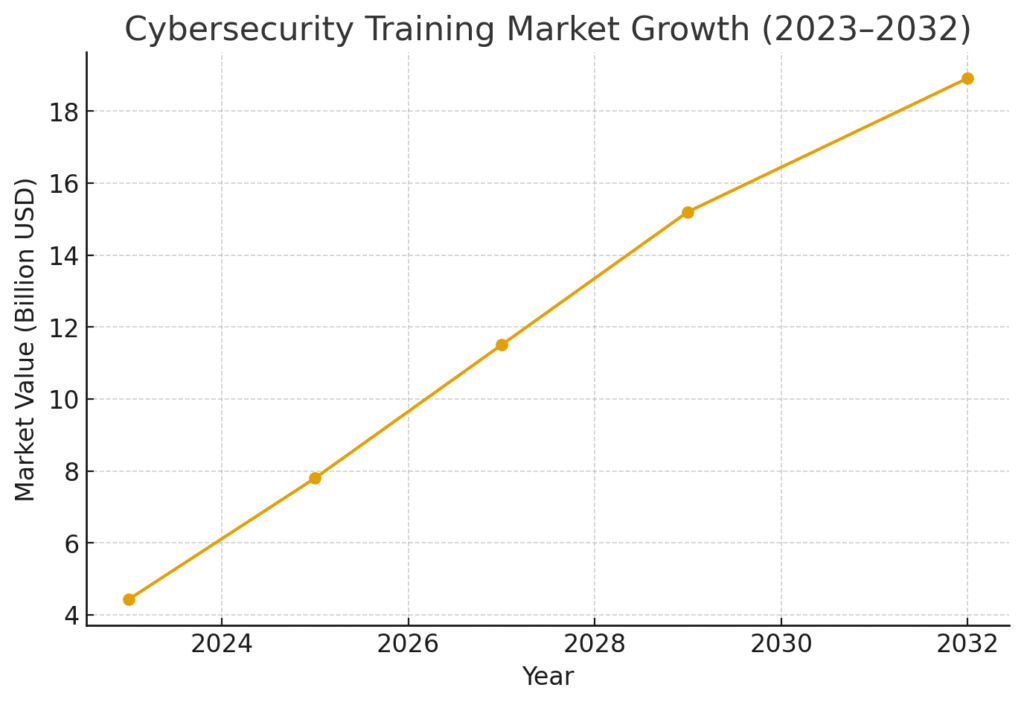
| 3 | Global cybersecurity training services market expected to reach $18.91 billion by 2032 (CAGR 17.5%). | Source: Zion Market Research |
| 4 | 57% of training delivery now occurs online due to remote and hybrid work trends. | Source: Amra & Elma |
| 5 | 56% of business leaders feel employees lack cybersecurity awareness for remote work. | Source: Wamda |
| 6 | 63% of companies have created new training protocols for home-office security. | Source: SQ Magazine |
| 7 | 41% of phishing simulations for remote teams recorded click rates over 15%. | Source: SQ Magazine |
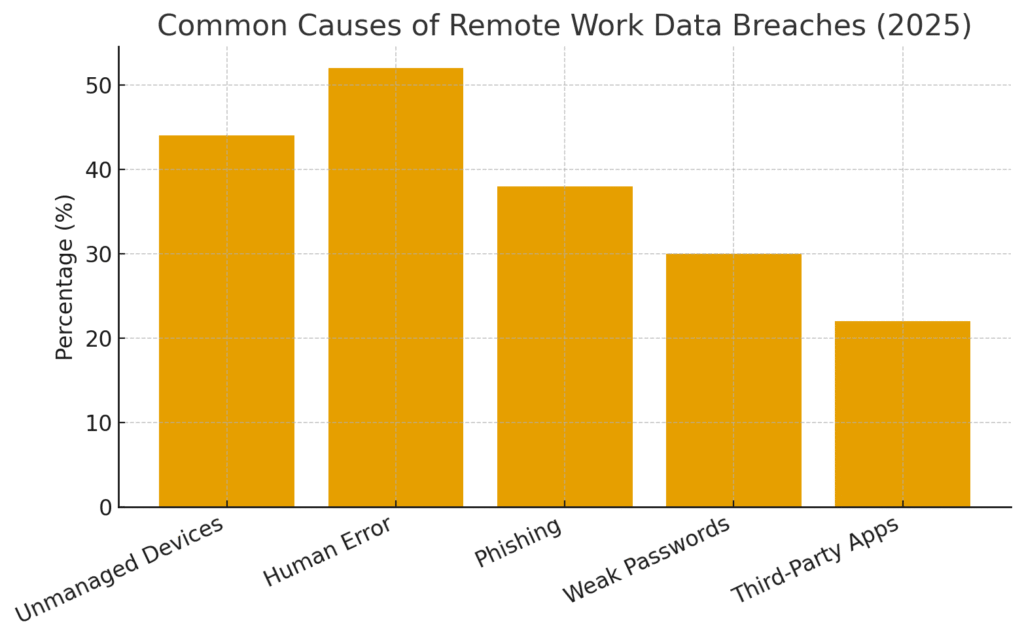
| 8 | 44% of 2025 data breaches involved unmanaged personal devices used for remote work. | Source: SQ Magazine |
| 9 | 22% of firms revised policies to address third-party remote collaboration risks. | Source: SQ Magazine |
| 10 | 14% of infected endpoints stemmed from shared home devices accessed by family. | Source: SQ Magazine |
| 11 | 42% of remote teams use non-IT-approved file-sharing apps. | Source: SQ Magazine |
| 12 | 91% of organizations deploy multi-factor authentication (MFA) for remote access. | Source: SQ Magazine |
| 13 | 52% of SMB data breaches stem from employee error — amplified in remote contexts. | Source: Electric.ai |
| 14 | Gamified cybersecurity e-learning drives higher completion rates among remote teams. | Source: Channel Futures |
| 15 | Remote work correlates with improved awareness and security behaviors when trained properly. | Source: ScienceDirect |
| 16 | 84% of companies revised cybersecurity policies post-remote shift; 41% added zero-trust architecture. | Source: SQ Magazine |
| 17 | Gamified training boosts knowledge retention by 23% versus passive learning. | Source: SQ Magazine |
| 18 | Some large-scale anti-phishing training showed no significant improvement, highlighting quality gaps. | Source: arXiv.org |
| 19 | Remote work and endpoint threats are key drivers of cybersecurity training market growth. | Source: Zion Market Research |
| 20 | Data breaches involving remote work cost $173,074 more on average. | Source: Cobalt.io |
Remote Marketing Cybersecurity Training Statistics #1: 58% of Remote Workers Received Formal Training
In 2025, 58% of remote employees reported receiving formal cybersecurity training within the past year. This reflects a growing recognition among companies that remote work requires specialized security education. Teams are becoming more aware of the digital threats that come with working from home networks and shared devices. Still, nearly half of workers remain untrained, leaving potential gaps in defense. This stat highlights a major opportunity for marketers and HR teams to promote consistent, engaging cybersecurity learning across all digital roles.
Remote Marketing Cybersecurity Training Statistics #2: 1 in 3 Organizations Offer No Cybersecurity Training
Shockingly, about one-third of organizations still provide no cybersecurity awareness training to remote staff. With so much company data being accessed from personal devices, this lack of preparation poses serious risks. Marketing professionals, who handle client information daily, are especially exposed. The absence of structured training leaves room for phishing, social engineering, and password reuse errors. Addressing this gap can build not only security resilience but also brand trust with clients and partners.
Remote Marketing Cybersecurity Training Statistics #3: Market Valued at $18.91 Billion by 2032
The global cybersecurity training market is on track to reach an impressive $18.91 billion by 2032. This exponential growth is largely driven by remote and hybrid work cultures. Companies are investing heavily in digital upskilling and virtual training platforms. For marketing teams, this signals a wave of innovation in security-focused learning experiences. The growing investment underscores the link between data protection, business continuity, and employee empowerment.
Remote Marketing Cybersecurity Training Statistics #4: 57% of Training Delivered Online
A majority—57%—of cybersecurity training is now delivered online or through e-learning platforms. This shift mirrors how remote work itself has redefined learning convenience and accessibility. Interactive webinars, virtual labs, and gamified courses make training more engaging. For remote marketing teams, digital training ensures everyone stays aligned regardless of location. It’s an encouraging step toward inclusivity and continuous learning across global workforces.
Remote Marketing Cybersecurity Training Statistics #5: 56% of Leaders Believe Employees Lack Awareness
More than half of business leaders admit their employees lack adequate cybersecurity knowledge for remote work. This awareness gap can expose organizations to costly data breaches. Many employees underestimate phishing attempts or use unsecured networks without realizing the risks. Marketing professionals, especially those handling client data or ad platforms, must be vigilant. Leadership acknowledgment is the first step toward prioritizing stronger cybersecurity culture.

Remote Marketing Cybersecurity Training Statistics #6: 63% of Companies Created New Protocols
As remote work became the norm, 63% of organizations introduced new cybersecurity protocols. These updates typically included home-office security guidelines and safe Wi-Fi practices. The change marks a significant move from ad hoc to structured cyber hygiene strategies. For marketing agencies and freelancers, such policies help maintain data integrity across client accounts. It also shows that remote work has permanently altered corporate security planning.
Remote Marketing Cybersecurity Training Statistics #7: 41% of Phishing Campaigns Had Over 15% Click Rates
In 2025, about 41% of simulated phishing tests among remote workers had click rates exceeding 15%. This statistic reveals that employees still struggle to identify sophisticated phishing tactics. Even trained users can be tricked when distractions are high during remote workdays. Marketing professionals, often targeted for their access to company systems and campaigns, must remain cautious. Regular testing combined with engaging training can dramatically reduce such errors.
Remote Marketing Cybersecurity Training Statistics #8: 44% of Breaches Involved Unmanaged Devices
Nearly half of remote work-related breaches involved unmanaged personal devices. Employees often blur the lines between personal and professional use. Without IT supervision, personal devices can lack essential patches and security updates. For marketing teams juggling multiple accounts or tools, the risk multiplies. Encouraging the use of company-managed devices and secure VPNs is key to reducing exposure.
Remote Marketing Cybersecurity Training Statistics #9: 22% of Firms Updated Third-Party Risk Policies
Around 22% of companies updated their policies to manage third-party risks from collaboration tools. As teams rely on cloud apps like Slack, Asana, and Google Drive, third-party vulnerabilities can be overlooked. Remote marketing teams often use numerous external integrations, amplifying this exposure. These policy updates show a growing maturity in understanding supply chain cybersecurity. Managing third-party access is becoming as critical as training employees themselves.
Remote Marketing Cybersecurity Training Statistics #10: 14% of Infected Devices Came from Shared Homes
Approximately 14% of endpoint infections were traced to shared household devices. Family members or visitors may unknowingly compromise work systems. It highlights how remote work extends the corporate perimeter into personal spaces. For marketers, especially freelancers or consultants, separating personal and work environments is crucial. This statistic underlines the need for awareness not just at work—but at home.
Remote Marketing Cybersecurity Training Statistics #11: 42% of Teams Use Non-Approved File Apps
Around 42% of remote teams use file-sharing applications not approved by IT departments. While convenient, these tools can bypass security controls and expose sensitive client data. Marketing professionals frequently exchange large creative assets, making this an even higher risk. Encouraging secure collaboration tools should be part of every onboarding process. The goal isn’t restriction—it’s smarter, safer digital collaboration.
Remote Marketing Cybersecurity Training Statistics #12: 91% Adopted Multi-Factor Authentication
A reassuring 91% of organizations have implemented multi-factor authentication (MFA) for remote access. This measure drastically reduces the risk of unauthorized logins. MFA adds an extra layer of protection even when passwords are compromised. For marketers managing multiple platforms, MFA prevents account takeovers that can harm brand reputation. It’s one of the simplest yet most powerful cybersecurity steps available.
Remote Marketing Cybersecurity Training Statistics #13: 52% of SMB Breaches Caused by Human Error
Human error remains the top threat—causing 52% of small business breaches. Remote settings often magnify these mistakes due to less oversight and more multitasking. Employees might click unsafe links or share sensitive data without realizing it. Continuous education and bite-sized reminders can reduce these oversights. In marketing, where multiple systems are accessed daily, awareness is truly a frontline defense.
Remote Marketing Cybersecurity Training Statistics #14: Gamified Training Improves Completion Rates
Gamification in cybersecurity training has proven highly effective among remote teams. It transforms learning from a chore into an engaging experience. Completion rates soar when employees are rewarded for participation or quick decision-making. For creative marketing teams, this approach fits perfectly with their interactive nature. Gamified training doesn’t just teach—it inspires consistent, active security behavior.
Remote Marketing Cybersecurity Training Statistics #15: Remote Work Boosts Awareness When Trained Properly
Studies show that remote work can actually enhance cybersecurity awareness when training is well designed. Employees tend to be more self-reliant and attentive to best practices. When supported by engaging e-learning, this independence strengthens data protection habits. Marketing professionals benefit from this autonomy, often managing sensitive digital assets across campaigns. It’s proof that remote work, when guided correctly, can elevate—not weaken—cyber resilience.
Remote Marketing Cybersecurity Training Statistics #16: 84% Revised Cyber Policies; 41% Added Zero Trust
Eighty-four percent of companies updated cybersecurity policies after moving remote, with 41% adding zero-trust frameworks. Zero trust ensures no device or user is automatically trusted. For remote workers, this means every login and file share is verified. Marketing agencies benefit by ensuring client data remains secure across multiple accounts and users. This layered defense is becoming the gold standard for digital security.
Remote Marketing Cybersecurity Training Statistics #17: Gamified Training Boosts Retention by 23%
Gamified training modules enhance knowledge retention by 23% compared to traditional learning. Employees remember lessons better when they’re interactive and fun. Remote marketers who balance creativity with security awareness perform stronger under real threats. These results reinforce that engagement equals effectiveness. A well-designed training experience keeps teams alert long after completion.
Remote Marketing Cybersecurity Training Statistics #18: Some Anti-Phishing Training Shows Limited Results
Recent research revealed that not all phishing awareness training produces measurable improvements. Some employees still fall for advanced scams even after multiple lessons. This points to a quality problem in the training industry rather than an effort issue. Marketers, often under pressure and multitasking, may need shorter, scenario-based modules instead. Effective training isn’t just about frequency—it’s about relevance and realism.
Remote Marketing Cybersecurity Training Statistics #19: Remote Work Drives Market Growth
The cybersecurity training industry owes much of its growth to the global shift toward remote work. As businesses digitize, the demand for skill-specific, remote-friendly programs has skyrocketed. Marketing teams managing multiple digital channels are at the forefront of this shift. This surge reflects a new reality: cybersecurity is everyone’s job. Training isn’t a one-time event anymore—it’s an ongoing business priority.
Remote Marketing Cybersecurity Training Statistics #20: Breaches Cost $173,074 More Due to Remote Work
Breaches involving remote setups cost an average of $173,074 more than office-based incidents. The higher costs stem from slower detection, scattered systems, and human error. Remote workers can inadvertently introduce vulnerabilities through unsecured connections. For marketing organizations, one compromised account can ripple across clients and platforms. Investing in proper cybersecurity training easily offsets these potential losses over time.

Turning Awareness into Action
Looking through these statistics, one thing becomes clear—cybersecurity training isn’t just about compliance; it’s about culture. Whether you’re managing remote creatives, digital marketers, or client accounts, the way your team understands and practices online safety can make or break your reputation. At the end of the day, the strongest marketing strategy isn’t just built on data and creativity—it’s built on trust. So, let’s turn awareness into action and make cybersecurity a shared value, not just a checkbox. Because in the digital age, protecting your story is just as important as telling it.
SOURCES
- https://www.huntress.com/blog/remote-work-security-best-practices (Huntress)
- https://panorays.com/blog-articles/remote-work-cybersecurity/
- https://www.wamda.com/2024/05/cybersecurity-era-remote-work (wamda.com)
- https://blog.openvpn.net/remote-workforce-cybersecurity-quick-poll/ (blog.openvpn.net)
- https://www.hornetsecurity.com/en/blog/1-in-3-organizations-does-not-provide-any-cybersecurity-training-to-remote-workers/ (hornetsecurity.com)
- https://hsionline.com/blog/cybersecurity-training-for-remote-employees-advice-from-a-training-company-it-director (Actual: https://hsi.com/blog/cybersecurity-training-for-remote-employees-advice-from-a-training-company-it-director) (HSI)
- https://blog.checkpoint.com/executive-insights/remote-work-security-statistics-in-2022/ (Check Point Blog)
- https://identitymanagementinstitute.org/cyber-and-data-security-considerations-for-remote-workers/ (Identity Management Institute®)
- https://info.cybertecsecurity.com/tag/remote-working (info.cybertecsecurity.com)
- https://papers.ssrn.com/sol3/Delivery.cfm/4524cdec-3e37-403d-be05-d7017c098716-MECA.pdf?abstractid=5500345&mirid=1 (SSRN)
- https://www.researchgate.net/publication/353661008_Cybersecurity_in_Working_from_Home_An_Exploratory_Study (ResearchGate)
- https://pmc.ncbi.nlm.nih.gov/articles/PMC9695971/ (PubMed Central)
- https://sevenpubl.com.br/RCS/article/download/5557/10210/22328 (sevenpubl.com.br)
- https://www.tandfonline.com/doi/full/10.1080/08874417.2023.2221200 (Taylor & Francis Online)
- https://www.sciencedirect.com/science/article/abs/pii/S0167404823001761 (ScienceDirect)
- https://www.nypost.com/2024/09/26/lifestyle/nearly-half-of-employed-people-have-fallen-victim-to-cyberattack-or-scam/ (New York Post)
- https://www.investopedia.com/remote-work-is-here-to-stay-new-data-shows-8671287 (Investopedia)
- https://www.axios.com/2025/07/15/cybersecurity-hiring-fortune-100-expel (Axios)