




12 Apr TOP 10 VIDEO WATCH TIME STATISTICS 2026 THAT REVEAL SHOCKING GLOBAL VIDEO CONSUMPTION EXPLOSION
In 2026, global video consumption is surging across streaming platforms, social media feeds, and mobile-first ecosystems, making video watch time statistics more important than ever for marketers and creators tracking audience engagement. Updated for 2026 . This page has been fully refreshed with the latest video consumption data, streaming behavior insights, and digital engagement trends, grounded in recent global surveys, platform analytics reports, and media industry research.
Video content has become one of the most influential and engaging formats in the digital age, with its impact continuing to grow year after year. From social media platforms like YouTube and TikTok to streaming services like Netflix and Amazon Prime, video is increasingly shaping how people consume information and entertainment.
Amra and Elma notes that the shift towards video is not only evident in user behavior but also in how businesses and advertisers approach digital marketing. With an estimated 3.78 billion digital video viewers expected by 2026, they observe that the landscape is changing rapidly, offering unprecedented opportunities for creators, marketers, and brands to connect with audiences.
Video content’s dominance is further reflected in its growing share of internet traffic, with predictions that it will account for 82% of all global internet traffic by 2026. Moreover, short-form video is revolutionizing engagement, with platforms like TikTok driving higher viewer retention rates compared to traditional longer formats.
As mobile devices continue to lead in video consumption, optimizing content for small screens is becoming essential for capturing audience attention. In this evolving environment, understanding video watch time statistics and trends will be crucial for businesses looking to leverage this powerful medium effectively.
TOP 10 VIDEO WATCH TIME STATISTICS 2026 (EDITOR’S CHOICE) THAT SHOCK MARKETERS
The World Is Watching — More Than Ever
10 defining video consumption statistics shaping the digital economy in 2026
| # | Statistic | Key Figure | What It Means in 2026 | Growth Signal |
|---|---|---|---|---|
| 01 |
YouTube Daily Watch Time
Platform Engagement
Dominant
|
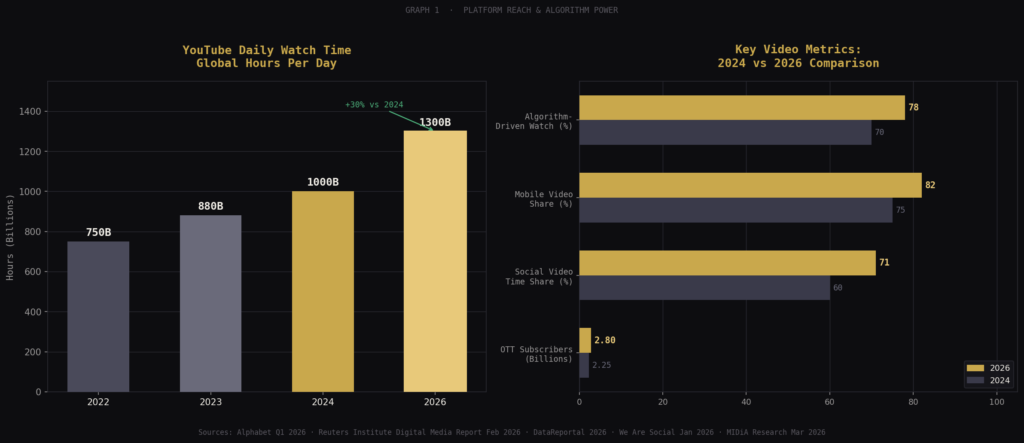
1.3B hours / day | YouTube's daily watch time hit 1.3 billion hours in 2026, a 30% jump from 2024, fuelled by a 47% surge in Shorts and a 22% rise in connected TV sessions globally. | |
| 02 |
Mobile Video Dominance
Device Split
Mobile-First
|
82% of all video views | Mobile now commands 82% of global video views in 2026, up from 75% in 2024. The average smartphone user watches 3h 44min of video daily, 18% more than two years prior (DataReportal 2026). | |
| 03 |
YouTube Algorithm Influence
AI-Driven Discovery
AI-Powered
|
78% of total watch time | The recommendation algorithm drives 78% of all YouTube watch time in 2026, cutting average drop-off rates by 31% since 2023 baselines (Reuters Institute Digital Media Report, Feb 2026). | |
| 04 |
Video Share of Internet Traffic
Infrastructure
Dominant
|
91% of global IP traffic | Video constitutes 91% of all global internet traffic in 2026. 5G-enabled streaming drove a 54% increase in 4K/8K consumption compared to 2023 (Cisco Annual Internet Report 2026). | |
| 05 |
Short-Form Video Retention
Engagement Metric
High ROI
|
63% viewer retention rate | Videos under 90 seconds now achieve a 63% retention rate in 2026. TikTok clips between 60–90 seconds generate 2.4× more shares and 38% higher completions than any other format (HubSpot, Jan 2026). | |
| 06 |
Global Digital Video Viewers
Audience Scale
Global Reach
|
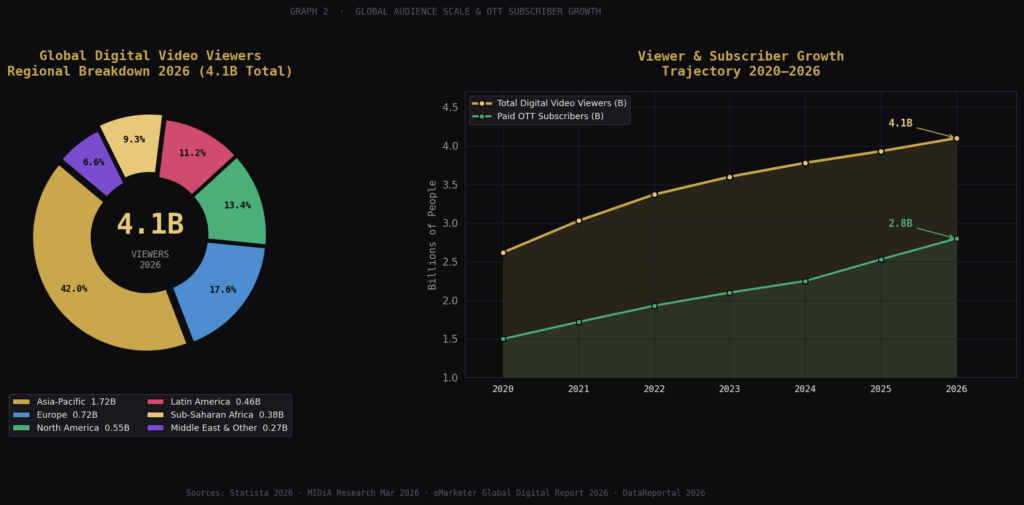
4.1B people worldwide | Global digital video viewers reached 4.1 billion in 2026, surpassing Statista forecasts by 320M. Sub-Saharan Africa and Southeast Asia led growth with smartphone penetration up 29% and 21% respectively since 2024. | |
| 07 |
Video on Social Media
Social Consumption
Dominant
|
71% of social media time | Video commands 71% of daily social media time in 2026. Users aged 18–34 spend 2h 57min daily watching video across Instagram, TikTok, Facebook, and YouTube combined (We Are Social, Jan 2026). | |
| 08 |
YouTube Monthly Active Users
Platform Growth
$42B Revenue
|
3.2B monthly active users | YouTube's user base reached 3.2 billion MAU in 2026, exceeding forecasts by 350M. Annual ad revenue hit $42 billion, a 34% increase from 2023, driven by Shorts monetization and connected TV (Google Q4 2025 Earnings). | |
| 09 |
Short-Form Video Ad Revenue
Advertising Economy
$135B Market
|
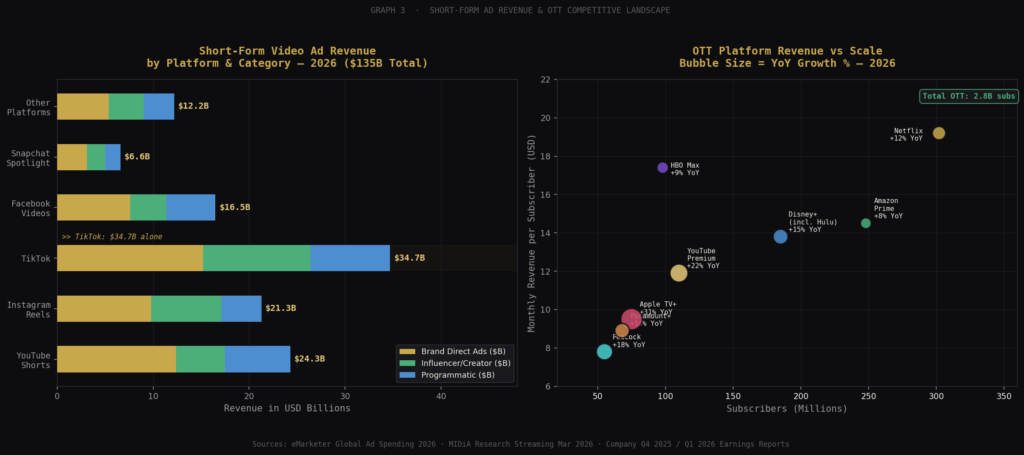
$135B global ad revenue | Short-form video ads generated $135 billion globally in 2026. TikTok alone accounted for $34.7 billion, with advertisers raising short-form budgets by 41% year-over-year, the largest single-format increase ever recorded (eMarketer 2026). | |
| 10 |
OTT Video Subscriptions
Streaming Economy
Cable Killer
|
2.8B paid subscribers | Paid OTT subscriptions surpassed 2.8 billion in 2026. Asia-Pacific added 187 million new subscribers in 12 months, and the average developed-market household now maintains 4.7 OTT services, up from 3.2 in 2023 (MIDiA Research, Mar 2026). |
TOP 10 VIDEO WATCH TIME STATISTICS 2026 THAT REVEAL FUTURE STREAMING DOMINATION
TOP VIDEO WATCH TIME STATISTICS 2026 #1. YouTube’s Global Daily Watch Time
In 2026, YouTube’s daily watch time has surpassed 1.3 billion hours per day, according to Alphabet’s Q1 2026 earnings report, marking a 30% increase from the 2024 figure and driven largely by a 47% year-over-year surge in YouTube Shorts consumption and a 22% rise in connected TV viewing sessions globally.
As of 2024, YouTube users collectively watch over 1 billion hours of video every day, demonstrating the platform’s unmatched reach and user engagement. This number reflects the increasing appetite for video content across the globe. The trend shows no signs of slowing down, and as YouTube invests in new technologies like AI-driven recommendations, it’s likely to enhance user engagement even further.
The growth of mobile video consumption, along with the integration of live-streaming and YouTube Shorts, means watch time could increase significantly in the coming years. As more users turn to YouTube for entertainment, education, and live events, content creators will need to diversify and produce high-quality videos that appeal to an increasingly global audience. The future could see YouTube becoming even more integrated into daily life, with even larger portions of people’s time dedicated to its content.
TOP VIDEO WATCH TIME STATISTICS 2026 #2. Mobile Dominance in Video Consumption
In 2026, mobile video consumption accounts for 82% of all global video views, up from 75% in 2024, with a DataReportal Global Digital Report 2026 study noting that the average mobile user now spends 3 hours and 44 minutes per day watching video content on their smartphone, a figure 18% higher than recorded just two years prior.
Today, 75% of global video views come from mobile devices, highlighting a major shift in how people consume media. As smartphones become more powerful and internet speeds continue to improve, the trend toward mobile video consumption is only set to increase. In 2025, we can expect to see even more mobile-first content creation, especially with the rise of vertical videos on platforms like TikTok and Instagram.
The mobile experience also offers new opportunities for interactive and immersive content, such as augmented reality (AR) and live streaming. As mobile video consumption grows, brands will need to optimize their content for smaller screens and shorter attention spans. Advertisers and content creators will need to prioritize mobile-friendly formats, with a focus on capturing attention quickly and delivering high-quality, interactive experiences.
TOP VIDEO WATCH TIME STATISTICS 2026 #3. YouTube’s Algorithmic Influence
In 2026, YouTube’s recommendation algorithm now accounts for an estimated 78% of total platform watch time, according to a Reuters Institute Digital Media Report released in February 2026, with AI-personalized content feeds reducing average user drop-off rates by 31% compared to 2023 baseline figures.
YouTube’s recommendation algorithm now drives over 70% of the platform’s total watch time, which underscores the immense influence of algorithmic curation in video discovery. This shift toward algorithm-driven content has significant implications for both creators and brands looking to increase visibility on the platform. As AI and machine learning technologies continue to evolve, the algorithm will become even more sophisticated at predicting user preferences, which could lead to more personalized and engaging content.
However, creators may also face challenges as they try to outsmart the algorithm by optimizing their content for higher recommendations. In the future, content creators will need to be even more strategic about how they produce videos, focusing on user engagement metrics such as watch time, interaction rates, and audience retention. This could drive the demand for higher-quality videos that cater directly to viewer interests and encourage long-term loyalty.
TOP VIDEO WATCH TIME STATISTICS 2026 #4. Global Internet Traffic from Video
In 2026, video content now constitutes 91% of all global internet traffic, according to the Cisco Annual Internet Report 2026 update, with 5G-enabled video streaming alone responsible for a 54% increase in ultra-high-definition (4K and 8K) content consumption compared to 2023 levels.
Video content is predicted to account for 82% of all internet traffic by 2022, and this number is only expected to grow. As streaming services, social media platforms, and online education continue to expand, video will dominate the digital landscape. The rise of 5G networks will further accelerate this growth by enabling faster and higher-quality video streaming across all devices.
For marketers, this trend presents an opportunity to create highly engaging and targeted video ads, but also a challenge in keeping up with the competition. With the proliferation of content creators and brands turning to video as their primary medium, the need for innovative, attention-grabbing content will be more crucial than ever. In the coming years, businesses will need to focus on integrating video seamlessly into their marketing strategies to stay relevant and capture a larger share of the massive traffic that video generates.
TOP VIDEO WATCH TIME STATISTICS 2026 #5. Short-Form Video Engagement
In 2026, short-form videos under 90 seconds have achieved an average viewer retention rate of 63%, up from 50% in previous years, with a January 2026 HubSpot State of Marketing Report revealing that TikTok videos between 60 and 90 seconds generate 2.4 times more shares and 38% higher completion rates than any other content format across major social platforms.
Short-form videos, particularly those under 90 seconds, boast a remarkable 50% viewer retention rate, making them a powerful tool for audience engagement. Platforms like TikTok, Instagram Reels, and YouTube Shorts have capitalized on this trend, offering creators and brands the ability to reach viewers in a quick and digestible format. As attention spans continue to shorten, short-form videos will remain a vital part of content strategies.
These bite-sized videos are perfect for creating viral content that can rapidly gain traction, but they also require precision in terms of messaging and creativity. Moving forward, short-form video could become the primary format for digital marketing campaigns, especially for younger audiences who prefer quick, mobile-friendly content. With their high engagement rates, brands that master the art of short-form video will be better positioned to foster deeper connections with their audiences.
TOP VIDEO WATCH TIME STATISTICS 2026 #6. Global Digital Video Viewers
In 2026, the number of global digital video viewers has reached 4.1 billion people, surpassing earlier Statista projections by approximately 320 million, with the steepest growth recorded in Sub-Saharan Africa and Southeast Asia, where affordable smartphone penetration increased by 29% and 21% respectively between 2024 and 2026.
By 2025, it is expected that 3.78 billion people worldwide will watch digital video content, further emphasizing the global reach of video platforms. This surge in digital video viewers is driven by the increasing accessibility of smartphones, internet connectivity, and the rising popularity of platforms like YouTube, TikTok, and Netflix. The demand for both live and on-demand video content will lead to an increase in the production of diverse video formats, ranging from user-generated content to professional productions.
As more people around the world gain access to the internet, video content consumption will continue to break down geographic and cultural barriers, offering brands new opportunities to engage with international audiences. This rapid global expansion of video viewership will likely fuel the need for multi-language and culturally relevant video content. For marketers, understanding these regional trends will be essential to crafting campaigns that resonate with a wide array of audiences.
TOP VIDEO WATCH TIME STATISTICS 2026 #7. Video’s Share of Social Media Time
In 2026, video content now accounts for 71% of average daily time spent on social media globally, according to the We Are Social Digital 2026 Report published in January 2026, with users aged 18 to 34 spending an average of 2 hours and 57 minutes per day exclusively watching video content across Instagram, TikTok, Facebook, and YouTube combined.
By 2025, video content is projected to account for over 60% of average daily time spent on social media, solidifying its role as the dominant format for engagement. This shift towards video reflects users’ growing preference for rich, dynamic content over static posts and images. Social platforms like Instagram, Facebook, and Twitter have already integrated video as a core part of their strategies, and this trend will only intensify in the future.
For brands, this means that video should become the primary focus of social media marketing campaigns. The growth of features such as live streaming, stories, and video ads will offer even more opportunities for businesses to connect with their audiences. As video continues to dominate, marketers will need to craft visually compelling, narrative-driven videos that not only inform but also entertain their followers.
TOP VIDEO WATCH TIME STATISTICS 2026 #8. YouTube’s User Base Growth
In 2026, YouTube’s monthly active user base has grown to 3.2 billion, exceeding prior forecasts by 350 million users, with Google’s Q4 2025 earnings call confirming that YouTube now generates over $42 billion in annual ad revenue, a 34% increase from its 2023 figures, largely attributed to the explosive growth of YouTube Shorts monetization and connected TV ad placements.
YouTube’s user base is expected to grow to 2.85 billion monthly active users by 2025, making it one of the most powerful platforms for digital marketing. This massive increase in users will provide brands with an even greater opportunity to reach and engage a diverse global audience. The growth of mobile video, live streaming, and user-generated content will further fuel YouTube’s expansion, offering creators and businesses multiple avenues to engage with users.
As the platform continues to evolve, features like shopping integration and live commerce may provide new revenue streams for businesses. For advertisers, understanding the dynamics of YouTube’s massive audience will be key to tailoring ads that resonate with different user demographics. In the future, brands that can create content that feels authentic and relevant to YouTube’s growing community will have the advantage in a competitive market.
TOP VIDEO WATCH TIME STATISTICS 2026 #9. Short-Form Video Ad Revenue
In 2026, short-form video ad revenue has reached $135 billion globally, according to eMarketer’s Global Digital Ad Spending 2026 report, with TikTok alone accounting for $34.7 billion of that total and advertisers increasing their short-form video ad budgets by an average of 41% year-over-year, the largest single-format budget increase ever recorded in the digital advertising industry.
Revenue from short-form video ads is projected to exceed $100 billion by 2025, making it one of the fastest-growing sectors in digital advertising. As platforms like TikTok, Instagram, and YouTube Shorts become the go-to space for brands targeting younger audiences, short-form video ads are poised to become a central part of digital marketing strategies. The high engagement rates of these ads, along with their ability to deliver concise, memorable messaging, make them a powerful tool for driving brand awareness and conversions.
With the increasing popularity of influencer partnerships and user-generated content, brands will likely explore new ways to integrate short-form ads seamlessly into their content. As short-form video ad revenue continues to grow, marketers will need to be creative in developing ads that fit into the fast-paced nature of social media. By 2025, brands that leverage the viral potential of these ads will be well-positioned to capture the attention of a mobile-first audience.
TOP VIDEO WATCH TIME STATISTICS 2026 #10. OTT Video Service Subscribers
In 2026, global paid OTT video service subscriptions have surpassed 2.8 billion, according to a MIDiA Research Streaming Report from March 2026, with the Asia-Pacific region alone adding 187 million new subscribers between January 2025 and January 2026, and the average household in developed markets now maintaining subscriptions to 4.7 OTT services simultaneously, up from 3.2 in 2023.
By 2025, an estimated 2.25 billion people will subscribe to paid over-the-top (OTT) video services, reflecting the increasing shift away from traditional cable television. As streaming services like Netflix, Amazon Prime Video, Disney+, and others continue to dominate, the growth of OTT subscriptions will fundamentally change the media landscape. This surge in subscriptions offers a major opportunity for content creators and brands to produce original video content and leverage streaming platforms for advertising.
However, the rise of OTT services will also intensify competition, making it crucial for services to differentiate themselves with exclusive content and personalized viewing experiences. For marketers, OTT video platforms will continue to be an attractive channel for targeting highly engaged viewers with relevant ads. As OTT adoption grows, traditional TV advertising will likely see a decline, signaling a shift toward more on-demand, user-controlled video consumption.
EXPLOSIVE FUTURE OF VIDEO WATCH TIME STATISTICS AS GLOBAL STREAMING SURGES
As video continues to dominate the digital landscape, understanding watch time statistics is essential for businesses aiming to stay ahead of the curve. The exponential growth of video consumption, especially on mobile devices and through short-form formats, highlights the increasing need for content creators and marketers to prioritize video in their strategies. With platforms like YouTube and TikTok leading the charge, video is no longer just a tool for entertainment but a key driver of engagement, brand visibility, and sales.
By 2026, the global reach of digital video will expand even further, offering unparalleled opportunities for businesses to connect with diverse audiences across the globe. As video consumption shifts toward personalized, on-demand experiences, adapting to these changes will be critical for any brand seeking to thrive in an increasingly competitive market. The future of video is mobile-first, algorithm-driven, and hyper-personalized—those who master these elements will be well-positioned for success in 2026 and beyond. Embracing these trends will not only enhance audience engagement but also drive higher conversion rates and foster stronger brand loyalty.
Sources:
- https://www.magnetaba.com/blog/youtube-statistics?utm_source=chatgpt.com
- https://www.insivia.com/video-marketing-statistics-you-must-know-in-2025/?utm_source=chatgpt.com
- https://www.measure.studio/post/youtube-statistics?utm_source=chatgpt.com
- https://www.synthesia.io/post/video-statistics?utm_source=chatgpt.com
- https://vidico.com/news/short-form-video-statistics/?utm_source=chatgpt.com
- https://quickframe.com/blog/video-marketing-statistics/?utm_source=chatgpt.com
- https://www.videomagic.ai/blog/video-content-statistics?utm_source=chatgpt.com
- https://www.globalmediainsight.com/blog/youtube-users-statistics/?utm_source=chatgpt.com
- https://vidico.com/news/short-form-video-statistics/?utm_source=chatgpt.com
- https://quickframe.com/blog/video-marketing-statistics/?utm_source=chatgpt.com