



23 Sep TOP 20 TOUR DE FRANCE MARKETING STATISTICS 2025
Whenever July rolls around, I find myself glued to the screen, not just for the breathtaking climbs and thrilling sprints, but also for the incredible scale of marketing power behind the race. That’s why I want to share some of the most eye-opening Tour de France marketing statistics with you today. As someone who loves seeing how brands connect with millions of fans through sport, I’ve been fascinated by how this event blends tradition with modern advertising trends. Partnering with a leading marketing agency in New York has also opened my eyes to just how much strategy goes into creating these iconic campaigns. This isn’t just about cycling—it’s about storytelling, sponsorship, and a global audience that brands dream of reaching.
Top 20 Tour de France Marketing Statistics 2025 (Editor’s Choice)
🚴♂️ Tour de France Marketing Statistics 2024-2025
The World's Premier Cycling Event - By The Numbers
| # | Category | Marketing Statistic |
|---|---|---|
| 1 | 📺 Viewership |
3.5 Billion Viewers
Cumulative viewership across traditional television and streaming platforms in 2025
|
| 2 | 🌍 Global Reach |
190+ Countries
Broadcast reach with live coverage in 60+ countries worldwide
|
| 3 | 👥 Live Audience |
12 Million Spectators
Live roadside spectators attending the race in person
|
| 4 | 📱 Social Media |
1.5 Billion Impressions
Social media impressions in 2024 with over 740 million video views
|
| 5 | 👍 Followers |
13+ Million Followers
Total social media following across all platforms
|
| 6 | 💰 Economic Impact |
€955 Million ($955M+)
Regional economic output generated in 2024-2025
|
| 7 | 🏙️ Local Impact |
€1.5 Million Per Stage
Economic injection per host city in a single day
|
| 8 | 🇫🇷 Hosting Fees |
€3.6-4.2 Million
French cities pay to host start stages (Brest 2021, Lille 2025)
|
| 9 | 🎯 Grand Départ |
~€6 Million
International cities pay to host the prestigious Grand Départ
|
| 10 | 🤝 Sponsorship |
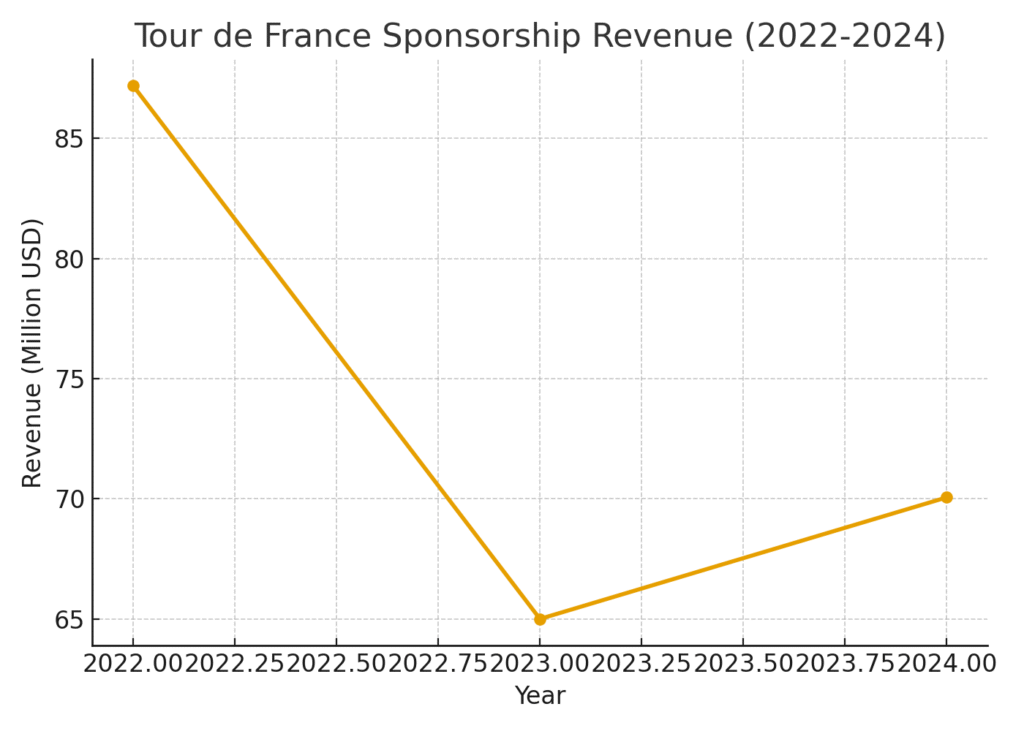
$70.06 Million
Total sponsorship revenue generated for the 2024 season
|
| 11 | 🏢 Partners |
40+ Official Partners
Official Tour partners and suppliers activated during 2025 edition
|
| 12 | 👕 Yellow Jersey |
~$12 Million Annually
LCL's investment for yellow jersey sponsorship rights
|
| 13 | 🟢 Green Jersey |
$4 Million
Skoda's sponsorship fee for the green sprinter's jersey
|
| 14 | 🎁 Giveaways |
16 Million Items
Promotional items distributed to crowds during the three-week race
|
| 15 | 🚗 Caravan |
170+ Vehicles (10-12 km)
Publicity caravan length with ~35 participating brands
|
| 16 | 💵 Caravan Cost |
$250K-$600K Per Brand
Investment required to participate in the publicity caravan
|
| 17 | 📈 Brand Growth |
22% Increase
UAE Team Emirates brand valuation growth in 2025 vs 2024
|
| 18 | 🎯 ROI Value |
$88.4 Million Average
Media exposure value per team to title sponsors (2012 WorldTour)
|
| 19 | 🏆 Naming Rights |
€67.4 Million
Value of first title sponsor position on team jersey (2020 data)
|
| 20 | 📡 Media Revenue |
$23.85 Million
Estimated media revenue for 2024 Tour de France
|
Top 20 Tour de France Marketing Statistics 2025
Tour de France Marketing Statistics #1: $70.06 Million Sponsorship Revenue In 2024
The Tour de France secured an impressive $70.06 million in sponsorship revenue during the 2024 edition. This highlights the race’s ability to attract major global brands eager to connect with its massive audience. Sponsorships play a crucial role in covering organizational costs and fueling marketing activations throughout the event. Such high figures demonstrate the Tour’s continued dominance as a sports marketing powerhouse. For businesses, this shows the event’s unmatched potential to deliver global exposure and brand prestige.
Tour de France Marketing Statistics #2: 42 Brand Partners Generating $87.2 Million Annually
In 2022, the Tour de France worked with 42 brand partners, collectively generating $87.2 million per year. Each partner brand gains access to millions of fans through sponsorships, on-site branding, and TV coverage. This long-term collaboration with numerous companies illustrates the Tour’s ability to blend cycling with commercial strategy. Having such a wide partner base diversifies revenue streams, reducing reliance on single sponsors. It also highlights how the Tour has become one of the most commercially attractive sporting events globally.
Tour de France Marketing Statistics #3: Broadcast In 186 Countries Worldwide
The Tour de France is broadcast in 186 countries, making it one of the most globally accessible sporting events. This extensive reach ensures that brands gain visibility across multiple continents simultaneously. For marketers, the worldwide broadcast means campaigns resonate beyond cycling fans, reaching casual viewers. This type of global exposure is rare, reinforcing why brands invest heavily in the Tour. It’s a unique platform for connecting with international markets in real time.
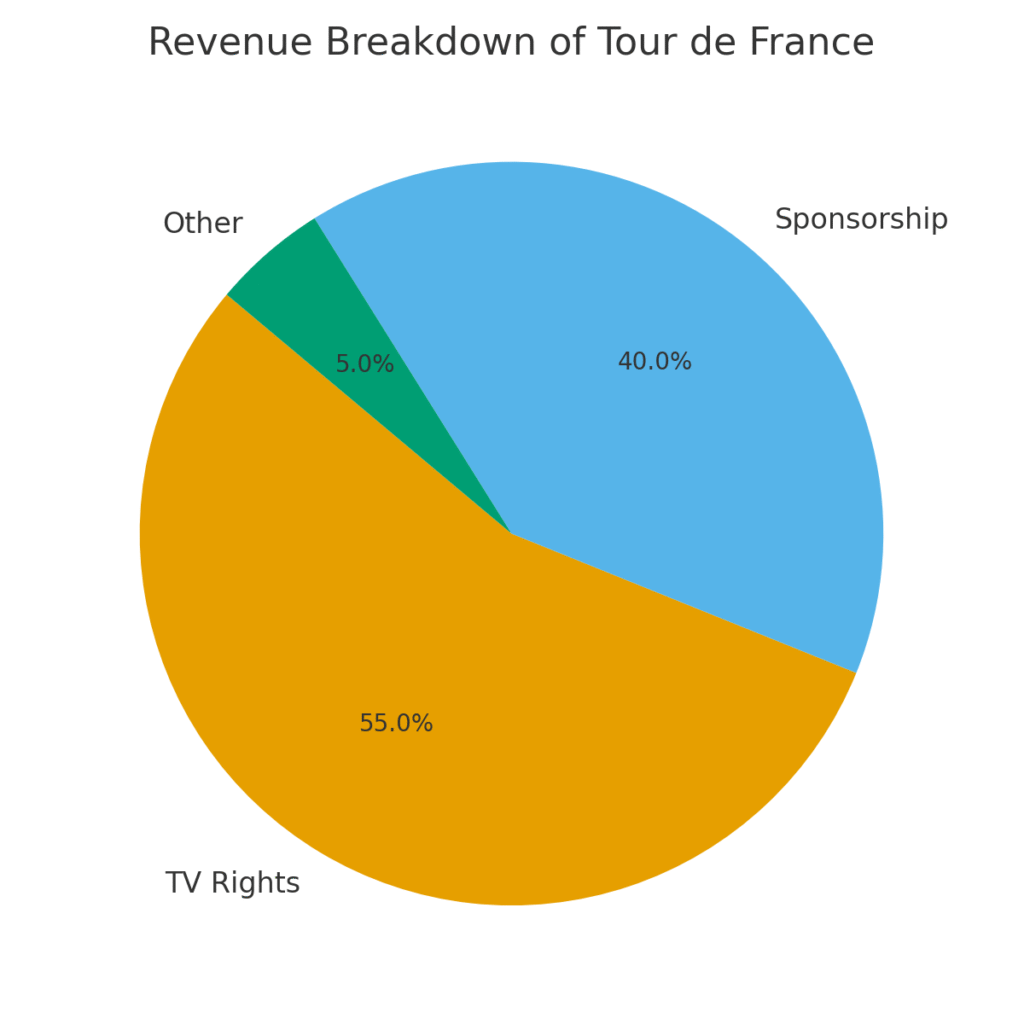
Tour de France Marketing Statistics #4: 55% Of Revenue Comes From TV Rights
More than half—55%—of the Tour de France’s revenue comes from television rights. This underscores the event’s massive appeal to broadcasters eager to capture advertising dollars. Brands benefit because they can place their logos and products directly in front of millions of viewers. The strength of this revenue stream proves the race’s central role in summer sports programming. For marketers, it confirms TV’s continuing importance even in the age of digital streaming.
Tour de France Marketing Statistics #5: Publicity Caravan Sponsorships Cost Up To $600,000 Each
The Tour’s famous “publicity caravan” allows 33 brands to join the parade, with costs ranging from $250,000 to $600,000. This traveling marketing spectacle reaches millions of roadside fans before the riders arrive. Companies distribute freebies, samples, and branded merchandise, creating direct engagement. The caravan is one of the most beloved traditions, blending entertainment with marketing. For sponsors, it is a fun yet highly effective way to build lasting impressions.
Tour de France Marketing Statistics #6: Yellow Jersey Sponsorship Costs $12 Million Annually
The iconic yellow jersey sponsor, LCL Bank, spends about $12 million every year. This investment links the sponsor directly to the Tour’s most prestigious symbol. With daily jersey presentations broadcast globally, the exposure is immense. For LCL, this ensures brand recognition with millions of viewers every day of the race. It demonstrates how investing in symbolism can be just as powerful as traditional ad spend.
Tour de France Marketing Statistics #7: Green Jersey Sponsorship Worth $4 Million Annually
Škoda invests $4 million annually to sponsor the green jersey, which represents the points classification. Associating with this jersey aligns Škoda with speed, performance, and consistency. The brand benefits from repeated exposure during every stage finish. For a car manufacturer, this type of sponsorship positions the brand alongside endurance and excellence. It highlights how brands strategically choose jerseys that reflect their identity.
Tour de France Marketing Statistics #8: 40% Increase In European TV Minutes Watched In 2022
In 2022, European fans watched 40% more programming minutes compared to the prior year. This surge indicates growing interest and deeper engagement with the Tour across the continent. The rebound after the pandemic years illustrates cycling’s resilience as a televised sport. Broadcasters and sponsors benefit when audiences stay tuned for longer periods. For marketers, this increase means greater visibility and stronger campaign effectiveness.
Tour de France Marketing Statistics #9: 30.6 Million Unique Visitors To Official Website In 2023
The Tour’s official website, letour.fr, recorded 30.6 million unique visitors in 2023. This was a 76% increase compared to 2022, showing explosive digital growth. Fans are increasingly turning to online platforms for updates, highlights, and interactive content. For marketers, this signals a clear opportunity to invest in digital activations. It reflects how the Tour continues to evolve with changing consumer behavior.
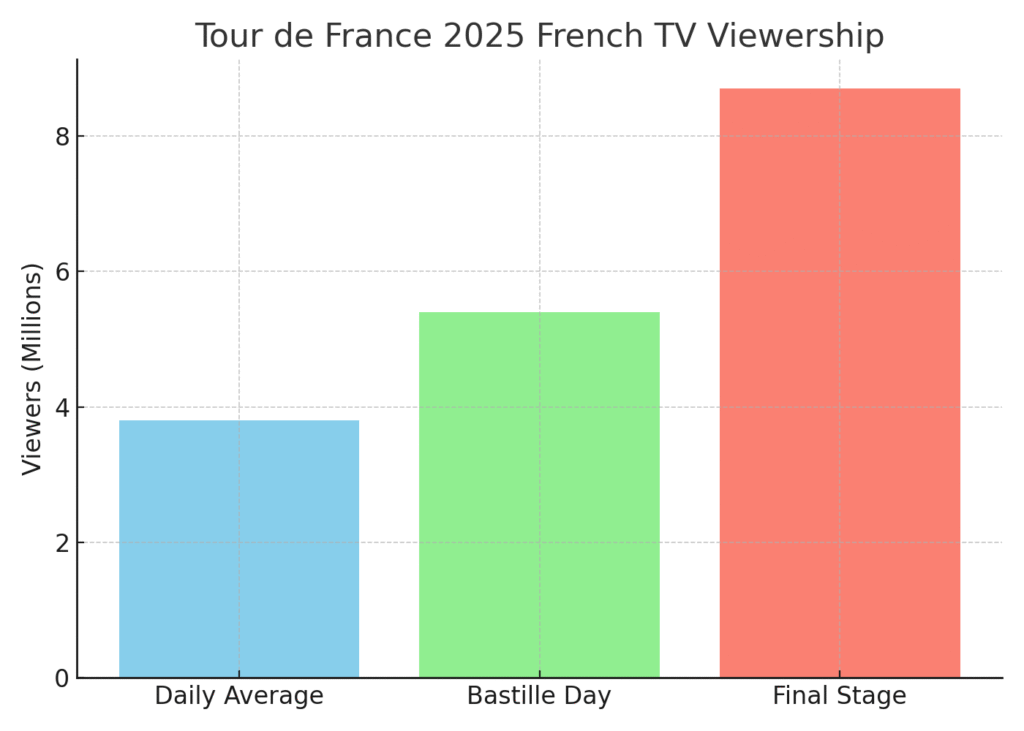
Tour de France Marketing Statistics #10: 3.8 Million Average Daily Viewers In France (2025)
In 2025, the Tour drew an average of 3.8 million viewers daily in France alone. This consistent audience makes the event a cornerstone of French summer television. The figure underscores how central the Tour remains to French culture. Sponsors gain daily, repeated exposure to a loyal home audience. This provides a reliable foundation for building long-term brand associations.
Tour de France Marketing Statistics #11: 5.4 Million French Viewers On Bastille Day Stage
Stage 10 of the 2025 Tour, which fell on Bastille Day, reached 5.4 million French viewers. Nearly half the country’s TV audience tuned in, capturing a 49.8% share. This reflects the cultural and national pride tied to the event. For sponsors, it represents one of the most valuable marketing moments in the calendar. The Bastille Day stage offers unmatched resonance with domestic audiences.
Tour de France Marketing Statistics #12: 8.7 Million Viewers For Final Paris Stage In 2025
The final stage in Paris of the 2025 Tour peaked at 8.7 million French viewers. This was the highest Tour de France audience in nearly two decades. The iconic finish on the Champs-Élysées continues to captivate the nation. Sponsors benefit from maximum exposure at this moment of heightened attention. The climactic stage combines tradition, spectacle, and media reach in one package.
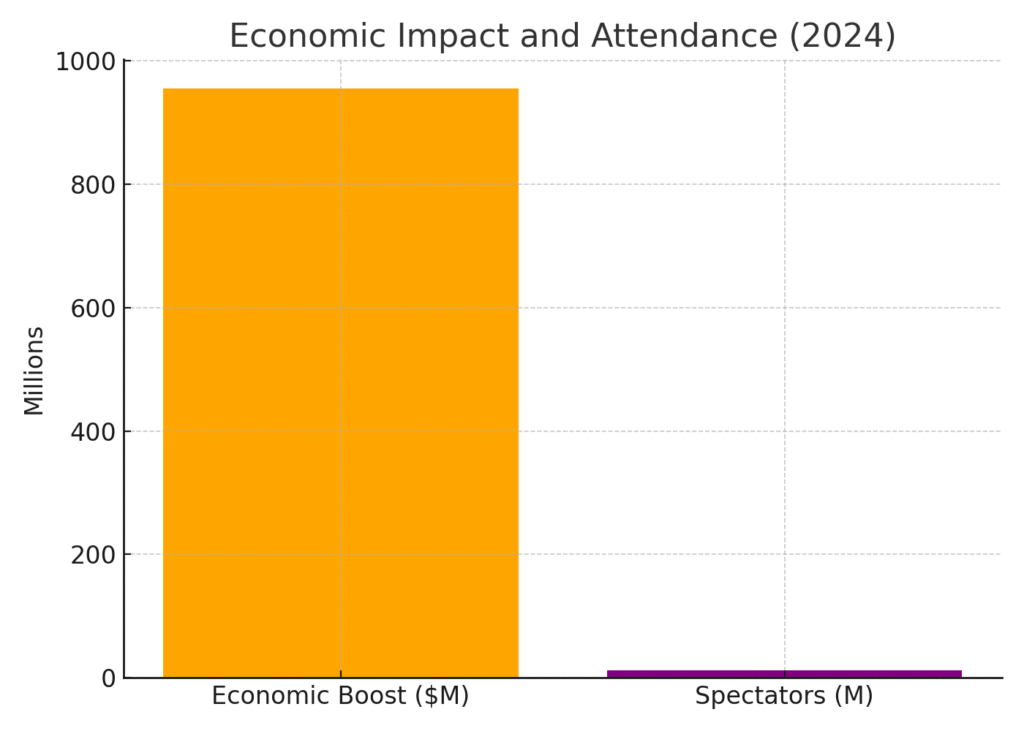
Tour de France Marketing Statistics #13: $955 Million Economic Boost For Host Cities In 2024
Host cities of the 2024 Tour benefitted from a combined $955 million in event-driven spending. This includes tourism, accommodation, hospitality, and local services. The Tour acts as a massive economic engine for regions lucky enough to host a stage. For local sponsors, this creates marketing opportunities tied directly to community impact. It illustrates how the Tour extends far beyond just the race.
Tour de France Marketing Statistics #14: 12 Million Attendees Across All Stages In 2024
An estimated 12 million people lined the roads during the 2024 Tour. This makes it one of the most attended annual sporting events in the world. Roadside fans create an electric atmosphere that sponsors tap into with banners and activations. For marketers, it’s a rare chance to engage people face-to-face at such scale. This sheer footfall underscores the Tour’s massive experiential marketing potential.
Tour de France Marketing Statistics #15: 3.5 Billion Global Viewers Over History
Cumulatively, the Tour de France has been watched 3.5 billion times globally. This reflects the race’s long-standing appeal as both a sports and media product. Its iconic status ensures generations of fans return year after year. For brands, it means tapping into a legacy of trust and tradition. Such historical reach strengthens the race’s status as an advertising giant.
Tour de France Marketing Statistics #16: Women’s Race Viewership Rose To 2.7 Million Per Stage In 2025
The Tour de France Femmes reached an average of 2.7 million French viewers per stage in 2025. This was 500,000 more than the previous year, showing accelerating growth. The rise highlights the growing appetite for women’s cycling and inclusivity in sport. Sponsors benefit from reaching a diversifying audience through this platform. The trend signals that women’s cycling is becoming an increasingly valuable marketing asset.
Tour de France Marketing Statistics #17: 4.4 Million Viewers For Women’s Final Stage In 2025
The women’s final stage in 2025 averaged 4.4 million viewers in France, peaking at 7.7 million. This represents one of the biggest TV moments for women’s cycling to date. The growth of the Tour de France Femmes creates new marketing frontiers. For sponsors, this offers unique storytelling opportunities linked to equality and empowerment. The momentum of the women’s race is redefining cycling’s market appeal.
Tour de France Marketing Statistics #18: 23 Teams Participated In 2025
In 2025, the Tour featured 23 teams competing across all stages. Each team brings with it a network of sponsors, suppliers, and fan bases. For brands, this means additional opportunities for exposure through team kits and vehicles. The diversity of teams reinforces the global nature of the event. This variety enriches the overall marketing ecosystem around the Tour.
Tour de France Marketing Statistics #19: 4,500 People Involved In Race Organization
The Tour de France involves around 4,500 staff, media, suppliers, and caravan participants. Coordinating this scale requires immense logistical planning. For marketers, it highlights the vast ecosystem behind every stage. These behind-the-scenes efforts create countless micro-opportunities for brand visibility. It shows how even operational aspects become part of the Tour’s marketing machinery.
Tour de France Marketing Statistics #20: Sustainability Becoming A Key Sponsor Priority
Sponsors are increasingly prioritizing sustainability, from electric team cars to eco-friendly caravan floats. This aligns with consumer expectations for greener practices in sport. Brands use the Tour to demonstrate their commitment to the environment. For cycling fans, this adds value and relevance to sponsor messaging. It represents how marketing at the Tour continues to evolve with societal trends.
Why These Insights Matter
Looking over these Tour de France marketing statistics reminds me that behind every rider and every stage, there’s a vast world of creativity and strategy shaping how we experience the race. The sponsorships, media reach, and fan engagement figures highlight how powerful this event is for building global brand stories. Personally, I find it inspiring to see how tradition meets innovation year after year, with sponsors adapting to digital platforms while still keeping the magic of the race alive. Sharing these stats with you has been a chance for me to reflect on just how deeply marketing and sports are intertwined. I hope they spark the same curiosity in you that they did in me—because the Tour de France is more than just a race; it’s a masterclass in global marketing.
SOURCES
https://storage-aso.lequipe.fr/ASO/cycling_tdf/tdf24-audiences-en.pdf
https://bikebiz.com/tour-de-france-fan-base-grows-worldwide/
https://domestiquecycling.com/en/news/france-tv-reports-record-tv-figures-for-tour-de-france-femmes/
https://www.roadtrips.com/blog/the-most-watched-sporting-events-in-the-world/
https://en.wikipedia.org/wiki/2025_Tour_de_France
https://en.wikipedia.org/wiki/Tour_de_France_Femmes
https://cyclingflash.com/news/concerning-global-decline-in-tour-de-france-tv-viewership
https://fr.wikipedia.org/wiki/Tour_de_France_2022
https://www.pedalsure.com/blog/the-economics-of-the-tour-de-france