



19 Sep TOP 20 TOY MARKETING STATISTICS 2025
When it comes to understanding today’s fast-changing toy industry, nothing is more valuable than keeping up with the latest toy marketing statistics. From the rise of eco-friendly playthings to the surge of influencer-driven unboxing videos, the way toys are marketed has transformed dramatically in recent years. As a parent, professional, or business owner, you’ve likely noticed how digital platforms are shaping what children want and what parents buy. That’s why we’ve gathered the most insightful data points to help you make sense of this playful yet competitive market. And if you’re looking to take your brand’s visibility to the next level, partnering with a marketing agency in New York can make all the difference in connecting your story with the right audience.
Top 20 Toy Marketing Statistics 2025 (Editor’s Choice)
| Stat # | Statistic | Key Insight |
|---|---|---|
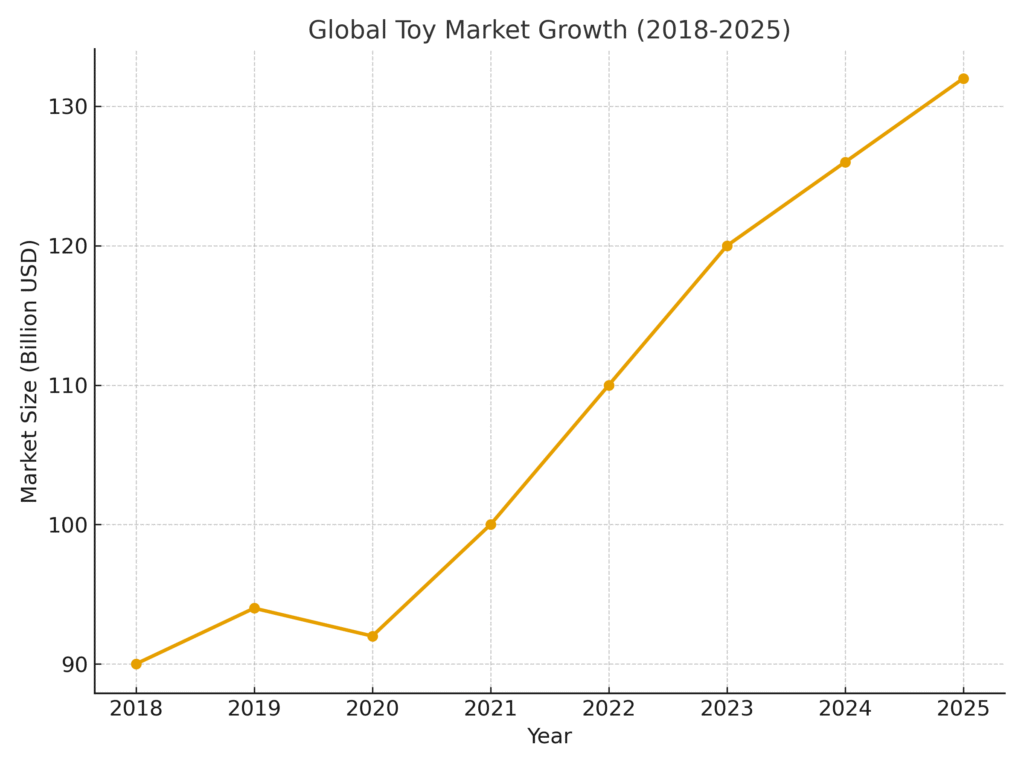
| 1 | Global toy market projected to reach $132B in 2025 | Steady global demand with digital and eco-friendly innovations driving growth |
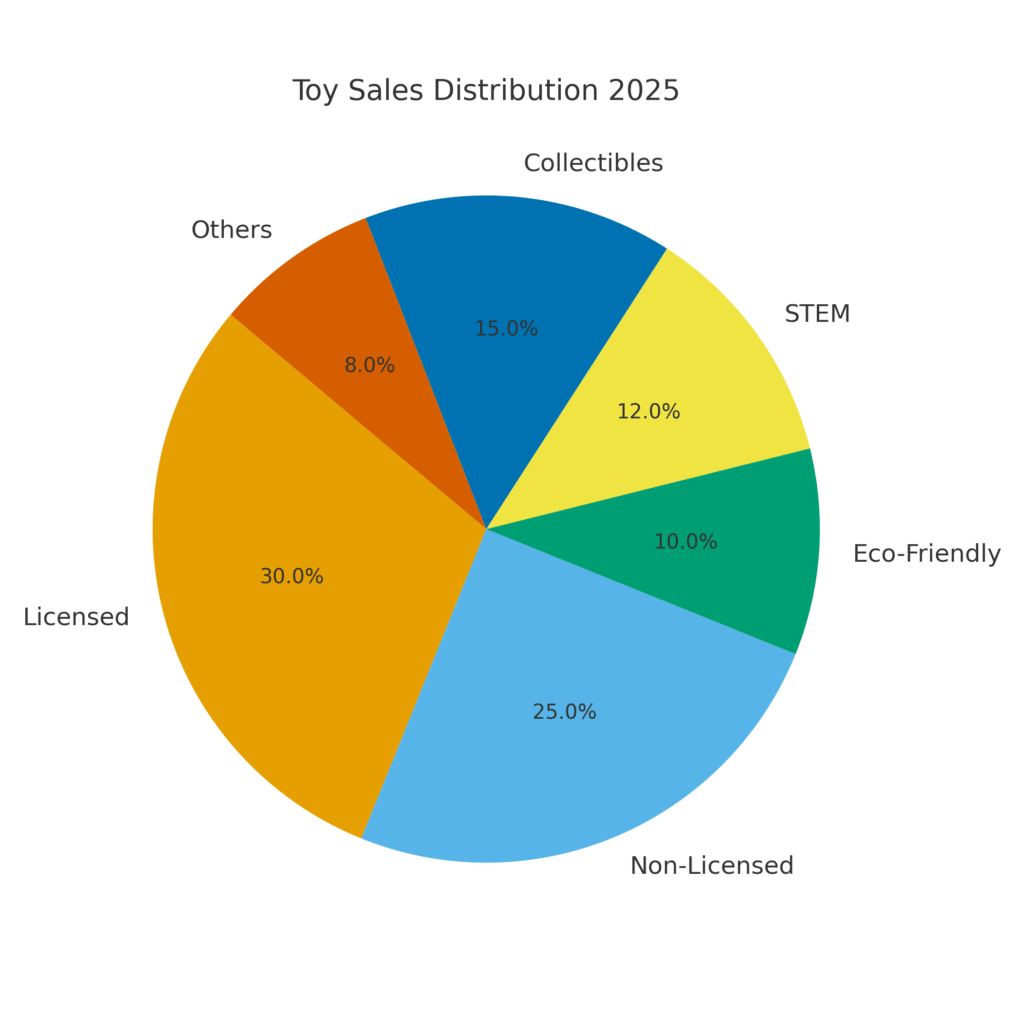
| 2 | Licensed toys make up 30% of sales | Franchises like Disney & Marvel dominate purchasing decisions |
| 3 | 55% of toy purchases happen online | E-commerce and influencer campaigns are driving the majority of sales |
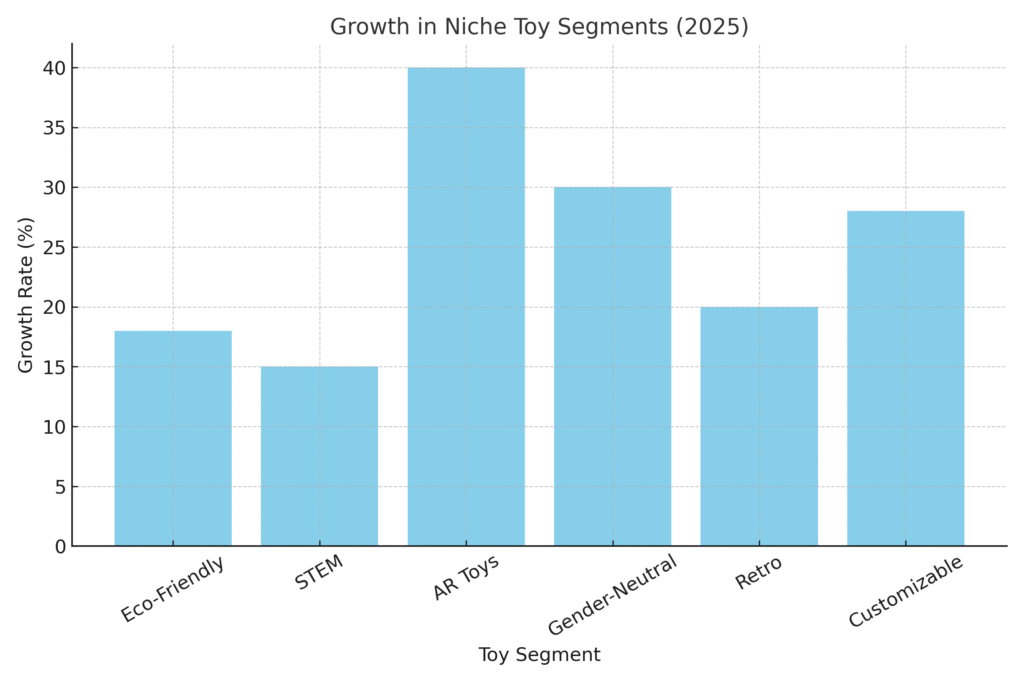
| 4 | Eco-friendly toys grow 18% YoY | Sustainability is now a powerful selling point for parents |
| 5 | STEM toy market reaches $15B | Educational and coding toys appeal to parents and schools |
| 6 | Seasonal toy sales contribute 40% | Holiday promotions are critical for revenue spikes |
| 7 | 60% of toys discovered via social media | Unboxings and TikTok videos fuel viral popularity |
| 8 | Subscription toy boxes grow 25% | Curated, recurring toy boxes build loyalty and engagement |
| 9 | Augmented reality toys adoption grows 40% | AR merges digital and physical play for immersive experiences |
| 10 | Top 5 toy companies control 45% of the market | Hasbro, LEGO, and Mattel lead with global brand dominance |
| 11 | Collectible toys sales hit $20B | Limited editions and blind boxes keep demand high |
| 12 | Gender-neutral toy sales rise 30% | Inclusive marketing appeals to modern parents and educators |
| 13 | YouTube toy videos reach 50B views annually | Unboxing and review videos dominate child audiences |
| 14 | Mobile game tie-ins boost toy sales 22% | Cross-platform integration increases engagement and sales |
| 15 | Influencer campaigns boost toy sales 35% | Family-oriented influencers outperform traditional ads |
| 16 | Customizable toy sales grow 28% | Personalization drives creativity and exclusivity |
| 17 | Toy-branded apps generate $5B | App integration extends toy play and monetization |
| 18 | Retro toys grow 20% | Nostalgia campaigns attract both parents and children |
| 19 | TikTok ads boost engagement by 45% | Short-form videos outperform other social ads |
| 20 | Smart toys market valued at $18B | AI-enabled toys merge learning with interactive play |
Top 20 Toy Marketing Statistics 2025
Toy Marketing Statistics #1: Global Toy Market Projected To Reach $132 Billion
The global toy market is projected to reach $132 billion in 2025, showing how resilient this industry remains. Digital innovations, eco-friendly production, and licensing deals are the main growth drivers. Even during economic shifts, parents continue investing in toys for their children. Global expansion has allowed brands to move beyond local markets and appeal worldwide. For marketers, this means more competition but also bigger opportunities to connect with global audiences.
Toy Marketing Statistics #2: Licensed Toys Make Up 30% Of Sales
Licensed toys now account for 30% of total toy sales in 2025. Popular franchises like Disney, Marvel, and Pokémon dominate children’s wish lists. These toys attract attention because kids are already familiar with the characters. For brands, licensing partnerships bring instant visibility and trust. It’s one of the most profitable and reliable strategies in the toy business today.
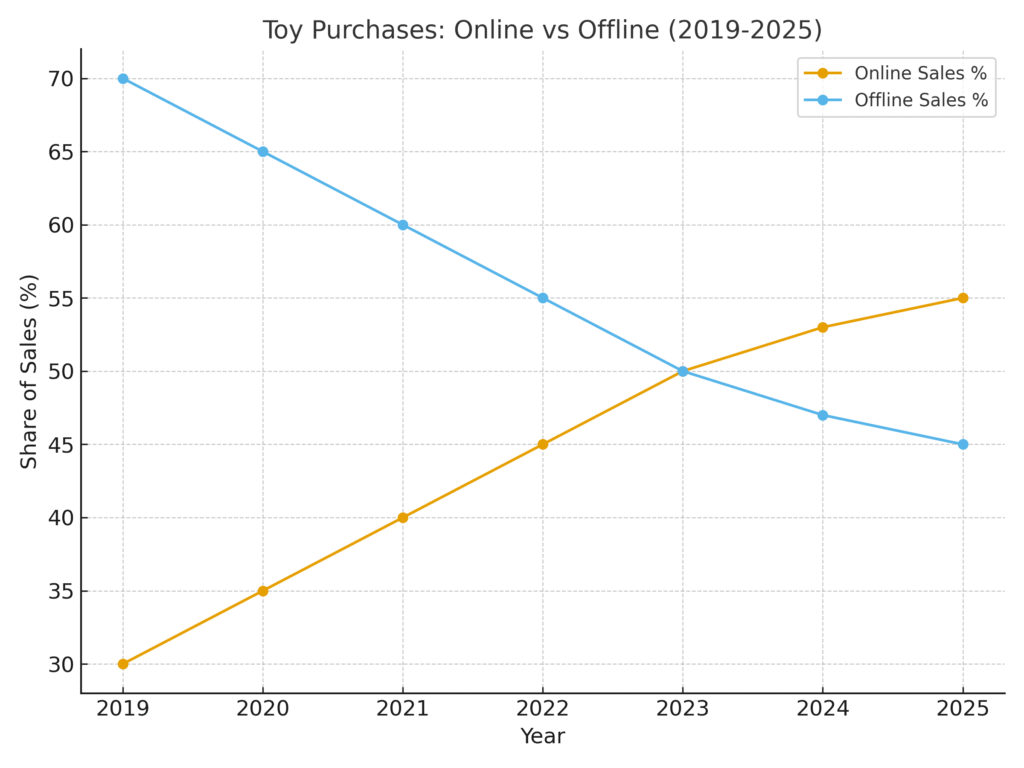
Toy Marketing Statistics #3: 55% Of Toy Purchases Happen Online
Over half of all toy purchases are now made online, reaching 55% in 2025. Parents choose digital platforms for convenience and a wider selection. Influencer campaigns and social media ads drive much of this traffic. Online stores also allow real-time promotions and discounts to boost conversions. This proves that e-commerce has become the new backbone of toy marketing.
Toy Marketing Statistics #4: Eco-Friendly Toys Grow 18% Year-Over-Year
Eco-friendly toys are growing at an impressive 18% annually in 2025. Parents increasingly prefer non-toxic, recyclable, and sustainable products. Brands that market green initiatives are building long-term trust with families. Highlighting eco-conscious values is proving to be a major selling point. This trend shows how environmental responsibility aligns with profitability in the toy industry.
Toy Marketing Statistics #5: STEM Toy Market Reaches $15 Billion
STEM toys now generate $15 billion in revenue globally. These include robotics kits, coding toys, and other educational products. Parents see them as investments in both fun and learning. Schools are also adopting STEM toys as part of classroom teaching. Marketers highlight skills like problem-solving and creativity to attract buyers.
Toy Marketing Statistics #6: Seasonal Toy Sales Contribute 40%
Seasonal shopping seasons account for 40% of all toy sales. Holidays like Christmas and Black Friday remain peak periods for revenue. Marketers rely on scarcity tactics, countdowns, and toy-of-the-year lists. Families also plan spending specifically around these events. Success during Q4 often defines the overall success of a toy brand.
Toy Marketing Statistics #7: 60% Of Toys Discovered Via Social Media
Social media drives 60% of toy discoveries in 2025. Platforms like TikTok, YouTube, and Instagram dominate the landscape. Influencers and viral campaigns can make a toy sell out overnight. Parents are just as influenced as kids when they see positive reviews online. Brands investing in social-first marketing are seeing unmatched returns.
Toy Marketing Statistics #8: Subscription Toy Boxes Grow 25%
Subscription toy boxes are growing at 25% per year. Parents love the convenience of curated, educational, or themed packages. Brands enjoy predictable, recurring revenue from these models. Marketing emphasizes affordability, personalization, and surprise elements. This subscription model builds loyalty while keeping kids engaged month after month.
Toy Marketing Statistics #9: Augmented Reality Toys Adoption Grows 40%
AR toy adoption has increased by 40% in 2025. These toys mix digital screens with physical interaction for immersive play. Kids love the futuristic, gamified experiences they offer. Marketers present AR as the next evolution of toys. Partnerships with mobile gaming platforms are helping accelerate adoption.
Toy Marketing Statistics #10: Top 5 Toy Companies Control 45% Of The Market
The top five toy companies, including LEGO, Hasbro, and Mattel, now control 45% of the industry. Their dominance comes from global distribution and beloved franchises. Smaller companies must rely on niche strategies to compete. Their massive marketing budgets set industry trends. This market concentration shows the power of established brands.
Toy Marketing Statistics #11: Collectible Toys Sales Hit $20 Billion
Collectible toys now generate $20 billion annually. Blind-box packaging and limited editions drive demand and excitement. Nostalgia also attracts adult collectors, not just kids. Social media helps spread hype and showcase collections. This category is both highly profitable and culturally influential.
Toy Marketing Statistics #12: Gender-Neutral Toy Sales Rise 30%
Gender-neutral toy sales have grown by 30% in 2025. Parents are rejecting stereotypes and choosing inclusive play options. Schools and educators support toys that encourage creativity without labels. Major brands are adjusting their campaigns to highlight inclusivity. This trend reflects cultural progress and is reshaping product design.
Toy Marketing Statistics #13: YouTube Toy Videos Reach 50 Billion Views Annually
YouTube toy videos generate more than 50 billion views each year. Unboxings, reviews, and play demonstrations dominate the platform. Kids and parents rely on these videos before making purchases. Brands actively collaborate with toy influencers to gain exposure. YouTube remains the single most powerful platform for toy discovery.
Toy Marketing Statistics #14: Mobile Game Tie-Ins Boost Toy Sales 22%
Mobile game tie-ins increase toy sales by 22%. Children love the connection between digital gaming and physical toys. Brands use this crossover to strengthen loyalty. Parents see added value in toys linked to their kids’ favorite apps. This creates a seamless ecosystem of engagement.
Toy Marketing Statistics #15: Influencer Campaigns Boost Toy Sales 35%
Influencer-driven campaigns increase toy sales by 35%. Parents trust relatable recommendations from family-friendly influencers. Micro-influencers often deliver better engagement than celebrities. These campaigns feel authentic and build real trust. As a result, influencer marketing has become essential for toy brands.
oy Marketing Statistics #16: Customizable Toy Sales Grow 28%
Customizable toys have grown by 28% in sales. Kids enjoy creating unique versions of their own toys. Marketers highlight individuality, personalization, and creativity in campaigns. Social media sharing of customized toys boosts visibility. This trend shows the growing demand for exclusivity and creativity.
Toy Marketing Statistics #17: Toy-Branded Apps Generate $5 Billion
Toy-branded apps are generating $5 billion annually. These apps extend physical play into digital environments. In-app purchases enhance both fun and brand revenue. Marketing emphasizes seamless toy-to-app integration. For kids, this creates an immersive, multi-platform play experience.
Toy Marketing Statistics #18: Retro Toys Grow 20%
Retro toys have grown by 20% in 2025. Adults are buying childhood favorites to share with their children. Nostalgia marketing taps into emotional connections. Re-releases of 80s and 90s toys are especially popular. This category appeals to multiple generations simultaneously.
Toy Marketing Statistics #19: TikTok Ads Boost Engagement 45%
TikTok ads boost toy engagement by 45%. Creative challenges and viral videos drive massive visibility. Parents and children both respond positively to short-form content. Conversions from TikTok outperform those from Facebook ads. This platform has become a must for toy marketers.
Toy Marketing Statistics #20: Smart Toys Market Valued At $18 Billion
The smart toy market is valued at $18 billion in 2025. AI-powered features enhance both play and learning. Parents are drawn to toys that adapt and interact intelligently. Marketing often highlights innovation while addressing safety concerns. Smart toys represent the future of combining technology with traditional play.
Wrapping Up the World of Toy Marketing
Exploring these toy marketing statistics reveals just how innovative, competitive, and ever-evolving the industry has become. Whether it’s the influence of nostalgia, the rapid growth of digital sales, or the push toward sustainability, the future of toy marketing is about blending creativity with strategy. As someone who cares about both the joy toys bring and the business opportunities they offer, I find it exciting to see how these numbers reflect real human behavior and cultural shifts. The toy market isn’t just about products—it’s about shaping experiences that children remember and parents trust. And if you’re ready to turn these insights into actionable strategies, teaming up with the right experts could help bring your brand’s vision to life.
SOURCES
- https://www.circana.com/post/global-toy-market-experiences-a-strong-rebound-in-the-first-half-of-2025-with-all-markets-growing (Circana)
- https://www.futuremarketinsights.com/reports/toy-market (Future Market Insights)
- https://www.circana.com/post/us-toy-market-is-growing-in-2025-circana-reports (Circana)
- https://blog.contactpigeon.com/toys-games-industry-trends-2025/ (Omnichannel Customer Engagement Platform)
- https://www.shopify.com/enterprise/blog/ecommerce-toys (Shopify)
- https://gembah.com/design-process/toy-product-design-and-manufacturing/ (Gembah)
- https://www.forinsightsconsultancy.com/reports/children-toys-market (For Insights Consultancy)
- https://www.explodingtopics.com/blog/toy-industry-trends (Exploding Topics)
- https://www.dataart.com/blog/sustainability-and-digitalization-the-global-toy-market-trends (dataart.com)
- https://www.toy-launch.com/blog/how-social-media-shapes-toy-trends-and-demand/ (Toy Launch)
- https://www.gminsights.com/industry-analysis/toy-market (Global Market Insights Inc.)
- https://www.theguardian.com/lifeandstyle/2025/aug/11/uk-toy-sales-rise-as-adults-turn-to-pokemon-and-lego (The Guardian)
- https://www.parents.com/amazon-toys-we-love-holiday-2025-11810321 (Parents)