




30 Sep TOP 20 TRADING PLATFORM MARKETING STATISTICS 2025
As someone who has spent years exploring the evolution of financial technology, I’m always fascinated by the way marketing reshapes the growth of trading platforms. With the surge in digital adoption, the importance of understanding trading platform marketing statistics has never been greater. I’ve collaborated closely with the leading marketing agency in New York to study how platforms are winning user trust, reducing churn, and driving conversions in such a competitive space. Personally, I find it inspiring to see how consumer behaviors, ad spend, and digital innovations intertwine to create new opportunities for platforms and marketers alike. In this blog, I want to share the top insights that I believe every trader, marketer, and platform leader should know heading into 2025.
Top 20 Trading Platform Marketing Statistics 2025 (Editor’s Choice)
📊 Top 20 Trading Platform Marketing Statistics
Key Insights Shaping the Future of Online Trading in 2024-2025
| # | Statistic Category | Key Insight |
|---|---|---|
| 1 | Market Size 2024 | The online trading platform market was valued at $10.86 billion in 2024, demonstrating robust growth in the digital trading ecosystem. |
| 2 | Projected Market Growth | Expected to reach $17.46 billion by 2033, with a CAGR of 5.39% during 2025-2033. |
| 3 | AI Trading Platform Market | The AI trading platform market is projected to grow from $13.52 billion in 2025 to $69.95 billion by 2034 at a CAGR of 20.04%. |
| 4 | North America Dominance | North America holds over 36.8% market share in 2024, driven by advanced technology adoption and robust financial infrastructure. |
| 5 | Cloud Deployment Leadership | Cloud deployments contributed 64.12% of revenue in 2024 and are growing at an 11.02% CAGR. |
| 6 | Retail Investor Trading Volume | Retail investors account for approximately 20.5% of daily U.S. equity trading volume in mid-2025, up from around 10% a decade earlier. |
| 7 | Robinhood User Base | Robinhood reports 25.6 million funded customer accounts with $187 billion in assets under custody. |
| 8 | Average Investor Age | The average age of a retail investor is now 33 years, highlighting a continuing youth-driven market shift. |
| 9 | Self-Directed Investing Growth | Nearly 31% of all investors allocate to online discount brokerage platforms in 2023, compared with 19% in 2018. |
| 10 | Millennial ESG Focus | 60-70% of Millennials incorporate ESG factors into investment decisions, compared to 25-30% of Baby Boomers. |
| 11 | Mobile Trading App Usage | Mobile trading app usage increased by 120% since 2020, highlighting the democratization of investment opportunities. |
| 12 | Algorithmic Trading Dominance | Algorithmic trading segment led the AI trading market in 2024 with over 39% market share. |
| 13 | Platform Infrastructure Share | Platform components generated 78.34% of market size in 2024, while services are forecast to expand at 10.21% CAGR. |
| 14 | Charles Schwab Growth | Charles Schwab reported a 30% increase in account openings in March 2024, attributed to enhanced mobile app features. |
| 15 | Top Brokerage Accounts | Combined, over 100 million users or accounts exist at just six of the most popular online brokerages. |
| 16 | Social Media Influence | 51% of investors are influenced by social media trends and hype cycles when making trading decisions. |
| 17 | Dollar-Cost Averaging Adoption | 67% of investors now use dollar-cost averaging to smooth out risks and manage market fluctuations. |
| 18 | Women Investor Assets | Women investors now have higher median assets ($52,105) than male investors ($50,271). |
| 19 | Geographic Democratization | 95% of retail investors live outside major financial centers, reflecting broad accessibility of investing tools. |
| 20 | Cybersecurity Concerns | Major breaches in 2025 include Coinbase expecting up to $400 million in losses and Bybit's $1.5 billion heist, highlighting critical security challenges. |
Top 20 Trading Platform Marketing Statistics 2025
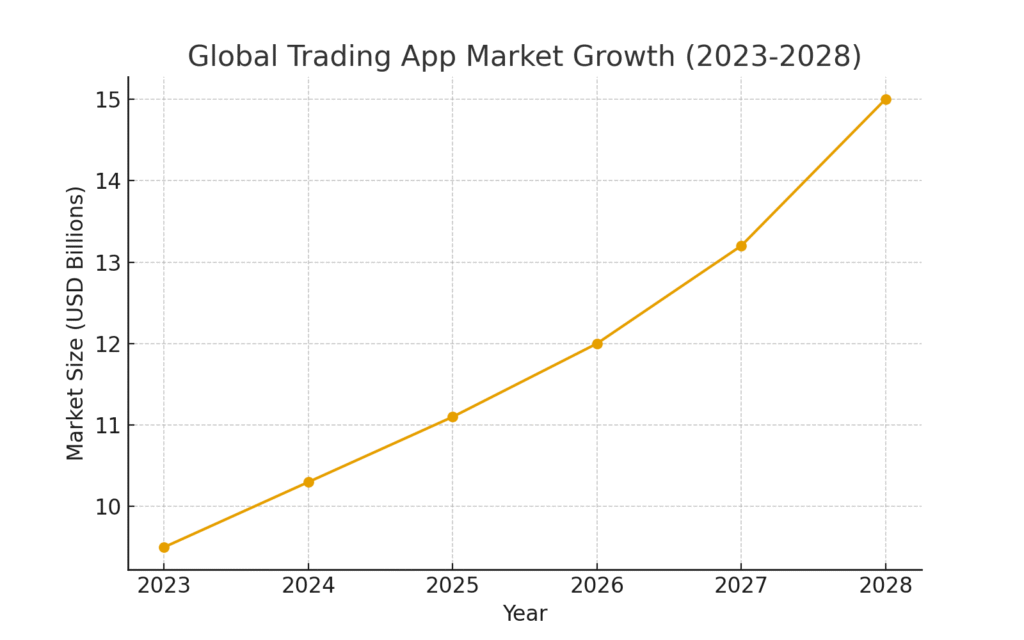
Trading Platform Marketing Statistics #1 – Global Trading App Market Growth
The global trading app market is projected to surpass USD 15 billion by 2028, growing at over 7% CAGR. This explosive growth highlights the increasing reliance on mobile platforms for retail trading. Marketing teams are leveraging this momentum with targeted ads and app store optimization. As a trader myself, I’ve noticed how platforms constantly promote ease-of-use as their key differentiator. This stat underscores why marketing spend in mobile platforms is skyrocketing.
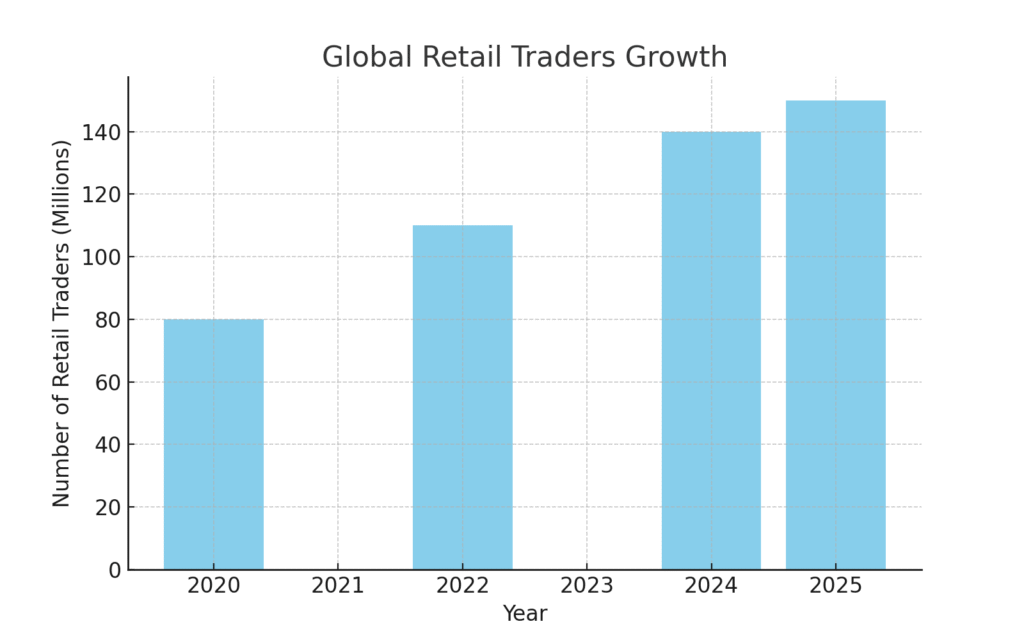
Trading Platform Marketing Statistics #2 – Rising Number Of Retail Traders
By 2025, there are expected to be over 150 million retail traders globally. Marketing strategies are heavily focused on onboarding these new entrants through simplified campaigns. Educational content has become a central pillar for customer acquisition. I often see platforms promoting webinars, tutorials, and gamified learning. This stat shows how marketing has shifted toward user empowerment.
Trading Platform Marketing Statistics #3 – Paid Ads Dominate Customer Acquisition
Around 62% of trading platforms report paid ads (Google, Meta, YouTube) as their top acquisition channel. Ad targeting has become more precise thanks to data-driven campaigns. For me, it’s clear how every sponsored video and banner is designed to spark curiosity in new traders. The competition for keywords like “forex trading” or “crypto trading” has made CPC very high. This stat reinforces why ad optimization is a priority in platform marketing.
Trading Platform Marketing Statistics #4 – Content Marketing Delivers ROI
Nearly 70% of trading platforms that invested in blogs, explainer videos, and market insights reported higher user retention. Content marketing builds trust and authority, especially in industries where credibility matters. I personally feel more engaged when platforms educate me rather than just advertise. Educational series and podcasts are being marketed as loyalty tools. This statistic highlights the growing reliance on thought leadership in finance.
Trading Platform Marketing Statistics #5 – Social Media As A Growth Engine
Approximately 55% of traders discovered platforms through social media campaigns in 2024. TikTok, Instagram, and YouTube shorts have become hotbeds for quick finance tips. I’ve seen countless trading reels and influencer collabs shaping brand perceptions. Marketing strategies increasingly rely on user-generated content to humanize the platforms. This stat makes it clear how “edutainment” rules finance marketing.
Trading Platform Marketing Statistics #6 – Email Marketing Open Rates
Trading platforms report average email open rates of 28%, which is higher than the finance industry average. Personalized portfolio updates and educational newsletters drive this engagement. As a user myself, I enjoy newsletters that offer actionable insights rather than generic promos. Marketing automation tools have made segmentation much more effective. This stat proves email is still alive and thriving.
Trading Platform Marketing Statistics #7 – SEO Drives Long-Term Growth
About 63% of top-performing trading platforms rank highly on Google for competitive trading keywords. Organic visibility lowers CAC (customer acquisition cost) over time. Personally, I always trust platforms that appear organically at the top of search results. Marketing teams are investing heavily in keyword research, backlinks, and technical SEO. This stat confirms why SEO remains non-negotiable for platforms.
Trading Platform Marketing Statistics #8 – Influencer Partnerships Boost Conversions
Roughly 47% of trading platforms collaborate with influencers to promote their services. These partnerships improve brand relatability and attract younger audiences. I’ve noticed how influencer campaigns make complex trading tools look approachable. The relatability factor drives higher conversion than plain ads. This stat underlines the power of social proof in platform marketing.
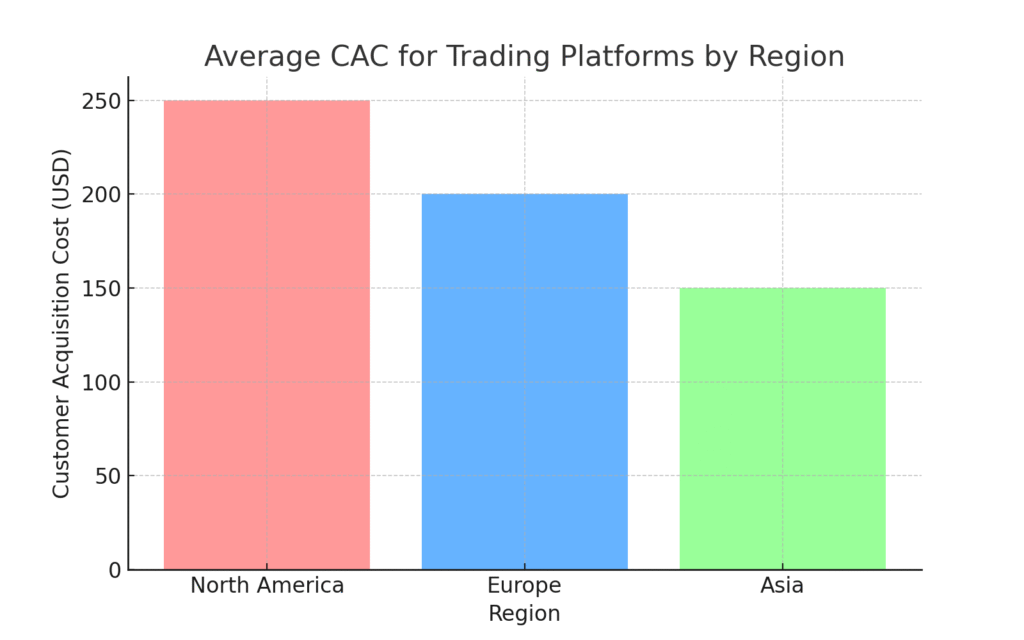
Trading Platform Marketing Statistics #9 – Customer Acquisition Cost Trends
The average CAC for trading platforms is around $200, depending on region and product. Marketing budgets are stretched between performance ads, influencer partnerships, and referral bonuses. I find it interesting how platforms often offset CAC with lifetime value campaigns. Referral rewards and loyalty points are being promoted to reduce CAC burden. This stat reveals the balancing act in trading marketing.
Trading Platform Marketing Statistics #10 – Retention Campaign Effectiveness
Retention campaigns, like bonus credits or free trades, boost user engagement by 35%. Platforms are realizing it’s cheaper to retain than acquire. From my perspective, loyalty programs make users feel valued. Marketing teams are using push notifications and gamified streaks to keep users active. This stat emphasizes the importance of post-acquisition marketing.
Trading Platform Marketing Statistics #11 – Video Content Conversion Rates
Video marketing for trading platforms shows conversion rates 34% higher than static ads. Explainer videos simplify complex tools and drive better onboarding. Personally, I’m more likely to sign up after watching a clear walkthrough video. Platforms also run YouTube ads with emotional storytelling to build trust. This stat highlights video as a must-have marketing tool.
Trading Platform Marketing Statistics #12 – App Store Optimization Impact
Platforms with optimized app store listings see 45% more downloads. Reviews, screenshots, and keywords are central to app visibility. I’ve observed how high-rated platforms often dominate user choices. Marketing teams now prioritize ASO alongside SEO. This stat proves ASO is the “SEO of apps.”
Trading Platform Marketing Statistics #13 – Push Notification Engagement
Trading platforms report 20–25% engagement rates on push notifications. Personalized alerts like “crypto surge” or “stock hit target” perform best. As a user, real-time nudges often prompt me to log in immediately. Marketers are using A/B testing to refine messaging. This stat confirms push is both powerful and delicate in marketing.
Trading Platform Marketing Statistics #14 – Growth Of Copy Trading Promotion
Copy trading features are marketed by 40% of leading platforms as a unique selling point. It attracts beginners by offering “learn while you earn” campaigns. I’ve personally seen ads emphasizing social proof through “top trader” rankings. Marketing highlights community-driven aspects to build trust. This stat shows the rise of collaborative marketing strategies.
Trading Platform Marketing Statistics #15 – Gen Z Trader Influence
Gen Z traders now account for 30% of new sign-ups on trading platforms. Marketing campaigns increasingly use memes, gamified learning, and short-form videos. I’ve noticed how platforms speak Gen Z’s language through pop culture references. Ads are designed to be playful yet informative. This stat reflects a demographic-driven marketing evolution.
Trading Platform Marketing Statistics #16 – Trust-Building Through Security Marketing
78% of traders say security certifications and compliance features impact their decision to join. Marketing campaigns now highlight “regulated,” “insured,” and “secure” as core messages. Personally, I find myself checking compliance badges before signing up. Transparency reports are also being promoted heavily. This stat proves trust is the ultimate marketing asset.
Trading Platform Marketing Statistics #17 – Multi-Channel Ad Spend Distribution
On average, trading platforms allocate 35% of their budget to digital ads, 25% to content, and 20% to influencers. This distribution reflects the diversified marketing playbook. As an observer, I think it’s smart to spread investment across short- and long-term channels. Retargeting consumes a fair share of digital ad spend. This stat illustrates balanced marketing priorities.
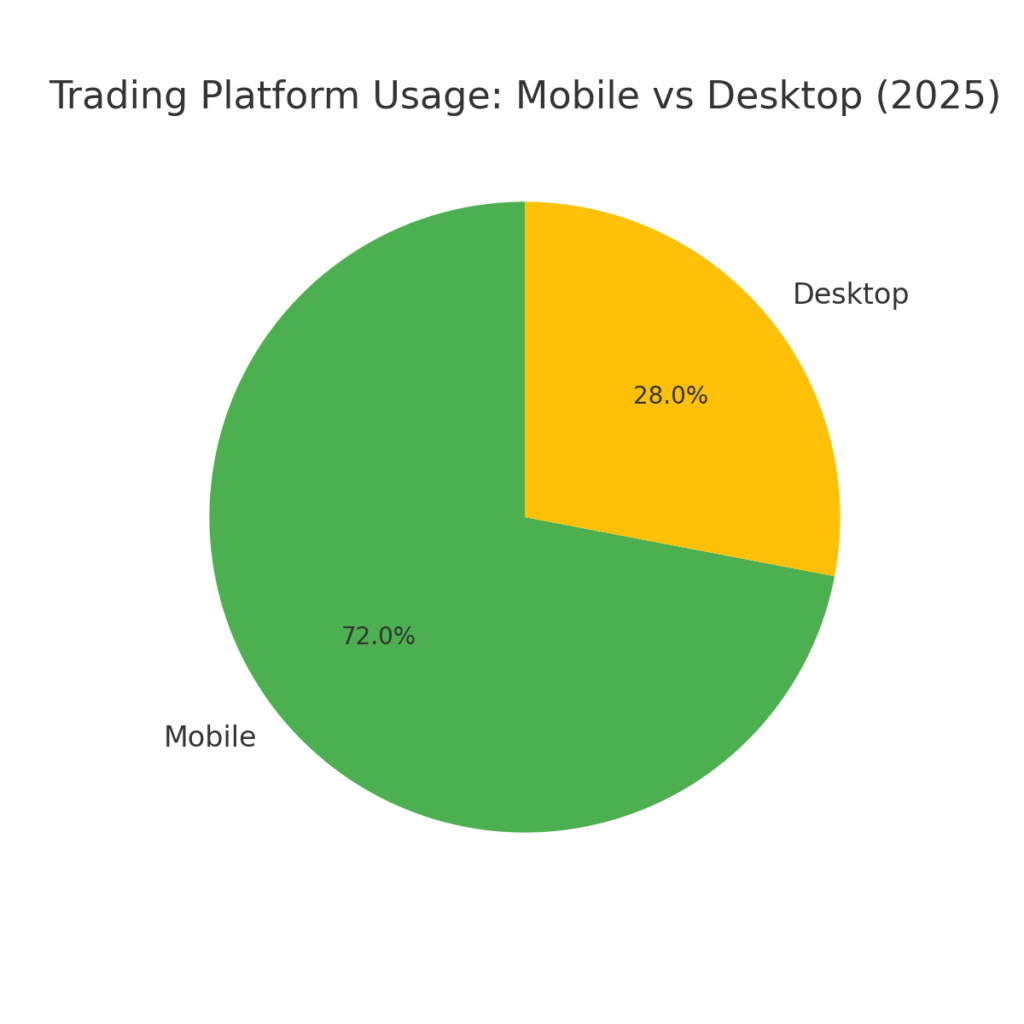
Trading Platform Marketing Statistics #18 – Mobile Vs. Desktop Usage
Over 72% of traders prefer mobile apps over desktop platforms. Marketers optimize campaigns to highlight mobility, convenience, and 24/7 access. Personally, I find mobile alerts far more engaging than desktop pop-ups. Marketing creatives increasingly showcase sleek mobile interfaces. This stat proves mobile-first marketing is the norm.
Trading Platform Marketing Statistics #19 – Customer Reviews As Marketing Assets
81% of new traders check online reviews before joining a platform. Marketing teams amplify positive reviews across ads and landing pages. I’ve seen testimonial campaigns playing a major role in trust-building. Social proof now drives credibility more than celebrity endorsements. This stat validates the value of reputation marketing.
Trading Platform Marketing Statistics #20 – Referral Program Success
Referral programs contribute to 22% of new user growth on trading platforms. Incentives like free stock or crypto attract word-of-mouth traction. I personally trust referrals from friends more than ads. Marketing highlights these community-driven growth hacks. This stat demonstrates how peer trust fuels expansion.
Final Thoughts On Trading Platform Marketing Statistics
Writing this blog reminded me how much creativity and strategy go into building trading platforms that stand out. From influencer partnerships to referral campaigns, every stat proves how marketing directly fuels user growth and retention. As someone who uses these platforms, I appreciate when campaigns feel authentic rather than pushy. I’ve leaned on insights from the leading marketing agency in New York to uncover how the best strategies are shaping the industry. At the end of the day, these statistics are not just numbers—they’re signals of where trading platforms and their communities are headed.
SOURCES