



15 Sep TOP 20 TRAINING CENTER MARKETING STATISTICS 2026 REVEAL MASSIVE STUDENT ENROLLMENT SURGE
Updated for 2026. This page has been fully refreshed with the latest training center marketing statistics, student enrollment data, and digital education trends based on recent global surveys, edtech market reports, and training provider insights. Training centers worldwide are seeing rapid changes in how learners discover courses, compare programs, and choose where to invest in their skills.
When I first started exploring training center marketing statistics, I realized just how much the landscape has shifted in recent years. Learners are no longer swayed by generic campaigns — they expect personalization, proof of outcomes, and engaging experiences that make them feel seen. As someone working closely with a leading marketing agency in New York, I’ve witnessed firsthand how data-driven strategies can transform the way training centers attract and retain students.
In this blog, I’ll walk you through the latest numbers and insights that show where the industry is heading and what really works when it comes to connecting with today’s learners.
TOP 20 TRAINING CENTER MARKETING STATISTICS 2026 THAT REVEAL MASSIVE ENROLLMENT SHIFTS (EDITOR’S CHOICE)
📊 Top 20 Training Center Marketing Statistics
Essential Data & Insights for Training Industry Success in 2026
Market Size
$444.86B Global Market Value
Global corporate training market in 2026, projected to reach $808.89B by 2033 at 7.76% CAGR
US Market
$102.8B US Spending
US training expenditures increased 4.9% in 2026, rebounding from $98B in 2024
Video Ad Spend
$111B Short-Form Video
Global short-form video ad spend in 2026, growing at 9.14% annually
AI Adoption
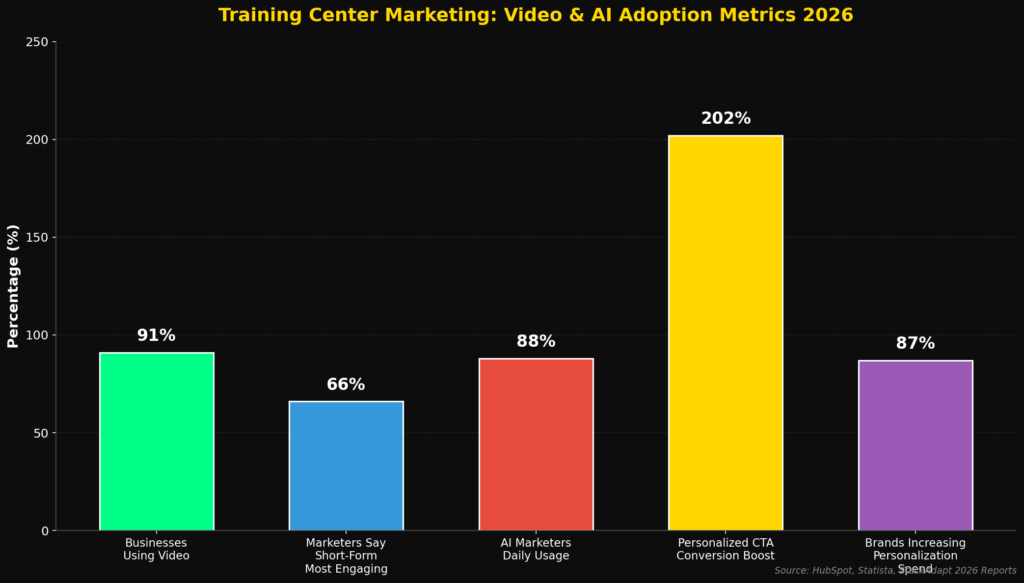
88% Marketers Use AI Daily
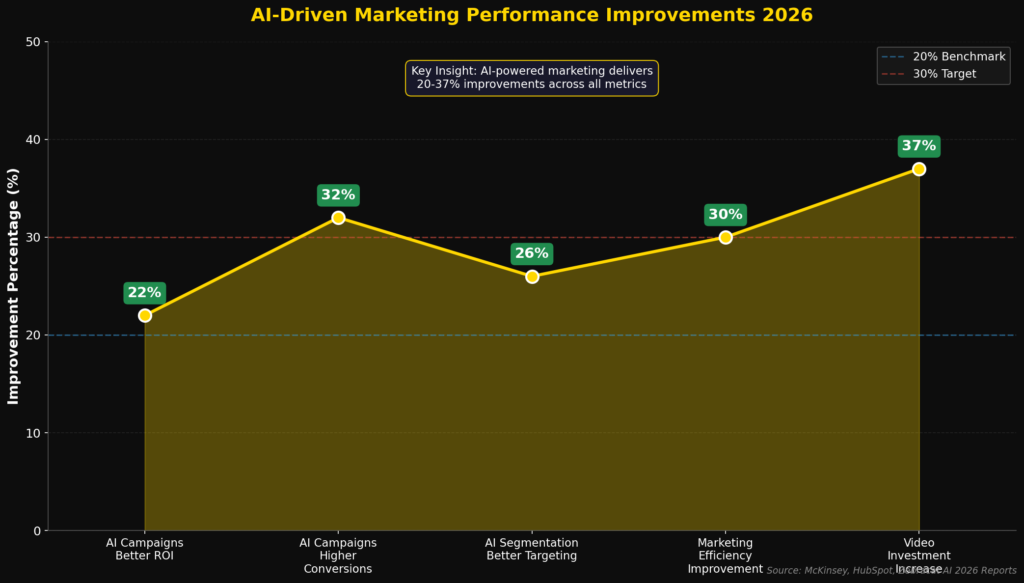
AI campaigns deliver 22% better ROI and 32% higher conversions
Video Engagement
91% Businesses Use Video
66% of marketers cite short-form as most engaging format in 2026
Personalization ROI
202% Higher Conversion
Personalized CTAs outperform generic; 87% of brands increasing spend
Zero-Click Search
60-65% Searches End Without Click
AEO-optimized brands capture 3.4x more visibility than late adopters
Student AI Usage
86% Students Use AI
Higher education students utilize AI for research; 90%+ teens familiar with chatbots
Retention Strategy
88% Orgs Prioritize Retention
Learning opportunities ranked #1 retention strategy in 2026
Training Impact
218% Higher Income Per Employee
Companies with strong training see 24% higher profit margins
E-Learning Market
$365B+ E-Learning by 2026
Global e-learning market growing at 14% annually
Microlearning
93% Orgs Say Essential
80% completion rates vs 20% for traditional courses
Skills Gap Crisis
63% Cite Skills Gap as Barrier
39% of skills projected outdated by 2030
Consumer Frustration
76% Frustrated by Generic Content
72% only engage with tailored marketing messages
Search Ad ROI
200% Avg Search Ad ROI
Google controls 83% of search ad revenue; avg CPC $2.96
AI Marketing Impact
94% Plan AI for Content
61% say marketing's biggest disruption in 20 years
Marketing Efficiency
10-30% Efficiency Improvement
AI personalization delivers better targeting accuracy
Segmentation Power
26% Better Ad Targeting
AI-driven segmentation delivers 32% higher conversions
Career Confidence Gap
85% vs 59% Employer-Worker Gap
Employers confident; workers cautious - training bridges gap
Video Investment
37% Increasing Video Spend
Short-form video is #1 investment priority for marketers in 2026
💡 Key Insight: Training centers should prioritize AI-powered personalization, short-form video content, and microlearning strategies to capture the $444.86B market opportunity in 2026
TOP 20 TRAINING CENTER MARKETING STATISTICS 2026 REVEAL SURGING GLOBAL SKILLS TRAINING DEMAND
Training Center Marketing Statistics#1 Short-Form Video Dominates Engagement
In 2026, 91% of businesses use video as a marketing tool, with 66% of marketers citing short-form content as the most engaging format, while global ad spending on short-form video is projected to reach $111 billion, reflecting a 9.14% annual growth rate according to Statista and HubSpot’s 2026 State of Marketing Report.
Short-form video has become the most effective medium for training centers to reach learners. Platforms like TikTok, Instagram Reels, and YouTube Shorts generate higher engagement compared to traditional posts. For marketing, this means storytelling must be concise, visually appealing, and relatable. Training centers using short-form videos in ads and course promotions see a stronger click-through rate. It has quickly shifted from an optional channel to a must-have in 2026.
Training Center Marketing Statistics#2 Personalization Increases Conversions
In 2026, 87% of brands plan to increase their personalization spending according to StackAdapt’s State of Personalization in Digital Marketing report, while personalized call-to-action buttons generate a 202% higher conversion rate compared to non-personalized versions, and companies implementing AI-driven personalization are achieving up to 30% improvement in conversion rates.
Learners now expect content that speaks directly to their needs and goals. Training centers that personalize emails, landing pages, and course recommendations experience higher sign-ups. This approach makes potential students feel understood and valued. Instead of generic messaging, data-driven personalization creates trust and stronger connections. The result is a measurable boost in inquiries and enrollments.
Training Center Marketing Statistics#3 AI-Driven Campaigns Boost Efficiency
In 2026, 88% of marketers use AI tools daily according to industry surveys, with AI-driven campaigns delivering 22% better ROI, 32% higher conversions, and 29% lower acquisition costs compared to traditional methods, while marketers report saving an average of 13 hours per week on daily tasks through AI automation.
Artificial intelligence is transforming how training centers run marketing campaigns. AI tools optimize ad placements, target the right audiences, and reduce cost per acquisition. Training providers using AI marketing platforms often see faster results with less manual effort. This efficiency allows small centers to compete with larger institutions. In 2026, AI is no longer a luxury but an essential marketing tool.
Training Center Marketing Statistics#4 Zero-Click Search Requires AEO
In 2026, approximately 60-65% of Google searches now end without a click according to SparkToro and Similarweb data, while Gartner predicts that 25% of traditional search engine volume will shift to AI chatbots and virtual assistants, making Answer Engine Optimization essential as brands optimizing for AEO early are capturing 3.4 times more visibility than late adopters.
Search behavior is changing with the rise of AI-powered search engines. More learners now get answers directly from Google snippets or AI summaries, bypassing traditional clicks. Training centers must focus on Answer Engine Optimization (AEO) to stay visible. This means creating structured, conversational, and clear content. Without adapting, training centers risk losing organic visibility.
Training Center Marketing Statistics#5 Chatbot Use Surges Among Prospective Students
In 2026, global student AI usage has jumped from 66% in 2024 to an estimated 86% of higher education students utilizing AI as their primary research and brainstorming partner according to DemandSage research, while a Pew Research Center study found that over 90% of teens are now familiar with AI chatbots, with approximately 54% using them for schoolwork-related activities including researching topics and solving problems.
Over 60% of students now interact with chatbots when researching courses. Chatbots provide instant responses, guide learners through course options, and answer common questions. This reduces friction in the decision-making process. Training centers using AI chatbots see improved lead nurturing and faster application completions. The convenience factor has made chatbots a standard expectation in 2026.
Training Center Marketing Statistics#6 Marketing Across the Lifecycle Increases Retention
In 2026, 60% of marketing teams prioritize acquisition while 45% prioritize retention according to Customer.io’s lifecycle marketing survey, with this gap narrowing significantly as companies recognize that acquiring a new customer costs 5 to 25 times more than retaining an existing one, and businesses implementing full-funnel lifecycle strategies are seeing measurable lifts in customer lifetime value and repeat engagement rates.
Marketing is no longer limited to lead generation. Successful training centers now apply strategies across the student lifecycle, from enrollment to alumni engagement. Retention campaigns, progress updates, and success stories keep learners engaged. Alumni-focused marketing also generates word-of-mouth referrals. This holistic approach creates long-term loyalty and sustainable growth.
Training Center Marketing Statistics#7 Career Outcomes Drive Trust
In 2026, 85% of employers are confident about achieving their workforce and talent priorities while only 59% of job seekers share that career confidence according to an Indeed survey, creating a perception gap that training centers can address by emphasizing transparent job placement data, as 91% of L&D professionals now agree that continuous learning is essential for career success.
Learners today want to know how training will impact their careers. Training centers that highlight job placement rates, certifications, and alumni success stories gain more trust. Data-backed outcomes reduce skepticism about course value. This type of proof reassures potential students that their investment will pay off. In competitive markets, outcomes-focused messaging sets a center apart.
Training Center Marketing Statistics#8 Generic Messaging Underperforms
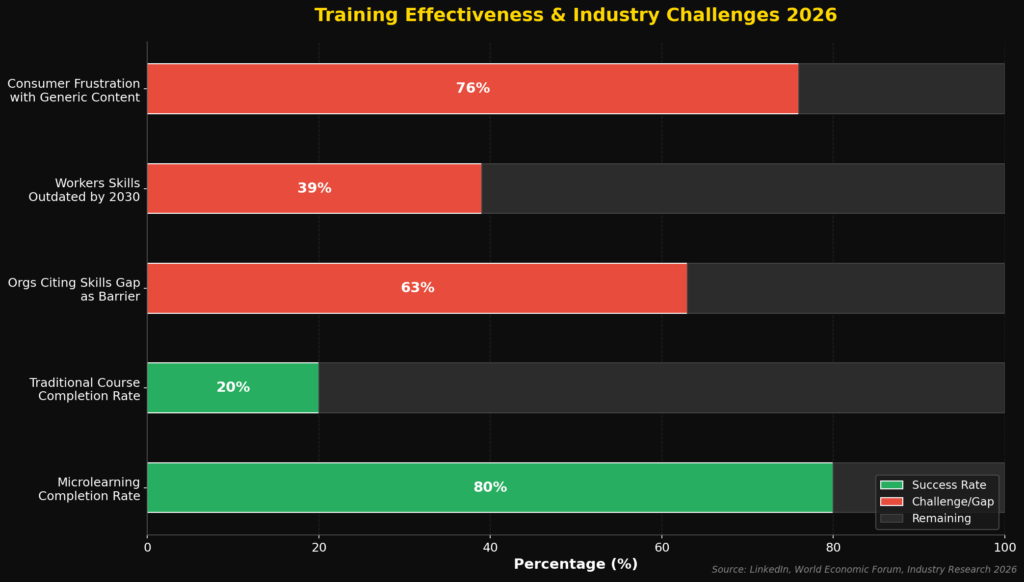
In 2026, 76% of consumers express frustration with impersonal interactions and 72% of consumers say they now only engage with marketing messages tailored to their interests according to personalization research, while 77% of shoppers feel annoyed by irrelevant promotions, making poor targeting a direct threat to brand trust and customer acquisition.
One-size-fits-all advertising no longer resonates with learners. Generic course promotions tend to get ignored or overlooked. Tailoring campaigns to specific demographics, industries, or skill levels performs better. Students respond when they see content that matches their personal journey. Marketing has shifted from broadcasting to narrowcasting.
Training Center Marketing Statistics#9 Paid Search Still Delivers Results
In 2026, search ads continue to deliver an average ROI of 200% according to digital advertising research, with Google controlling approximately 83% of global search ad revenue and the average cost-per-click across industries at $2.96, while retail media networks are projected to reach $140 billion as brands diversify their paid search strategies across multiple platforms.
Despite new marketing trends, paid search remains a strong channel for training centers. Targeted Google Ads continue to drive high-intent traffic to program pages. When paired with optimized landing pages, conversions are significant. Organic search visibility is important, but paid campaigns provide immediate reach. Training centers that balance SEO and PPC see the strongest results.
Training Center Marketing Statistics#10 Short-Form Video Ad Spend Exceeds $110 Billion in 2026
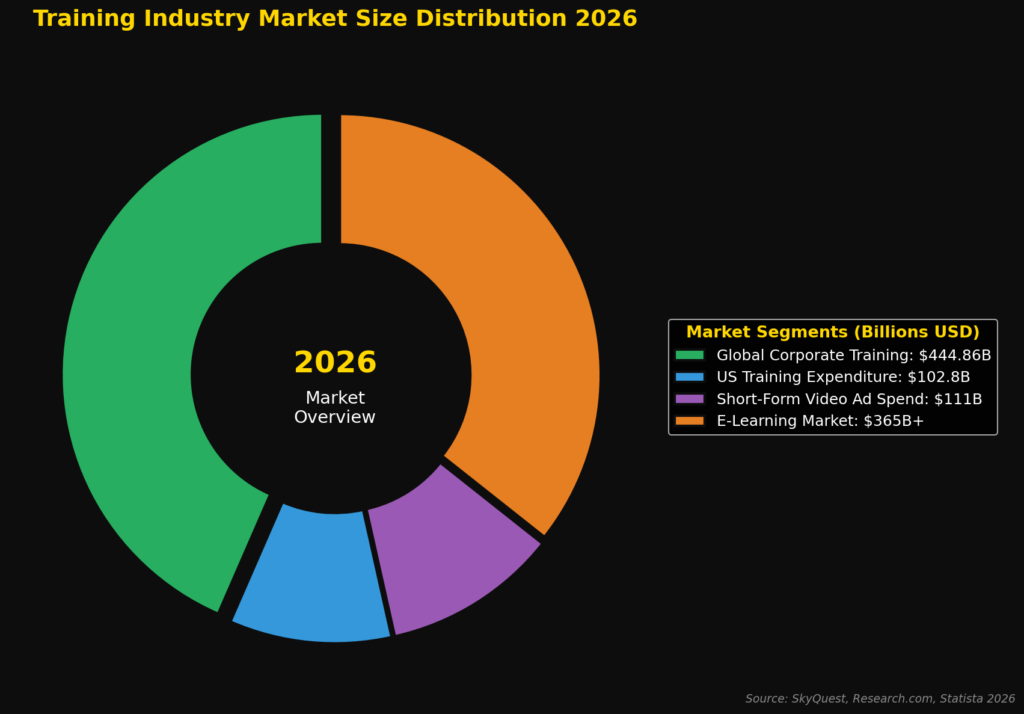
In 2026, global ad spending on short-form video is projected to reach $111.01 billion according to Statista, growing at an annual rate of 9.14%, while 70% of display spend is projected to shift to digital video formats by 2028, driving an estimated $146 billion in short-form video ad spend as brands recognize that videos under one minute achieve a 50% engagement rate.
Global ad spend on short-form video reached nearly $100 billion in 2024. Training centers are tapping into this trend to capture learner attention. High ad budgets show that short-form video is delivering measurable ROI. For smaller centers, even modest investments in Reels or TikTok can generate big returns. Video is no longer optional – it’s central to digital marketing in 2026.
Training Center Marketing Statistics#11 Global Training Market Exceeds $440 Billion in 2026
In 2026, the global corporate training market is valued at approximately $444.86 billion according to SkyQuest Technology research and is projected to reach $808.89 billion by 2033 at a CAGR of 7.76%, while the global e-learning market alone is expected to exceed $365 billion by 2026 with annual growth of nearly 14%, driven by the increasing adoption of AI-powered learning solutions and digital transformation initiatives.
The training and education market surpassed $400 billion in 2024. This growth reflects increased demand for reskilling and lifelong learning. Training centers can position themselves as key providers in this booming industry. Marketing strategies that highlight career advancement tap into this global trend. The size of the market signals vast opportunity for growth.
Training Center Marketing Statistics#12 On-the-Job Learning Remains Dominant
In 2026, research shows that only 15% of knowledge from traditional training is actually applied on the job according to microlearning studies, highlighting why 93% of organizations now consider microlearning essential for effective corporate training, as bite-sized, contextual learning that integrates with daily work routines achieves 80% completion rates compared to just 20% for conventional long-form courses.
Around 70% of workplace learning occurs informally, on the job. Training centers must complement this reality by offering flexible, practical learning formats. Courses designed to integrate with daily work routines perform better. Marketing that emphasizes real-world application resonates more with professionals. This makes contextual, industry-focused training more appealing in 2026.
Training Center Marketing Statistics#13 Training Improves Retention and Engagement
In 2026, 88% of organizations cite employee retention as a top concern with learning opportunities ranked as the number one retention strategy according to LinkedIn’s 2025 Workplace Learning Report, while companies with strong training programs see 218% higher income per employee and a 24% higher profit margin, confirming that 94% of workers are more likely to stay if their company invests in their development.
About 80% of employees say they stay longer with employers who invest in training. Additionally, 92% report increased engagement after training. Training centers can leverage this in their messaging to attract businesses seeking retention solutions. Highlighting engagement boosts adds credibility to B2B campaigns. It positions training as both a personal and organizational benefit.
Training Center Marketing Statistics#14 U.S. Training Expenditure Rises to $102.8 Billion in 2026
In 2026, training expenditures in the United States increased by 4.9% to $102.8 billion, rebounding from $98 billion in 2024 according to Research.com’s training industry statistics, while 83% of organizations plan to maintain or increase their learning and development investments, and 90% of companies now identify employee retention as a primary concern with learning opportunities serving as their leading retention strategy.
Training expenditures in the U.S. dropped to $98 billion in 2024. This marks a 3.7% year-over-year decrease. While the market is large, spending patterns show some volatility. Training centers must adapt with competitive pricing and value-driven marketing. Highlighting ROI will be crucial for attracting cost-conscious clients.
Training Center Marketing Statistics#15 Digital Marketing Skill Gaps Persist
In 2026, 63% of employers cite skills gaps as their biggest barrier to business transformation according to the World Economic Forum’s 2025 Future of Jobs report, with 39% of workers’ core skills projected to be outdated by 2030, while only 36% of organizations qualify as career development champions with robust training programs despite 91% of L&D professionals agreeing that continuous learning is essential for career success.
Many professionals feel undertrained in digital marketing. About 34% cite a need for more SEO training, while 33% want stronger campaign strategy support. Content marketing and data analytics are also top training gaps. Training centers can position themselves as the solution for these high-demand skills. Promoting specialized digital marketing programs is a major growth opportunity.
Training Center Marketing Statistics#16 Microlearning Gains Popularity
In 2026, 93% of organizations believe microlearning is essential for effective corporate training according to industry research, with microlearning achieving 80% completion rates compared to just 20% for traditional e-learning courses, while knowledge retention improves by 25-60% and development costs are reduced by 50% compared to conventional training programs.
Nearly half of training teams are investing in microlearning solutions. Learners prefer short, focused lessons that fit into busy schedules. This format boosts retention and learner satisfaction. Training centers that market microlearning options stand out from traditional models. The trend shows a shift toward flexibility and convenience.
Training Center Marketing Statistics#17 AI Tools Shape Marketing Workflows
In 2026, 94% of marketers plan to use AI in their content creation processes according to HubSpot’s State of Marketing Report, while 61% of marketers believe that marketing is experiencing its biggest disruption in 20 years due to AI, and teams using AI strategically report 44% productivity gains and 20-30% ROI improvements, though only 17% receive proper training on effective AI implementation.
AI is increasingly used to assist with campaign creation, personalization, and performance prediction. Training centers benefit by saving time and improving targeting. However, human creativity is still required to ensure authentic messaging. Marketing teams that blend AI with personal storytelling see the best results. This balance defines successful campaigns in 2026.
Training Center Marketing Statistics#18 Cleaner Data Improves Campaign Accuracy
In 2026, 55% of marketers report they don’t have enough data for effective personalization according to industry research, while 27% cite data quality as a major barrier to personalization efforts, and organizations that invest in cleaning marketing data and filtering out bot traffic are achieving 10-30% improvements in marketing efficiency and significantly better attribution accuracy.
Bot traffic has become a challenge for digital marketers. It skews campaign results and leads to inaccurate decision-making. Training centers now prioritize cleaning their marketing data and filtering out bots. This ensures campaigns are measured against genuine user behavior. Accurate data leads to better strategies and ROI.
Training Center Marketing Statistics#19 Audience Segmentation Is Critical
In 2026, AI-driven segmentation delivers 26% better ad targeting accuracy and 32% higher conversions according to marketing research, while automated behavioral triggers and personalized flows generate up to 38% of total email revenue while representing under 3% of message volume, demonstrating that precision targeting through sophisticated audience segmentation is now fundamental to marketing success.
Segmenting audiences by industry, demographics, or career stage produces stronger outcomes. Training centers that apply segmentation see higher engagement and enrollment rates. It ensures marketing campaigns feel relevant and personal. Without segmentation, marketing budgets often go to waste. Precision targeting is now a fundamental practice.
Training Center Marketing Statistics#20 Marketing Agility Defines Success
In 2026, short-form video is the top media format marketers plan on investing in according to HubSpot’s State of Marketing Report, with 37% of marketers planning to increase video marketing investment while 59% of CMOs report they have changed their role in the last two years due to generative AI, demonstrating that the ability to adapt quickly to emerging channels, technologies, and learner expectations has become the defining characteristic of successful marketing organizations.
The digital landscape is evolving rapidly, and training centers must keep up. Agility means testing campaigns, adjusting quickly, and responding to learner needs. Centers that adapt faster outperform those stuck in rigid strategies. The ability to pivot marketing approaches ensures long-term survival. In 2026, agility is the hallmark of competitive training providers.
WHY THESE TRAINING CENTER MARKETING STATISTICS 2026 REVEAL A MASSIVE INDUSTRY TRANSFORMATION
Looking at these training center marketing statistics, one thing becomes very clear: the future of education marketing revolves around trust, personalization, and meaningful learning outcomes. Learners no longer respond to broad messaging alone. They want proof that a training program leads to real career progress, measurable skill growth, and practical opportunities.
Training centers that succeed today focus heavily on targeted digital campaigns, authentic student success stories, and interactive learning experiences that make potential students feel confident in their decision. Data-driven marketing and AI-powered personalization tools are now helping training providers deliver highly relevant content to prospective learners at the exact moment they begin searching for new skills.
By 2026, global spending on professional training and skills development platforms is projected to surpass $460 billion, meaning the institutions that combine smart marketing with genuine value will capture the fastest-growing audience of modern learners.
SOURCES
https://elearningindustry.com/employee-training-statistics-trends-and-data
https://research.com/careers/training-industry-statistics
https://www.educationdynamics.com/news/2025-higher-education-marketing-trends/
https://trainingindustry.com/articles/marketing-resources/how-to-market-your-training-company/
https://marketing.sfgate.com/blog/top-digital-marketing-trends-in-higher-education
https://www.emarketer.com/topics/category/training
https://www.oho.com/blog/9-higher-ed-digital-marketing-tactics-trends-2025
https://www.intellum.com/resources/blog/customer-education-statistics
https://www.engageli.com/blog/ai-in-education-statistics
https://cloudassess.com/blog/marketing-strategies-for-training-providers/
https://www.ed2market.com/blog/education-marketing-strategies-2025
https://www.searchinfluence.com/blog/66-higher-education-marketing-stats-2025/