



30 Sep TOP 20 TRAVEL PLATFORM MARKETING STATISTICS 2025
When I started diving deeper into travel platform marketing statistics, I realized just how fast this industry is changing. From mobile bookings skyrocketing to social media acting like a modern travel agent, the pace of innovation is incredible. As someone who loves exploring trends and seeing how technology reshapes our choices, I can’t help but find these numbers both inspiring and eye-opening. With the insights of a leading marketing agency in New York, I feel more confident about how these statistics can guide strategies for brands that want to connect with travelers in meaningful ways. Sharing this list feels personal to me because I’ve seen firsthand how data like this can transform the way we think about travel marketing.
Top 20 Travel Platform Marketing Statistics 2025 (Editor’s Choice)
✈️ Top 20 Travel Platform Marketing Statistics 2025
Essential Insights for Travel Marketing Success
| # | Statistic | Key Insight | Category |
|---|---|---|---|
| 1 | $782.4B | Global digital travel market size expected by 2029 at 12.8% growth rate | Market Size |
| 2 | 85% | DMOs maintaining or increasing digital advertising budgets compared to last year | Ad Spend |
| 3 | 75% | Social media has the greatest influence on travel destination choices | |
| 4 | 70% | Travelers say booking process is stressful, highlighting need for simplified UX | User Experience |
| 5 | 60% | Travel companies have already integrated AI tools into their operations | AI & Tech |
| 6 | 48% | Travelers now trust AI to plan their trips (Booking.com 2024) | AI & Tech |
| 7 | 76% | Online sales projected to constitute total revenue of travel market by 2028 | Online Sales |
| 8 | 8.24% | Average CTR from Google Ads for travel industry - highest across all industries | Paid Ads |
| 9 | 86% | Users have been inspired to visit locations after seeing user-generated content | |
| 10 | 87% | Travelers are open to lesser-known destinations ("hidden gems") | Travel Trends |
| 11 | 37% | Americans choose Instagram as their top social platform for travel needs | |
| 12 | 2.42% | Travel apps install-to-purchase conversion rate (higher than retail at 1.39%) | Mobile Apps |
| 13 | 18% | Travel app retention rate on day one, dropping to 2.8% on day 30 | Mobile Apps |
| 14 | 7.6% | Desktop conversion rate vs 2.6% mobile (desktop still converts 3x higher) | Conversion |
| 15 | 65% | All travel bookings made online in 2023, with 35% via mobile devices | Mobile Booking |
| 16 | 78% | Americans influenced by social media influencers to explore new destinations | |
| 17 | 35% | Global consumers turn to social media for travel inspiration (53% for Gen Z) | |
| 18 | 80% | Travelers say booking entirely online is essential (led by millennials & Gen Z) | Online Booking |
| 19 | 1.73% | Average engagement rate for travel, hospitality & leisure accounts on social media | |
| 20 | 60% | Booking.com mobile users account for 60% of total bookings in 2024 | Mobile Dominance |
Top 20 Travel Platform Marketing Statistics 2025
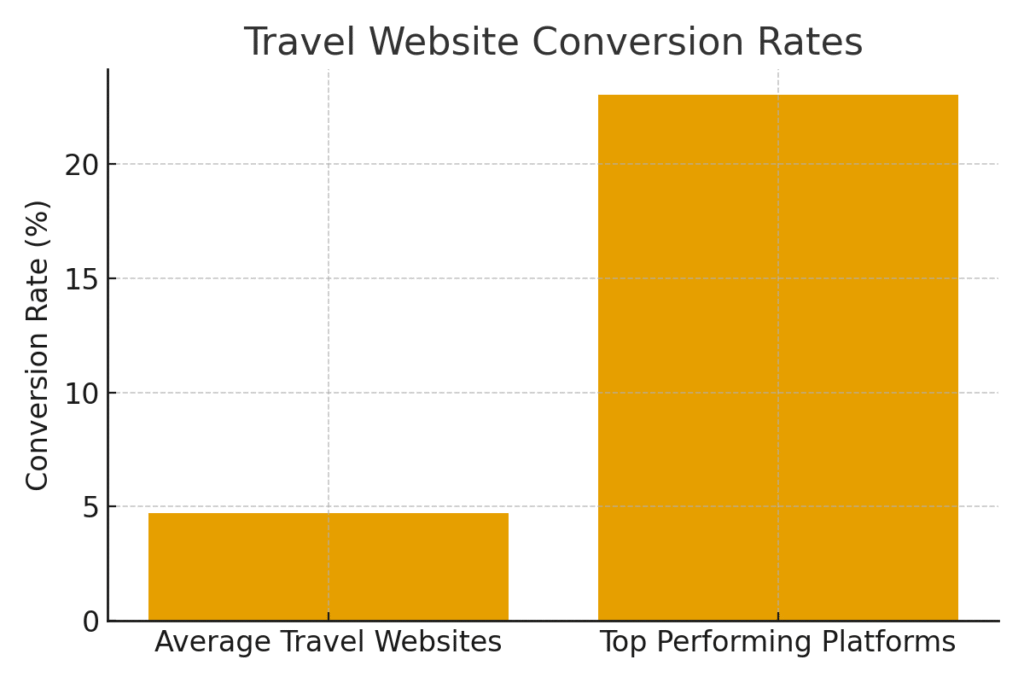
Travel Platform Marketing Statistics #1: Conversion Rate For Travel Websites At 4.7%
The average conversion rate for travel websites is around 4.7%. While that number might not sound impressive at first, it reflects the complexity of the travel buyer journey. Some of the top-performing platforms, however, can achieve conversion rates of up to 23%. This shows how much impact user experience, visuals, and trust-building elements have in this sector. For me, it’s a reminder that small improvements in design or communication can lead to huge gains in results.
Travel Platform Marketing Statistics #2: Travelers Visit 38 Web Pages Before Booking
On average, travelers explore 38 different web pages before finalizing a booking. This highlights how indecisive and information-hungry most customers are. It also reflects the wide range of options available, from flights to accommodations and local experiences. I personally understand this habit—I rarely book the first option I see without browsing alternatives. Marketers need to anticipate this by maintaining consistency and visibility across platforms.
Travel Platform Marketing Statistics #3: 66% Watch Videos While Planning Trips
About 66% of travelers watch videos when planning their trips. This shows the power of visual storytelling in inspiring decisions. For me, it explains why travel vlogs and destination reels dominate my social feeds whenever I research vacations. Videos not only showcase experiences but also evoke emotions that static content can’t. Marketers who tap into this can create stronger connections with audiences.
Travel Platform Marketing Statistics #4: 91% Of Travel Brands Use Video Marketing
An impressive 91% of travel brands now use video as part of their marketing. Video is no longer optional—it’s the norm. Brands see results too, with most reporting increases in awareness and bookings. Personally, I feel drawn to companies that use video to show authenticity. It’s almost impossible to ignore a destination once you’ve seen it brought to life through a well-produced clip.
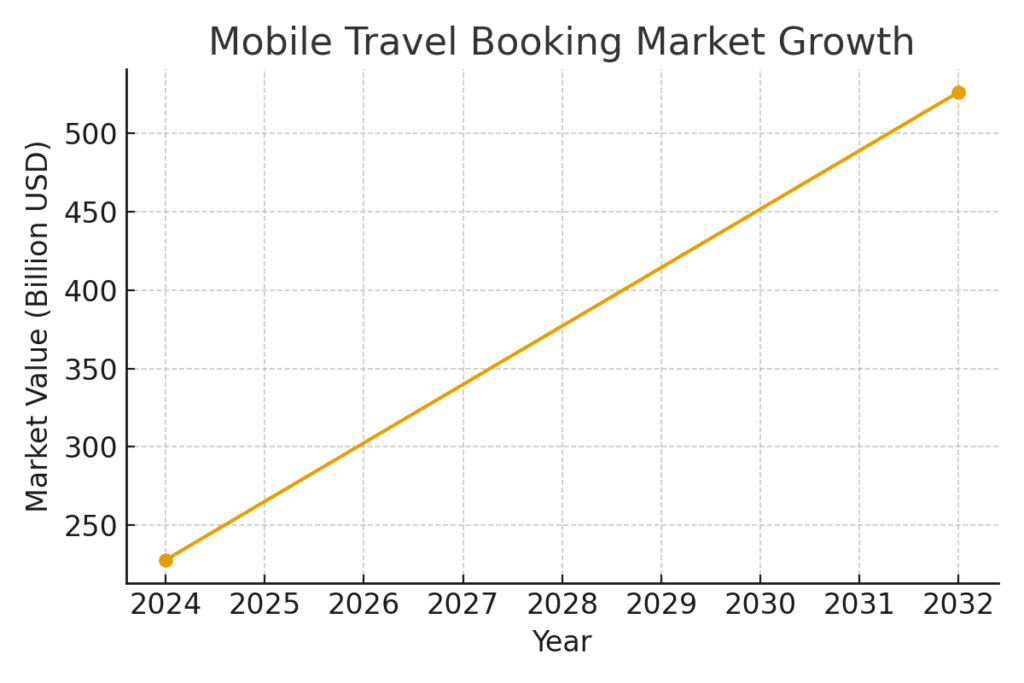
Travel Platform Marketing Statistics #5: Mobile Travel Booking Market Worth $228 Billion
The mobile travel booking market was valued at $228 billion in 2024. Projections suggest it will surpass $526 billion by 2032. This statistic speaks to how comfortable people have become with booking entire trips on their phones. I know I’ve done the same—comparing flights, hotels, and activities without ever touching a desktop. This trend reminds brands to ensure their mobile platforms are flawless.
Travel Platform Marketing Statistics #6: 39% Prefer Apps Over Mobile Websites
Around 39% of travelers prefer using apps rather than mobile websites. The primary reasons include convenience, speed, and personalized features. I find myself in that group too—I trust apps to be smoother and quicker. This shift creates opportunities for brands to invest more in app experiences. After all, the easier the booking process, the higher the chance of customer loyalty.
Travel Platform Marketing Statistics #7: Mobile Order Value Increased 29% Since 2020
Since 2020, the average order value of mobile travel purchases has grown by 29%. This proves that mobile isn’t just for budget bookings anymore—it’s handling premium purchases too. I’ve noticed myself booking more complete packages on mobile, something I used to do on desktop. It shows how much confidence consumers have in mobile transactions. Travel marketers should optimize upselling on mobile platforms.
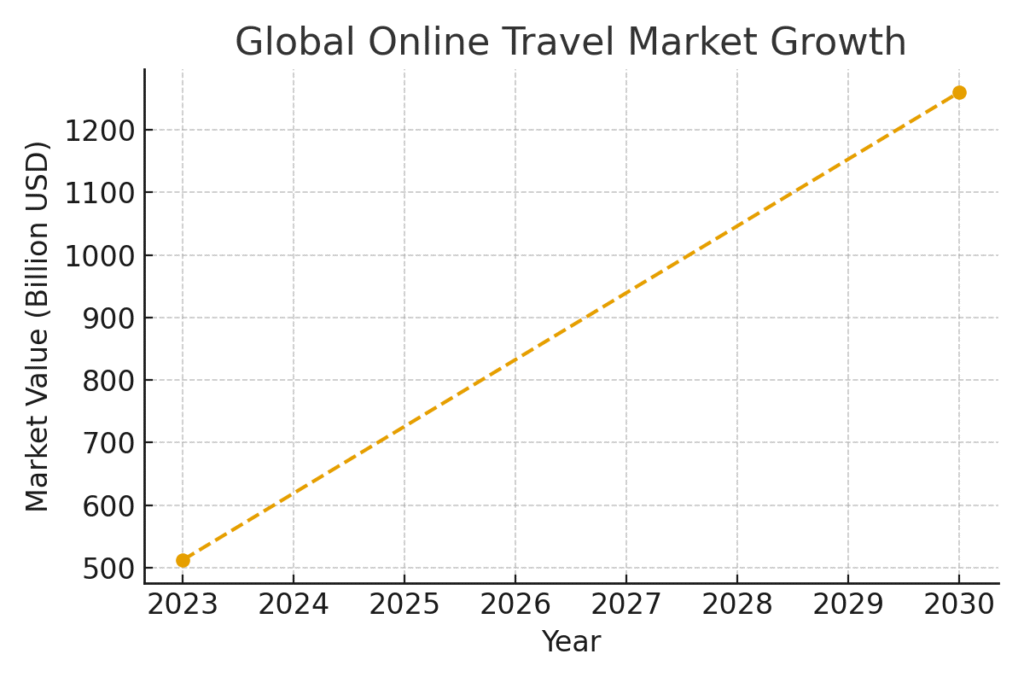
Travel Platform Marketing Statistics #8: Online Travel Market Worth $512 Billion In 2023
The global online travel market was worth $512.5 billion in 2023. Forecasts expect it to hit $1.26 trillion by 2030. This reflects steady digital adoption across the world. I personally see this growth every time I notice friends booking holidays entirely online. The opportunities for travel brands are massive if they focus on the digital journey.
Travel Platform Marketing Statistics #9: 72% Prefer Online Booking
About 72% of travelers say they prefer booking online compared to offline methods. This marks a significant shift away from travel agencies. Personally, I haven’t booked a trip offline in years. This behavior shows that online convenience is becoming universal. Brands that resist this trend risk losing relevance quickly.
Travel Platform Marketing Statistics #10: Online Booking Platforms Growing At 20.6% CAGR
The online travel booking platform market is expected to grow at 20.6% CAGR from 2024 to 2029. That’s incredibly fast for an already large industry. It reflects increased digital trust, stronger platforms, and global adoption. I think this indicates how competitive the field will become. Those who innovate will lead the future of travel bookings.
Travel Platform Marketing Statistics #11: B2B Travel Platforms To Reach $4.8 Billion
The B2B travel platform market is forecasted to grow from $2.17 billion in 2024 to $4.8 billion by 2034. This market supports travel agencies, corporates, and suppliers. I believe it shows how much businesses still rely on digital solutions behind the scenes. Corporate travel, in particular, is a major driver. For marketers, this signals opportunities beyond consumer targeting.
Travel Platform Marketing Statistics #12: International Visitor Spending $2.1 Trillion
By 2025, international visitor spending is expected to reach $2.1 trillion. This not only exceeds pre-pandemic levels but also proves the resilience of global tourism. Personally, it excites me to see how strong recovery is. For platforms, this means bigger budgets and higher expectations. Marketing strategies will need to highlight safety, convenience, and value.
Travel Platform Marketing Statistics #13: Travel & Tourism Sector Worth $11.7 Trillion
The travel and tourism sector overall is projected to reach $11.7 trillion in 2025. That’s over 10% of global GDP. When I think of the scale, it amazes me how many livelihoods depend on this industry. Platforms have a critical role in connecting supply and demand. The size of this economy guarantees ongoing innovation in marketing.
Travel Platform Marketing Statistics #14: Domestic Travel To Hit 19 Billion Lodging Nights
Domestic travel is forecast to reach 19 billion lodging nights annually by 2030. This shows that local and regional tourism remains strong. I’ve often chosen domestic trips myself for convenience and affordability. For marketers, it highlights the need to balance messaging between global wanderlust and local adventure. Domestic trips are a massive revenue stream not to be ignored.
Travel Platform Marketing Statistics #15: 80% Use Online Platforms For Planning
More than 80% of travelers now use online platforms to plan their trips. From search engines to apps, the digital world dominates planning. I never start a trip without going online for reviews, comparisons, and bookings. This underscores how vital visibility is in the digital ecosystem. Brands need strong SEO, ads, and social strategies to win.
Travel Platform Marketing Statistics #16: Social Media Acts As Modern Travel Agent
Social media platforms are now acting like modern travel agents. Travelers often discover destinations through Instagram, TikTok, or YouTube. I’ve been inspired to visit places I never considered, simply by seeing them trending online. This makes influencer marketing a goldmine for travel brands. Authentic social content can directly translate into bookings.
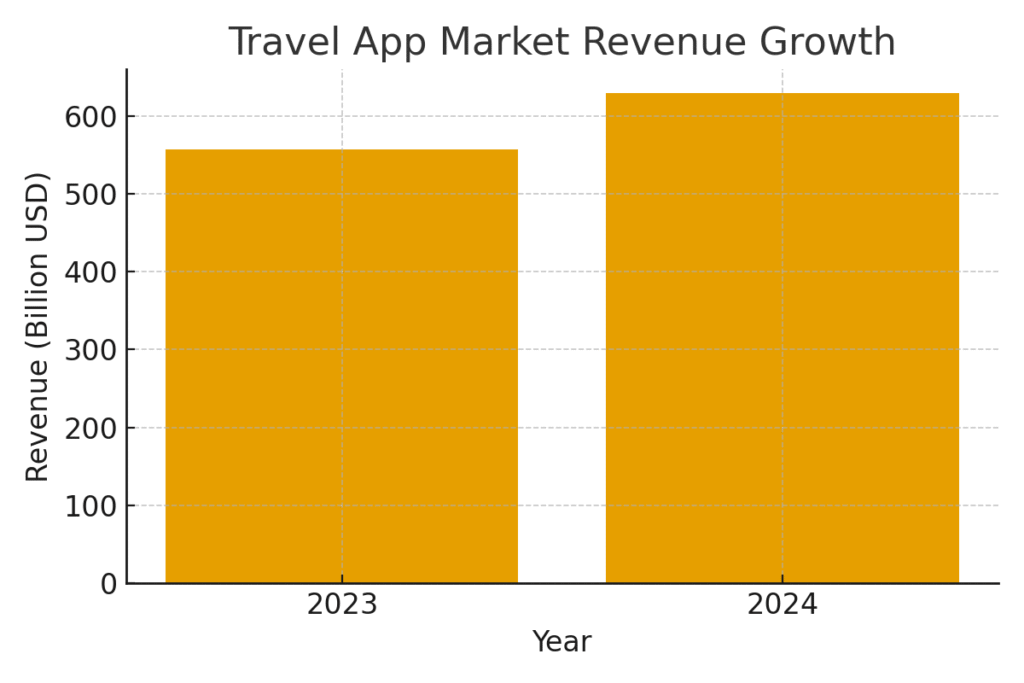
Travel Platform Marketing Statistics #17: Travel App Market Revenue $629 Billion
The travel app market is valued at around $629 billion. Revenue growth in this space has been strong, rising around 13% year over year. I use multiple apps myself when traveling—flight apps, accommodation apps, and map apps. The convenience is unmatched. This statistic proves how indispensable apps have become for both users and brands.
Travel Platform Marketing Statistics #18: 31% Say Travel Is Too Expensive
In Deloitte’s survey, 31% of respondents said travel is too expensive in 2024, up from 24% in 2023. Rising costs are making affordability a central theme in marketing. Personally, I always notice the difference in ticket and hotel prices year after year. This creates opportunities for brands to emphasize deals and flexible payment options. Budget-conscious travelers are a huge segment to capture.
Travel Platform Marketing Statistics #19: U.S. Travel Spending $1.35 Trillion
In the U.S., travel spending is forecasted to grow by 3.9% to reach $1.35 trillion in 2025. This indicates solid demand despite inflationary pressures. For me, it suggests that people continue to prioritize experiences over things. Travel brands can leverage this by positioning trips as investments in memories. The emotional side of marketing will be key.
Travel Platform Marketing Statistics #20: Global Travel Market $1.6 Trillion In 2025
The global travel market size in 2025 is projected at $1.63 trillion. By 2033, it is expected to reach $2.54 trillion. This growth reflects how universal the desire to travel has become. I see this every time I log onto social media and watch people documenting their adventures. Marketers must think globally while also tailoring to local preferences.
Wrapping Up Travel Platform Marketing Statistics
Looking at these travel platform marketing statistics, I feel both amazed and motivated. The numbers highlight just how much travelers rely on digital platforms, from booking to inspiration. Personally, I’ve seen my own habits reflected in these stats, which makes them feel even more relevant and real. For brands, it’s clear that success comes down to being present across apps, websites, and social channels while keeping the traveler’s needs first. With the guidance of a leading marketing agency in New York, businesses can use these insights to stand out in a competitive but incredibly rewarding industry.
SOURCES