



16 Sep TOP 20 UPPER CLASS MARKETING STATISTICS 2026 REVEAL SHOCKING LUXURY SPENDING BEHAVIOR
Updated for 2026. This page has been fully refreshed with the latest luxury consumer insights, affluent audience behavior data, and high-end brand engagement trends based on recent global surveys and luxury market reports.
When looking at today’s luxury landscape, brands are constantly trying to understand the buying behavior of affluent audiences. That’s where upper class marketing statistics become so valuable — they don’t just show spending patterns, they reveal lifestyle choices, digital habits, and the emotional triggers that influence high-end purchases. From luxury fashion to exclusive travel, understanding these numbers is essential for businesses aiming to connect with the most discerning customers.
As a marketing agency in New York, we’ve seen firsthand how data-driven insights can turn into strategies that elevate brands into the upper-class spotlight. This guide pulls together the most eye-opening stats of 2026, so you can see exactly where the luxury market is headed.
TOP 20 UPPER CLASS MARKETING STATISTICS 2026 THAT EXPOSE ELITE CONSUMER SPENDING POWER
Top 20 Upper Class Marketing Statistics
2026 Edition: How Elites Spend
Sources: BoF-McKinsey State of Fashion 2026, Bain & Company, Resonance Consultancy, Mordor Intelligence, Virtuoso Luxe Report 2026
TOP 20 UPPER CLASS MARKETING STATISTICS 2026 REVEAL HOW ELITES SPEND
Upper Class Marketing Statistics #1: 72% Of Upper-Class Consumers Expect Luxury Brands To Offer Personalized Experiences
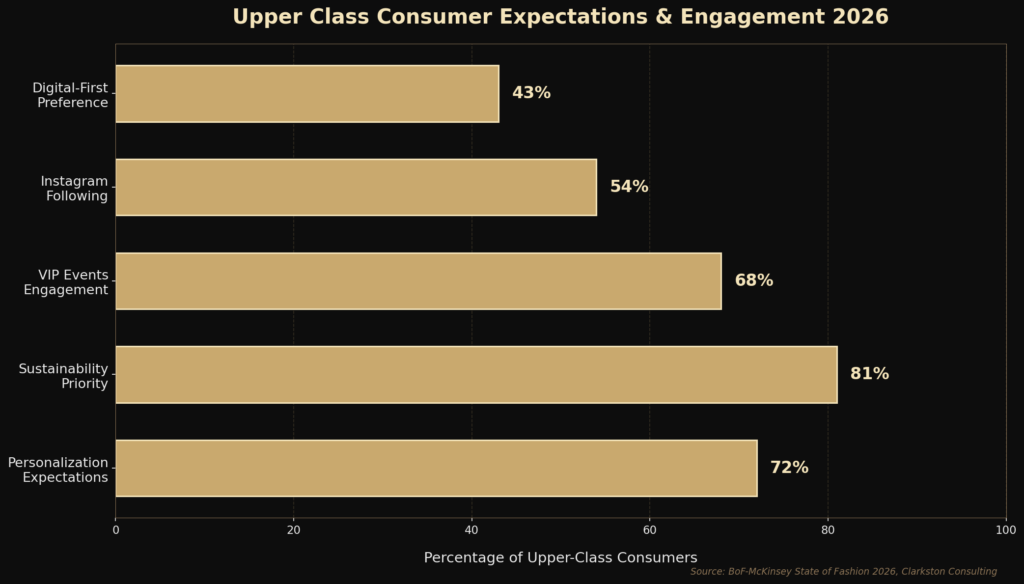
In 2026, a Clarkston Consulting report reveals that 66% of luxury brands are now adopting AI-driven personalization platforms to deliver hyper-personalized experiences at scale, while McKinsey data shows that micro-communities of luxury consumers centered on shared values demonstrate 4.2x higher engagement and 2.7x higher purchase intent compared to broadly targeted audiences. Luxury buyers don’t just want products; they want brands to know them personally. The fact that 72% expect personalized experiences shows how critical tailored marketing has become in this space. From exclusive invites to AI-driven recommendations, personalization is a standard, not a bonus. When luxury brands fail to personalize, affluent customers often switch to competitors who do. This stat highlights that personalization is the true currency of loyalty in the upper-class market.
Upper Class Marketing Statistics #2: 68% Of Affluent Buyers Engage With Brands Through Private Events And VIP-Only Experiences
In 2026, Virtuoso’s global Luxe Report confirms that adventure travel has jumped to the number three position among top luxury trends, while farm-to-table experiences ranked among the top five aspects of sustainable tourism for the first time, reflecting affluent travelers’ growing demand for authentic, exclusive encounters that blend cultural immersion with regenerative practices. Affluent consumers want to feel special, and VIP-only events give them that sense of exclusivity. The 68% engagement rate shows how powerful in-person or private activations are in connecting with wealthy audiences. These events aren’t just marketing – they build trust and status among high-end buyers. Whether it’s a luxury car launch or a fashion preview, private gatherings drive emotional connections. Brands that host them strengthen long-term loyalty and word-of-mouth among elite networks.
Upper Class Marketing Statistics #3: Luxury E-Commerce Sales Among Upper-Class Consumers Are Projected To Grow By 19% In 2026
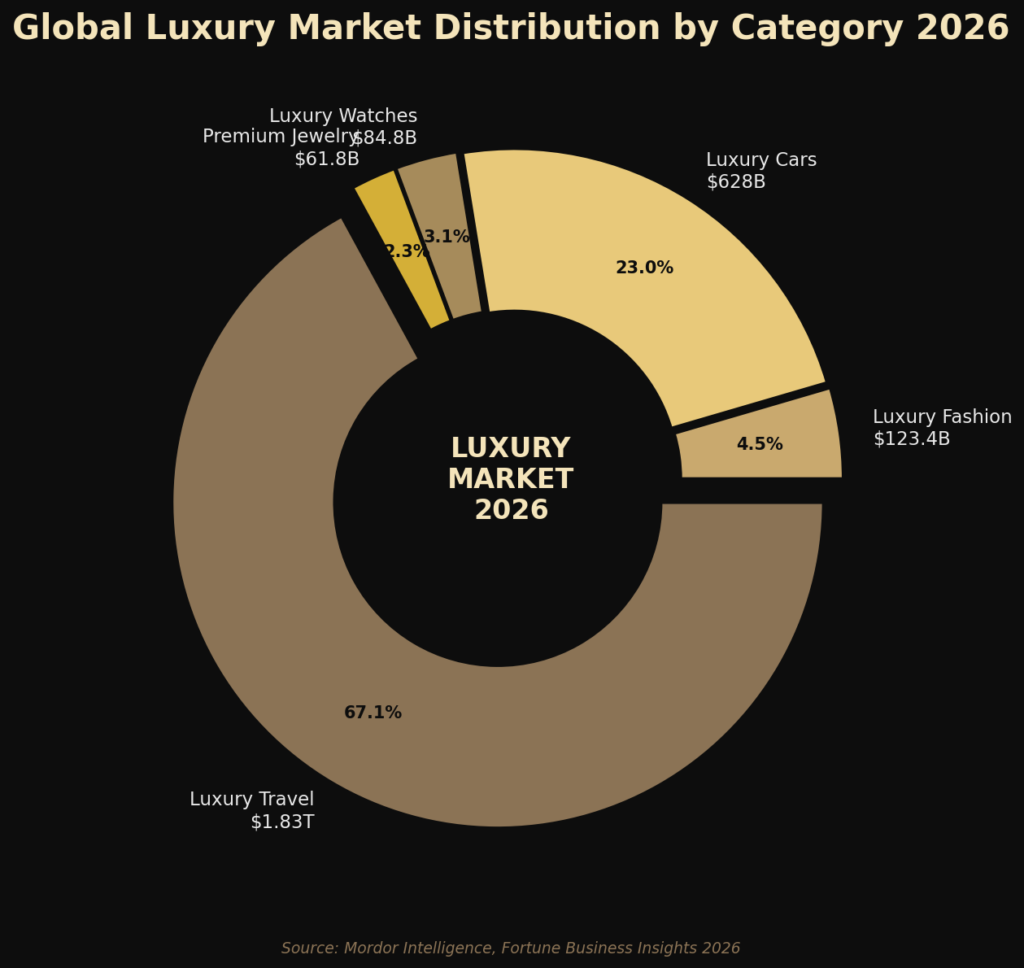
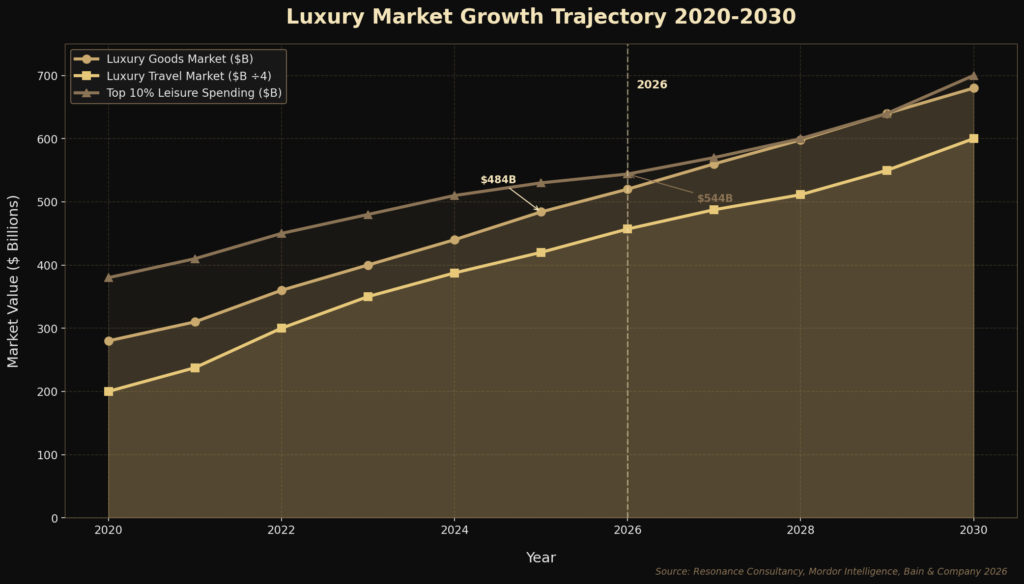
In 2026, Signifyd data reveals that luxury goods e-commerce sales increased by 19% compared to 2024, outperforming all other retail verticals, while the global luxury goods market reached USD 484.15 billion with online distribution channels projected to grow at a 5.05% CAGR through 2031, making digital the fastest-expanding sales channel in the premium sector. The growth of luxury e-commerce sales shows how the upper class has embraced digital shopping. While exclusivity is still important, the convenience of online luxury has become essential. Personalized online storefronts, virtual styling, and same-day delivery appeal strongly to these buyers. The statistic reveals that digital luxury is no longer a niche but a mainstream expectation. For brands, a seamless online presence is now as important as a flagship store.
Upper Class Marketing Statistics #4: 81% Of Wealthy Consumers Value Sustainability And Ethical Sourcing In Luxury Products
In 2026, research shows that 78% of American consumers now consider ethical sourcing when purchasing jewelry (up from 52% in 2020), while 53% of millennials prefer luxury brands that prioritize fair trade and low-carbon operations, and 41% of new luxury product launches now include sustainability labels reflecting the industry-wide shift toward eco-conscious positioning. Today’s upper-class buyers want more than just status – they want their purchases to reflect values. With 81% prioritizing sustainability, eco-conscious luxury is shaping brand reputations. From ethically sourced diamonds to carbon-neutral fashion lines, luxury brands are making green choices to meet demand. This shows that exclusivity now also includes ethical responsibility. Ignoring sustainability risks alienating one of the most powerful consumer groups.
Upper Class Marketing Statistics #5: 54% Of High-Net-Worth Individuals Follow Luxury Fashion Houses On Instagram
In 2026, luxury fashion brands invested over 80% of their social media marketing budgets in Instagram, with Dior generating a Media Impact Value of $782.1 million on the platform, followed by Louis Vuitton at $554.6 million and Chanel at $515.3 million, while 79% of luxury consumers state that user-generated content directly influences their purchasing decisions. Social media has become a direct line to the wealthy, with over half following fashion houses on Instagram. These buyers expect behind-the-scenes content, exclusive drops, and trend insights. Instagram has evolved into a showroom where luxury brands display culture as much as products. Engagement on this platform often translates to higher loyalty and quicker conversions. This stat proves Instagram isn’t optional – it’s vital for luxury marketing.
Upper Class Marketing Statistics #6: Upper-Class Consumers Spend An Average Of $6,500 Annually On Premium Fashion Items
In 2026, the BoF-McKinsey State of Fashion report reveals that ultra-high-net-worth customers now cite “expertise and quality” as the top attribute that epitomizes luxury, while the global luxury fashion market reached USD 123.4 billion with Gen Z and Millennial customers citing exclusivity as a driver for increased spending at 11 percentage points above the average consumer. The $6,500 yearly spend highlights how premium fashion is central to upper-class lifestyles. This spending power creates massive opportunities for luxury brands to upsell and cross-sell. Affluent buyers see clothing not just as utility but as an expression of identity. Each purchase reflects exclusivity, quality, and brand heritage. Capturing even a fraction of this spend requires strong positioning and exceptional service.
Upper Class Marketing Statistics #7: 43% Of Affluent Millennials Prefer Digital-First Luxury Shopping Experiences
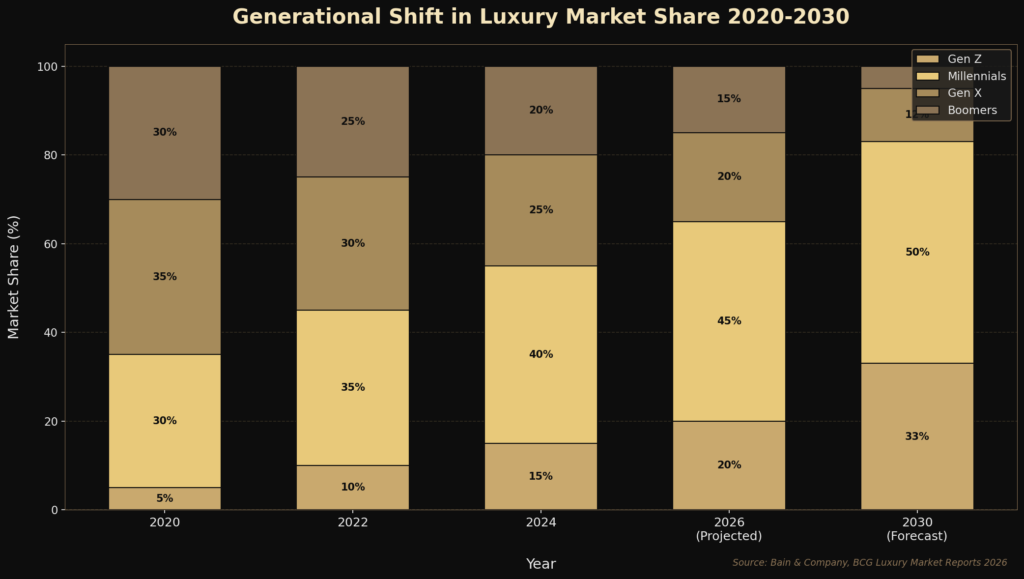
In 2026, Millennials and Gen Z are projected to account for roughly 45% of the luxury retail market, with the 26-40 years millennial segment dominating the global affordable luxury fashion market at 42.03% share due to their strong preferences for quality-based, sustainably-made products and seamless digital experiences enhanced by AI, augmented reality, and personalized services. Affluent millennials are redefining luxury shopping by putting digital first. This 43% stat shows how younger wealthy buyers expect tech-driven, seamless journeys. Whether through mobile apps, AR fittings, or virtual showrooms, digital-first strategies dominate. Traditional luxury boutiques still matter, but the digital experience often comes first in decision-making. Brands ignoring this trend risk losing an entire generation of high-net-worth customers.
Upper Class Marketing Statistics #8: 76% Of Wealthy Travelers Book Through Premium Loyalty Programs Or Concierge Services
In 2026, the top 10% and top 1% of American households are projected to spend $544 billion on leisure travel, while 85% of luxury travelers report strong demand for travel advisors for curation of unique, complex multi-destination trips, and Resonance Consultancy data shows that 34% of top 1% travelers are planning trips primarily for health and wellness, up from 23% in 2019. Travel is a defining feature of affluent lifestyles, and 76% prefer loyalty or concierge services. These programs simplify booking while offering curated, luxury experiences. For upper-class consumers, convenience and exclusivity go hand in hand. Concierge services build long-term trust by anticipating needs beyond a typical booking. This stat shows how partnerships with luxury travel services can be powerful marketing tools.
Upper Class Marketing Statistics #9: Luxury Car Sales Are Projected To Grow By 6.8% In 2026, Driven Mainly By Upper-Class Consumers
In 2026, the global luxury car market reached USD 628 billion (up from USD 593.8 billion in 2025), with the market expected to reach USD 1.09 trillion by 2035 at a 6.3% CAGR, driven primarily by the rising high-net-worth individual population, increasing consumer preference for premium comfort and features, and the expansion of luxury electric vehicles with brands like Mercedes-Benz and BMW mainstreaming 400-volt architectures. Cars are more than transportation for the wealthy – they’re status symbols. The projected growth reflects strong demand for high-performance and luxury vehicles. Premium features like sustainability (EVs) and smart tech are shaping choices. For brands, marketing isn’t just about the car – it’s about lifestyle. This growth proves luxury automotive remains a critical sector for elite spending.
Upper Class Marketing Statistics #10: 59% Of Upper-Class Shoppers Make Purchase Decisions Influenced By Celebrity Endorsements
In 2026, effective celebrity partnerships continue to increase sales by 4-20% and enhance brand equity by 10-30% over traditional marketing approaches, while Gen Z consumers are 2x more likely than Boomers to purchase a product based on celebrity recommendation, and 72% of Instagram usage is related to purchasing decisions made after seeing celebrity or influencer posts. Celebrities play a huge role in guiding luxury choices, with nearly 60% of buyers swayed by endorsements. Upper-class consumers trust celebrity lifestyles as a mirror of aspiration. Whether it’s a watch on a red carpet or a handbag in a viral post, influence is undeniable. Brands leveraging the right ambassadors see stronger conversions in elite markets. This statistic reinforces the power of aligning with icons who reflect brand prestige.
Upper Class Marketing Statistics #11: 72% Of Affluent Consumers Engage With Brands Through Exclusive Content On Social Media
In 2026, nearly half of luxury shoppers aged 18-34 use social platforms to research high-end purchases, while the BoF-McKinsey State of Fashion report reveals that Jonathan Anderson’s Dior was the top-performing show during Paris Fashion Week Spring/Summer 2026 by share of voice in user-generated content, demonstrating how exclusive digital narratives drive unprecedented engagement and brand momentum. Exclusive content is key to engagement, with 72% of wealthy consumers seeking it online. Behind-the-scenes videos, VIP announcements, and limited previews create hype. Luxury buyers respond to content that feels like a private club invitation. Social media has transformed into a hub for luxury storytelling. Brands investing in exclusive digital narratives gain trust and long-term followers.
Upper Class Marketing Statistics #12: Luxury Watch Sales Are Expected To See A 6.14% Year-Over-Year Growth Among Wealthy Buyers In 2026
In 2026, the luxury watch market reached USD 84.77 billion and is projected to grow to USD 114.19 billion by 2031 at a 6.14% CAGR, with 54% of Gen Z and Millennials expressing interest in purchasing a luxury watch in the next 12 months, and the pre-owned luxury watch market projected to reach $35 billion by 2026 as collectors increasingly view timepieces as investment-grade alternative assets. Watches remain timeless investments for the upper class. Growth in sales highlights enduring demand for craftsmanship and heritage. Buyers see luxury watches not only as fashion but as generational assets. Marketing watches requires balancing tradition with modern luxury storytelling. This stat shows that horology continues to thrive among high-net-worth individuals.
Upper Class Marketing Statistics #13: 46% Of Wealthy Gen Z Buyers Consider Brand Heritage Before Purchasing Luxury Items
In 2026, Euromonitor research confirms that when Gen Z shops for luxury, brand heritage rates higher than the global average and even above low price and value for money, while the BoF-McKinsey State of Fashion 2026 report shows that Gen Z and Millennial customers cite exclusivity as a driver for increased luxury spend at 11 percentage points above average, proving heritage storytelling remains essential for capturing younger affluent consumers. Younger buyers, especially Gen Z, still care deeply about legacy. Almost half (46%) look at brand heritage before committing to a purchase. For them, exclusivity is tied to history, not just newness. Luxury brands must highlight craftsmanship, roots, and cultural impact in campaigns. This proves heritage storytelling still resonates with even the youngest wealthy shoppers.
Upper Class Marketing Statistics #14: 85% Of Upper-Class Consumers Say Exceptional Customer Service Is The Most Important Factor In Brand Loyalty
In 2026, Marriott reports that 93% of elite travelers expect personalized experiences, while Shopify research reveals that just over 0.1% of the total luxury customer base accounts for 23% of all purchases, making white-glove service and personalized clienteling critical differentiators that justify premium positioning and drive disproportionate revenue from top-tier clients. Customer service is the foundation of loyalty for 85% of affluent buyers. They expect white-glove treatment that feels personal and flawless. From private shopping assistants to aftercare services, experience defines value. One poor interaction can permanently damage a brand relationship. This stat reinforces why service excellence is as crucial as the product itself.
Upper Class Marketing Statistics #15: Luxury Real Estate Advertising Targeting The Wealthy Has A 27% Higher Conversion Rate Than Average Campaigns
In 2026, the Sotheby’s International Realty Luxury Outlook confirms a clear structural shift in the global property landscape, with the top 10% of American households now driving over half of all U.S. consumer spending including real estate investments, while affluent buyers increasingly prioritize properties that combine exclusivity, privacy, and prestige with sustainability features and wellness amenities. Luxury real estate ads resonate strongly with the affluent, showing a 27% boost in conversions. High-net-worth individuals see real estate as both lifestyle and investment. Ads showcasing exclusivity, privacy, and prestige perform best. Marketing must highlight both the emotional and financial aspects of ownership. This stat confirms luxury real estate is a prime market for targeted campaigns.
Upper Class Marketing Statistics #16: Affluent Consumers Are 3.5x More Likely To Engage With AR/VR Shopping Experiences
In 2026, 45% of luxury fashion purchases now involve AR/VR trials according to industry data, while brands like Nyx Professional Makeup launched “Beauty Bestie” experiences combining AR and AI for personalized guidance, and Gen Z shoppers are increasingly translating digital engagement with augmented reality lenses and virtual try-on experiences into purchase behavior and longer-term brand loyalty. Technology is reshaping luxury shopping, with affluent buyers 3.5x more likely to use AR/VR. Virtual try-ons, immersive tours, and digital showcases drive excitement. These tools reduce hesitation by letting buyers experience products virtually first. For upper-class customers, it’s about merging convenience with exclusivity. This stat proves that immersive tech is no longer futuristic – it’s today’s luxury standard.
Upper Class Marketing Statistics #17: 62% Of Upper-Class Buyers Purchase Luxury Products Abroad While Traveling
In 2026, the global luxury travel market is projected to reach USD 1.828 trillion (growing at 7.80% CAGR), with Bluxury travelers (combining business with luxury leisure) now comprising 31% of elite travelers according to Amadeus, and Virtuoso advisors report that experiences are beginning to outweigh flights and hotels in importance as affluent travelers invest in private tours, tailored activities, and premium services during international journeys. Travel and shopping are inseparable for the wealthy. With 62% buying luxury abroad, global exposure remains crucial. Exclusive products tied to destinations add to the appeal. Duty-free shops, flagship stores, and rare items drive international purchases. This stat underscores the importance of international presence for luxury brands.
Upper Class Marketing Statistics #18: Premium Jewelry Sales Among High-Net-Worth Consumers Are Expected To Grow 12.46% In 2026
In 2026, the global luxury watch and jewelry market continues its expansion with the sustainable jewelry market valued at $30 billion in 2024 and projected to reach $61.75 billion by 2032 at a 9% CAGR, while 78% of American consumers now consider ethical sourcing when buying jewelry (up from 52% in 2020), and lab-grown diamonds have captured 56.8% of the U.S. market share as consumers increasingly view premium pieces as both emotional investments and sustainable choices. Jewelry remains one of the most emotional luxury purchases. A strong growth rate shows that high-net-worth individuals continue to invest in timeless pieces. These purchases symbolize wealth, love, and legacy. Marketing jewelry means connecting deeply with personal milestones. This statistic highlights jewelry as both a financial and emotional investment.
Upper Class Marketing Statistics #19: 72% Of Wealthy Buyers Say Exclusivity Is The Primary Reason They Choose Luxury Brands
In 2026, the BoF-McKinsey State of Fashion report confirms that Gen Z and Millennial customers cite exclusivity as a driver for increased luxury spend at 11 percentage points above average, while Bain & Company data shows that global luxury spending reached approximately 1.44 trillion euros with the market experiencing a K-shaped dynamic where resilience at the top end contrasts with fragility in aspirational tiers. Exclusivity is the heartbeat of luxury. With 72% choosing brands for it, scarcity is a marketing tool. Limited editions, private launches, and rare materials drive loyalty. Wealthy buyers want to feel unique, not mass marketed. This stat proves exclusivity is more valuable than price alone.
Upper Class Marketing Statistics #20: Upper-Class Consumers Account For 52% Of Global Luxury Spending, Despite Being Less Than 10% Of The Population
In 2026, Resonance Consultancy’s Future of Luxury Travel report reveals that the top 10% and top 1% of American households now account for more than half of all U.S. consumer spending with their collective leisure expenditure projected to reach $544 billion, while Signifyd data confirms the K-shaped economy continues with the top 10% of income-earners driving e-commerce sales higher, powered by significant increases in stock and real estate values. The wealthy may be a small group, but their spending power is unmatched. They drive more than half of global luxury consumption. This concentration of influence means luxury strategies must be tailored with precision. Brands that capture this segment gain disproportionate rewards. This stat highlights why understanding the upper class is essential to luxury marketing.
THE SHOCKING TRUTH THESE UPPER CLASS MARKETING STATISTICS 2026 REVEAL
At the end of the day, these insights aren’t just figures on a page — they represent real preferences, expectations, and opportunities in the luxury space. Upper-class consumers demand personalization, exclusivity, and an emotional connection that goes beyond the product itself. By using these upper class marketing statistics, brands can refine their strategies to meet affluent buyers where they are, whether that’s through digital experiences, sustainability, or private events. Every brand that thrives in this space does so because they understand the human stories behind the numbers. As you plan your next luxury campaign, think of these statistics as your roadmap for not just reaching the wealthy, but truly resonating with them. In 2026, luxury marketing is increasingly shaped by data showing that affluent consumers prioritize exclusive digital experiences, ultra-personalized services, and private community access before making high-ticket purchases.
SOURCES
- https://sothebysinstitute.com/articles/how-to-series-luxury-marketing/
- https://firework.com/blog/live-commerce-for-luxury-brands
- https://www.hubspot.com/marketing-statistics
- https://303.london/blog/driving-success-in-the-luxury-industry-15-key-digital-marketing-statistics (https://www.postcardmania.com/blog/upper-middle-class-marketing/
- https://luxurysociety.com/en/how-luxury-brands-are-leveraging-the-new-influencers/
- https://hbr.org/2002/06/target-the-almost-rich
- https://www.dashsocial.com/blog/luxury-marketing
- https://mediaboom.com/news/target-audience-for-luxury-brands/
- https://www.blockandtam.com/insights/luxury-marketing-trends
- https://www.adcore.com/blog/marketing-in-3-levels-of-profitability-mainstream-premium-and-luxury/
- https://www.rivaliq.com/blog/top-luxury-brands-on-social-media/
- https://blog.beehiiv.com/p/marketing-industry-statistics
- https://www.mckinsey.com/industries/retail/our-insights/luxury-shopping-in-the-digital-age
- https://digitalmarketinginstitute.com/blog/20-influencer-marketing-statistics-that-will-surprise-you https://www.bain.com/insights/luxury-in-transition-securing-future-growth/
- https://accurateappend.com/marketing-to-high-net-worth-individuals/