




20 Sep TOP 20 URBAN MARKETING STATISTICS 2025
When I first started digging into urban marketing statistics, I realized just how quickly city-based consumer behavior is shifting. Living and working in such a fast-paced environment, especially while collaborating with a leading marketing agency in New York, has shown me that data isn’t just numbers on a screen—it’s a pulse check on how real people connect with brands in crowded, competitive markets. These insights help me (and hopefully you too) see not only where the opportunities lie, but also how we can create campaigns that genuinely resonate with people navigating city life every single day.
Top 20 Urban Marketing Statistics 2025 (Editor’s Choice)
🏙️ Top 20 Urban Marketing Statistics 2025
Essential Data-Driven Insights for Urban Consumer Targeting
| # | Category | Key Statistic | Marketing Insight |
|---|---|---|---|
| 1 | Urban Demographics | 88% of U.S. population | Classified as urban consumers, representing massive market reach potential |
| 2 | Global Urbanization | 5+ billion people | Will live in cities by 2030, driving most global consumption |
| 3 | Emerging Markets | 892 million increase | Urban population growth in developing markets by 2030 |
| 4 | Future Growth | 1.56 billion growth | Expected global urban population increase from 2020-2040 |
| 5 | Mobile Preference | 63% of consumers | Prefer finding brand information on mobile devices |
| 6 | Online Presence | 97% check online | Users verify business presence online before visiting |
| 7 | Search Dominance | 89.62% Google traffic | Google dominates search across all devices in 2025 |
| 8 | Local Search | 72% use Google | People rely on Google for local business searches |
| 9 | Social Reach | 5.17 billion users | Global social media users spending 2.5+ hours daily |
| 10 | Business Adoption | 91%+ businesses | Use social media for marketing purposes |
| 11 | Brand Research | 75% of users | Research brands on social media before purchasing |
| 12 | Social Engagement | 97% monthly check | Users check social media at least once per month |
| 13 | Video Content | 90% internet traffic | Short-form video projected to dominate in 2025 |
| 14 | Content Strategy | 66% find humor works | Social marketers say humor is most effective for engagement |
| 15 | Learning Preference | 78% prefer video | People prefer learning about products through short videos |
| 16 | SEO Performance | 91% marketers | Report SEO enhanced website performance in 2024 |
| 17 | B2C ROI Leaders | Email + Social | Email marketing and paid social deliver best B2C ROI |
| 18 | Ad Spending | $276.7 billion | Projected social media advertising spend for 2025 |
| 19 | Brand Trust | 81% need trust | Consumers must trust a brand before making purchase |
| 20 | OOH Marketing | Triggers mobile | Out-of-home campaigns encourage mobile interaction in cities |
Top 20 Urban Marketing Statistics 2025
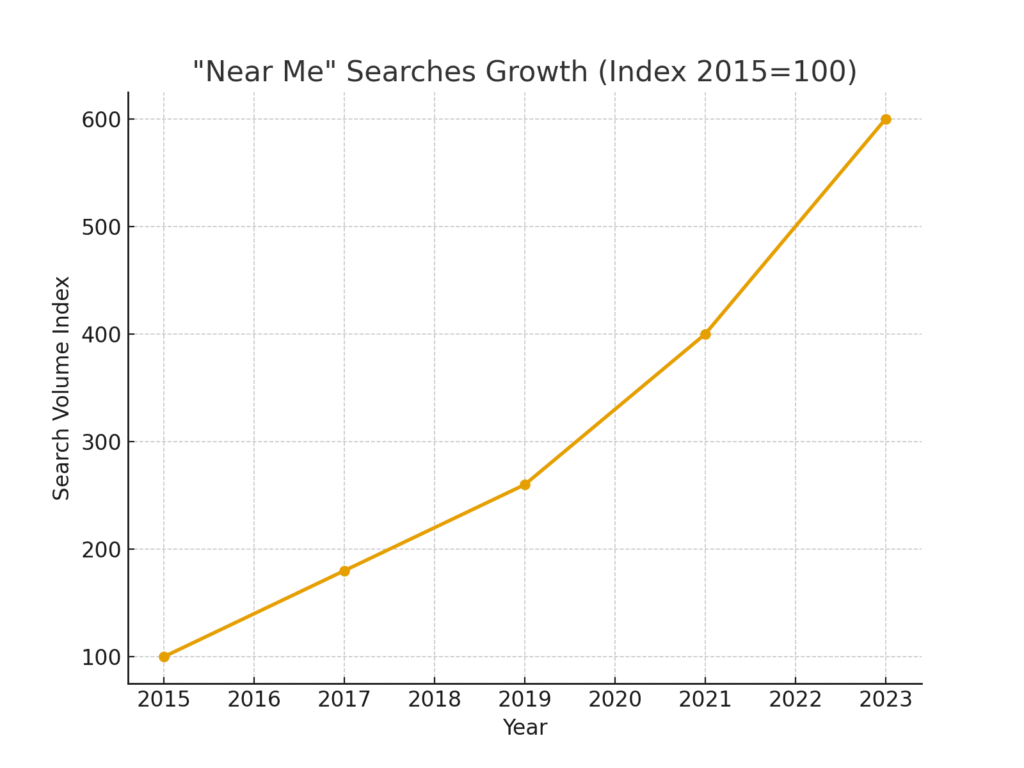
Urban Marketing Statistics #1: “Near Me” Searches Surged By 500%
The rise of mobile technology has made “near me” searches skyrocket by 500% in recent years. This shows that urban consumers increasingly depend on their phones to find immediate solutions around them. For marketers, this means local SEO optimization is no longer optional—it’s essential. Businesses that appear in these searches are positioned to capture high-intent customers quickly. Ignoring this trend means missing out on countless purchase-ready individuals.
Urban Marketing Statistics #2: 97% Of Users Search Online For Local Businesses
Almost every urban consumer turns to the internet when looking for nearby services or stores. This statistic highlights the importance of having an optimized online presence. If a brand isn’t searchable online, it might as well be invisible to city dwellers. Reviews, accurate contact info, and clear location details are critical in gaining trust. Urban marketing thrives when businesses meet people where they are—online.
Urban Marketing Statistics #3: 88% Of Mobile Local Searches Lead To Store Visits Within 24 Hours
When someone searches for a local business on their smartphone, they often follow up with an in-person visit quickly. This proves the urgency and immediacy behind urban consumer behavior. Local ads and mobile-friendly websites become powerful tools to guide that decision. Marketers who capitalize on this “search-to-store” journey gain a clear competitive advantage. It’s all about reducing friction between online intent and offline action.
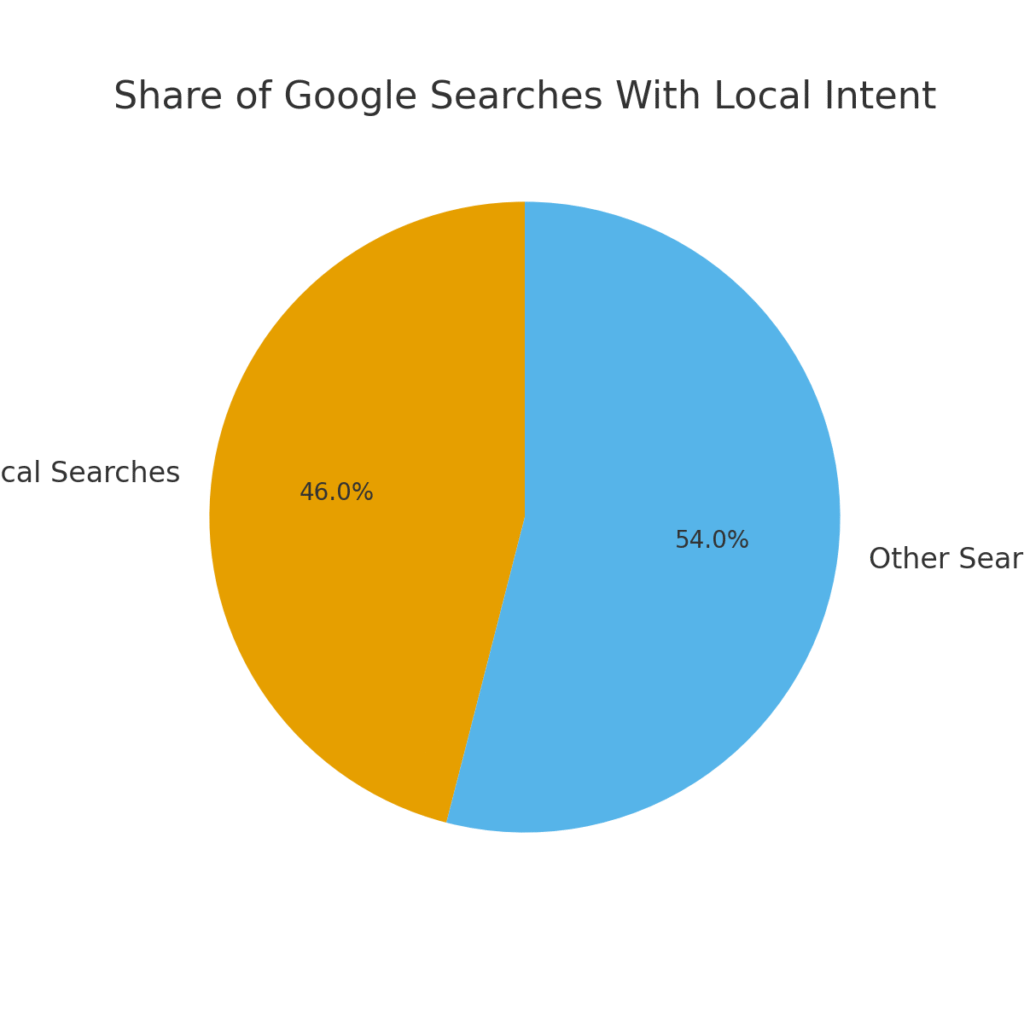
Urban Marketing Statistics #4: 46% Of All Google Searches Are Local
Nearly half of all Google searches involve people looking for local information. That makes local intent one of the most significant drivers of online activity. For urban businesses, ranking in these searches is vital to visibility. SEO strategies must prioritize location-based keywords and content. In a city full of options, showing up at the top makes all the difference.
Urban Marketing Statistics #5: 4 In 5 Consumers Want City-Specific Ads
Personalized advertising is no longer a luxury—it’s an expectation. Four in five consumers prefer ads tailored to their city, area, or ZIP code. This means marketers must use geotargeting effectively to create relevant campaigns. Urban residents want to feel understood in their environment. Ads that miss the local context often fail to connect.
Urban Marketing Statistics #6: 89% Of People Search For Local Businesses Weekly On Smartphones
Mobile usage in urban areas is at its peak. Almost nine out of ten people use their smartphones every week to find local businesses. This creates opportunities for brands to engage through mobile-first experiences. From responsive websites to mobile app offers, convenience drives engagement. The urban consumer is most loyal to brands that respect their time.
Urban Marketing Statistics #7: 72% Visit Stores Within Five Miles After A Local Search
Urban consumers value proximity and efficiency. Over seven out of ten people who search locally end up visiting a business within just five miles. This shows how vital location targeting is in competitive city landscapes. Stores that make their physical location visible online gain more visits. Accessibility and visibility directly impact conversion rates in urban areas.
Urban Marketing Statistics #8: Affiliate Marketing Industry Worth $37 Billion In 2025
The affiliate marketing industry has ballooned into a $37 billion global sector. Urban brands often leverage affiliate strategies to reach micro-audiences in competitive markets. Influencers, bloggers, and partners create hyper-local engagement opportunities. This stat reflects how performance-based marketing thrives in bustling cities. For urban businesses, affiliates act as trusted voices in a noisy environment.
Urban Marketing Statistics #9: Digital Marketing Growing At 13.1% CAGR (2024–2032)
Digital marketing is growing at a compound annual growth rate of 13.1%. Urban environments amplify this trend due to heavy reliance on online platforms. Businesses that fail to invest in digital tools risk being left behind. The rapid growth reflects not just demand but innovation in channels. For urban marketing, scaling digital investments is a path to sustained success.
Urban Marketing Statistics #10: $5 ROI For Every $1 Spent On Digital Marketing
The average return on investment in digital marketing is about $5 per $1 spent. In urban markets, this ratio can be even higher due to dense populations. Smart targeting ensures that ads reach the right audience at the right time. This makes digital marketing one of the most efficient channels for growth. The payoff highlights why more businesses are shifting urban budgets online.
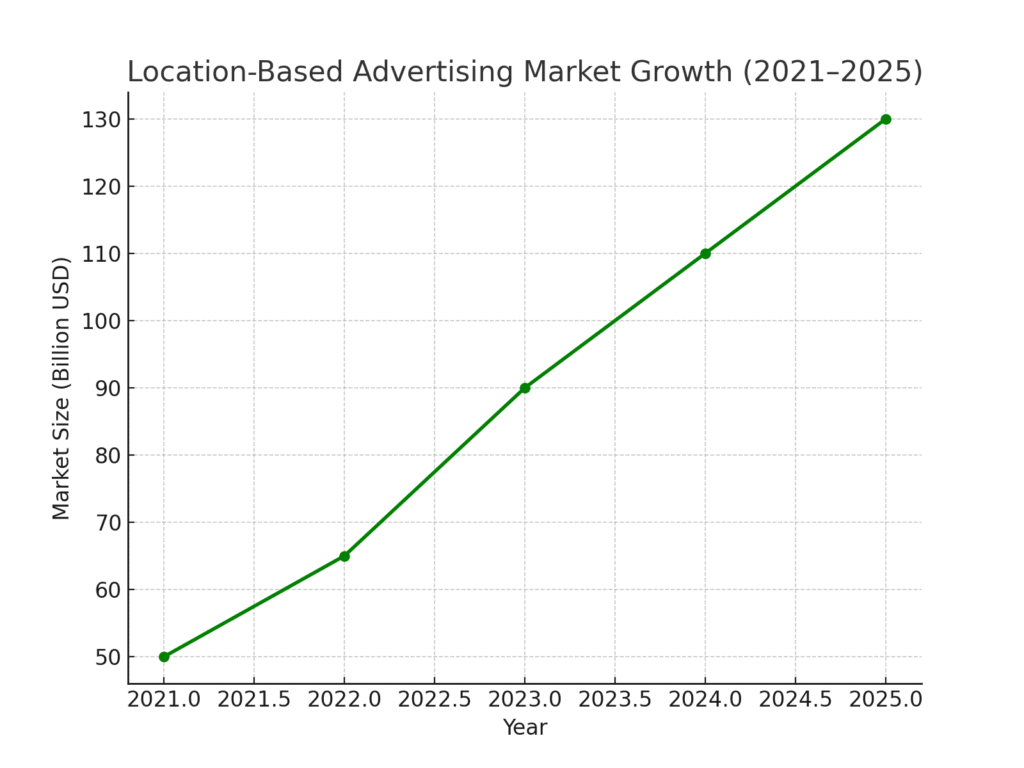
Urban Marketing Statistics #11: Email Marketing Delivers $36 Return Per $1 Spent
Email remains a reliable marketing tool, even in the fast-moving urban digital world. For every $1 spent, businesses can expect up to $36 in return. This proves email’s ability to nurture relationships in crowded markets. Personalized campaigns resonate strongly with urban professionals who live in their inboxes. Despite newer channels, email continues to outperform.
Urban Marketing Statistics #12: 91% Of Marketers Use Video Content
Video has become the dominant form of communication for brands. Over nine in ten marketers rely on video campaigns to reach audiences. In urban areas, video thrives due to heavy social media usage and visual culture. Short-form content, like TikTok and Instagram reels, drive local engagement. Video helps businesses break through the noise of city life.
Urban Marketing Statistics #13: Social Ad Spend To Reach $276.7B In 2025
Global social media ad spend is projected to exceed $276.7 billion by 2025. Urban marketers see this as a crucial channel for connecting with mobile-first consumers. The growth reflects shifting budgets toward social platforms with strong targeting tools. For city-focused businesses, social ads enable hyper-local relevance. This makes them indispensable in modern urban marketing.
Urban Marketing Statistics #14: 68% Of Executives See ROI From Generative AI
Generative AI is reshaping marketing strategies. More than two-thirds of executives already report a positive ROI. In urban contexts, AI enables personalized campaigns at scale. This means city-based consumers receive more tailored offers and messages. AI adoption is setting the tone for the next phase of urban marketing.
Urban Marketing Statistics #15: 80% Of Users Want Location-Based Alerts
Consumers appreciate timely, relevant communication. Four in five people actively want location-based alerts on their devices. For marketers, this provides a chance to send offers when people are nearby. It creates a direct bridge between digital messaging and physical presence. The urban consumer expects immediacy, and alerts meet that demand.
Urban Marketing Statistics #16: 75% Take Action After Location-Based Messages
Location-based marketing has proven effectiveness. Three out of four consumers act after receiving a location-specific message. This shows that targeted push notifications can drive measurable results. Urban environments amplify this effect, with higher traffic density. For marketers, timing and accuracy of these messages is critical.
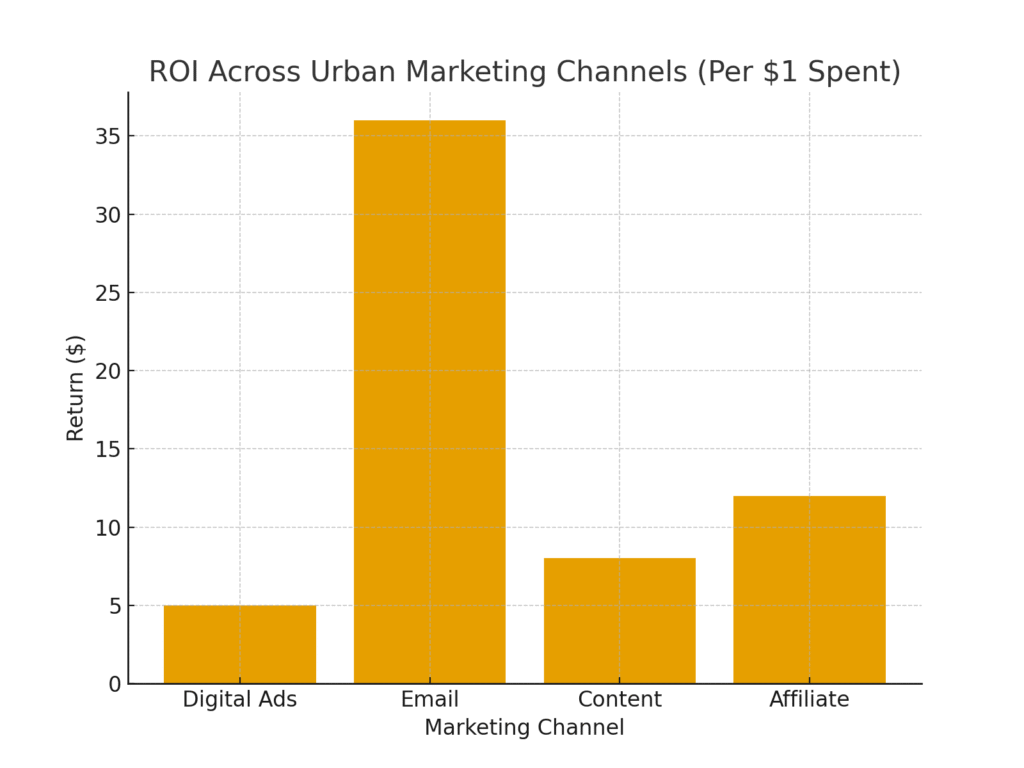
Urban Marketing Statistics #17: Location-Based Advertising To Grow $80B By 2025
The location-based advertising market is rapidly expanding. Forecasts predict growth exceeding $80 billion between 2021 and 2025. This surge demonstrates strong industry confidence in localized strategies. Urban centers, with their density and diversity, drive much of this growth. Brands investing now are positioning themselves for long-term success.
Urban Marketing Statistics #18: 82% Still Value Print Ads
Despite digital dominance, traditional ads still matter. Over eight in ten consumers rely on print ads when deciding purchases. In cities, print remains visible in transit systems, billboards, and magazines. This balance of digital and print strengthens integrated campaigns. Marketers should not overlook offline exposure in urban settings.
Urban Marketing Statistics #19: Mobile-Friendly Sites Increase Local Conversions By 61%
When a local business has a mobile-friendly website, it is 61% more likely to convert. Urban consumers, always on the go, value seamless experiences. Websites that load fast and display well on phones earn loyalty. Poor mobile design often leads to lost opportunities. For urban marketers, mobile optimization is non-negotiable.
Urban Marketing Statistics #20: Content Marketing Market Reached $413.3B In 2022
Content marketing has grown into a massive $413.3 billion industry. Urban audiences consume more digital content than ever before. Blogs, videos, and interactive media are now standard touchpoints. The growth highlights how content fuels brand discovery in crowded markets. Strong content strategies separate leading urban brands from the rest.
Wrapping It All Up
Looking back at these statistics, I can honestly say they’ve changed the way I think about marketing in an urban setting. For me, the biggest takeaway is that behind every data point is a person making quick decisions on the go—whether it’s searching for a café nearby or clicking on a targeted ad during their commute. That human side of the numbers makes me want to be more thoughtful, more creative, and more intentional with every strategy I put together. If you’ve felt the same while reading through, then I’d say this exploration has done exactly what it set out to do.
SOURCES
-
https://llcbuddy.com/data/location-based-marketing-statistics/ LLCBuddy
-
https://www.wix.com/blog/blogging-statistics-and-facts wix.com
-
https://www.sixthcitymarketing.com/digital-marketing-stats/ Sixth City Marketing
-
https://www.verfacto.com/blog/data-driven-marketing/location-based/ Verfacto
-
https://www.impactmybiz.com/blog/how-to-leverage-location-based-marketing/ Impact My Biz
-
https://www.geoplugin.com/resources/location-based-marketing-statistics-top-insights-revealed/ GeoPlugin
-
https://tipsonblogging.com/2025/03/location-based-marketing-statistics/ Tipsonblogging
-
https://www.amraandelma.com/blog-marketing-statistics/ Amra and Elma LLC