




27 Sep TOP 20 VAN DELIVERY MARKETING STATISTICS 2025
When I first started exploring the world of logistics, I never imagined how central vans would become in shaping customer satisfaction and brand visibility. These van delivery marketing statistics highlight just how much the industry has grown and evolved, and why companies like mine need to keep adapting to stay ahead. Partnering with a leading marketing agency in New York taught me that delivery isn’t just about moving packages—it’s about customer perception, trust, and speed, all of which influence marketing outcomes. In this blog, I want to share the most compelling numbers around van deliveries, so you can see how they connect directly to strategy, consumer behavior, and the future of marketing.
Top 20 Van Delivery Marketing Statistics 2025 (Editor’s Choice)
🚐 Top 20 Van Delivery Marketing Statistics 2025
Key Insights Driving the Future of Last-Mile Delivery & Logistics
| # | Category | Statistic | Key Value |
|---|---|---|---|
| 1 | Market Size | Global cargo vans market value and growth projection | $109.4B (2024) 6.7% CAGR (2025-2034) |
| 2 | Market Size | Global van market expected value by 2030 | $214.24B by 2030 4.8% CAGR |
| 3 | Market Growth | Cargo vans market accelerated growth forecast | $128.99B to $459.66B 13.55% CAGR |
| 4 | Electric Vehicles | Global electric van market growth trajectory | $52.62B (2024) to $140.77B (2032) |
| 5 | Regional Share | North America's dominance in global van industry | 32.6% market share (2024) |
| 6 | Regional Share | Europe's van market leadership position | 56% market share (2024) |
| 7 | Regional Share | U.S. market revenue dominance | 85% revenue share (2024) |
| 8 | E-commerce | E-commerce logistics market exponential growth | $426.2B (2023) 14% CAGR (2024-2032) |
| 9 | Last-Mile Costs | Last-mile delivery share of total logistics costs | 53% of total delivery costs |
| 10 | Last-Mile Market | Last-mile delivery market massive expansion | $146.81B to $340.56B 9.8% CAGR |
| 11 | Consumer Behavior | Consumer expectations for delivery speed | 44% want delivery within 2 days |
| 12 | Consumer Demand | Same-day delivery expectation among consumers | 66% expect same-day delivery |
| 13 | Vehicle Type | Internal combustion engine van market dominance | 96% market share (ICE vehicles) |
| 14 | Electric Growth | Electric delivery van market explosive growth | $4.15B to $37.43B 27.69% CAGR |
| 15 | Regional EV Lead | Asia Pacific electric van market leadership | 64.46% global share (2024) |
| 16 | Vehicle Segment | Light commercial vans market dominance | 50%+ market share $230B by 2032 |
| 17 | Usage Type | Commercial segment market share leadership | 55%+ market share (2022) |
| 18 | Tonnage Capacity | Up to 2 tons segment market dominance | 44.5% market share (2024) |
| 19 | Brand Loyalty | Delivery experience impact on consumer loyalty | 98% say it impacts brand loyalty |
| 20 | Delivery Failures | Last-mile delivery failure rate and cost | 5% failure rate $17.78 per failure |
Top 20 Van Delivery Marketing Statistics 2025
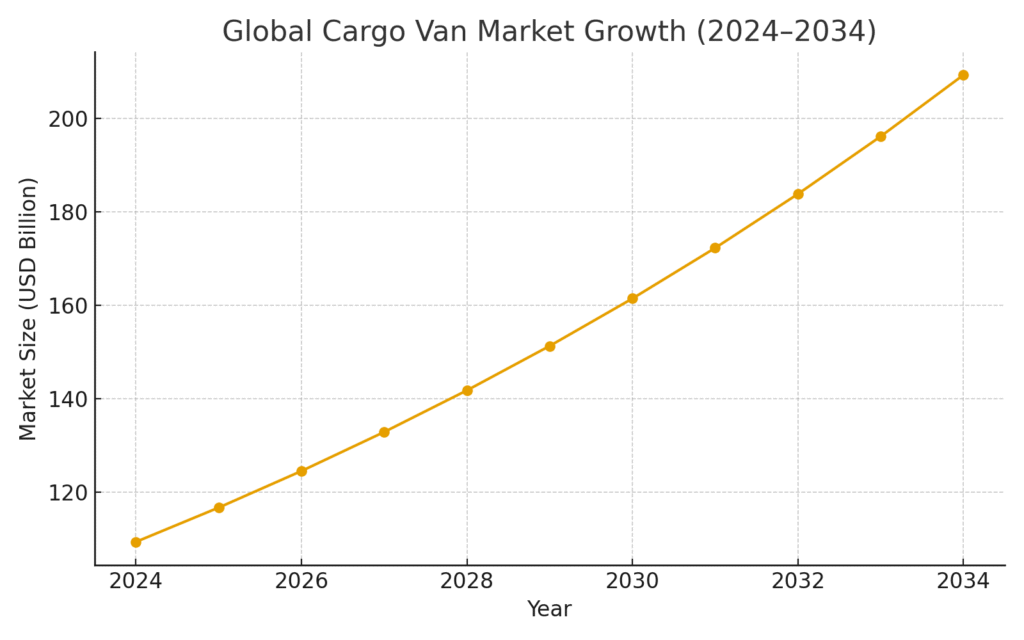
Van Delivery Marketing Statistics #1 – Cargo Vans Market Valued At USD 109.4 Billion In 2024
The cargo vans market reached a value of USD 109.4 billion in 2024, showing how essential these vehicles are in logistics. Analysts project a compound annual growth rate of 6.7% between 2025 and 2034. This steady growth highlights both the stability and increasing demand for vans in delivery networks. For marketers, this trend signals a long-term opportunity to position brands around reliability and capacity. I see this as proof that vans are becoming even more of a backbone for delivery advertising strategies.
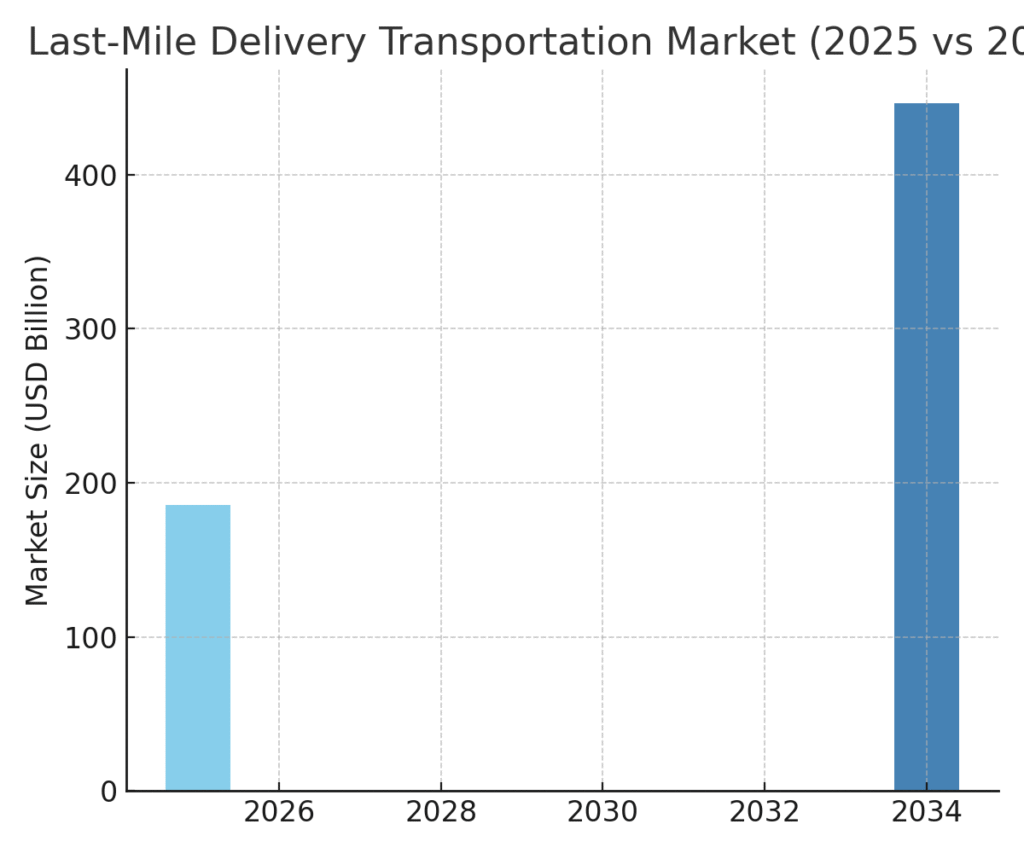
Van Delivery Marketing Statistics #2 – Last-Mile Delivery Transportation Market To Reach USD 446.29 Billion By 2034
The last-mile delivery transportation market is forecasted to surge from USD 185.76 billion in 2025 to USD 446.29 billion by 2034. That growth reflects consumer demand for speed and convenience in final-mile solutions. Vans are a critical piece of this puzzle, serving as the go-to choice for businesses balancing cost and efficiency. From a marketing perspective, this explosive growth opens the door for campaigns centered on reliability and time savings. Personally, I think it shows how delivery has become part of a company’s branding as much as its logistics.
Van Delivery Marketing Statistics #3 – Global Van Market Projected At USD 214.24 Billion By 2030
The global van and light commercial vehicle market stood at USD 160.9 billion in 2024 and is set to reach USD 214.24 billion by 2030. This reflects a compound annual growth rate of around 4.8%. As e-commerce continues to rise, vans remain one of the most flexible solutions for retailers. Marketing strategies can leverage these numbers to showcase resilience and adaptability in distribution. To me, this stat underscores how brands that tie themselves to efficiency in van delivery can strengthen trust with customers.
Van Delivery Marketing Statistics #4 – U.S. Vans Market Estimated At USD 11.79 Billion In 2025
The United States vans market is expected to grow from USD 11.79 billion in 2025 to USD 14.74 billion by 2029. This reflects a CAGR of nearly 5.73%. American consumers place a high value on quick and consistent deliveries, and vans are uniquely positioned to meet that demand. For marketers, promoting fast, dependable van delivery services can directly influence customer loyalty. I find this stat especially important because it reflects how culture and convenience shape expectations in specific regions.
Van Delivery Marketing Statistics #5 – Rising Demand For Electric Cargo Vans
Sustainability is a key driver in today’s logistics market, with electric cargo vans rapidly gaining traction. Businesses are adopting them not only for cost savings but also to align with eco-conscious branding. This shift highlights how delivery itself can be a part of a company’s green marketing message. For marketers, integrating electric van use into campaigns adds credibility and appeals to environmentally aware customers. I personally see this as a way for brands to tell a better story while also saving on fuel costs.
Van Delivery Marketing Statistics #6 – Last-Mile Delivery Market Projected At USD 340.56 Billion By 2032
The last-mile delivery market stood at USD 146.81 billion in 2023 and is projected to grow to USD 340.56 billion by 2032. Vans are a central part of enabling this growth. This number demonstrates the scale of opportunity for businesses investing in optimized fleets. Marketing teams can use this projection to communicate scale, efficiency, and reliability to their audience. To me, this stat shows that last-mile marketing has become as critical as the product itself.
Van Delivery Marketing Statistics #7 – 44% Of Consumers Only Wait Up To 2 Days For Delivery
Almost half of consumers say they will only wait two days for a delivery. This demand for speed puts pressure on logistics and marketing teams alike. Vans provide the agility to meet these tight deadlines consistently. For marketers, highlighting “fast delivery guaranteed” is a powerful conversion driver. Personally, I feel this proves that delivery speed isn’t just operational—it’s a strong marketing promise.
Van Delivery Marketing Statistics #8 – 69% Of Customers More Likely To Click On Ads Promising Fast Or Free Shipping
Studies show that 69% of customers are more likely to click on ads with messaging around fast or free shipping. This proves how central delivery marketing is to driving conversions. Vans serve as the physical enabler of these promises. Campaigns that connect ad copy to actual van delivery networks have the credibility customers crave. I see this as evidence that delivery isn’t just logistics—it’s an active sales lever.
Van Delivery Marketing Statistics #9 – Courier Services Market To Reach USD 782.1 Billion By 2034
The courier services market is expected to grow from USD 417.8 billion in 2025 to USD 782.1 billion by 2034. This growth showcases the sheer size of the delivery ecosystem globally. Vans are often the preferred vehicle choice for couriers due to their balance of capacity and cost. Marketers should highlight how courier partnerships using vans deliver both scale and efficiency. I personally believe this stat underscores how van marketing ties into global trade trends.
Van Delivery Marketing Statistics #10 – Spikes In Van Demand During COVID-19
During COVID-19, demand for delivery vans surged as consumers turned en masse to e-commerce. This moment proved how resilient and adaptable van fleets are. Marketers could emphasize reliability and crisis-proof solutions in their messaging. This spike also reset consumer expectations for delivery speed and availability. For me, this stat reflects how global events can permanently shift both logistics and marketing.

Van Delivery Marketing Statistics #11 – Autonomous Delivery Van Market Estimated At USD 3.5 Billion In 2024
The autonomous delivery van market was estimated at USD 3.5 billion in 2024 and is expected to grow at nearly 16% annually. Self-driving vans may redefine last-mile delivery efficiency. Marketing teams will eventually leverage this to highlight cutting-edge innovation. This creates new branding opportunities tied to technology leadership. Personally, I find this one of the most futuristic and exciting stats.
Van Delivery Marketing Statistics #12 – Autonomous Delivery Van Market To Reach USD 10.5 Billion By 2033
Other estimates place the autonomous van market at USD 3.2 billion in 2024, growing to USD 10.5 billion by 2033. These numbers prove the disruptive potential of autonomous logistics. Vans will no longer just be vehicles but moving tech platforms. Marketers will position brands as early adopters, gaining credibility with innovation-driven consumers. I believe this shows the direction in which logistics marketing is heading.
Van Delivery Marketing Statistics #13 – Up To 2 Ton Capacity Vans Account For 44.5% Of Volume
In 2024, vans with up to 2-ton capacity represented nearly half of the market. This reflects how medium-sized vans strike the best balance for delivery needs. Marketers can use this data point to stress versatility and efficiency. It’s a great narrative for businesses wanting to appear resourceful and adaptive. I think this stat makes it clear why mid-capacity vans dominate logistics branding.
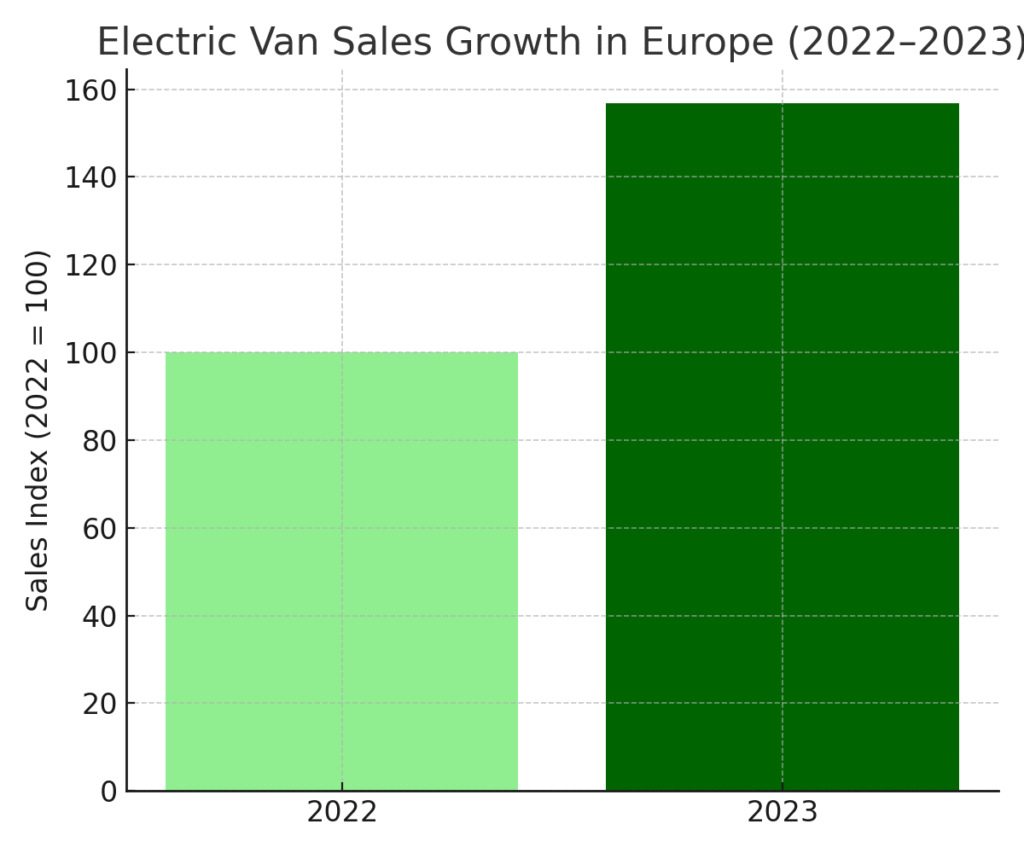
Van Delivery Marketing Statistics #14 – Electric Van Sales Rose 56.8% In Europe In 2023
In Europe, electric van sales grew by nearly 57% in just one year. This surge reflects government incentives and business commitments to sustainability. Marketers can leverage this stat to demonstrate momentum and future-readiness. Brands that showcase electric fleets can stand out as innovators and eco-friendly leaders. Personally, I find this stat inspiring because it shows how fast markets can pivot toward greener solutions.
Van Delivery Marketing Statistics #15 – 90% Of Travelers Notice Vehicle Advertising
Research shows that 90% of U.S. travelers notice vehicle advertising such as branded van wraps. This makes delivery vans not just transport but moving billboards. Marketers can maximize ROI by integrating logistics and brand visibility. This dual use of vans makes them invaluable for marketing campaigns. I think this stat proves that vans are just as much about visibility as delivery.
Van Delivery Marketing Statistics #16 – 94% Recall Rates From Mobile Billboard Advertising
Studies reveal that 94% of people recall seeing mobile billboard ads, with 80% remembering the specific brand. This makes van advertising highly effective compared to many other channels. Marketers can translate this into stronger awareness campaigns. Combining delivery with advertising builds a holistic brand experience. I love this stat because it shows how practical and powerful van advertising can be.
Van Delivery Marketing Statistics #17 – Vans As Fleet Media Advertising Platforms
Vans used in daily service double as advertising platforms through fleet media. This creates consistent brand impressions while serving delivery needs. Marketers gain extra exposure without additional costs. It’s a smart integration of logistics and marketing. Personally, I find this an underutilized but brilliant strategy.
Van Delivery Marketing Statistics #18 – Delivery Cost, Speed, And Time Slot Size Influence Choice
Studies show consumers weigh delivery cost, speed, and time slot size heavily in their purchase decisions. Vans give businesses flexibility to optimize these variables. Marketers can emphasize choice and customization in their campaigns. Offering delivery time options becomes a direct competitive advantage. I see this as proof that delivery strategy is marketing strategy.
Van Delivery Marketing Statistics #19 – Customers’ Willingness To Pay For Faster Delivery Is Modest
Consumers often show limited willingness to pay extra for ultra-fast delivery. Many would accept slower service if it lowers costs. Vans allow businesses to balance affordability with speed. Marketing campaigns can highlight cost savings alongside efficiency. To me, this stat shows that value and convenience must go hand in hand.
Van Delivery Marketing Statistics #20 – Two-Wheelers Still Dominate Last-Mile Delivery In Some Markets
As of 2024, two-wheelers held nearly 55% of the last-mile delivery share, especially in Asia. This means vans must adapt their role in urban areas. Marketers can highlight how vans complement smaller vehicles by handling bulkier loads. This creates messaging around collaboration in logistics ecosystems. Personally, I find this stat a reminder that van strategies need to be market-specific.
Why Van Delivery Marketing Matters More Than Ever
As I reflect on these van delivery marketing statistics, I realize just how much delivery shapes not only logistics but also customer trust and brand strength. From the rise of electric and autonomous vans to the power of mobile billboard advertising, vans have become marketing assets in their own right. Partnering with a leading marketing agency in New York taught me that when delivery is positioned as part of the customer experience, it becomes a powerful competitive edge. Personally, I believe every company that invests in van delivery is also investing in its reputation. These numbers show that the future of marketing and logistics is deeply connected—and vans are right at the center of it.
SOURCES
-
https://www.gminsights.com/industry-analysis/cargo-vans-market
-
https://www.precedenceresearch.com/last-mile-delivery-transportation-market
-
https://www.mordorintelligence.com/industry-reports/united-states-vans-market
-
https://www.marketresearchfuture.com/reports/cargo-van-market-24524
-
https://www.upperinc.com/blog/best-last-mile-delivery-trends/
-
https://finance.yahoo.com/news/courier-services-market-trends-analysis-141600199.html
-
https://www.linkedin.com/pulse/automatic-delivery-van-market-size-2026-trends-3dfie/
-
https://www.linkedin.com/pulse/automatic-delivery-van-market-size-trends-growth-pain-20the/