




24 Sep TOP 20 VETERINARIAN MARKETING STATISTICS 2025
As someone who loves both pets and the business side of veterinary care, I’m really excited to share these veterinarian marketing statistics with you. Over the years, I’ve noticed how much the pet industry has evolved—from how clinics advertise to how pet owners expect to connect with their veterinarians. These numbers tell an important story about where the industry is today and where it’s heading in the future. I’ve also learned that working with the right experts makes all the difference, which is why I often look to insights from a leading marketing agency in New York to understand how strategies can be applied to this growing market. My goal here is to not just give you numbers, but to share context and meaning that can help you see opportunities for your own practice.
Top 20 Veterinarian Marketing Statistics 2025 (Editor’s Choice)
🐾 Top 20 Veterinary Marketing Statistics
Essential Data for 2024-2025 Success
| Rank | Category | Key Statistic |
|---|---|---|
| 📈 Market Size & Growth | ||
1 |
Market Value | Veterinary services market valued at $128.73 billion in 2025, projected to reach $163.52 billion by 2030 (4.91% CAGR) |
2 |
Global Growth | Global veterinary services reached $110.8 billion in 2023 with expected 7.3% CAGR through 2032 |
3 |
Medicine Market | Veterinary medicine market: $49.96 billion (2024) → $80.85 billion (2030) at 8.5% CAGR |
| 🏠 Pet Ownership & Demographics | ||
4 |
Household Growth | Pet ownership surged from 56 million households (2011) to 94 million households (2025) |
5 |
Market Penetration | Pet ownership increased from 56% (1998) to 66% (2023) of U.S. households |
6 |
Demographics | Generation Z represents the fastest-growing cohort of new pet owners |
| 💰 Revenue & Financial Performance | ||
7 |
Practice Revenue | Vet practices generate $300K-$600K revenue per full-time veterinarian depending on location and type |
8 |
Profit Margins | Average profit margins: 10-15% (small animal) | 15-25% (emergency/specialty) |
9 |
Revenue Per Patient | Average annual revenue per patient: $622 (+7% YoY) - $499 services + $203 products |
| 💳 Marketing Budget & Spending | ||
10 |
Standard Budget | Typical veterinary marketing budget: 1% of total revenue |
11 |
Budget Range | Veterinary practices spend 0.5% to 5% of revenue on marketing initiatives |
12 |
Recommended Spend | Industry experts recommend 1.6-2% of turnover for effective marketing budget |
| 📱 Digital Marketing & Technology | ||
13 |
Telehealth Trend | Telehealth usage declined from 38% (2023) to 29.2% (2024) while online scheduling grows |
14 |
Booking Behavior | 30-40% of appointments are scheduled outside office hours during pet owners' free time |
15 |
Remote Care Interest | 69% of pet owners expressed interest in remote care options if accessible |
| ⚠️ Industry Challenges & Staffing | ||
16 |
Staffing Crisis | 55,000 new veterinarians needed by 2033 to meet growing demand |
17 |
Relief Veterinarians | Relief vets increased from 6% (2023) to 9.1% (2024) in private practice |
18 |
Operating Hours | Average practice hours extended from 9 hours (2023) to 10 hours (2024) on weekdays |
| 🔄 Market Dynamics & Consumer Behavior | ||
19 |
Visit Trends | Patient visits decreased 2.3% YoY while revenue increased 3.9% due to price increases |
20 |
Service Focus | Preventive care leads with 31.34% revenue share; telehealth projected 6.54% CAGR through 2030 |
Top 20 Veterinarian Marketing Statistics 2025
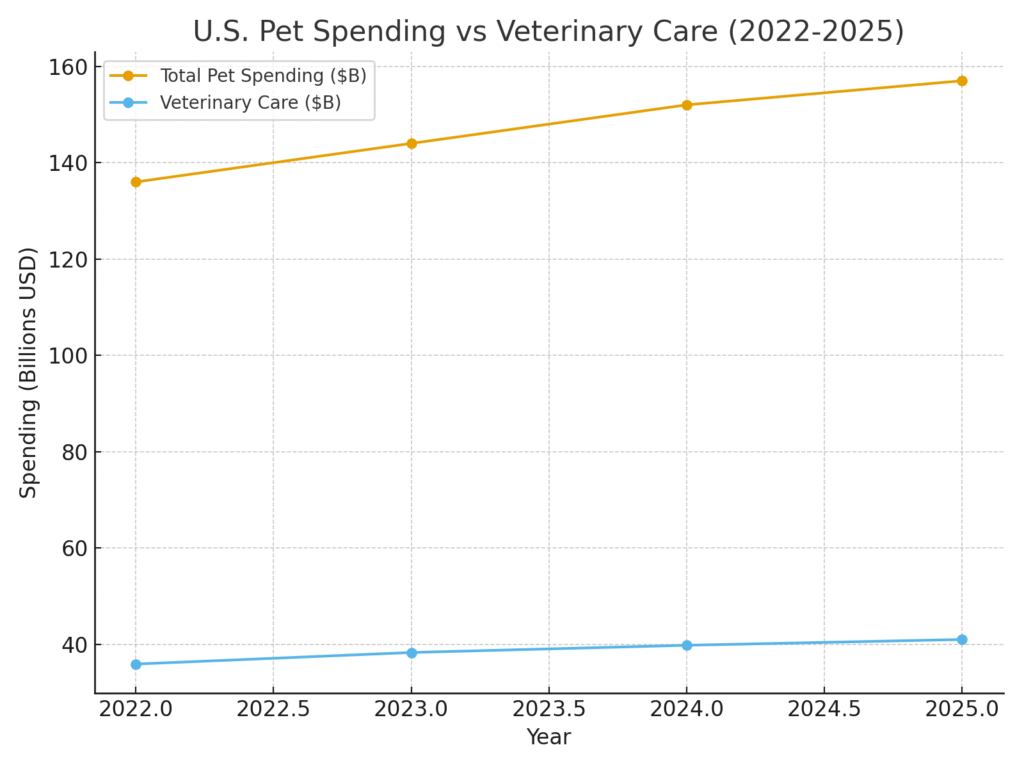
Veterinarian Marketing Statistics #1: U.S. Pet Spending Reached $152 Billion in 2024
The U.S. pet industry saw a remarkable $152 billion in spending in 2024, with a large portion dedicated to veterinary care. This shows how deeply pet owners value professional healthcare for their animals. For marketers, it reflects a highly resilient industry where demand continues to climb regardless of economic shifts. Veterinary practices that position themselves as trusted advisors can capture more of this spending. Marketing efforts emphasizing pet wellness and preventative care resonate strongly with today’s pet owners.
Veterinarian Marketing Statistics #2: Veterinary Care Accounts for $39.8 Billion of Spending
Out of the total $152 billion spent in 2024, $39.8 billion went specifically to veterinary care and products. This demonstrates that nearly one-third of all pet spending flows into the veterinary sector. Practices that highlight the quality of their services and showcase modern equipment can stand out in such a competitive environment. Clear communication of value and care can directly influence a client’s decision to choose one clinic over another. Marketing campaigns that stress expertise and trust can drive loyalty among pet parents.
Veterinarian Marketing Statistics #3: Market Projected to Reach $157 Billion in 2025
The pet industry as a whole is projected to grow to $157 billion in 2025. Veterinary services are expected to continue holding a strong share of this market. This growth represents opportunities for clinics that are willing to invest in digital marketing strategies. Practices that stay visible online will be better positioned to attract new clients. A forward-looking marketing plan ensures veterinarians stay ahead of the curve as the industry expands.
Veterinarian Marketing Statistics #4: U.S. Veterinarians Market Growing at 8.7% CAGR
From 2023 to 2030, the U.S. veterinarians market is expected to grow at a compound annual growth rate (CAGR) of 8.7%. This steady rise indicates a healthy demand for services and room for expansion. Marketers can leverage this growth trend by showing how practices adapt to meet rising demand. Investing in SEO, local ads, and client retention campaigns will maximize growth potential. Consistent visibility ensures clinics don’t miss out as the industry scales.
Veterinarian Marketing Statistics #5: 130,415 Veterinarians Practicing in the U.S.
There are currently about 130,415 veterinarians working in the United States. With this many professionals, the competition to attract and retain clients is fierce. Practices need to differentiate through branding, online presence, and client experience. Marketing is no longer optional—it’s essential to stand out in a saturated marketplace. Personalization in outreach helps build stronger client relationships despite the competition.
Veterinarian Marketing Statistics #6: 94 Million U.S. Households Own Pets
Around 94 million households in the U.S. report owning pets. This massive base of potential clients offers endless marketing opportunities for veterinarians. With such a wide audience, practices can segment by location, pet type, and demographics for targeted campaigns. Digital tools such as social ads or email marketing help connect with these households more efficiently. Effective targeting ensures clinics reach the right pet owners with the right message.
Veterinarian Marketing Statistics #7: Millennials Prefer Texting Communications
Millennials, one of the largest pet-owning groups, often prefer texting over phone calls. This trend impacts how veterinary practices should design their communication strategies. Clinics that integrate text reminders, confirmations, and promotions are more likely to connect with this audience. Ignoring this shift can cause practices to miss opportunities with tech-savvy clients. Tailoring communication to client preferences shows attentiveness and builds trust.
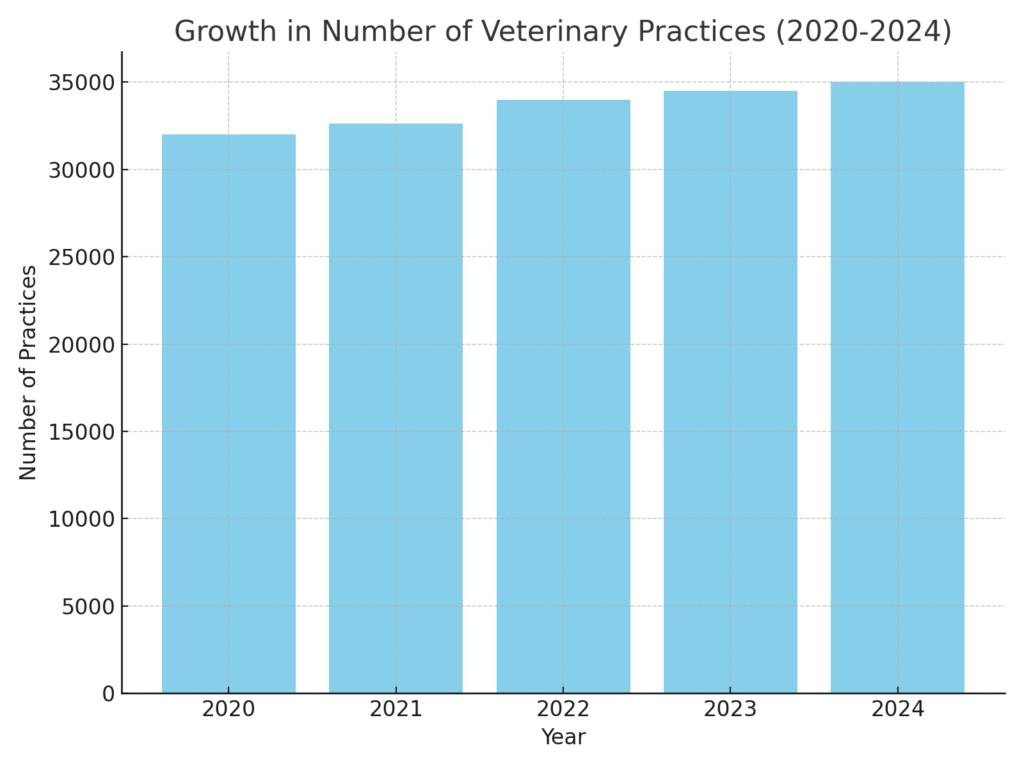
Veterinarian Marketing Statistics #8: Number of Veterinary Practices Grew to 34,000 in 2022
By 2022, the number of veterinary practices in the U.S. had risen to approximately 34,000. This steady growth highlights a competitive business environment. Practices need to market themselves effectively to stand out against nearby competitors. Showcasing unique services, specialties, or client care standards can make the difference. A strong online reputation can help a clinic attract new pet owners in crowded markets.
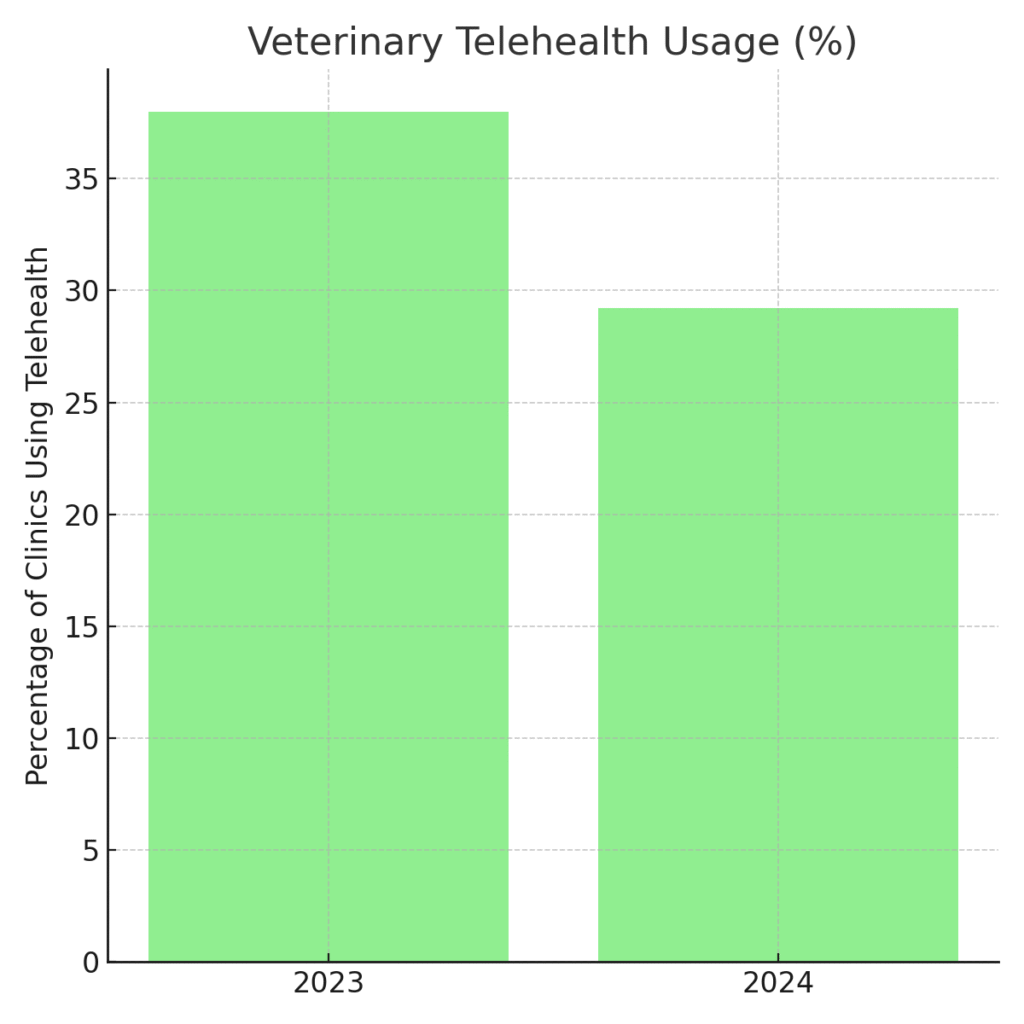
Veterinarian Marketing Statistics #9: Telehealth Usage Declined from 38% to 29.2%
Veterinary telehealth services dropped from 38% in 2023 to 29.2% in 2024. This decline suggests that many pet owners still prefer in-person visits. Clinics offering telehealth should ensure they communicate the convenience and safety benefits clearly. On the other hand, those focusing on in-person services can highlight quality and personalization. Adapting marketing messages based on service delivery trends ensures relevance.
Veterinarian Marketing Statistics #10: Average Veterinarian Handles 13–14 Appointments Daily
A typical full-time veterinarian manages about 13 to 14 appointments each weekday. This capacity means clinics must balance marketing campaigns with operational realities. Attracting new clients is important, but overbooking can lead to burnout and dissatisfaction. Marketing should highlight availability, convenience, and scheduling ease. Smart resource planning helps practices grow sustainably without compromising care quality.
Veterinarian Marketing Statistics #11: Veterinary Practices Operate 10 Hours on Weekdays
In 2024, average veterinary clinics extended their weekday operating hours to about 10 hours. Longer hours reflect the demand for accessible veterinary care. Marketing can highlight extended availability as a competitive advantage. Pet owners often look for convenience, so showcasing longer service times can drive more visits. Extended hours paired with strong promotion can boost client satisfaction and loyalty.
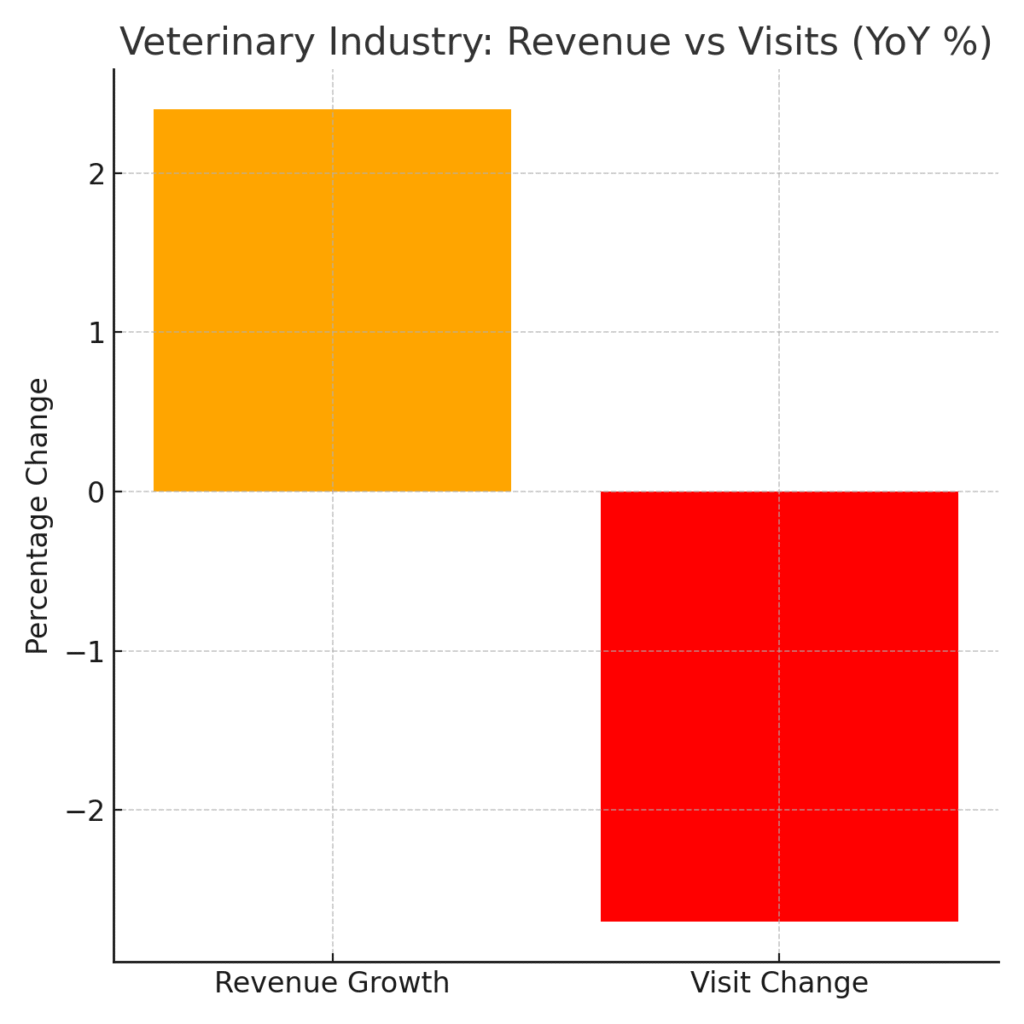
Veterinarian Marketing Statistics #12: Revenue Growth +2.4% While Visits Dropped –2.7%
In a recent rolling period, veterinary revenue grew 2.4% year-over-year while visits fell by 2.7%. This suggests clinics are generating more income per visit despite fewer appointments. Marketing strategies can focus on higher-value services and wellness plans. Practices can also highlight preventive care packages that improve outcomes while increasing revenue. Strong communication of value justifies higher per-visit spending.
Veterinarian Marketing Statistics #13: Card Payments Fell by 1% in 2025
Card payments at veterinary practices fell by about 1% year-over-year in 2025. While small, this shift shows how payment methods can fluctuate. Practices should market flexibility by offering multiple payment options. Promoting financing or wellness plans can also ease client concerns about cost. Marketing that emphasizes affordability and flexibility helps retain more clients.
Veterinarian Marketing Statistics #14: Product Revenue Declined by 3.8% in 2025
Product revenue in veterinary practices dropped by nearly 3.8% year-over-year. This shows that services remain more reliable than retail sales. Practices can market products strategically by bundling them with services. Highlighting unique or specialty products can also help maintain sales. Effective product marketing should emphasize exclusivity and quality.
Veterinarian Marketing Statistics #15: Veterinary Services Inflation Exceeds 4% YoY
Veterinary service inflation has been running above 4% year-over-year. Rising costs can create sensitivity among pet owners. Marketing should emphasize value and transparency to counter potential pushback. Practices that explain the benefits of care and provide flexible pricing options will earn trust. Strong communication can turn cost concerns into opportunities for education.
Veterinarian Marketing Statistics #16: Global Veterinary Market Valued at $127–138.9 Billion
Globally, the veterinary services market is valued between $127 and $138.9 billion in 2025. This indicates a robust international industry with wide growth potential. Clinics can draw inspiration from global trends and innovations. Marketing can emphasize staying current with international best practices. Positioning as modern and innovative helps attract informed pet owners.
Veterinarian Marketing Statistics #17: 50% of Veterinarians Report Emotional Burnout
Nearly half of veterinarians report experiencing emotional exhaustion or burnout. This impacts not only professionals but also client satisfaction. Marketing messages should balance growth with compassion, showing clients that staff well-being matters. Highlighting supportive clinic culture can attract both clients and potential staff. Addressing burnout openly can build authenticity and trust with the community.
Veterinarian Marketing Statistics #18: Over 25% of Veterinarians Leave the Profession Annually
Some reports suggest that more than 25% of veterinarians leave the field each year. High attrition rates create staffing challenges for clinics. Marketing strategies can include recruitment messaging as well as client outreach. Highlighting stability, experience, and staff continuity reassures clients. Communicating consistency builds trust in long-term care.
Veterinarian Marketing Statistics #19: Projected Shortage of 14,000–24,000 Vets by 2030
Industry forecasts predict a shortage of between 14,000 and 24,000 veterinarians by 2030. This looming gap highlights the importance of retention and efficiency. Practices may need to market specialized services or limit focus to manage demand. Communicating limited availability can create urgency for clients to schedule. Preparing now helps clinics stay ahead of the shortage.
Veterinarian Marketing Statistics #20: 88% Cite Student Debt as Top Stressor
Around 88% of veterinary professionals name student debt as their top financial stress. This financial burden affects career satisfaction and retention. Clinics can use marketing to showcase supportive work environments or repayment assistance if offered. Transparency about challenges builds empathy with clients. Highlighting professional dedication despite challenges humanizes veterinarians in marketing efforts.
Final Thoughts on Veterinarian Marketing Statistics
Looking back at these insights, I can’t help but feel optimistic about the future of veterinary practices and pet care marketing. These veterinarian marketing statistics reveal that while there are challenges—like staffing shortages and the need for digital adaptation—there are also incredible opportunities to connect with pet owners in more authentic and effective ways. Personally, I find it inspiring to see how much room there is for growth if clinics embrace innovation and put client relationships at the heart of their strategies. I hope these statistics give you both clarity and inspiration for your next steps. After all, the best marketing isn’t just about growth; it’s about building trust and making a difference in the lives of both pets and the people who love them.
SOURCES
https://www.veterinary-practice.com/article/marketing-advice-for-veterinary-practices
https://www.avma.org/resources-tools/reports-statistics
https://www.avma.org/resources-tools/veterinary-economics/veterinary-industry-tracker
https://petdesk.com/blog/veterinary-social-media-trends/
https://www.dvmelite.com/guide-to-veterinary-practice-marketing
https://www.dvmelite.com/veterinary-marketing-tips-to-implement-this-year
https://www.vetstoria.com/blog/veterinary-marketing-the-ultimate-guide/
https://www.vetmarketingservices.com.au/blog/the-benefits-of-blogs
https://gatewayvetclinic.com/the-data-behind-marketing-to-pet-owners/
https://petdesk.com/blog/2024-veterinary-industry-stats/
https://animalpatient.com/economics/us-veterinary-clinics-potential
https://verticalvet.com/blog/four-trends-shaping-the-next-10-years-of-veterinarymedicine